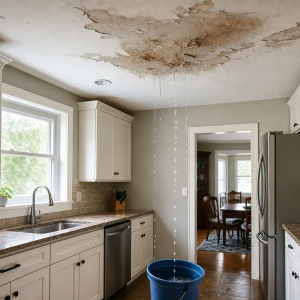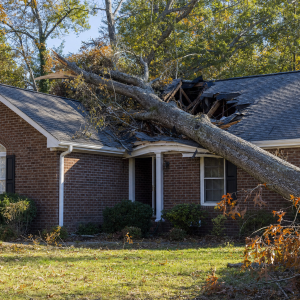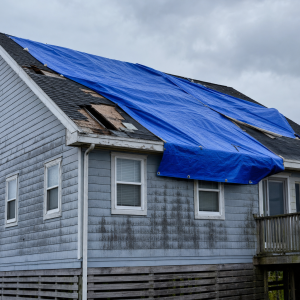

The storm is over. The tarp is flapping, the ceiling stain is spreading, and your insurance company is already looking for a way to call it anything except covered storm damage.
That's where wind driven rain turns into a claim dispute. You report leaking around a window, staining on drywall, warped trim, wet insulation, or damage that showed up after a hurricane, tropical storm, or hard wind event in North Carolina or Virginia. Then the carrier starts splitting hairs. They'll say it was old caulk. Bad seals. Deferred maintenance. Long-term seepage. Anything to avoid paying what the policy should cover.
That response isn't rare. In North Carolina, where wind-driven rain frequently accompanies hurricanes and tropical storms, the National Weather Service has documented that over 60% of hurricane-related home damage involves water intrusion from wind-driven rain rather than direct wind force alone, which is exactly why documentation matters in a dispute with the carrier, as noted by Siddons Law's discussion of wind-driven rain claim issues.
Table of Contents
- Your Wind Driven Rain Nightmare Begins
- What Wind Driven Rain Is and Why Insurers Exploit It
- The Insurer's Playbook for Wind Driven Rain Claim Denials
- How to Find and Prove Hidden Wind Driven Rain Damage
- Your Wind Driven Rain Claim Documentation Checklist
- Fight Back Against a Lowball Offer or Denial
- How a Public Adjuster Wins a Wind Driven Rain Claim
Your Wind Driven Rain Nightmare Begins
You walk into the bedroom after the storm and see peeling paint near the window. The next day, the smell hits you in the hallway. By the weekend, there's a stain on the ceiling and damp insulation in the attic. You call the insurance company because that's what you've paid premiums for.
Then the adjuster shows up and starts changing the story.
Instead of focusing on the storm, they focus on your house. The seal was old. The flashing wasn't perfect. The siding may have had a gap. They act like the storm is irrelevant unless a tree came through the roof. That's nonsense. Wind driven rain often enters through points that only fail when wind pressure forces water sideways and upward into places ordinary rainfall never reaches.

The claim problem starts fast
The first inspection is usually too shallow. The carrier looks at where the water showed up, not where it got in. That's how valid claims get labeled as maintenance issues.
Practical rule: If damage appeared right after a wind event, treat the property like a loss scene. Photograph everything before cleanup, patching, repainting, or tear-out.
Homeowners in NC and VA get trapped by one bad assumption. They assume the carrier will connect the dots. It usually won't. If you don't document the timing, the weather event, the entry path, and the full spread of damage, the company has room to deny, delay, or underpay.
What you're really up against
You aren't just dealing with water damage. You're dealing with a causation fight. The carrier wants the water disconnected from the wind. If they can do that, they can try to push your loss into exclusions like wear and tear, seepage, poor maintenance, or faulty construction.
That's why wind driven rain claims are so often mishandled. The storm may be obvious. The path of the water usually isn't.
What Wind Driven Rain Is and Why Insurers Exploit It
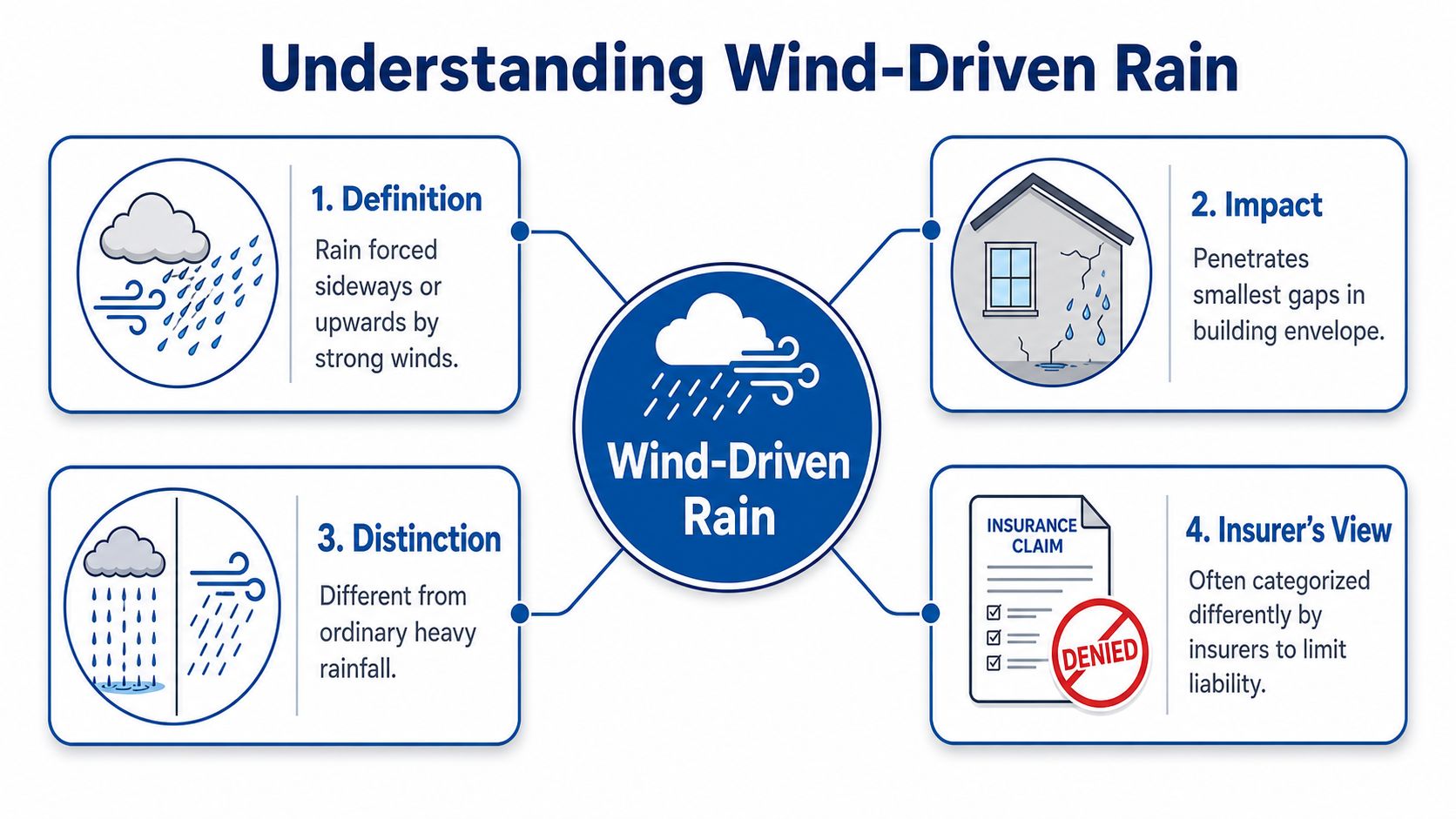
Wind driven rain isn't just heavy rain. It's rain that gains force and direction from wind, which lets it hit walls, window assemblies, roof intersections, vents, and siding gaps at angles your house doesn't normally face.
That distinction matters because insurance companies like technical ambiguity. If they can blur the line between storm-created water intrusion and ordinary rain entering an old opening, they gain an advantage.
Wind changes the claim
Think of it this way. Ordinary rain falls and drains. Wind driven rain gets pushed. It can hit a wall surface hard enough to move behind cladding, through failed sealant lines, around window perimeters, and under roofing components.
In the southeastern United States, catastrophic wind-driven rain events often involve wind speeds exceeding 45 m/s (about 100 mph), which marks a threshold where these forces act as added loads on buildings and create water intrusion that insurers may try to misclassify as simple rain damage, according to the American Meteorological Society research on coincident wind and rain extremes.
That's the part homeowners need to understand. Wind isn't just part of the weather report. In these losses, wind is the force that turns rain into a covered claim argument.
Why carriers lean on confusion
Most policyholders aren't building-envelope experts. Carriers know that. They use technical language to make a straightforward storm loss sound uncertain.
Watch for these moves:
- They isolate the water from the storm: The adjuster talks about “rain entry” while ignoring wind pressure and storm conditions.
- They shift blame to upkeep: Old sealant, aging flashing, and prior repairs become the focus, even when the damage first appeared after the storm.
- They reduce the scope: They'll pay for interior paint touch-up and ignore the exterior breach that caused it.
- They act like no opening means no coverage: That argument often skips over the key question, which is whether wind conditions forced water through a vulnerable part of the building envelope during the event.
A useful outside reference on how building-related claims are assessed is Awesim's insurance claims guide. It's worth reading because it reinforces a simple point. Good claims analysis looks at cause, path, and full scope. Bad claims handling looks for the cheapest explanation.
The insurer benefits when the claim stays vague. You benefit when the damage path gets specific.
The Insurer's Playbook for Wind Driven Rain Claim Denials
Once you've seen a few of these claims, the pattern is obvious. The language changes a little, but the strategy doesn't.
The carrier wants to create doubt about cause, shorten the repair scope, and pressure you into accepting less than the property needs. That's the playbook.

The denial language is predictable
You'll hear some version of the same excuses over and over:
- “This was long-term seepage.” They say the damage developed over time, even when the staining, odor, and wet materials appeared after one storm.
- “This is wear and tear.” They point to age because age is easier to argue than storm causation.
- “The seals failed.” True maybe, but incomplete. The key issue is whether the storm forced water through that condition in a way that caused sudden interior damage.
- “Improper installation caused it.” That's a favorite when they don't want to pay for envelope failure.
- “It's flood, not storm intrusion.” If the water came from above or sideways under wind force, that's a completely different coverage argument from rising water.
Here's the hard truth. A lot of adjusters inspect to deny, not to understand.
To see how storm claim handling problems often unfold from the policyholder side, review managing your storm damage claim. The useful takeaway isn't the filing process. It's how quickly poor documentation and insurer framing can box a homeowner into a smaller claim.
Later in the inspection, video can help explain the bigger dispute about underpayment and denial:
Delay and low-ball are part of the strategy
Carriers don't always deny outright. Sometimes they delay until you're exhausted. Sometimes they issue a partial payment small enough to look helpful and inadequate at the same time.
That pattern isn't paranoia. Insurance companies like State Farm have been formally investigated by regulators, including a 2024 California Department of Insurance Market Conduct Examination prompted by a “significant” volume of complaints alleging unjustified delays and initial offers “substantially below the actual value of the claim,” as described in Daly & Black's review of the regulatory scrutiny.
When a carrier underpays early, it's often testing whether you know enough to push back.
The company is counting on three things. You need money fast. You don't have a complete scope. You'll mistake movement for fairness.
How to Find and Prove Hidden Wind Driven Rain Damage
The stain on the first floor may have nothing to do with the first floor. That's the trap.
A critical, often overlooked aspect of wind driven rain is hidden migration. Water can enter at high elevations, like roof penetrations or upper-wall openings, and show up lower in the building, which leads insurers to slap on a wear-and-tear label when the underlying cause was a storm breach higher up, as explained in MBM's analysis of wind-driven rain migration in buildings.
Follow the path, not just the stain
If you only photograph the ceiling bubble or wet baseboard, you're documenting symptoms. You need the route.
Start high and work down:
Roof edges and penetrations
Check around vents, flashing transitions, skylights, chimney intersections, and any area where wind could force water past a weak point.Upper-story windows and wall penetrations
Look for staining at corners, swollen trim, soft drywall, and signs of water tracking below the window line.Attic and roof deck
Use a flashlight. Look for darkened wood, damp insulation, rusted fasteners, or water marks on framing.Exterior wall systems
Inspect siding laps, lifted sections, failed joints, and trim transitions. Water often gets behind the visible finish before it appears indoors.
What to inspect before repairs start
You don't need fancy equipment to start building evidence. You need discipline.
- Take wide photos first: Show the room, then the wall, then the damage close-up. Context matters.
- Shoot video during active leaking if it's safe: The sound of wind outside and visible water movement can help frame timing.
- Mark the date and storm event: Save weather alerts, local news screenshots, and carrier communications in one folder.
- Check windows carefully: When seal issues are part of the dispute, it helps to understand how assemblies fail. A practical primer on aluminium window seal replacement can help you recognize where water may have been forced past deteriorated components.
- Inspect roof-related paths too: If the loss involves roof lift, displaced materials, or intrusion around roof-to-wall transitions, compare your findings with this guide to wind damage roof insurance claims.
Don't let the insurance company define the entry point for you. Trace the route yourself, or have someone do it who knows building failures.
The worst thing you can do is make cosmetic repairs before the cause is documented. Fresh paint is the enemy of proof.
Your Wind Driven Rain Claim Documentation Checklist
A weak claim file invites a weak decision. A strong one forces the carrier to answer evidence with evidence.
Use this checklist to build a file that's hard to brush aside.
| Item | Action Required | Why It's Critical |
|---|---|---|
| Policy documents | Pull the full policy, declarations page, endorsements, and any denial or payment letters | You need the exact coverage language and exclusions the carrier is relying on |
| Storm timeline | Create a dated timeline from storm event to first sign of damage to every insurer contact | Timing helps connect the loss to a specific event instead of “ongoing seepage” |
| Photo set | Take wide, medium, and close-up photos of every affected area, inside and outside | A complete visual record shows scope, location, and progression |
| Video evidence | Record active leaks, dripping, wet insulation, warped materials, and exterior problem areas | Video captures movement and conditions static photos can miss |
| Moisture spread notes | Write down where moisture appeared first and where it traveled later | Migration matters in wind driven rain losses |
| Exterior inspection log | Note roof penetrations, flashing concerns, siding movement, window perimeter issues, and visible gaps | The carrier will look for a reason to call it maintenance. You need your own record |
| Interior room list | Identify every room and component affected, including drywall, trim, flooring, insulation, and odor | Small early estimates often omit hidden or secondary damage |
| Temporary repair records | Save receipts, contractor invoices, photos before and after emergency mitigation, and tarp records | These support mitigation efforts and preserve the loss condition |
| Independent contractor input | Get written repair opinions and estimates that explain likely storm-related entry paths | A detailed outside scope can challenge a carrier's narrow estimate |
| Communication file | Save every email, letter, adjuster name, inspection date, and claim note | Carriers change personnel often. Your file must stay consistent |
What makes this checklist work
The value isn't in having a pile of documents. The value is in connecting four things clearly:
- The storm happened
- The damage showed up after it
- The water had a plausible storm-related entry path
- The repair scope is bigger than the carrier admits
If one of those links is missing, the insurer attacks the gap.
Fight Back Against a Lowball Offer or Denial
A denial letter isn't the final word. It's the carrier's position. Those aren't the same thing.
If the company low-balled the scope, blamed wear and tear without proving it, or ignored evidence tying the intrusion to a storm, push back in writing. Phone calls disappear. Written disputes don't.
Build a written dispute, not a phone argument
Your dispute letter should be simple and sharp.
Include:
- The claim number and property address
- The storm date and damage timeline
- The parts of the decision you dispute
- The policy language they're relying on, if they cited any
- Your photos, videos, contractor opinions, and repair estimate
- A direct request for reconsideration, supplemental payment, or full reversal
Don't rant. Don't guess. Don't bury the facts in emotion.
State your position plainly: the damage was caused by wind driven rain associated with a specific storm event, the carrier's scope is incomplete or wrong, and the decision should be changed based on the enclosed evidence.
If roof, siding, or building-envelope damage is part of the fight, it also helps to review this breakdown of a broader storm damage insurance claim. It's useful for framing the dispute around scope, causation, and underpayment rather than just “customer dissatisfaction.”
When the carrier crosses into bad faith territory
Insurers have obligations. They don't get to stall, underpay, and hide behind vague conclusions forever.
Under the Texas Insurance Code, which is often cited in bad faith claim discussions, insurers must pay claims quickly and fairly. A Texas jury found State Farm broke the law by underpaying a homeowner after storm damage, reinforcing that unjustified denials or underpayments can give policyholders grounds to appeal or pursue legal action, as described in Vargas Gonzalez Delombard's discussion of the State Farm verdict and bad faith standards.
If the carrier's explanation is thin, the scope is stripped down, and your evidence is being ignored, stop treating the dispute like a misunderstanding. Treat it like a claim fight.
That's usually the point where homeowners hit a wall. The company has adjusters, vendors, consultants, and legal backup. You have a kitchen table full of papers. If you're getting buried by the process, it's time to get professional representation.
How a Public Adjuster Wins a Wind Driven Rain Claim
A good public adjuster changes the battlefield. The issue stops being what the carrier says happened and starts becoming what the evidence proves.
That matters in wind driven rain losses because these claims aren't won by outrage. They're won by causation, scope, documentation, and pressure.

What changes when the homeowner stops fighting alone
Take a common scenario in Raleigh. A homeowner gets hit by a severe thunderstorm. Water shows up in the kitchen ceiling, around an upper-story wall, and near a window assembly. The carrier blames age and offers a cosmetic interior patch.
A serious claim review does more than look at the drywall. It traces entry points, checks roof-to-wall transitions, inspects upper elevations, documents moisture spread, and compares the insurer's estimate to the actual repair scope. That's how a “small leak” becomes what it really is. A storm-created building-envelope loss.
Public adjusters also know how insurers think. They know when the company is narrowing the scope on purpose. They know when “maintenance” is just a label slapped onto an underinvestigated storm claim. And they know how to package the file so the carrier has to respond to facts, not assumptions.
If you're still unclear on what that role is, this overview explains what is a public adjuster. The short version is simple. The insurance company has its adjuster. You can have yours.
Here's what policyholders usually gain from that move:
- A real scope of damage instead of a skimpy carrier estimate
- A causation argument built around evidence instead of adjuster opinion
- Direct negotiation support when the insurer stalls or underpays
- A cleaner claim file that's harder to deny, ignore, or discount
You don't need to become an expert in moisture migration, roof flashing, window assemblies, and policy interpretation just to get treated fairly. But if the carrier is playing games with your wind driven rain claim, you do need someone who already is.
If your insurer is blaming wear and tear, old seals, seepage, or “just rain” after a storm, don't accept that at face value. For The Public Adjusters, Inc. helps homeowners and business owners in North Carolina and Virginia dispute denied, delayed, and underpaid property claims involving wind, water, storm, and building damage. They represent policyholders, not insurance companies, and they know how to document cause, scope, and hidden migration issues that carriers often ignore. Have your water damage claim questions answered at NO COST. Call 919-400-6440 to speak with a licensed Public Insurance Adjuster or Contact Us here with questions. WE Work For YOU… NOT Your Insurance Company!