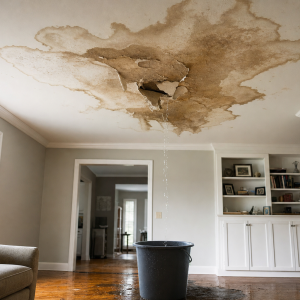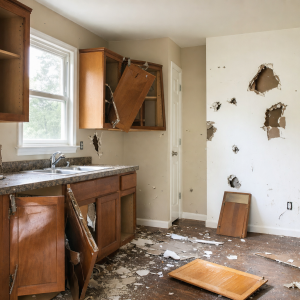

The storm stopped. Your fight did not.
You made it through the wind, the hail, the roof leak, the soaked drywall, the ruined flooring, and the panic of trying to keep more water out of the house or business. Then the insurance company picked up the phone and turned a property disaster into a paperwork war.
That is where most policyholders get blindsided. They think the hard part was surviving the storm. It usually is not. The hard part is proving the full scope of damage, forcing the carrier to acknowledge it, and refusing to let an insurer low-ball, delay, or deny a valid storm damage insurance claim.
Your Storm Damage Insurance Claim Nightmare Starts Now
The first call to the insurance company often sounds polite. It also tells you exactly what kind of fight you are in.
You report roof damage, water intrusion, or siding loss. The representative opens a claim, gives you a number, and starts talking about inspections, temporary repairs, and next steps. Then the tone shifts. Suddenly the questions sound less like help and more like screening. How old is the roof? Was there prior leaking? Have you had repairs before? Did you mitigate fast enough?
That is not your imagination. Carriers start building defenses early.

The storm is over but the pressure starts immediately
A homeowner in North Carolina or Virginia usually enters this process exhausted. The ceiling is stained. The insulation is wet. The fence is down. A contractor is saying the damage is worse than it looks. Meanwhile, the carrier wants neat answers before you have complete information.
If you need practical background on the first emergency steps after interior water intrusion, this guide on file an insurance claim for water damage is useful for understanding the immediate response side. But once the insurer starts minimizing the loss, you are no longer dealing with basic filing. You are dealing with dispute strategy.
Your insurer is not your advocate
State Farm, Allstate, and every other major carrier market trust. In a storm claim, trust is not the issue. Conflict of interest is the issue.
The company adjuster does not work for you. The desk adjuster does not work for you. The engineer the carrier hires does not arrive as a neutral ally. These people answer to the company paying them.
That matters because storm damage is rarely simple. Wind can lift shingles without tearing the whole roof apart. Water can travel behind walls before a stain appears. Hail can bruise roofing materials in ways the untrained eye misses. If the insurer controls the inspection, the scope, and the language used in the estimate, the insurer controls the narrative.
Key takeaway: The first version of your claim is usually the insurer’s version of your loss. If you do not challenge it, that version can become the whole case.
The claim gets framed before you know what happened
Most bad outcomes start with one of these insurer-friendly frames:
- Old roof story: They call storm damage aging.
- Maintenance story: They blame wear, tear, or deferred upkeep.
- Minor loss story: They admit some damage but shrink the scope.
- Excluded water story: They reframe obvious storm-related interior damage as something else.
When policyholders lose early, it is often because they let the insurer define the problem. Do not do that. In a storm damage insurance claim, the opening days shape the entire payout battle.
The Insurance Company’s Playbook for Denying Your Claim
Your carrier does not need to beat you with a full denial. It can win by shaving the claim, slowing the file, and forcing you to accept less than the property needs.
That usually starts with the first inspection.

The first inspection sets the trap
The carrier’s adjuster gets the first shot at defining the loss. If that inspection is narrow, the estimate stays narrow. If the estimate stays narrow, every later conversation gets dragged back to that low starting point.
I see the same omissions over and over. Missing roof slopes. No attic review. No detached structures. No line items for detach and reset. No permit costs. No code items. No serious effort to trace water from the point of entry to the interior damage. Then the desk adjuster treats that stripped-down scope like objective truth.
That is the play. Control the scope, then defend the scope.
If the company asks you for a recorded statement, a sworn inventory, or a formal loss package, treat every word like evidence. File a complete proof of loss with documentation that matches the actual scope of damage. Do not let the carrier define your numbers for you.
The denial language rarely changes
Carriers rotate adjusters, engineers, and vendors. The excuses stay familiar.
| Insurer tactic | What the carrier is trying to accomplish |
|---|---|
| Wear and tear | Push storm damage into an exclusion |
| Pre-existing damage | Break the link between the storm and the loss |
| Cosmetic damage | Pay for dents or marks while avoiding functional repairs |
| No storm-created opening | Reject interior water damage tied to wind-driven rain |
| Insufficient documentation | Shift blame to you after a weak inspection |
The ugliest move is the pre-existing damage argument. Roof claims get hit with phrases like “age-related deterioration,” “thermal cracking,” or “long-term condition” because those labels give the carrier cover to deny causation. That is why you need maintenance records, prior inspection reports, pre-storm photos if you have them, and a contractor or public adjuster who knows the difference between age and fresh storm damage.
Age matters, but carriers abuse that point. A roof can be older and still suffer covered storm damage. If the insurer starts talking about useful life, force the conversation back to storm-created damage and the condition of the system before the loss. Basic roof life expectancy context helps, especially if the carrier tries to turn normal aging into a blanket exclusion. See how long a shingle roof lasts and then compare that general lifespan discussion to the roof’s real pre-storm condition, maintenance history, and post-storm damage pattern.
Catastrophe claims give insurers more room to cut corners
After a major storm, volume becomes the excuse for bad claim handling. Files get rushed. Adjusters get reassigned. Inspections get shorter. Serious damage gets labeled minor because the carrier wants to close files fast.
Analysts at Cape Analytics cited North Carolina Department of Insurance data showing that after Hurricane Helene, 25% of homeowners’ claims were closed without payment. Read that number for what it is. A catastrophe does not make carriers more generous. It gives them more chances to under-scope, delay, and deny.
Delay is part of the strategy
A slow claim can be just as dangerous as a denied one.
The carrier asks for documents you already sent. It changes adjusters halfway through. It orders a reinspection after weeks of silence. It issues a small payment on one portion of the loss and leaves the expensive part unresolved. Meanwhile, your roof still leaks, your contractor wants a deposit, and you are the one carrying the financial pressure.
That pressure is not accidental. It is useful to the insurer.
Treat every delay as a sign that you need tighter documentation, written follow-up, and a stronger record. Storm claims are adversarial from the start. The policy gives you rights, but rights only matter if you push back before the carrier’s version of the loss hardens into the claim file.
How to Build an Unbeatable Evidence File
If you want influence, build evidence like you are preparing for a dispute, not a casual inspection.
Your evidence file should do two jobs. First, it must show what was damaged. Second, it must show what caused the damage. Those are not the same thing, and carriers exploit that gap every day.
Document the cause, not just the mess
A wet bedroom ceiling matters. But for claim purposes, the stronger evidence is often above it.
Show the lifted shingles, creased tabs, displaced flashing, punctures, broken seals, dented metal, impact marks, damaged vents, and water entry paths. The carrier wants to say “old leak.” You want proof that wind or hail opened the system and let water in.
Use this checklist:
-
Take timestamped video first
Walk the property slowly. Narrate what you are seeing. State the room, date, and damage location out loud. -
Use high-resolution photos from multiple angles
Shoot wide views first, then medium shots, then close-ups. Do not rely on one dramatic picture. -
Get roof visuals safely
Drone footage is useful for steep or unsafe roofs. It also helps show slope-by-slope conditions. -
Capture the inside and the outside
Exterior storm damage and interior water damage must connect. If you separate them, the insurer will too.
Policyholders who use timestamped videos, drone footage, and independent estimates can push back against the 60%+ of denials insurers tie to unverifiable damage after premature repairs, according to this storm claim documentation discussion.
Do not erase your own evidence
The biggest self-inflicted mistake is cleaning up too much before the loss is fully documented.
You should mitigate. You should not perform permanent repairs before the damage is properly captured and inspected. Tarp the roof. Dry the space. Move contents. Save damaged materials when practical. Keep every receipt.
Tip: Temporary protection supports your claim. Permanent replacement before proper documentation can destroy it.
Build a contractor file the insurer cannot brush off
Carrier estimates often come from software-driven assumptions, not full-scope reality. You need real-world counterweight.
Get independent estimates from reputable contractors. Ask for detailed line items, not just a lump sum. Roofing contractors, mitigation companies, interior repair contractors, and engineers all serve different purposes. One estimate is rarely enough in a serious dispute.
This matters even more when the carrier starts blaming age. If the insurer says your shingles failed because the roof was old, it helps to understand expected service life and material wear patterns. A practical homeowner resource on how long a shingle roof lasts can help you separate normal aging from storm-caused failure before the carrier twists the issue.
Inventory contents and business property with discipline
For homeowners, that means furniture, electronics, flooring, rugs, clothing, stored items, and anything else touched by water, debris, or contamination.
For business owners, include:
- Equipment
- Inventory
- Tenant improvements
- Furniture and fixtures
- Damaged records
- Affected operational spaces
Do not write “miscellaneous tools” or “office contents.” Be specific. Brand, model, age, condition, location, and damage type all matter.
Use a proof of loss carefully
At some point, the claim may require a formal proof of loss. That document is not filler. It is a sworn statement with consequences.
If you want to understand how that document fits into a disputed property claim, review this guide on https://forthepublicadjusters.com/blog/proof-of-loss/ before signing anything incomplete or inaccurate.
Hidden damage is where many claims are won or lost
Storm claims are full of damage that appears later. Wet insulation, attic saturation, trapped wall moisture, and subtle structural movement often do not show up during a fast insurance inspection.
That is why the best evidence files are layered:
- initial photos and video
- contractor findings
- moisture readings
- repair opening photos
- supplemental estimates
- updated damage narratives
Insurers like clean, narrow claim files. You need a claim file that is complete, ugly, and hard to ignore.
How to Fight a Low-Ball Offer and Dispute a Denial
The insurer’s first number is not the finish line. In many cases, it is bait.
In 80% of storm damage cases, the first offer is a low-ball, and policyholders who demand reinspection and submit supplemental evidence can beat offers that are often 40% to 60% below fair value, according to Stark Loss.

Read the estimate like the insurer hopes you will not
Most policyholders look at the total. You need to inspect the omissions.
Low-ball estimates often leave out:
- Full roof replacement logic
- Matching issues
- Overhead and profit
- Detach and reset items
- Permit fees
- Code-required upgrades
- Interior paint blending
- Insulation replacement
- Moisture-related demolition
If the carrier’s estimate says “repair” and your contractor says the assembly cannot be properly repaired, that dispute must be pushed directly. The insurer will not volunteer a better scope.
Demand a line-by-line explanation
Send a written request asking the carrier to explain every disputed item. Not generalities. Actual line items.
Use direct language:
“Please identify each damaged component you excluded, the policy basis for each exclusion, and the factual basis for limiting the scope to repair rather than replacement.”
That kind of request forces the adjuster to stop hiding behind vague conclusions.
Build a supplemental package, not an emotional complaint
Anger is understandable. It does not win claim disputes by itself.
A strong supplement usually includes:
- A rebuttal letter that identifies missing items and wrong conclusions
- Independent estimates with line-item detail
- Photos and video tied to each disputed area
- Expert support such as roofing analysis, moisture findings, or engineering input
- Policy references tied to the disputed coverage issue
That package changes the conversation from “I think your offer is unfair” to “your estimate is missing defined components and your causation decision is unsupported.”
Reinspection should be strategic
Do not ask for reinspection just to buy time. Ask when you have something new to show.
That could be hidden water damage discovered during tear-out. It could be contractor evidence that the roof system cannot be spot-repaired. It could be code issues the carrier ignored. It could be proof that interior damage tracks directly to storm-created openings.
If the original field adjuster missed obvious damage, ask for a different adjuster or a specialist.
What a successful dispute looks like
A storm claim turnaround usually happens because someone changed the evidence, the scope, or both.
Here is a common real-world pattern, without dressing it up as a miracle story. A homeowner gets an initial estimate that covers a fraction of the roof work and some cosmetic interior patching. Then a deeper inspection identifies additional roof damage, underlayment issues, wet insulation, and code-related items omitted from the first estimate. A supplemental submission follows. The carrier resists. A reinspection happens. The claim value moves because the original number could not survive scrutiny.
That is how many disputed storm damage insurance claims get corrected. Not through politeness. Through pressure, documentation, and persistence.
Dispute rule: Never argue only about the final dollar amount. Argue about scope, causation, code, materials, and omitted line items. The number changes after those change.
If the claim is denied outright
A denial is not the end unless you treat it like the end.
Read the letter carefully. Identify whether the carrier is denying based on causation, exclusion, documentation, or late notice. Then answer that exact reason with evidence. If they say wear and tear, rebut causation. If they say no storm-created opening, produce roof and interior linkage. If they say insufficient proof, submit the proof in organized form.
A denial that survives is usually the denial nobody challenged properly.
The NFIP Flood Claim Dispute You Can’t Afford to Lose
You walk into the first floor after the storm. The flooring is buckled, the drywall is soaked, furniture is ruined, and everyone involved starts pointing at someone else. Your homeowners carrier says flood. The flood carrier says only part of the damage qualifies. If you do not separate the claim fast, you get trapped in the gap between two policies.
NFIP claims are a different fight. They follow federal rules, tight documentation standards, and deadlines that insurers and Write Your Own carriers know far better than the average policyholder. They use that advantage.
Standard homeowners coverage will not save a flood loss
Flood is its own category. Rising water is generally handled under the National Flood Insurance Program, not under a standard homeowners policy.
That matters even more in storm-prone coastal areas. In Virginia Beach, storm surge risk puts many properties in play, and North Carolina saw over 58,000 hail claims in a two-year period, with average property damage claims exceeding $13,962, according to Policygenius homeowners insurance statistics. Flood losses are often harder to recover because NFIP coverage is narrower and the insurer gets more room to argue over what counts, what belongs to the building, and what gets excluded.
NFIP disputes are won or lost on technical points
Insurance companies count on confusion here. They know policyholders often submit a pile of photos, a contractor estimate, and a general description of damage. That is not enough in a disputed flood file.
Common pressure points include:
| NFIP issue | How insurers use it against you |
|---|---|
| Building versus contents | They shift items into the lower-paying or uncovered category |
| Direct physical loss | They interpret covered damage as narrowly as possible |
| Documentation gaps | They treat missing support as a reason to cut payment |
| Proof of loss errors | They use technical defects to stall, limit, or reject the claim |
A damaged lower level may look obvious to you. The carrier looks at line items, coverage definitions, elevation issues, and whether each item fits the policy form. That is how a major loss gets reduced on paper.
Mixed wind and flood claims are where carriers save money
This is one of the most dangerous claim setups in the business.
A storm creates roof damage, wind-driven rain, and rising water. The policyholder reports one disaster. The insurance companies split it into separate causes and start drawing hard lines. The homeowners carrier pushes damage toward flood. The flood side narrows payment under NFIP rules. If nobody forces a clean damage allocation with proof, the unpaid portion lands on you.
Do not hand them one vague story for a two-policy loss. Break out the timeline, the water path, the wind damage, and the damaged components by cause.
Flood dispute rule: If the loss involved both rising water and storm-created openings, document and argue each source of damage separately before the carriers turn that overlap into a denial strategy.
NFIP files punish delay and sloppy submissions
A weak flood claim gives the carrier exactly what it wants. Missing room-by-room support, unclear contents lists, bad measurements, and proof of loss mistakes make it easier to underpay you while sounding procedural about it.
If the flood side is minimizing damage, denying part of the loss, or hiding behind technicalities, review a detailed guide to handling disputed flood damage claims and build your file like you expect a fight. Because you should.
The right response is specific. Match every insurer excuse with records, photos, measurements, invoices, and a clear explanation of why the item is covered. That is how NFIP disputes get turned around.
Winning the Fight with a Public Adjuster on Your Side
The carrier inspector spends 20 minutes at your property, misses half the damage, and files an estimate that becomes the claim file’s foundation. From that point on, you are arguing uphill unless someone on your side rebuilds the record fast.
A public adjuster changes that fight because the insurer is no longer the only party inspecting, pricing, and interpreting the loss.

What a public adjuster does
A licensed public adjuster works for the policyholder, not the carrier. That changes the entire claim process. The inspection is done to find damage, not to limit it. The estimate is built to reflect real repair cost, not the insurer’s preferred number. The negotiation is tied to policy language and documented loss, not pressure to close the file cheaply.
A strong public adjuster will:
- Reinspect the property with a claim strategy in mind
- Document hidden, secondary, and code-related damage
- Prepare a line-by-line estimate the carrier has to answer
- Review the policy for coverage grants, limitations, and exclusions
- Handle insurer communication so your words are not twisted against you
- Demand supplements, expert review, and reinspection when the first scope is wrong
If you need a clear breakdown of the role, review what a public adjuster does for policyholders.
Public adjusters are built for carrier tactics
Insurance companies use patterns. They blame wear and tear. They call storm damage cosmetic. They say the roof was already failing. They narrow the inspection area and pretend whatever they did not inspect does not exist.
That is where policyholders get trapped.
A public adjuster answers those tactics with inspection detail, repair pricing, weather data, contractor support, photographs tied to location, and a claim presentation built around causation and coverage. If the carrier says the damage was pre-existing, the response cannot be frustration or guesswork. It has to be evidence organized well enough to expose the weakness in the insurer’s position.
That matters most when the insurer has already framed the loss the wrong way.
Early involvement cuts off bad insurer narratives
Policyholders often wait until after a low offer or denial. By then, the carrier has already set the tone of the claim. Its adjuster has picked the photos, chosen the measurements, and written the first version of events into the file.
That first version sticks.
The longer it sits unchallenged, the harder the fight becomes. Materials get discarded. Moisture changes. Temporary repairs blur what the storm did. Recorded statements are taken out of context. A public adjuster can still step in late, but early involvement gives you a cleaner file and fewer insurer excuses.
For example, For The Public Adjusters, Inc. is a licensed firm that represents homeowners and business owners in North Carolina and Virginia by inspecting losses, preparing estimates, documenting damage, and negotiating directly with carriers. That is the kind of help policyholders need when the carrier’s scope is incomplete or its valuation is built to save money.
Why policyholders trust outside help
Storm claims wear people down. The carrier knows that. Delay is not just a timeline problem. It is a pressure tactic. Confusing letters, partial answers, and underwritten estimates are often designed to make you accept less and move on.
A good public adjuster slows that down and forces the insurer to deal with specifics.
This video gives a sense of that policyholder-side perspective in practice.
Public adjusters matter because they know how claims are cut down. They know where scope gets trimmed, where depreciation gets abused, where exclusions get stretched, and where unsupported denials can be pushed back hard. They turn a frustrated policyholder into a documented claim position the carrier has to confront.
Bottom line: If the insurer has trained professionals protecting its payout, you should have a trained professional protecting your claim.
Take Control and Get the Money You Are Owed
Your policy is a contract. It is not a favor. It is not charity. It is not something the insurance company gets to reinterpret every time a storm hits your property.
If your storm damage insurance claim has been delayed, underpaid, or denied, stop treating the carrier’s first answer like the final word. Challenge the scope. Challenge the causation decision. Challenge every omission in the estimate. Force the company to justify its position in writing.
The pattern is clear. Carriers shrink claims by narrowing inspections, blaming age, using technical exclusions, and making offers that do not reflect the cost to repair or rebuild. Policyholders recover more when they answer that with evidence, independent estimates, and disciplined dispute strategy.
Do not hand the insurer an easy file.
Build the record. Keep receipts. Preserve photos and video. Ask direct questions. Demand itemized explanations. If flood is involved, get even more careful because the rules are less forgiving. If the claim keeps going sideways, bring in someone who deals with this every day.
You paid premiums for coverage. You have every right to demand the full benefit of that bargain.
Q2: How can I tell if the roof damage on my home was caused by hail versus normal wear and tear?
A: Hail damage is characterized by randomly scattered dents or strikes that chip the shingle granules or leave soft spots. Normal wear is typically uniform across the entire roof slope. An independent inspection by a Public Adjuster or licensed contractor will provide definitive proof.
Q3: How much time do I have to file an insurance claim after a major wind or hurricane event?
A: While most policies require you to report the claim promptly, the deadline for filing the final claim documentation (like the Proof of Loss) can vary by state, often ranging from 1 to 3 years after the storm date. Consult your policy or a Public Adjuster for the specific timeline.
Q4: What is "matching" coverage, and how can I fight my insurer if they refuse to replace all my siding?
A: Matching coverage requires the insurer to replace undamaged sections of materials (like siding or shingles) if the damaged sections cannot be perfectly matched, often due to color fading or discontinuation. You fight this by citing the "Reasonable Repair" section of your policy.
Q5: How does a Public Adjuster prove the full scope of wind damage when the insurer only wants to pay for minor repairs?
A: A Public Adjuster brings in independent structural engineers and roofing consultants to conduct invasive inspections and use drone technology to document all damage, submitting a full scope of loss that the insurer's low estimate cannot logically dispute.
Q6: My insurance company is only offering Actual Cash Value (ACV). How do I get the full Replacement Cost Value (RCV)?
A: Your policy likely pays ACV upfront. To get the remaining RCV (depreciation amount), you must complete the repairs and submit receipts showing the actual cost to rebuild or replace the property. A Public Adjuster helps manage this RCV recovery process.
Q7: What should I do if my hurricane damage claim is denied because the insurer claims it was flood damage?
A: This is a complex "Wind vs. Water" dispute. You need a Public Adjuster and a forensic engineer to prove the damage (e.g., roof tear-off) occurred due to wind before the floodwaters arrived, ensuring your standard homeowner's policy pays the wind portion.
Q8: Can the insurance company deny my entire roof claim if they find evidence of previous, unrepaired damage?
A: They can try to limit payment, but a Public Adjuster counters this by arguing the current storm caused new, separate damage, or that the new damage was compounded by the old, forcing the insurer to pay the costs associated with the most recent covered event.
Q9: How does a Public Adjuster stop the insurer from delaying my storm damage claim for months?
A: A Public Adjuster immediately takes control of all communications, establishes an aggressive timeline, and leverages state regulations (like the Fair Claims Settlement Practices Act) to hold the insurer accountable to processing deadlines.
Q10: Can I get money for living expenses (ALE) if my home is uninhabitable after a major storm?
A: Yes, if the storm damage is from a covered peril and forces you out, your policy's Additional Living Expense (ALE) coverage will pay for reasonable and necessary extra costs like temporary housing and increased food expenses while your home is under repair.
If your homeowner, dwelling, or business property claim is being low-balled, delayed, or denied, get experienced help before the insurer locks in its version of the loss. For The Public Adjusters, Inc. provides policyholder-side claim reviews, damage documentation, estimate preparation, and negotiation support for storm, wind, hail, water, and flood-related property disputes in North Carolina and Virginia.