The words that cost you thousands in a storm claim fight start getting spoken before you even realize the fight has begun. The storm passes, the roof is leaking, the drywall is stained, your business or home is upside down, and then the adjuster calls. It sounds like progress. It isn't. It's the opening move.
The company adjuster works for the insurance company. Their file notes, estimate, and early impressions often become the foundation of the insurer's settlement position. Guidance aimed at policyholders repeatedly warns that recorded or written statements can fuel coverage disputes, delays, and reduced settlement value, especially when people speculate, guess, or speak casually before the damage is fully inspected, as explained in this insurance adjuster statement guidance.
That means every throwaway line matters. "I'm fine." "It's probably old." "It's not that bad." "I'll just take the check." I've seen those phrases come back later as excuses to narrow scope, challenge causation, and push a low-ball offer.
Regarding what not to say to a storm claim adjuster, you don't need polite theory. You need defensive language that protects your claim, keeps the file clean, and stops the carrier from boxing you in before you know the full loss. Use this guide that way.
Table of Contents
- 1. "I'm okay, we're all safe."
- 2. "I think the damage started…"
- 3. "It's not that bad," or "I only see a few spots."
- 4. "I don't have receipts for everything."
- 5. "My contractor can talk to you."
- 6. "Yes, you can record this statement."
- 7. "I'll take whatever you're offering; I just want this to be over."
- 7 Phrases to Avoid with Storm Claim Adjusters
- Your Next Step: Get a Free Claim Dispute Consultation
1. "I'm okay, we're all safe."
That sounds harmless because in normal life it is. In a claim, casual words become file notes. Once they're in the file, they don't disappear.

If your storm claim involves a home, rental dwelling, or business property, keep the conversation centered on property damage unless you've deliberately chosen to discuss something else with proper advice. The adjuster may sound sympathetic. Fine. Sympathy isn't coverage. Their notes can still frame the rest of the claim.
Say a tree hits your house in Raleigh or wind-driven rain gets into a commercial roof in Norfolk. On day one, you may not know the full condition of the property, the contents, or whether moisture migrated behind walls. You also may not know what stress, displacement, or interruption has done to the household or business. That's why you don't volunteer broad comfort statements that make the loss sound closed before the investigation has even started.
What to say instead
Use language that's clean and controlled.
- Keep it property-focused: "Everyone is accounted for. I'm calling about the building damage and contents damage."
- Leave room for inspection: "We're still assessing the full impact of the storm."
- Refuse to summarize too early: "I don't want to make broad statements before the property is fully inspected."
Practical rule: Don't give the adjuster a neat little sentence they can drop into the file to make the loss sound minor.
This matters even more after water intrusion. A ceiling stain is easy to see. Wet insulation, compromised sheathing, soaked inventory, and hidden interior damage are not. If you're dealing with storm-related water exposure, this winter pipe protection guide is about prevention, but it also reminds homeowners how quickly water problems spread beyond the obvious surface.
Why adjusters like casual reassurance
Because it lowers the temperature of the file. "Insured says they're okay, damage appears limited" is the kind of early framing that helps justify a narrow estimate later. You don't need to be rude. You do need to be disciplined.
A better approach is simple. Confirm access. Confirm the date of loss if you know it. Confirm the damaged areas you can identify. Then stop talking.
2. "I think the damage started…"
Many people wreck their own claims. They try to be helpful, and they start guessing. Bad move.
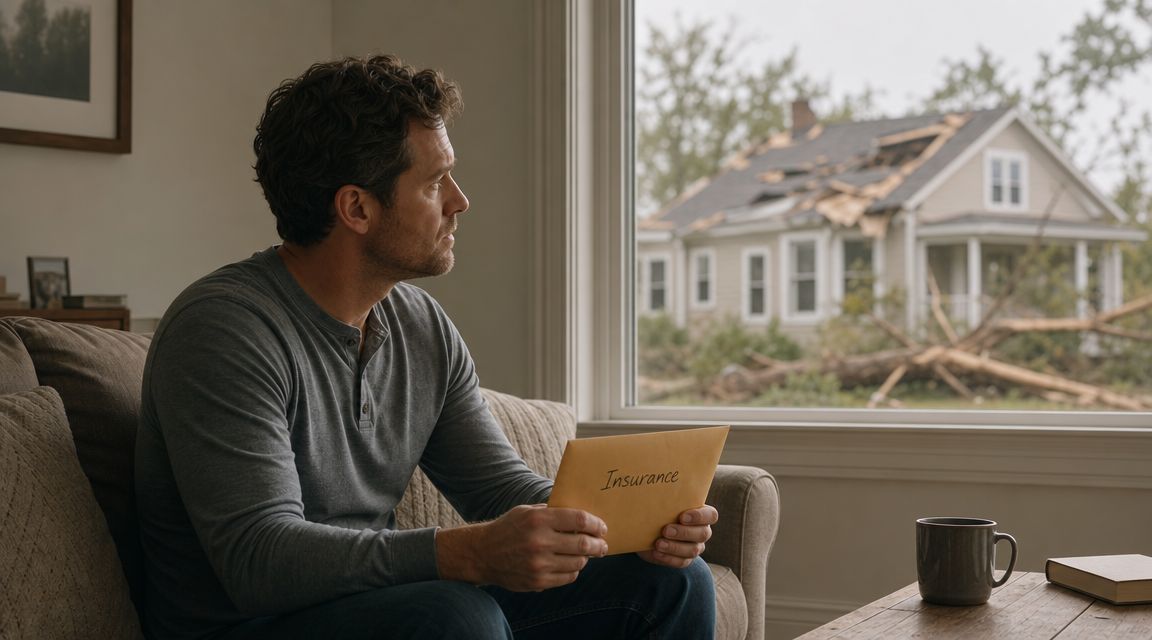
Storm losses live and die on cause, timing, and scope. If you say, "I think it started a few weeks ago," or "It was probably from old wear," you've just handed the carrier language it can use to argue the damage wasn't caused by the reported storm at all. Legal guidance aimed at claimants warns against statements like "it was probably rotted" or "I should have noticed," because speculation about cause can be used to challenge coverage or reduce value, as noted in this guidance on what not to say to an adjuster.
In North Carolina and Virginia storm claims, this gets ugly fast. Hail, wind, torn shingles, lifted flashing, and water intrusion can overlap with pre-existing wear arguments. The insurer already knows that. You don't need to help them build that defense.
Better language for timeline and cause questions
Use one of these instead:
- When asked when it started: "I noticed the damage after the storm, and the property still needs full inspection."
- When asked what caused it: "I'm reporting storm-related damage. I want the cause and scope confirmed through inspection."
- When asked how long it's been there: "I won't guess about duration until the damaged areas are evaluated."
Don't speculate about cause, age, or prior condition. If you don't know, say you don't know and that you need inspection.
That last part matters. A lot of articles on what not to say to a storm claim adjuster tell you not to guess, then stop there. That's lazy advice. You need substitute language that keeps you cooperative without surrendering the issue.
For homeowners dealing with flood claims
If the loss involves actual flood rather than a standard homeowners storm claim, the rules and coverage issues are different. Those disputes often involve NFIP or Write Your Own carriers, and the wording around direct physical loss and documentation can become even more rigid. Don't blend a flood explanation into a wind claim explanation or vice versa. Keep the cause description narrow until the facts are documented.
A homeowner says, "I think the roof was already getting weak." That one sentence can haunt the file for months. Don't give them that sentence.
3. "It's not that bad," or "I only see a few spots."
That's optimism talking. Optimism is expensive in a property claim.
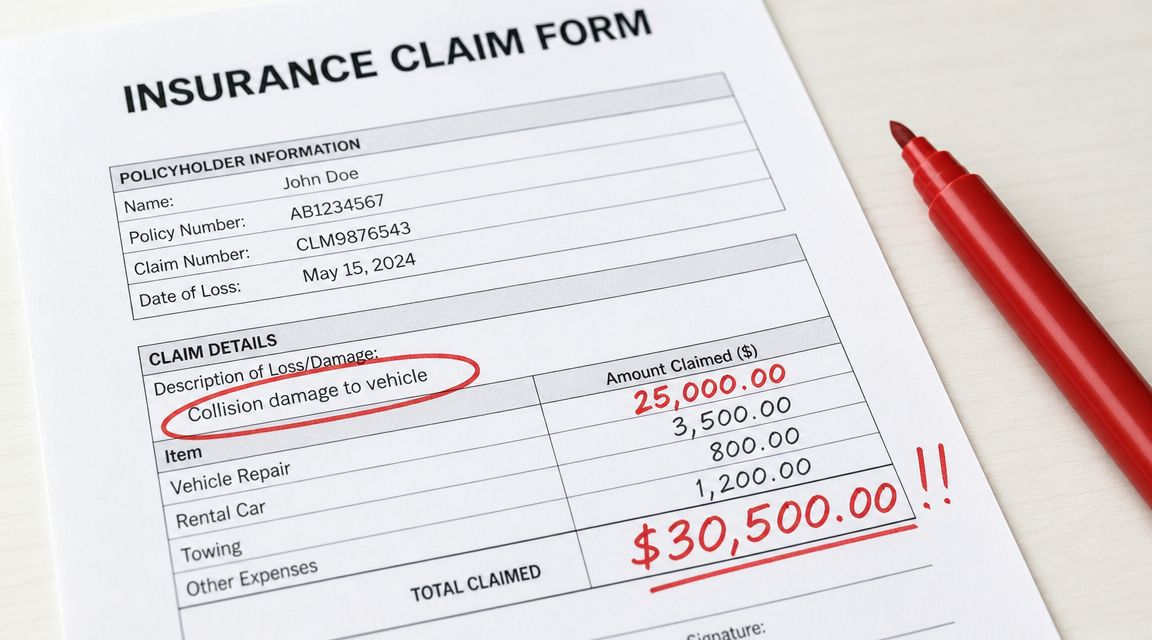
Storm damage rarely stays politely on the surface. A few water spots can mean saturated insulation, soaked subfloor, trapped moisture in wall cavities, damaged sheathing, compromised flooring, or business personal property that starts failing later. When you minimize visible damage during the first call or first inspection, you make it easier for the insurer to write a small estimate and act like the rest is your problem.
The hard truth is that the first adjuster conversation often shapes the rest of the file, and the adjuster's estimate often becomes the base for the carrier's settlement position, according to this storm-claim communication warning. That's why early minimization is such a gift to the other side.
Hidden damage is where claims get cut down
Think about the usual post-storm scene. You see a ceiling stain in one room, but the attic hasn't been thoroughly checked. You see a few missing shingles, but no one has tested for moisture migration. You see wet carpet, but not the swelling under baseboards or damage behind cabinets.
That isn't paranoia. That's ordinary property loss reality.
- Visible damage isn't full damage: Surface stains rarely tell the whole story.
- Water moves: It follows framing, insulation, and gravity into places you can't see on day one.
- Estimates harden fast: Once the carrier writes a narrow scope, every supplemental request becomes a fight.
What to say instead
Try this language:
"I can identify visible damage today, but I won't minimize the loss before a full inspection."
Or this:
"I'm seeing some obvious storm damage, and there may be additional hidden damage that hasn't been documented yet."
If you're a business owner, apply the same rule to stock, equipment, tenant improvements, and downtime-related property issues. Don't tell the adjuster the damage is light because the lobby "doesn't look too bad." Commercial losses often spread behind walls, above ceilings, and across systems.
Don't diagnose the loss with your eyes alone. That's how underpayments get born.
4. "I don't have receipts for everything."
Lying isn't the common practice. That's not the problem. The problem is blurting it out like a confession.
In contents and business personal property claims, the carrier wants gaps. Gaps make room for depreciation fights, value disputes, and low lump-sum offers. If you announce right away that your records are incomplete, the adjuster hears an advantage.
That doesn't mean you fake certainty. It means you don't start by weakening your own proof. Start with what exists and build from there. Photos, videos, bank statements, contractor invoices, serial numbers, warranty registrations, owner manuals, store accounts, inventory logs, and prior real estate listing photos can all help reconstruct ownership and condition.
Replace the apology with a process
Say this instead:
- For household contents: "I'm gathering documentation and will supplement the inventory as I go."
- For business property: "We're compiling records for damaged equipment, furnishings, and stock."
- For missing proof: "Some items will require reconstruction from photos, statements, and other records."
That answer tells the adjuster you're organized, not defeated.
Why this matters financially
The stakes aren't theoretical. One independent agency notes that public adjusters commonly charge about 10% to 15% of the claim settlement, which underscores how much claim value can swing based on early presentation and whether the insurer discounts the loss from the start. The same discussion notes that hidden storm damage and staged document requests can stretch the process, which is exactly why you don't casually understate or under-document what was lost.
Claim reality: The file gets built from the first conversations and the first documents. Weak presentation invites a weak payment.
A restaurant owner after a wind event might not have every purchase receipt for shelving, small appliances, decor, and dry goods. Fine. The right response isn't, "I don't have proof." The right response is, "We're assembling the records and will submit the support we have, then supplement."
That's how you protect value.
5. "My contractor can talk to you."
Your contractor should absolutely discuss repairs, scope, and construction realities. Your contractor should not become your accidental claims spokesperson.
A roofer knows roofing. A mitigation company knows drying. A general contractor knows rebuild sequencing. None of that means they know your policy language, your endorsements, your proof obligations, or the traps buried in claim communications. If the contractor casually agrees that something is "maintenance," "old damage," or "not part of this loss," you've got a new problem.
Contractors and claim roles aren't the same
I've seen this play out over and over. The adjuster asks a contractor a friendly-sounding question about whether all the slope damage is storm related. The contractor answers too fast. Now the file contains a limitation the policyholder never intended to make.
Use your contractor as a fact witness about repairs and damage they personally observed. Don't use them as a substitute for your own claim strategy.
- Let contractors discuss construction: Materials, code issues, access, repair method, and visible damage.
- Keep coverage statements for yourself or your representative: Cause opinions, policy interpretation, scope disputes, and settlement positions.
- Stay in the loop: Ask to be copied on emails and present during site meetings.
What to say instead
Say, "My contractor can discuss repair issues and observed damage, but I will handle claim decisions and communications."
That's clean. It sets a boundary. It stops the adjuster from turning a jobsite conversation into a coverage shortcut.
If you're already seeing a gap between what the carrier wrote and what the building needs, learn more about what a public adjuster does. That's the role built for documenting, valuing, and negotiating the claim from the policyholder's side.
A contractor helps rebuild the property. A public adjuster helps build the claim.
For commercial properties, this distinction matters even more. A contractor may know the roof system, storefront, or tenant buildout. They usually aren't the person who should negotiate policy benefits, business personal property, or disputed line items with the carrier.
6. "Yes, you can record this statement."
No. Slow down.
Recorded statements are one of the most common pressure points in a storm claim. The adjuster makes it sound routine, harmless, and necessary. Usually, it's useful to them, not to you. Guidance aimed at homeowners repeatedly warns that recorded or written statements can become the basis for disputes over causation, timing, consistency, and value, especially when the claimant isn't fully prepared, as explained earlier in the cited adjuster-statement guidance.
What they're trying to lock in
A recorded statement freezes your words before you know the full loss. That's the whole game.
You haven't had the roof fully inspected yet. You haven't opened every wall cavity. You don't know whether flooring is salvageable. You don't know if attic insulation is wet, if HVAC components were affected, or if the commercial space has concealed damage above the ceiling grid. But now they want a permanent recording of your "understanding" of the loss.
That's backwards.
Better responses when the adjuster asks
Use direct substitute language:
- Recorded statement request: "I'm not agreeing to a recorded statement at this stage."
- Premature detail request: "I need time to inspect, document, and review the damage before answering detailed questions."
- Estimate pressure: "I won't guess at repair cost before qualified inspection and documentation."
This isn't being difficult. It's being smart. The practical gap in a lot of storm-claim advice is that it says "don't guess" but doesn't give you language to use when the pressure starts. This is the language.
Response script: "I'm cooperating with the claim, but I need the property fully inspected and documented before giving detailed statements."
If the carrier escalates and starts using more formal claim tools, understand the difference between an informal recorded statement and an examination under oath. They are not the same thing, and you shouldn't treat them like they are.
For NFIP flood claims, be even more careful. Those files can turn brutally technical, and loose wording about cause, timing, and scope can create avoidable disputes. Recorded statements in any property loss should be treated as strategic events, not casual chats.
7. "I'll take whatever you're offering; I just want this to be over."
That's exactly what a worn-down carrier wants to hear.
Storm claim disputes often turn into a war of attrition. The insurer asks for one more document, then one more clarification, then one more inspection window, then sends a thin estimate and waits to see if you're too exhausted to fight. If you signal that you're done resisting, the low-ball phase gets easier for them.
Why this sentence is so dangerous
The moment you act desperate to close, you lose your advantage. The claim stops being about the actual cost to repair, replace, and restore covered damage. It becomes about your tolerance for hassle.
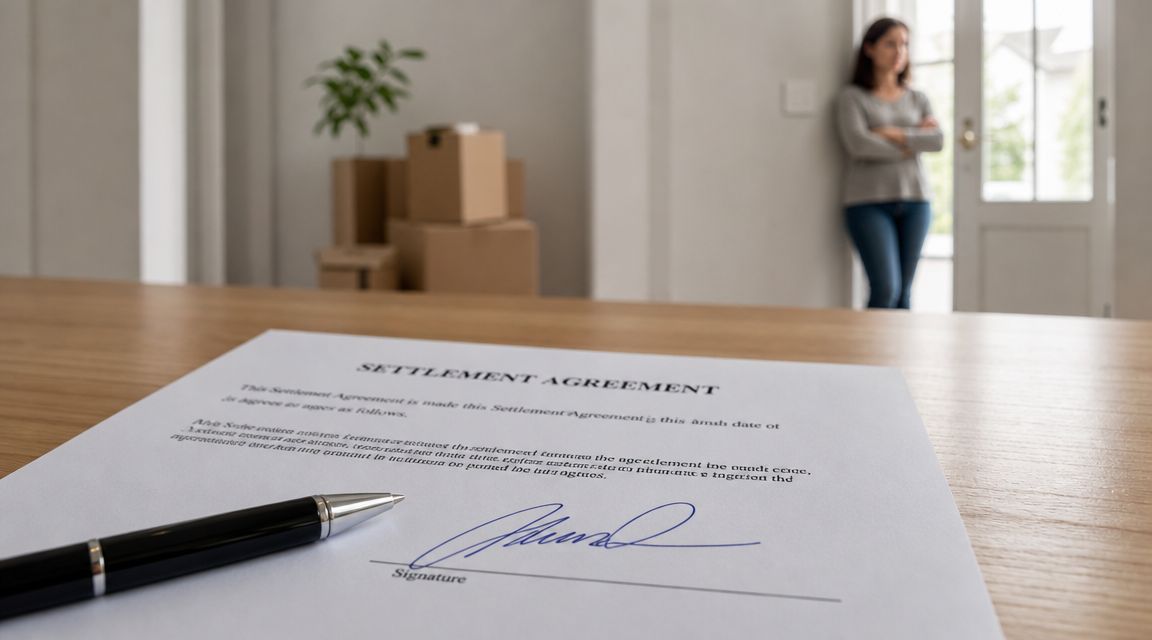
And once you sign a release, influence drops sharply. That's one of the most important procedural realities in property claims. If the payment is wrong and the paperwork closes out the dispute, your ability to push for more can shrink fast.
What to say instead
Try one of these:
- If the offer feels rushed: "I'm reviewing the estimate and comparing it to the documented damage."
- If you're exhausted: "I want this resolved correctly, not quickly."
- If they push settlement language: "I'm not accepting payment terms until the scope and valuation are fully reviewed."
That last sentence has saved a lot of people from bad settlements.
A homeowner in Virginia gets an estimate that covers patching part of a roof, some ceiling paint, and little else. Meanwhile, their contractor sees broader storm damage, interior moisture issues, and code-related repair needs. If the owner says, "Fine, just send the check," the insurer has little reason to revisit anything.
You don't need fast money that leaves you paying the rest out of pocket.
Before accepting a payment, make sure you understand the difference between actual cash value and replacement cost. A lot of policyholders think the first number is the whole claim. It often isn't.
If the claim has stalled because you're tired, that's the moment to get help, not surrender.
7 Phrases to Avoid with Storm Claim Adjusters
| Statement | Risk/Impact 📊 | Mitigation Complexity 🔄 | Resources/Speed ⚡ | Expected Outcome ⭐ | Practical Tip 💡 |
|---|---|---|---|---|---|
| "I'm okay, we're all safe." | Can be recorded to deny later physical/emotional claims; high evidentiary risk. | Low, adopt a property-focused script immediately. | Minimal, one prepared phrase; immediate. | High, preserves ability to pursue later medical/psych claims. | Say: "I'm focusing on the property damage; not discussing personal condition." |
| "I think the damage started…" | Speculation can misattribute cause (e.g., flood vs wind) and trigger denial. | Moderate, consistently defer cause to experts. | Moderate, document visible facts and obtain professional assessment. | High, avoids misclassification of peril and coverage denials. | Stick to observable facts and state you'll rely on professional determination. |
| "It's not that bad," / "I only see a few spots." | Downplaying reduces estimate and forfeits hidden/secondary damages. | Low, avoid opinions; use factual language. | Minimal, use prepared factual wording and photo documentation. | High, preserves right to supplemental claims for hidden damage. | Say: "This is the damage currently visible," and photograph thoroughly. |
| "I don't have receipts for everything." | Signals weak proof of loss and invites low lump-sum offers for contents. | Moderate, reconstruct inventory and proofs of value. | High, requires time to collect photos, statements, bank records, catalogs. | Medium–High, better settlement with reconstructed documentation. | Say you're compiling documentation and will submit records (photos, statements, online orders). |
| "My contractor can talk to you." | Contractor may accept limited scope or miss policy-covered items (code upgrades, matching). | Low–Moderate, allow estimates but retain negotiation control. | Minimal, provide contractor estimates but keep policy communications. | High, protects coverage negotiation and ensures full scope. | Provide the contractor's estimate but direct all coverage/settlement talk to you or your public adjuster. |
| "Yes, you can record this statement." | Recorded answers can be used against you; creates permanent legal record. | Moderate, decline informal recordings; consult counsel if required (EUO). | Minimal immediate effort to decline; potential high downstream legal effort if recorded. | High (if declined), maintains accuracy and control of your claim narrative. | Politely refuse and request written questions via email; consult a public adjuster/attorney before any formal recorded statement. |
| "I'll take whatever you're offering; I just want this to be over." | Accepting initial offer often means significant underpayment and forfeited future claims. | Low, request time to review and consult before accepting. | Moderate, may require professional review (public adjuster/contractor/attorney). | High (if resisted), preserves negotiation leverage and full recovery. | Respond: "I will review the offer and consult professionals before responding." |
Your Next Step: Get a Free Claim Dispute Consultation
If you're dealing with storm damage in North Carolina or Virginia, assume the claim file is being built around your words, your documents, and the insurer's first estimate. That's why what not to say to a storm claim adjuster matters so much. One careless sentence can turn into a causation dispute. One guess can become a delay. One rushed acceptance can become a permanent underpayment.
You don't need to out-talk the insurance company. You need to stop giving them usable language against you. Keep your answers short. Keep them factual. Don't guess about cause, timing, or cost. Don't downplay damage you haven't fully inspected. Don't hand over control of the claim just because the process is frustrating.
For homeowners, dwelling owners, and business owners, the smart move is to get the policy reviewed, the damage documented properly, and the estimate challenged when it's too low. That's especially true in storm claims involving wind, hail, hurricane damage, hidden water intrusion, roof disputes, and supplemental damage the carrier didn't include the first time.
If your loss involves flood, treat it as its own animal. NFIP and Write Your Own flood claims follow a different playbook than ordinary homeowners storm claims. The wording, documentation, and dispute process can be unforgiving. Don't casually blend flood facts into a standard property claim conversation.
The insurance company has trained adjusters, internal reviewers, preferred vendors, and a system built to protect its money. You need someone protecting yours. For The Public Adjusters, Inc. represents policyholders, not carriers, and helps homeowners and businesses evaluate damage, understand coverage, document the full scope of loss, and fight back against denials, delays, and low-ball offers.
If the adjuster is pushing a narrow scope, pressing for a statement, ignoring hidden damage, or trying to wear you down, get a second set of eyes on the file before you say anything else that can be used against you.Have your water damage claim questions answered at NO COST. Call 919-400-6440 to speak with a licensed Public Insurance Adjuster or Contact Us here with questions. WE Work For YOU… NOT Your Insurance Company!
For The Public Adjusters, Inc. is an independent, state-licensed public insurance adjusting firm serving homeowners and businesses across North Carolina and Virginia. If your storm claim has been delayed, underpaid, disputed, or pushed toward a low-ball settlement, their team can inspect the loss, document the damage, explain the policy, and negotiate directly with the carrier on your behalf.