
Your roof's tarped, the ceiling's still dripping, and the adjuster is already in your driveway with a tablet and a friendly smile. You're tired, you want this hurricane claim moving, and you say something casual just to keep the conversation going. That sentence goes into the claim notes, and it can shape your payout for months.
What not to say to a hurricane claim adjuster matters because adjusters work for the carrier, not for you. They're often kind, fast, and under pressure to close files after a storm in North Carolina or Virginia. You don't need to fight them, but you do need to separate what you observed from what you concluded about cause, cost, and coverage.
The seven traps below pair each risky phrase with how it can be recorded, a word-for-word replacement, and a documentation step that protects you. Use the scripts exactly as written until you've reviewed the estimate in writing. If the adjuster pushes for a quick yes, slows down, or denies part of the loss, that's the point where a licensed public adjuster should step into the conversation.
Table of Contents
- 1. Claim Help – Never Say Whatever You Offer Is Fine in a Low-Ball Hurricane Claim
- 2. Claim Dispute Alert – Stop Saying It's Only Cosmetic or The Roof Is Probably Fine
- 3. Denied Claim Warning – Don't Guess at Cause or Date of Damage During Hurricane Inspections
- 4. Claim Denied Risk – Never Say We Already Fixed It Before the Adjuster Inspects
- 5. Lowball Claim Fight – Don't Admit Fault or Say I Should Have Bought More Coverage
- 6. Claim Dispute Pitfall – Don't Give Your Own Repair Numbers Without a Contractor Estimate
- 7. Claim Help – Never Say I Don't Need Help or Let's Just Settle Before Reviewing Your Rights
- Quick Comparison
- Protect Your Claim Before the Next Conversation
1. Claim Help – Never Say Whatever You Offer Is Fine in a Low-Ball Hurricane Claim
Say a policyholder gets a call after a Category 1 storm and hears a number that sounds better than nothing. She says, "Yeah, that works." The adjuster records verbal acceptance. Weeks later she finds interior water damage behind a wall, but the first offer covered shingles only and she's now disputing a number she already agreed to.
That early yes is the low-ball trap. Hurricane damage spreads across roofs, siding, interiors, and contents, and first scopes routinely miss hidden damage. Agreeing before you've seen the line-item estimate signals you won't push back. Cashing a check marked final or full and final can make reopening the claim harder still.
Say this instead: "Thank you. I need to review the estimate and will respond in writing."
Request the complete estimate, scope of loss, and depreciation breakdown before you discuss acceptance. Keep a written log of every call with the date, time, adjuster's name, contact information, documents requested, and expected response date. That discipline matters because the J.D. Power 2025 U.S. Property Claims Satisfaction Study reported average property-claim timing exceeding 44 days from first notice of loss to final payment.
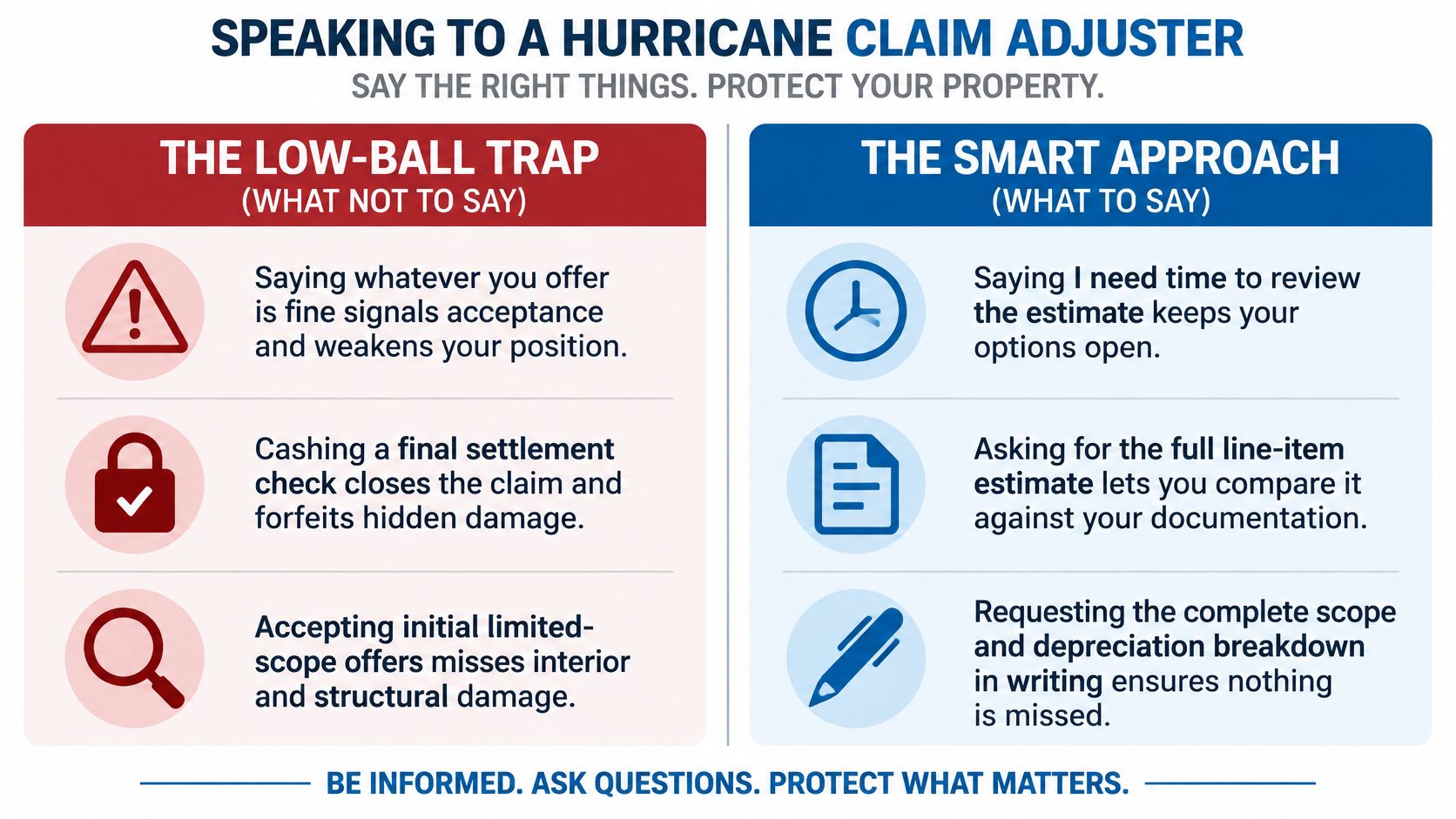
A homeowner who asked for everything in writing and brought in a public adjuster was able to add a documented skylight leak and ceiling damage the first offer excluded. That's the trade-off. Waiting a few days costs nothing. Accepting too fast can cost the repair. If you're preparing for that first conversation, review this guide to a hurricane insurance claim before the adjuster arrives.
2. Claim Dispute Alert – Stop Saying It's Only Cosmetic or The Roof Is Probably Fine
"It's just a little cosmetic." "I think the roof is mostly okay." Homeowners say this to sound reasonable. Adjusters hear minor damage, write a smaller scope, and close the inspection early.
Hurricane wind lifts shingles, breaks tab seals, creases metal panels, and drives rain into attics without obvious exterior signs. Missing shingles that look like no big deal from the ground can mean damaged decking and wet insulation above the ceiling. Once you've minimized it on the record, proving the full extent later takes a reinspection you shouldn't have needed.
Describe What You See, Not What You Think It Means
Use plain observation. "Three shingles are lifted on the east slope and the flashing is bent" protects you. "It's nothing" doesn't. Walk the adjuster to every area you suspect is damaged, including the attic, soffits, eaves, and underside of decking, and ask the adjuster to note suspected hidden damage for follow-up.

A coastal commercial owner who listed every damaged item during the inspection, including rooftop HVAC covers, got a scope that matched the documented loss. A homeowner who skipped the attic didn't. Take date-stamped photos and video before cleanup, then compare what you captured against this overview of roof damage from wind. For more on documenting storm loss step by step, see these insurance claim tips from Eagle Restoration.
3. Denied Claim Warning – Don't Guess at Cause or Date of Damage During Hurricane Inspections
"I think it happened during the storm." "It might have been there before." "The leak probably started last year." Each guess gives the carrier a causation argument built from your own words.
Most homeowners and dwelling policies cover sudden wind damage but exclude wear and tear, deterioration, and long-term leaks. If you speculate about timing, the adjuster can attribute damage to a pre-existing condition even when storm-created openings are right there. A policyholder who guessed a leak started last year faced a long-term seepage exclusion until dated photos and a prior inspection report proved otherwise.
Mixed-peril rooms are even riskier. Florida reported that flood exclusions accounted for 20% of Hurricane Helene claims closed without payment, according to the Florida Office of Insurance Regulation announcement on hurricane claim denials. If you tell the adjuster everything in a flooded room is flood damage, you've handed over the wind portion of that same loss.
"I observed water intrusion after the storm. I cannot determine whether the source was storm surge, rising water, roof failure, or wind-driven rain. Please inspect and explain the coverage decision in writing."
Ask for a component-by-component causation analysis rather than a blanket label for the whole room. Gather prior inspection reports, maintenance invoices, and older photos before the visit. If causation stays disputed, request the basis for any pre-existing damage finding in writing and ask about an engineer's report.
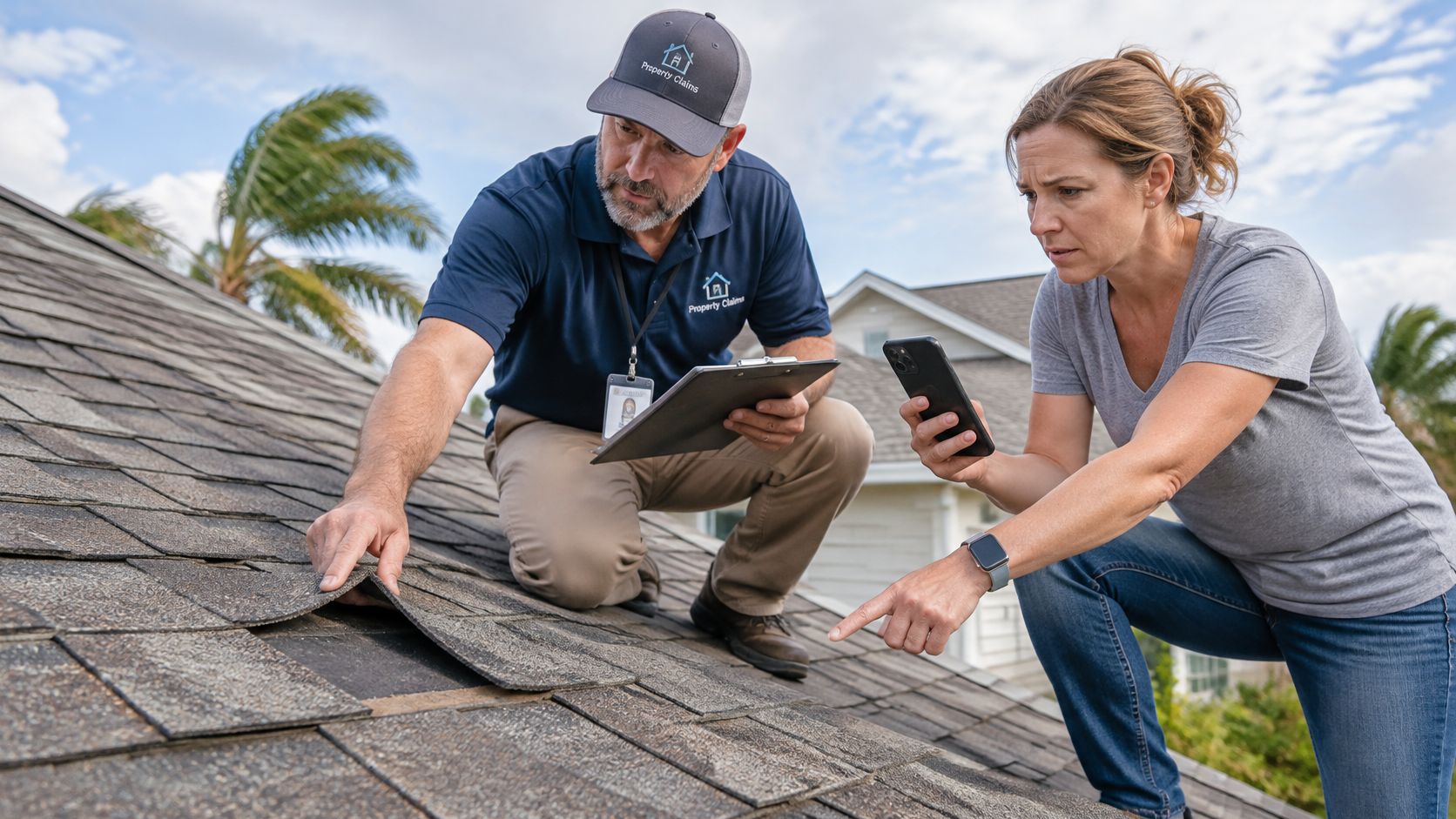
Saying "I don't know" is safer than inventing a cause. Staying silent about damage you did observe isn't. Report the facts, decline the conclusions.
4. Claim Denied Risk – Never Say We Already Fixed It Before the Adjuster Inspects
A business owner ripped out wet drywall and flooring the day after a storm, hauled it to the curb, and took no photos. When the adjuster arrived, the dispute wasn't about price. It was about whether the damage was storm-related at all, because the evidence was gone.
Your policy expects emergency mitigation and a reasonable chance for the carrier to inspect. Tarping a roof, extracting water, and running drying equipment protect the property from further loss. Permanent repairs before inspection do the opposite. They can give the carrier grounds to limit or deny payment for work it never saw.
For flood losses, FEMA's NFIP file your claim guidance requires photographs and videos showing structural damage, water levels inside and outside, and damaged contents before removal or disposal. That standard is smart practice on any hurricane claim, flood or wind.
What to Preserve Until Inspection Is Done
- Damaged materials: Keep removed shingles, flooring, and trim in a garage or covered area until the adjuster approves disposal.
- Labels and serial numbers: Photograph appliance plates and contents before anything leaves the house.
- Receipts and drying logs: Save every mitigation invoice, rental receipt, and contractor record.
- Written approval: Ask the carrier in writing before major demolition starts.

Use this script. "I completed only emergency mitigation to prevent further loss. The damaged materials and receipts are preserved, and I can provide dated photos and contractor documentation." A homeowner who photographed each step of tarping, drying, and demolition recovered the full mitigation and repair scope because the record matched the request.
5. Lowball Claim Fight – Don't Admit Fault or Say I Should Have Bought More Coverage
Frustrated people blame themselves out loud. "I should have replaced that roof years ago." "I know I underinsured the building." "We probably let maintenance slide." The adjuster doesn't hear honesty. The adjuster records neglect, deferred maintenance, and underinsurance for the coverage analysis.
A property owner who said the building was probably underinsured for years triggered a coinsurance reduction discussion even though an agent had reviewed the valuation at renewal. A homeowner who declined to speculate about maintenance and instead handed over invoices for regular roof inspections avoided a neglect argument entirely. Same storm, different record.
Your job during the inspection is narrow. Describe what happened, when you discovered it, and what was damaged. You don't evaluate your insurance decisions, apologize for the age of your roof, or grade your own upkeep. Those aren't facts about the loss, and volunteering them only narrows your claim.
If the adjuster raises valuation, coinsurance, or maintenance, don't improvise an answer in your driveway. Say, "Please send me the policy provisions you're relying on in writing, and I'll review them with my agent and public adjuster." Then pull your maintenance records, prior inspection reports, and renewal paperwork together before you respond.
Practical rule: Answer questions about the damage. Defer questions about coverage, valuation, and fault to a written review.
This isn't withholding facts. It's refusing to make admissions you aren't qualified to make. If the carrier wants to argue neglect or underinsurance, make it prove that from the policy and the evidence, not from a tired sentence you offered on day two.
6. Claim Dispute Pitfall – Don't Give Your Own Repair Numbers Without a Contractor Estimate
"It should cost about twenty thousand." "Whatever it costs to fix, I guess." A number you invent on the spot becomes an anchor. If it's low, the adjuster can accept it. If it's vague, the carrier's software fills the gap with its own pricing and you argue uphill from there.
Repair cost depends on local labor rates in your part of North Carolina or Virginia, current material pricing, code upgrades, and the complete scope, including hidden damage. After a hurricane, contractor demand surges and prices move. Without a written estimate, you're negotiating against a detailed carrier scope with a guess.
A homeowner who offered a rough figure found the carrier's pricing well below what local contractors charged. A detailed contractor estimate with local labor rates and code items closed much of that gap. On a hurricane-damaged commercial building, a public adjuster preparing a line-item estimate added overhead and profit and ordinance or law costs the carrier's first estimate omitted entirely.
Build Your Number on Paper First
- Contractor estimate: Say, "I will have a licensed contractor provide a written estimate for review."
- Carrier scope: Request the carrier's Xactimate or equivalent line-item estimate in writing.
- Missing items: Ask directly whether overhead and profit and code upgrade costs were included.
- Line-by-line dispute: Compare estimates side by side and challenge specific items, not the total.
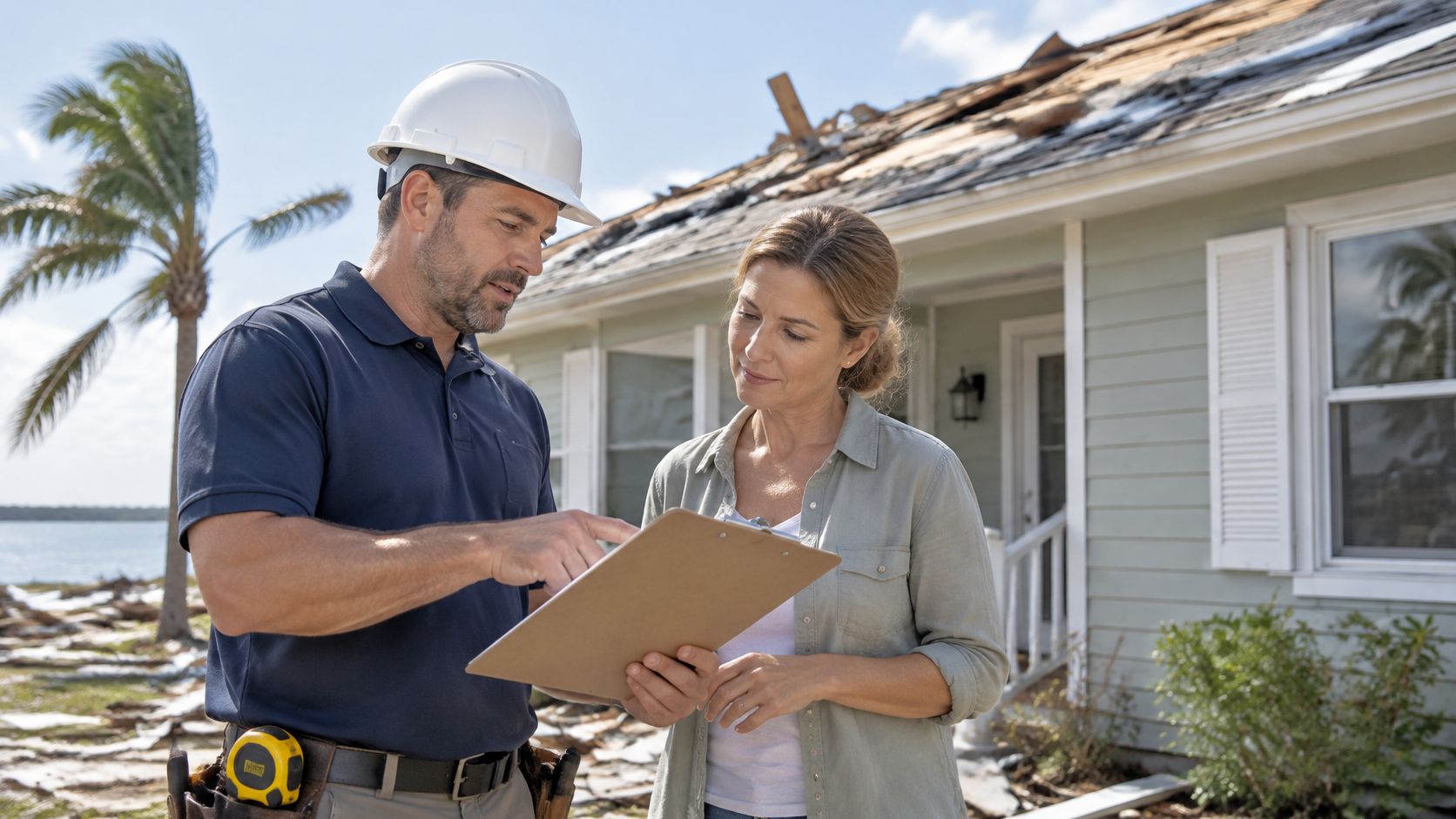
If the carrier's estimate still falls short after that comparison, a documented supplement is the next step, and this explainer on insurance claim supplements covers how that process works. Bring in a public adjuster when the gap turns on pricing, scope, or code items you can't verify yourself.
7. Claim Help – Never Say I Don't Need Help or Let's Just Settle Before Reviewing Your Rights
"I don't need help." "Let's just settle and be done." People say this because they're exhausted, not because they've reviewed their rights. That exhaustion leads to signing a proof of loss, appraisal waiver, or release without understanding what it does.
A business owner signed a sworn proof of loss the carrier prepared, without reviewing the amount, and later found it omitted covered business income losses under a business owner policy. A homeowner who hired a public adjuster after a hurricane denial got a roof reinspection, documented additional wind damage, and secured a revised payment through a formal dispute. Signing fast closed one claim. Reviewing first reopened the other.
Flood claims carry stricter formality. Under FEMA's NFIP claims guidance on proof of loss, the policyholder generally must submit a completed, signed Proof of Loss with supporting documentation within 60 days after the flood loss, unless FEMA grants an extension. It isn't an informal estimate. It's a sworn statement supporting the amount requested, and you must submit it even when you disagree with the adjuster's valuation.
If an NFIP claim is denied in whole or in part, FEMA's appeal guidance for NFIP policyholders gives you 60 calendar days from the date on the denial letter to submit a written appeal to FEMA. Discuss it with the adjuster first, escalate to the supervisor and the insurer's claims representative, then file the appeal with photos, itemized estimates, drying logs, and the adjuster's final report.
Say this before any signature. "Before I sign anything, I need to review it with my public adjuster." Calendar every deadline the day you receive it. Getting help isn't fighting your insurer. It's knowing what you're signing.
Quick Comparison
| Item | Primary Risk | Typical Impact on Payout | Documentation to Gather |
|---|---|---|---|
| Accepting a low initial offer | Verbal acceptance or signing a full-and-final release | Hidden or later-discovered damage may be excluded from recovery | Full line-item estimate, scope of loss, depreciation breakdown, call log |
| Minimizing damage during inspection | Comments may be used to justify a smaller damage scope | Hidden roof or interior damage may be underpaid or denied | Date-stamped photos and video, damage measurements, moisture or infrared inspection findings |
| Guessing the cause or date of damage | Speculation may support a pre-existing damage or exclusion argument | Coverage may be reduced or denied based on disputed causation or policy period | Prior photos, inspection reports, maintenance records, engineer's report if causation is disputed |
| Saying repairs are already complete | Removed materials or early permanent repairs may limit inspection evidence | Payment may be limited or disputed because the original damage scope is harder to verify | Pre-repair photos and video, mitigation receipts, records of removed materials, written carrier approvals |
| Admitting fault or underinsurance | Self-blaming statements may support neglect or coinsurance arguments | Payout may be reduced or subject to a coinsurance penalty | Maintenance records, prior inspection reports, declarations page, policy valuation and coinsurance provisions |
| Giving repair cost estimates without support | A guessed figure may anchor negotiations or be rejected as unsupported | Recovery may fall short of documented repair costs | Licensed contractor's written estimate, carrier's line-item estimate, code upgrade costs, overhead and profit details |
| Declining help or settling before reviewing rights | Signing forms or missing deadlines without understanding their effect | Additional recovery may be waived, delayed, or reduced | Policy and claim forms, proof-of-loss and response deadlines, release or waiver documents, professional review notes |
Protect Your Claim Before the Next Conversation
Hurricane claims are rarely lost in one dramatic moment. They're lost in ordinary sentences, a minimized roof, a guessed date, a thrown-away piece of flooring, a number offered without an estimate behind it. Each one becomes part of the file. Each one is hard to take back once the estimate is written around it.
Before the next adjuster visit, prepare a short script and stick to it. State when you discovered the damage, where water entered, what was visible, and what emergency work occurred. Decline to guess at cause, cost, coverage, or whether damage existed before the storm. A technically safer response is, "I observed these conditions on this date. Here are photos, videos, receipts, maintenance records, and contractor findings."
Then ask for what most policyholders never request. Citizens Florida reported the largest category of catastrophe complaints involved requested claim information, including status, documentation, denials, response times, and difficulty reaching an adjuster, in its Citizens Property Insurance Corporation committee minutes. Use a neutral written request. "Please confirm the claim number, assigned adjuster, inspection date, documents still needed, undisputed payment, covered and excluded items, applicable deductible, and the policy provisions supporting any denial."
Don't accept a denial or low offer verbally just to end a stressful call, and don't accuse an adjuster of bad faith without evidence. Preserve your communications log, keep damaged materials until inspection is complete, and get every coverage decision itemized in writing. That paper trail is what a dispute, appraisal, supplement, or FEMA appeal is built on.
For The Public Adjusters, Inc. is a state-licensed public adjusting firm serving homeowners and businesses across North Carolina and Virginia, representing policyholders rather than insurers on hurricane, wind, hail, fire, and water damage claims. Its adjusters provide no-cost claim reviews, inspections, scope and estimate preparation, and direct negotiation with carriers, including help with difficult NFIP flood claim disputes handled through FEMA or a Write Your Own company. Have your water damage claim questions answered at NO COST. Call 919-400-6440 to speak with a licensed Public Insurance Adjuster or Contact Us here with questions. WE Work For YOU… NOT Your Insurance Company!
If your hurricane offer is low, your damage is being blamed on wear and tear, or an adjuster is pressing you to agree before you've seen the estimate in writing, For The Public Adjusters, Inc. can review your claim file at no cost and tell you where the scope, pricing, or causation argument falls short. Bring your estimate, photos, and communications log, and get a licensed public adjuster on your side of the next conversation before you say yes to anything.