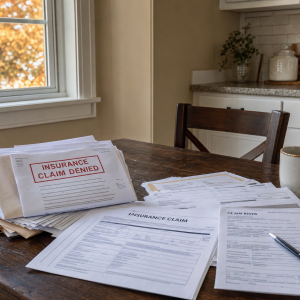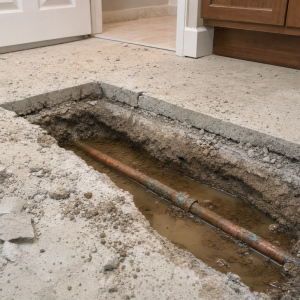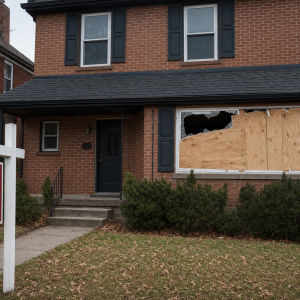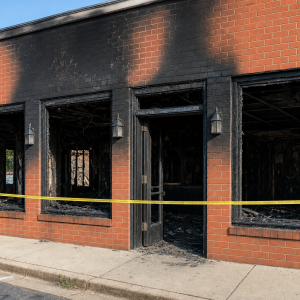
Getting a lowball offer on your hurricane insurance claim after paying your premiums on time, year after year, is like being hit by a second storm. It’s a gut punch.
You trusted your insurer—whether it’s a giant like State Farm or Allstate—to be there for you. Now, after a hurricane has turned your life upside down, you find yourself in a fight with the very company that was supposed to make things right. It’s a frustrating and all-too-common reality for home and business owners across North Carolina and Virginia.
Let’s be blunt: insurance carriers are businesses driven by profit. Their primary goal is to protect their bottom line, which often means paying you as little as legally possible. They send out their own adjusters—staff or “independent” contractors—who are trained to find reasons to minimize your payout. They’ll hide behind confusing policy language, argue that the damage was caused by uncovered perils, or just throw out a settlement that barely scratches the surface of what it will actually cost to rebuild.
You need to burn this into your memory: Your insurer’s first offer or outright denial is not the end of the road. It’s their opening shot in a negotiation you didn’t ask for but now must win.
Why Your Insurer’s First Offer Is Just a Starting Point
The insurance industry is under immense financial pressure. In a recent year, global insured losses from natural catastrophes soared to $137 billion, with hurricanes being a massive part of that bill. Major industry reports, like the global catastrophe research from Swiss Re, show these losses are growing by 5–7% annually.
That pressure trickles all the way down to how they handle your claim. Here’s what’s happening behind the scenes:
- Systematic Underpayment: Insurers use internal software and guidelines that automatically default to the cheapest materials and repair methods. This isn’t about what’s right for your property; it’s about what’s cheapest for their balance sheet.
- The Adjuster’s Allegiance: The company adjuster works for the insurance company, period. Their job is to close your claim quickly and for the lowest possible amount. They are not your advocate.
- The “Wear-Down” Strategy: Delays are not accidental. Endless requests for more documents and ridiculously low offers are calculated tactics. They know that many policyholders, exhausted and overwhelmed, will eventually just give up and take a fraction of what they’re truly owed.
To give you a better idea of what you’re up against, here’s a quick look at their playbook and how you can start fighting back.
Insurer Tactic vs Your Counter-Move
| Common Insurer Tactic | Your First Actionable Counter-Move |
|---|---|
| Claiming damage is from an uncovered peril (like flood). | Immediately hire an independent engineer or contractor to provide an expert report on the true cause of the damage. |
| Sending an endless stream of requests for documentation. | Create a single, organized digital file (e.g., in Google Drive) and share the link. Update it once and notify them. |
| Delaying communication and missing deadlines. | Send a certified letter documenting the delay and referencing your state’s “prompt payment” laws. |
| Using their preferred contractor’s lowball estimate. | Get at least two detailed, line-item estimates from your own trusted, local contractors to prove the real market cost. |
These are just the opening moves. Winning this fight requires a complete shift in your mindset.
Adopting the Right Mindset for the Dispute
You have to stop thinking of yourself as a storm victim and start acting like the CEO of your own recovery project. Right now. That means getting organized, being persistent, and being ready to prove every single dollar of your claim.
From this moment on, every email, every photo, and every receipt is evidence. It’s ammunition. The insurance company has a whole team of experts fighting for their interests. You need to build a case that’s so detailed and well-documented that they have no choice but to pay what they owe.
Our guide on how to appeal a denied insurance claim is a great place to start understanding the formal process. This is a battle you can absolutely win, but it demands a strategic, evidence-first approach to force the insurer to honor the contract you paid for.
How To Build An Undeniable Case Against The Insurer
When your insurance company lowballs or denies your hurricane insurance claim, they’re making a calculated bet. They’re betting you’re too tired, too stressed, and too uninformed to put up a real fight.
To win, you have to prove them wrong. It’s time to build a fortress of evidence so solid it systematically tears down every excuse they have for not paying you what you’re rightfully owed.
Let’s be clear: the adjuster your insurance company sends out works for them, not you. Their primary job is to protect their employer’s bottom line. They are trained to conduct quick, surface-level inspections that conveniently miss hidden damage, all to justify the lowest possible payout. Your job is to create a counter-narrative built on cold, hard facts.
Document Everything Meticulously
From this moment forward, you are the lead investigator on your own claim. Every single detail matters. The professionalism and thoroughness of your documentation will directly influence the size of your settlement check. The goal here is to leave absolutely no room for the insurer to argue.
Here’s where you start building that evidence file:
- Create a Master Communications Log: Grab a notebook or open a spreadsheet. Log every single phone call, email, and conversation you have with your insurance company. Write down the date, time, the full name and title of the person you spoke with, and a detailed summary of what was said. If they promise you something, immediately ask for it in an email. This creates a paper trail.
- Photograph and Video Everything (Again): Even if you took pictures right after the storm, do it again. Take hundreds of high-resolution photos and videos. Get shots of all damaged areas, both inside and out. Use a timestamping app on your phone for added credibility. When you take videos, narrate what you’re seeing—point out the damage and explain how it happened.
- Compile Pre-Storm Proof: This is your secret weapon. Dig up any photos, videos, or receipts that show what your property looked like before the hurricane. Holiday pictures showing your living room, the invoice from your new roof installation, or an old home inspection report can be gold. This evidence completely shuts down the common excuse that your damages were just “pre-existing issues.”
This infographic shows the typical path a claim takes when the insurer’s first decision isn’t in your favor.
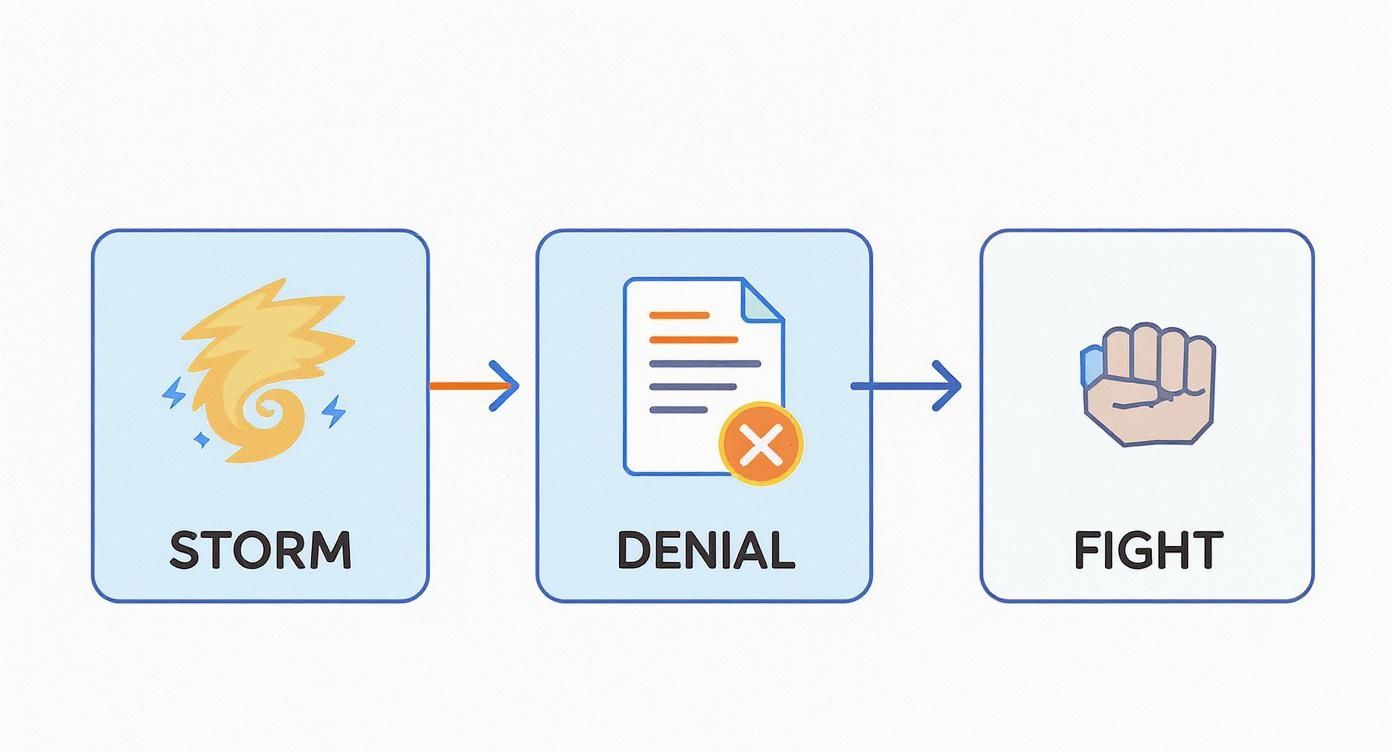
This visual drives home a critical point: a denial isn’t the end of the road. It’s the beginning of the real fight.
Develop A Detailed Damage Inventory
A vague list of “damaged stuff” is an open invitation for a lowball offer. You need to create a professional, room-by-room inventory that leaves no doubt about the true value of your loss. This is how you take control of the numbers, using today’s real-world costs instead of the outdated pricing software your insurer uses.
Walk through your property, room by room. For every single damaged item, document:
- Item Description: Be incredibly specific. Not just “TV,” but “Samsung 65-inch 4K Smart TV.”
- Manufacturer and Model Number: Get this information whenever you can find it.
- Age and Condition: Be honest about how old the item was and what shape it was in before the storm.
- Original Cost: Find receipts or pull up old credit card statements if possible.
- Replacement Cost: This is the most important part. Research the current price to buy the exact same or a comparable new item today. Include links to online product pages to prove it.
This detailed inventory becomes the bedrock of your counter-offer. It replaces the insurance company’s vague, often inaccurate assessment with a precise, verifiable accounting of what they owe you.
Get Your Own Independent Estimates
Never, ever accept the insurance company’s repair estimate at face value. It was almost certainly written by their “preferred” contractor—someone who has a financial incentive to keep repair costs as low as possible for the insurer.
You have every right to get your own estimates, and it’s one of the most powerful moves you can make.
Contact at least two or three reputable, licensed, and insured local contractors. Ask them for a detailed, line-item estimate that breaks down the real-world costs for both labor and materials in your area. This independent estimate becomes a powerful piece of evidence proving the true market rate for repairs. To see just how critical this is, you can learn more about managing a storm damage claim and getting the right proof together.
By meticulously gathering this evidence—your communication log, your detailed inventory, and your independent estimates—you completely shift the power dynamic. You’re no longer just a victim asking for a handout; you are a prepared policyholder presenting an undeniable case for the full and fair settlement you deserve.
Understanding Why Your Claim Was Underpaid
When you open that letter and see a check that doesn’t even begin to cover your repair costs, it’s more than frustrating—it’s insulting. Let’s be clear: this is rarely a simple mistake. Large insurance companies like State Farm and Allstate have a well-oiled machine designed to minimize payouts on every single hurricane insurance claim. They are counting on you being overwhelmed and unaware of their playbook.
Figuring out why your claim was underpaid is the first step in dismantling their argument and fighting back for what you’re owed. Their reasons often sound legitimate on the surface, but they fall apart the moment you apply a little pressure.
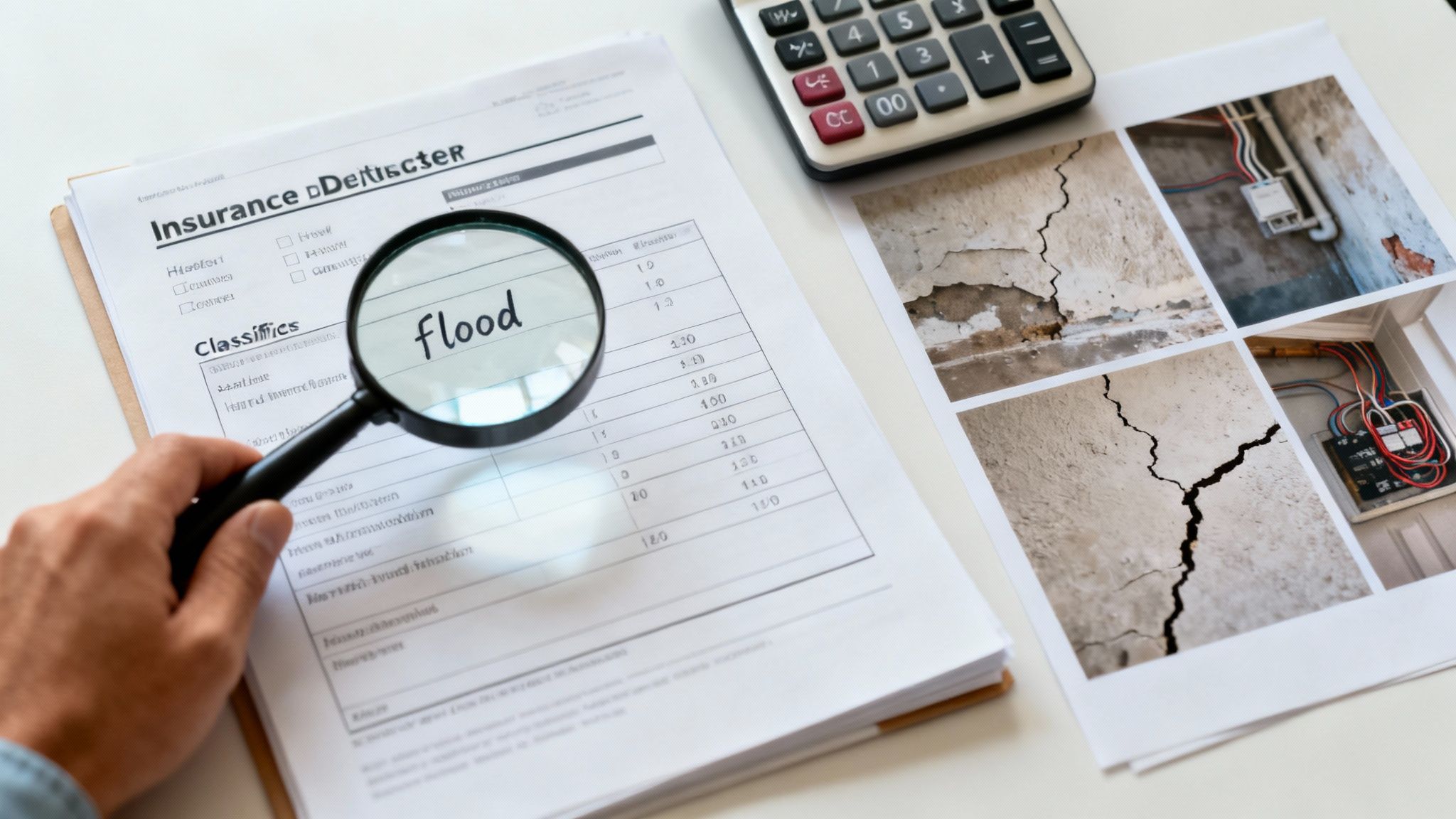
They are masters at using dense policy language and skewed damage assessments to justify a lowball offer. By pulling back the curtain on their most common tactics, you can start to anticipate their moves and build a powerful, evidence-based case of your own.
The Wind vs. Flood Blame Game
One of the oldest tricks in the book, especially in coastal areas of North Carolina and Virginia, is blaming the damage on flooding instead of wind. Your standard homeowner’s or business owner’s policy covers wind damage but specifically excludes flood damage. That requires a separate policy, usually from the NFIP.
An adjuster might walk your property and wrongfully attribute roof damage and the resulting interior water intrusion to “storm surge” when it was clearly caused by hurricane-force winds ripping shingles off your roof first. This distinction is everything. If they successfully pin the damage on flooding, they can deny a massive portion of your claim and walk away, leaving you with the bill.
Weaponizing Depreciation and the Fine Print
Another favorite tool is excessive depreciation. The adjuster will look at your 10-year-old roof or older siding and argue it had very little value left, so they’ll only pay you a fraction of what it costs to actually replace it. While some depreciation is legitimate, they often apply extreme, unreasonable percentages just to slash the payout.
They also love to weaponize the fine print in your policy, digging through the exclusions and limitations. They’ll point to a vague clause about “pre-existing damage” or “wear and tear” to deny coverage for a roof that was perfectly fine before 150 mph winds tore through. It’s a calculated move designed to make you feel powerless against the sheer complexity of the policy you paid for.
The insurer’s damage assessment is not an objective, expert opinion. It is their opening bid in a negotiation, written by their employee to serve their financial interests.
Ignoring Hidden Damage and Using Outdated Costs
The insurance company’s adjuster often performs a quick, superficial inspection. They’re trained to document the most obvious damage and conveniently ignore the costly hidden issues that a real construction professional would spot immediately.
Here are a few things they routinely miss:
- Compromised Electrical Systems: Water getting into your walls can cause severe, unseen damage to wiring and outlets, creating a massive fire hazard.
- Subtle Foundation Cracks: The immense stress from high winds and saturated ground can cause hairline cracks that threaten your property’s structural integrity down the road.
- Loss of Roof Granule Adhesion: Even if your shingles are still attached, violent winds can strip away their protective granules. This drastically shortens your roof’s lifespan and voids its warranty, but it’s easy for an adjuster to ignore.
To make matters worse, they often rely on outdated pricing software that doesn’t reflect the current post-hurricane spike in costs for labor and materials. This “computer-generated” estimate guarantees a lowball offer that simply isn’t based in reality. The scale of these events is enormous; in the first half of a recent year, natural catastrophes caused $162 billion in global economic losses, with over 90% of the insured losses happening right here in the U.S. This massive exposure gives insurers every incentive to cut corners. You can read more about the global impact at the World Economic Forum.
By recognizing these tactics for what they are—calculated strategies to underpay you—you can stop being a victim and start building a targeted counter-offensive to get the settlement you deserve.
Strategic Communication When Disputing Your Claim
When you’re fighting a lowball offer on your hurricane insurance claim, how you communicate can either build your case or completely torpedo it. It’s easy to get emotional after a storm, and your first instinct might be to pick up the phone and demand answers. Don’t.
A phone call leaves no record. It’s a conversation that, legally speaking, never happened. Big insurance carriers like State Farm and Allstate train their adjusters to be friendly and reassuring on the phone, often making vague promises. But without a written record, those words are meaningless. You have to take control of the narrative by creating an undeniable paper trail that forces them to respond to facts, not just talk.
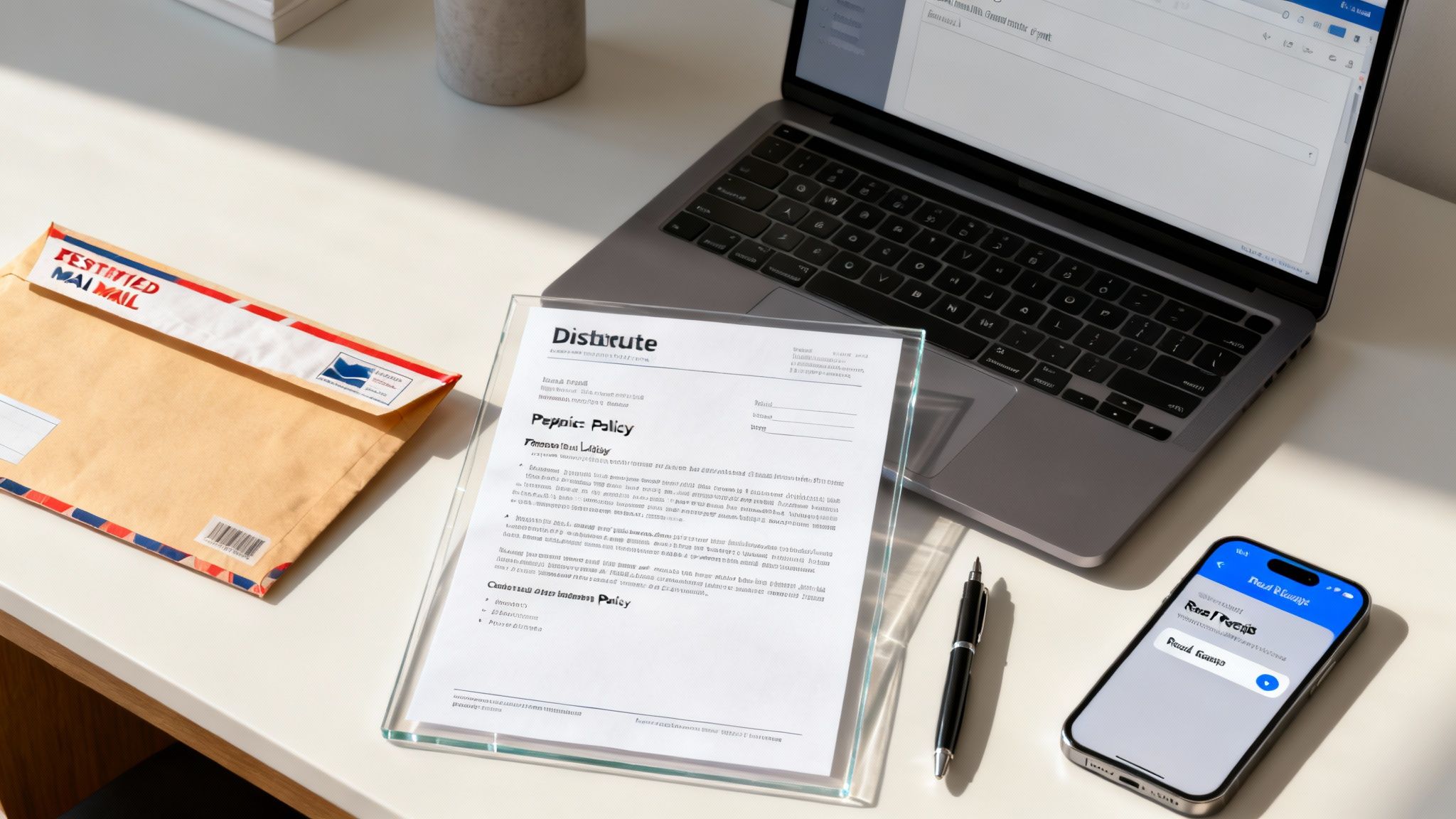
From this moment on, your new mantra is simple: if it isn’t in writing, it didn’t happen.
Crafting a Formal Dispute Letter
Your first real move in this chess match is a formal dispute letter. This isn’t just an angry email. It’s a structured, professional document that lays out your position and signals that you’re serious. Keep it firm, factual, and leave the emotion out of it.
Your letter should include:
- The Basics Up Top: Your name, property address, policy number, and claim number.
- A Clear Purpose: Start the letter with a direct statement. For example, “I am writing to formally dispute the settlement offer dated [Date] for claim number [Your Claim Number] concerning the hurricane damage to my property.”
- Itemized Disagreements: This is the core of your letter. Systematically list every point of disagreement. Reference the insurer’s lowball estimate line by line and contrast it with the detailed estimates you’ve gotten from your own trusted contractors.
- Policy References: Point to the exact sections of your insurance policy that support your claim. This proves you’ve done your homework and understand your contractual rights.
- Evidence Checklist: Clearly state every piece of evidence you’re including with the letter—your damage inventory, contractor bids, engineering reports, and any new photos.
- A Firm Deadline: End by stating you expect a written response within a specific, reasonable timeframe, such as 15 or 30 days, per your state’s insurance regulations.
Think of this letter as the cornerstone of your official dispute record. It sets the tone for everything that follows.
Why Certified Mail Is Non-Negotiable
Sending a critical letter like this through standard mail is a rookie mistake. It gives the insurance company an easy out—they can simply claim they “never received it,” throwing you into another cycle of delays.
You have to eliminate that possibility. Send every single piece of important correspondence using a method that gives you undeniable proof of delivery.
Your best options are:
- Certified Mail with Return Receipt: This is the gold standard. You get a physical postcard signed by the person who received your package, which serves as legally recognized proof of delivery on a specific date.
- Email with a Read Receipt: While not as ironclad as certified mail, a digital read receipt confirms your email was opened. If you send a crucial email, always follow up with a quick call to confirm they got it.
This meticulous approach creates a timeline that can’t be argued with. It shuts down any attempt by the insurer to claim ignorance or blame you for the holdup.
To help you stay on track, here are some ground rules for every interaction you have with the insurance company from here on out.
Dos and Don’ts of Communicating With Your Insurer
| Action | Why It’s Important |
|---|---|
| Do keep all communication in writing (email or certified mail). | Creates a permanent, legally admissible record of the entire conversation. |
| Don’t rely on phone calls for important matters. | Verbal agreements are unenforceable. Without a recording, it’s your word against theirs. |
| Do remain professional and factual, even when you’re frustrated. | Emotion clouds judgment and can weaken your position. Stick to the evidence. |
| Don’t sign any documents or checks without a full review. | Never sign anything that includes phrases like “full and final settlement” unless you are 100% sure. |
| Do keep a detailed log of every interaction. | Note the date, time, who you spoke with, and a summary of the conversation. |
| Don’t provide a recorded statement without legal counsel. | Insurers can use your words against you to twist facts and deny parts of your claim. |
| Do ask for the adjuster’s reasoning for their decision in writing. | This forces them to justify their lowball offer based on your policy, not just their opinion. |
By following these rules, you take the power back. You’re no longer just a frustrated policyholder; you’re a prepared opponent building an ironclad case.
Remember: Every email, letter, and receipt is a potential exhibit. Treat it like it will one day be presented in court.
This strategic, documentation-heavy approach forces the insurance company to stop the runaround and deal with the hard evidence you’ve put right in front of them.
When To Escalate The Fight And Hire A Public Adjuster
You’ve done everything right. You documented the damage, sent certified letters, and laid out clear, undeniable evidence. And yet, your insurance company still refuses to budge.
This is the moment it clicks. You realize you’re not just having a disagreement; you’re in a fight against a multi-billion-dollar corporation. They have entire departments staffed with experts whose sole job is to protect the company’s bottom line. They are masters of the delay-and-deny game, and they will wear you down until you give up.
Knowing when to stop fighting alone and bring in a professional is the single most important decision you can make in your hurricane insurance claim dispute. If you keep going head-to-head with an insurer who is clearly acting in bad faith, you could be leaving tens or even hundreds of thousands of dollars on the table.
Recognizing The Red Flags Of Bad Faith
There’s a difference between poor customer service and “bad faith.” Bad faith isn’t a mistake; it’s a deliberate pattern of unreasonable behavior designed to weasel out of paying a legitimate claim. If any of this sounds familiar, it’s a massive red flag that you need an advocate in your corner.
- Endless, Unexplained Delays: Your adjuster constantly misses their own deadlines, keeps asking for documents you’ve already sent, or just goes dark for weeks at a time. This isn’t disorganization; it’s a tactic designed to exhaust you into accepting a terrible offer.
- Refusal to Provide a Written Explanation: They deny your claim (or parts of it) but won’t give you a straight answer in writing that points to the specific language in your policy. They’re counting on you not knowing your rights.
- Intimidation and Threats: The adjuster hints that your premiums will skyrocket or your policy might be canceled if you keep pushing back. This isn’t just unprofessional; it’s illegal retaliation.
- Misrepresenting Your Policy: They twist the meaning of your policy’s language or flat-out lie about what’s covered, hoping you won’t take the time to read the fine print yourself.
When your insurer stops acting like a partner and starts behaving like an opponent, the game has changed. This is no longer a simple claim; it’s a fight for your financial future, and you need a professional fighter on your side.
What Is A Public Adjuster And How Do They Help
This is where a Public Adjuster becomes your most powerful weapon. The adjuster sent by your insurance company works for them. A public adjuster is a state-licensed professional who works only for you, the policyholder. Their loyalty is to you and you alone. (Speak with a Public Adjuster About Your Claim Here)
Their entire job is to level the playing field. They have a deep understanding of policy language, damage valuation, and negotiation tactics, and they take over the entire claim process for you.
Here’s what a good public adjuster actually does:
- Conducts an Independent Damage Assessment: They bring in their own experts to do a forensic inspection of your property, finding all the hidden and overlooked damage the company adjuster conveniently missed.
- Analyzes Your Insurance Policy: They dig into the complexities of your policy to find every ounce of coverage you’re entitled to, then hold the insurer accountable to their own contract.
- Documents and Presents the Claim: They build a professional, evidence-backed claim package that leaves no room for the insurance company to argue. This includes detailed repair estimates using current, local market pricing.
- Negotiates Directly with the Insurer: They handle every phone call, email, and meeting. They free you from the stress and fight aggressively to get you the maximum possible settlement.
The Financial Sense Of Hiring An Advocate
I get it—the last thing you want right now is another expense. But here’s the thing: public adjusters work on a contingency fee.
That means they don’t get paid unless you get paid. Their fee is a small, pre-agreed percentage of the final settlement they win for you.
This setup perfectly aligns their interests with yours. The more money they recover for you, the more they earn. In fact, studies consistently show that policyholders who hire public adjusters receive significantly higher settlements—amounts that dwarf the public adjuster’s fee.
A catastrophic event like Hurricane Ian, which racked up over $50 billion in insured losses, sends shockwaves through the entire industry. You can see these trends in real-time reports on the global insurance market from marsh.com. That kind of financial pressure gives insurers every incentive to underpay your individual hurricane insurance claim.
Bringing in a public adjuster isn’t giving up. It’s a smart, strategic business decision to fight fire with fire and make sure you have the expert firepower needed to rebuild your life.
Frequently Asked Questions About Hurricane Claim Disputes
Trying to rebuild after a hurricane is hard enough. The last thing you need is a fight with your insurance company over a denied or lowballed claim. When you’re in that frustrating position, questions start piling up fast. Let’s tackle some of the most common concerns we hear from homeowners and business owners across North Carolina and Virginia.
How Long Do I Really Have to Dispute My Claim?
This is one of the first and most critical questions people ask, because the clock is always ticking. The real deadline to dispute your claim is dictated by your state’s statute of limitations and, just as importantly, the specific language buried in your insurance policy.
This isn’t just a guideline. If you miss this deadline, you could permanently lose your right to challenge the insurance company’s decision.
Insurers know this all too well. It’s a classic delay tactic for an adjuster from a carrier like State Farm or Allstate to tell you they’re “still reviewing things” or “not to worry about the deadline.” Don’t fall for it. If they want to extend a deadline, get it in writing. The smartest move you can make is to act with urgency the moment you get a denial or an offer that doesn’t feel right.
Will My Insurance Premiums Skyrocket if I Dispute My Claim?
This is a deep-seated fear, and insurance companies often use it to scare people into accepting bad settlements. Let’s be crystal clear: it is illegal for an insurance company to raise your rates or drop your policy as retaliation for filing a legitimate claim or disputing their offer.
It’s true that premiums often go up after a major hurricane hits an area, but that’s because insurers are re-evaluating risk for the entire region. It affects everyone, not just you. Your decision to fight for the money you are contractually owed will not single you out for a rate hike.
The fear of retaliation is a powerful tool for insurers. Don’t let it stop you from holding them to the contract you paid for. Your premiums might go up because a storm hit your area, but not because you fought for a fair settlement.
Can I Hire My Own Contractor to Do the Repairs?
Yes, you can, and frankly, you should. A common play from the insurance company’s book is to steer you toward their “preferred” contractors. These vendors often rely on the insurer for a steady stream of business, which gives them a powerful incentive to keep repair estimates suspiciously low.
You are under no obligation to use their recommended contractor. In fact, getting two or three detailed, line-item estimates from your own independent and reputable local contractors is one of the best tools in your arsenal. These bids show the true cost of labor and materials in your market, creating a real-world benchmark that can dismantle an insurer’s lowball estimate.
What Exactly Is Insurance “Bad Faith”?
“Bad faith” isn’t just a disagreement over how much your claim is worth. It’s a legal term for when an insurance company fails to uphold its end of the contract through unreasonable, deceptive, or even malicious actions.
It’s about a pattern of behavior deliberately designed to avoid paying what they rightfully owe. This could look like endless delays, making things up about your policy coverage, or refusing to conduct a proper investigation. Documenting these actions is vital if you need to escalate the fight, as proving bad faith can sometimes allow you to recover more than just your original claim amount.
When the fight with your insurance company becomes too much, you need an expert on your side of the table. The team at For The Public Adjusters, Inc. works only for policyholders—never for the insurance companies. We level the playing field and handle the entire process so you don’t have to.
If you’re struggling with a hurricane claim, contact us today for a free, no-obligation consultation.