
It starts fast. You are standing in front of a burned home or business, exhausted, shaken, and trying to answer questions while your life is still covered in soot. Then the adjuster shows up sounding calm, helpful, and reasonable. That first conversation is not small talk. It is the opening round of a negotiation, and the carrier is listening for anything they can use to narrow, delay, or discount your claim.
Your words set the tone for everything that follows. A casual guess about value, a rushed comment about cause, or a statement that sounds cooperative can become the insurance company’s script for paying less. Adjusters are trained to get admissions, lock you into early positions, and treat uncertainty like weakness. You need to treat that call the same way you would treat any high-stakes negotiation. The mindset behind mastering deal negotiation applies here too, except the money at stake is your property, your recovery, and your timeline.
Fire claims draw heavy scrutiny because they are expensive, document-intensive, and easy for carriers to challenge line by line. That is why you should never answer loosely, speculate, or try to sound agreeable just to keep things friendly.
If you want a stronger plan before you speak with the carrier, read this guide on how to deal with an insurance adjuster after a house fire. Then use the sections below to avoid the statements adjusters use against policyholders every day.
This is you versus them. The insurer has a trained representative protecting its money. You should approach every conversation with the same level of discipline, and if the loss is serious, bring in a public adjuster early so you are not negotiating alone.
Table of Contents
- 1. I don't have documentation for those losses
- 2. I think the damage is worth about low estimate
- 3. I'm fine with whatever the insurance company decides
- 4. Admitting uncertainty about loss causation
- 5. This is just an estimate and the actual damage will probably be less
- 6. I've already gotten bids or repairs started without submitting a claim first
- 7. I'm going to hire an attorney
- 7-Point Comparison: What Not to Say to a Fire Claim Adjuster
- Don't Fight Your Fire Claim Alone Get Your Own Expert
1. I don't have documentation for those losses
The adjuster walks through a burned room, asks what was there, and you say, "I don't have documentation for those losses." That gives them exactly what they want. An opening to question the item, cut the value, or leave it off your claim altogether.
Fire destroys the very proof the insurer later demands. Receipts burn. Boxes melt. Hard drives fail. That does not erase your loss. It means you need to answer strategically.
Say this instead
Use this script:
What to say: "Some records were destroyed in the fire. We are reconstructing the loss with photos, bank records, order histories, and other available documentation."
That answer protects your position. You are not admitting a weakness. You are telling them the proof is being rebuilt, and that the claim is still supported.
That distinction matters. Adjusters listen for statements they can treat as concessions. "I don't have documentation" sounds final. "We are reconstructing the documentation" tells them you are organized, careful, and not easy to push around.
If you need help handling these conversations, read this guide on how to deal with the insurance adjuster after a house fire.
How adjusters use this against you
They are looking for gaps.
If you volunteer that you cannot prove what you owned, they may treat disputed contents as inflated, optional, or unverified. That is a negotiation tactic, not a neutral search for truth. The insurer benefits when your inventory looks incomplete.
You need to treat the conversation the same way professionals treat mastering deal negotiation. Every word can set a number, shift the burden, or narrow what gets paid.
Rebuild the file before they define the loss for you
Use every source that survived or can be recreated:
- Photos and videos: phone backups, cloud albums, real estate listings, holiday photos, social posts, and move-in walkthroughs
- Purchase records: bank statements, credit card statements, retailer accounts, financing paperwork, and email confirmations
- Ownership records: appraisals, warranty registrations, manuals, service records, and scheduled property lists
- Claim forms: a formal proof of loss works after property damage
A homeowner may lose receipts for furniture, clothing, and electronics because the filing cabinet burned with everything else. A business owner may lose inventory logs because the office computer was damaged by heat and suppression water. The property is still gone. The value still has to be documented and claimed.
Your job is to start rebuilding the paper trail. Your public adjuster’s job is to turn that trail into a claim the insurance company has a harder time discounting.
2. I think the damage is worth about low estimate
The fastest way to low-ball your own claim is to guess a number. Once you throw out a low estimate, the adjuster has an anchor. From that point on, every conversation starts below where your claim should have started.

This happens all the time after kitchen fires, attic fires, and commercial unit fires. The owner looks at blackened cabinets or visible smoke staining and guesses based on what they can see. The insurer knows the actual cost often includes demolition, hidden smoke spread, insulation replacement, wiring checks, cleaning, odor treatment, and code-related items that aren't obvious on day one.
Why your rough number hurts you
A rough estimate makes you look uninformed about replacement cost and scope. It also gives the carrier a reference point they didn't earn.
Fire claims are notorious for hidden damage. The article on how to deal with the insurance adjuster after a house fire explains why scope has to be built carefully, not guessed in a hallway conversation.
If you want a useful negotiation principle, this is close to mastering deal negotiation. The first number on the table influences everything that follows. Don't make that number your uninformed guess.
Say this instead
Use a valuation response that protects you.
"I'm not providing a damage value until the full fire, smoke, and related damage is professionally documented."
That's strong, accurate, and hard to twist. It tells the adjuster you understand the game.
A homeowner after a contained stove fire might think the damage is limited to cabinets and drywall. Later, the inspection shows smoke migration into adjacent rooms and HVAC contamination. A store owner may believe only front-end inventory was affected until soot reaches packaging in back stock. Your estimate isn't the claim. The documented scope is.
Let the insurer show its hand first. Then challenge omissions with a real scope, not a guess.
3. I'm fine with whatever the insurance company decides
The kitchen fire is out. You're standing in a smoke-damaged house, exhausted, and the adjuster asks a friendly question that sounds harmless. "Are you okay with our decision once we review it?" If you say, "I'm fine with whatever the insurance company decides," you just told them you can be managed.
That sentence gives away control. It tells the carrier you are more concerned with being agreeable than being paid correctly. In a fire claim, that is expensive. Adjusters are trained to look for signals about how hard a policyholder will push, how closely they will read the estimate, and whether they will accept a partial scope without a fight.
What the adjuster hears
They hear three things right away:
- You may accept a short estimate: Omitted cleaning, hidden smoke spread, code-related items, and content losses are less likely to get challenged.
- You want closure fast: Speed can be used against you if they think you'll trade accuracy for a quick payment.
- You are not treating this like a negotiation: They are.
That last point matters. A fire claim is not a customer service conversation. It is a document-driven negotiation over scope, pricing, and coverage. If you sound passive, they have no reason to volunteer corrections that cost them money.
A homeowner dealing with smoke in every room may say this because they are tired and want the process over with. A business owner may say it because reopening feels more urgent than arguing over line items. The insurer hears something else. They hear less resistance.
That is why your wording has to be deliberate.
Say this instead
Use a statement that keeps the burden where it belongs.
"I expect a full written estimate of all covered fire, smoke, soot, odor, and related damage. I will review it before agreeing to any decision."
That script does two jobs. It shuts down the idea that their first number is final, and it signals that omissions will be challenged.
If they press you, use this:
"Please send the complete scope and explain any items you are excluding or limiting in writing."
Now you are forcing clarity. That matters because vague conversations help them. Written positions help you.
The tactic behind the question
This is a compliance test. They ask soft questions to see whether you will defer to their process without scrutiny. If you do, they control the pace, the inspection boundaries, and the paper trail.
You need to control your side of the claim the same way you would control risk before a fire starts. Basic prevention matters, and so does preventing home fire hazards. After the loss, claim discipline matters just as much.
Ask for the estimate. Read every line. Challenge missing items. Do not sign off on a number just because it came from the insurer. If the carrier wants the final word, make them earn it with a complete inspection and a written scope.
If you want a fair outcome, stop talking like they are the referee. They are the other side. A public adjuster is the professional who levels that fight.
4. Admitting uncertainty about loss causation
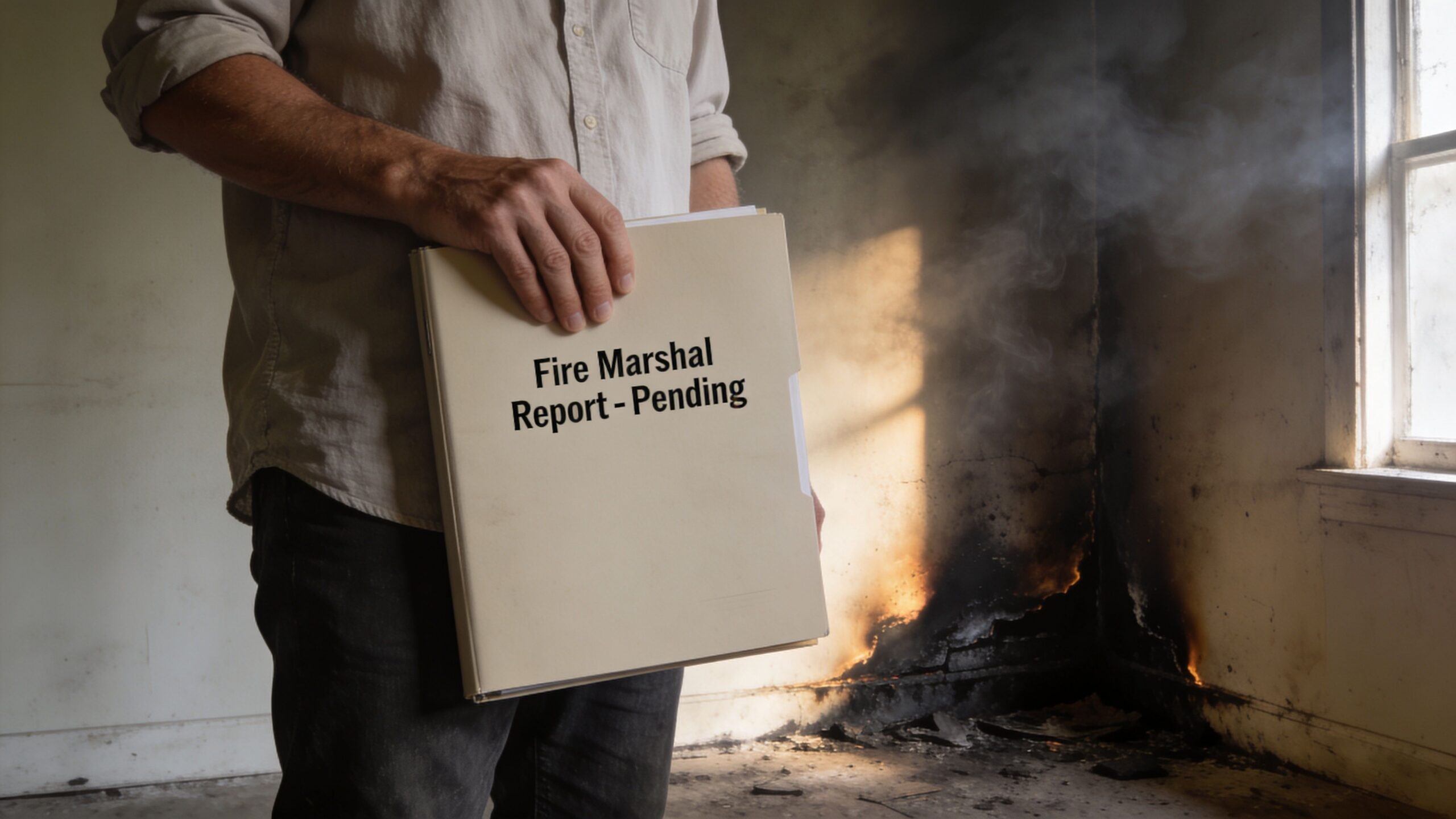
You are standing in a smoke-damaged house, exhausted, and the adjuster asks, "Any idea how it started?" That question sounds casual. It is not. It is an opportunity for them to lock you into a theory before the investigation is finished.
When you guess, you give the carrier something to use against you. A stray comment about an outlet, candle, space heater, or appliance can end up in the claim file as if it were a confirmed fact. Later, if the fire marshal, electrician, or origin investigator reaches a different conclusion, the insurer gets an opening to question your credibility or push an exclusion argument.
Why speculation is dangerous in a fire claim dispute
Cause is one of the insurer's favorite pressure points in a fire loss. If they can get you talking loosely, they may try to reframe the loss around negligence, maintenance, misuse, or some other coverage fight. That is the tactic. Get the policyholder to talk first, then use the words later.
Your job is narrower than theirs. You report what you observed. Qualified investigators determine cause.
That line matters.
If you saw smoke coming from the garage at 6:10 a.m., say that. If you heard a popping sound near the panel, say that only if you heard it. If the origin has not been confirmed, do not help them build a theory from your stress and memory gaps.
What to say instead
Use short, controlled answers.
- State observed facts: "I discovered the fire at approximately [time] in [location]."
- Refer causation to the official investigation: "I am not speculating about cause. I will rely on the fire marshal and qualified investigators."
- Correct leading questions: "I can't confirm that. Please note that the cause is still under investigation."
- Keep the record clean: "My statement is limited to what I personally observed."
Here is the script to use if the adjuster keeps pushing:
"I can tell you when I discovered the fire and what I observed. I am not giving an opinion on cause. I will rely on the official investigation."
Use it word for word.
The tactic behind the question
This is a framing move. They want your early uncertainty on paper because uncertainty can be turned into inconsistency, and inconsistency can be turned into an advantage. You need to shut that down before it starts.
The same discipline that matters before a loss matters after one. Good maintenance and preventing home fire hazards reduce risk. After the fire, disciplined communication protects your claim.
If causation is contested, the fight gets technical fast. That is where policyholders lose ground by talking too much and too loosely. A public adjuster helps control the facts, the timeline, and the paper trail so the insurer cannot twist a stressed-out guess into a coverage defense.
5. This is just an estimate and the actual damage will probably be less
The adjuster hears one thing when you say this: permission to cut your claim.
Do not give it to them. If your contractor, estimator, or contents specialist put a number on the loss, your job is to present that scope firmly and require the carrier to respond to the actual documentation. The moment you start apologizing for the estimate, you shift the negotiation against yourself.
Fire losses grow as the inspection gets better. Smoke travels. Soot settles in places you cannot see at first glance. Heat can damage wiring, cabinets, insulation, HVAC components, flooring transitions, finishes, and contents outside the obvious burn area. Then code items show up. Then demolition exposes more. That is how real fire claims work.
So stop trying to sound reasonable by discounting your own evidence. The insurance company already has people assigned to do that.
What to say instead
Use this script:
"This estimate reflects the damage identified so far. If additional covered damage is discovered during demolition, cleaning, or repair, we will submit a supplement."
That keeps you in control. It supports the current number and preserves your right to add more when hidden damage appears.
The tactic behind the pushback
This is anchoring. The adjuster wants your lower number on the record first, because your own words become their starting point. After that, every later supplement gets treated like inflation, not investigation.
A hallway fire is a good example. The visible damage may look limited, but the written scope can properly include sealing, smoke cleanup, insulation replacement, paint across connected surfaces, odor treatment, flooring tie-ins, and electrical evaluation. If you tell the carrier the estimate is probably high, they will not correct you. They will use it.
The smarter move is to stand on documentation, keep the estimate open for supplements, and get your own advocate involved early. If you are weighing whether to bring in a lawyer, read this guide on homeowners insurance claim lawyers in North Carolina, then talk to a public adjuster before you hand the insurer another damaging sound bite.
Present serious numbers seriously. That is how you protect the full value of the claim.
6. I've already gotten bids or repairs started without submitting a claim first
Panic often collides with claim strategy. After a fire, people want to clean, tear out, rebuild, and get life moving again. That's understandable. But if you tell the adjuster you've already pushed ahead without proper claim documentation, you can make a bad situation worse.
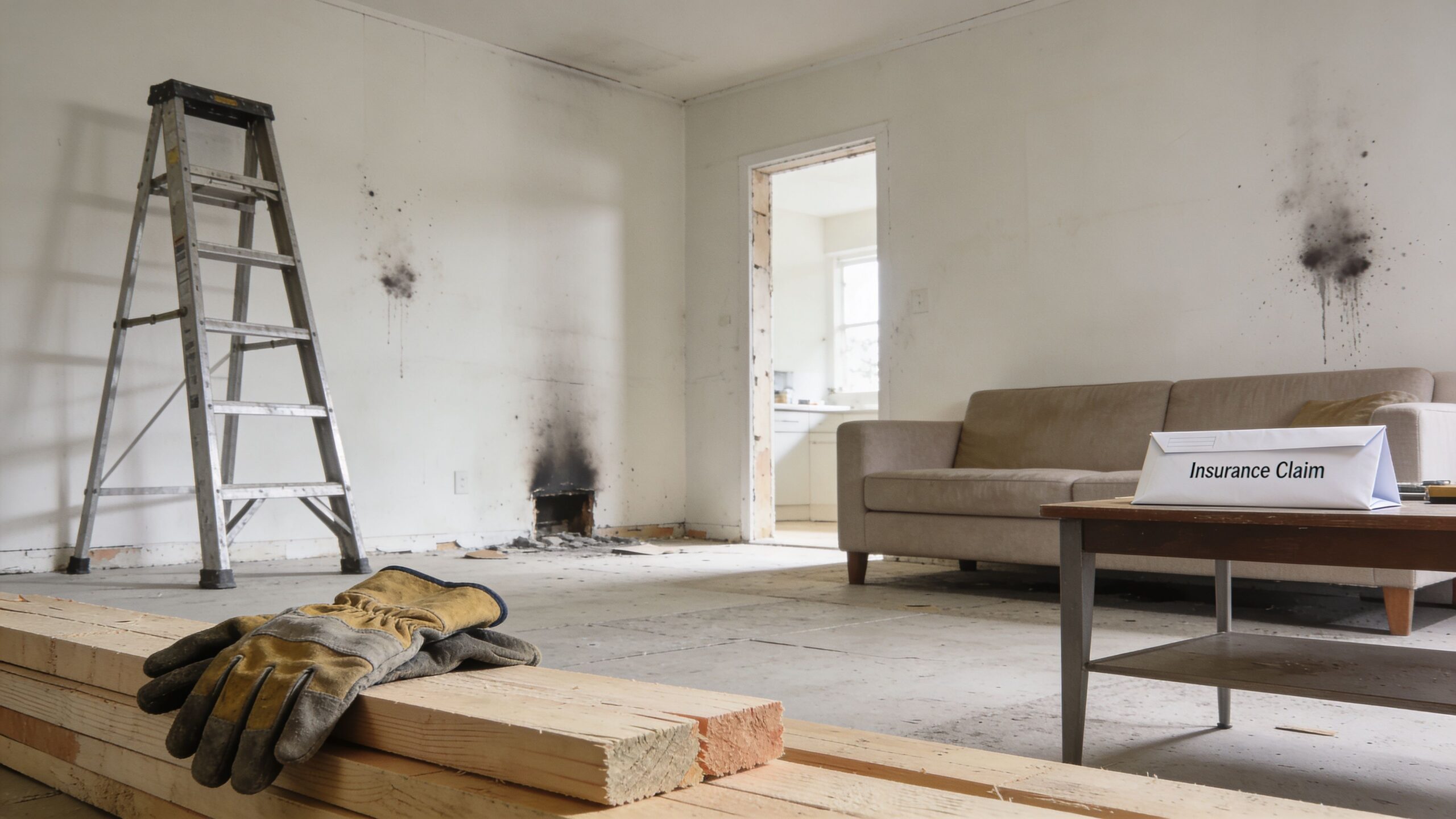
Insurers often treat early repairs as a chance to argue they didn't get to inspect the original condition. They may also claim parts of the work were unauthorized, unnecessary, or unrelated.
The line between mitigation and damaging your claim
You do need to protect the property from further damage. Boarding up openings, securing the site, and taking emergency steps can be necessary. What you should not do is casually tell the insurer you've already moved deep into repairs or finalized scope on your own before the claim record is solid.
This matters even more in fire losses because smoke and soot evidence can disappear quickly once cleanup starts. If the carrier wants to dispute contamination, your pre-clean condition becomes critical.
The practical move is to document first, preserve evidence, and keep written records of emergency mitigation. Then let your public adjuster control communication with the carrier.
Say this instead
Use a narrow, factual statement.
- For emergency work: "We took reasonable steps to prevent further damage and preserve the property."
- For inspections: "The damage has been documented, and we're preserving records of all emergency measures."
- For scope disputes: "No final repair agreement should be evaluated until the full covered damage is inspected."
A short video can help you understand how these conversations go when carriers start pushing for control of the timeline.
A homeowner who rips out smoke-affected materials before a full inspection can lose proof. A business owner who starts restoration without preserving inventories and pre-clean images can face pushback on contents. Move fast on safety. Move carefully on claim strategy.
7. I'm going to hire an attorney
Your house just burned, the adjuster is pressing for answers, and you say, "Fine. I'll get a lawyer." That feels strong. It usually helps them more than it helps you.
Once you announce a legal threat too early, the carrier can tighten communication, route everything through a more defensive process, and start building a record around conflict instead of payment. You have not improved your position. You have told them the conversation is changing before you have locked down scope, contents, code issues, and valuation.
A fire claim is a negotiation. The adjuster is trained for it. You should not walk into that fight alone or show your strategy before you have your own expert in place.
Bring in claim representation first
In most fire losses, the first hire is a public adjuster, not an attorney. A public adjuster handles the part of the case where policyholders usually lose money: documenting damage, proving scope, organizing estimates, and controlling what gets said to the carrier.
Shouse Law warns against statements to adjusters that can damage a claim, including careless recorded statements and other remarks that create inconsistencies the insurer can later use against you. That is the primary risk here. The carrier is listening for statements it can pin to the file. Your public adjuster's job is to stop that and push the claim back onto evidence, pricing, and policy language.
If you need to understand the difference between legal help and claim representation, read this guide on homeowners insurance claim lawyers in North Carolina.
Attorneys matter when there is bad faith, a coverage lawsuit, or a dispute that cannot be resolved through adjustment. But telling the insurer "I'm going to hire an attorney" is not a strategy. Hiring the right advocate is.
Say this instead
Keep control. Keep it short.
"I'm having my representative review the loss, and claim communications about scope and valuation will go through them."
If you have already hired a public adjuster, be even more direct.
"I am represented by a public adjuster. Please send claim communications through them."
That changes the psychology of the claim. You are no longer the overwhelmed policyholder they can rush, corner, or bait into sloppy statements. You have someone on your side who knows how carriers narrow scope and shave value.
A homeowner with a kitchen fire may need missing line items added back into the estimate. A business owner with smoke migration and contents damage may need a full documentation plan before the insurer starts limiting what it will consider. Get your own expert in place first. If legal action is needed later, make that move with a record that is already built.
7-Point Comparison: What Not to Say to a Fire Claim Adjuster
One bad sentence can cost you thousands. The adjuster is listening for shortcuts, uncertainty, and anything they can turn into a smaller scope, a lower value, or a delayed payment. Use this table as a quick read on which statements hurt you, why they hurt you, and what you should say instead.
| What You Should Never Say | How Hard Is It to Fix Once You Say It? | What You Need to Fight Back | What Usually Happens If You Say It | What to Say Instead | Bottom Line |
|---|---|---|---|---|---|
| "I don't have documentation for those losses." | Hard | Records, replacement proof, photos, expert help, public adjuster | Parts of the claim get questioned, limited, or left out | "I'm still gathering documentation, and I will supplement the claim with records, photos, and inventory support." | This hands them doubt. Give them a process instead. |
| "I think the damage is worth about [low estimate]." | Hard | Full scope, contractor pricing, contents documentation | Your number becomes the starting point, and they work down from there | "I am not putting a number on the loss until the full scope and pricing are documented." | Never do their job for them at a discount. |
| "I'm fine with whatever the insurance company decides." | Very hard | Strong claim review, written objections, public adjuster | They treat your cooperation as consent and push a lower outcome | "I expect the claim to be evaluated based on the full documented damage and the policy." | Polite surrender still gets you underpaid. |
| Speculating about cause, such as "I'm not sure where the fire started." | Hard | Fire reports, origin findings, expert review | More scrutiny, more delay, more room for dispute | "I will rely on the official investigation and documented findings rather than speculate." | Adjusters use uncertainty to widen the dispute. |
| "This is just an estimate and the actual damage will probably be less." | Hard | Revised scope, contractor support, technical documentation | They cut line items early and resist adding them back | "This scope reflects known damage to date, and additional hidden damage may be identified during repairs." | Never talk your own claim down. |
| "I've already gotten bids or started repairs without submitting a claim first." | Very hard | Mitigation records, photos, invoices, policy review, expert help | They question what was damaged, what was preexisting, and what they owe | "I completed emergency mitigation to prevent further damage and documented the condition before any major repair work." | Protect the property first, but protect the evidence too. |
| "I'm going to hire an attorney." | Moderate | Representation plan, claim file, communication control | The claim can stall and the carrier gets more guarded | "My representative will handle claim communications about scope, pricing, and documentation." | Use representation. Do not make threats. |
This is the prevailing pattern. The wrong statement gives them an opening. The right statement shuts that opening and puts the discussion back on evidence, pricing, and policy terms.
That is why a public adjuster matters. You are not just trying to be careful with words. You are handling a negotiation against a company trained to spot weak phrasing and turn it into claim savings for them.
Don't Fight Your Fire Claim Alone Get Your Own Expert
The fire is out. Your home smells like smoke, parts of the structure are wet from suppression efforts, and the carrier wants statements, inventories, and quick answers. That is the moment many policyholders make the mistake that costs them money. They try to handle a technical negotiation alone against a company that does this every day.
That is a bad bet.
A fire claim is not just a conversation about what burned. It is a dispute over scope, pricing, cause, documentation, code issues, cleaning versus replacement, and whether hidden damage gets counted at all. The adjuster knows how to frame those issues in the carrier's favor. If you do not, your file starts filling up with admissions, guesses, and shortcuts they can use later.
You have already seen the pattern in this article. One careless sentence can turn into a reduced payment, a delayed investigation, or a denied line item. The fix is not just "be careful." The fix is representation.
A public adjuster works for you, not for them. Your expert documents the loss, reviews the insurer's scope, challenges omissions, organizes proof, and controls claim communications so the discussion stays on evidence and policy terms. That changes the psychology of the claim. The carrier is no longer dealing with a stressed policyholder making off-the-cuff statements. They are dealing with an advocate who knows the pressure tactics, spots low estimates, and pushes back in writing.
That matters in fire losses because the worst damage is often the damage they try to narrow. Smoke migration can affect rooms that never saw flames. Soot can contaminate HVAC systems, contents, and electronics. Water used to put out the fire can create a second layer of damage. Code-required upgrades can increase rebuild cost. If you miss those categories early, the insurer has a head start cutting them out.
One client, James P., described it this way:
"A house fire is a difficult, devastating and confusing thing to go through. That's where For The Public Adjusters comes in… The team was extremely knowledgeable and held my hand through the entire process. They explained the process from the beginning and answered my phone calls anytime I had a question… I would NOT recommend going through a major home owners claim with out their help."
That support is not just emotional. It is strategic. You need someone who can tell you what to say, what not to say, what to document, and when to stop talking until the evidence is in order.
If your claim is already delayed, underpaid, disputed, or drifting toward a low estimate, stop treating this like customer service. It is a negotiation over real money. Get your own expert before the insurer locks your words into the file and uses them against you.
If you're dealing with a denied, delayed, or low-ball fire damage claim, For The Public Adjusters, Inc. can step in, review your loss, document the damage, and fight the insurance company on your behalf. The firm represents homeowners and business owners, not insurers, and offers a no-cost claim review to help you understand your rights and your next move.