
After a house fire, the single biggest mistake you can make is waiting for the insurance adjuster to show up before you start building your case. The game is already in motion, and every move you make—or fail to make—in those first few hours will drastically impact your final settlement.
Your insurance company, whether it's State Farm, Allstate, or another giant, has a playbook for this exact scenario. Their goal isn't to help you rebuild your life; it's to protect their bottom line by low-balling your claim. You have to be just as ready to fight for yours.
Your First Moves After a House Fire Before the Adjuster Appears
Let's be blunt: the shock and emotional chaos after a fire are overwhelming. It's hard to think straight. But the actions you take right now are absolutely critical to fight a claim denial or low-ball offer later.
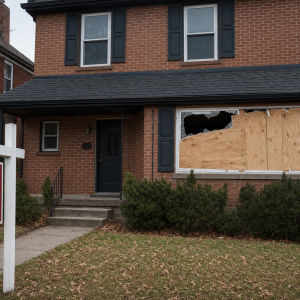
First, you have a duty under your policy to secure the property and prevent any further damage—what the insurance world calls "mitigating damages." This means boarding up broken windows or tarping the roof to keep rain out.
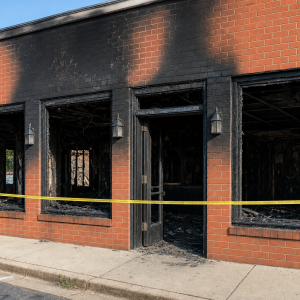
But stop right there. Do not start cleaning up or moving a single piece of debris. The fire scene, exactly as it is, is the most powerful evidence you have. Don't destroy it.
Document Everything Immediately
Before anyone touches anything, pull out your smartphone. You need to become a crime scene investigator for your own loss. Take hundreds of photos and long, continuous videos.
Go room by room. Get wide shots, then zoom in on specific items. Open every single cabinet, drawer, and closet and film what's inside—or what's left of it. Make sure you capture the "hidden" damage: the smoke, the soot, and the water damage from the firefighters' hoses. This visual proof is non-negotiable.
This initial, untouched documentation is your primary weapon against an adjuster who will inevitably try to downplay the damage. They weren't there. Your photos and videos force them to confront the brutal reality of what you lost.
This isn't just a suggestion; it's the foundation of your entire claim dispute. The process is simple: secure, document, then notify.

Following this sequence ensures you meet your policy obligations while building an ironclad case from day one.
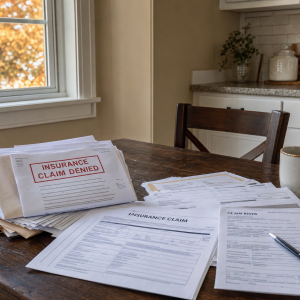
When you make that first call to your insurance company, keep it short and factual. Give them your name, policy number, and the property address, and state that you've had a fire. That's it. Don't guess about the cause or offer any other details. Your only other request should be for a complete, certified copy of your entire insurance policy. You need that rulebook.
From this point forward, start a claim journal. Log every single interaction—phone calls, emails, in-person conversations. Note the date, time, the name of the person you spoke with, and what was said. This log will become invaluable when the insurance company starts using delay tactics or giving you conflicting information.
And save every single receipt. Temporary housing, meals, new clothes—these fall under your Additional Living Expenses (ALE) coverage, and you'll need proof for every penny. For a deeper look at the documents you'll need to assemble, our guide on the Proof of Loss form is essential reading.
While you're navigating the claim, it's also a good time to think about prevention. You can learn how to prevent electrical fires in your home with these tips and strategies to help protect your property in the future.
Understanding the Insurance Adjuster's True Role
After the sheer trauma of a house fire, that first call from the insurance adjuster can feel like a lifeline. It’s completely natural to assume they’re there to help, to walk you through this nightmare, and get you back on your feet.
That is the single most dangerous assumption you can make.
Let's be very clear: the adjuster sent by State Farm, Allstate, or any other carrier is a company employee. Their job is not to get you the biggest check possible. Their job is to protect their employer's profits. Their performance reviews, their raises, and their bonuses hinge on how effectively they can minimize what the insurance company pays out on claims.
This isn't a maybe. It's a fundamental, unavoidable conflict of interest baked right into the process.

They Are Trained to Find the Cheapest Path Forward
The company adjuster's primary weapon is their initial damage estimate. You’ll almost certainly find it’s suspiciously, if not offensively, low. This isn't a mistake. It’s a strategy.
They are absolute masters at overlooking or downplaying damage that isn't immediately obvious. I see it on every single claim.
- Smoke and Soot Infiltration: They’ll walk through and say only the visibly charred stuff needs work. They conveniently ignore how corrosive soot and smoke particles get sucked into your HVAC system and permeate drywall, insulation, and every porous surface in your home.
- Water Damage from Firefighting: The thousands of gallons of water used to save your house cause their own disaster. We're talking about ruined subflooring, soaked wall cavities, and fried electrical systems. This often leads to hidden mold, another expensive problem they're happy to pretend doesn't exist.
- Structural Integrity Issues: The intense heat from a fire can weaken the bones of your house—the wood framing, steel beams, and even the concrete foundation. These are catastrophic, costly repairs they are heavily incentivized to miss.
Their estimate isn’t a good-faith offer. It's a calculated opening bid in a negotiation you didn't even realize had started.
Recognizing the Adjuster's Pressure Tactics
Beyond the lowball number, company adjusters have a whole playbook of psychological tactics designed to push you into accepting a bad deal. Learning how to deal with an insurance adjuster after a house fire means learning to spot these moves.
A classic tactic is the rush job. They know you’re stressed, displaced, and desperate to get your life back. They'll dangle a check, implying it’s the best you can hope for and that fighting it will only drag things out for months.
They might push you to sign a “release of all claims.” This is a legal trap. Signing it means you give up your right to ever ask for another penny for this loss. Never sign a final release until you are 100% certain the settlement covers every last bit of damage, which is impossible without your own independent evaluation.
Another favorite move is steering you toward their “preferred” contractors. These vendors often have deals with the insurer to do the work cheaply. This can mean cut corners, shoddy materials, and repairs that don't truly restore your home. You are never obligated to use their guys.
The Financial Incentive to Underpay Your Claim
The scale of this conflict of interest is staggering. House fires hit about 1 in 430 insured homes every year, and the financial stakes are massive. The average insurance claim for a house fire is now over $88,170, far more than claims for wind or other types of water damage. You can read more about these sobering homeowners insurance claim statistics on HealthSureHub.com.
With billions in residential fire damage annually, every dollar an insurer like Allstate or State Farm can shave off your claim is a dollar that goes straight to their bottom line. The gap between what your loss is actually worth and their lowball offer is pure profit for them.
They are counting on you being too exhausted, overwhelmed, and emotionally drained to fight back. You have to make a critical mindset shift: the company adjuster is your adversary, not your advocate. Their job is to pay you as little as legally possible. Your job is to not let them.
How to Build an Ironclad Fire Damage Claim
When you're across the table from your insurance adjuster after a house fire, understand one thing: their word carries more weight than yours unless you can prove otherwise. Winning a claim dispute isn't about arguing. It’s about building a mountain of undeniable proof that makes their lowball estimate impossible to defend.
The adjuster from your insurance company—whether it's Allstate, State Farm, or anyone else—will generate their own estimate using their software. They'll often rely on their network of preferred (and cheaper) contractors to set the price. If your only comeback is, "That's not enough," you've already lost. You have to build your own case from scratch, starting with a painfully detailed inventory of everything you lost.
Documenting Every Single Loss
I won't lie, this part is tedious and emotionally exhausting. But it's also the single most important thing you can do for your claim. You need to create a detailed list of every item, in every room, of your home. This is no time to be vague.
Go room by room. Drawer by drawer. Closet by closet. List it all, no matter how small it seems.
- Furniture: Don't just put "sofa." Write down the brand, the store where you bought it, its age, and what you paid for it.
- Clothing: This is a huge category people underestimate. List items individually—"5 pairs of Levi's jeans," "10 Brooks Brothers dress shirts," "3 North Face winter coats"—and find their current replacement cost.
- Electronics: List every TV, computer, tablet, and gaming console with its make, model, and age.
- Keepsakes and Personal Items: While you can't replace sentimental value, you must establish its value for insurance. Document photo albums, collections, and other meaningful objects.
To get a better handle on what your policy actually promises to cover, you absolutely must learn more about how to read your insurance policy in our detailed guide. Knowing your coverage is fundamental to building a complete list.
Uncovering Hidden and Overlooked Damages
The company adjuster's favorite tactic is to focus only on what's obviously charred and burned. They are trained to ignore the widespread—and expensive—secondary damage that a fire leaves in its wake. Your job is to drag these hidden damages into the light.
Make sure your claim accounts for damages like:
- Smoke and Soot Infiltration: Those tiny, corrosive soot particles get everywhere. You need to document the need to clean or completely replace insulation, drywall, and especially the ductwork in your HVAC system.
- Water Damage from Firefighting: The thousands of gallons of water used to put out the fire cause their own unique devastation. We're talking about warped subflooring, fried electrical wiring, and the very real risk of dangerous mold blooming inside your walls.
- Structural Damage: The intense heat from a fire can weaken wooden support beams, twist steel framing, and even crack your home's concrete foundation. These are issues an adjuster can easily "miss," but they're catastrophic if not fixed.
Success Story: Exposing an Adjuster's Lowball Game
A family in Raleigh, NC, recently had a major kitchen fire. The insurance company's adjuster swooped in, did a quick walk-through, and slapped a settlement offer of just under $75,000 on the table. He claimed the damage was mostly contained to the kitchen and the next room.
The offer felt insultingly low, so the family hired a public adjuster from our team. We immediately brought in specialists. An HVAC expert confirmed the entire home's ductwork was contaminated with toxic soot. We used thermal imaging to find water hidden in walls far from the actual fire. An independent structural engineer we hired found heat-related stress fractures in the roof trusses that the company adjuster completely ignored.
Our meticulously documented claim, filled with independent expert reports and contractor estimates, totaled over $180,000. Faced with irrefutable evidence, the insurance company had no choice but to scrap their initial lowball offer and pay the full, fair amount. Their adjuster had conveniently "missed" over $100,000 in damages.
This is exactly why you can't simply trust the company adjuster's numbers. You must get your own independent repair estimates from contractors you trust—not the low-cost vendors the insurance company tries to push on you. These independent bids are the backbone of your claim dispute. They give you the leverage you need to fight back and win.
Fighting Back Against Lowball Offers and Unfair Denials
Getting that first settlement offer after a house fire can be a soul-crushing moment. It feels like you're being victimized all over again, but this time by the very company you trusted and paid to protect you.
Let’s be clear: this is not the end of the road. It’s the start of the real fight.
Never, ever accept their first offer. It’s almost guaranteed not to be their best one. Think of it as a calculated opening bid in a negotiation, designed to see if you’re too exhausted and beaten down to fight back. Treat this initial insult for what it is: a declaration that you now must formally dispute their math.

Crafting a Formal Dispute Letter
Your first countermove is to send a formal dispute letter via certified mail. This isn't just another email—it's a legal document that officially puts the insurance company on notice. Vague complaints are easy to ignore, so you have to be direct and demand specific action.
Your letter needs to state in no uncertain terms that you reject their settlement offer and are disputing their valuation of the damages. The trick here is to shift the burden of proof right back onto them.
Use strong, direct language that forces them to be accountable. For example:
- "We formally reject Settlement Offer [Offer Number] dated [Date]."
- "We demand a detailed, line-by-line justification explaining the discrepancy between your estimate and the independent contractor bids we have provided."
- "Please provide the specific policy language you are relying on to justify the valuation for each disputed item."
This letter creates an official paper trail of your dispute. It forces the insurer to respond in writing, which is absolutely critical if this conflict escalates.
Invoking the Appraisal Clause
If you hit a wall and the dispute stalls, your policy contains a powerful tool to break the stalemate: the Appraisal Clause. This is a provision built into most homeowner policies that triggers a formal process to determine the value of your loss without having to go to court.
Invoking the Appraisal Clause takes the negotiation completely out of the company adjuster’s hands. It’s a potent but often misunderstood right that forces the insurer into a structured, binding process to resolve disagreements over value.
Here’s a simplified look at how it works:
- You hire your own appraiser. This is an independent expert who evaluates your loss and argues for your valuation.
- The insurance company hires its appraiser. They'll do the same to represent the insurer's position.
- The two appraisers select a neutral umpire. This person acts as a tie-breaker.
- If your appraiser and the insurance company’s appraiser can agree on a value, the dispute is settled. If they can’t, they submit their differences to the umpire. A decision agreed upon by any two of the three is binding.
While this can be incredibly effective, it's a technical and complex procedure. We almost always advise having a public adjuster manage this process to ensure your interests are aggressively and expertly represented.
Legal Precedent and Bad Faith Practices
Insurance companies like State Farm and Allstate have a legal duty to act in "good faith" when handling claims. When they knowingly delay, deny, or underpay a valid claim, they can be held liable for bad faith. This can lead to significant penalties that go far beyond what they originally owed you on the claim.
Courts have repeatedly slammed major insurers for these tactics. In one landmark case, a jury found an insurer acted in bad faith by unreasonably delaying payment and using its massive financial leverage to bully a policyholder into accepting a low offer. The court didn't just award the full claim amount; it also hit the company with substantial punitive damages to punish their malicious behavior.
This legal precedent is your leverage. It proves that the insurer’s delay-and-deny tactics aren't just frustrating—they can be illegal. Challenging an unfair offer isn't just about getting what you're owed; it’s about holding these corporate giants accountable to the promises they made in your policy.
Why You Need a Public Adjuster in Your Corner
Let’s be brutally honest. After a house fire, going up against a massive insurance company like State Farm or Allstate by yourself is not a fair fight. It’s a setup.
They’ll send out a team of adjusters, building experts, and even lawyers whose only job is to protect their employer’s bottom line. Meanwhile, you’re just trying to manage a devastating personal crisis, likely displaced from your home and completely exhausted. They are absolutely counting on this to push through a quick, insultingly low settlement.
Trying to handle a complex fire claim on your own is a recipe for financial disaster. The adjuster your insurance company sends works for them, not you. That creates a massive conflict of interest. Their goal is to pay out as little as they can get away with, which is the exact opposite of your goal: getting the full settlement you need to actually rebuild your life.
Leveling the Uneven Playing Field
This is exactly where a licensed public adjuster comes in. We are state-licensed claims professionals who work exclusively for you, the policyholder. Think of us as your expert advocate and negotiator. We bring the same level of expertise to your side of the table that the insurance company has on theirs, instantly leveling the playing field.
Unlike the company adjuster, our only loyalty is to you. Our job is to fight for your best interests. Here’s how we do it:
- A Complete and Independent Damage Assessment: We conduct our own exhaustive inspection, using specialized equipment to find all the hidden damage from smoke, soot, and water that company adjusters conveniently "miss."
- Deep Policy Analysis: We dig into every line of your insurance policy—a document intentionally written to be confusing—to find every bit of coverage you're entitled to. This goes far beyond the structure itself to include personal property, debris removal, code upgrades, and additional living expenses.
- Aggressive Negotiation: We build an ironclad claim backed by undeniable facts and evidence. Then we go to war for you, forcing the insurance company to justify their lowball numbers and pay what you are truly owed under your policy.
The Power of Expert Representation
Hiring a public adjuster isn’t an expense; it’s the single most powerful strategy for maximizing your claim payout. We know their tactics, we speak their language, and we understand the real cost of rebuilding in today's market.
We take the entire soul-crushing burden of the claims process off your shoulders. This frees you up to focus on what actually matters—your family and recovery. Our entire purpose is to show you what a public adjuster does to fight for your claim and secure the best possible outcome.
This review from one of our clients says it all. They saw firsthand how an expert can step in, take control of a chaotic process, and get a settlement far beyond what the insurance company wanted to pay.
A public adjuster is your personal advocate, armed with the knowledge and experience to dismantle the insurance company's strategies. We meticulously document every single aspect of your loss, translate your complex policy to your advantage, and relentlessly negotiate to ensure you receive the maximum possible settlement. You have a right to your own expert representation.
When you're learning how to deal with an insurance adjuster after a house fire, the most critical lesson is that you don’t have to do it alone. The right public adjuster from a firm like For The Public Adjusters, Inc. is your most powerful weapon in the fight to rebuild. We make sure you get every last dollar you are owed so you can restore your home and your life without being saddled with the unfair financial burden your insurer tried to impose on you.
Answers to Common House Fire Claim Questions

Trying to get straight answers after a house fire feels impossible. You're overwhelmed, and the insurance claim process is full of uncertainty and loaded questions. Giant insurers like State Farm and Allstate actually count on your confusion to push through shamefully low settlements.
Let’s cut through the noise. Here are direct answers to the most urgent questions homeowners like you are asking right now.
Should I Accept the First Settlement Offer from the Insurance Adjuster?
Absolutely not. Let's be blunt: the first offer is almost always a lowball. It's a calculated move designed to test you—to see if you're too exhausted and traumatized to fight for what you're actually owed.
Think of that initial number as the starting line for a negotiation, not the finish line. Your job is to immediately put it up against your own detailed inventory of losses and the estimates you got from your own trusted contractors. If there's a huge gap—and there usually is—that's your proof that the insurer is intentionally undervaluing your claim. It’s time to dig in for a dispute.
Do I Have to Use the Contractor My Insurance Company Recommends?
No. You have the absolute right to hire your own general contractor. Don't let them tell you otherwise. The insurer's "preferred vendors" are often preferred for one reason: they have cozy relationships with the insurance company and agree to keep repair costs down. This often leads to cut corners, cheap materials, and a "repair" that's anything but a full restoration.
Protect yourself. Get at least two or three independent bids from reputable, local contractors you've personally vetted. This gives you a real-world, market-based price for the repairs and becomes powerful leverage against the company adjuster's bogus estimate.
What if the Adjuster Denies Coverage for Certain Fire Damages?
Never just take their word for it. This is a classic tactic. The company adjuster will interpret vague policy language in the way that best serves their employer—the insurance company.
Your response should be immediate and firm: demand they provide you with the specific language from your policy, in writing, that justifies their denial. This is where having a public adjuster becomes a game-changer. They live and breathe policy language, can find all the coverages you’re entitled to, and will formally challenge the company’s bad-faith interpretation.
For a deeper dive, this guide on how to deal with an insurance adjuster after a house fire offers an even more detailed, step-by-step approach.
How Long Can the Insurance Company Take to Settle My Claim?
While laws vary by state, every insurer has a legal duty to act in "good faith" and handle your claim within a reasonable timeframe. But let's be realistic: delay tactics are one of the oldest and most cynical tricks in their playbook.
They know that dragging out the process for months on end wears you down financially and emotionally. The goal is to make you so desperate that you’ll grab any low offer they eventually throw your way.
If your claim is stalled for months with no clear progress or communication, you need to act. This is a massive red flag for bad faith. Document every call and email, and send a formal letter demanding a status update and a clear timeline for resolution. Unreasonable delays are a serious problem and a key reason to bring in a public adjuster who can force the insurer to stop stalling and pay up.
When you're fighting an insurance giant after a house fire, you need an expert in your corner. The team at For The Public Adjusters, Inc. works only for you, the policyholder, to fight back against lowball offers and get you the full settlement you deserve. Contact us for a free claim review.