
When a storm hammers your roof, a roof insurance claim is the formal demand you make on your insurance company to pay for the repairs or replacement. You’ve paid your premiums, so you expect them to hold up their end of the bargain. The process should be simple: document the damage, meet with their adjuster, and get a check to make your home whole again.
But that’s not how it usually works with big insurance companies. What should be a straightforward process often turns into an absolute battle.
Why Your Roof Insurance Claim Is an Uphill Battle
Let’s get one thing straight: your insurance company is not your partner in recovery. They are a for-profit business, and their primary objective is to protect their profits by minimizing what they pay out on claims. Companies like State Farm and Allstate have built empires on this model.
This creates an immediate, unavoidable conflict of interest. Your goal is to get your roof fully restored to its pre-storm condition. Their goal is to pay as little as legally possible. This is the adversarial dynamic that catches so many homeowners off guard.
It’s why your legitimate claim might be met with endless delays, insultingly low settlement offers, or a flat-out denial. Big insurers have a well-oiled machine and a playbook designed to wear you down until you accept a fraction of what you’re actually owed. They are not on your side.
Common Insurer Tactics You Will Face
Insurance companies have a whole arsenal of strategies they use to protect their bottom line. The first move is usually sending out their own staff adjuster or a “preferred” contractor who knows who signs their paychecks.
These adjusters are trained to find any reason—any excuse at all—to deny or underpay your claim.
Here’s what you can expect them to do:
- Blame Pre-Existing Conditions: They’ll look at obvious hail or wind damage and call it “wear and tear.” They’ll claim your roof was old and failing anyway, even if it was in perfect shape a week ago.
- Downplay the Severity: This is a classic. The adjuster will call the damage “cosmetic,” insisting it doesn’t impact the roof’s ability to shed water. You’re left with a pockmarked, damaged roof that they refuse to cover.
- Offer Partial Repairs: Instead of paying for the full replacement your roof clearly needs, they’ll offer a token amount to patch a few shingles. This not only leaves your roof looking mismatched but also creates weak points that will almost certainly leak down the road.
The financial stakes have never been higher. Recently, the cost of roof repairs from insurance claims in the U.S. ballooned to nearly $31 billion—a shocking 30% jump from previous years. According to data from Verisk.com, this surge, mostly from wind and hail, has made insurers more aggressive than ever in cutting their losses.
The moment you file a claim, you’re no longer a valued customer. You’re a liability on a balance sheet. You’ve just entered a high-stakes negotiation where their team of adjusters, engineers, and lawyers are all working against you.
To arm yourself for this fight, a detailed guide to storm damage roof repair and navigating insurance is essential reading. You have to understand the insurer’s playbook from the very beginning. It’s the only way to level the playing field and demand the settlement you’re entitled to.
To help you anticipate their moves, I’ve put together a quick-reference table of their most common tactics and how you can counter them.
Insurer Tactic vs Your Proactive Response
| Common Insurer Tactic | Your Strategic Counter-Move |
|---|---|
| “Pre-Existing Damage” | Provide dated photos of your roof’s condition before the storm. Maintenance records are also powerful evidence. |
| “Cosmetic Damage Only” | Argue that compromised granules and dents void the manufacturer’s warranty and accelerate the roof’s deterioration. |
| Lowball Settlement Offer | Present multiple, detailed estimates from reputable local roofing contractors that reflect true market costs for labor and materials. |
| Delay, Delay, Delay | Communicate in writing (email) to create a paper trail. Follow up consistently and reference your state’s “bad faith” insurance laws. |
| Sending Their “Preferred” Contractor | Insist on your right to choose your own contractor. Never sign a work authorization for their hand-picked choice. |
This table isn’t exhaustive, but it covers the core strategies you’ll almost certainly face. Being prepared for these tactics is half the battle.
Building an Undeniable Damage Portfolio
Let’s be blunt: your insurance company has a legion of adjusters and so-called “experts” trained to dismantle your roof insurance claim piece by piece. To win this fight, you can’t just tell them your roof is damaged—you have to prove it with such overwhelming evidence that denying it becomes indefensible.
This is where you build your damage portfolio. Think of it as the ammunition you need to shut down their arguments before they even start. It’s about more than just a few quick photos; it’s about creating a bulletproof, time-stamped record that ties every shingle, dent, and leak directly to a specific storm, leaving no wiggle room for them to blame “pre-existing conditions” or “wear and tear.”
Mastering Photographic and Video Evidence
Your smartphone is your single most powerful weapon in this initial stage. Every photo and video you take is automatically embedded with metadata—the date and time—which is your first line of defense against the “old damage” argument.
You need to document everything, no matter how small it seems at the time.
- The Big Picture: Start with wide shots of all four sides of your house and the entire roofline. This establishes the overall scene right after the storm.
- The Damning Details: Now get close. Take detailed pictures of shingles that are lifted, creased, torn, or completely missing. If you have hail damage, put a quarter or a ruler next to the impact marks to give them undeniable scale.
- A Narrated Walk-Around: This is a crucial step. Take a slow, steady video as you walk around your property. Point out everything—dented gutters, damaged siding, fallen tree limbs—and verbally state the date and the storm that just hit. This narrative powerfully connects all the damage to one single event.
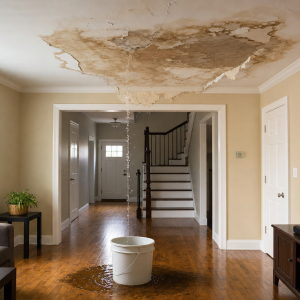
And don’t forget to look up. Are there new water stains on your ceilings or walls? That’s direct proof of a roof failure. Photograph them immediately, especially if they are actively dripping.
Gathering Corroborating Evidence
Your photos and videos are the heart of your claim, but you need to back them up with objective, third-party proof that a major weather event actually happened. This is how you shut down the insurer’s attempt to claim the damage is from a long time ago.
Start gathering official reports from reliable sources:
- Local Weather Reports: Get screenshots or printouts from local news stations or weather services. You want reports that detail the storm’s date, wind speeds, and hail size specifically for your neighborhood.
- NOAA Data: The National Oceanic and Atmospheric Administration (NOAA) is your best friend here. Their storm data is official, unbiased, and serves as rock-solid verification of the weather event.
This infographic lays out the playbook insurers often use. They guide claims down a path that frequently leads from damage to denial, forcing you to fight for every dollar you’re owed.

As you can see, the process is designed to be adversarial. Your meticulously gathered evidence is the only thing that can break this cycle of delay and denial.
The Power of a Communication Log
Every single phone call, every email, every conversation you have with your insurance company is a part of your claim. A detailed communication log isn’t just a good idea; it’s your best defense against the “he said, she said” games, broken promises, and intentional delays.
Never, ever rely on a verbal promise from an adjuster. If it isn’t in writing, it never happened. Your log is the paper trail that holds them accountable.
Grab a simple notebook or create a spreadsheet and track everything:
- Date and Time: Log every single interaction, without fail.
- Person Spoken To: Get their full name, title, and adjuster ID number. Don’t be shy about asking for it.
- Method of Communication: Was it a phone call, email, or in-person meeting? Note it down.
- Summary of Discussion: Write down the key points. What promises were made? What timelines were given? What questions did you ask?
- Follow-Up Actions: Note any tasks they gave you or that you need to complete.
This log, combined with your visual evidence and weather reports, becomes the unshakable foundation of your claim. This level of organization is also critical when your insurer demands you submit a formal Proof of Loss—a sworn statement detailing the scope and amount of your loss. Having your portfolio ready makes this step far less intimidating. You can learn more about how to handle this critical document in our guide on the importance of a Proof of Loss form.
Managing the Insurance Adjuster’s Visit
The on-site inspection is the moment of truth. This isn’t a friendly visit; it’s a financial evaluation where the insurance company’s adjuster—who is paid to protect their employer’s bottom line—will look for any reason to deny or pay as little as possible on your claim.
How you handle this meeting can make or break your entire case.
First, the most important rule: you absolutely must be present for this inspection. Never, ever leave the adjuster alone on your property. They are not there to be your advocate or to meticulously search for every bit of damage. They are there to build a case that serves their employer, not you.
Your job is to be an active, informed participant. With your portfolio of damage photos and documentation in hand, you’ll walk them through the evidence you’ve collected. Point out every single dented shingle, every lifted edge, and every piece of collateral damage you found. If you don’t show it to them, there’s a strong chance it will never make it into their report.

Recognizing and Countering Common Deflections
Get ready to hear a series of well-rehearsed excuses designed to shift blame away from the storm. The company adjuster has a playbook, and you need to be ready to shut down their moves in real-time.
Here are some of their greatest hits:
- “It’s just wear and tear.” This is the go-to argument for any roof that isn’t brand new. Your counter is to point directly to your pre-storm photos and the official weather data proving a major storm event just hit your address.
- “That’s faulty installation.” They’ll blame the original roofer for anything they can find, from nail placement to shingle alignment. This is a classic attempt to pass the buck.
- “The damage is only cosmetic.” They’ll claim hail dents don’t actually affect the roof’s function. You have to push back, explaining that these impacts have shattered the shingle’s integrity, voided the manufacturer’s warranty, and will drastically shorten its lifespan.
These deflections are not an honest assessment. They are strategic maneuvers to reduce the payout. Your calm, evidence-based rebuttal is your strongest defense.
The scale of this issue is massive. Wind and hail damage claims now dominate the industry, making up nearly 50% of all homeowner filings. As storms get more intense, insurers are digging in their heels, especially for roofs over 20 years old. In those cases, they often default to depreciated value coverage instead of a full replacement. You can find valuable insights on roof age and insurance policies to better understand these industry tactics.
Leveling the Playing Field with Your Own Expert
Walking onto that roof with just the company adjuster puts you at a severe disadvantage. They are a trained professional whose entire job is to minimize claims. To have any shot at a fair outcome, you need an expert in your corner.
This is where bringing your own trusted advocate—either a reputable roofing contractor or, even better, a public adjuster—becomes a game-changer. Their presence at the inspection sends an immediate, powerful message to the insurance company: you are serious, you know your rights, and you will not be steamrolled.
When your public adjuster meets the company adjuster on the roof, the dynamic shifts instantly. The insurer knows they can’t get away with their usual lowball tactics because another licensed expert is there, documenting everything and knowing exactly what constitutes legitimate storm damage.
A public adjuster will spot damage the company adjuster “conveniently” overlooks. They speak the same technical language and can dismantle bogus arguments about “wear and tear” on the spot. They make sure the scope of damage is accurately and completely documented from the very beginning, preventing the insurer from controlling the narrative.
This single move can be the difference between a check for a few minor repairs and a settlement that actually covers a full, proper roof replacement.
How to Dispute a Lowball Offer or Denial
Getting a lowball offer or an outright denial for your roof claim isn’t the end of the story. For the insurance company, it’s a calculated business move. They’re betting you’ll feel defeated and just take what you’re given.
Don’t. This is where the real fight begins. It’s time to stop just documenting damage and start formally challenging their decision with cold, hard evidence.
Your first move? Formally request, in writing, the entire claim file from their adjuster. I’m not talking about the one-page summary letter. You need everything: their photos (even the blurry ones), their field notes, the estimate from their software, and any engineering reports they might have tucked away.
This file is the basis for their decision, and it’s almost always riddled with errors, missed damage, and flimsy justifications you can easily pick apart.
Crafting a Powerful Dispute Letter
Once you have their report in hand, it’s time to draft your rebuttal. This isn’t an emotional email; it’s a professional, evidence-based smackdown of their position.
Keep it structured and methodical. You’re going to dismantle their argument piece by piece:
- State Your Position: Start by clearly stating that you formally dispute their settlement offer of [Amount] or their denial of claim [Claim Number]. No fluff.
- Counter Their Points with Evidence: Go through their report line by line. Did they claim “pre-existing wear and tear”? Counter it with your timestamped photos from before the storm. Did they underestimate the scope? Point directly to your contractor’s detailed estimate.
- Attach Your Proof: Don’t just mention your evidence—include it. Attach copies of your photos, your contractor bids, and the local weather data. You are forcing them to look at the facts they chose to ignore.
- Set a Deadline: End the letter by stating you expect a revised, fair settlement within a reasonable timeframe, like 30 days, and that you’re prepared to escalate if they don’t comply.
This approach signals you won’t be pushed around. It forces them to re-evaluate based on your facts, not just their desire to close the claim cheaply.
Invoking the Appraisal Clause in Your Policy
If your dispute letter doesn’t get you a fair offer, it’s time to pull out a bigger tool. Buried in the fine print of your policy is likely an appraisal clause—a powerful provision that lets you force a binding, impartial evaluation when you and your insurer can’t agree on the dollar amount of your loss.
It’s a straightforward process:
- You hire your own independent appraiser (this is often a public adjuster or a highly experienced contractor).
- The insurance company hires their appraiser.
- The two appraisers review all the evidence and try to agree on a fair amount.
- If they can’t agree, they bring in a neutral “umpire” to make the final, binding decision.
Invoking appraisal yanks the decision-making power away from the biased company adjuster and puts it in the hands of objective experts. It’s a game-changer for breaking a stalemate.
Success Story: Turning a $3,000 “Repair” into a $35,000 Replacement
A homeowner in Raleigh, NC, got a check for just over $3,000 from his insurance company after a nasty windstorm. The company adjuster insisted the damage was minor and only a few shingles needed repair. The homeowner knew she had significantly more roof insurance claim damage, via her roofer. Frustrated, she hired For The Public Adjusters who immediately found and documented the widespread, undeniable wind related damages the company adjuster had “missed.” By presenting this irrefutable proof and invoking the appraisal clause, that insulting $3,000 offer was turned into a $35,000 settlement for a full roof replacement.
The Critical Difference a Public Adjuster Makes
This case shows the massive gap between the adjuster your insurer sends out and a public adjuster who works only for you. The company adjuster serves their employer’s bottom line. A public adjuster has one fiduciary duty: to you, the policyholder.
We are licensed experts who live and breathe this stuff. We know how to document a claim, read the complex policy language, and negotiate aggressively to get every dollar you’re owed. For a deeper look, check out our guide on whether your insurance will cover a full roof replacement.
Insurers love to use your roof’s age against you. Once a roof hits 20 years, policies get more restrictive, premiums jump, and claim payouts get depreciated. They’ll use any sign of age as an excuse to deny a claim based on “wear and tear.”
An experienced public adjuster knows exactly how to separate legitimate storm damage from normal aging—a distinction company adjusters conveniently blur. This expert advocacy is your single most powerful weapon when you’re facing a bogus denial or a lowball offer.
Knowing When To Hire a Public Adjuster
Let’s be blunt: the endless back-and-forth with your insurance company isn’t just frustrating. It’s often a deliberate strategy to wear you down until you accept a lowball offer or just give up entirely.
When your roof insurance claim hits a wall, that’s your signal. It’s time to stop fighting alone and bring in a professional advocate.
A public adjuster is a state-licensed insurance expert who works exclusively for you, the policyholder. Unlike the adjuster your insurance company sends out (who works for them), a public adjuster’s only loyalty is to you. Their job is to document your loss, negotiate on your behalf, and maximize your settlement.

Red Flags That Mean It’s Time To Call for Help
Recognizing the exact moment to get an expert involved is critical. If you see any of these tactics, your insurer is not acting in good faith, and you need professional backup—fast.
- An Outright Denial: The insurer denies your claim using flimsy excuses like “pre-existing wear and tear” or “faulty installation,” even with clear evidence of storm damage. You need an expert to dismantle these bogus arguments.
- A Lowball Settlement Offer: Their offer doesn’t even come close to covering a legitimate roofer’s estimate. This isn’t a mistake; they are daring you to challenge them.
- Unexplained Delays: Suddenly, the company adjuster is impossible to reach. Calls go to voicemail, and emails go unanswered for weeks. This “ghosting” is a classic delay tactic designed to make you abandon the claim.
- Complex or Widespread Damage: The damage isn’t just a few shingles. It involves structural issues, water intrusion into your attic and walls, or other collateral damage. The claim’s complexity just skyrocketed, and a public adjuster ensures nothing gets overlooked.
These aren’t just minor frustrations; they are clear signs that your claim is heading for disaster. If you’re on the fence, our detailed guide explains more about when you should hire a public adjuster to fight for your rights.
A public adjuster levels the playing field. The insurance company has a team of experts working for them; you deserve to have one working exclusively for you.
When you’re trying to navigate this process, it’s crucial to understand who is actually on your side. The difference between the adjuster your insurance company sends and a public adjuster you hire is night and day.
Public Adjuster vs Insurance Company Adjuster
| Feature | Public Adjuster | Insurance Company Adjuster |
|---|---|---|
| Who They Work For | You, the policyholder. | The insurance company. |
| Loyalty & Allegiance | To you and your financial recovery. | To the insurance company’s bottom line. |
| Primary Goal | Maximize your settlement payout. | Minimize the insurance company’s payout. |
| Licensing | Licensed by the state to represent the public. | Licensed by the state to represent insurers. |
| How They Are Paid | A small percentage of the settlement they secure for you. | Salary or contract pay from the insurance company. |
The takeaway is simple: one works to pay you as much as possible, while the other works to pay you as little as possible.
An Investment, Not an Expense
Many homeowners hesitate to hire a public adjuster because they worry about the cost. This is a complete misunderstanding of their value.
Public adjusters work on a contingency fee. This means they get paid a small, agreed-upon percentage of the final settlement after they get you paid.
If they don’t increase your settlement, you owe them nothing. It’s that simple. This structure ensures their goals are perfectly aligned with yours: get the largest possible payout from the insurance company.
Don’t think of it as a cost. Think of it as an investment in avoiding a massive financial loss. Accepting a lowball offer of $5,000 when you’re actually owed $40,000 for a full roof replacement is the real cost. A public adjuster’s fee is a small price to pay to recover the $35,000 the insurer tried to keep.
Burning Questions About Your Disputed Roof Claim
When you’re going head-to-head with your insurance company over a roof claim, you’re going to have questions. That’s normal. Big insurers like State Farm and Allstate actually count on your confusion to make you back down.
Let’s cut through the noise with some straight answers to the most common worries we see from homeowners.
What if My Insurance Company Says My Roofer is at Fault?
This is one of their oldest tricks in the book. The company adjuster, who almost never has a roofing license, will find some trivial installation issue from years ago and claim that’s the real reason your roof is leaking—completely ignoring the softball-sized hail that just pummeled your neighborhood.
It’s a pure deflection tactic.
Your countermove is to get a detailed, written report from your own licensed, reputable roofing contractor. This report needs to directly shut down the insurer’s nonsense, showing precisely how the damage patterns scream “storm impact,” not “bad installation.” A good public adjuster will take that expert report and use it to dismantle the insurance company’s argument piece by piece.
Will My Insurer Drop Me if I Hire a Public Adjuster?
Homeowners worry about this constantly, and insurance companies are more than happy to let that fear linger. Let’s be crystal clear: it is illegal for an insurance company to drop your policy in retaliation for hiring a public adjuster on a legitimate claim.
Public adjusters are licensed professionals, recognized and regulated by the state’s Department of Insurance. Bringing one on board is simply you exercising your right to expert representation. After all, your insurer has its own team of experts. Hiring your own just signals that you’re serious about getting paid what you’re owed.
Dropping a policyholder for fighting for a fair claim is a classic example of insurance bad faith. If you suspect you were non-renewed because you hired help, you may have grounds to take legal action.
How Long is This Fight Going to Take?
I wish there was a simple answer, but the truth is, insurers often use delay tactics as a weapon to wear you down. A straightforward dispute might wrap up in 30 to 60 days once you hit them with solid counter-evidence.
But if the insurer digs in their heels or you have to invoke the appraisal clause in your policy, the fight can easily stretch out for several months.
The only way through it is relentless pressure. You have to document every call, send letters via certified mail, and follow up every single week demanding an update. This is where a public adjuster is invaluable—they take over that grind, making sure your file never gets shoved to the bottom of the stack.
I Already Cashed the First Check. Can I Still Dispute the Claim?
Absolutely. In nearly all cases, cashing that first, ridiculously low check does not forfeit your right to demand more money. The only exception is if you signed a document with “full and final release” language on it.
Think of that initial payment as the undisputed amount—it’s the part of the damage the insurer admits to. You can, and should, cash that check to get started on temporary repairs. Then, you continue the fight for the full amount you’re actually owed.
Just be incredibly careful about what you sign. An insurer might send you $4,000 for a roof they know will cost $25,000 to replace, hoping you’ll see the check, feel relieved, and go away. Don’t fall for it. By cashing the check and continuing the fight, you keep your claim alive.
Wind damage claims are challenging, especially in coastal states like North Carolina and Virginia, due to specific policy exclusions, separate percentage deductibles, and the constant battle over whether damage is from a covered storm or non-covered wear and tear.
What is the NCIUA, and how do I file a wind damage claim if my policy excludes wind coverage?
The North Carolina Insurance Underwriting Association (NCIUA), or Coastal Property Insurance Pool, provides essential coverage, including wind and hail, to properties in specific coastal counties that standard carriers exclude. If your primary policy excludes wind, you must have a separate NCIUA policy. We coordinate the claim between both carriers, ensuring the primary carrier handles the initial loss adjustment and the NCIUA pays for the wind-specific peril loss, which requires expert separation of damages.
How is a "Named Storm" deductible different from a standard wind/hail deductible in coastal NC and VA?
A Named Storm deductible (often 2% or 5%) is only triggered when the damage occurs during a storm officially named by the National Weather Service (Tropical Storm or Hurricane). It is often much higher than the standard percentage deductible for non-named wind events (like a severe thunderstorm or Nor’easter). We verify the exact timing of the loss and the storm's official designation to ensure the lower, more favorable deductible is applied, if legally possible.
My insurance company says my roof damage is "wear and tear," not wind. How do I prove the wind caused the damage?
This is the most frequent denial. We use two pieces of evidence: 1) Forensic Analysis: We secure an inspection from an independent engineer who can identify the specific uplift or sheer patterns characteristic of high wind damage (e.g., lifted shingle seals, shingle creases/tears, directional pattern damage) versus the random, gradual signs of aging. 2) Weather Data: We provide dated, localized wind speed reports that prove the wind was high enough to cause damage to a reasonably maintained roof.
If wind only removed a few shingles, how does a Public Adjuster argue for replacement of the entire roof?
We invoke the doctrine of System Integrity. If the original shingle is discontinued or if the remaining shingles are so weathered that a patch job will result in a blatant patch outside of Like, Kind, and Quality (thus reducing the home's market value), we argue that patching the roof is not restoring the property to its pre-loss condition and value. This is critical, especially where a visible mismatch exists on the primary slopes of the roof.
The wind caused a tree to fall, damaging my fence and roof. Are the costs for tree removal covered in my claim?
Yes, the cost to remove the portion of the tree that is blocking the repair of a covered structure (like the roof) is covered under the Dwelling limit. We ensure the claim also includes coverage for the fence under the Other Structures limit (Coverage B) and that the debris removal costs for the tree are fully itemized to prevent lowballing.
Wind-driven rain entered my attic after shingles blew off. Is the resulting water and mold damage covered?
Yes, this is a classic covered loss. The wind is the initial Peril that created the opening in the roof (a covered event), and the resulting water damage (even if water is excluded on its own) is covered because it was directly caused by the covered wind damage. We ensure the estimate includes full demolition, drying, and, if necessary, mold remediation caused by the wind-driven water intrusion.
How does the involvement of a Public Adjuster ensure payment for the full cost of temporary repairs (tarps, boarding up)?
We advise policyholders to make reasonable temporary repairs to prevent further damage, as required by the policy. We then ensure that all receipts for materials and reasonable labor costs for tarps, board-up, and mitigation are submitted as part of the claim. These emergency costs are crucial and are generally reimbursed in addition to the deductible.
My policy has a $1,000 deductible, but the carrier is only offering me $800 for wind repair. Why?
This often occurs because the carrier's estimate is below your deductible. They have determined the cost to repair the damages they acknowledge (e.g., replacing three shingles) is only $1,800. After deducting your $1,000 deductible, they pay the remaining $800. A Public Adjuster's role is to prove the actual, necessary cost of repair (including code upgrades, ventilation, and full replacement scope) is tens of thousands more, ensuring you recover the maximum amount above your deductible.
If my insurance adjuster only inspects from the ground or a drone, how does a Public Adjuster prove damage to the decking or underlayment?
Visual and drone inspections often miss critical sub-surface damage. We insist on a physical inspection where a few shingles are lifted in key areas to check the nailing pattern, underlayment integrity, and decking condition. We also use thermal imaging from the inside of the attic to check for current or past water intrusion that may compromise the wood structure, proving damage the carrier missed.
Can I use the funds from my wind damage claim settlement for anything other than repairing the roof?
The funds (minus the deductible) are paid to you to restore the damaged property. If your policy is Replacement Cost Value (RCV), you must complete the repairs and submit receipts to receive the final depreciation (holdback) payment. Using the funds for unrelated expenses is generally considered a breach of policy conditions for RCV claims and can lead to non-payment of the final recoverable depreciation amount.
What is the Appraisal process, and when is it the best option for resolving a wind damage claim dispute in NC/VA?
Appraisal is a contractual dispute mechanism found in most NC and VA policies. It is used when the insurer agrees that the damage is covered but disputes the value or scope of the loss. A Public Adjuster acts as your appointed Appraiser, and we resolve the disagreement with the carrier's appraiser and a neutral umpire. It is often a faster, lower-cost alternative to litigation for resolving valuation disputes and is highly effective in wind claims.
When your insurance company is more focused on protecting its profits than protecting your home, you need an advocate who works only for you. The team at For The Public Adjusters, Inc. specializes in turning denials and lowball offers into fair settlements. If you’re struggling with a roof insurance claim in North Carolina or Virginia, visit us at https://forthepublicadjusters.com for a no-cost claim review and expert guidance.