Let’s be blunt: a property damage claim isn’t a request for help. It’s the first shot fired in a brutal negotiation with your insurance company. You’re asking for the compensation you’re owed after your property takes a hit, but your insurer’s goal isn’t to make you whole—it’s to protect their bottom line.
Why Your Property Damage Claim Is an Uphill Battle
After a fire, flood, or nasty storm tears through your life, you expect the insurance company you’ve been paying faithfully to have your back. But the hard truth is, you’re now in an adversarial relationship.
Think about it. Companies like State Farm and Allstate are massive, profit-driven corporations. Every single dollar they pay out on a claim is one less dollar in profit. This is a fundamental conflict of interest, and it poisons the entire claims process from day one.
Your insurance policy isn’t a safety net; it’s a legal contract drafted by their lawyers to protect them. They will twist every ambiguous phrase, loophole, and exclusion in their favor. They have armies of adjusters and attorneys trained to find any reason possible to delay, deny, or underpay what you are rightfully owed.
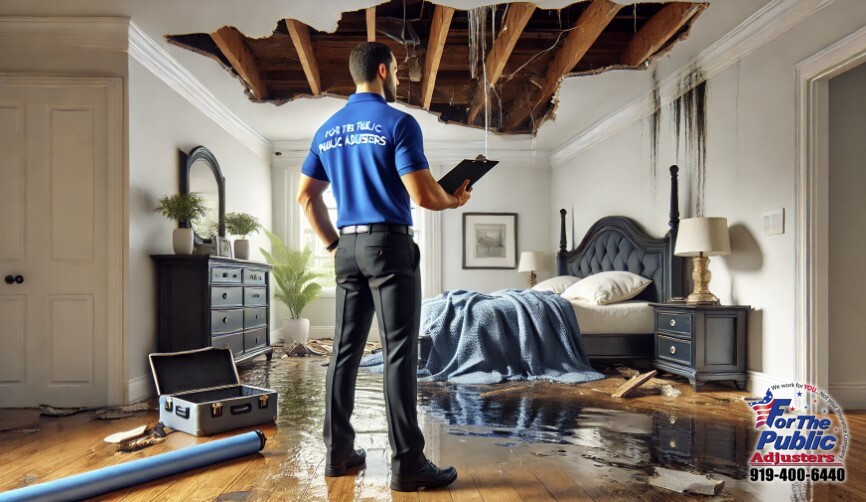
Common Insurer Tactics You Will Face
The moment you file, you’re playing a game where the rules are rigged against you. Insurers use the same playbook over and over to control the settlement.
- Weaponized Policy Language: They use confusing jargon and dense clauses as a smokescreen to limit what they have to cover.
- Delay and Stall Tactics: Endless requests for more paperwork and glacial response times are designed to wear you down until you’re so exhausted you’ll take any lowball offer they throw at you.
- The Lowball First Offer: Their first offer is almost always a joke. It’s a fraction of what your claim is actually worth because they’re banking on you not knowing any better.
The numbers tell the story. In 2023, around 5.3% of insured homes in the US filed a claim. Of those, a staggering 97.3% were for property damage caused by things like theft, fire, and wind. The stakes are massive; fire and lightning damage claims alone averaged $77,340 between 2016 and 2020. That’s a lot of money your insurer wants to keep in their own pockets.
Whether you’re dealing with a burst pipe or catastrophic wind damage, you have to be ready to fight for a fair settlement. For a deep dive into fighting back after a storm, check out this excellent Storm Damage Roof Insurance Claim Guide. The first step to winning this fight is knowing your enemy’s playbook. Only then can you level the playing field and get the money you need to rebuild.
The Insurance Company Playbook for Undervaluing Claims
https://www.youtube.com/embed/y6JQI0GKiss
Let’s be blunt: when you file a property damage claim, you are not dealing with a helpful partner. You are up against a massive corporation with a well-oiled system designed for one thing: to pay you as little as legally possible.
Insurance giants like Allstate and State Farm didn’t get rich by writing big checks. They have a playbook, a set of tactics honed over decades to undervalue, delay, and deny legitimate claims. Knowing this playbook is your first, and best, line of defense.
The Lowball Offer Straight Out of the Gate
One of the oldest tricks in the book involves the software they use to create their repair estimate. The company adjuster will plug in a few details and generate a report using a program loaded with outdated, rock-bottom prices for materials and labor.
These numbers almost never reflect the real-world costs of hiring a reputable contractor in your area right now. The result is an official-looking document that’s often thousands, if not tens of thousands, of dollars short of what the repairs will actually cost. They are banking on you being too overwhelmed to question it.
Twisting Your Policy Against You
Another favorite tactic is to willfully misinterpret your policy language. Your insurance contract is a dense, confusing legal document, and adjusters are experts at exploiting every ambiguity.
They might tell you that water damage isn’t covered because it came from a “gradual leak” or that the wind damage to your roof is just normal “wear and tear.” After a fire, they’ll often try to limit the payout to only what was physically burned, conveniently ignoring the toxic, pervasive smoke and soot that has contaminated your entire home and HVAC system. This is a classic bad-faith argument.
Understanding the nuances of your policy is critical. Digging into related topics like drone insurance costs and coverage can even offer a glimpse into how insurers calculate risk and value across different policy types, giving you a broader perspective on their methods.
The Delay Game: Weaponizing Your Frustration
Insurance companies know that time is money—theirs, not yours. They use intentional delays and endless requests for repetitive documentation to wear you down. This isn’t just incompetence; it’s a strategy.
The longer they drag out your property damage claim, the more financial pressure you feel. They know you need to get your life back together, and they’re counting on you getting desperate enough to accept a fraction of what you’re owed just to make it all stop. This isn’t just a theory; it’s a practice so common it has led to major legal battles. In State Farm Mut. Auto. Ins. Co. v. Campbell, the U.S. Supreme Court slammed State Farm for a nationwide scheme of capping payouts and using bad-faith tactics to cheat policyholders, exposing a culture of fraud designed to protect profits over people.
Success Story: A Raleigh business owner learned this firsthand after a devastating fire. Their insurer, a major national brand, offered a pathetic $85,000, writing off most of the smoke damage as “cosmetic.” It wasn’t nearly enough. After bringing in a public adjuster who hired an industrial hygienist and built an ironclad, line-by-line estimate, the game changed. The final settlement was over $270,000—more than 3x their initial lowball offer.
Insurance companies have a powerful incentive to play hardball. Global insured losses from natural disasters are climbing by 5% to 7% every year. Swiss Re reported that these losses hit $137 billion in 2024 and are on track to approach $145 billion in 2025.
This immense financial pressure trickles down directly to your claim. To them, you aren’t a person in crisis; you’re a number on a balance sheet they need to shrink.
Common Insurer Tactics vs Your Counter-Strategy
Insurance companies rely on a standard set of tactics to control the claims process and minimize what they pay you. Here’s a breakdown of what to watch for and how you can fight back proactively.
| Insurer Tactic | What It Looks Like | Your Proactive Counter-Strategy |
|---|---|---|
| The “Recorded Statement” Trap | They ask for a recorded statement right away, often phrasing it as a standard, mandatory step. | Politely decline. You are not required to give one. State that you will provide all necessary information in writing to avoid misinterpretation. |
| Lowball Estimates from “Preferred” Contractors | They push you to use one of their network contractors who provides a cheap estimate that aligns with their low offer. | Always get at least three independent estimates from your own vetted, local, and reputable contractors. Never rely solely on theirs. |
| The “Wear and Tear” Excuse | They deny a claim for roof or siding damage by claiming it was pre-existing or due to age, not a specific event like a storm. | Provide maintenance records, photos of your property before the damage, and any inspection reports to prove its prior condition. |
| Misinterpreting Policy Exclusions | The adjuster points to a vague exclusion in your policy to deny part or all of your claim (e.g., “gradual leak” for water damage). | Demand they provide the exact policy language they are citing, in writing. Have an expert (like a public adjuster) review it. |
| Stalling and “Losing” Documents | They repeatedly ask for documents you’ve already sent or claim they never received your file, dragging the process out for months. | Document every single communication. Send all documents via certified mail or email with read receipts. Follow up in writing after every phone call. |
Recognizing these moves for what they are—calculated strategies—is the first step toward taking control of your claim and forcing the fair settlement you deserve.
Building an Unshakeable Evidence File for Your Claim
After a disaster, the most powerful tool you have in your fight against an insurance company is undeniable proof. Let’s be blunt: when you file a property damage claim, you can’t just tell them what you lost. You have to show them, in painstaking detail.
Your mission is to build a fortress of evidence so strong that it leaves the insurance company zero room to argue, delay, or lowball your settlement.
This goes way beyond snapping a few quick pictures on your phone. You need to think like a prosecutor building a case. Every receipt, every photo, and every logged conversation becomes an exhibit that proves the true value of your loss. A flimsy evidence file is an open invitation for the insurer to slash your claim; an unshakeable one forces their hand.
Documenting Every Single Loss
First things first: you need a comprehensive inventory of all damaged personal property. This is a brutal, tedious task, but it is absolutely critical. For every single item—from your living room sofa and TV down to the spatulas in your kitchen drawer—you must document it.
Your inventory needs to include:
- Item Description: Be ridiculously specific (e.g., “Samsung 65-inch 4K Smart TV, Model QN65Q80A”).
- Age and Condition: How old was the item, and what shape was it in before the disaster?
- Original Cost: Dig up receipts, credit card statements, or bank records to prove what you paid.
- Replacement Cost: Find out what it costs to buy the exact same item new today. Include links to retail websites as proof.
This level of detail is non-negotiable. An insurer will gladly pay you $50 for a “blender.” They are forced to pay you $450 for a “Vitamix Professional Series 750 Blender” when you provide the proof.
Proving Structural and Hidden Damage
The insurance company’s adjuster is trained to see only the most obvious, surface-level damage. It’s a guarantee they will ignore or downplay hidden issues like smoke contamination in your attic, water damage seeping behind walls, or subtle structural compromises.
It’s your job to counter their biased assessment with your own expert proof. This means bringing in your own team. Whatever you do, don’t rely on their “preferred contractors,” who almost always have a cozy, referral-based relationship with the insurer.
Case Study in Evidence: A homeowner’s fire claim was initially assessed at $45,000 by their insurance company, which focused only on the visible charring. The family hired a public adjuster who brought in an industrial hygienist. Air and surface samples proved the entire home’s HVAC system and insulation were contaminated with toxic smoke particles—a fact the insurer conveniently ignored. The evidence was irrefutable. The final settlement was $190,000, covering a full remediation the family desperately needed.
Even major insurers know this damage is real, even if they hope you don’t. A publication from Chubb, a massive insurance carrier, details how smoke particles infiltrate ventilation systems and persist long after a fire, posing serious health risks. They know smoke damage is real and dangerous; your job is to force them to pay to fix it properly.
The Power of Third-Party Experts
The single most effective way to dismantle an insurer’s lowball estimate is with a competing report from an independent, licensed professional. Their adjuster is on their payroll; your expert works for you and only you.
- Structural Engineer: If you suspect foundation or structural frame damage, an engineer’s report is gospel. It can override an adjuster’s dismissive opinion in a heartbeat.
- Licensed Roofer: A detailed report from a reputable roofer documenting hail or wind damage carries far more weight than the adjuster’s quick glance from the street.
- Public Adjuster: A public adjuster is your ultimate evidence-gathering expert. They know exactly what proof is needed to build a winning property damage claim, how to format it, and how to present it for maximum impact.
By constructing a detailed, evidence-backed file, you shift the entire dynamic of the fight. You are no longer just asking for money; you are presenting an airtight legal and financial case that they cannot easily dispute. This meticulous preparation is your key to securing a fair and just settlement.

Navigating the Nightmare of an NFIP Flood Claim
If you thought fighting your homeowner’s insurance company was a brutal process, welcome to the bureaucratic nightmare of a National Flood Insurance Program (NFIP) claim. A flood-related property damage claim isn’t just another dispute; it’s a completely different animal, run by rigid federal rules built to limit payouts and grind you into submission.
Unlike a claim with a private company like Allstate, your NFIP claim is handled by an adjuster from FEMA or a “Write Your Own” (WYO) insurance company that’s just a front for the government. Let’s be blunt: these adjusters are not on your side. They are there to enforce a strict, anti-policyholder script.
Why NFIP Claims Are So Damn Hard
The whole system is designed to work against you from the second the water recedes. The rules are rigid, the deadlines are absolute, and the coverage gaps are massive. Most homeowners are absolutely stunned to learn what their NFIP policy won’t pay for.
Get ready to face hurdles like these:
- Brutal Proof of Loss Deadlines: You’re forced to submit a ridiculously detailed “Proof of Loss” form, usually within 60 days of the flood. One mistake, one missed document, and they have grounds for a full-blown denial.
- No “Bad Faith” Lawsuits: You can’t sue the NFIP for acting in bad faith. This is a critical legal weapon you have against private insurers who drag their feet or unfairly deny claims. Taking that away removes their main incentive to treat you fairly.
- Infamous Coverage Exclusions: NFIP policies are notorious for excluding coverage for almost everything in a basement—finished or not. They also won’t cover anything outside the building itself, like your landscaping, decks, sheds, or fences.
And these fights are only getting worse as catastrophic storms become the new normal. In 2025, global insured property losses from natural disasters skyrocketed, with North America in the crosshairs. Even with high insurance rates, the financial bleeding is immense—the 2025 Palisades and Eaton fires alone torched up to $65 billion in economic losses.
A Public Adjuster Isn’t an Option—It’s a Necessity
Trying to fight an NFIP claim alone is financial suicide. The adjuster sent by FEMA or the WYO company is following a playbook designed to pay you as little as legally possible. They have zero motivation to find hidden damage or make sure your settlement is fair. They work for the government, not you.
A public adjuster who specializes in NFIP claims is not just helpful; they are essential for survival. They know the twisted federal regulations, the absurd documentation rules, and the exact strategies needed to force the government-backed insurer to pay what’s owed.
A battle-tested public adjuster understands how to navigate the bureaucratic appeals process, which is heavily stacked against you. They build a claim that satisfies every strict federal requirement, documenting every single loss with the kind of overwhelming proof needed to force a fair payout.
You can learn more about how an expert turns the tables when you’re handling a complex flood damage claim. Without that specialized expertise on your side, you’re completely outgunned, leaving you to carry the true cost of rebuilding all by yourself.
How a Public Adjuster Levels the Playing Field
Let’s be blunt. After a disaster, you’re exhausted, broke, and staring down a fight you never asked for. On the other side of the table is your insurance company with its army of adjusters, lawyers, and engineers, all fighting to protect their bottom line. Who do you have fighting for you?
This is exactly where a public adjuster comes in. They aren’t just a helper; they are your professional advocate in a high-stakes battle over your property damage claim.
Think of it this way: the insurance company’s adjuster is their hired gun. Their loyalty is to the company that signs their paychecks, and their job is to find ways to pay you as little as possible. A public adjuster is a state-licensed professional you hire. Their one and only legal duty is to you—the policyholder—and their mission is to force the insurer to pay the absolute maximum you’re owed.
What Does a Public Adjuster Actually Do?
A public adjuster takes the entire weight of the claim off your shoulders and systematically dismantles the insurer’s lowball game plan. They don’t just “help” with the claim; they take complete control of it for you.
Here’s what that battle plan looks like:
- Launch an Independent Damage Assessment: They bring in their own experts to conduct a forensic, top-to-bottom inspection of your property, documenting every bit of damage the company adjuster conveniently “missed.”
- Build an Ironclad Evidence File: They create the bulletproof documentation we talked about earlier, building a detailed, line-by-line estimate of what it will actually cost to fix everything using today’s local prices for materials and labor.
- Weaponize Your Policy: They are fluent in the twisted, deceptive language of insurance policies. They know how to find and leverage clauses for coverage your insurer would never, ever point out to you.
- Go to War with the Insurer: They handle every email, every phone call, and every negotiation. They slam your evidence down on the table and force the insurance company to deal with the facts, not their own internal profit targets.
Simply put, they level the playing field. The insurer can no longer use its size and endless resources to bully you into taking a garbage offer. For a deeper dive into their role, you can find valuable insights into why hiring a public claims adjuster is a smart move when you’re gearing up for a fight.
 A Real-World Example: Turning the Tables on a Lowball Offer
The value a public adjuster brings isn’t some theory; it’s measured in the real dollars families need to put their lives back together. Take the story of a family whose home was hit by a nasty kitchen fire.
The firefighters got the blaze under control fast, but the smoke damage was everywhere. The insurance company—a huge national brand—sent out their adjuster, who did a quick 20-minute walkthrough. A few days later, they made a settlement offer of $30,000. The family was told this was plenty to replace a few cabinets, slap on some paint, and clean the carpets. Overwhelmed and just wanting it to be over, they nearly signed.
Something just didn’t feel right. A friend recommended they get a second opinion from a public adjuster. The first thing the public adjuster did was bring in an industrial hygienist to run tests. The results were sickening. Toxic soot and ash had been sucked into the HVAC system and blasted into every corner of the house, contaminating the attic insulation and seeping deep into the drywall.
The public adjuster then built a mountain of evidence. He submitted the hygienist’s report, photos of the hidden contamination, detailed estimates from specialized smoke remediation crews, and a full inventory of every piece of personal property ruined by the smoke. He also found a “Additional Living Expenses” clause in their policy that the insurance company had conveniently “forgotten” to mention.
He presented this new, undeniable claim to the insurer. At first, they pushed back, but the proof was overwhelming. After a brutal negotiation, the final settlement came in at $150,000—a stunning five times the original lowball offer.
This wasn’t some lottery win. It was the correct amount the family was owed all along. Without a professional advocate in their corner, they would have been forced to take a settlement that wouldn’t have even scratched the surface, leaving them to live in a toxic home or pay tens of thousands for proper repairs out of their own pocket. This is the power of having an expert on your side of the property damage claim.
Your Action Plan for Disputing a Lowball Offer
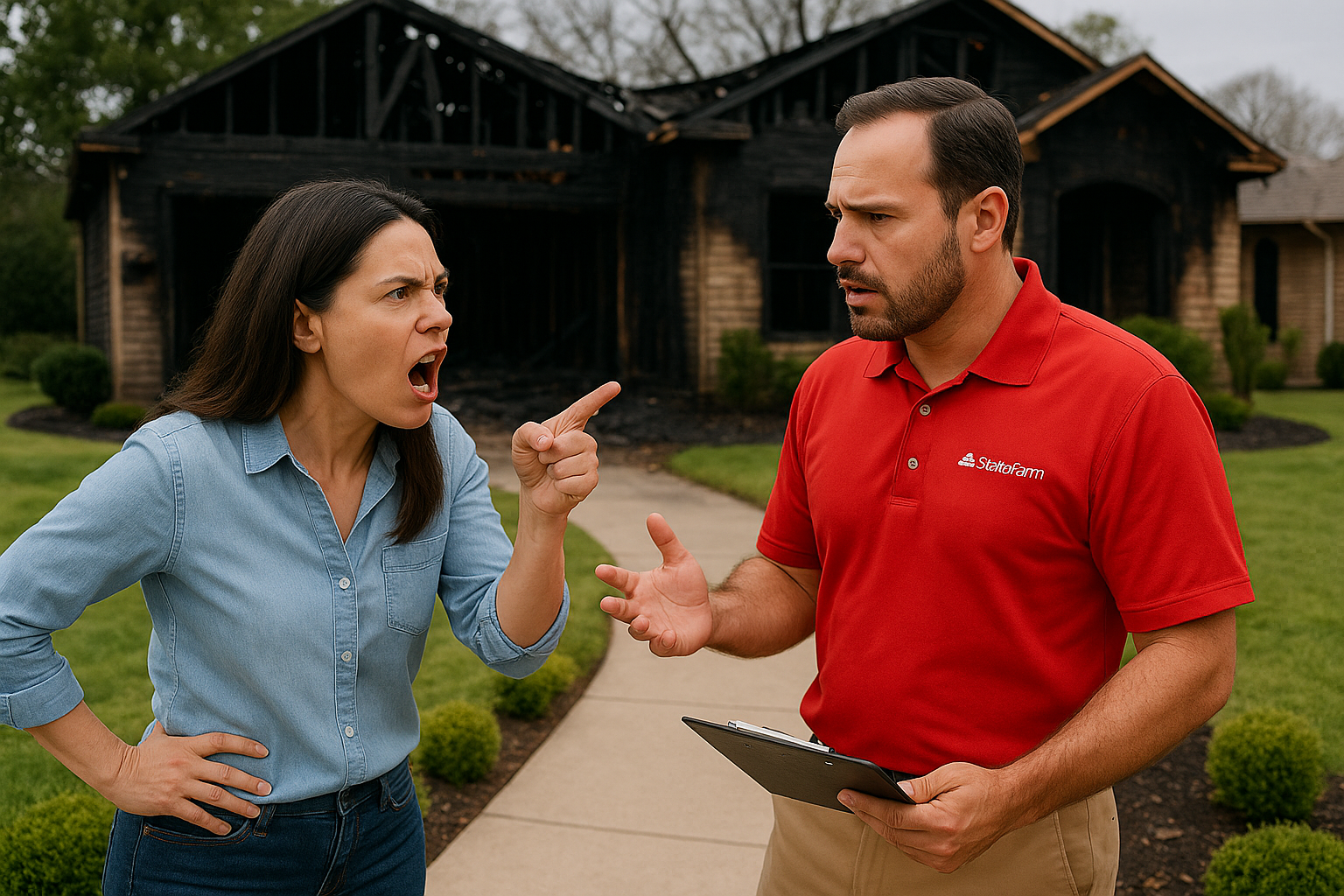
When that insultingly low settlement offer for your property damage claim lands in your lap, it can feel like a punch to the gut. Let’s be clear: this is not the end of the road. It’s a signal that the real fight is just beginning.
Do not, under any circumstances, accept that first offer. Think of it as their opening shot in a negotiation you have to win. It’s time to draw a line in the sand and execute a counter-attack to get the money you’re actually owed under your policy.
Your first move? Formally reject their offer in writing. Don’t just make a phone call. Send a professional, no-nonsense letter via certified mail that clearly states you are disputing their settlement amount. In that letter, you need to break down every single discrepancy between their joke of an estimate and the real-world numbers you have from your own contractors and inventory lists. This isn’t just a letter; it’s the start of a paper trail that puts them on notice you won’t be bullied.
Escalating the Dispute
When your letter doesn’t get you a fair number, it’s time to escalate. Buried in your policy documents is a powerful tool they hope you’ll never use: the appraisal clause.
Invoking this clause yanks the power away from the company’s biased adjuster. It forces both you and the insurer to hire your own independent appraiser to value the damages. If those two can’t agree, a neutral third-party “umpire” is brought in to make a final, binding decision. Suddenly, it’s not their game anymore.
While that’s happening, you should also be filing a formal complaint with your state’s Department of Insurance. This puts official, regulatory heat on the insurance company. They are legally required to respond and justify their lowball offer to a government agency, and that’s a headache they often want to avoid. For more on the nitty-gritty of these tactics, check out our guide on how to negotiate with an insurance adjuster.
This is the fundamental process a public adjuster uses to build a case that’s impossible to ignore.
This isn’t complicated, but it is methodical. You assess every inch of the damage, you document everything with overwhelming proof, and then you negotiate from a position of absolute strength. If the insurer still stalls, denies clear evidence, or refuses to budge, those aren’t just red flags—they’re giant, waving banners signaling bad faith. At that point, bringing in a public adjuster isn’t just an option; it’s a necessity to force them to the table and get a fair outcome.
Frequently Asked Questions About Claim Disputes
When you’re trying to put your life back together after a property damage claim, the last thing you need is your insurance company playing games. But delay tactics and lowball offers are part of their playbook. Here are the straight answers to the questions we hear every day from homeowners and business owners stuck in a fight for a fair settlement.
What Is the Difference Between the Insurer’s Adjuster and a Public Adjuster?
It all comes down to who they work for. The adjuster sent by your insurance company is their employee. Their job is to protect the company’s bottom line, which means their goal is to pay you as little as legally possible.
A public adjuster is a state-licensed professional you hire to work only for you. Their legal and ethical obligation is to you, the policyholder. They are your dedicated advocate, fighting to document every detail of your loss and force the insurance company to pay the maximum settlement you’re owed under your policy.
My Insurance Company Is Delaying My Claim What Can I Do?
Don’t let them wear you down. Unreasonable delays are a classic bad-faith strategy used by carriers like State Farm and Allstate, hoping you’ll get frustrated and accept a lowball offer just to be done with it.
It’s time to fight back. Start by sending a formal, written demand letter to the adjuster via certified mail. In it, you’ll demand a clear status update and a non-negotiable deadline for payment. If they keep stalling, your next move is to file a formal complaint with your state’s Department of Insurance. The threat of regulatory action is often the only thing that gets them to stop dragging their feet.
Can I Dispute the Insurance Company’s Repair Estimate?
You absolutely can, and you absolutely should. Never accept their first number. That initial estimate is almost always a lowball offer, deliberately calculated using cheap materials, outdated labor rates, and a scope of work that misses half the damage.
The only way to beat their numbers is to hit them with a better set of facts. You can start by getting independent estimates from contractors you trust. But the real knockout punch comes from a public adjuster, who will build a detailed, line-by-line counter-estimate that documents the true cost and scope of the damage. It forces the insurance company to negotiate based on reality, not their fantasy numbers.
Is It Worth Hiring a Public Adjuster?
For any claim that’s complex, large, or already in dispute, the answer is an unqualified yes. Think of it this way: the insurance company has their expert working to save them money. A public adjuster is your expert, working to get you every single dollar you are rightfully owed.
Studies have repeatedly shown that policyholders who hire a public adjuster often receive significantly higher settlements—sometimes by several hundred percent—than those who go it alone, even after the adjuster’s fee. They level the playing field, manage the entire stressful process, and give you the power to fight back against a corporate giant.
When your insurance company is lowballing, delaying, or denying your claim, you don’t have to take it lying down. The team at For The Public Adjusters, Inc. fights exclusively for policyholders in North Carolina and Virginia, making sure you get the fair settlement you deserve. Contact us today for a no-cost claim review and learn how we can take over the fight for you. Visit us at https://forthepublicadjusters.com to get started.