
When a hurricane rips through your life and damages your home or business, you assume your insurance company will be there to help you pick up the pieces. You’ve paid your premiums, after all. But for too many property owners, that assumption shatters when their insurer—be it Allstate, State Farm, or any other carrier—starts playing games. Suddenly, your claim is delayed, denied, or met with a lowball offer that doesn't even begin to cover the damage.
A hurricane claim attorney is the professional you call when this happens. They are your legal firepower, hired to fight back against these bad-faith tactics and force your insurance company to pay what they owe.
Why You Need an Advocate When Your Insurer Fights Back
After the storm passes, your first instinct is to secure your property and start the long road to recovery. You file your claim, thinking your insurance company is your partner in this.
Unfortunately, that’s rarely how it works. Your insurer is a business, and its main objective is to protect its profits by paying out as little as possible. Giants like State Farm and Allstate have a long history of putting their bottom line ahead of their policyholders' needs. This puts you in a terrible position—your financial survival is in direct conflict with their business goals.
This is where the fight becomes unfair. The insurance company sends out their adjuster, an employee or contractor whose loyalty is to the company, not you. They are trained to find loopholes in your policy, look for reasons to limit your coverage, and settle your claim for pennies on the dollar.
Who Is Truly on Your Side After a Hurricane?
When you're trying to dispute a complex claim, it’s crucial to understand who is working for whom. The answer isn't always obvious.
| Player | Who They Work For | Primary Goal |
|---|---|---|
| Insurance Company Adjuster | Your Insurance Company | Minimize the payout to protect the company's profits. |
| Public Adjuster | You, the Policyholder | Maximize your claim settlement based on policy terms. |
| Hurricane Claim Attorney | You, the Policyholder | Legally compel the insurer to pay a fair settlement and sue for bad faith if necessary. |
This table makes it clear: only a public adjuster or a dedicated attorney is truly in your corner.
Leveling the Playing Field with Legal Power
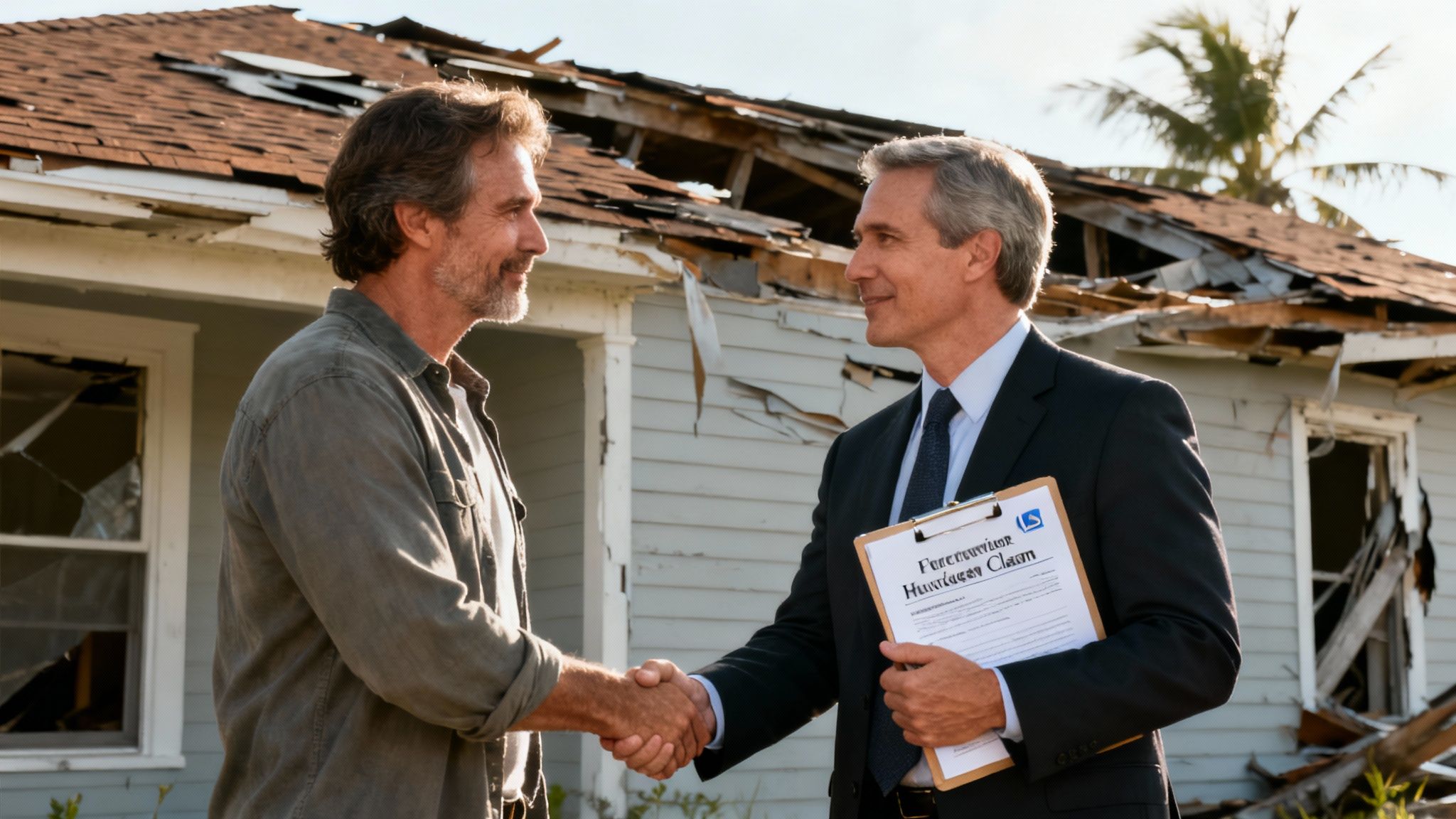
Hiring a hurricane claim attorney completely changes the dynamic. You're no longer just a policyholder fighting a faceless corporation; you have a legal advocate ready to go to war for you.
An attorney understands insurance law, contract language, and litigation inside and out. While both an attorney and a public adjuster can fight for you, only an attorney has the ultimate weapon: the power to file a lawsuit if the insurance company refuses to act fairly. To learn more about what a public adjuster does, check out our explanation of the public claims adjuster on our blog and see how their role fits into the bigger picture.
When an attorney gets involved, the insurance company knows you mean business. It’s a clear signal that you won’t be bullied into accepting an unfair offer. Your lawyer takes over all communication, shuts down delay tactics, and builds an ironclad case based on the facts of your damage and the promises in your policy.
"Insurance companies have teams of professionals working to protect their bottom line, and you deserve someone just as experienced on your side. An attorney forces them to justify their decisions under the law, not just their internal guidelines."
Holding Insurers Accountable for Their Actions
When an insurance company unreasonably delays, denies, or underpays a valid claim, they may be acting in "bad faith." This isn't just poor customer service; it's a serious legal violation where they break their contractual promise to you.
A hurricane claim attorney is the only professional who can pursue a bad faith lawsuit. This legal action can force the insurer to pay not only what they originally owed you but also additional damages for their misconduct.
This legal pressure is often the only thing that gets a massive insurance carrier to do the right thing. It ensures you get every dollar you need to rebuild your home and your life.
Understanding the Three Adjusters Controlling Your Claim

After a hurricane tears through your property, you’re suddenly thrown into a world of adjusters. But here’s a critical mistake I see homeowners and business owners make time and time again: they assume every adjuster is on their side.
Nothing could be further from the truth.
In reality, there are three completely different types of professionals involved in your claim, and each one has a very different person they answer to. Understanding who they work for is the single most important part of protecting your family’s financial recovery. Think of it this way: you’d never let the other side’s lawyer represent you in court. The same logic applies here.
The Insurance Company Adjuster
The very first person your insurance company sends to your home is their own adjuster. They might call them a "staff" adjuster or even an "independent" adjuster to make them sound neutral.
Don't be fooled. They work for the insurance company. Period. Their job isn't to make you whole; it's to protect their employer's bottom line.
These adjusters are trained to find every possible reason to limit your payout. I’ve seen it all:
- Minimizing the damage: They’ll tell you a few shingles will fix a roof that actually needs a full replacement to stop future leaks.
- Twisting your policy exclusions: They’ll try to blame wind damage on old "wear and tear" or find any loophole to deny coverage.
- Using rock-bottom pricing: Their estimates are often based on outdated software with lowball costs for labor and materials that just aren't realistic after a disaster.
Their goal is to close your claim fast and cheap. Accepting their first offer without getting a second opinion is like letting the fox guard the henhouse.
Success Story: A public adjuster took on a case where the insurer's adjuster offered a homeowner just $12,000 for major roof and water damage. The homeowner knew it was wrong. After a real investigation by the public adjuster that documented the full extent of the damage, that claim settled for over $85,000—a staggering 700% increase. This shows the power of having a real advocate on your side.
The Public Adjuster
This is where the tables turn. Unlike the company adjuster, a public adjuster works only for you, the policyholder. We are state-licensed professionals you hire to manage your claim from start to finish and fight for your best interests.
A public adjuster levels the playing field. We bring the same, if not more, expertise to your side of the negotiation.
Our job is to perform our own exhaustive investigation of the damage, documenting everything the insurance company conveniently overlooks. We dig into the fine print of your policy and build a rock-solid claim designed to get you the maximum settlement you are rightfully owed. We break down the key differences in our guide to an insurance adjuster vs. a public adjuster.
The Hurricane Claim Attorney
The third person in your corner is the hurricane claim attorney. While a public adjuster is an expert in assessing damage and negotiating a claim, an attorney is your legal weapon.
You bring in an attorney when the insurance company digs in its heels and acts in bad faith—unreasonably delaying, denying, or lowballing your claim.
A hurricane claim attorney has the power of the law to hold giants like Allstate and State Farm accountable. They can file a lawsuit for breach of contract or insurance bad faith. Often, just the threat of being taken to court is enough to make an insurer finally offer a fair settlement. If they still refuse to do the right thing, an attorney is the only one who can take them before a judge and jury to demand justice.
Red Flags That Signal It’s Time to Hire an Attorney
After a hurricane turns your world upside down, your insurance company is supposed to be your lifeline. But what happens when that lifeline feels more like an anchor, dragging you down? When their actions feel like a betrayal, that’s your cue to get a legal advocate in your corner.
You have to learn how to spot the difference between a normal negotiation and outright bad faith tactics. Recognizing these red flags is the key to protecting your right to get paid what you’re truly owed.
So, how do you know when your insurer has crossed the line? It usually starts with their first offer and the way they communicate. If you feel like you’re being ignored, bullied, or fed a line, you probably are. These aren't just customer service hiccups; they’re calculated strategies designed to save the insurance company money. Your money.
The Lowball Offer: A Stalling Tactic in Disguise
One of the most common red flags is getting a settlement offer that’s just plain insulting. You get a check in the mail that doesn't even begin to cover the estimates you got from your own trusted contractors. This isn’t a simple difference of opinion. It’s a move.
Insurance giants like Allstate and State Farm often throw out these low initial offers for two reasons:
- They bet on your desperation. They know you need money, and you need it now. They’re counting on you to take the quick, small check just to make the nightmare end.
- It buys them time. By forcing you to dispute their pathetic offer, they kick off a long, drawn-out battle. The claim drags on for months while your home is still a wreck.
A hurricane claim attorney sees this game from a mile away. We counter it immediately with a professionally documented damage estimate that’s so thorough, the insurer can't just brush it aside.
Delays, Denials, and Drowning in Paperwork
Is your claims process suddenly at a dead stop? Has your adjuster gone silent, no longer returning your calls? Or maybe the company is burying you in endless, often pointless, requests for more documents.
These are not accidents. They are classic delay tactics. The insurer’s goal is to wear you down until you either give up completely or just accept a tiny fraction of what your claim is worth. They might even hit you with an outright denial, blaming some confusing policy exclusion they know you won't understand.
When you hit these walls, you’re no longer in a simple claim negotiation. You’re in a legal fight.
Case Study: Turning a $30,000 Lowball into a $150,000+ Victory
A North Carolina homeowner had their roof torn apart and their home flooded with water damage after a hurricane. Their insurance company offered a measly $30,000, trying to claim most of the damage was already there before the storm. Fed up, the homeowner hired an attorney. The legal team brought in independent engineers and public adjusters who documented every last bit of destruction caused by the storm. Faced with a lawsuit backed by proof they couldn't deny, the insurer settled the claim for over $150,000—more than five times their garbage offer.
Pressure Tactics and Outright Lies
Has an adjuster ever told you, "This is our final offer, take it or leave it"? Or tried to talk you out of hiring your own help? These are high-pressure tactics designed to intimidate you. Period. The company adjuster works for the insurance company, not for you. Their advice is always meant to protect their boss's bottom line.
Here are a few other dirty tricks that should have you calling an attorney immediately:
- Rushing you to sign: They’ll push you to sign a release form that permanently closes your claim before you’ve even had time to find all the hidden damage.
- Misrepresenting your policy: The adjuster might tell you something isn't covered, knowing full well that it is. They’re counting on you not to read the fine print.
- Blaming you for the damage: They’ll try to pin the damage on "poor maintenance" to weasel out of paying for legitimate storm damage.
If you recognize any of these red flags, the time for being polite is over. You need a hurricane claim attorney to step in and force them to play by the rules.
The Anatomy of a Disputed Hurricane Claim
When your insurance company slides a lowball offer across the table—or denies your claim outright—it’s a gut punch. But that isn't the end of the road. It’s the beginning of a legal fight, and bringing a hurricane claim attorney on board means you’re no longer just making frustrating phone calls. You’re mounting a formal challenge.
The moment you hire legal counsel, the dynamic shifts. Your attorney takes over all communication, putting an immediate stop to the insurance company's delay tactics and high-pressure games. From that point forward, every move is a calculated step toward building an airtight case for the full amount you’re owed.
Building Your Case with Independent Experts
First things first: we have to prove what your claim is really worth. Your attorney will bring in a team of independent experts—think public adjusters, engineers, and trusted contractors—who have one job: to work for you, not the insurance company.
This team will go through your property with a fine-toothed comb. They find the hidden damage that the company adjuster "missed" and document every last bit of it with photos, professional reports, and detailed estimates. This evidence forms a powerful Proof of Loss package, which becomes the bedrock of your entire case.
This independent assessment is then packaged into a formal demand letter. This isn't just a polite request. It’s a legal document sent directly to the insurer, laying out exactly where they failed, detailing the true scope of your damages, and demanding they pay what your policy promises.
Understanding the Legal Grounds for Your Fight
When an insurer won't pay what they owe, your attorney’s case is typically built on two powerful legal arguments:
- Breach of Contract: Your insurance policy is a contract, plain and simple. When the company refuses to pay for a covered loss, they've broken their promise. This is the most direct path to holding them accountable.
- Bad Faith: This takes it a step further. An insurer is acting in bad faith when they treat you unfairly or dishonestly. This could mean knowingly lowballing your claim, dragging their feet for no good reason, or twisting the words of your policy to deny coverage. A successful bad faith claim can force the insurer to pay damages above and beyond your policy limits as a penalty for their behavior.
The infographic below shows the classic red flags—low offers, delays, and denials—that signal it's time to gear up for a legal dispute.
These aren't just administrative hiccups. They are signs that your insurer is putting its bottom line ahead of its legal duty to you, often leaving homeowners with no choice but to fight back.
The Stages of a Legal Dispute
Once the demand letter is out the door, the dispute can move through a few different stages. Your attorney will know which path gives you the best shot at winning.
- Appraisal: Many policies have an appraisal clause. This is a process where you and the insurer each hire an independent appraiser to value the damage. If they disagree, a neutral umpire steps in to make a final, binding decision on the dollar amount.
- Mediation: Think of this as a structured negotiation. A neutral mediator works with both sides to see if a settlement can be reached without going to court. It’s a common step, but nothing is final unless both you and the insurer agree to the terms.
- Litigation: If the insurance company still refuses to do the right thing, your attorney will file a lawsuit. This kicks off the formal litigation process. Your legal team will gather evidence, take depositions, and prepare to take your fight to a judge and jury. The threat of having to explain their actions in a public courtroom is often the only thing that forces an insurer to finally pay a fair settlement.
The financial pressure on these companies is immense. In peak catastrophe years like 2017 (think Hurricanes Harvey, Irma, and Maria), insured losses shot up 111% above the long-term average. When carriers are facing that kind of financial hit, they fight tooth and nail to limit payouts, making a skilled attorney absolutely essential for homeowners. You can review the full report on rising catastrophe losses and see the impact for yourself.
Landmark Case: Broussard v. State Farm
After Hurricane Rita, State Farm faced a massive lawsuit that pulled back the curtain on its claims practices. A court found the company had run a widespread scheme to systematically undervalue and deny claims. The evidence was damning, showing that State Farm pressured its own engineers to alter their reports to blame storm damage on causes that weren't covered. The court came down hard on State Farm, holding them accountable for their bad faith tactics and proving just how powerful legal action can be for protecting homeowners.
Navigating the Complexities of Hurricane Flood Damage
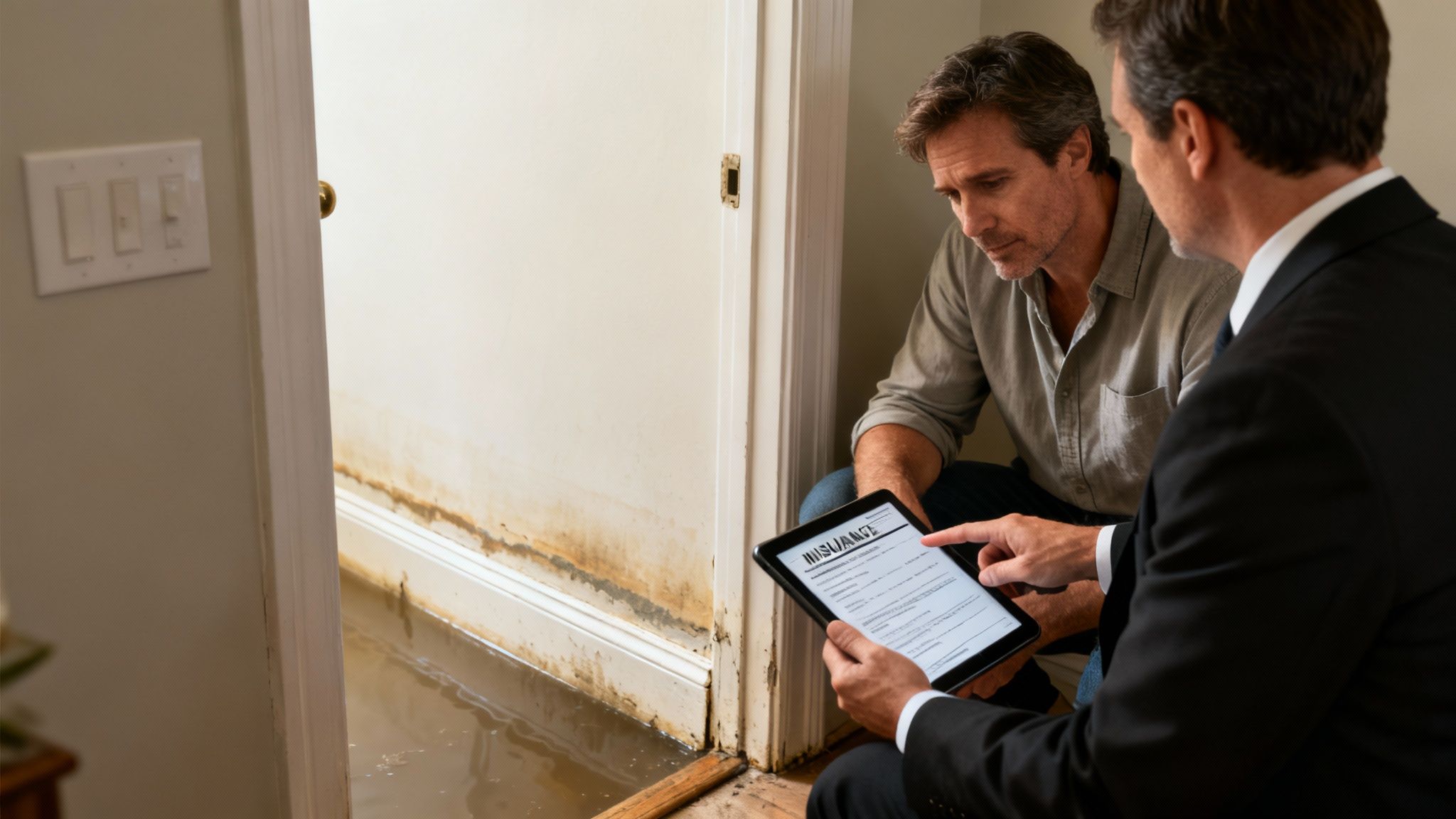
When the storm passes, the real fight often begins. After a hurricane, the line between wind damage and flood damage becomes a battleground. Standard homeowner and business policies almost always exclude flood damage, which means you’re forced to file a separate claim under the notoriously difficult National Flood Insurance Program (NFIP), which is managed by FEMA.
This creates a perfect storm for your insurance company. They can point to the rising water and blame flooding for damage that was actually caused by hurricane-force winds tearing your roof apart. By shifting the blame, they wash their hands of responsibility and push you into the bureaucratic maze of an NFIP claim. A public adjuster or hurricane claim attorney is absolutely essential to fight this blame game.
The Wind-Versus-Water Fight
Insurers are masters at using the “wind-versus-water” debate to minimize what they pay out from both of your policies. Your homeowner's policy might cover the roof being ripped off by the wind, but the NFIP policy is supposed to cover the damage from the rising water.
What happens next is maddening. The two insurance companies—even if it’s the same company acting as a "Write Your Own" (WYO) carrier for the NFIP—will point fingers at each other. You get caught in the middle with two severely underpaid claims while they argue over who is responsible for what.
This is where expert documentation becomes your most powerful weapon. A public adjuster will bring in engineers and other experts to prove exactly what failed first. Did the storm surge flood your ground floor before the wind tore off the roof? Or did hours of wind-driven rain pour in through a hole the hurricane created? The answer determines which policy pays, and you can bet the insurers will exploit any gray area they can find.
When dealing with property damage after a hurricane, it’s also smart to understand the specific weak points of your home, like windows. You can find helpful resources on hurricane-related glass damage and repair to see just how vulnerable certain components are.
Why NFIP Claims Are So Difficult
Let’s be clear: dealing with FEMA and the NFIP is nothing like filing a standard insurance claim. It’s a federal program with its own rigid, unforgiving rules designed to protect the government—not you, the policyholder. They are notoriously difficult to deal with.
Here are some of the biggest hurdles you’ll face with an NFIP claim:
- Strict Deadlines: You typically have only 60 days from the date of the loss to file a formal, sworn Proof of Loss document. If you miss this deadline, your claim can be permanently denied.
- Technical Denials: Claims are routinely rejected for minor paperwork errors or technicalities that have nothing to do with the actual damage to your property.
- Limited Coverage: NFIP policies have firm coverage limits and often only pay out the Actual Cash Value (the depreciated value) for your personal property, not the full replacement cost you need to actually buy new things.
- Difficult Adjusters: The adjusters, whether from NFIP directly or a WYO company, are trained to follow federal guidelines to the letter, which leaves almost no room for common sense or negotiation.
An experienced public adjuster or lawyer knows how to manage both the homeowner and flood claims at the same time. They force each policy to pay its fair share and stop the insurance companies from using this jurisdictional confusion to leave you with a fraction of what you need to rebuild. You can learn more about how we handle the complexities of insurance claims for flood damage and see why this specialized knowledge is so critical.
How to Choose the Right Hurricane Claim Attorney
When your insurance claim goes sideways, picking the right legal advocate is the single most important decision you will make. It's a make-or-break moment.
Not all attorneys are created equal, especially in this arena. The right choice can mean the difference between a soul-crushing loss and getting the money you need to rebuild. You need a firm that not only gets the nuances of insurance law but has a proven history of going toe-to-toe with giants like Allstate and State Farm—and winning.
Vetting them is everything. You're not just hiring a lawyer; you're choosing a partner to fight for your family's or business's financial survival. That means you have to ask the tough, direct questions that separate the true warriors from those just looking for a quick payday.
Key Questions to Ask Every Potential Attorney
Before you sign a single piece of paper, treat this process like a job interview where you're the one doing the hiring. Your home and financial future are on the line.
Here’s a practical checklist to guide that conversation:
- What is your track record against my specific insurance company? A seasoned hurricane claim attorney knows your insurer's playbook. They’ve fought them before and know their tactics, their pressure points, and how they try to wiggle out of paying.
- Can you share results from hurricane claims similar to mine? Don't settle for vague answers. Ask for concrete examples of cases with similar damage and policy disputes. This proves they have relevant, real-world experience, not just a law degree.
- Who, specifically, will be handling my case? This is critical. You need to know if you'll be working directly with an experienced attorney or if your file is going to be passed down to a junior associate or paralegal.
- How are your fees structured? A reputable attorney will be completely transparent about their fees. This question leads directly to the most powerful financial tool you have.
Understanding the Contingency Fee Model
Let's be blunt: the biggest thing holding most homeowners back is the fear of crippling legal bills. This is where the contingency fee model changes the entire game. It's the great equalizer, giving you access to the same high-caliber legal muscle as a multi-billion-dollar insurance corporation.
A contingency fee arrangement means you pay absolutely nothing upfront. The attorney's fee is a pre-agreed-upon percentage of the additional money they successfully recover for you.
Think about what that means. This model lines up your attorney's interests perfectly with yours. They only get paid if they win you a bigger settlement.
If they don't recover more money than the insurance company already offered, you owe them nothing. This risk-free structure empowers you to hire a top-tier hurricane claim attorney based on their skill and track record, not on whether you can afford to pay them by the hour. It guarantees your advocate is 100% invested in getting you the maximum possible payout. Period.
Common Questions After Your Hurricane Claim is Denied
Even after you’ve made the tough decision to fight back, you’re bound to have more questions. It’s completely normal. Let’s tackle some of the most common worries we hear from homeowners and business owners who are being forced to dispute a hurricane claim.
How Much Does a Hurricane Claim Attorney Cost?
This is the first question on everyone's mind, and the answer is a relief. Reputable hurricane claim attorneys work on a contingency fee basis.
That means you pay absolutely nothing upfront. No retainers, no hourly bills, no out-of-pocket costs. Their fee is a percentage of the new money they force the insurance company to pay you. If they don't win you a bigger settlement than the insurer already offered, you owe them nothing. It’s that simple. This structure means their goal is the same as yours: get you the maximum possible payout.
Is It Too Late to Hire an Attorney if My Claim Was Already Denied?
Absolutely not. In fact, a denial is often where the real work begins. The moment you hire an experienced attorney, they’ll demand your entire claim file from the insurance company to see exactly why they denied it.
From there, the real fight starts. They’ll tear apart your policy language, bring in their own trusted engineers and contractors to document the real damage, and build a case so strong it forces the insurer to back down from their unfair decision. Countless successful claims were first denied, only to be reopened and paid in full once an attorney got involved.
A denial letter isn't the end of the road; it's an invitation to fight. Your insurance company is making a bet that you'll just give up. An attorney calls their bluff.
Will My Insurer Cancel My Policy if I Hire a Lawyer?
Let's be crystal clear: It is illegal for an insurance company to cancel your policy or jack up your rates as punishment for hiring an attorney. When you dispute a claim, you're not looking for trouble—you're exercising your contractual rights.
Any move they make that even smells like retaliation could land them in even deeper hot water, opening the door for a separate bad faith lawsuit. A good hurricane attorney doesn't just fight for your claim; they protect you from these kinds of illegal, strong-arm tactics. You have a right to legal help without fearing what your insurance company will do next.
When your insurance company draws a line in the sand, you need an advocate who will cross it and fight for you. The team at For The Public Adjusters, Inc. provides no-cost claim reviews to help you figure out your next move and get the full settlement you’re owed. Contact us today and get an expert in your corner.