When the sound of hail finally stops, what you do in the next few hours can make or break your insurance claim. The moments right after the storm are your best chance to get ahead of the process.
It’s all about taking quick, smart actions to protect your home from more damage and start gathering the proof you’ll need. These aren’t just cleanup chores; they’re the bedrock of a successful claim. Hail damage roof insurance claims are the most common type of damage from these events.
What to Do Right After a Hailstorm
That sound of ice pounding on your roof is terrifying, but your focus needs to shift as soon as it’s safe. Your goals are simple: make sure everyone is safe, stop any more damage from happening, and document everything you possibly can.
Acting fast shows your insurance company you’re a responsible homeowner trying to mitigate the loss. Honestly, it’s something they expect and it’s usually written into your policy.
Now, this is not the time to be a hero and climb up on a wet, slippery, and potentially weak roof. The best first move you can make is a safe inspection from the ground. Just walk the perimeter of your property and look for the obvious calling cards hail leaves behind.
Start Your Inspection From the Ground
You’d be surprised how much you can tell about your roof’s condition by looking at everything else around your house. These areas are easier to see up close and often show the storm’s impact even more clearly than the shingles do from a distance.
Keep an eye out for these tell-tale signs:
- Dented Gutters and Downspouts: Your soft aluminum gutters are like a punching bag for hail. If they’re all dinged up, it’s a good bet your roof took a similar beating.
- Damaged Siding: Look for little circular impact marks, chips, or even cracks in your siding. Pay close attention to the side of the house that faced the worst of the storm.
- Bruised AC Units: Those thin metal fins on your outdoor air conditioning unit get shredded by hail. This is undeniable proof of the storm’s power.
- Damaged Decking or Fences: Check for fresh splinters or impact marks on any wood surfaces. Decks, fences, and even playsets will show the hits.
If you’re seeing this kind of damage all over, it’s a major red flag that you need to get a professional to look at your roof.
The infographic below gives a great visual of how this process should flow, from your initial ground check all the way to calling your insurer.

This just drives home the point: being proactive right away is essential. It protects your home and builds a much stronger case before you even file.
Prevent Further Damage Immediately
Your insurance policy almost certainly has a clause called “duty to mitigate damages.” In plain English, it means you have to take reasonable steps to keep things from getting worse. If you can see a leak or a gaping hole from the ground, covering that spot is non-negotiable.
A heavy-duty tarp, properly secured over the damaged part of your roof, can stop water from pouring in. This one move can save you from thousands in repairs to your ceilings, insulation, and drywall, and it shows the insurance company you’re doing your part.
Make sure you take pictures before and after you put the tarp up. And hang on to the receipts for the tarp and any other supplies you had to buy—these costs are often reimbursable in your final hail damage roof insurance claims settlement. Just remember, this is a temporary bandage, not a permanent fix.
To help you stay organized in those first chaotic hours, here’s a quick checklist of what to prioritize.
Immediate Post-Hailstorm Action Checklist
| Action Item | Why It’s Important | Pro Tip |
|---|---|---|
| Check for Immediate Dangers | Safety first. Look for downed power lines, broken glass, or unstable structures before doing anything else. | Stay inside until the storm has completely passed. Your safety is more important than any property damage. |
| Perform a Ground-Level Inspection | This is the safest way to get an initial assessment of the damage without risking a fall. | Use your phone to take pictures and videos of everything—dented gutters, siding, window screens, and AC units. |
| Document the Time and Date | Your insurer will need to know exactly when the storm hit to verify weather reports. | Note the time the hail started and stopped. If you can, find a news report or weather alert to confirm the event. |
| Make Emergency Tarping/Repairs | Prevents water from getting inside and causing more expensive secondary damage like mold or drywall ruin. | Take “before” and “after” photos of the tarping. Keep all receipts for materials; they are part of your claim. |
| Find Your Insurance Policy | You’ll need your policy number and the contact information for the claims department. | Take a picture of the declarations page on your phone so you always have your policy number handy. |
Following this checklist ensures you cover all the critical bases, protecting both your property and your right to a fair claim.
Taking these steps is so important, especially when you look at the numbers. Hail damage is a massive problem, accounting for a staggering 45.5% of all homeowner claims in the country. With the average claim hitting $11,695, and the total annual cost of hailstorms now between $8 billion and $15 billion, you can’t afford to miss a step. If you’re curious about the data behind these trends, property insurers like Cape Analytics often publish detailed reports on hail risk.
Documenting Hail Damage Like a Pro

When it comes to hail damage roof insurance claims, the strength of your case hinges on one thing: undeniable proof. The evidence you pull together right after a storm is the single most powerful tool you have. You need to think like a detective building a case—every photo, every note, every document makes your claim that much harder for the insurance company to dispute.
This isn’t about just snapping a few random pictures of your roof. We’re talking about creating a complete evidence package that tells the undeniable story of the damage. A thoroughly documented claim leaves very little room for an insurer to downplay or second-guess the severity of your loss.
Your Smartphone is Your Best Friend
Forget about needing fancy equipment. The camera you carry in your pocket is all you need to build a rock-solid case, as long as you use it the right way. Your goal is to capture the big picture and all the little details that an adjuster might otherwise overlook.
Start by taking wide shots of each slope of your roof. This gives everything context. From there, you’ll want to move in close to document the specific points of impact. And this is where a simple photography trick can make all the difference.
Pro Tip: Always, and I mean always, use an object for scale in your close-up shots. Place a coin (a quarter works great) or a small tape measure next to a hail impact mark. This gives it immediate, indisputable context. A photo of a dent is just a photo; a photo of a dent next to a quarter is hard evidence.
Take your pictures from multiple angles and try shooting at different times of the day. You’d be surprised how the early morning or late afternoon sun can cast shadows that make subtle dings and bruises on your shingles pop. Don’t stop at the roof, either. Remember that ground inspection? Photograph the dented gutters, pockmarked siding, and damaged AC unit fins. If you want to see what powerful proof looks like, it’s worth reviewing examples of good photographic evidence to see what adjusters are looking for.
Why Video Tells a Better Story
Photos are critical, but a video can tell a story in a way that static images just can’t. A slow, narrated walk-around of your property can be incredibly compelling.
- Start your video by clearly stating your name, your address, and the date the storm hit.
- Walk the entire perimeter of your home, talking about what you see. Point out the damaged siding, torn window screens, and dented gutters as you go.
- Zoom in on specific spots that show a pattern. For instance, you could say, “You can see all these hail impacts along the downspout, and that same pattern continues right up onto the roof above.”
Think of this video as a guided tour of the damage for anyone reviewing your claim. It connects the dots and paints a complete picture of just how intense that storm really was.
Back Up Your Claim with More Proof
Your own photos and videos are the main event, but they become even more powerful when you back them up with other documents. You need to prove a significant weather event actually happened when you say it did.
Start gathering these key items right away:
- Weather Reports: Find local news articles or reports from the day of the storm. Many services provide detailed meteorological data, including reports on hail size for specific areas. Print them or save them as PDFs.
- Hail Samples: This isn’t always possible, but if you can safely grab a few hailstones, toss them in a freezer bag and put them in your freezer next to a ruler. A photo of a golf-ball-sized hailstone from your own yard is pretty hard for an adjuster to ignore.
- A Communication Log: Get a notebook or start a digital file to track every single conversation about your claim. Log the date, time, the name of the person you spoke with, and what was discussed. This organized record is priceless if you run into delays or disputes down the road.
Putting this evidence package together takes a little work upfront, but it pays off big time. It helps you avoid the endless back-and-forth that stalls so many claims. When you present a meticulously documented case, you shift the entire conversation from if the damage is covered to how much your settlement should be.
Filing Your Insurance Claim with Confidence

You’ve got a solid package of evidence in hand. Now it’s time to officially kick off the hail damage roof insurance claims process. I know that first call to the insurance company can feel a little daunting, but you’ve already put yourself way ahead of the game with your prep work.
Remember, this isn’t just a simple call to report a problem. It’s the official start of a business transaction where you are owed compensation for a covered loss under your policy.
What to Have Ready Before You Call
Before you even think about dialing, pull a few key documents together. This simple move can turn a potentially tense, frustrating conversation into a smooth, professional exchange. The agent on the other end has a script to follow, and having the answers ready makes life easier for everyone.
Make sure you have this info at your fingertips:
- Your Insurance Policy Number: This is non-negotiable. You can usually find it right on the declarations page of your policy or on your insurance card.
- The Date and Time of the Storm: Get as specific as you can. Noting when the hail started and stopped helps the insurer cross-reference the event with official weather reports.
- Your Documentation: Keep your photos, videos, and notes handy. You won’t be sending them over during this first call, but you can speak confidently about the damage because you have the proof right in front of you.
Pro Tip: Before you call, take five minutes to review your policy’s coverage for hail and wind. Find your deductible amount and write it down. Knowing that number from the get-go helps you set realistic expectations for your out-of-pocket costs.
Making the Call and the Questions You Need to Ask
When you get on the phone, keep it factual and to the point. Stick to what you know and what you’ve documented. You’re not a roofer, so don’t try to diagnose the full extent of the damage.
Just state the facts. Something simple like, “My home was hit by a hailstorm on this date. I can see significant damage to my siding, gutters, and AC unit, and I believe my roof is also damaged.”
After you’ve given them the basics, the ball is in your court. It’s time for you to ask the questions that will set the tone for the rest of the claim.
Don’t hang up without asking:
- What is my claim number? (Write it down immediately!)
- Who is my assigned adjuster, and when can I expect them to contact me?
- What’s the general timeline for the inspection?
- Are there any specific forms I need to fill out right away?
- What does my policy say about making temporary repairs to prevent further damage?
Asking these questions creates a clear record and shows the insurance company you’re an organized and engaged policyholder.
So, What Happens Next?
Once the claim is officially filed, the clock starts ticking for the insurer. They will assign an adjuster to your case—this person will be your main point of contact. You should expect to hear from them within 24 to 48 hours to schedule their inspection.
This initial period is more important than ever. The cost and frequency of roof claims are skyrocketing. Recent industry reports show that total costs for roof repair and replacement in the U.S. have climbed to nearly $31 billion. The main drivers? Wind and hail, which account for more than half of all residential roof-related losses. You can read more about these trends in a detailed report on U.S. roof claims.
Why does this matter to you? With costs on the rise, some adjusters face pressure to keep payouts low. Your thorough preparation and clear communication are your best tools to set the stage for the next crucial step: the adjuster’s inspection.
Working with Adjusters and Roofing Contractors

Once you’ve filed your hail damage roof insurance claim, you’ll find yourself managing two very different, but equally crucial, relationships. One is with the adjuster your insurance company sends out, and the other is with the roofer you hire to do the actual repairs.
It’s simple, really. The insurance adjuster works for the insurance company. Their job is to look at the damage, compare it against your policy, and figure out what the insurer owes. Your roofing contractor, on the other hand, works for you. Their focus is on finding every bit of damage and making sure your roof is put back together right. Understanding that difference is the key to getting a fair shake.
Your Role During the Adjuster’s Inspection
When the insurance adjuster sets a time to inspect your property, you need to be there. Period. This is your best—and sometimes only—shot to walk the property with them, show them the damage you’ve already documented, and make sure nothing gets missed. Bring your photos and notes. It lets you guide the conversation and ask smart questions.
But don’t go it alone. One of the smartest moves you can make is to have your roofer meet the adjuster on-site. This completely changes the dynamic and levels the playing field. Your contractor speaks their language, can point out subtle damage an adjuster might gloss over, and will argue for the right repair methods.
When your roofer and the adjuster are on the roof together, the meeting shifts from a simple assessment to a professional collaboration. This dramatically boosts the odds that the initial damage report is accurate and complete, saving you a ton of back-and-forth headaches later.
This teamwork approach often gets you a more accurate settlement offer right from the start, simply because everyone agrees on the scope of work upfront.
Choosing the Right Roofing Contractor
After a big hailstorm, your neighborhood is ground zero for contractors. Be careful. Many are “storm chasers”—out-of-town crews that blow in, do fast, cheap work with no warranty, and disappear just as quickly, leaving you with a mess.
Here’s how to spot a true local professional:
- They have a local, physical address. A contractor with roots in your community has a reputation to protect.
- They’re fully licensed and insured. Don’t be shy—ask to see their general liability and workers’ compensation certificates.
- Their estimate is detailed and itemized. A real quote breaks down everything: materials, labor, permits, and all other line items.
- They don’t use high-pressure tactics. A pro will give you a fair quote and the space to make a decision. Anyone trying to force you to sign on the spot is a huge red flag.
The unfortunate reality is that more severe weather has led to a spike in roofing scams. In recent years, convective storms have triggered around $29 billion in roofing claims across the country. To see the data behind this trend, you can discover more insights about roofing claim trends on claimsjournal.com.
The Power of an Independent Advocate
Sometimes, a claim is just too complex or the insurance company is being difficult. While your roofer is an expert in repairs, they can’t legally negotiate your insurance settlement for you. This is where you might consider bringing in a different kind of expert.
Understanding the benefits of hiring a public insurance adjuster can be a game-changer. Unlike the company adjuster, a public adjuster is a state-licensed professional who works exclusively for you to get the best possible settlement.
By building a team that has your back—a trusted local roofer and, if needed, a public adjuster—you ensure your claim is handled correctly from start to finish. It’s your best defense against a lowball offer and the surest way to get your home restored the right way.
Decoding and Negotiating Your Settlement Offer
https://www.youtube.com/embed/UAW9wzFhRh4
After the adjuster leaves, the next piece of mail you’re waiting for is the settlement offer. When it arrives, you’ll find it’s usually dense with confusing insurance jargon. Don’t let it intimidate you. The key is to remember that their first offer is just that—an offer. It’s the starting point for a negotiation, not the final word.
Getting a handle on this document is the only way to know if you’re getting a fair shake. Before you even think about accepting, you need to know exactly what you’re looking at.
Making Sense of the Insurance Lingo
The math behind your payout isn’t as complicated as it first appears. The entire offer really boils down to just a few core concepts. Once you understand them, you can start advocating for what your roof repair is actually going to cost.
To help you get started, we’ve broken down the most common terms you’ll see in your settlement paperwork.
Insurance Settlement Terminology Explained
| Term | What It Means | Example |
|---|---|---|
| Replacement Cost Value (RCV) | This is the big number. It’s the total cost to replace your roof today with similar quality materials and labor. | If a brand-new roof costs $15,000 in today’s market, your RCV is $15,000. |
| Depreciation | The value your roof has lost over time due to age and normal wear. Insurers subtract this amount from the RCV. | For a 10-year-old roof with a 20-year lifespan, the insurer might say it has depreciated by 50%, or $7,500. |
| Actual Cash Value (ACV) | This is the amount of your first check. It’s calculated by taking the RCV and subtracting the depreciation. | RCV ($15,000) – Depreciation ($7,500) = ACV ($7,500). This is your initial payment. |
Most modern policies are RCV policies, which is good news. It means you can get that depreciation money back. It’s often called “holdback,” and the insurance company will release it to you once you provide proof that the roof replacement is complete.
What to Do When Their First Offer Is Too Low
It happens all the time: the insurance company’s offer comes in well below your contractor’s estimate. Don’t panic. This is a very normal part of the process.
Often, the adjuster simply missed something—dented gutters, damaged flashing, or the need to bring everything up to current building codes. Sometimes their pricing software is just plain wrong for your area.
This is where your contractor’s detailed, itemized estimate becomes your most powerful tool. A proper estimate isn’t just a single number on a piece of paper. It’s a line-by-line breakdown of every single cost, from the type of shingles and underlayment to the specific cost of nails, flashing, and hauling away the debris.
When you put your roofer’s thorough estimate next to the adjuster’s report, the gaps become crystal clear. Maybe the adjuster missed the hail-dented ventilation covers. Or perhaps their software is using a national average for labor, while your roofer quoted the real, higher rates for skilled work in your town. These are the exact points you’ll use to build your case.
The goal here is to file a supplement to the original claim. Your roofer will formally submit their estimate and supporting documents to the adjuster, clearly pointing out the discrepancies and justifying the need for a higher amount.
Smart Strategies for a Successful Negotiation
Winning this negotiation comes down to being prepared, professional, and persistent. You’ve already done the hard part by documenting everything and getting an expert roofer on your side. Now it’s time to present your case.
- Keep Everything Organized: Create a single file for the adjuster’s report, your roofer’s estimate, photos, and every email.
- Put It in Writing: After any phone call with the insurer, send a follow-up email summarizing the conversation. This creates a paper trail and holds everyone accountable.
- Stick to the Facts: Arguing out of frustration won’t get you anywhere. Build your case on evidence. Point to specific line items, reference your photos, and cite local building codes that support your claim.
The back-and-forth can feel slow, but don’t give up. Policyholders who have their facts straight and present their case professionally have a much better shot at getting what they’re owed. In some disputes, a well-argued case can make a massive difference—we’ve seen instances where a hail and wind damage jury awarded a homeowner $72k after the insurance company tried to lowball them.
It just goes to show that when you stand your ground with solid evidence, you can win. By understanding your settlement and negotiating with a fact-based approach, you can secure the funds needed to do the job right.
A Few Common Questions We Hear About Hail Damage Claims
Even when you do everything by the book, the hail damage roof insurance claim process can be confusing. It’s a world filled with its own rules, deadlines, and jargon that can easily trip up a homeowner who just wants to get their roof fixed.
We get these questions all the time from folks trying to navigate a claim. Think of this as a quick-reference guide to get you through some of those tricky spots.
How Long Do I Have to File a Hail Damage Claim?
This is a big one, and the clock is always ticking. Every insurance policy has a deadline for filing a claim, often called a statute of limitations. For most, you’re looking at one to two years from the date the storm hit.
But let me be blunt: waiting is a terrible idea. The more time that passes, the easier it is for your insurance company to argue that the damage wasn’t from that specific storm. They might suggest later weather events or just plain old wear and tear are to blame, which can seriously weaken your case.
Our best advice is simple: Call your insurance company the moment you suspect you have damage. Getting the claim on the books right away establishes a clear timeline and protects your right to a fair assessment.
Will Filing a Hail Claim Make My Insurance Go Up?
This is probably the number one fear we hear from homeowners, and the good news is, the answer is usually no—at least not because of your individual claim. Damage from a hailstorm is considered an “Act of God.” You couldn’t have stopped it, so insurance companies are generally prohibited from penalizing you for it like they would an at-fault car accident.
However, there’s a catch. If a catastrophic hailstorm causes massive damage across your entire city or region, the insurance company might raise rates for everyone in that area to cover their huge losses. So, while your personal claim won’t be the direct trigger, you and your neighbors might see a rate hike simply because your area is now seen as a higher risk.
What if My Claim Gets Denied or the Payout Is Way Too Low?
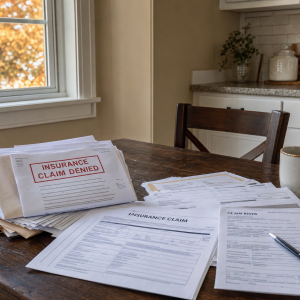
A denial letter or a lowball offer feels like a punch to the gut, but it is absolutely not the end of the road. You have the right to appeal, and all that documentation you gathered is about to become your best friend.
Here’s what to do when they say no:
- Get it in writing. First things first, demand a detailed written explanation for their decision. This forces them to go on the record and gives you specific points you can fight.
- Bring your receipts. This is where you lay your cards on the table. Use your photos, videos, and your roofer’s detailed estimate to build a formal appeal that directly counters their reasoning. Show them exactly what they missed or where their numbers don’t add up.
- Demand a second look. If you and your contractor are positive that damage was overlooked, you can request that a different adjuster—or even a supervisor—come out to re-inspect the property.
- Bring in a professional. If you’re just hitting a brick wall, it might be time to hire a public adjuster. A public adjuster works for you, not the insurance company, and can take over the entire negotiation to fight for what you’re rightfully owed.
Does My Insurance Company Get to Pick My Roofer?
Let’s be crystal clear on this: Absolutely not. Your insurer might have a “preferred” list of contractors they like to work with, but they cannot legally force you to use any of them. The choice of who repairs your home is 100% yours to make.
Your top priority should be finding a trusted, local, and fully insured roofer who you feel comfortable with—someone who will advocate for you. Be very skeptical of any adjuster who pressures you to use their guy. Your loyalty is to the quality of the repair, not to your insurer’s network.
The most successful hail damage claims hinge on two main factors: proving functional damage (not just cosmetic) and winning the battle over partial versus full replacement.
How do you successfully dispute a denial based on "pre-existing damage" or "wear and tear" on an older roof?
This is the most common denial. We use historical weather data (NOAA reports) to establish the exact date and intensity of the hail event at your location. Then, we coordinate a joint inspection with an independent roofing consultant who uses test squares and controls to isolate the fresh hail impacts from old weathering, providing a date-stamped damage report that isolates the covered event from prior conditions.
My adjuster only marked a few shingles with chalk. How does a Public Adjuster prove the hail damage is widespread enough for a full replacement?
Insurance adjusters may inspect small "test squares" and project the damage based on a low number. We ensure the inspection adheres to industry-accepted standards (like the 20/20 Rule or equivalent) and document multiple slopes and elevations. We utilize drone and high-resolution photography to show the uniformity and severity of impacts across the entire roof plane, forcing the carrier to acknowledge the full scope of loss.
If my hail claim was filed months after the storm, will the insurance company deny it for lack of "prompt notice?"
A Public Adjuster argues that hail damage is often latent (hidden) and not easily visible from the ground, especially on older roofs. We document the first time a reasonable person would have discovered the damage (e.g., discovery of a leak or during a maintenance check), thus satisfying the policy's requirement for timely reporting after discovery.
How do you argue for a full roof replacement when my state doesn't have a matching statute and only one slope was damaged?
We bypass the lack of a "matching statute" by focusing on material unavailability and functional impairment. We secure an affidavit from the original manufacturer or supplier confirming the original color/product line is discontinued, making the entire roof replacement the only path to repair with "like kind and quality" materials as required by the policy.
My roof is damaged, but so are my gutters, vents, and siding. How do you ensure the claim covers ALL exterior hail damage?
We ensure the scope includes all collateral damage. Hail damage often dents soft metal components (gutters, downspouts, flashing, vents, AC fins) and can fracture or puncture siding and windows. We conduct a comprehensive 360-degree exterior inspection and itemize all affected systems, ensuring the full cost of replacing all damaged exterior materials is included in the Xactimate estimate.
Does hail damage coverage include the cost of Code Upgrades if local regulations have changed since my roof was installed?
Yes, provided you have "Ordinance or Law" coverage. Hail damage often necessitates a full tear-off, which triggers local building codes requiring upgrades like ice and water shields, specialized ventilation, or more robust decking. We identify these mandatory code compliance costs upfront and include them in the claim, preventing massive out-of-pocket expenses.
My policy is RCV (Replacement Cost Value). How does a Public Adjuster ensure I receive the depreciation holdback payment after the repairs are done?
The carrier initially pays the Actual Cash Value (ACV) and holds back the depreciation. We meticulously manage the claim to ensure: 1) The ACV payment is maximized. 2) The full repair work (costing at least the ACV + holdback) is completed using a licensed contractor. 3) We submit the necessary invoices, permits, and affidavits proving completion, forcing the carrier to release the final Recoverable Depreciation payment quickly.
What is "Appraisal," and when is it the best option to resolve a hail damage claim dispute with my insurer?
Appraisal is a formal, contractual dispute resolution method used when the insurer agrees the damage is covered but disputes the value (scope/cost) of the repair. A Public Adjuster acts as your appointed appraiser, presenting the fully documented scope to a neutral umpire. It is often a faster, cheaper alternative to litigation for resolving valuation disputes.
If my insurance company uses a preferred contractor network, must I accept their low-cost bid for my hail repair?
No. You have the right to choose your own licensed, reputable contractor. The carrier's preferred vendors are incentivized to keep costs low for the carrier. We ensure the carrier pays the Reasonable and Necessary Cost of repair, which is the fair market rate established by your choice of contractor.
Can hail damage cause internal water leaks that don't appear until weeks later, and how does a Public Adjuster prove this connection?
Yes. Hail impacts compromise the shingle seal or crack vents, allowing slow water intrusion that may take weeks or months to reach the interior ceiling or wall. We use thermal imaging and moisture mapping to prove the current leak path originates directly from the roof damage caused by the historical hail event, thus tying the interior water damage to the covered peril.
What must be included in my initial hail claim submission to prevent an immediate underpayment or denial?
To prevent an early denial, your submission (prepared by the PA) must include: 1) A specific date-of-loss tied to verified weather reports. 2) A detailed, itemized Xactimate scope showing damage to multiple slopes and soft metal components. 3) High-resolution photos with clear scale markings (coin/ruler) to distinguish hail impacts from normal wear.
Trying to navigate a complex hail damage roof insurance claims can feel like a full-time job. You don’t have to do it by yourself. The team at For The Public Adjusters, Inc. provides expert, no-cost claim reviews to help policyholders in North Carolina and Virginia understand their rights and secure the settlement they deserve. If you’re stuck fighting a hail damage claim, visit us online to get the professional advocacy you need.