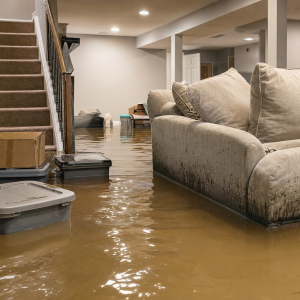

FROZEN PIPE CLAIM HELP NC – When a frozen pipe explodes, it’s not just water that comes gushing out—it’s chaos. One minute your home is fine, the next it’s a full-blown disaster zone. Water soaks everything in its path, from drywall and insulation to your floors and irreplaceable belongings.
But once the water stops flowing, a second, more calculated battle begins: the insurance claim dispute.
The Two-Front Battle After a Frozen Pipe Burst
Dealing with the immediate water damage is just round one. Round two starts the second you pick up the phone to call your insurance company. Major insurers like State Farm and Allstate see these high-dollar claims and immediately put their guard up, sending out an adjuster trained to protect their profits by delaying, denying, and low-balling your settlement.
This is where the real fight starts. You want to get your home and your life back. They want to minimize what they pay out.
Why Insurers Immediately Scrutinize These Claims
Let’s be blunt: a frozen pipe claim is an expensive mess. The financial fallout from these events is one of the biggest winter headaches for the insurance industry.
Industry data shows that water damage from frozen pipes costs insurers a staggering $15 billion to $20 billion every year. The average claim easily tops $15,000, and the really bad ones can be financially catastrophic. One analysis found the average loss was $27,000 per claim, with the worst one hitting $1.7 million.
Because the stakes are so high, insurers have a playbook. Their adjuster will show up promptly, but their inspection is often designed to produce a quick, lowball estimate that conveniently ignores the real scope of the damage.
They are notorious for overlooking:
- Hidden Moisture: Water that gets trapped behind walls, under subfloors, or deep in your insulation. This is a perfect recipe for a major mold problem down the road.
- Structural Damage: Saturated drywall, warped subflooring, and even compromised structural joists are common, but often downplayed in the initial report.
- Code Upgrades: Your repairs might legally require you to bring plumbing or electrical systems up to current building codes—an expense they love to omit from their offer.
- Proper Remediation: Real restoration isn’t just about setting up a few fans. It requires professional drying techniques and antimicrobial treatments to prevent future issues.
Your Policy vs. Their Interpretation
The adjuster’s job is to interpret your policy in a way that benefits their employer. They’ll hunt for any loophole or negligence clause to justify denying parts of your claim or the whole thing.
Right away, you’re in an adversarial relationship. It’s not a level playing field.
The shock of a burst pipe is overwhelming, but you need to understand this: your insurer’s response is a business strategy. Their first offer is just a starting point for a negotiation, not the final word on what you’re owed.
Of course, the best way to deal with this nightmare is to avoid it entirely by implementing solid freezing pipe prevention tips. But when disaster strikes anyway, this guide is your playbook for forcing the insurance company to pay what they rightfully owe you.
Decoding Your Insurer’s Playbook of Denials and Low Offers
After a frozen pipe bursts, your insurance company springs into action. But let’s be honest—it’s not always in the way you need. They have a well-rehearsed strategy designed to pay you as little as possible, and their staff adjuster is the frontline player sent to execute this plan.
Knowing their common tactics is the first step toward fighting back.
One of the most frequent denial strategies involves pointing the finger directly at you. The adjuster will scour your policy for a “negligence” or “failure to maintain heat” clause. They’ll argue that because you were on vacation or didn’t keep the thermostat cranked high enough, you’re responsible for the disaster. It’s a classic move to shift the blame and find an excuse to deny the claim outright, even if you took perfectly reasonable precautions.
The Anatomy of a Low-Ball Offer
If they can’t find a reason to deny your claim, their next move is almost always a low-ball settlement offer. This isn’t a good-faith estimate; it’s a calculated attempt to close your claim quickly and for pennies on the dollar. It will look official, often coming with a detailed-looking estimate, but it’s built to systematically undervalue what it will actually cost to make you whole.
A typical low-ball offer for a frozen pipe claim only covers the most obvious, surface-level damage. It might include funds for tearing out some wet drywall and drying the area with fans, but it conveniently ignores the much deeper, more expensive issues lurking beneath.
Here’s what they almost always leave out:
- Hidden Moisture Damage: The adjuster’s moisture meter might only scan the surface. They often “miss” moisture trapped inside wall cavities, under subfloors, or deep within insulation—the perfect breeding ground for toxic mold.
- Mismatching Materials: Their estimate will likely use prices for cheap, builder-grade flooring or flimsy particleboard cabinets, completely ignoring the cost to match the quality and style of what you actually lost.
- Inaccurate Labor Rates: Insurers love to use national average labor costs or the rates of their “preferred vendors” who give them volume discounts. These numbers rarely reflect the real cost of hiring skilled, local craftspeople.
- Full Scope of Remediation: A proper recovery involves far more than just drying things out. It requires antimicrobial treatments, long-term dehumidification, and sometimes complex structural repairs—all expensive items they’d rather not pay for.
Using Your Own Policy Against You
The insurance adjuster knows your policy inside and out. But they use that expertise to find exclusions and limitations that work in their favor, not yours. They might incorrectly apply depreciation to materials that shouldn’t be depreciated or misinterpret coverage limits for specific types of damage.
Make no mistake: this is a deliberate strategy to confuse and overwhelm you into accepting less than you’re owed. For a deeper look into their methods, check out our guide on dealing with an insurance adjuster.
“I had a pipe burst in my crawl space that caused extensive damage. Joe was able to successfully negotiate a claim amount that was fair and allowed us to make our home better than it was before the pipe burst. Thanks, Joe”
- Jeremy Jones, Google Review
Jeremy’s experience is incredibly common. Insurers know that policyholders are stressed, displaced, and vulnerable after a disaster. They are banking on you not having the energy or the expertise to fight their initial offer.
The problem is only getting worse. In early 2024, one insurer saw a staggering 191% increase in frozen pipe claims over the previous year. State Farm data shows claims in one state exploding from just 75 in 2020 to 2,094 in 2021. You can learn more about the rise in frozen pipe claims and see why insurers are so aggressive.
Their first offer isn’t a gesture of goodwill. It’s their opening move in a negotiation you didn’t even know you were in. Before you get caught in their game, it’s critical to understand the tactics you’re up against and the rights you have as a policyholder.

Insurer Tactics vs Policyholder Rights in a Frozen Pipe Claim
| Common Insurer Tactic | What This Really Means for You | Your Right and How to Fight Back |
|---|---|---|
| The “Negligence” Accusation | They blame you for not keeping the heat on, trying to void coverage based on a policy exclusion for “failure to maintain.” | You have the right to a fair investigation. Document all steps you took to prevent freezing (e.g., thermostat settings, dripping faucets). A public adjuster can prove you acted responsibly. |
| The Quick, Low-Ball Offer | They offer a fast, cheap settlement that only covers superficial damage, hoping you’ll take it out of desperation. | You have the right to a full and complete repair. Never accept the first offer. Demand they cover all hidden damage, matching materials, and local labor rates. Get independent estimates. |
| “Preferred Vendor” Pressure | They push you to use their network of contractors who have pre-negotiated low rates with the insurer. | You have the right to choose your own contractor. This is a critical right. Choose a reputable, independent contractor who works for you, not the insurance company. |
| Misapplying Depreciation | They deduct “wear and tear” from items that should have full replacement cost value, shrinking your payout. | You have the right to be paid based on your policy terms. Challenge every depreciation deduction. Many parts of a repair, like labor, should never be depreciated. |
| Delaying the Claim | They drag their feet, request redundant paperwork, and go silent for weeks, hoping you’ll get frustrated and give up. | You have the right to a timely claim process. Document every phone call, email, and letter. In NC and VA, insurers must act in good faith. A public adjuster can force them to respond. |
Understanding this playbook is your first line of defense. The insurer is betting you don’t know your rights—prove them wrong.
How to Build an Ironclad Claim They Cannot Ignore
Let’s be blunt: to fight the insurance company’s low-ball strategy after a frozen pipe disaster, you have to build a case so strong it leaves them nowhere to hide. Overwhelming, undeniable evidence is your only weapon. This starts with creating a comprehensive “proof of loss” package the very second you find the damage.
Your entire goal is to document everything so thoroughly that any attempt on their part to downplay, delay, or deny your claim looks completely unreasonable—and potentially like an act of bad faith.
Document Everything Immediately
The moment you discover that burst pipe, you are on the clock. Don’t wait. The insurance adjuster might not show up for days, and by then, critical evidence will be gone as the cleanup crew does its job.
Here’s exactly what you need to do:
- Video First: Before a single thing is moved, grab your phone and start recording. Take a long, continuous video, walking through every single affected room. Talk over the video, stating the date and time. Make sure you capture water actively flowing if you can, show the depth of any standing water, and get clear shots of how it’s soaking into walls, floors, and your personal belongings.
- Photos Second: Once the video is done, switch to photos. Take hundreds of them. Start with wide shots of each room to establish the scene, then get right up close to show the specific damage. You need pictures of the burst pipe itself, saturated drywall, warped floorboards, and every single ruined item. And don’t forget the hidden spots—photograph the damage behind and under things like sinks, cabinets, and appliances.
- Track the Hidden Damage: Pay close attention to where the water traveled. Look for water stains blooming on ceilings below upstairs bathrooms, paint that’s starting to bubble on walls, and discoloration creeping up your baseboards. These photos establish the true, initial scope of the disaster before any mitigation work begins to cover it up.
Reject Their “Preferred” Vendors
It won’t be long after you file the claim that your insurer will “helpfully” suggest you use one of their “preferred” contractors for the repairs. Don’t fall for it. This is a trap.
These vendors have a cozy relationship with the insurance company. Their main goal isn’t to restore your home properly; it’s to keep the insurer happy by keeping repair costs as low as humanly possible.
You have the absolute right to hire your own independent contractor—someone who works for you, not them. Go out and get at least two detailed estimates from reputable, local contractors you’ve vetted yourself. Their estimates will reflect the real-world cost of putting your home back together with materials of like kind and quality. This gives you a powerful weapon to fight the insurer’s inevitable low-ball numbers.
A contractor who works for you writes an estimate based on what it actually costs to fix your home. A contractor who works for the insurance company writes an estimate based on what the insurance company wants to pay. The difference is often tens of thousands of dollars.
The visual below shows the simple, infuriating playbook most insurers use to cheat you out of the money you deserve for your frozen pipe claim.

This Deny-Delay-Underpay cycle isn’t an accident. It’s a deliberate strategy they use to wear you down until you finally give up and accept an unfair settlement out of sheer exhaustion.
Create Meticulous Inventories and Logs
Building a claim they can’t deny goes beyond just photos of the structure. You have to account for every single thing you lost, down to the last spoon.
Start by creating an exhaustive inventory of all your damaged personal property. Go room by room, listing every single item that was ruined. For each one, you need to include:
- A clear description (e.g., “Samsung 55-inch 4K Smart TV”)
- The manufacturer and model number
- Its approximate age
- What you originally paid for it and where you bought it
- The estimated cost to replace it today
This detailed inventory is absolutely critical for your contents coverage claim. To see how this documentation fits into the formal claims process, check out our guide on what makes up a proper Proof of Loss.
On top of that, you need to keep a running log of every single communication with the insurance company. Note the date, the time, the name of the person you spoke with, and a quick summary of what was said.
Finally, track every dollar you spend because you’ve been forced out of your home—hotel bills, meal receipts, even mileage. This is for your “Additional Living Expenses” coverage, a part of your policy that insurers love to nickel-and-dime. When you present them with this organized, evidence-backed package, you flip the power dynamic and force the adjuster to justify every single penny they try to hold back.
Leveling the Playing Field with a Public Adjuster
When you file a claim for a frozen pipe, your insurance company sends out their adjuster. You have to remember who that person works for. Their loyalty, training, and financial incentives are all tied to one thing: protecting the insurer’s bottom line.
Relying on them to fairly assess your damage is like letting the opposing team’s coach referee the championship game. You’re at an immediate and significant disadvantage. This is where a public adjuster steps in.
A public adjuster is a state-licensed insurance professional who works exclusively for you, the policyholder. Their entire job is to be your advocate, your expert, and your negotiator. They flip the power dynamic from you against a multi-billion dollar corporation to a professional-versus-professional negotiation.

Dismantling the Low-Ball Offer
The first thing a public adjuster does is conduct their own independent, forensic damage assessment. While the company adjuster might do a quick walkthrough with a flashlight and a moisture meter, a good public adjuster goes much, much deeper.
They bring in specialized tools like thermal imaging cameras to see exactly what’s happening behind your walls and ceilings. This tech lets them find and document every pocket of hidden moisture the company adjuster conveniently “missed.” They systematically map out all the areas where water migrated, ensuring the true scope of the damage is captured before a single estimate gets written.
Building a Bulletproof Estimate
Once the full extent of the damage is known, the public adjuster builds a professional, line-item-by-line-item estimate to repair your property correctly. They use the same estimating software as the insurance companies, but there’s a critical difference. Their estimate is based on the actual scope of work needed, using real local labor rates and material costs.
This isn’t a number pulled out of thin air; it’s an evidence-backed demand package that forces the insurance company to justify every single penny of their undervalued offer. It accounts for everything the insurer loves to ignore:
- Code Compliance: Making sure all repairs meet current building codes.
- Matching Materials: The actual cost to match existing flooring, cabinetry, and paint.
- Proper Remediation: The full cost of mold prevention and structural drying, not just a surface-level fix.
The reality is that water damage from a frozen pipe is a massive problem for insurers. Globally, it’s one of the most common and expensive claims, representing 22% to 29% of all reported homeowner losses annually. In the winter, it accounts for over 40% of all claims, making it a prime target for cost-cutting tactics.
Your Expert Policy Interpreter and Negotiator
Maybe the most valuable role a public adjuster plays is that of an expert policy interpreter. Insurance policies are complex legal contracts filled with confusing language and loopholes designed to benefit the insurer. Your public adjuster knows this language inside and out and understands how to apply it in your favor.
They identify all areas of coverage you’re entitled to—including Additional Living Expenses, code upgrade coverage, and contents replacement—that you might not even know exist.
Then, they take over. All communications and negotiations with the insurance company go through them. You no longer have to deal with the frustrating delays and constant runaround. The public adjuster manages the entire process, forcing the company adjuster to negotiate based on facts, not stall tactics.
A public adjuster doesn’t just get you a better settlement; they take the entire burden of fighting the insurance company off your shoulders, allowing you to focus on getting your life back in order. They manage the stress so you don’t have to.
When you’re facing down a powerful insurance company determined to underpay your claim, you need an expert in your corner. If you’re struggling with a claim or just want to understand your options, learning more about what a public adjuster does can be the most important step you take toward a successful recovery. They are the equalizer you need to turn a denial-and-delay strategy into a fair and final payment.
A Real Story of Turning a Low Offer into a Full Recovery
The stress of fighting an insurance company after a frozen pipe bursts can feel like you’re on an island. It’s you against their team of adjusters and lawyers, all while you’re just trying to get your home back to normal. But you are not alone in this fight.
Thousands of homeowners get thrown into this exact battle every year, facing low-ball offers or flat-out denials that make them feel completely helpless. The story in the video above is a perfect example of what happens when a homeowner, getting the runaround from his insurer, decides to bring in an expert.
The result? A settlement that was four to five times the insurance company’s pathetic initial offer.
From Frustration to Full Recovery
This kind of experience is incredibly common. The initial relief you feel from having insurance coverage quickly sours into frustration when you realize the company you’ve paid faithfully for years is not on your side. They delay, they undervalue, and they bank on you getting tired enough to just accept their unfair offer.
The homeowner in the video was stuck in that exact trap. The insurance company’s adjuster conveniently missed huge portions of the damage, which led to an estimate that wouldn’t even scratch the surface of the real repair costs. It’s a classic tactic designed to protect their profits, not your property.
Bringing in a public adjuster completely flipped the script. An expert who works for you—not the insurance company—came in, performed a meticulous, independent inspection, and built a detailed claim they couldn’t ignore.
The fight was no longer a one-sided beatdown. It became a professional negotiation between experts, which is the only way to level a playing field that’s tilted so heavily in the insurer’s favor. This story isn’t just about a number; it’s about a family getting the funds they were owed to rebuild their home properly without cutting corners or draining their own savings. It’s about holding the insurer accountable to the promise they made in the policy.
You Are Not Alone in This Fight
Too many homeowners feel overwhelmed and just give up, accepting pennies on the dollar for what their claim is truly worth. Real-world reviews show just how powerful it is to have a professional advocate in your corner.
“I had a pipe burst in my crawl space that caused extensive damage. Joe was able to successfully negotiate a claim amount that was fair and allowed us to make our home better than it was before the pipe burst. Thanks, Joe!”
- Jeremy Jones, Google Review
Jeremy’s experience is the unfortunate norm. That feeling of getting the “run around” is a deliberate strategy from massive insurers like Allstate and State Farm. They are counting on your exhaustion.
But the moment a professional steps in, the entire dynamic shifts. An expert takes over the burden of the endless phone calls, the complex documentation, and the tense negotiations. They turn a frustrating, one-sided battle into a resolved claim. Your story doesn’t have to end with whatever lowball number the insurance company decides to throw at you.
Answers to Your Urgent Frozen Pipe Claim Questions
When you’re fighting your insurer over a frozen pipe disaster, a million questions are probably running through your head. That stress and confusion? That’s exactly what the big insurance companies count on.
Let’s cut through the noise. Here are direct, no-nonsense answers to the questions we hear from homeowners every single day. This is the clarity you need to fight back and get a fair settlement.
Can My Insurer Deny My Claim if I Was Away When the Pipe Froze?
Yes, and they will absolutely try. This is one of the oldest tricks in their playbook.
The insurance adjuster will point to a vague clause in your policy about “failure to maintain heat” or a lack of “due diligence.” They’re not-so-subtly accusing you of being negligent. They’ll argue that because you were away, you failed to protect your own property.
This is a classic bad-faith interpretation. If you took reasonable steps before you left—like setting your thermostat to a safe temperature (we recommend 55°F or higher)—you have a strong case. A public adjuster knows exactly how to shut this tactic down by documenting every responsible action you took and proving you held up your end of the deal.
What if the Insurer’s Contractor Gives a Much Lower Estimate than Mine?
Let’s be blunt: this isn’t a simple difference of opinion. It’s a calculated low-ball strategy designed to save them money.
Insurance companies push you to use their “preferred vendors” for one reason: those contractors have backroom agreements to keep repair costs rock-bottom. That benefits the insurer, not you. Their estimates are notorious for using cheaper materials, ignoring true local labor costs, and completely overlooking critical steps in the restoration process.
You have the absolute right to hire your own independent contractor.
A good public adjuster will take your trusted contractor’s fair and accurate estimate and use it to dismantle the insurer’s low-ball offer, line by line. We show them exactly why their scope of work is garbage and force them to negotiate based on what it actually costs to fix your home the right way.
How Long Does the Insurance Company Have to Settle My Claim?
While the exact timelines vary, both North Carolina and Virginia have laws on the books that force insurance companies to act in “good faith” and handle claims in a timely manner. They can’t just use unreasonable delays as a weapon to wear you down and force you into taking a bad deal.
Is your adjuster dragging their feet? Have they stopped returning your calls? Are they asking for the same documents you’ve already sent three times? They could be acting in bad faith.
This is where a public adjuster becomes essential. We manage every shred of communication, creating a meticulous paper trail of the insurer’s delays. We hold them accountable to legal deadlines, using the very real threat of a bad faith complaint to get your frozen pipe claim moving again.
Does Hiring a Public Adjuster Mean I Have to Sue My Insurance Company?
Not at all. In fact, hiring a public adjuster is one of the best ways to avoid a lawsuit.
Let’s face it, litigation is a nightmare—it’s expensive and time-consuming for everyone involved. The entire goal of a public adjuster is to prevent things from ever getting that far by settling the claim fairly through expert documentation and tough negotiation.
We build an evidence-based claim package that is so thorough and professionally damning that it becomes too difficult and risky for the insurer to even think about fighting it in court. We are expert negotiators who resolve the overwhelming majority of disputes long before any legal action is necessary, saving you the stress and expense of a courtroom battle.
Once your current claim is behind you, the last thing you want is a repeat disaster. It’s worth looking into proactive pipe repair to secure your home for the future.
When a “Polar Vortex” or a sudden Appalachian cold snap hits North Carolina and Virginia, frozen pipe claims skyrocket. Here we address the specific contractual traps Allstate, State Farm, Liberty Mutual, and others use in the Mid-Atlantic.
Below is the definitive FAQ guide for Frozen Pipe Insurance Claim Help.
2. What is the "Duty to Maintain Heat" in Virginia and North Carolina?
Direct Answer: It is a mandatory policy condition. Under VA Code § 38.2-510 and NCGS § 58-63-15, insurers must act in good faith, but they strictly enforce the requirement that you keep the property warm enough to prevent freezing.
The Strategy: To beat a "lack of heat" denial, gather your utility bills (Dominion Energy or Duke Energy) for the 30 days prior. A consistent or spiked usage pattern proves you were attempting to heat the home. If you have a smart thermostat (Nest/Ecobee), download the temperature history immediately; this is the "black box" evidence that wins these disputes.
3. Why did my insurer pay for the floor but refuse to pay for the pipe repair?
Direct Answer: This is a common "Partial Denial" tactic. The adjuster may be trying to classify the pipe failure as "Wear and Tear" or "Corrosion" to avoid paying the plumber's bill and the "access" costs to reach the pipe.
The Solution: You must provide evidence that the failure was a Longitudinal Split (a long crack caused by ice expansion) rather than a small pit or hole (caused by corrosion). If the pipe split lengthwise, it is a "Freezing" peril loss, and they are contractually obligated to pay for the pipe repair, the plumber's labor, and the "Access and Egress" (tearing out the wall to reach it).
4. What if my frozen pipe burst while the house was vacant or on the market?
Direct Answer: If the home was vacant for more than 30 or 60 days (check your policy), coverage for "Freezing" is typically excluded unless you took specific precautions.
The NC/VA Nuance: There is a legal difference between "Vacant" (no furniture, no people) and "Unoccupied" (furniture present, but owners are away). In North Carolina, courts generally favor the policyholder if the home was merely unoccupied (e.g., you were at the Outer Banks for the winter). However, if the water wasn't shut off and the heat failed, Allstate or Travelers will use the "Neglect" exclusion to deny the claim.
5. Does the insurance company have to match my flooring in NC and VA?
Direct Answer: This depends heavily on which side of the state line you are on.
Virginia: Generally follows the "Reasonable Uniformity" standard. If a burst pipe ruins 20% of your hardwood in a Richmond colonial, Allstate may be required to replace the entire floor if a "spot patch" is aesthetically inconsistent.
North Carolina: NC does not have a statutory matching law. However, a Public Adjuster can argue for a full replacement based on the "Line of Sight" principle—if you can see the difference from the doorway, it isn't a "repair."
6. Can I stay in a hotel (ALE) if my pipes burst?
Direct Answer: Yes, under Coverage D: Loss of Use. If the water damage makes the home "unfit to live in" (no working bathrooms or a lack of potable water), the insurer must pay for your additional living expenses.
Expert Deep Dive: In NC/VA, "unfit" is often determined by local building codes. if your home in Raleigh has no running water, it is legally uninhabitable. Pro Tip: Do not just book a Ritz Carlton. Insurers only pay for "standard of living" comparable to your current home. Keep every receipt, including the $10 extra you spent on laundry or pet boarding.
7. My insurer says the leak was "gradual" and denied the claim. How do I fight this?
Direct Answer: This is a common tactic where adjusters claim the pipe was "seeping" for weeks before it burst.
The Solve: Frozen pipes are physically different from slow leaks. A frozen pipe typically has a longitudinal split (a long crack along the side) caused by the expansion of ice. A slow leak usually shows pitting or green oxidation (verdigris). Take high-resolution photos of the pipe before the plumber throws it away. If it’s a long split, it’s "sudden and accidental," not gradual.
8. What is "Category 3" water, and why does it matter for my claim?
Direct Answer: Water from a frozen pipe is usually Category 1 (clean). But if that pipe runs through a crawlspace and mixes with soil or sewage, it becomes Category 3 (Black Water).
Expert Insight: Category 3 water requires total removal of porous materials (drywall, insulation, carpet). Many adjusters in the VA Tidewater region try to "dry out" these materials to save money. This is a health hazard. Demand an IEP (Independent Environmental Professional) test your air quality if they refuse to remove contaminated materials.
9. Should I sign the "Work Authorization" from the water mitigation company?
Direct Answer: Be extremely careful. Many "preferred vendors" for insurers in Charlotte or Norfolk have you sign an Assignment of Benefits (AOB).
The Risk: An AOB gives the contractor the right to sue your insurance company and collect your claim money directly. If the insurer refuses to pay the contractor's inflated bill, the contractor can put a mechanic's lien on your house. Always hire a company that bills you, and let a Public Adjuster negotiate the "Reasonable and Necessary" costs with the insurer.
10. How long do I have to file or dispute a frozen pipe claim in NC and VA?
Direct Answer: * North Carolina: You generally have 3 years to file a lawsuit for property damage, but your policy likely has a "Suit Against Us" clause limiting this to 2 years from the date of loss.
Virginia: Most policies also limit the time to sue to 2 years.
Expert Advice: If you are unhappy with the settlement, do not wait. In both states, you can invoke the Appraisal Clause (a form of mini-arbitration) to settle a dispute over the amount of damage without going to court.
If you’re stuck in a frustrating fight with your insurance company over a frozen pipe claim, you don’t have to take their low-ball offer or their ridiculous denial lying down. At For The Public Adjusters, Inc., we level the playing field. We work for you—never for the insurance company—to make sure you get every single dollar you’re entitled to.
Contact us today for a free, no-obligation claim review and let us take the fight to them. https://forthepublicadjusters.com