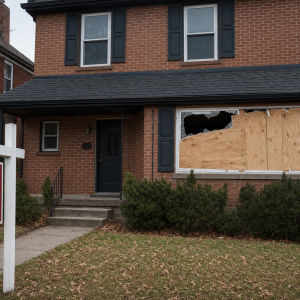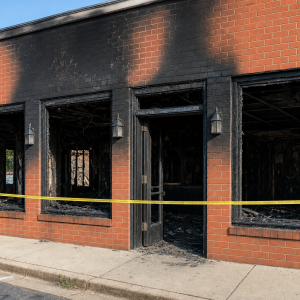
The fire is out. The trucks are gone. Your family is safe. That part matters.
But if you're staring at a smoke-stained kitchen, a soaked attic, ruined contents, and an insurance adjuster who sounds calm while your life is upside down, you're already in the next battle. Fire claims in Durham don't become stressful because the loss is unclear. They become stressful because the insurer moves fast to define the loss before you do.
That first estimate is rarely the finish line. It's the opening position. If you accept the carrier's version of scope, contents value, cleanup, and living expenses too early, you make their job easy and your recovery harder.
Table of Contents
- Your Durham Home Suffered a Fire Now The Real Fight Begins
- Decoding the Insurer's Tactics to Low-Ball Your Fire Claim
- Building an Ironclad Case Your Fire Damage Documentation Checklist
- The Public Adjuster's Role in a Durham Fire Claim
- Choosing the Right Public Adjuster and What to Expect
- For The Public Adjusters Inc Your Durham Fire Claim Advocate
Your Durham Home Suffered a Fire Now The Real Fight Begins
A lot of Durham property owners feel relief for about five minutes. Then the insurance process starts.
You report the loss. Someone schedules an inspection. A field adjuster arrives, takes photos, asks a few questions, and starts shaping the file. By the time you realize the estimate feels thin, the insurer has already built the first version of your claim.
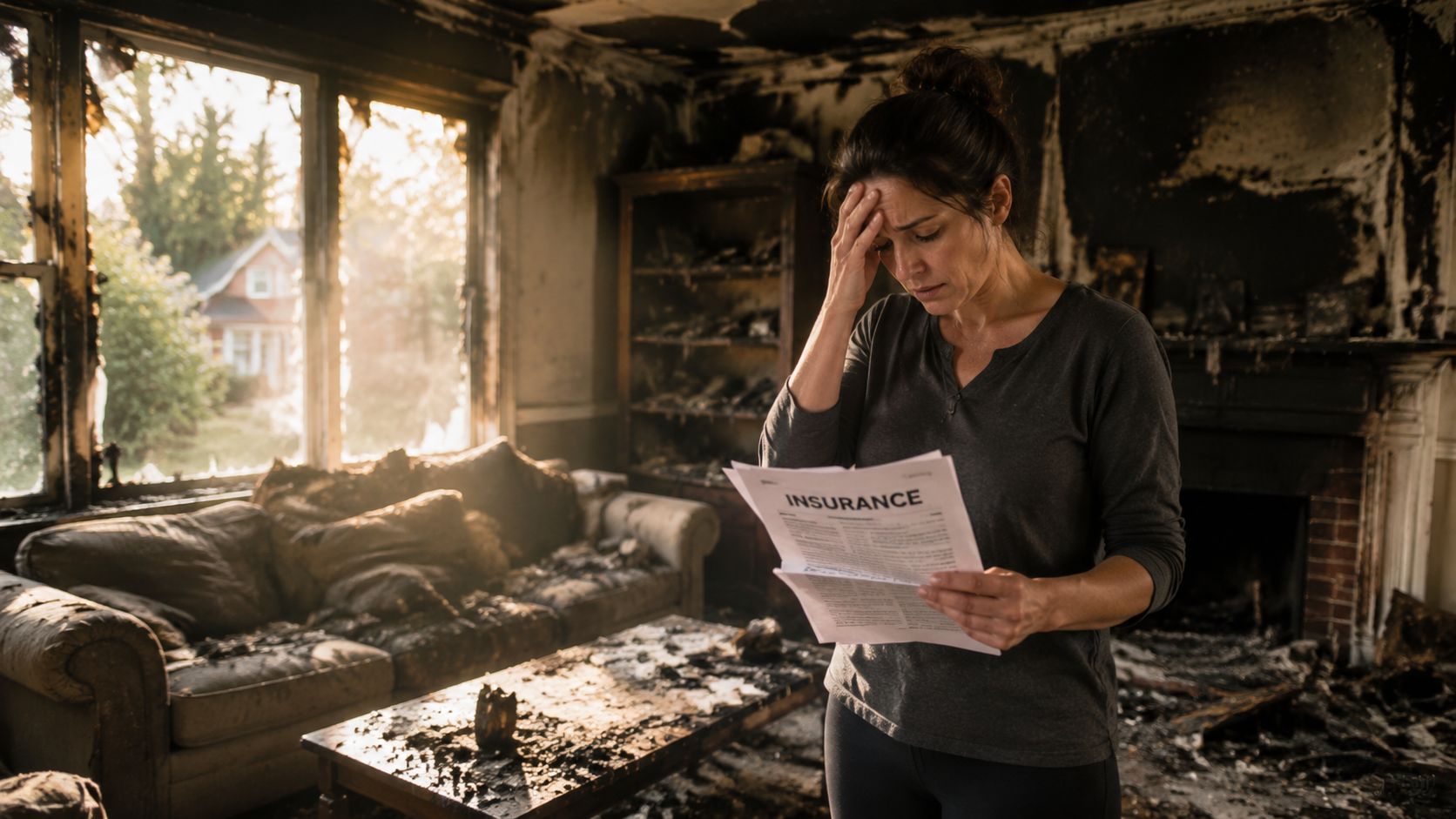
The first inspection is not neutral
The critical question Durham homeowners face is when to get help. Insurer-side adjusters in the Raleigh and Durham area are expected to manage claims from first notice of loss through estimate writing and coverage discussions, which means the carrier's narrative forms early in the file, as reflected in local claims adjuster job expectations in Durham.
That matters because your insurer's adjuster is not your advocate. They work inside a structured process. You need your own structure just as fast.
Practical rule: If the carrier inspects first and defines the loss first, you're already reacting instead of leading.
Homeowners often tell themselves they'll wait and see what the insurance company offers. That's a mistake. Fire claims are loaded with hidden damage, and hidden damage doesn't negotiate well after demolition, disposal, and cleanup have already erased the proof.
What gets disputed first
The visible charring is only part of the claim. The main fights usually start with smoke migration, soot in concealed spaces, odor remediation, contents valuation, and additional living expenses when the house isn't fit to occupy.
Use this early window well. Review practical steps like what to do after the ashes settle before debris is removed and before contractors unintentionally destroy evidence you still need.
If you're reading this after the loss, not before it, fine. Focus on the fight in front of you. Later, when things are calmer, it's worth reviewing common house fire prevention tips from Purified Air Duct Cleaning so this doesn't happen twice.
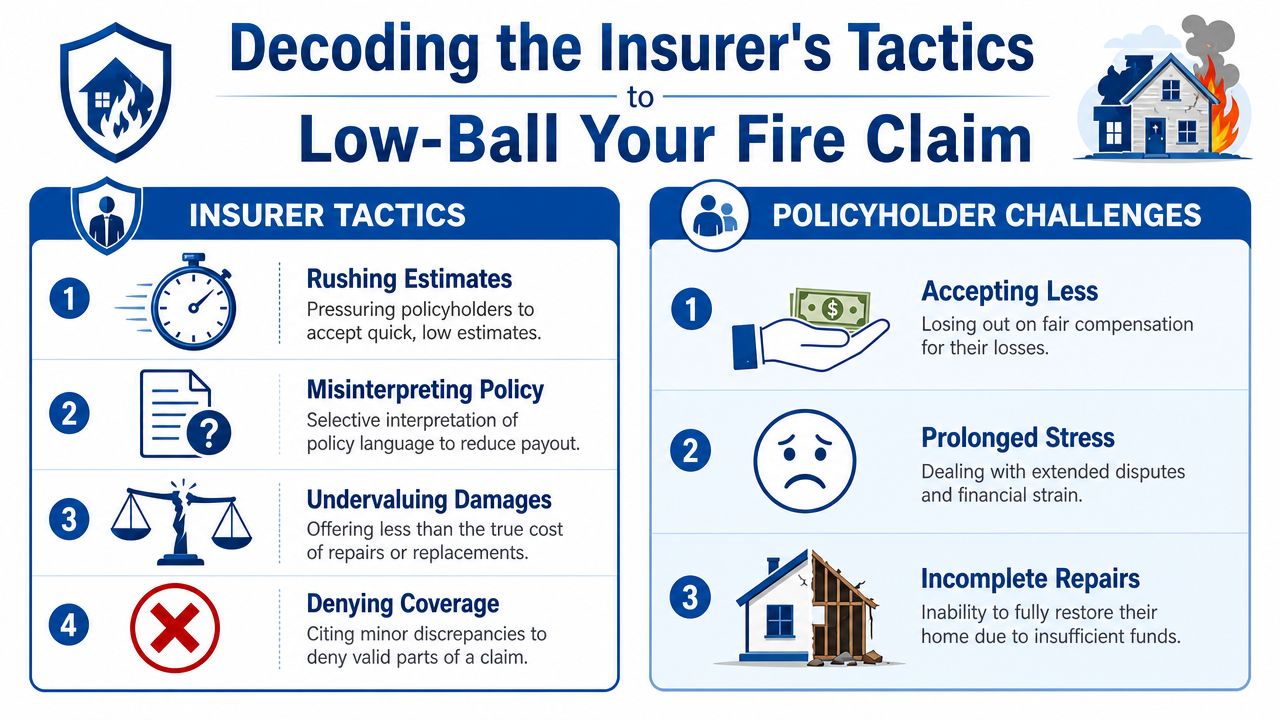
Decoding the Insurer's Tactics to Low-Ball Your Fire Claim
After a fire, many Durham homeowners expect the hardest part to be the smoke, the debris, and the disruption. Then the carrier's estimate arrives, and the fight shifts. What looked like help starts to look like control.
Insurers usually follow a familiar playbook. They inspect fast, frame the loss narrowly, and put a clean-looking number in front of you before the full damage is understood. Once that first number lands, every correction feels like a battle, even when you are only asking to have the full loss recognized.
In Durham, this is handled like a business operation, not a favor. The City maintains mapped Durham Fire Insurance Areas page, and carriers process claims with systems, software, and internal procedures built to control cost. Treat every early decision in your file as strategic.
Why the carrier moves so quickly
Speed gives the insurer an advantage.
A fast inspection lets the adjuster anchor the claim to a limited first scope. If the attic was not opened, if the HVAC system was not tested, or if smoke spread beyond the burn room was brushed aside, the file starts small. From there, you are stuck trying to prove additions instead of forcing them to prove omissions.
That is why the phrase fire claim adjuster Durham NC matters in the first place. Homeowners search for answers. What they need is someone who can challenge the carrier's first version of the loss before that version hardens into the claim.
The first estimate is not a fact. It is the insurer's opening position.
The most common low-ball moves
These are the tactics I see over and over in fire claims:
- Rushed scope writing. The adjuster captures the obvious burn damage but gives little attention to smoke migration, soot in concealed spaces, HVAC contamination, insulation impact, or odor damage in rooms that never burned.
- Incomplete estimating software entries. A polished estimate can still miss major categories of work. Clean formatting does not mean full payment.
- Contents reduction. Personal property is lumped together, priced vaguely, or depreciated aggressively. That cuts the claim fast, especially for families who lost clothing, furniture, electronics, and daily-use items.
- Minimizing specialty work. Carriers often resist full deodorization, specialized cleaning, pack-out costs, and replacement of materials that cannot be restored to pre-loss condition.
- Pressure to accept movement instead of accuracy. Partial payments and repair discussions start early. That sounds helpful, but it often pushes the claim forward before the scope is complete.
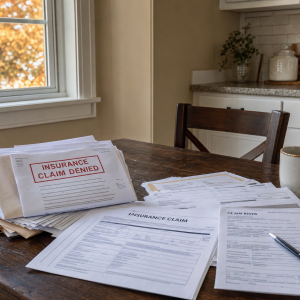
If your carrier is resisting hidden damage, delayed contamination, or broader restoration work, compare your situation to these common reasons fire claims get denied. You will see the same tactics show up under different labels.
Here is the counter-playbook. Slow the file down. Demand the policy basis for any limitation. Require room-by-room scope review. Question every missing line item. Preserve proof before cleanup crews, contractors, or demolition erase it.
A disciplined fire claim workflow should include immediate mitigation, policy review, room-by-room inspection, and a line-item estimate that captures smoke, soot, and hidden water damage before demolition. That is how you stop a low number from becoming the number the carrier spends the next six months defending.
Building an Ironclad Case Your Fire Damage Documentation Checklist
Most underpaid fire claims don't collapse because the policyholder lied. They collapse because the file is thin.
The insurer has photographs, notes, software output, and internal communications. You need your own evidence package that is stronger, more detailed, and harder to dismiss.

Document before anything disappears
The biggest reason fire claims are underpaid is the documentation gap, especially with smoke, soot, odor, HVAC contamination, deodorization needs, and room-by-room contents loss, as explained in this Durham-focused public adjuster fire claim guide.
Before anyone removes debris, tears out drywall, or hauls contents away, do this:
- Film a slow walkthrough. Narrate what you smell, see, and know. Open closets. Show ceilings, vents, insulation edges, and contents inside drawers and cabinets.
- Photograph every room from multiple corners. Then get close-ups of soot, blistering, ash, water staining, warped materials, and affected personal property.
- Capture hidden zones. HVAC returns, duct registers, attic framing, crawl spaces, garages, utility rooms, and basement areas matter.
- Save mitigation records. Board-up invoices, tarping, water extraction notes, deodorization recommendations, and cleaning reports all belong in the file.
Later in the claim, your insurer may ask for a formal sworn statement of what was lost. If you're not prepared for that document, read this guide on proof of loss requirements before you submit anything.
Your checklist for disputed fire losses
This short video gives a useful overview before you start organizing your file:
Your working checklist should include:
| Evidence | Why it matters |
|---|---|
| Room-by-room photos | Shows spread, severity, and conditions before cleanup changes the scene |
| Video walkthrough with narration | Captures odor issues, context, and items that photos miss |
| Contents inventory | Forces specificity on brand, model, age, and replacement need |
| Receipts and invoices | Supports ownership, value, mitigation, and temporary expenses |
| Communication log | Lets you track promises, delays, and shifting explanations |
| Independent repair estimates | Gives you something concrete to compare against the carrier's scope |
Your leverage is in the file. If it isn't documented, expect the insurer to treat it as optional, exaggerated, or unsupported.
For contents, don't write "toaster," "couch," or "clothes." Write the room, item description, condition, and whatever support you still have. For business property, separate stock, equipment, furnishings, and specialty items. Vagueness helps the carrier.
The Public Adjuster's Role in a Durham Fire Claim
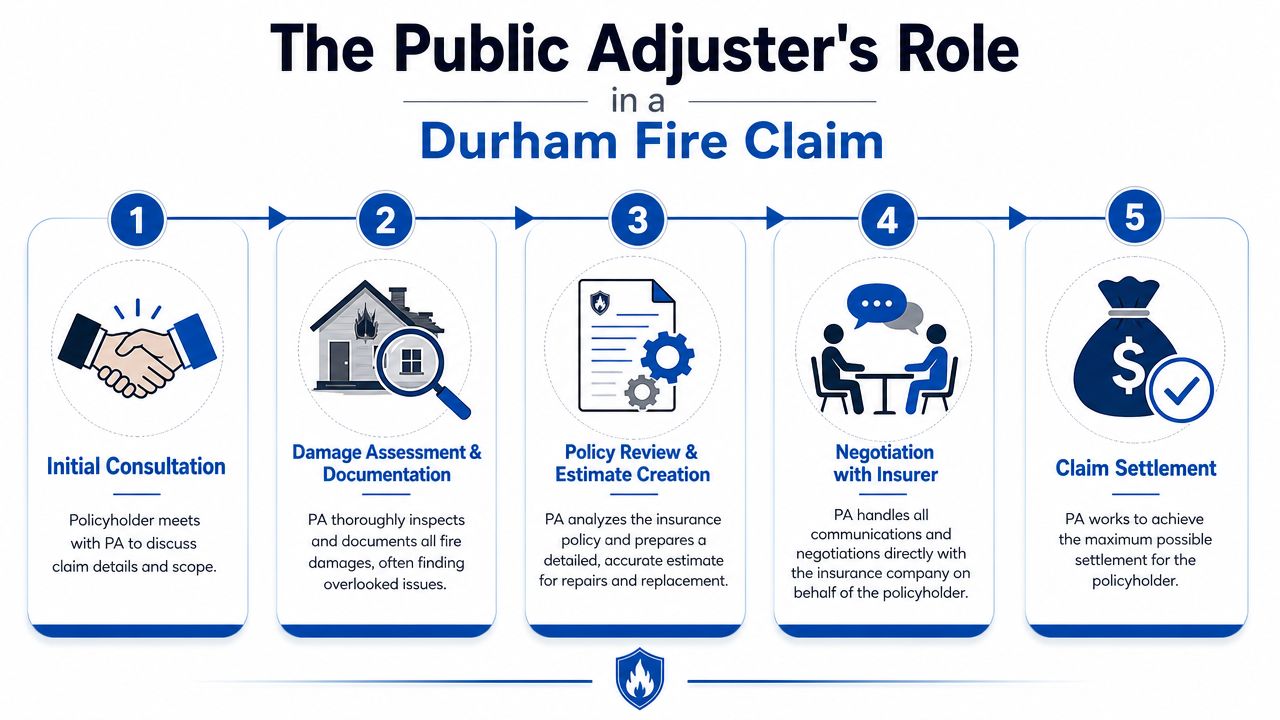
After a fire, the carrier has a team, a process, and a file built to control what gets paid. You need your own claims professional building your side of the case from day one. That is the public adjuster's job.
What a public adjuster does
A good public adjuster does far more than argue over a number on the insurer's estimate. They build the claim the carrier should have built in the first place, then force the dispute onto facts, scope, pricing, and policy terms.
That means inspecting the property with a fire-claim mindset, not a quick-close mindset. It means identifying smoke migration, soot contamination, odor damage, tear-out needs, cleaning versus replacement issues, and water damage caused during firefighting. It also means reviewing the policy closely so the carrier cannot hide a bad valuation decision inside a vague coverage explanation.
In practice, a public adjuster will usually handle:
- An independent inspection focused on the full extent of fire, smoke, soot, odor, and water damage
- A line-item estimate based on what the property needs, not what the first carrier inspection happened to note
- A contents valuation process that turns broad categories into specific, supportable losses
- A claim strategy for responding to low scopes, delayed responses, partial denials, and shifting adjuster positions
- Negotiation with evidence so the discussion stays on proof, not pressure
Insurers win disputed fire claims the same way over and over. They narrow the scope early, treat hidden damage as speculative, and push the homeowner to accept the first version of the loss. A public adjuster breaks that pattern by creating a stronger record and challenging weak assumptions before they become the official story of the claim.
When to bring one in
Bring in a public adjuster before you sign off on a bad estimate, before demolition wipes out proof, and before months of carrier delay wear you down.
Early involvement gives you a better chance to stop preventable damage to the file. Once the insurer's position hardens, every correction takes more work. It can still be done, but now you are undoing mistakes instead of preventing them.
If you already have an estimate in hand, do not panic. Get it reviewed. A weak scope can be challenged, missing items can be added, and unsupported positions can be pushed back when the claim file is built correctly.
For The Public Adjusters, Inc. is a licensed public adjusting firm that handles residential and commercial property claims and assists policyholders with documenting, estimating, and negotiating fire and smoke losses.
If the insurer has paperwork and you only have frustration, the carrier is ahead. Fix that fast. Build the file, pin down the scope, and make the dispute about proof.
Choosing the Right Public Adjuster and What to Expect
Hiring a public adjuster isn't about hiring a helper. You're hiring a claims professional to take apart an insurer's position and rebuild the claim correctly.
Claims adjusting is a real profession. The U.S. Bureau of Labor Statistics reported a national median wage of $66,790 per year in May 2019, with wages ranging from $41,100 at the 10th percentile to $100,400 at the 90th percentile for claims adjusters, examiners, and investigators, according to the BLS occupational wage data. North Carolina workforce data cited alongside that occupation also reflects ongoing activity in the field, with 548 job openings statewide despite an average annual job growth rate of -0.4%. Translation: this work is specialized, technical, and financially significant.
How to vet the person handling your dispute
Ask direct questions. If the adjuster dodges them, move on.
Use this filter:
- License first. Verify they are properly licensed to handle public adjusting work in North Carolina.
- Fire claim experience. Ask how they approach smoke, soot, odor, contents, and loss-of-use disputes in dwelling and business-owner claims.
- Estimate depth. Ask whether they prepare a line-item estimate and how they document concealed damage before demolition.
- Policy analysis. Ask who reviews the policy and how they identify coverage issues versus valuation issues.
- Communication control. Ask whether they take over insurer communications or leave most of the back-and-forth to you.
A weak public adjuster can waste time. A strong one changes the quality of the file.
What the process usually feels like
The process isn't instant. A fair fire settlement usually takes persistence, document gathering, estimate revisions, and negotiation rounds. That's normal.
Most policyholders also want to know about fees. Public adjusters commonly work on a contingency basis, meaning they are paid from the claim recovery rather than by an upfront hourly bill. The exact terms should be written clearly and explained before you sign anything.
A couple of client comments often reflect what people care about most in this stage: responsiveness and clarity. Reviews for firms in this space commonly praise adjusters who keep clients updated, explain policy language in plain English, and reduce the pressure of constant insurer contact. That's what you should look for. Calm communication, organized documentation, and someone who doesn't flinch when the carrier pushes back.
For The Public Adjusters Inc Your Durham Fire Claim Advocate
At 7 a.m., you are standing in a smoke-soaked Durham house, staring at blackened drywall, warped cabinets, and a carrier estimate that barely scratches the surface. The fire is out. The insurance fight is starting.
After a fire, many owners believe the hardest part was getting through the loss. Then they encounter the claim process.
That process turns against you fast when the carrier controls the scope, the photos, the contractor conversations, and the timeline. If your Durham home or business has fire and smoke damage, bring in someone who handles coverage, documentation, valuation, and negotiation from the start.
A proper fire claim has to account for structural damage, smoke spread, soot contamination, odor treatment, damaged contents, and extra living expenses or business interruption when the policy allows it. If those items are missing from the file, your payment stays low and the insurer gains ground.
Here is the practical snapshot:
| For The Public Adjusters Inc At a Glance | Details |
|---|---|
| Who they represent | Policyholders, not insurance companies |
| Claim types relevant here | Homeowner, dwelling, and business owner property claims involving fire and smoke damage |
| Core work | Inspection, documentation, estimate preparation, policy review, and negotiation |
| Service area | Durham and broader North Carolina service coverage |
| Best fit | Denied, delayed, disputed, or underpaid property claims |
Do not treat the carrier's first number like a verdict.
Treat it like an opening position. Challenge missing line items. Force smoke and odor damage into the record. Push back on weak contents valuations. Get a second set of eyes on every part of the loss before the insurer's version hardens into the official story.
If your claim has turned into a low offer, a partial denial, or a fight over scope and value, For The Public Adjusters, Inc. can review the file and explain your options. Call 919-400-6440 to speak with a licensed Public Insurance Adjuster or use the contact form if you want to start with questions. Have your fire claim questions answered at NO COST. They work for you, not your insurance company.