
Does Homeowners Insurance Cover Fallen Trees? Yes — homeowners insurance CAN cover fallen trees, but the real answer is: it depends on why the tree fell and what it damaged. Here’s a clear, consumer-friendly breakdown ????
When it IS covered: Homeowners insurance typically covers fallen trees if the cause is a “covered peril”—meaning something sudden and out of your control. Some examples include windstorms or hurricanes, lightning strikes, snow or ice weight, fire or vandalism.
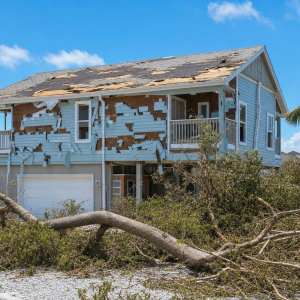
If one of these causes the tree to fall and it damages your home, fence, garage, or other structures, your policy will usually pay for the repairs to the structure, damage to personal property, and the tree removal itself (often with limits – more on this below.
So, a tree came crashing down in your yard. The big question isn’t just “will insurance pay for it?”—it’s “how do I fight the insurance company when they try to deny my claim or low-ball the payout?” Does homeowners Insurance Cover Fallen Trees?
The short answer is a hard maybe. Whether you see a dime from your insurance company depends entirely on two things: why the tree fell and what it landed on. But let’s be clear: that’s just the starting point for your dispute.
If a hurricane or a nasty ice storm knocks a tree onto your house, your policy should step up. But here’s the reality: insurance carriers like State Farm and Allstate have entire departments dedicated to finding ways to pay you as little as possible. They’ll look for any loophole to lowball or deny your claim, and you need to be ready to fight back.
Does Homeowners Insurance Cover Fallen Trees?
When a tree smashes into your property, that first call to the insurance company is filled with hope. The simple truth is, that coverage is never guaranteed. Insurance companies write policies to protect their own bottom line, not to make you whole again after a disaster.
They use confusing language and a mountain of fine print to limit what they have to pay, especially in states like North Carolina and Virginia where severe storms are a fact of life. This is where claim disputes begin.
Your policy is built to cover damage from specific events, what the industry calls covered perils. These usually include things like:
- Windstorms and hurricanes
- Lightning strikes
- The weight of ice, snow, or sleet
- Vandalism
But if that tree falls because it was visibly rotting, diseased, or dying, you’re in for a fight. Your insurer will almost certainly deny the claim by blaming you for neglect. Their argument is simple: you should have dealt with the hazardous tree before it fell, so the consequences are on you. This is one of their favorite ways to deny a claim outright.
It All Depends On What It Hits
The single most important factor is where the tree lands. Insurance companies draw a very clear, bold line between a tree that damages a structure and one that just makes a mess of your lawn.
This flowchart breaks down the basic rule of thumb your carrier’s adjuster will follow when trying to limit your payout.

As you can see, the outcome is completely different depending on what got hit. If the tree lands on an insured structure—your house, a detached garage, a shed, or even a fence—your policy coverage is triggered. If it falls harmlessly into the grass, you’re almost always on your own for the removal costs.
To give you a clearer picture, here’s a quick summary of how these situations typically play out.
Fallen Tree Coverage At A Glance
| Scenario | Is It Typically Covered? | Key Considerations & Common Insurer Tactics |
|---|---|---|
| Tree falls on your house or garage | Yes | Coverage applies to structural repairs and limited debris removal. Adjusters often lowball repair estimates or try to pay for a cheap “patch job” instead of a proper repair. |
| Tree falls in your yard (no damage) | No | Insurers consider this a maintenance issue, not a covered loss. You are responsible for 100% of the removal cost. This is an easy denial for them. |
| Tree falls and blocks your driveway | Maybe | Some policies offer a small amount of coverage (e.g., $500 – $1,000) for removal only if it blocks access to the home. This is often an easy denial for them. |
| Tree falls on your car | No (from Homeowners) | This is a claim for your auto insurance policy, specifically under your comprehensive coverage. It will not be paid by your home insurance. |
This table shows just how many “ifs” and “buts” are baked into your policy.
This distinction is just the start. For a deeper dive into the fine print that adjusters use against you, you can learn more by understanding homeowners insurance coverage in detail. In the sections that follow, we’ll expose the specific tactics insurance companies use to slash your payout and give you a roadmap to fight back.
Decoding Your Policy Before the Adjuster Misleads You

Let’s get one thing straight: your homeowners insurance policy is not your friend. It’s a legal contract written by the insurance company’s lawyers to protect their profits, not your home.
When a tree comes crashing down, the company adjuster who shows up isn’t there to make you whole. Their job is to find any reason, any loophole, to pay you as little as the law allows.
Terms like “covered perils,” “exclusions,” and “coverage limits” are the weapons in their arsenal. Understanding what they really mean is your first line of defense against them gutting your claim.
What Is a Covered Peril?
For your insurance to even consider paying a dime, the event that brought the tree down must be a covered peril. These are specific, named events your policy agrees to cover. Think of it as the insurance company’s approved list of disasters.
The most common covered perils that send trees falling are:
- Windstorm or Hail: This is the number one cause, a constant threat here in North Carolina and Virginia.
- Lightning: A direct strike can instantly split a tree or fatally weaken it.
- Weight of Ice or Snow: A heavy winter storm can snap huge limbs or topple entire trees.
- Vandalism: If someone intentionally cuts or damages a tree, causing it to hit your property.
Here’s a hard fact: in 2022, property damage made up almost 98 percent of all homeowners insurance losses. A staggering 40 percent of that was caused specifically by wind and hail—the very events that drop trees on houses.
But don’t be surprised when an adjuster from State Farm or Allstate tries to argue that the wind wasn’t a “windstorm” by their definition. It’s a classic tactic to try and disqualify your claim from the start.
The Exclusions Adjusters Love to Use
While the “covered perils” section gives you hope, the exclusions list is where the insurance company takes it away. These are the trapdoors and loopholes adjusters use to flat-out deny your fallen tree claim.
Key Takeaway: An exclusion is a clause that eliminates coverage for specific events or conditions. It is the insurance company’s “get out of jail free” card, and they play it every chance they get.
These are the top exclusions adjusters lean on to reject fallen tree claims:
- Neglect: If they can claim the tree was visibly dead, diseased, or rotting before the storm, they’ll blame you. They’ll say you neglected your duty to maintain a safe property and deny the claim on that basis alone.
- Earth Movement: This is a broad category that includes earthquakes, landslides, and mudslides. If heavy hurricane rains cause the ground to shift and a tree falls, the adjuster will point to the “earth movement” exclusion, ignoring the covered peril (the hurricane) that started it all.
- Flooding: Damage from rising water is almost never covered by a standard policy. If floodwaters wash out a tree’s root system and it falls over, you’re out of luck. The adjuster will immediately point to the flood exclusion.
Trying to decipher your policy is a nightmare by design, but you have to do it to protect yourself. To see exactly how to break down your own policy documents, read our guide on how to read your insurance policy. This knowledge is what empowers you to spot when the adjuster is twisting the words to underpay or deny what you are rightfully owed.
Fighting Your Insurer Over Tree Debris Removal Limits
When a storm slams a tree into your house, the shock of the gaping hole in your roof is just the first wave of the disaster. The second hits when you realize you’re facing a massive, tangled mess of wood and debris—and your insurance company is about to draw a hard line in the sand.
This is where one of the most common and frustrating insurance fights begins. Your carrier is banking on you not knowing the rules of the game, and they’re ready to use confusing policy limits to push thousands of dollars in costs right back onto you.
While your policy is supposed to cover the damage to your house, adjusters love pointing to fine print that puts a laughably small cap on what they’ll pay for the actual tree removal.
The $500 Debris Removal Lowball: A Classic Insurance Tactic
It’s a textbook play from carriers like State Farm, Allstate, and others. The adjuster shows up, looks at the tree crushing your roof, and offers you a check for $500 or maybe $1,000 for debris removal, acting like they’re doing you a huge favor.
Here’s the hard truth: removing a mature oak or pine that’s tangled up with your home’s structure is a complex, expensive job. It can easily cost $4,000, $5,000, or even more, especially if it requires a crane and a specialized crew to lift it off safely without causing more damage.
The adjuster knows this. They are counting on you being too overwhelmed to argue. They expect you to take their first lowball offer, leaving you to cover the rest out-of-pocket. While standard U.S. homeowners policies almost always cover damage from fallen trees, the debris removal portion is often capped at just $500 to $1,000 per tree. This is a critical detail, especially for homeowners in hurricane-prone states like North Carolina. For a deeper dive, you can explore how typical policies handle fallen tree costs.
Worse yet, this tiny payment only kicks in under two very specific conditions:
- The tree must hit a covered structure (your house, garage, fence, or shed).
- The tree must be blocking your driveway or a required ramp for handicap access.
If a tree comes down in your yard but doesn’t hit anything? You’re on your own. The insurance company will wash their hands of it, calling it a landscaping problem, and will pay zero for removal. Adjusters use this rule as a weapon to deny any part of a claim involving trees that didn’t directly strike a building.
Your Battle Plan to Demolish Low Removal Limits
Let’s get one thing straight: the adjuster’s first offer is not the final word. It’s an opening bid in a negotiation you need to win. You have every right to dispute their assessment and demand the actual cost of the work.
Crucial Tip: Never, ever accept the insurance company’s first offer for debris removal. It is a calculated lowball designed to save them money, not to make you whole. Treat it as nothing more than the starting point for a fight.
Here’s your plan to fight back and get what you’re owed:
-
Get Multiple, Detailed Quotes. Immediately call at least three reputable and insured tree removal companies. Don’t settle for a single price. Demand a line-item quote that breaks down the entire job: labor costs, the number of crew members, and the specific equipment needed (e.g., “75-ton crane required for safe lift off roof without further structural damage”).
-
Document Everything. Period. Take dozens of photos and videos of the tree from every possible angle. Get close-ups of where it’s resting on the roof and walls. Your goal is to prove why it requires professional, heavy equipment for safe removal. If a tree expert tells you a crane is necessary, get them to state that in writing on the quote.
-
Formally Submit Your Evidence. Send the adjuster an email with all your quotes and photos attached, creating a written record. State clearly and firmly that their offer is unacceptable and insufficient to cover the real-world cost of the work. Explain that your submitted quotes reflect the true market price for a safe and professional job.
This is a battle where having an expert in your corner is a game-changer. An experienced public adjuster knows exactly how to dismantle an insurer’s weak arguments. We use industry-standard estimating software and an expert understanding of policy language to prove the actual, necessary cost, saving homeowners from paying thousands they don’t owe.
My Neighbor’s Tree Fell On My House Who Pays?

It’s the sound every homeowner dreads: a deafening crash during a storm that tells you something big just hit your house. You look outside and see it—your neighbor’s giant oak is now lying across your roof.
Once the shock wears off, one question hits you: who pays for this?
Common sense says your neighbor should pay. It was their tree, after all. But that’s not how insurance companies see it. They have a rule they love to hide behind, and it’s going to frustrate you.
The brutal truth is, your insurance company will immediately say you are responsible. In almost every case involving a storm or so-called “act of God,” your own homeowners insurance is on the hook for the damage to your property. It doesn’t matter who owned the tree.
The “Act of God” Default Rule
This is the standard playbook across the entire insurance industry. When wind or lightning—a covered peril—sends a neighbor’s tree onto your property, your policy is expected to pay. This practice saves insurers millions in claim payouts every year. You can learn more about how fallen tree liability is typically assigned from TheZebra.com.
So what does this mean for you? It means you’re the one filing the claim, paying the deductible, and likely getting hit with a premium increase. All for a tree that wasn’t even yours.
Your insurance company has zero financial reason to fight your neighbor’s insurer. It’s far easier and cheaper for them to process the claim under your policy and move on, leaving you to deal with the consequences.
But there is one powerful exception to this rule. The catch? The burden of proof is entirely on you.
Proving Your Neighbor Was Negligent
The only way to make your neighbor’s insurance company pay is to prove negligence. This isn’t just an accusation; it’s a legal argument you must win by proving three specific facts:
- The tree was clearly a hazard (dead, diseased, visibly rotting, or leaning dangerously).
- Your neighbor knew—or should have reasonably known—about the dangerous condition.
- Your neighbor did nothing to remove or fix the hazardous tree.
Proving negligence is an absolute uphill battle. Your insurance company’s adjuster has no motivation to do the hard work of building a case against another carrier. They’d rather approve a simple claim on your policy, close the file, and meet their quota.
Key Insight: To win a negligence argument, you need undeniable proof. This isn’t a “he said, she said” situation. You need documented, hard evidence that your neighbor knew about the danger and ignored it.
This is a classic scenario where hiring a public adjuster becomes your most powerful move. We take on the fight your own insurance company refuses to. We know exactly how to gather the evidence needed to force the issue, such as:
- Arborist Reports: Getting a certified arborist to examine the tree for pre-existing disease or decay that proves it was a ticking time bomb.
- Past Communications: Uncovering certified letters, emails, or even text messages you sent to your neighbor warning them about the tree.
- Photographic Evidence: Assembling time-stamped photos that show the tree’s worsening condition before it fell.
- Witness Statements: Securing signed affidavits from other neighbors who were also aware of the hazard and can confirm it was a known problem.
Without this kind of professionally built case, any attempt to prove negligence will almost certainly fail. You’ll be left paying the price for your neighbor’s inaction. A public adjuster’s only job is to fight for you. We build the case your insurer won’t, forcing the at-fault party—and their insurance company—to pay for the damage they caused.
Case Study: How We Fought a Lowball Tree Damage Offer and Won
Reading your policy is one thing. Seeing how an insurance company tries to twist the rules in a real-world claim shows you what’s really at stake. Let’s walk through what happened to a North Carolina family after a fallen tree punched a hole in their home—and their sense of security.
During a nasty thunderstorm, a huge pine tree snapped and came crashing down on their roof. It smashed through the sheathing and cracked several main support rafters in the attic. They filed their claim, and the insurance company’s adjuster showed up a few days later. After a quick once-over, he offered them a check that was a joke—a fraction of what the real repair would cost.
The Insurer’s Lowball Playbook
The company adjuster pulled two classic moves right from the insurance company playbook to slash the payout. First, he pointed to an arbitrary $1,000 limit for debris removal in their policy. The problem? Quotes to safely crane the massive tree off the house were already pushing $4,000.
Second, he wrote an estimate for a cheap “patch job” on the roof. He completely ignored the cracked, splintered rafters in the attic—the bones of their roof. His excuse was a common one: the cracks looked old and weren’t from the tree. Just like that, they tried to dodge paying for a massive structural repair, leaving the family with an insulting offer that wouldn’t even get the tree off their house.
How a Public Adjuster Flipped the Script
Overwhelmed and furious, the homeowners called us. That one call changed everything. Our public adjuster immediately went on the offensive.
The first move was a painstaking re-inspection of the damage. We don’t do quick walk-arounds. Our expert spent hours documenting the real story.
- He got into the hot, cramped attic to photograph the fresh, splintered wood along every cracked rafter, proving the damage was new and a direct result of the impact.
- He used thermal imaging to find hidden water intrusion all around the impact zone—moisture the company adjuster conveniently missed.
- He brought in a licensed structural engineer who produced an expert report confirming the rafters had to be replaced, not patched.
Armed with a mountain of undeniable proof, our adjuster built a professional, line-item estimate detailing the true cost to make the family whole again. He submitted this ironclad claim package and began aggressively negotiating, taking apart the company adjuster’s weak arguments one by one.
Faced with overwhelming evidence and the clear threat of a bad faith lawsuit, the insurance company caved. They agreed to pay for the full cost of the crane removal, the complete structural repairs, and a proper roof replacement. The final settlement was multiples higher than their first insulting offer.
This family got the money they were owed to actually fix their home, all because they had an expert fighting exclusively for them.
This client’s experience shows how a public adjuster’s thoroughness can be the only thing standing between a lowball offer and a fair settlement. To understand the critical differences in who works for whom, read our guide on what a public adjuster does and how we advocate only for you, the policyholder.
Answering Your Fallen Tree Claim Questions

When your insurance company hits you with a denial or a lowball offer after a tree crashes down on your property, you need straight answers, not more corporate double-talk. This is where their adjusters use confusing language and policy loopholes to make you feel powerless and give up.
We’re here to fight back. Below, we’re tackling the most common and infuriating questions homeowners face when battling their insurer over fallen tree damage. This is actionable advice designed to help you win.
What Should I Do if My Insurer Blames the Tree’s Health for the Damage?
This is a classic denial tactic, plain and simple. The insurance company is trying to trigger a “neglect” or “maintenance” exclusion to get out of paying what they owe. Don’t let them.
First, do not accept their verbal denial. Your first move is to demand their decision in writing. Make them point to the exact policy language they are using to justify the denial.
Next, you build your counter-attack. Gather any photos you have showing the tree looked perfectly healthy before the storm. Dig up local weather data proving a covered event—like hurricane-force winds—was the real cause. This is a moment where a public adjuster is your most powerful weapon. They will hire an independent arborist whose expert opinion will crush the insurer’s flimsy excuse and prove the storm was the true cause of loss, not some imaginary rot.
My Insurer Is Only Offering $1,000 for Tree Removal but It Costs $4,000. How Do I Fight This?
You’re looking at a standard low-ball tactic. Insurance carriers love to hide behind arbitrary policy sub-limits that have zero connection to real-world costs.
Let’s be clear: never accept their initial offer. It’s not a gesture of goodwill; it’s a calculated move designed to save them money at your expense.
Immediately get on the phone with at least three reputable, insured tree removal companies and get detailed, itemized quotes. Make sure those quotes spell out why the cost is what it is—things like the need for a crane, complex rigging, or difficult access. Submit these written quotes to your insurer as a formal dispute of their insultingly low offer.
Crucial Insight: An adjuster’s offer is a starting point for a fight, not the final word. When you arm yourself with multiple, professional quotes, you replace their made-up number with a hard, evidence-based figure they can’t ignore.
If the company adjuster still refuses to budge, it’s time to bring in a professional. A public adjuster uses the same industry-standard estimating tools the insurance companies use to prove the true cost, forcing them to stop playing games and pay what’s fair.
Can a Public Adjuster Help if My Fallen Tree Claim Was Already Denied?
Yes, absolutely. It is never too late to get an expert second opinion on a denied or underpaid claim. The truth is, many homeowners only call us after they’ve been punched in the gut with a denial letter or a ridiculous offer.
A good public adjuster will review your entire policy and the insurance company’s denial letter for free to see if you have a winning case. They are experts at catching adjuster errors, finding damage the company “missed,” and using the policy’s own language to reopen and win denied claims. For other risk-reduction strategies, it’s also worth reading a guide to protecting your South Carolina home.
Hiring a public adjuster after a denial can completely turn the tables and secure the money you need and deserve.
2. Why does my insurance only offer $500 for tree removal when the bill is $5,000?
This is the most common "lowball" error made by staff adjusters. Standard policies (HO3) have a Debris Removal sub-limit (usually $500–$1,000) for "hauling away" the wood.
The Solution: You must distinguish between Extraction and Debris Removal. The cost to crane the tree off your roof to prevent further damage is a "Reasonable Repair" under Coverage A (Dwelling) and is not subject to the $500 limit. Only the cost of cutting up and hauling away the logs once they are on the ground falls under the $500 cap.
3. What is the "Virginia Rule" regarding hazardous trees?
Virginia follows a specific legal precedent regarding encroaching and hazardous trees. Under Fancher v. Fagella, a property owner can be held liable for damage caused by their tree's roots or branches if they are a "nuisance"—meaning they cause actual or imminent harm. This gives VA policyholders more leverage to demand a neighbor remove a dead tree before it falls, or to hold them liable if it does.
4. How does the North Carolina "Matching" rule affect my roof repair?
If a tree damages 25% of your shingles, will the insurance pay for a whole new roof? In North Carolina, the NCDOI and the NC Rate Bureau allow for a "reasonable uniform appearance." If your shingles are discontinued and a patch would be an eyesore, a public adjuster can leverage NCGS § 58-63-15 to argue that the insurer must replace the entire slope or roof to maintain the home's value.
5. Does insurance cover tree removal if the tree hit my yard but NOT my house?
Generally, no. If a tree falls in your yard and doesn't hit a covered structure (house, shed, fence), most NC and VA policies provide zero coverage for removal.
The Exception: Most policies include a provision that pays for removal if the tree blocks a driveway (preventing vehicle access) or a handicapped ramp. A public adjuster will look for these "access" clauses to get your yard cleared at the insurer's expense.
6. What if a tree falls on my car while it’s in the driveway?
This is not a homeowners insurance claim. This falls under the Comprehensive Coverage of your Auto Insurance policy. If the tree hit both your house and your car, you will have to file two separate claims and likely pay two separate deductibles.
7. Does my policy cover "Emergency Mitigation" (Tarping)?
Yes. In fact, your policy requires you to prevent further damage. In NC and VA, the "Duties After Loss" section of your policy mandates that you cover holes in the roof immediately.
The Warning: Do not let a tree company charge you $10,000 for a "rush" tarping job without an itemized invoice. Insurers in VA and NC are increasingly denying "unreasonable" mitigation invoices. Always get a "scope of work" before they start.
8. How do I prove my neighbor was negligent after the tree is already on the ground?
The Stump is the Evidence. If you believe the neighbor's tree was dead, do not let the tree service grind the stump immediately. A public adjuster will recommend an arborist to examine the rings and internal decay of the stump. In North Carolina, photos of "fungal conks" or hollow centers are vital evidence to prove the neighbor breached their Duty of Care, potentially getting your deductible reimbursed.
9. What is my deductible for a fallen tree claim in NC/VA?
Check your "Declarations Page."
Coastal Regions: If you are in Virginia Beach or the Outer Banks, you may have a Named Storm or Hurricane Deductible (usually 1%–5% of your home's value).
Inland Regions: In Richmond or Charlotte, you likely have a flat "All-Peril" deductible (e.g., $1,000). If the tree fell during a thunderstorm, the lower deductible applies.
10. Can I use my own contractor, or do I have to use the insurance company’s "Preferred Vendor"?
You have the absolute right to choose your own contractor in both NC and VA. "Preferred Vendors" work for the insurance company and are often incentivized to keep costs low. A public adjuster ensures that your chosen contractor’s estimate—which includes local NC/VA labor rates and Xactimate line items—is the one used for the settlement.
Don’t let your insurance company dictate the terms of your recovery. If you’re fighting a denied, delayed, or underpaid fallen tree claim in North Carolina or Virginia, For The Public Adjusters, Inc. can help. Visit us online at https://forthepublicadjusters.com to get a free, no-obligation claim review today.