You opened the flood claim expecting help. Instead, you got a number that doesn’t come close to tearing out wet materials, drying the structure, replacing damaged contents, and dealing with the mess left behind. That reaction is normal. Homeowners in North Carolina and Virginia call this the second disaster, because by the time the water is gone, the paperwork fight starts.
If your flood policy is through the National Flood Insurance Program (NFIP) or a Write Your Own (WYO) carrier handling an NFIP claim, you’re not dealing with a regular homeowners water loss. You’re dealing with a federal program, strict deadlines, technical forms, and adjusters who often write narrow scopes that miss damage, minimize line items, or leave you guessing about what was denied and why. If you want to dispute a low insurance offer for flood damage, you need to treat it like a document battle, not a customer service issue.
Table of Contents
- That Sinking Feeling Why Your NFIP Flood Offer Is So Low
- Your First Moves After a Lowball Offer
- Building Your Counter-Attack Evidence and Proof of Loss
- How to Write a Demand Letter That Gets Results
- Navigating NFIP Deadlines Appeals and Appraisal
- Claim Help Hiring a Public Adjuster to Fight for You
That Sinking Feeling Why Your NFIP Flood Offer Is So Low
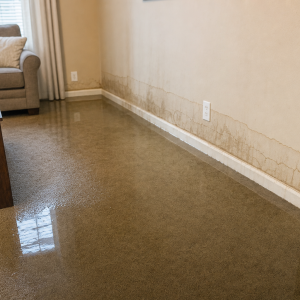
The check or estimate lands in your inbox, and your stomach drops. You already know the floors have to come out. You know the base cabinets swelled. You know the drywall wicked water higher than the adjuster marked. Yet the offer reads like somebody inspected a different house.

Why the first number is usually the wrong number
This isn’t bad luck. It’s baked into the way these claims often move. From 2016 to 2023, the average NFIP payout for water damage claims was $66,000, yet FEMA’s average initial settlement was just $3,000. That $63,000 gap shows that disputing a low offer is a standard and necessary step to get what you are owed, according to NFIP water damage claim figures summarized by Insurify.
That tells you something important. The first offer is often not the full value of the loss. It’s the opening position. If you accept it blindly, you may lock yourself into someone else’s thin scope of damage.
Practical rule: If the scope is wrong, the money will be wrong. Flood claims are estimate-driven.
A lot of homeowners also confuse flood claim valuation with regular homeowners claim valuation. They are not the same fight. NFIP rules, coverage categories, and valuation issues can get technical fast. If you’re also trying to understand how insurers value damaged materials, this breakdown of actual cash value vs replacement cost helps you spot where numbers get shaved down.
The adjuster is not your advocate
The field adjuster may be polite. That doesn’t make the report complete. In NFIP and WYO flood claims, the insurer’s side controls the first inspection, the first scope, and often the first explanation of what is supposedly covered or excluded. That’s a serious advantage for them and a serious risk for you.
Common problems show up fast:
- Missing rooms or components that were affected but not priced.
- Low unit pricing that doesn’t match what licensed contractors are charging.
- Wet materials treated as minor cleanup instead of full removal and replacement.
- Secondary damage ignored because it takes more work to document.
If your estimate feels disconnected from reality, trust that instinct. You’re not being difficult. You’re seeing the gap between a carrier-driven scope and the actual cost of repair.
Your First Moves After a Lowball Offer
Once you see that low number, slow down and get organized. Angry phone calls feel good for five minutes and accomplish nothing. Your next moves need to create a paper trail.
What to do in the first two days
Start with this checklist:
- Read the offer line by line. Don’t just look at the total. Compare each room, material, and item to the actual damage in your house.
- Ask for the complete adjuster file. Request the estimate, photographs, room measurements, notes, and the exact policy language used to limit or deny payment.
- Create a claim diary. Keep a running log of every call, email, inspection, and promise. Include names, dates, times, and what was said.
- Do not endorse or deposit money casually. If a payment has been issued, get written clarification on whether it is partial and whether accepting it affects your right to dispute.
- Keep documenting the property. Continue taking photos and video during cleanup, demolition, drying, and discovery of hidden damage.
Homeowners often lose ground because they assume the carrier’s summary is the full file. It isn’t. You need the backup behind the number. If they relied on exclusions, ask them to identify the exact wording. If they priced repairs, ask for the line-item estimate.
Put every important request in writing. Phone calls disappear. Emails don’t.
Do not let flood zone language shut down your claim
A lot of underpaid claims start with a lazy assumption. The property isn’t in the most obvious high-risk area, so the insurer treats the loss as smaller, less predictable, or somehow suspicious. That argument falls apart under actual claim history.
From 2014 to 2024, nearly one-third of all NFIP flood insurance claims occurred outside high-risk flood zones. This proves that devastating floods happen everywhere, and your location is not a valid excuse for an insurer to underpay your claim, as noted in FloodSmart talking points for flood insurance professionals.
That matters in NC and VA, where homeowners often hear some version of, “This area isn’t usually a major flood zone.” That’s not a coverage analysis. That’s a shortcut.
If your claim also includes roof-related water entry issues alongside flood damage, it’s worth understanding how contractors think about pricing disputes. This guide on negotiating roof repairs gives useful context on how line items and repair scopes get challenged when insurers understate damage.
A short table can help you separate useful action from wasted motion:
| What helps | What hurts |
|---|---|
| Written requests for reports and policy language | Verbal arguments with no follow-up |
| Room-by-room comparisons | Complaining only about the total |
| Contractor estimates from licensed professionals | Handwritten guesses from a handyman |
| Daily documentation log | Relying on memory |
Building Your Counter-Attack Evidence and Proof of Loss
Flood disputes are won by the file you build. Not by how upset you are. Not by how obvious the damage looks to you. If it’s not documented, priced, and tied to the claim, the insurer will act like it doesn’t exist.
Build a file the insurer can’t brush aside
Your evidence package should be boring, thorough, and hard to attack. That means no vague totals and no one-page estimates.
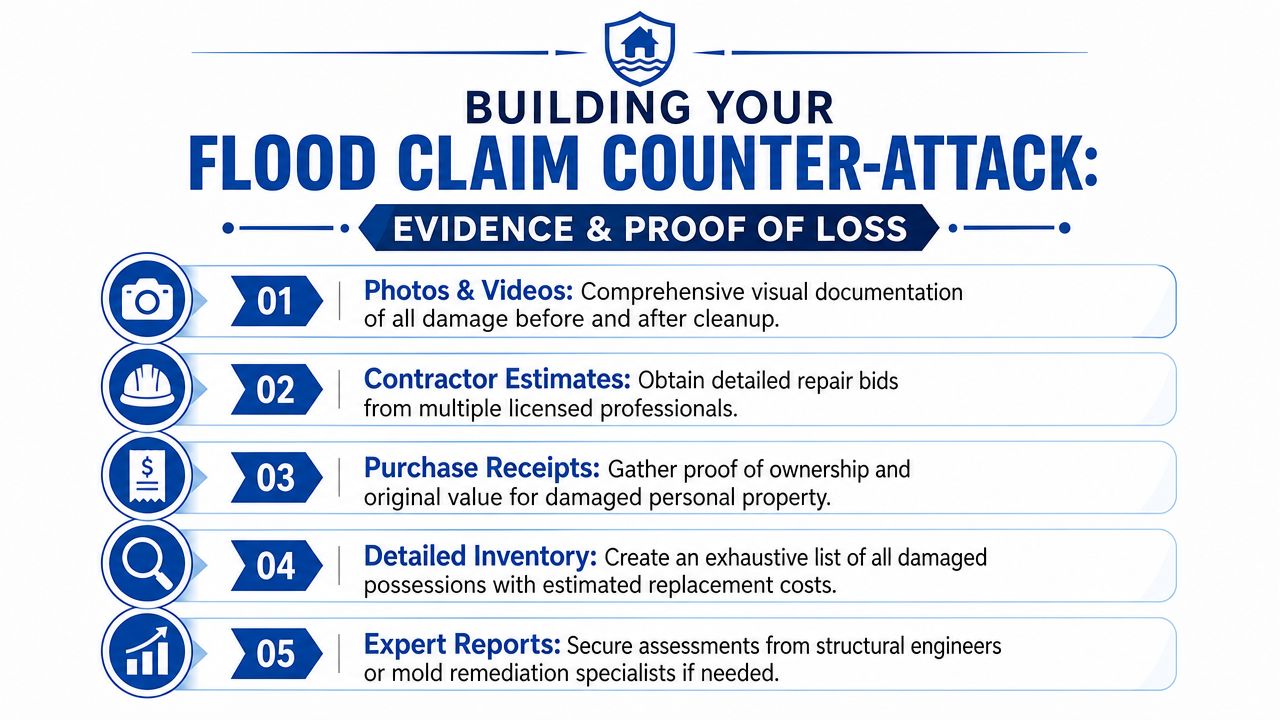
Use this evidence stack:
- Photos and video showing every affected room, every water line, every removed material, and every damaged content item.
- Detailed contractor estimates from licensed professionals who know flood repair, not casual bids with one total at the bottom.
- Personal property inventory listing damaged contents with descriptions and replacement information.
- Receipts and ownership proof where available.
- Specialist reports when needed for issues like mold, structural concerns, or hidden moisture.
If soft goods, rugs, or specialty contents were affected, don’t let them vanish from the claim file just because the insurer focused on structure first. Even niche restoration categories need documentation. A practical example is this resource on water damage rug restoration Birmingham, which shows the kind of condition-specific evaluation that helps support disputed content losses.
Your Proof of Loss has to be complete and on time
The Proof of Loss (POL) is where many valid claims die. Homeowners think they can sort details out later, or they assume the adjuster filed everything needed. That’s a mistake.
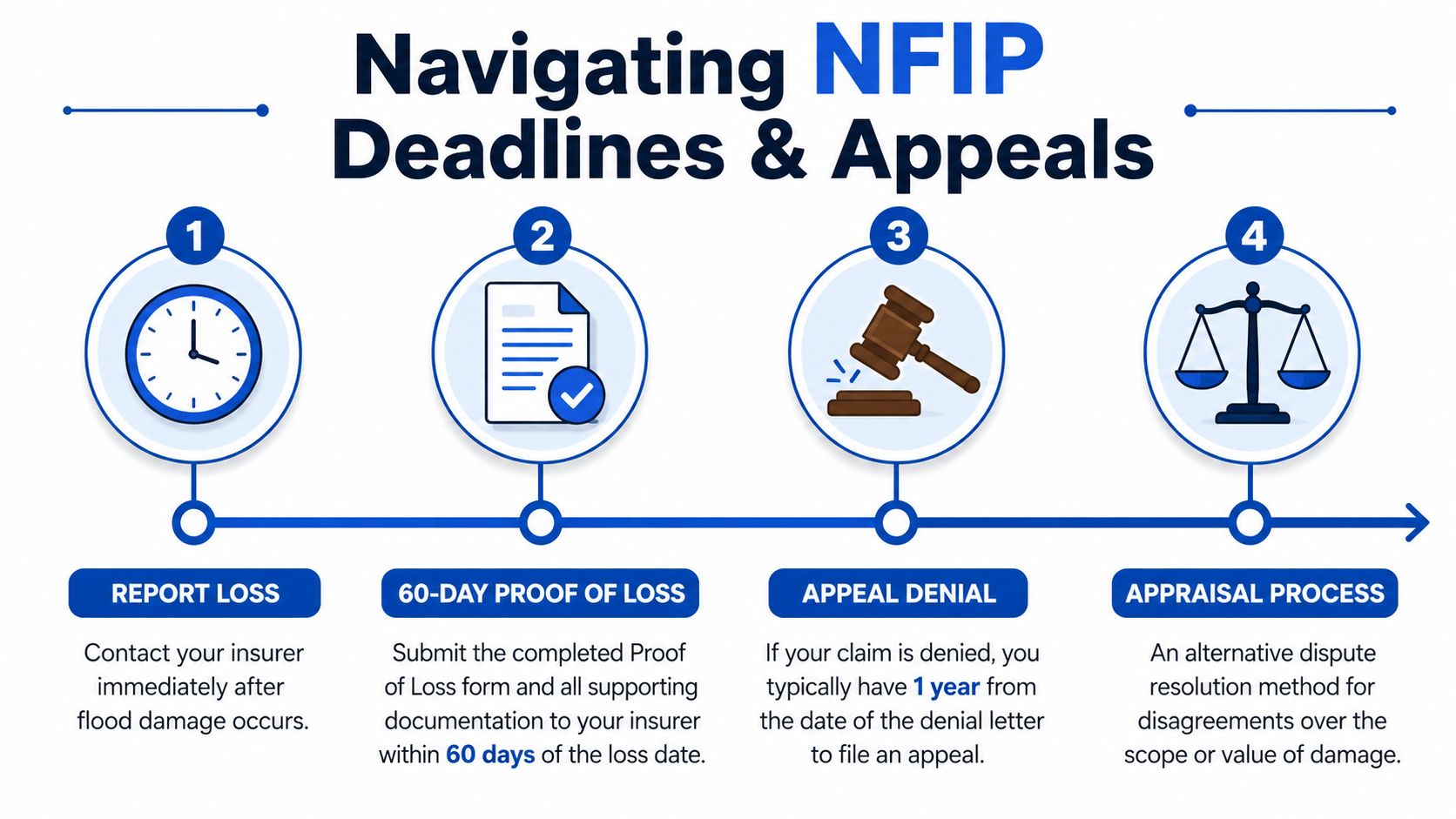
Policyholders must file a signed Proof of Loss within 60 days of the loss to preserve their appeal rights. Failure to meet this deadline often results in a procedural dismissal of your dispute, regardless of its merit. Success rates for disputes with a fully documented POL increase by approximately 45%, according to guidance on flood damage claim disputes.
That means two things. First, the deadline is not flexible just because the house is chaotic. Second, a rushed, thin POL is almost as dangerous as no POL at all.
Your POL package should include:
- A signed and sworn Proof of Loss
- A specific dollar amount you are claiming
- Line-item estimates supporting that amount
- Photographs and videos
- Inventory sheets for damaged contents
- Any expert reports that support disputed areas
- Written references to the policy language if exclusions are being challenged
A weak POL tells the insurer you aren’t ready. A complete POL tells them the file is heading toward a real dispute.
If you want a deeper look at what belongs in that package, review this guide to a Proof of Loss. It’s one of the few documents in the claim that can protect you or sink you.
How to Write a Demand Letter That Gets Results
A demand letter is not a venting session. It’s your formal rejection of the low offer and your notice that you’re backing your position with documents, pricing, and deadlines. Keep the emotion out and the facts in.
What your letter must say
Your letter should do five jobs clearly:
- Reject the current offer in writing.
- Identify what’s wrong with it, such as omitted rooms, missing materials, or undervalued line items.
- State the amount you are demanding based on your evidence.
- List the supporting documents enclosed or previously provided.
- Request a written response by a firm date.
Do not write pages of outrage. The best letters are organized, direct, and specific. They read like someone who can prove every line.
A useful format looks like this:
| Part of letter | What to include |
|---|---|
| Opening | Claim number, property address, date of loss |
| Rejection statement | Clear statement that you reject the offer as insufficient |
| Scope dispute | Specific rooms, materials, and items left out or underpriced |
| Support | Contractor estimates, photos, inventory, expert findings |
| Demand | Your claimed amount and request for written reconsideration |
A simple structure that works
You can adapt language like this:
I am formally disputing the flood damage valuation issued on my claim. The current offer does not reflect the full scope of covered damage to the building and contents. Enclosed are detailed estimates, photographs, and supporting records showing the proper value of this loss.
Then get specific. Mention the kitchen cabinets, flooring, insulation, drywall cuts, electrical components, appliances, or contents that were omitted or underpriced. Identify the estimate pages or attached reports that support your correction.
Use a short checklist before sending:
- Every attachment is labeled
- Every page includes the claim number where possible
- The demand amount matches your estimate package
- The letter asks for the carrier’s written position
- You send it in a way you can track
One more rule matters. Ask for the documents behind their number. Request the internal evaluation reports, repair estimate, and any basis for exclusions or deductions. If their adjuster relied on a narrow interpretation, force them to put that position in writing.
“Your goal isn’t to sound angry. Your goal is to sound prepared.”
That tone changes negotiations. Adjusters know the difference between a homeowner who is frustrated and a homeowner who is building a record.
Navigating NFIP Deadlines Appeals and Appraisal
NFIP disputes punish confusion. Carriers and WYO companies know most homeowners haven’t lived through this before. That’s why ambiguous wording, shifting explanations, and deadline pressure work so often.
The procedural trap that knocks out valid claims
The harsh truth is this. Many flood appeals fail before anyone seriously reviews the damage.
NFIP data from 2024-2025 shows that 70% of appeal filings are rejected for procedural errors, not on merit. A common trap is an ambiguous denial letter from the insurer that confuses the policyholder about the start of the 60-day appeal clock, leading to automatic dismissal.
That’s why you cannot rely on a vague denial letter or a casual comment from an adjuster about “next steps.” You need to read every date, every label, and every instruction as if the carrier expects you to miss something.
Your appeal package should include the mandatory identifying details the program requires, including your policy information, property address, contact details, summary of the dispute, and a clear record of prior communication. If any core element is missing, the appeal can get kicked out before the substance is ever considered.
Non-negotiable: Track the deadline yourself. Never let the insurer define it for you verbally.
For valuation disputes, some policyholders also need to understand whether the disagreement belongs in an appeal or another valuation process. This explanation of an insurance appraiser helps clarify the role of appraisal when the fight is really about damage amount and scope.
Appeal versus appraisal
These are not the same thing.
Appeal is typically the route when you are challenging the insurer’s decision, denial, or handling under the NFIP framework. It is paperwork-heavy and unforgiving.
Appraisal is a separate path used in some claim disputes when both sides agree there is covered damage but disagree on value. It is a valuation mechanism, not a customer complaint.
Use this comparison:
- Choose appeal when the carrier is denying, limiting, or procedurally mishandling the claim.
- Consider appraisal when the primary dispute is over the amount of damage and the scope can be independently valued.
- Do neither casually without first identifying which process your policy and claim posture best support.
Homeowners get in trouble when they fire off a generic letter and call it an appeal. NFIP flood disputes don’t reward generic anything.
Claim Help Hiring a Public Adjuster to Fight for You
At some point, many homeowners hit the same wall. The carrier has a scope writer, desk adjuster, field adjuster, and internal process. You have a wet house, a job, a family, and a stack of forms that seem designed to trip you. That’s when professional claim help stops being optional and starts being practical.

When handling it yourself stops making sense
If your flood claim is underpaid, partially denied, missing major line items, or drifting toward a deadline problem, bringing in a licensed public adjuster is often the smartest move you can make. A good public adjuster doesn’t just argue with the insurance company. They rebuild the claim properly.
That work usually includes:
- Re-inspecting the property for missed structural and content damage
- Preparing a complete scope and estimate
- Organizing the documentation package
- Handling carrier communication
- Preparing or correcting dispute materials
- Pushing back when the WYO company hides behind vague wording
This is especially important in flood claims involving hidden moisture, mold-related damage, and secondary issues that insurers often try to classify away from covered flood damage. Those issues usually require better documentation, better wording, and better timing than a homeowner can reasonably pull together alone during a stressful loss.
Why experienced claim help changes the outcome
The value is not abstract. Policyholders who utilize a public adjuster to manage the complex NFIP dispute process recover an average of 35% more than those who go it alone. This is largely due to the adjuster’s expertise in interpreting policy language and countering the insurer’s low-value estimates, according to Merlin Law Group’s discussion of low property settlement offers.
That result makes sense. A trained public adjuster knows how to spot omitted demolition, improper dry-out deductions, incomplete room measurements, missing finish materials, and unsupported exclusions. They also know when the carrier’s estimate reads like a shortcut instead of a real flood scope.
This short video gives a useful look at the kind of claim guidance homeowners need when insurers control the process early:
You do not have to accept a lowball flood offer just because the paperwork is confusing. You do have to respond the right way, on time, with the right proof. That’s where experienced help earns its keep.
Does my standard homeowner's insurance policy cover flood damage?
No, standard homeowner's insurance policies do not cover flood damage. Flood damage, defined as water coming from the ground up, requires a separate NFIP (FEMA) Flood Insurance Policy or a private flood insurance policy.
Who is responsible for inspecting my property if I have NFIP (FEMA) flood insurance?
Your NFIP claim will be assigned to an adjuster hired by the private insurance company that services your NFIP policy (called a WYO carrier). Crucially, this adjuster represents the carrier, while your Public Adjuster represents you. You should always consider speaking with a Public Adjuster for a flood damage claim due to the scale of the loss and the difficulty with flood damage coverage issues.
What is the "Proof of Loss" document and why is it so critical in a flood claim?
The Proof of Loss (POL) is the policyholder’s sworn, legally binding statement detailing the total dollar amount of the flood damage. It must be submitted accurately within 60 days of the loss to the insurer; missing this deadline is the most common reason for claim denial.
How does a Public Adjuster document hidden water damage that the NFIP adjuster might miss?
A Public Adjuster uses advanced equipment like moisture meters, thermal imaging cameras, and drone imagery to locate and document water intrusion and hidden damage (e.g., behind walls or under flooring) to ensure the full scope of loss is covered.
Can I start cleaning up and making repairs before the flood adjuster arrives?
Yes, you have a duty to mitigate from further damage (e.g., removing saturated items, starting dry-out), but you must photograph/video everything first and keep detailed records of discarded items, receipts, and professional remediation invoices. It's best to consult with a State Licensed Public Adjuster about this process before you discard any evidence you may need down the road.
What does NFIP flood insurance cover in a basement?
NFIP coverage in a basement is highly limited, typically only covering essential equipment like furnaces, water heaters, air conditioners, and permanently installed items. A Public Adjuster works to ensure the adjuster doesn't misclassify covered items as excluded.
How can I get extra money to rebuild to current building codes after a flood?
You may be eligible for Increased Cost of Compliance (ICC) coverage, which provides up to $30,000 to elevate or mitigate future flood damage if your local official deems the property "substantially damaged." A Public Adjuster facilitates the complex ICC claim process.
My NFIP flood claim was denied. Can a Public Adjuster appeal or re-open the case?
Yes. A Public Adjuster specializes in reviewing denial letters and can appeal the decision by submitting a corrected, fully documented Proof of Loss or a comprehensive appeal package to FEMA, often leading to a reversal of the denial.
If my home was damaged by both wind and floodwater, who pays for which damage?
This is a complex Wind vs. Water dispute. A Public Adjuster hires engineers to determine the proximate cause of loss for specific damages (e.g., wind damage to the roof vs. flood damage to the foundation), ensuring both your homeowner's and flood policies pay the maximum benefit.
If your NFIP or WYO flood claim has been delayed, denied, or underpaid, For The Public Adjusters, Inc. can review the damage, evaluate the scope, and help you fight back with a stronger claim file. Have your water damage claim questions answered at NO COST. Call 919-400-6440 to speak with a licensed Public Insurance Adjuster or Contact Us here with questions. WE Work For YOU… NOT Your Insurance Company!