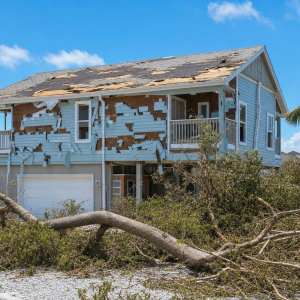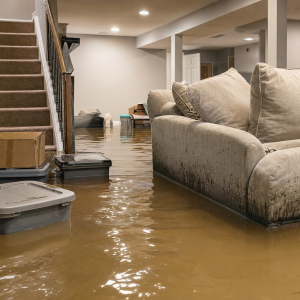
A fire tears through the back of your building. A storm rips open the roof. Water gets into equipment, inventory, and wiring. The physical damage is obvious, so you expect your insurer to step up on the business interruption side too. Instead, you get silence, delay, a vague request for more documents, or a payment calculation that doesn't come close to keeping the lights on.
That's the second disaster.
Business interruption coverage can save a company after a covered property loss, but only if you understand how carriers narrow it, how adjusters frame the numbers, and where they try to push business owners into accepting less than the policy owes. If your claim has been denied, delayed, or low-balled, you need more than a definition. You need a fight plan.
Table of Contents
- Your Business Survived a Disaster But Can It Survive the Insurer
- Understanding Business Interruption Coverage Triggers
- Policy Exclusions and Essential Endorsements You Need
- How to Calculate Your True Loss and Spot a Low-Ball Offer
- Common Insurer Pushbacks and How to Fight Them
- Your Claim Dispute Action Plan
- Claim Help Is Here For NC and VA Businesses
Your Business Survived a Disaster But Can It Survive the Insurer
A lot of business owners learn the hard way that getting back inside the building and getting back into business are not the same thing. The contractor may be working. The cleanup crew may be on site. But revenue has stopped, payroll is still due, and the carrier starts acting like your shutdown is somehow your accounting problem instead of an insured loss problem.

I've seen the pattern. The insurer pays attention to charred walls, broken glass, soaked flooring, and damaged stock. Then it drags its feet on the part of the claim that keeps the business alive. That's backward. According to FEMA data cited by Alliant, 90% of businesses fail within one year if they cannot resume operations within five days after a disaster. That fact should change how every owner looks at business interruption coverage.
Why the real fight starts after the loss
The carrier's first move is often to shrink the claim before you even realize the fight has started. It may ask for limited financials, ignore current business momentum, or focus on how quickly the building could be patched instead of how long it takes to restore operations. Those are not harmless mistakes. They reduce the payment.
A business owner usually walks into this blind. The policy language sounds broad. The declarations page shows coverage. The adjuster sounds helpful. Then the reservations start. The requests multiply. The offer lands low.
Practical rule: If the insurer controls the story of your shutdown, it will usually control the value of your claim.
What's at stake in a claim dispute
Business interruption coverage exists because fixed costs don't stop when your business does. Rent is still due. Certain employees still need to be paid. Loan obligations, utilities, and other ongoing expenses keep hitting the account even while the doors stay closed.
That's why this issue can't be treated like a side item on a property claim. It's often the difference between surviving a covered loss and closing for good.
Watch for these early warning signs that the carrier is setting up a dispute:
- Repeated document requests: The adjuster keeps asking for more records without explaining what issue is under review.
- Premature restoration dates: The insurer acts like the claim period ends when rough repairs could have started, not when normal operations could reasonably resume.
- Partial accounting review: The carrier cherry-picks old returns or weak periods and ignores growth, booked work, contracts, or seasonal patterns.
- Vague explanations: You hear phrases like “not supported,” “not necessary,” or “outside the period” without a written policy-based explanation.
If you're dealing with any of that, you're not overreacting. You're already in a claim dispute.
Understanding Business Interruption Coverage Triggers
Most business owners get misled by the name. They hear “business interruption” and assume the policy pays when business gets interrupted. That's not how standard coverage works. The trigger is narrower, and insurers know it.
The trigger that controls everything
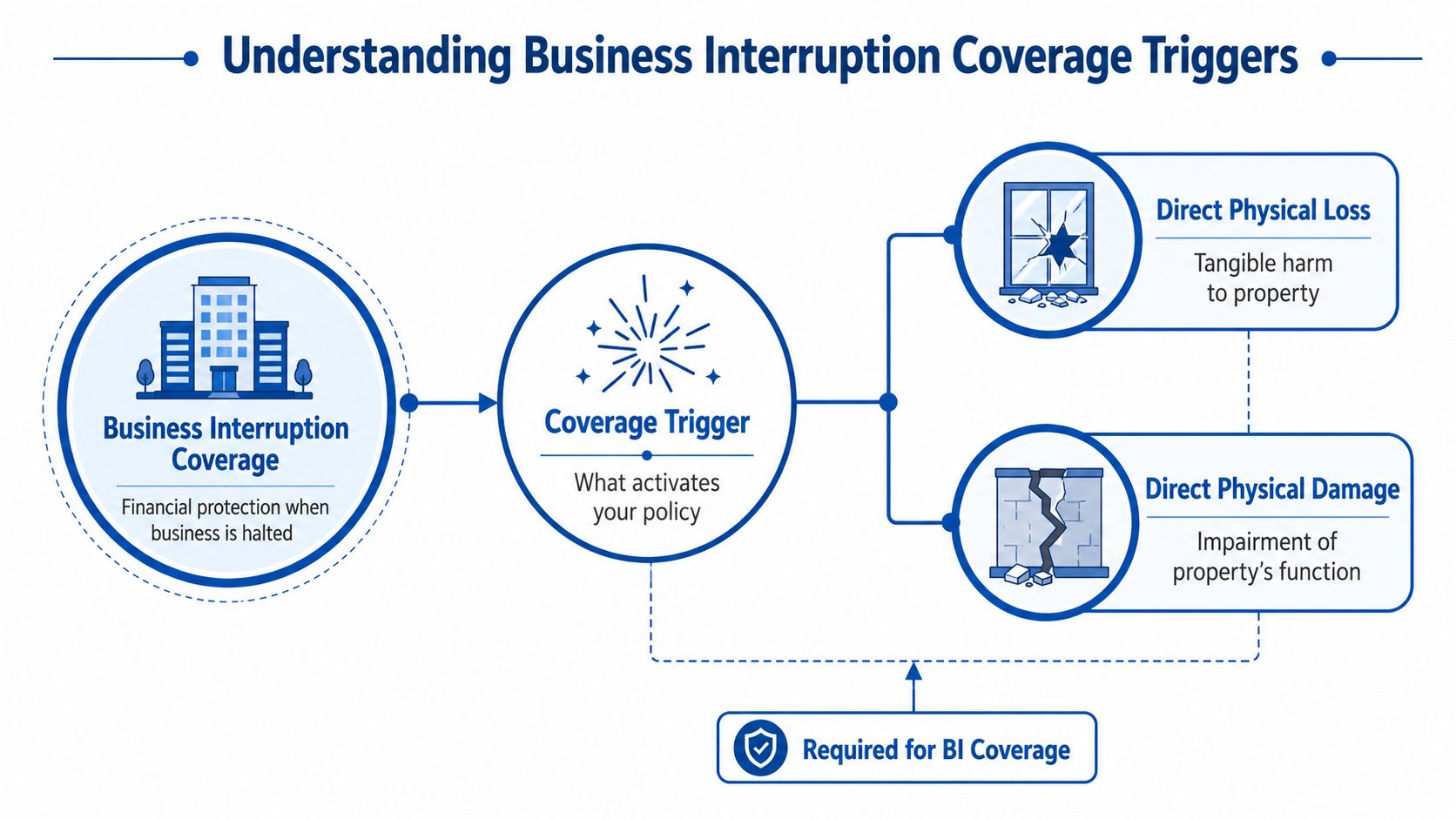
Standard business interruption coverage is tied to property insurance. If there is no covered physical loss or physical damage to covered property, the carrier usually says there is no business income claim to pay. That's the central rule.
As explained by TrustLayer's overview of business interruption insurance, business interruption insurance is strictly triggered by direct physical loss or damage to covered property. The same source notes that businesses with 100 or fewer employees are often eligible for Businessowners Policies, and only 30–40% of small business owners carry this coverage even though it can replace net income loss and cover fixed costs during restoration.
That means a government closure by itself usually won't do it. A slowdown in customer traffic won't do it. Supply chain headaches alone usually won't do it. You need a covered property event that activates the policy.
What the coverage is actually supposed to pay
Once the trigger is satisfied, the next question is value. Regarding this, carriers start speaking in broad generalities. Don't let them.
Business interruption coverage generally aims to address the income the business would have earned and certain continuing expenses during the restoration period. In practical terms, that usually means a mix of lost net income and ongoing costs that didn't disappear just because operations stopped.
What owners should review closely:
- Net income loss: What the business reasonably would have earned if the damage had not happened.
- Continuing operating expenses: Costs that kept running during the shutdown, such as rent or similar fixed obligations.
- Extra expense components: Some policies also address necessary spending to reduce downtime or continue operations in some form.
The property damage opens the door to the claim. Your records decide how much gets paid.
The myth that causes denied claims
A common mistake is assuming lost revenue equals a covered loss. It doesn't. Lost revenue has to tie back to a covered suspension of operations caused by covered physical damage. If that chain breaks, the insurer has its favorite denial argument ready.
That's why the first pages you should study are not your invoices, but the policy's business income form, definitions, covered causes of loss, waiting period, and restoration language. If the adjuster is talking only about sales and not about the physical damage trigger, you're hearing half the story.
Policy Exclusions and Essential Endorsements You Need
A standard policy isn't a safety net. It's a contract full of doors that open and doors that stay shut. Business owners get into trouble when they assume the policy is broader than it is.
The ugliest disputes usually come from exclusions and missing endorsements. The carrier doesn't need to prove your loss wasn't painful. It only needs to point to language that cuts the claim off.
The civil authority trap
A lot of owners think a government order automatically triggers business interruption coverage. That assumption has cost people dearly. As discussed by Adjusters International on business income insurance questions, civil authority provisions typically do not apply to public lockdowns without a direct link to physical damage from an insured peril, and over 68% of denied business interruption claims in 2024 were due to this specific exclusion.
That matters because “civil authority” sounds broad. In practice, carriers often argue the order must tie back to covered physical damage of the type required by the policy. If your property was untouched and the order wasn't connected the right way, they often deny it.
Standard holes business owners miss
Some exclusions are so common that owners stop seeing them. They assume the policy must address a business shutdown because that's the exact risk they fear most. Then they learn the policy is built around direct property loss, not every kind of disruption.
Here's a practical snapshot:
| Business Interruption Coverage At a Glance | Typically Covered | Typically Excluded (Without Endorsement) |
|---|---|---|
| Covered property event shuts down operations | Losses tied to direct physical loss or damage from a covered peril | Shutdowns without direct physical damage |
| Restricted access issues | Some civil authority situations tied to insured physical damage | Broad public lockdowns without the required physical damage link |
| Dependent business losses | Some contingent losses if specifically endorsed | Supplier or customer disruptions without the right endorsement |
| Extra costs during recovery | Necessary extra expenses if covered by policy language | Costs outside policy wording or unsupported mitigation spending |
| Flood-related income loss | Possible under dedicated commercial flood coverage | Business interruption or lost income under NFIP-only protection |
One major blind spot is flood. According to United Policyholders' NFIP flood claim guidance, the National Flood Insurance Program explicitly excludes business interruption and lost income, while dedicated commercial flood policies are the ones that typically include that protection. If your operation depends on flood-prone property and you only have NFIP-style protection, that gap is dangerous.
Endorsements worth your attention
You can't fix a bad policy after the loss. You can, however, identify what's missing before the next one.
Look closely at whether your policy includes or needs:
- Civil authority wording: Read the trigger, distance limits, time requirements, and whether access must be prohibited because of covered physical damage.
- Contingent business interruption: This matters if a key supplier, manufacturer, or major customer can shut your operation down.
- Extra expense coverage: This can become the most practical coverage on the policy when relocation, temporary equipment, or workarounds keep revenue moving.
Owners should also understand how endorsements interact across the policy. Questions about third-party risk often overlap with contract language and status issues, which is why resources on Coverage Axis additional insured insights can be useful when you're reviewing how responsibilities and insurance obligations are spread across business relationships.
Don't buy coverage based on the heading. Read the trigger, the exclusions, and the endorsement language that follows.
How to Calculate Your True Loss and Spot a Low-Ball Offer
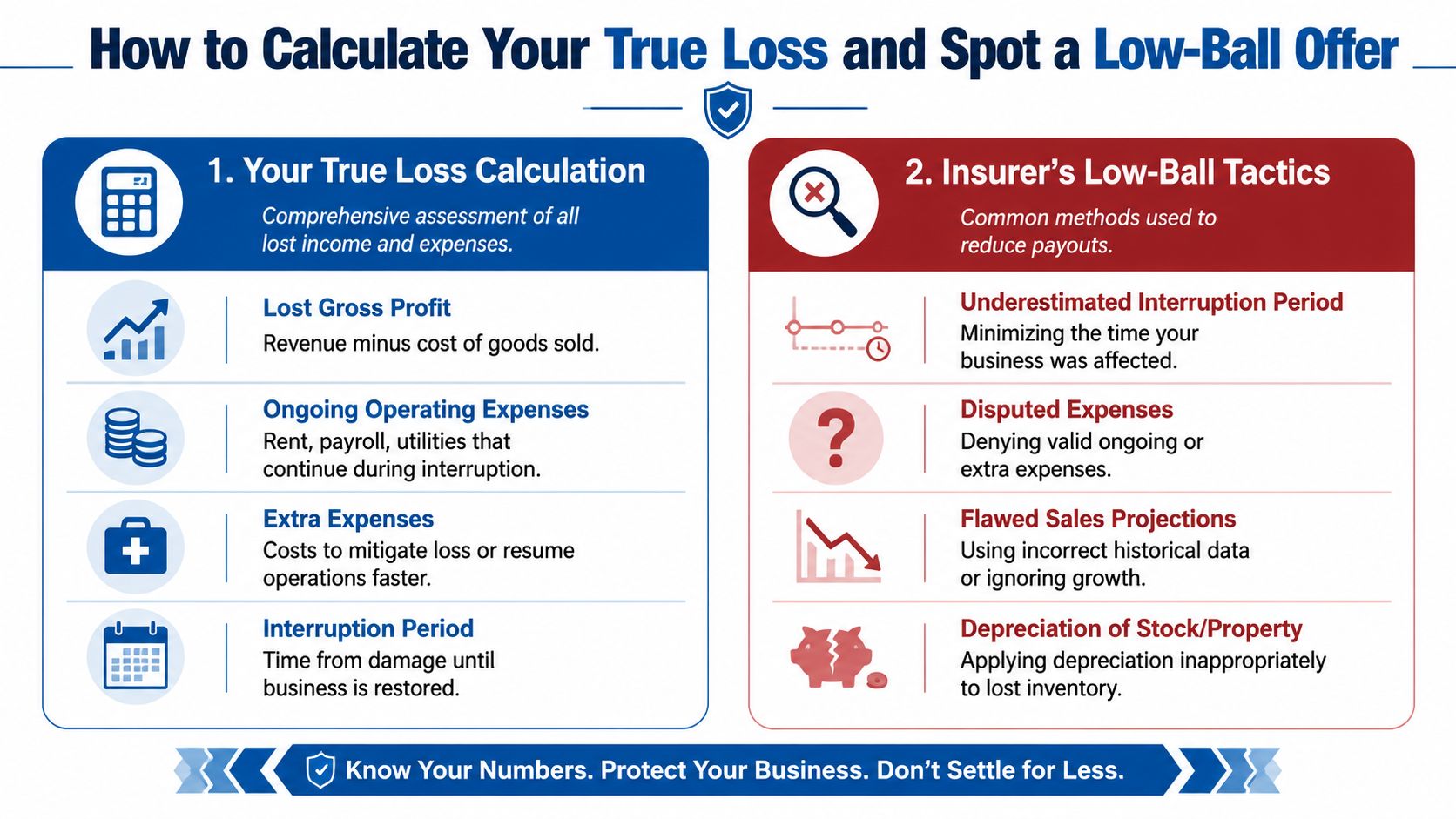
Most low-ball business interruption offers come from one simple tactic. The carrier uses a stripped-down model that makes your shutdown look smaller, shorter, and less disruptive than it was.
That's why owners need to understand the math well enough to challenge it.
How insurers tend to undersell the numbers
A carrier often starts with old tax returns, averages out sales, subtracts a broad set of expenses, and picks a restoration period that ends too early. That may produce a neat spreadsheet. It does not necessarily produce the right number.
A better analysis asks harder questions. Was the business growing before the loss? Was there seasonality? Were jobs already booked? Did the business lose only walk-in revenue, or also repeat customers, contracts, and production capacity? Which expenses stopped, and which kept running?
Here's what a real review should examine:
- Revenue trend: Recent sales history matters, not just stale annual returns.
- Seasonal variation: A holiday retailer, beach business, or contractor doesn't earn the same every month.
- Saved versus continuing expenses: Some costs stop. Many don't. The difference matters.
- Reasonable restoration period: The correct period is not whatever date makes the insurer happiest.
A side-by-side example
Take a restaurant closed after a kitchen fire. The insurer may say, “We looked at prior annual numbers, assumed limited continuing expenses, and concluded the business should have resumed normal operations quickly after basic repairs.”
That framing leaves out real-world facts. Health inspections may delay reopening. Equipment lead times may extend closure. Staffing may need rebuilding. Revenue may not snap back the first day the doors reopen.
A stronger loss presentation usually compares what the business would likely have earned during the shutdown period against what it earned, then adjusts for expenses that ceased. It also separates extra expenses spent to reduce the suspension, because those costs shouldn't just disappear into the carrier's general ledger review.
If you need context on physical damage claims that often sit underneath the income dispute, this guide on help with commercial property insurance claims gives a useful overview of how building and business losses intersect.
Where flood losses create a separate problem
Flood claims deserve a separate warning. Business owners often assume flood damage to the premises naturally leads to business income protection. It often doesn't. As noted earlier, NFIP protection excludes business interruption and lost income. That means your property claim and your income loss may travel on completely different tracks.
If part of your loss involves rental income or income-producing space, it's also worth reviewing how related coverage categories can be misunderstood. This article on loss of rents coverage disputes helps clarify one area where carriers and policyholders often talk past each other.
If the insurer's math fits on one page, there's a good chance your loss was oversimplified.
Common Insurer Pushbacks and How to Fight Them
When carriers want to reduce a business interruption claim, they tend to use the same handful of arguments. The wording changes. The strategy doesn't.
Pushback one says there was no qualifying loss
This is the denial engine behind a huge number of disputes. The carrier argues there was no direct physical loss or that the business closure wasn't caused by covered damage in the way the policy requires.
The pandemic wave made that pattern impossible to ignore. According to the NAIC report on coronavirus business interruption claims, insurers received 201,285 business interruption claims, paid 3,001, and closed 164,178 without payment. That tells you how aggressively carriers relied on the no-physical-damage position for pandemic-related losses.
Your response has to be disciplined. Tie the interruption directly to documented covered physical damage. Use inspection records, contractor findings, remediation reports, photographs, access restrictions tied to damage, and repair schedules. Don't argue in slogans. Argue in evidence.
Pushback two shrinks the restoration period
The carrier may accept that some loss exists, then cut the period short. It may claim the business should have resumed sooner, that temporary repairs were enough, or that delays caused by permitting, specialty equipment, inspections, or code-related issues don't count.
Fight this with a reconstruction of reality, not theory.
Use:
- Repair timelines from contractors
- Equipment replacement documentation
- Inspection and permit records
- Communications showing when the business was able to operate normally
Pushback three attacks your expense and income assumptions
Insurers love saying an expense wasn't necessary or that income projections are speculative. Sometimes they're right. Often they're using that label to avoid paying what a functioning business lost.
Build your rebuttal with business records that show the loss was grounded in operations, not guesswork:
- Recent profit and loss statements
- Monthly sales reports
- Payroll records
- Vendor invoices
- Work orders, reservations, or signed contracts
- Bank statements that confirm operating patterns
A warning sign often appears early in the process. If the carrier sends a reservation of rights letter, read it carefully and answer it carefully. That letter often signals the insurer is collecting arguments it may later use to narrow or deny part of the claim.
Pushback four wears you down
This tactic doesn't always show up in writing. It shows up in time. Long gaps between responses. Repeated handoffs. New document requests after old ones were already provided. Silence after you dispute the numbers.
That strategy works because owners are busy trying to save the business itself. The carrier knows pressure builds every week. A strained business is more likely to accept an inadequate payment just to move on.
The way to fight that is to create a written record. Confirm calls by email. Ask direct questions. Demand written positions tied to policy language. Set deadlines. Don't let the claim stay in the fog.
Your Claim Dispute Action Plan
Once you have a denial, partial denial, or low-ball offer, stop treating the matter like an informal conversation. It's a dispute now. Handle it that way.
Start with the carrier's exact position
Ask for the insurer's decision in writing if you haven't already received it. Not a summary. Not a phone explanation. A written explanation that cites the specific policy language, facts relied on, and calculations used.
Then request the claim support behind that decision. You want the estimate, accounting analysis, expert reports, communications that matter, and the adjuster's stated basis for the business income number.
Build your counter-file
You can't win a serious claim dispute with outrage alone. Build a clean file that tells the story better than the insurer's version does.
Your dispute package should usually include:
- Financial proof: Profit and loss statements, tax returns, sales reports, bank records, payroll records, invoices, and job or reservation histories.
- Damage and repair proof: Photos, contractor scopes, remediation records, equipment quotes, inspection reports, and reopening barriers.
- Timeline proof: A day-by-day or week-by-week sequence showing what happened, what was done, and why normal operations could not resume sooner.
- Communication proof: Emails, letters, adjuster notes you've received, and a log of calls and unanswered requests.
The stronger file usually wins. Not the louder voice.
Dispute the decision point by point
Write a formal dispute letter that answers the carrier's arguments one at a time. If it says the restoration period was too long, explain why that position is wrong and attach the records. If it says an expense wasn't necessary, connect the expense to mitigation or continuing operations. If it uses outdated revenue assumptions, show why they distort the loss.
Keep emotion out of the document. Use dates, records, policy language, and direct contradictions.
If the dispute starts moving toward a legal breach issue, it helps to understand how contract claims escalate. This overview of breach of contract business litigation gives useful context on when a business dispute stops being a negotiation problem and becomes a legal one.
Know when to stop doing the insurer's job for it
There comes a point where more informal cooperation just gives the carrier more time. If the adjuster keeps changing the rationale, ignores your records, or refuses to engage the substance of your rebuttal, bring in professional help.
That may mean a public adjuster, accountant, coverage counsel, or more than one of them. The right move depends on the type of dispute, but the wrong move is staying stuck in the same unproductive loop.
Claim Help Is Here For NC and VA Businesses
North Carolina and Virginia business owners don't need more vague insurance talk. They need someone who knows how these claims get reduced, delayed, and denied in practice.

For The Public Adjusters, Inc. represents policyholders, not insurance companies. That difference matters because the company adjuster on your claim does not work for you. Their job is to protect the carrier's position. A public adjuster's job is to document the loss, interpret the policy, challenge weak carrier assumptions, and press for the full amount owed.
That work often includes reopening denied claims, rebuilding the business income calculation from the ground up, organizing financial records into a claim-ready presentation, and negotiating directly with the insurer with true negotiating power. Business owners in NC and VA who need local representation can review service details through this public adjuster near me resource.
Why business owners bring in backup
Owners usually call for help when one of three things happens. The carrier denies coverage outright. The insurer pays on the building but stalls or underpays the income loss. Or the claim gets buried in document requests and shifting explanations.
That's when experienced claim advocacy changes the pressure on the file.
Clients consistently talk about the same things after getting help: clearer answers, stronger documentation, better communication with the carrier, and a claim presentation that finally matches what the business lost. One client review puts it plainly: they found coverage the owner didn't realize existed and fought for far more than the insurer first offered.
The right message to send the insurer
When a policyholder shows up with facts, records, timelines, and someone who understands claim valuation, the conversation changes. The carrier has to respond to substance instead of waiting for frustration to force a cheap resolution.
Have your water damage claim questions answered at NO COST. Call 919-400-6440 to speak with a licensed Public Insurance Adjuster or Contact Us here with questions. WE Work For YOU… NOT Your Insurance Company!
If your business interruption coverage claim has been denied, delayed, or low-balled, For The Public Adjusters, Inc. can step in and fight back for you. We help NC and VA policyholders challenge bad carrier decisions, document the full loss, and push for a fair settlement.