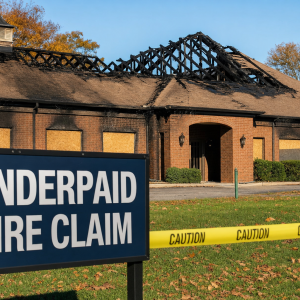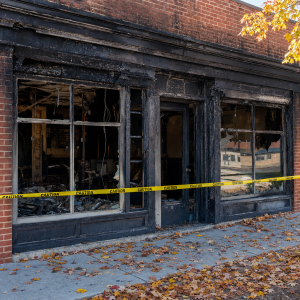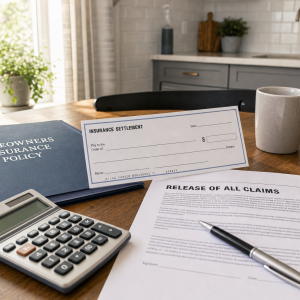

When burst water pipe damage turns your home or business into a waterlogged nightmare, the initial shock is just the beginning. The real battle starts the moment you get that first settlement offer from your insurance company. Let’s be clear: that first number is almost always a lowball offer, a calculated tactic from giants like State Farm or Allstate designed to protect their profits, not to help you recover.
Why Your Insurer’s First Offer Is a Low-Ball Negotiation Tactic
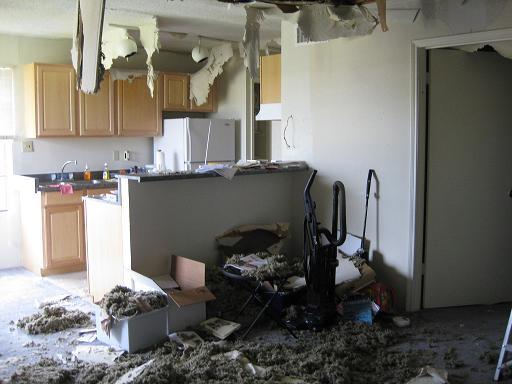
After the pipe bursts, your insurer sends their adjuster. You must understand who this person works for. Their job is to represent the insurance company’s interests, and that means minimizing the payout on your claim. Their “assessment” is not a good-faith effort to make you whole; it’s the opening shot in a battle over your financial recovery.
That first offer is a calculated business strategy. Insurance companies are betting you’re too stressed, overwhelmed, and exhausted from the disaster to fight back. They hope you’ll just take the money and sign the papers to make it all go away, saving them thousands—or even tens of thousands—of dollars in the process.
Common Tactics Used To Undervalue Your Claim
Insurance adjusters have a playbook they follow to justify low offers on burst pipe claims. They are trained to delay, deny, and underpay. If you can spot these tactics, you’re already one step ahead in the fight for a fair settlement.
Here are a few of the most common moves they make:
- Ignoring Hidden Damage: The adjuster’s inspection is almost always superficial. They’ll measure the room for new drywall and flooring but somehow “forget” about the soaked insulation behind the walls, the warped subfloor, or the very real potential for mold that needs professional remediation.
- Using Outdated Pricing: They love to use pricing software with outdated local costs for labor and materials. The estimate they produce is so low that no reputable contractor would touch the job for that price, leaving you to cover the difference.
- Misinterpreting Your Policy: Adjusters are masters at twisting confusing policy language. They’ll point to vague exclusions for “gradual damage” or “lack of maintenance” to deny parts of your claim, even when the burst pipe was a sudden, accidental event.
- Rushing the Process: They’ll often pressure you to sign off on a proof of loss statement before you’ve even had a chance to uncover the full extent of the damage.
Key Takeaway: The insurance company’s first offer is a negotiation tactic, not a real valuation of your damages. Never, ever accept it without getting a second opinion from an expert who actually works for you.
The frustration of being lowballed is something we see every single day. A famous court case, State Farm Mut. Auto. Ins. Co. v. Campbell, highlighted the systemic nature of these bad faith practices, with the Supreme Court addressing the insurance giant’s nationwide scheme to cap claim payments and cheat customers. It’s exactly at this point that getting professional help can completely flip the outcome in your favor.
The experience of this client is a perfect example of what homeowners are up against:
The company’s adjuster missed major damage and came up with a ridiculously low estimate, forcing the homeowner into a fight they shouldn’t have to navigate alone. You can find more strategies for these complex situations in our guide on how to handle an insurance claim for water damage.
Uncovering The True Cost Of Burst Pipe Damage
When you’re standing in an inch of water, the chaos feels overwhelming. The insurance company’s adjuster will show up, clipboard in hand, ready to document the obvious: the soggy carpet, the ruined drywall, the furniture that’s a total loss. They focus on this surface-level damage because it’s the easiest and cheapest part of the problem to fix.
But the real financial hit from burst water pipe damage isn’t what you can see. It’s buried deep inside your walls and under your floors, and that’s exactly where your insurer hopes you won’t look.
The first bill you’ll see is for professional water extraction and drying, and it’s often a shocker. This isn’t a job for a few box fans. It requires teams with commercial-grade equipment running around the clock, sometimes for days, to pull moisture out of the very bones of your house. Skip this, and the hidden costs start to spiral out of control.
The Hidden Expenses Insurers Conveniently Ignore

Think of the water damage you can see as just the tip of a very expensive iceberg. Underneath the surface, a whole chain of costly problems is just getting started. Your insurance company’s adjuster has zero incentive to go looking for these problems. In fact, their job is to close your claim for as little as possible.
Here’s a quick rundown of the expensive surprises they often “miss”:
- Saturated Insulation: The insulation inside your walls is basically a giant sponge. Once it’s wet, it’s useless. It loses all its R-value, gets compressed, and quickly becomes a breeding ground for mold. It has to be torn out and completely replaced.
- Warped Subflooring: Water doesn’t just sit on top of your floor. It seeps through the cracks and soaks the plywood or OSB subfloor underneath. This causes the wood to swell, warp, and fall apart, destroying the structural integrity of your entire floor.
- Compromised Electrical Systems: Water and wiring are a lethal combination. When moisture gets into outlets, junction boxes, and behind walls, it creates a massive fire hazard. A licensed electrician has to inspect everything and make repairs before it’s safe.
- Urgent Mold Remediation: Mold isn’t an afterthought; it’s an emergency. It can start growing in as little as 24-48 hours. What began as a water claim can quickly turn into a much more expensive—and hazardous—mold disaster requiring specialized containment and removal. The financial fallout can be massive, as the hidden costs of frozen pipes pile up long after the water is gone.
Costs for Business Owners
For a business, a burst pipe is a potential knockout blow. It’s not just about the physical repairs; it’s about the massive financial bleeding from business interruption. A major water event can shut your doors for weeks, if not months, leading to:
- Lost Revenue: Every single day you’re closed is a day you’re not making money.
- Ongoing Operational Costs: Your rent, utilities, and payroll don’t stop just because you can’t open for business.
- Temporary Relocation Costs: You might have to rent another space just to keep operating, adding another huge expense to the pile.
A proper claim must account for every single one of these items. Your policy likely covers Business Interruption, but insurers will fight you tooth and nail to minimize the payout. They’ll argue you could have reopened sooner or that your income projections are overblown.
The scale of these events is staggering. Freeze-thaw cycles from winter storms are a major cause of burst pipes, costing the insurance industry around $10 billion annually in water damage claims nationwide. These incidents are especially punishing for property owners in North Carolina and Virginia during a cold snap.
With the average restoration bill falling between $1,322 and $5,954 per incident, it’s painfully clear that what you see at first is just the down payment on a very expensive recovery. You can learn more about the industry-wide impact in this in-depth analysis of burst pipe costs.
How To Document Damage And Dispute Lowball Estimates
When you’re fighting an insurance company over burst water pipe damage, the evidence you gather is your most powerful weapon. Let’s be blunt: your insurer is already building a file to justify paying you as little as possible. Your job is to build a better one—a file so thorough it proves the true, full scope of your loss.
This isn’t about snapping a few quick pictures on your phone. It’s about creating a methodical, undeniable record of every single detail. This is the ammunition a public adjuster uses to dismantle the insurance company’s weak estimate and force them to pay what you are rightfully owed.
Creating An Irrefutable Damage Inventory
Your first move is to create a comprehensive list of everything that was damaged, room by room. Don’t just write down “couch” or “drywall.” That’s what they want you to do. For every single item, you need to document the details that establish its real value.
- Personal Property: For every piece of furniture, electronic device, or item of clothing, note its make, model, age, and what you paid for it. Dig up receipts or credit card statements if you can.
- Building Materials: Get specific. Was that ruined flooring cheap laminate or solid hardwood? Is the wall standard drywall or expensive plaster? These details can change the replacement cost by thousands.
This detailed inventory becomes the foundation of your counter-offer. It systematically proves the value of what you lost, making it much harder for the insurer to justify their lowball numbers.
The Power of Visual Evidence
Photos and videos are non-negotiable, but you have to be strategic. Capture the destruction from multiple angles—wide shots to show the scale of the disaster and tight close-ups to show the specific damage.
Pro Tip: Don’t just take silent pictures. Record a video walkthrough. As you move through the damaged areas, talk about what you’re seeing. Open soaked cabinets, peel back a corner of the carpet to show the wet pad, and point the camera at the tide line on the wall. This creates a compelling narrative that a stack of photos alone never will.
Just as important, you must document the mitigation process. Take photos of the restoration company’s moisture meter readings on your walls and floors. This is the scientific proof of how far the water spread, and it completely shuts down any attempt by the insurer to claim the damage was “minimal.”
The restoration process itself involves a sequence of critical—and often hidden—costs that your insurer will gladly overlook. This flow chart shows the typical progression from initial water extraction to the necessary structural drying and final mold remediation that follows a major pipe burst.

Each of these stages represents a significant cost that must be fully accounted for in a fair settlement. This is especially true for mold, which is often a direct result of an incomplete or rushed drying job—something the insurance company may have pushed for.
Maintain a Meticulous Paper Trail
This is also a battle of paperwork. Every document is a piece of evidence. Get a folder and save every single thing related to this claim.
- Receipts: Keep every receipt for emergency repairs, temporary hotel stays, meals you have to eat out, and any supplies you bought. These are often covered under your policy’s Additional Living Expenses (ALE) provision, but only if you have proof.
- Communication Log: Log every single phone call and email with your insurance company. Note the date, time, the name of the person you spoke with, and what was said. This log becomes invaluable for holding them accountable for delays, broken promises, and misinformation. If you want to see how complicated this can get, read our guide on what to do when your frozen pipe plumber needs to be paid.
- Independent Estimates: Get your own repair estimates from trusted local contractors. This gives you a real-world price to counter the insurer’s lowball figures, which are almost always generated by software using out-of-date or inaccurate pricing for your area.
Insurance Adjuster Tactics vs Public Adjuster Response
When you file a claim, it’s crucial to understand the conflicting roles of the adjuster sent by your insurance company and a public adjuster you hire to represent you. The insurance company’s adjuster works for them, not for you. Their goal is to protect the company’s bottom line. A public adjuster works only for you, with the sole purpose of maximizing your settlement.
| Claim Aspect | Insurance Company Adjuster Tactic | Public Adjuster Strategy |
|---|---|---|
| Damage Assessment | Conducts a quick, surface-level inspection, often missing hidden water damage behind walls or under floors. | Performs an exhaustive inspection using moisture meters and thermal imaging to uncover all hidden and potential future damage (like mold). |
| Policy Interpretation | Interprets policy language narrowly, often looking for exclusions or limitations to reduce the payout for things like mold or code upgrades. | Interprets the policy broadly in your favor, identifying all areas of coverage, including Additional Living Expenses and code compliance costs. |
| Valuation | Uses standardized pricing software (like Xactimate) with default, often low, local labor and material costs. | Builds a detailed, line-item estimate based on actual local contractor pricing and high-quality materials to match what you lost. |
| Documentation | Relies on their own photos and report, which are structured to minimize the scope and severity of the loss. | Builds a comprehensive evidence package with your detailed inventory, photos, videos, expert reports, and independent estimates to prove the full value of the claim. |
| Negotiation | Presents a low “take-it-or-leave-it” initial offer, counting on the policyholder’s stress and lack of expertise to get them to accept. | Engages in strategic, evidence-based negotiation to systematically dismantle the insurer’s lowball offer and justify a higher, fair settlement. |
The table makes the conflict of interest clear. The insurance adjuster is trained to find ways to pay less. A public adjuster is your advocate, trained to find every bit of coverage you are entitled to under your policy and to fight for it.
Navigating Policy Exclusions And Coverage Disputes
Let’s be blunt: your insurance policy wasn’t written for you to understand. It’s a dense legal contract, packed with jargon, conditions, and loopholes designed to do one thing—limit how much the insurance company has to pay for your burst water pipe damage. Insurers like State Farm and Allstate have entire departments skilled at using this confusing language to wrongfully deny or drastically underpay perfectly legitimate claims.
When your claim gets shot down or you get a ridiculously low offer, the adjuster will almost always point to some obscure clause in your policy. Knowing their playbook is the first step to fighting back.
The “Gradual Damage” Excuse
This is one of their go-to moves. The insurance company will try to argue that the pipe didn’t just suddenly burst. Instead, they’ll claim it was leaking slowly for weeks, months, or even years due to poor maintenance or simple wear and tear. Why? Because most policies have an exclusion for “gradual” damage.
It’s a deliberate misinterpretation of the facts. A pipe that freezes solid and then explodes is the very definition of a sudden and accidental event—exactly what your policy is supposed to cover. They’re banking on you not knowing the difference or having the proof to call their bluff. A public adjuster immediately shuts this down by bringing in forensic plumbing experts who can prove the failure was acute, not chronic.
Water Damage vs. Flood Damage
Here’s another classic area of confusion that insurers love to exploit: the distinction between water damage and flood damage. They are not the same thing, and they are covered by two completely different policies.
- Water Damage: This is what your standard homeowner’s policy covers. It means water that originates inside your home—think a burst pipe, a washing machine that overflows, or a water heater that gives out.
- Flood Damage: This is only covered by a separate flood policy, usually from the National Flood Insurance Program (NFIP). It means water that comes from outside your home, like a river overflowing its banks, a storm surge, or severe rainfall that swamps the area.
Insurers will try to muddy the waters, but the source of the water is the only thing that matters. If it came from your plumbing, it’s a water damage claim. Period.
The bigger picture here is the aging infrastructure crisis, which only makes these fights more common. U.S. water utilities are spending a staggering $7.6 billion annually on repairs, with an estimated 6 billion gallons lost every single day to failing pipes. This systemic failure often leads to catastrophic property damage, forcing homeowners into brutal claim disputes. You can learn more by exploring the financial impacts of broken pipelines and see how property owners are often left holding the bag.
Case Study: A Business Saved From A Bad Faith Denial
A restaurant owner had a burst pipe water damage claim in Cary, NC. pipe burst in the middle of the night, completely flooding his kitchen and dining room. His insurance company denied the entire claim, blaming “poor maintenance.” Their “proof”? A small, totally unrelated plumbing repair from two years earlier. That denial would have bankrupted him.
He brought in a public adjuster to fight back. We immediately hired a forensic plumber who proved the pipe didn’t fail from neglect—it failed because of a sudden, massive pressure surge from the municipal water line. It was an event totally outside the owner’s control. Armed with that expert report, we forced the insurance company to reopen the claim. The denial was completely reversed, leading to a six-figure settlement that covered all the water damage and the lost business income, allowing the restaurant to rebuild and reopen.
This is a perfect example of why understanding the complex language of your insurance policy is so crucial. Consider mastering contract interpretation principles to better arm yourself for these exact kinds of fights.
 Why You Need A Public Adjuster To Level The Playing Field
Trying to fight a billion-dollar insurance corporation on your own after burst water pipe damage is an uphill battle you’re set up to lose from the start. They aren’t just one person; they have entire teams of adjusters, engineers, and lawyers whose only job is to protect their company’s bottom line. That means minimizing your payout.
A public adjuster is the expert you bring in to even the odds. Unlike the insurance company’s adjuster, who is paid to be loyal to their employer, a public adjuster works only for you, the policyholder. Their professional and ethical duty is to get you the maximum settlement you’re entitled to under your policy. Period.
Your Advocate In The Claims Process
The moment you hire a public adjuster, the entire dynamic of your claim changes. You’re no longer alone. They take over the whole stressful mess, managing every phone call, email, and piece of paperwork so you can focus on getting your life back together.
This means they take on the critical, and often overwhelming, parts of the claim:
- Conducting a real, exhaustive damage inspection. We don’t just walk through and take a few pictures. We use specialized tools like moisture meters and thermal cameras to find the hidden water damage the insurance company’s adjuster “missed.”
- Building a professional, line-item estimate. We use the same industry-standard software as the insurance companies, but we build the estimate based on the true cost of repairs—using quality materials and local labor rates, not the lowball numbers the insurer wants to pay.
- Handling all communications. We take every call and answer every email from the insurer. This stops them from using their usual delay tactics or confusing language to wear you down until you give up.
- Negotiating aggressively for your maximum settlement. Armed with undeniable proof of your loss, we systematically dismantle their lowball offer and fight for every single dollar you are owed.
The scale of America’s aging infrastructure makes these fights more and more common. Every year, U.S. and Canadian drinking water systems face about 260,000 water main breaks, leading to $2.6 billion in direct repair costs. And that number doesn’t even touch the property damage when these bursts flood homes, setting the stage for the exact type of underpaid claims we fight every day. You can discover more insights about this nationwide infrastructure problem on asce.org.
A Real-World Raleigh Success Story
A water damage claim in Raleigh really turned this homeowner’s daily routine upside down. A pipe burst in their attic, and water poured through the ceilings, completely destroying the second floor and causing massive damage to the main level below. Their insurance company sent out an adjuster who did a quick walkthrough and came back with an offer of $50,000.
The homeowner knew that wouldn’t even cover the drywall and paint, let alone the structural repairs, new flooring, and all their ruined personal belongings. Feeling completely lost, they called us.
Our team immediately performed a new, far more thorough inspection. We uncovered severe structural damage to the floor joists—damage the company adjuster had completely ignored. We also documented the need for extensive mold remediation and calculated the family’s Additional Living Expenses (ALE) for the months they’d be forced out of their home.
After building a new, detailed estimate and going to bat for them, we secured a final settlement of over $250,000. That’s a 400% increase from the insurance company’s initial offer.
This is the real, tangible difference an advocate makes. It’s not a luxury; it’s a necessity. To get a better handle on this critical role, you can learn more about what a public adjuster does in our detailed guide.
Common Questions About Burst Pipe Damage Claims
When your home or business is suddenly underwater from burst pipe damage and your insurance company starts playing games, the stress can be unbearable. You’ve got questions, and you need real answers, not corporate double-talk. Here are the issues we see every single day when an insurer tries to get out of paying what they owe.
Can My Insurer Really Deny My Claim By Blaming Poor Maintenance?
Absolutely. It’s one of the oldest tricks in the book. The insurer will claim the pipe burst because you neglected it or because of simple “wear and tear,” which—surprise, surprise—happens to be an exclusion in your policy. They’re banking on you just giving up.
Don’t fall for it. A sudden and accidental burst, especially from a freeze, is almost always a covered disaster. A good public adjuster shuts this nonsense down immediately. We fight back by bringing in our own team of independent engineers and master plumbers. Their expert testimony proves the pipe failure was an abrupt, unexpected event—not some chronic problem you ignored. That leaves the insurance company with nowhere to hide and forces them to pay the claim.
The Insurer’s Estimate Is Thousands Lower Than My Contractor’s. What Now?
Let’s be clear: this isn’t an honest disagreement. It’s a calculated lowball strategy. The company adjuster who wrote that estimate probably used outdated prices for materials, guessed low on the labor hours, and conveniently “forgot” to include critical line items like mold testing or structural drying. Their number isn’t designed to make you whole; it’s designed to protect their profit margin.
Never accept their first offer. Think of it as the starting point in a negotiation you didn’t ask for. A public adjuster will take your contractor’s honest bid and build our own incredibly detailed scope of loss using the same software the insurance companies use. We then go to bat for you, proving line-by-line why their number is wrong and ours is right. Our entire job is to close that gap and make sure you get every penny you’re entitled to.
A satisfied client shared their experience after facing this exact problem. Their review highlights the frustration of dealing with an insurer who refuses to listen and the relief that comes from having an expert take over the fight.
How Long Can The Insurance Company Drag This Out?
In states like North Carolina and Virginia, there are rules against unreasonable delays, but that doesn’t stop insurers from using them as a weapon. They know that the longer they make you wait, the more worn down and desperate you’ll get. Eventually, they hope you’ll take a lowball offer just to make it all stop.
This kind of behavior—asking for the same paperwork over and over, going silent for weeks at a time—can be a sign of bad faith. A public adjuster puts an end to it, fast. We take over every phone call and email, creating a bulletproof paper trail of every interaction. We apply constant, professional pressure, forcing the insurer to follow the terms of your policy and the letter of the law.
Is It Worth Hiring A Public Adjuster For A Smaller Claim?
What looks like a “small claim” at first can often be the tip of the iceberg, hiding much bigger, more expensive problems. That’s why most public adjusters, our team included, offer a free, no-obligation claim consultation. We’ll come out and assess the true scope of your damage before you ever sign anything.
Even on a claim that seems smaller, the higher settlement a public adjuster secures almost always covers our fee and then some. We work on a small, agreed-upon percentage of the final payout. If we don’t get you more money, you don’t owe us a dime. Just as importantly, we take the entire burden of fighting the insurance company off your shoulders, so you can focus on getting your life back.
2. What is the "Sudden and Accidental" rule, and how do I prove it?
The Short Answer: It means the event happened without warning and wasn't a slow leak. Burst pipe claims from freeze are consider sudden and accidental.
The Deep Dive: You must understand that "sudden" has a temporal element. We use moisture mapping and thermal imaging to argue that damage was NOT gradual.
- Pro Tip: Save the section of the burst pipe. This is your "smoking gun." If the pipe shows a clean break (freeze) versus a pinhole with green oxidation (slow leak), it determines your coverage. In NC and VA, adjusters look for "tide lines" on drywall to prove the water sat for days, which can lead to a "failure to mitigate" denial.
3. Does insurance pay for the actual plumbing repair of the pipe?
The Deep Dive: This is a critical distinction. Most policies cover the ensuing damage (the wet floors, ruined drywall, and soggy furniture) but not the source of the loss (the plumbing repair) when the cause is wear and tear.
- The Frozen Pipe Exception (NC & VA): If the pipe burst due to freezing, the repair of the pipe itself is typically covered under the policy, as freezing is a sudden and accidental covered peril. This is a key difference from a pipe that bursts due to old age or corrosion.
- The Access Exception: If the plumber has to tear out a kitchen island or a tiled wall to access the burst pipe, the "cost to access" is often covered under the dwelling portion of your claim in both NC and VA, regardless of the cause.
4. What are my immediate "Duties After a Loss" in North Carolina?
The Short Answer: Mitigate, Document, and Notify. The Deep Dive: Per the NC Department of Insurance, you have a legal obligation to prevent further damage.
- Actionable Step: You must stop the water flow immediately. If you don't, the insurer can deny the portion of the damage that happened after you discovered the leak.
- NC Specific: Keep every receipt for "temporary repairs" (like shop-vac rentals or plywood). NC law requires insurers to reimburse these reasonable costs in addition to your policy limits in many cases.
5. How does Virginia law handle "Additional Living Expenses" (ALE) if I can't stay in my home?
The Short Answer: It covers the increase in your cost of living.
- VA Nuance: The Virginia Bureau of Insurance clarifies that ALE only pays for the excess costs. If your normal groceries are $500/month and you spend $800/month while displaced, you are reimbursed $300.
- Expert Tip: In VA, if you stay with a friend or relative, you can sometimes claim a "hospitality allowance" for your host, but you must have a written agreement or proof of payment.
6. Can I choose my own contractor in NC and VA, or do I have to use the insurance company's "Preferred Vendor"?
The Short Answer: You have the absolute right to choose your own contractor.
- NC/VA Legal Right: You are not legally required to use their vendor. In NC, you should ensure your contractor is licensed by the NC Licensing Board for General Contractors. In VA, check the DPOR (Department of Professional and Occupational Regulation). Using a local, independent contractor often ensures a higher standard of "pre-loss condition" restoration.
7. What happens if the insurance estimate is lower than my contractor's quote?
The Short Answer: You can hire a Public Adjuster and/or invoke the "Appraisal Clause" in your policy.
- The Public Adjuster Process: A public adjuster works on behalf of the policyholder to manage the entire insurance claim from start to finish. They assess and document the damage, prepare and submit the claim, communicate directly with the insurance company, and negotiate the settlement, making sure the policy is properly applied. The goal is to reduce stress for the client while maximizing the claim’s accuracy and outcome.
- The Appraisal Process: You hire an appraiser, they hire an appraiser, and those two pick an "Umpire." A decision by any two of the three is binding. This avoids costly litigation and is a standard right in the NC/VA standard policy forms.
8. Is mold damage covered after a pipe bursts?
The Short Answer: Only if it's a direct result of the sudden burst and you mitigated properly.
- The Trap: If you wait 2 weeks to report the burst pipe and mold grows, it will likely be looked at as "neglect." However, if mold appears during the drying process managed by a professional, it is typically covered under the water damage claim, not the limited mold endorsement.
9. What is the difference between "Actual Cash Value" (ACV) and "Replacement Cost Value" (RCV) in a water claim?
The Short Answer: ACV is depreciated; RCV is the cost to buy new.
- The 180-Day Rule: In North Carolina, you typically have 180 days from the date of loss to notify the company that you intend to make an RCV claim. You must actually replace the items or complete the repairs to get the remaining depreciation check.
10. Why was my "Slab Leak" or "Below-Ground" burst pipe denied?
The Short Answer: It might be classified as "Seepage" or "Earth Movement."
- Pro Strategy: Search for "Hidden Seepage Endorsement." Many modern policies in NC/VA offer this as an add-on. If you don't have it, you must prove the break was a "sudden rupture" to trigger coverage for the expensive jackhammering required to reach the pipe.
When you’re dealing with a lowball offer, endless delays, or an unfair denial for your burst pipe damage, you don’t have to go it alone. The team at For The Public Adjusters, Inc. is here to level the playing field and make sure you get the full settlement you deserve. Contact us today for a free review of your claim. Visit us at https://forthepublicadjusters.com to get started.