
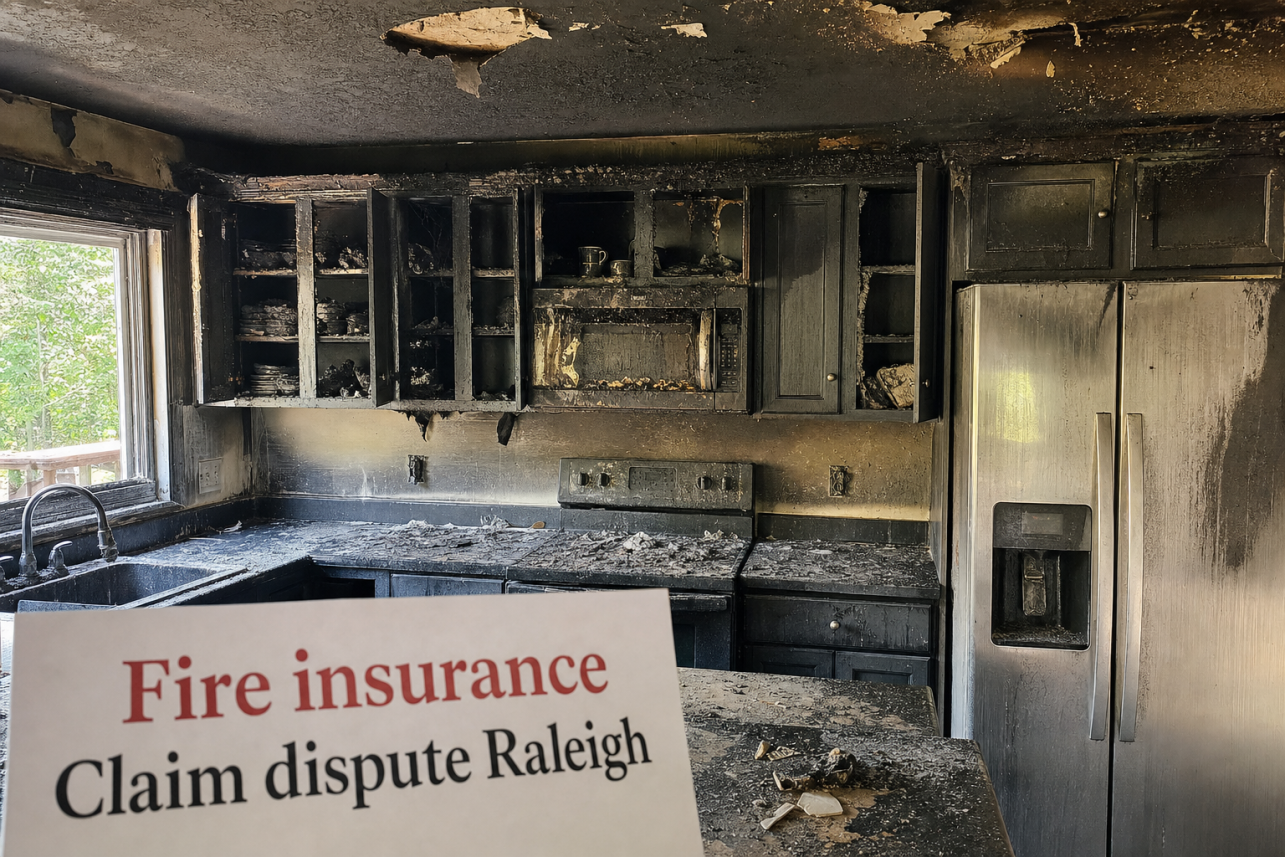
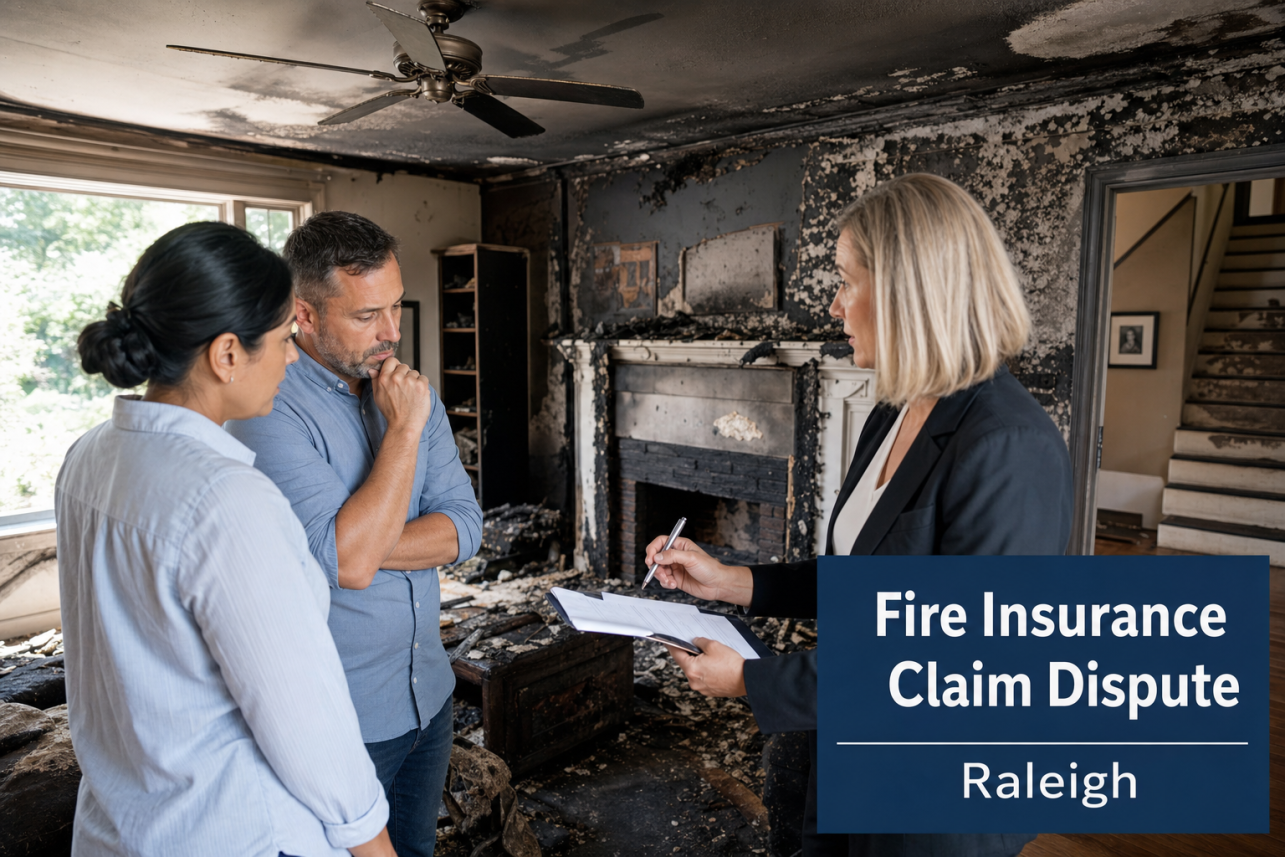
If you're in a Fire insurance Claim dispute Raleigh homeowners face after a house fire, you have the right to challenge a denial or a settlement that won't actually cover repairs — and you don't have to do it alone. For The Public Adjusters, Inc. is a licensed and bonded public adjusting firm that works only for policyholders, never for insurance companies. We re-document the loss, rebuild the estimate, and negotiate directly with your insurer's adjuster on your behalf.
What This Service Is
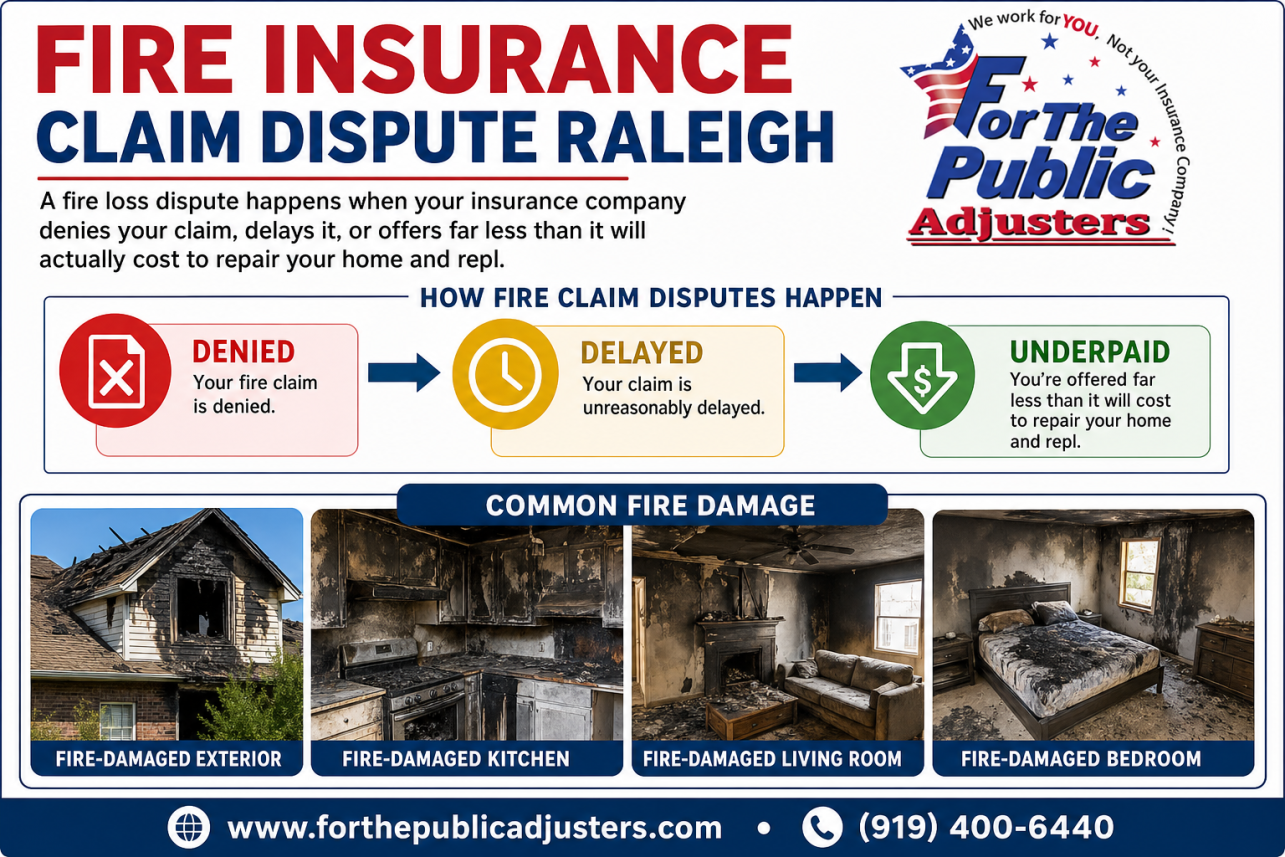
A fire loss dispute happens when your insurance company denies your claim, delays it, or offers far less than it will actually cost to repair your home and replace what you lost. A public adjuster steps in as your representative — the mirror image of the adjuster the insurance company sends out, except we answer to you.
After a fire in Raleigh, the damage is rarely just what burned. Smoke and soot travel through duct systems and settle into walls, insulation, and furniture rooms away from the flames. Water from firefighting soaks framing, drywall, and flooring. Insurance company estimates frequently miss these layers of damage, and that's often where the underpayment starts.
Our job is a complete property loss assessment: documenting structural damage (including what's hidden behind walls), building a room-by-room inventory of your personal belongings, calculating what you're owed for temporary housing and daily living costs while you're displaced, and pressing for replacement cost rather than a depreciated payout where your policy allows it. We handle fire, smoke, and the water damage that comes with fighting a fire — and if arson is alleged against an innocent homeowner, we handle those claims too.
The courts have long recognized that insurers can be held accountable when they wrongly refuse to pay. In Gruenberg v. Aetna Insurance Co., the California Supreme Court allowed a policyholder to sue his insurers for bad faith after they refused to pay his fire loss claim — a landmark decision confirming that an insurance company owes its own customer a duty of good faith and fair dealing when handling a claim. That principle is the backbone of every negotiation we take on.
Common Problems
Fire Insurance Claim Dispute Raleigh: What Should My Settlement Actually Cover?
More than most homeowners are offered at first. A fair fire settlement includes structural repairs at real contractor pricing, smoke and soot cleanup throughout the home, water damage from the firefighting effort, your destroyed contents, and additional living expenses — hotel, rental, meals — while your home is unlivable.
Watch the depreciation line on your estimate. Many insurers pay 'actual cash value' first, deducting for the age of your roof, cabinets, and belongings, and only release the held-back depreciation after repairs are done. If your policy provides replacement cost coverage, that money is recoverable — but you have to know to pursue it.
Also look for code upgrade coverage. Older Raleigh homes often can't be rebuilt to the way they were; current building codes require updated wiring, framing, or egress. If your policy includes ordinance-or-law coverage, those upgrade costs belong in your claim, not out of your pocket.
My Fire Claim Was Denied, Delayed, Or The Check Won't Cover Repairs. Now What?
First, don't cash a check thinking it closes the door — in most cases a claim can be reopened and supplemented when new damage is documented. Don't accept 'that's our final offer' as final, either. Insurers rely on policyholders not knowing how to push back.
Delays and denials usually hinge on documentation: the insurer says the proof of loss was incomplete, the contents inventory is unsupported, or the damage is 'pre-existing.' We answer that with evidence — detailed photo documentation, itemized repair estimates, and a properly prepared proof of loss that's hard to argue with.
When a carrier drags its feet or ignores clear evidence, that can cross into bad faith. North Carolina policyholders can also file a complaint with the North Carolina Department of Insurance, which oversees how carriers handle claims in this state. We build the file so that every avenue — negotiation, appraisal, complaint, or referral to an attorney — is backed by solid documentation.
Should I Fight The Insurance Company Myself, Or Hire A Public Adjuster?
You can handle a dispute yourself, and for a small, straightforward claim that may be fine. But fire claims are among the most complex losses there are — hidden structural damage, soot migration, water intrusion, contents valuation, depreciation math, and coverage limits all in one file. The insurer's adjuster does this every day. Most homeowners do it once in a lifetime.
A good public adjuster is licensed by the state, bonded, works on the policyholder's side exclusively, and puts every number in writing. The NCDOI Public Adjusters Guide explains how public adjusters are regulated in North Carolina and what to expect from a legitimate one — read it before you hire anyone, including us.
Be wary of anyone who guarantees a specific dollar outcome. No honest adjuster can promise what a claim will settle for. What we can promise is a thorough, professionally documented claim and an experienced negotiator sitting across from the insurance company instead of you.
Our Process
Free Policy And Claim Review
We start by reading your actual policy — coverage limits, deductible, replacement cost provisions, ordinance-or-law coverage, and additional living expense benefits. Then we review everything the insurer has sent you, including their estimate and any denial letter, and tell you plainly where the gaps are.
Full Re-Inspection And Documentation
We inspect the property ourselves, including areas the insurer's adjuster skipped — attics, wall cavities, ductwork, and rooms away from the fire where smoke and firefighting water did quiet damage. We build a line-item repair estimate, a complete contents inventory with values, and a proper proof of loss package.
Negotiation And Resolution
We present the documented claim to your insurance company and negotiate directly with their adjusters, meeting them on-site if needed. If the carrier still won't move, we pursue the dispute tools built into your policy, such as the appraisal process, and keep you informed at every step until the claim is resolved.
| What Happens | Homeowner Alone | With For The Public Adjusters |
|---|---|---|
| Damage scope | Relies on the carrier's estimate, which often stops at the visible burn area | Independent inspection covering smoke, soot, HVAC contamination, and hidden structural damage |
| Smoke and soot testing | Rarely performed; contamination goes undocumented | Industrial hygienist sampling to prove damage in rooms the insurer skipped |
| Policy leverage | Matching, code-upgrade, and appraisal provisions usually go unused | Every applicable coverage identified and invoked, including appraisal when the carrier won't move |
| Additional living expenses | Often cut off early or underpaid while the family is displaced | ALE documented and extended through the full permitted rebuild timeline |
| Negotiation | Field adjuster controls the file and the pace | Escalation to large-loss units, supported by contractor estimates and expert reports |
| Typical result | Settlement anchored to the first offer | Documented settlements frequently two to four times the initial offer |
Commonly Overlooked In The Public Adjusting Industry
- Soot contamination in HVAC ductwork and insulation — Carrier adjusters scope what they can see, and smoke residue inside duct runs and attic insulation never shows up in a walk-through.
- Code-upgrade (ordinance and law) coverage during rebuild — Raleigh permitting often requires bringing wiring, egress, or smoke detection up to current code, and insurers won't volunteer the coverage that pays for it.
- Matching requirements for flooring, siding, and cabinetry — Insurers propose patching a few boards or panels, ignoring that mismatched repairs leave the home worth less and that policy and NC guidance often support continuous replacement.
- The policy's appraisal clause — Most policyholders don't know a built-in dispute mechanism exists, so they either accept a low offer or assume a lawsuit is the only option.
- Additional living expenses tied to the real rebuild timeline — Carriers cut ALE off based on their own optimistic schedule, not the actual permit, inspection, and contractor timeline in Wake County.
- Improper depreciation on contents and short-lived materials — Depreciation gets applied broadly across the inventory, including items and materials that shouldn't be depreciated at all under a replacement-cost policy.
- Char and heat damage to structural members behind finished surfaces — Studs, joists, and roof decking weakened by heat look intact behind drywall, and only invasive inspection or an engineer catches it before the rebuild seals it in.
- The recorded statement's effect on a disputed claim — Homeowners give casual answers about the fire's cause or timeline early on, and carriers later use those exact words to narrow or deny coverage.
Case Studies
Case Study #1
Situation: A family in Raleigh's Five Points neighborhood suffered a kitchen fire that spread smoke and soot through their 1940s bungalow. The flames were contained to the kitchen, but the smell and residue reached every room.
Problem: The carrier's adjuster scoped the loss as a 'kitchen-only' repair and offered $38,000. The estimate ignored soot infiltration in the HVAC ductwork, plaster walls that had absorbed smoke, and the family's original heart-pine flooring, which the insurer proposed patching with mismatched modern boards.
Investigation: We brought in an independent industrial hygienist to run surface and air sampling in rooms the carrier never tested. We also documented the plaster and flooring with a restoration contractor experienced in historic Wake County homes, and pulled the policy's matching and ordinance provisions.
Findings: Lab results confirmed char and soot particulate in bedrooms two floors from the kitchen. North Carolina's matching considerations and the policy language supported continuous flooring replacement rather than patching. Duct cleaning alone would not resolve the contamination — the plenum and several runs needed replacement.
Solution: We rebuilt the estimate line by line, submitted the hygienist's report with photographic mapping, and invoked the policy's appraisal clause when the carrier refused to move past $52,000.
Outcome: The appraisal panel awarded $147,600 — nearly four times the original offer. The family's floors were replaced continuously, the duct system was properly remediated, and their additional living expenses were extended to cover the longer rebuild.
Lesson: Smoke travels far beyond the burn area, and carriers rarely test for it unless someone forces the issue. Independent testing early in a disputed fire claim changes the entire conversation.
Case Study #2
Situation: The owner of a small commercial strip on Capital Boulevard had an electrical fire in one tenant space overnight. Two adjacent units took heavy smoke damage, and all three tenants had to vacate.
Problem: The insurer accepted the structural damage but denied most of the business income loss, arguing the adjacent units were 'habitable' and that the landlord's rent loss claim was speculative. Their offer covered roughly 30% of what the owner was actually losing each month.
Investigation: We collected lease agreements, twelve months of rent rolls, and written statements from the tenants' own insurers confirming displacement. We also had a licensed electrician and the Wake County fire report reconciled against the carrier's cause-and-origin findings, which had understated the extent of wiring damage in the shared electrical room.
Findings: The shared panel serving all three units had sustained heat damage requiring full replacement, meaning no unit could legally be occupied until permitted electrical work passed City of Raleigh inspection. The 'habitable' argument collapsed once the code requirement was on the table.
Solution: We presented the permit timeline, inspection requirements, and documented rent losses as a unified business income claim, then negotiated directly with the carrier's large-loss unit rather than the field adjuster who had stalled the file.
Outcome: The claim settled at $312,000 including nine months of lost rents — up from an initial position of about $95,000. All three tenants returned after the rebuild.
Lesson: Commercial fire disputes are often won on code and permitting facts, not just damage photos. If a rebuild legally cannot proceed, the income loss clock keeps running whether the carrier admits it or not.
| Your Situation | Best Next Step | What It Depends On | Typical Timeline |
|---|---|---|---|
| Offer seems low but claim is open | Request the carrier's full estimate and get an independent scope before signing anything | Whether hidden smoke, duct, or structural damage was left out | 2–6 weeks |
| Carrier denied smoke damage beyond the burn room | Independent hygienist testing and a supplemental claim | Lab results proving contamination the insurer never tested for | 3–8 weeks |
| Dispute is about repair cost, not coverage | Invoke the policy's appraisal clause | A dollar disagreement with coverage already accepted; each side picks an appraiser | 2–4 months |
| Claim denied over cause of fire | Cause-and-origin review against the fire marshal report; possible engineer involvement | Strength of the carrier's investigation vs. the official record | 1–3 months |
| ALE cut off while home is still uninhabitable | Document permit and inspection timelines showing the rebuild legally can't be occupied | City of Raleigh permitting status and habitability evidence | 1–3 weeks to reinstate |
| Contents payout heavily depreciated | Itemized inventory with age, condition, and replacement pricing; challenge improper depreciation | Whether the policy is replacement-cost and how items were categorized | 3–6 weeks |
| Carrier acting in bad faith or ignoring deadlines | Formal complaint to the NC Department of Insurance alongside adjuster representation | Documented delays, missed statutory response windows, misrepresented coverage | Varies |
Reviews
After our attic fire, the insurance company offered $61,000 and acted like that was final. For The Public Adjusters found smoke damage in rooms their adjuster never even walked into and caught that our roof decking couldn't just be spot-repaired under code. Final settlement was over $180,000. I would have signed the first check if my contractor hadn't told me to call them.
Marcus T., North Hills
The carrier tried to blame our garage fire on 'pre-existing electrical issues' and dragged the claim out for four months. This team pushed back with the actual fire marshal report, got an engineer involved, and forced them to honor the policy. They also caught depreciation the insurer had taken on items that shouldn't have been depreciated at all. Worth every penny of their fee.
Denise W., Garner
We were living in a hotel with two kids while the insurance company argued about whether our house was really uninhabitable after the fire. For The Public Adjusters got our additional living expenses reinstated within two weeks and then took the whole dwelling dispute to appraisal. The award came in more than double the carrier's number. They explained every step in plain English, which we badly needed.
Priya R., Cary
Frequently Asked Questions
What Can I Do About A Fire Insurance Claim Dispute Raleigh Homeowners Commonly Face After A House Fire?
If your insurer has underpaid, delayed, or denied your fire claim, you have more options than most Raleigh homeowners realize. The first step is understanding that the insurance company's estimate is a starting point for negotiation, not a final ruling.
For The Public Adjusters, Inc. begins by pulling your full policy and comparing every coverage — dwelling, other structures, contents, and additional living expenses — against what the carrier actually paid. In fire losses, we routinely find smoke damage, soot infiltration in HVAC systems, and code-upgrade costs that the insurer's adjuster missed or minimized.
From there, we build an independent, line-item estimate using local Wake County construction pricing, which often differs sharply from the software defaults carriers use. We document everything with photos, moisture and soot testing where appropriate, and detailed contents inventories.
North Carolina policies also include an appraisal provision, a formal process for resolving disagreements over the amount of loss without going to court. When negotiation stalls, invoking appraisal is often the fastest path to a fair settlement, and we guide clients through it regularly.
Most disputes we handle in the Raleigh area settle for significantly more than the carrier's original offer, without litigation. The key is acting while evidence is fresh — before repairs erase the proof of what the fire actually did to your home. If your settlement feels wrong, it usually is worth a second look.
How Long Do I Have To Challenge An Underpaid Fire Claim In North Carolina?
In North Carolina, you generally have three years from the date of loss to bring legal action on a property insurance claim, though your specific policy may set contractual deadlines that are shorter, so read it carefully. That said, waiting anywhere near that long is a mistake.
Fire evidence degrades quickly. Soot migrates deeper into materials, weather works on a compromised roof, and once demolition or repairs begin, the physical proof of the fire's full extent disappears. Carriers know this, and delayed disputes are harder to win.
There are also practical deadlines inside your policy. Proof of loss requirements, supplemental claim windows, and the timeframe for demanding appraisal can all affect your rights. Miss one, and the insurer gains leverage even if your damages are legitimate.
Our team at For The Public Adjusters, Inc. recommends getting a professional review within weeks of receiving a settlement offer you question — not months. When a Raleigh homeowner brings us a fire file early, we can still inspect the property, photograph hidden smoke and heat damage, and test materials before contractors alter the scene.
Even if you already accepted a payment, you are usually not barred from pursuing a supplemental claim for damage that was overlooked or underscoped. Cashing a check is rarely a full release under North Carolina law. The bottom line: the clock matters, but so does evidence, and the sooner a licensed public adjuster reviews your claim, the stronger your position.
Why Did My Insurer's Estimate Come In So Much Lower Than My Contractor's Bid?
This gap is the single most common reason Raleigh fire claims end up in dispute, and it usually comes down to scope, not just price. The carrier's adjuster may have spent an hour walking your property; your contractor spent hours planning how to actually rebuild it.
Insurance estimates are typically written in pricing software with default regional rates that lag behind real Wake County labor and material costs. They also frequently omit fire-specific items: full HVAC duct cleaning or replacement after smoke contamination, sealing and priming charred framing, replacing insulation that absorbed soot, and matching finishes so repaired areas don't clash with the rest of the house.
Code upgrades are another major gap. Raleigh and Wake County enforce current building codes on repairs, so an older home may need updated electrical, egress, or smoke-detection work the original estimate never priced — even though ordinance-or-law coverage in your policy may pay for it.
When For The Public Adjusters, Inc. reviews these files, we reconcile the two estimates line by line and document exactly what the carrier's scope missed, with photos and code citations. That evidence-based approach turns a stalemate into a negotiation the insurer has to engage with.
Don't assume you must accept the lower number or pay the difference yourself. A properly documented supplemental demand, backed by a licensed public adjuster, closes that gap in the majority of fire cases we handle across the Triangle.
What Does For The Public Adjusters, Inc. Charge To Handle A Fire Insurance Claim Dispute Raleigh Property Owners Are Fighting?
We work on contingency, which means there is no upfront cost to hire us. Our fee is a percentage of the settlement we recover for you, agreed in writing before we start, as required for licensed public adjusters in North Carolina. If we don't recover money, you don't owe us a fee.
That structure matters in a fire dispute because it aligns our interests with yours. We only get paid when your settlement increases, so we have every incentive to document each dollar of damage — structural repairs, smoke and soot remediation, destroyed contents, and additional living expenses while you're displaced.
The initial consultation and claim review are free. We'll read your policy, examine the carrier's estimate and correspondence, inspect the property, and tell you honestly whether the offer is fair or whether a dispute is worth pursuing. Some settlements are reasonable, and we'll say so.
For homeowners and business owners in Raleigh and surrounding Wake County communities, the math usually works strongly in your favor. Fire claims involve so many specialized categories — code upgrades, contents inventories, matching requirements — that professional representation typically recovers far more than the fee costs.
Compare that to going it alone against a carrier's trained adjusters, or paying hourly legal fees before knowing whether litigation is even necessary. A Fire insurance Claim dispute Raleigh residents try to handle themselves often settles for the insurer's second offer; ours settle for what the policy actually owes. Call us before you sign anything, and we'll give you a straight answer at no cost.
Can For The Public Adjusters, Inc. Help With A Fire Insurance Claim Dispute Raleigh Insurers Have Already Denied Outright?
Yes. A denial letter is not the end of your claim — it is the insurer's opening position, and it can be challenged. Our team starts by pulling apart the denial itself. Carriers must cite the specific policy language they relied on, and in fire losses we frequently find the cited exclusion was misapplied or the investigation was incomplete.
From there we rebuild the claim from the ground up. That means an independent origin-and-cause review when the carrier alleges something like an electrical issue tied to unpermitted work, a room-by-room inventory of smoke and heat damage the field adjuster never documented, and a repair estimate built on actual Wake County contractor pricing rather than outdated software rates.
North Carolina policyholders also have leverage many people never use. Most fire policies contain an appraisal clause that lets you demand a binding valuation process when the dispute is about the amount of loss. When the dispute is about coverage itself, a formal, documented demand backed by evidence often moves a denial to a negotiated settlement without litigation.
We have handled denied fire losses across Raleigh, from older homes inside the Beltline with knob-and-tube wiring questions to newer builds in North Hills where smoke migrated through open floor plans. Bring us the denial letter, your policy, and any photos you have. The consultation costs nothing, and we will tell you honestly whether the denial can be overturned before you commit to anything.
My Insurer Says The Smoke Damage In Untouched Rooms Isn't Covered. Is That Worth Disputing?
Almost always, yes — and this is one of the most common shortfalls we see in Raleigh fire claims. Smoke, soot, and combustion byproducts travel far beyond the burn area through HVAC systems, wall cavities, and open stairwells. A kitchen fire can contaminate insulation, ductwork, textiles, and electronics two floors away, even when those rooms look clean at a glance.
Standard homeowners policies in North Carolina cover smoke damage as part of the fire peril. When a carrier limits payment to the visibly charred rooms, they are usually relying on a quick visual inspection rather than actual testing. Soot is acidic and corrosive; it keeps damaging metals, wiring, and finishes for weeks after the fire is out.
Our Wake County team documents what the field adjuster missed. We arrange surface sampling and air-quality testing, photograph soot webs in closets and attic spaces, and inventory contents that need specialized cleaning or replacement — clothing, upholstery, electronics, and porous items that hold odor permanently. We also scope duct cleaning and sealing, which carriers routinely leave out entirely.
The difference is rarely small. On typical Raleigh house fires, properly documented smoke and soot damage can add tens of thousands of dollars to a settlement, particularly in two-story homes where heat pushed contamination upward. If your carrier's estimate stops at the doorway of the room where the fire started, get a second opinion before you sign anything or accept a final payment.
Should I Accept The Insurance Company's First Settlement Offer After A House Fire In Raleigh?
Not before someone who works for you reviews it. First offers on fire losses are built quickly, often from a single walkthrough, and they consistently undervalue the true scope of repairs. In our experience across Wake County, initial fire settlements frequently miss code-upgrade costs, hidden structural damage, full contents inventories, and realistic additional living expenses.
A few things to check before accepting anything. First, does the estimate include ordinance-and-law coverage? Raleigh's permitting process will require rebuilding to current code, which can mean upgraded electrical panels, hardwired smoke detectors, and modern framing standards an older home never had. Second, did anyone open walls or test framing near the burn area? Charred structural members hidden behind drywall are a routine finding once demolition begins. Third, is your contents list complete, or did the adjuster estimate it from memory?
Also understand what accepting payment means. Cashing a check is not always a final release in North Carolina, but insurers treat early acceptance as a signal the claim is closed, and reopening it becomes an uphill fight. It is far easier to negotiate the full amount once than to chase supplements for months.
We review settlement offers for Raleigh homeowners at no charge. If the number is fair, we will tell you so and you lose nothing. If it is short — and most first offers we see are short by a significant margin — we will show you exactly where and by how much before you decide anything.

What Evidence Matters Most When Fighting A Fire Insurance Claim Dispute Raleigh Adjusters Keep Pushing Back On?
The disputes we win are won on documentation, and the strongest evidence falls into four categories.
First, the physical record. Photographs and video of every room before any cleanup, the fire department's incident report from the Raleigh Fire Department, and — when cause is contested — an independent origin-and-cause investigation. Never authorize debris removal until the loss is fully documented, because once material leaves the property, so does your proof.
Second, the repair scope. A detailed, line-item estimate from a licensed North Carolina contractor who actually rebuilds fire-damaged homes carries far more weight than a carrier's software printout. It should reflect real Wake County labor and material pricing, permit fees, and code-required upgrades under Raleigh's current building standards.
Third, the contents inventory. Item-by-item lists with age, condition, and replacement cost, supported by receipts, bank statements, photos, or even old social media posts showing items in your home. Insurers discount vague inventories heavily; specific ones are hard to argue with.
Fourth, the paper trail. Every conversation with your carrier should be confirmed in writing. Dates, names, and what was said become critical if the dispute escalates to appraisal or a complaint with the North Carolina Department of Insurance.
For The Public Adjusters, Inc. builds this evidence package as a matter of course. Homeowners handling a Fire insurance Claim dispute Raleigh carriers are contesting usually lose ground not because their claim is weak, but because it was never documented in a way the insurer had to answer. We make sure yours is.
Can The Appraisal Clause Resolve A Fire Insurance Claim Dispute Raleigh Homeowners Can't Settle Through Negotiation?
Often, yes. Nearly every homeowner policy written in North Carolina contains an appraisal clause, and it exists for exactly this situation: you and the insurer agree the fire loss is covered but disagree on what it's worth. Either side can invoke appraisal in writing.
Once invoked, you select an appraiser, the carrier selects one, and the two appraisers choose a neutral umpire. Any figure agreed to by two of the three becomes binding on the amount of loss. It keeps you out of court, and in our experience it frequently moves a stalled Wake County claim in weeks rather than months.
That said, appraisal is not automatically the right move. It only settles valuation, not coverage. If the insurer is denying that certain smoke or water damage is covered at all, appraisal won't fix that. And the outcome depends heavily on the quality of your estimate going in — an appraiser working from a thin scope of repairs can't invent line items later.
Before we recommend appraisal for a fire dispute in Raleigh, we rebuild the claim file: a room-by-room damage scope, contents inventory, code-upgrade costs under the current North Carolina building code, and local contractor pricing rather than software defaults. Sometimes that documentation alone closes the gap without invoking the clause. When appraisal is warranted, going in with a defensible, itemized estimate is what produces a fair award.
My Family Is Displaced After A House Fire In Raleigh — Can I Dispute How The Insurer Is Handling Our Additional Living Expenses?
Yes, and it's one of the most common fights we see. Additional living expense coverage, sometimes called loss of use, pays the increase in your living costs while your home is uninhabitable. That includes comparable temporary housing, extra mileage, pet boarding, laundry, and increased food costs beyond what you'd normally spend.
Problems usually start when the carrier pushes a family of five into an extended-stay hotel off Capital Boulevard for months, or cuts off payments based on an unrealistic repair timeline. "Comparable" means comparable to how you actually lived — if you had a four-bedroom home in North Raleigh with a fenced yard for your dogs, a single hotel room isn't a reasonable substitute.
The other frequent dispute is duration. Insurers often approve ALE for a set number of months, then pressure you to move home before repairs are finished or permits are closed out. If contractor delays, city inspection schedules, or supplemental damage discoveries extend the rebuild, your displacement costs should extend with it, up to your policy limit.
Keep every receipt from day one, including grocery and takeout costs, and document your pre-loss living situation with photos and your lease or mortgage details. When we take over a claim, we build an ALE ledger that separates normal expenses from increased ones, tie the timeline to the actual construction schedule, and push back in writing when the carrier tries to close loss-of-use benefits prematurely.
I Already Filed My Fire Claim Myself — Is It Too Late To Bring In A Public Adjuster?
No. Most of the disputed fire claims we handle in Raleigh and across Wake County come to us mid-stream, after the homeowner has already filed, met the carrier's adjuster, and received an offer that doesn't come close to covering the rebuild. You can hire licensed representation at almost any stage before the claim is fully released and closed.
What changes when we step in is the footing. We notify the insurer in writing that all communication now goes through us, which stops the recorded phone calls and pressure tactics. Then we audit everything already in the file: the carrier's estimate, their engineer or cause-and-origin reports, your policy's declarations and endorsements, and any payments issued so far.
From there we document what was missed. In fire losses that's typically smoke and soot migration into rooms the flames never touched, HVAC contamination, structural charring behind finished walls, code-upgrade costs, and undervalued contents. We then submit a supplemental claim with a full scope and demand a re-inspection.
Two cautions. First, if you've already cashed checks, that usually doesn't end the claim — most payments are partial, not final settlements — but bring us the paperwork so we can confirm nothing was signed as a full release. Second, the earlier you call, the better, because North Carolina's contractual limitation period keeps running whether or not the carrier is negotiating in good faith. Even so, "already started" is almost never "too late."
How Long Does It Take To Resolve A Disputed Fire Claim, And What Does The Process Look Like?
Every Fire insurance Claim dispute Raleigh property owners bring to us follows its own path, but most fall into a predictable range. A well-documented supplemental claim on an underpaid loss often resolves in 30 to 90 days. Disputes that require the appraisal process typically run three to six months. Denied claims that need expert reports or legal escalation can take longer.
The process usually starts with a full review of your policy and the carrier's file, followed by our own inspection of the property. Fire losses hide damage — soot in ductwork, heat-damaged framing behind drywall, moisture from firefighting water — so we scope the entire structure, not just the burn area.
Next comes documentation: an itemized repair estimate built on Raleigh-area contractor pricing, a contents inventory with replacement values, ALE calculations, and code-upgrade costs required by Wake County inspections. We submit that package as a formal supplement and request a joint re-inspection with the carrier's adjuster.
Most disputes settle at that stage because the insurer now faces a documented file rather than a homeowner's objection. If they still won't move, we advise on next steps — appraisal for valuation fights, or a complaint to the North Carolina Department of Insurance and referral to counsel for coverage denials.
One thing that helps timelines enormously: don't authorize demolition or full repairs before the disputed damage is documented. Preserving the evidence, or at minimum photographing everything thoroughly, keeps your leverage intact and shortens the fight.
My Kitchen Fire Seems Small — Is A Fire Insurance Claim Dispute Raleigh Residents Pursue Really Worth It For A Partial Loss?
Partial losses are actually where insurers underpay most often, so yes — smaller fires are frequently worth disputing. With a total loss, the payout is largely dictated by policy limits. With a kitchen or attic fire, the carrier's estimate involves hundreds of judgment calls, and each one is an opportunity to shortchange you.
A typical kitchen fire in a Wake County home involves far more than cabinets and drywall. Smoke and soot travel through HVAC ductwork into bedrooms and living areas. Heat can compromise wiring behind walls, warp adjacent flooring, and embed odor in insulation. Insurers routinely scope only the visibly charred area and call it a day.
We regularly see 'small' Raleigh kitchen fires initially estimated at $15,000 to $25,000 that legitimately cost $60,000 or more once duct cleaning, odor sealing, matching cabinetry, code-required electrical updates, and contents cleaning are properly accounted for. Matching is a common flashpoint: if your cabinets or flooring can't be matched, North Carolina claim practices often support replacing the continuous run, not patching one section.
Before accepting any partial-loss settlement, have the scope reviewed by someone working for you rather than the carrier. For The Public Adjusters, Inc. inspects the entire home — not just the burn area — documents hidden smoke migration, and builds a line-item estimate the insurer has to answer to. If the gap between their number and the real cost is significant, disputing it usually pays for itself many times over.
The Insurance Company Is Lowballing My Personal Property After The Fire. How Do I Dispute The Contents Portion Of The Claim?
Contents disputes come down to documentation, and most homeowners are asked to produce it at the worst possible moment — while displaced and grieving their belongings. Insurers know this, and low contents offers often reflect a rushed or incomplete inventory rather than what you actually owned.
Start by demanding the carrier's contents inventory and pricing sheet in writing. You're entitled to see exactly what they counted, what condition they assigned, and how they priced each item. Common problems we find in Raleigh fire claims include items priced at big-box clearance levels, excessive depreciation on nearly new belongings, entire categories skipped, and smoke-damaged items marked 'cleanable' when restoration would cost more than replacement.
Rebuild your inventory room by room. Pull photos from your phone, bank and credit card statements, Amazon and store order histories, and receipts stored in email. For high-value items — jewelry, firearms, electronics, instruments — gather appraisals or model numbers so replacement pricing is accurate, not guessed.
Watch the depreciation math closely. If you carry replacement cost coverage, the insurer initially pays actual cash value and owes you the recoverable depreciation once you replace items. Many Wake County homeowners never collect that second payment because nobody explains it.
Our team prepares forensic-level contents inventories, challenges inflated depreciation line by line, and tracks recoverable holdbacks so nothing is left behind. Contents often represent 30 to 40 percent of a fire settlement — it deserves the same fight as the structure.
My Insurer Won't Pay For Code Upgrades Required To Rebuild My Raleigh Home. Can That Be Disputed?
In many cases, yes — and this is one of the most valuable disputes a fire victim can win. When you rebuild after a fire, the City of Raleigh and Wake County won't permit you to reconstruct to the old standard. You must meet the current North Carolina building code, which can mean updated electrical panels and wiring, hardwired smoke detectors, energy-efficiency requirements, egress changes, and sometimes structural upgrades.
Whether the insurer owes for that depends on your policy's ordinance or law coverage. Many North Carolina homeowner policies include it — often 10 percent of the dwelling limit or more — but carriers frequently omit code items from their estimates unless someone forces the issue. Adjusters write estimates to restore what existed before, then quietly leave the upgrade costs on your shoulders.
If you were told code upgrades 'aren't covered,' get that denial in writing and have your full policy reviewed, including endorsements. The coverage is sometimes buried in language homeowners never see quoted. Documentation matters too: correspondence from your Raleigh permit reviewer or inspector identifying required upgrades turns a vague argument into a concrete, provable cost.
For The Public Adjusters, Inc. handles this fight regularly. We identify the ordinance or law coverage in your policy, obtain written code requirements from local officials, price the upgrades into a detailed rebuild estimate, and present the carrier with a demand it can't dismiss. On older homes inside the Beltline or in established neighborhoods like Five Points or Oakwood, code-related costs can add tens of thousands of dollars to a proper settlement.
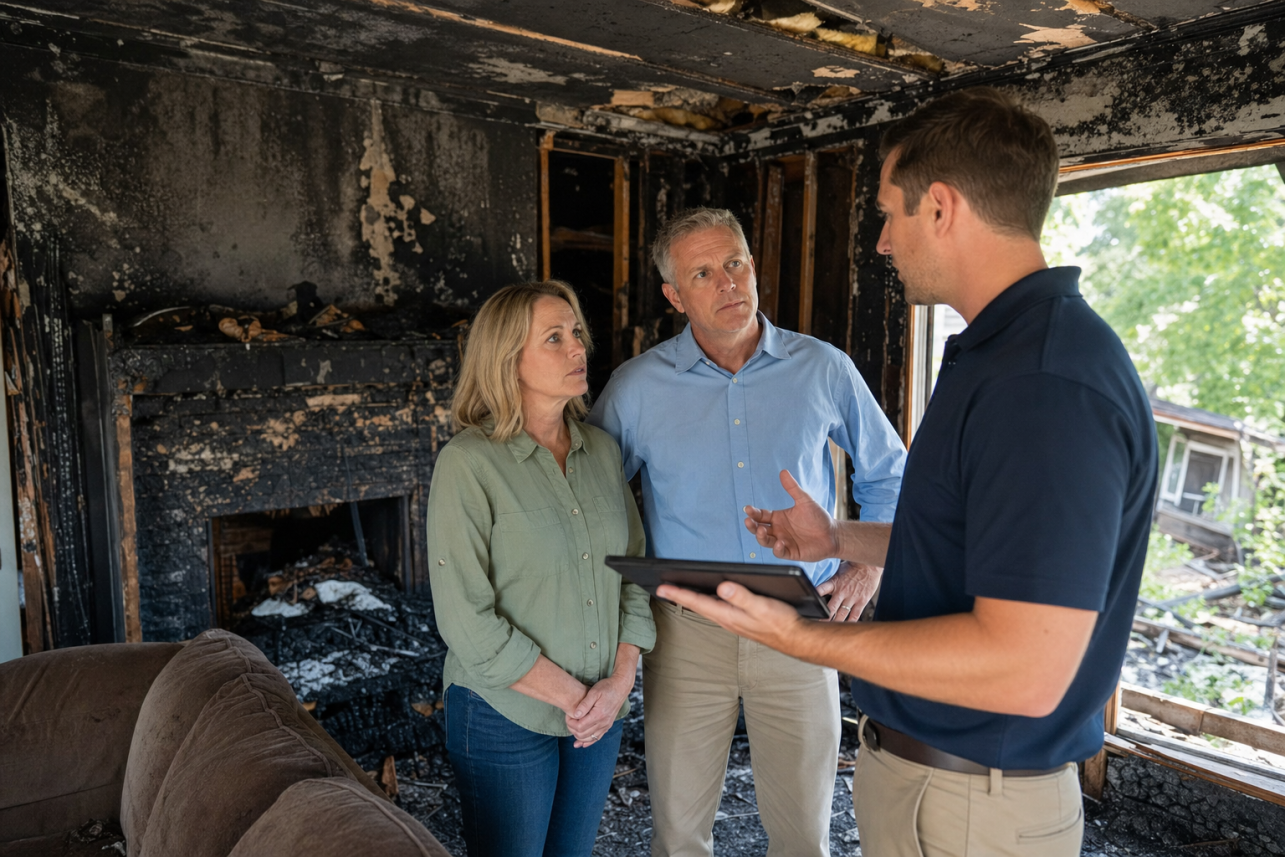
The Carrier Is Holding Back Depreciation On My Fire Settlement. Is That Part Of A Fire Insurance Claim Dispute Raleigh Homeowners Can Win?
Recoverable depreciation is a legitimate battleground in almost every Fire insurance Claim dispute Raleigh property owners bring to us, and it's winnable when you understand the mechanics. If you carry replacement cost coverage, the insurer first pays actual cash value — replacement cost minus depreciation — then releases the withheld depreciation after you complete repairs or replacement.
Problems arise in two ways. First, insurers often apply aggressive depreciation percentages, treating a five-year-old roof or nearly new flooring as if it were decades old. Every extra percentage point of depreciation shrinks your upfront check and increases the risk you can't afford to start repairs at all. Second, carriers sometimes make recovering the holdback needlessly difficult — imposing tight deadlines, demanding paperwork the policy doesn't require, or refusing supplements when actual costs exceed their estimate.
Both issues can be challenged. Depreciation should be item-specific and defensible, based on the actual age and condition of each component, not a blanket percentage across the whole estimate. And your deadline to claim recoverable depreciation is set by your policy language, which we review carefully because missing it can forfeit real money.
Our team audits the depreciation schedule line by line, pushes back on inflated age assumptions, and manages the documentation trail — contractor invoices, receipts, and completion evidence — so the full holdback gets released. For a typical house fire in Wake County, disputed depreciation alone can amount to $20,000 or more. Don't treat the ACV check as your final settlement; for most fire victims, it's only the first installment of what the policy actually owes.
Local Relevance
Raleigh's housing stock ranges from mid-century homes inside the Beltline to fast-built newer construction across Wake County, and that mix matters in a fire claim. Older homes often have plaster walls, aging wiring, and framing that can't legally be rebuilt as-is, which triggers code upgrade costs insurers frequently leave out of their first estimate. Newer homes tend to have open floor plans and shared HVAC systems that let smoke travel much farther than the flames did.
Our humid climate adds another layer. Firefighting water that soaks into a Raleigh home in July doesn't just dry out on its own — it feeds mold in framing and insulation within days, turning a fire claim into a fire-and-water claim. The National Fire Protection Association notes that cooking remains the leading cause of home fires nationally, and kitchen fires are exactly the kind of loss where smoke, grease residue, and water damage spread far beyond the visible burn area.
When a Raleigh insurer's estimate covers only the charred kitchen and ignores the rest, that's where the dispute begins — and where local knowledge of how these homes are built, and what Wake County repairs actually cost, becomes leverage.
In Raleigh's humid summers, the water used to put out even a modest kitchen fire tends to stay trapped in wall cavities and subfloors far longer than in drier climates, so many local fire disputes hinge on secondary water and mold damage the insurer's first estimate never inspected — always insist on moisture readings before accepting any fire settlement here.
Get A Second Opinion On Your Fire Claim
If the insurance company's number won't rebuild your home, let For The Public Adjusters, Inc. review your policy and their estimate at no cost. We're licensed, bonded, and we work for Raleigh policyholders — never for insurance companies. The review is free, and you'll know exactly where you stand before you decide anything.
Request Your Free Claim Review
Call us: (919) 400-6440
Helpful Resources
- NCDOI Public Adjusters Guide
- National Fire Protection Association (NFPA)
- North Carolina Department of Insurance — State regulator overseeing insurers and public adjusters in NC
- U.S. Fire Administration home fire safety resources — Federal fire prevention and recovery education
Last updated: August 12, 2026