If you need tree damage insurance claim help Burlington homeowners can actually rely on, For The Public Adjusters, Inc. represents you — not the insurance company — from the first phone call through final settlement. We inspect the full extent of the damage, document it properly, prepare your claim, and negotiate directly with your insurer's adjuster. We are licensed and bonded in North Carolina, and we only get paid when your claim does.
What This Service Is
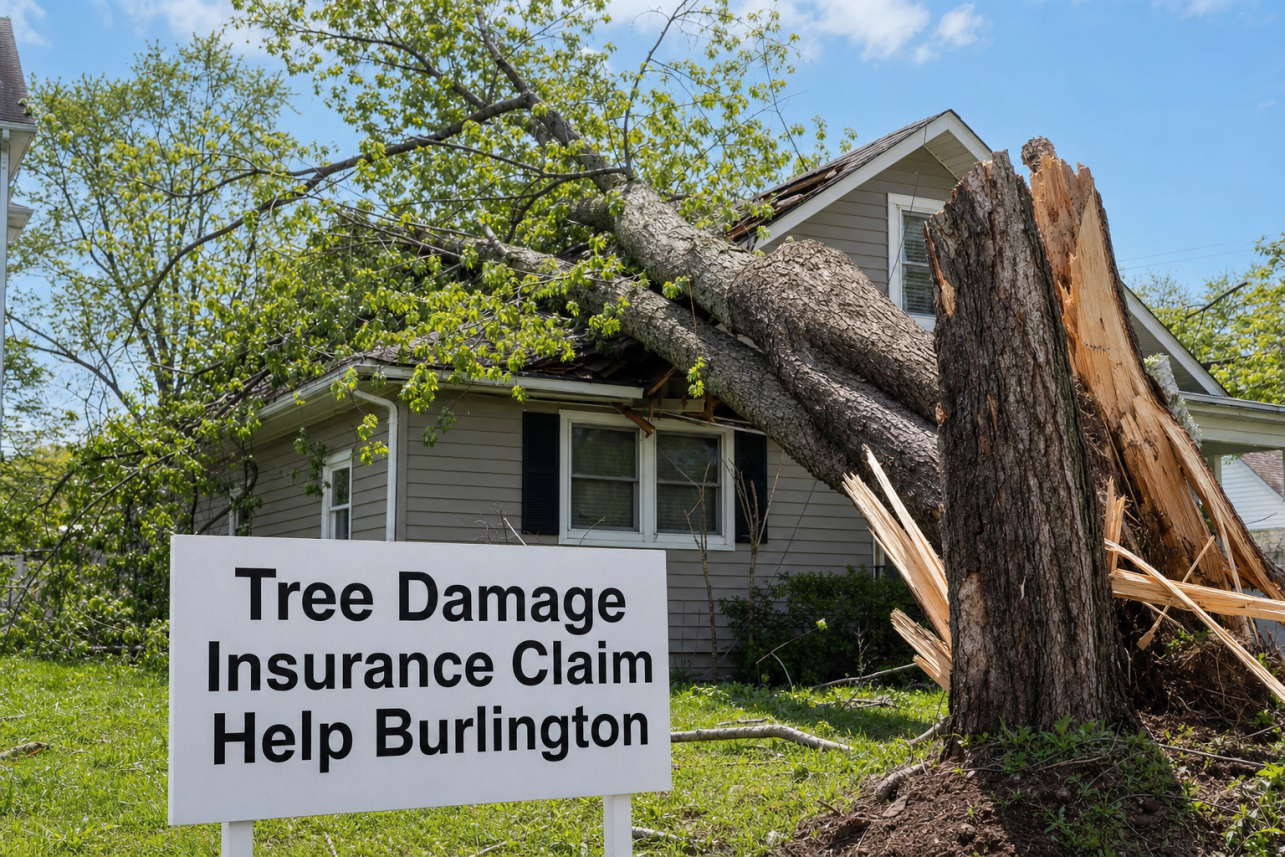
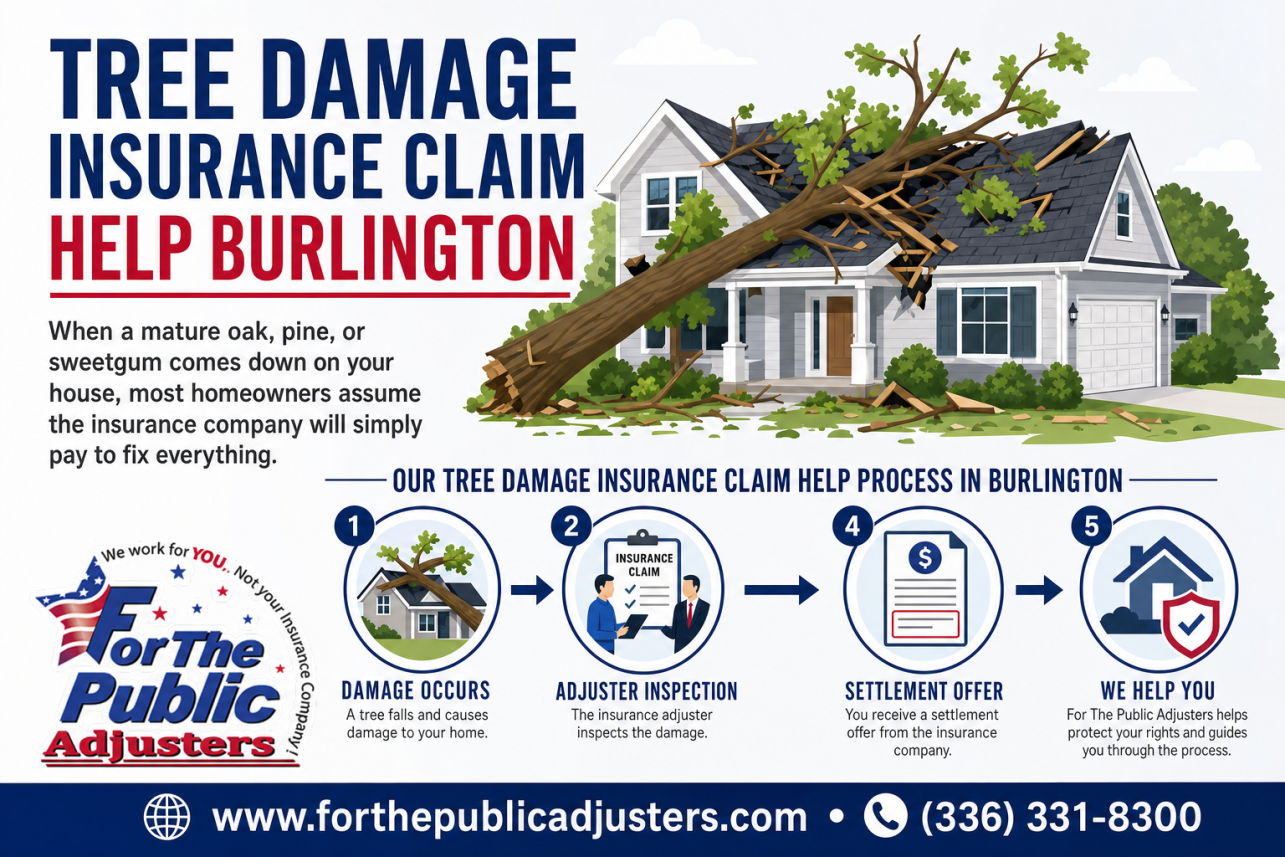
When a mature oak, pine, or sweetgum comes down on your house, most homeowners assume the insurance company will simply pay to fix everything. In reality, the insurer sends its own adjuster, whose estimate often covers what is easily visible and little else. Cracked rafters under the shingles, shifted framing, torn flashing, and water intrusion that follows a puncture can all be missed or minimized.
A public adjuster works only for the policyholder. Our team reads your policy carefully, identifies everything it covers — including tree removal costs, temporary tarping, structural repairs, damaged contents, and additional living expenses if your home is unlivable — and builds the documentation to support the full loss.
We handle the fallen-tree claim itself, plus the damage that usually travels with it: roof punctures that let rain into ceilings and walls, crushed porches and detached garages, and fires or electrical damage when a tree takes down a service line. If a storm-driven tree strike is part of a larger hurricane loss, we handle that too. The NCDOI Public Adjusters Guide explains exactly what licensed public adjusters in North Carolina can do for policyholders, and we work within those rules on every claim.
Common Problems
Will My Policy Really Pay For Tree Removal, Or Just The Hole In My Roof?
This is where many Alamance County homeowners get shortchanged. Most homeowners policies cover removal of a tree only when it damages a covered structure — and even then, removal is often capped at a set dollar amount that may not cover a large hardwood.
Then there is the payment method. If your insurer pays actual cash value, they deduct depreciation from your roof and siding, leaving you to cover the gap out of pocket. If your policy includes replacement cost, you may be entitled to that depreciation back once repairs are done — but only if the paperwork is handled correctly. We sort out what your specific policy owes you, including your deductible, so there are no surprises.
Tree Damage Insurance Claim Help Burlington Homeowners Need When The Insurer Delays, Underpays, Or Denies
A common story around Burlington: the insurance adjuster spends twenty minutes on site, and weeks later a check arrives that would barely cover the tarp. Or the claim is denied outright, with the insurer blaming pre-existing rot or a maintenance exclusion buried in the policy.
You do not have to accept the first offer, and a denial is not the end. Insurers can be held accountable — in Guessford v. Pennsylvania National Mutual Casualty Insurance Co., a North Carolina homeowner pursued his insurer in federal court over a mishandled house damage claim and prevailed, with the court recognizing the insurer's unfair conduct. We build the evidence, submit a complete proof of loss, and negotiate a corrected settlement — and we know when a dispute needs to be escalated.
Should I Just Handle The Claim Myself?
You can, and some straightforward claims settle fairly. But a tree strike is rarely straightforward. Hidden structural damage, water intrusion, and disputes over the scope of repairs are exactly where self-filed claims get underpaid — and once you cash a settlement check, reopening the claim gets much harder.
A good public adjuster does three things you cannot easily do yourself: reads the policy the way the insurer's lawyers wrote it, documents damage to a standard the carrier cannot dismiss, and negotiates from experience with hundreds of claims. Before hiring anyone, verify their North Carolina license and confirm they are bonded — we are both, and we will show you.
Our Process
Free Inspection And Policy Review
We walk the property and look past the obvious — into the attic, along the roof deck, behind ceilings where water may have traveled. Then we read your actual policy, not a summary, and tell you honestly what it covers, what it excludes, and what your claim is realistically worth to pursue.
Documentation And Claim Preparation
We photograph and measure everything, obtain repair estimates that reflect the true scope of work, and account for tree removal, emergency tarping you paid for, damaged contents, and living expenses if you had to leave home. Every claim deadline in your policy is tracked so nothing lapses.
Negotiation Through Settlement
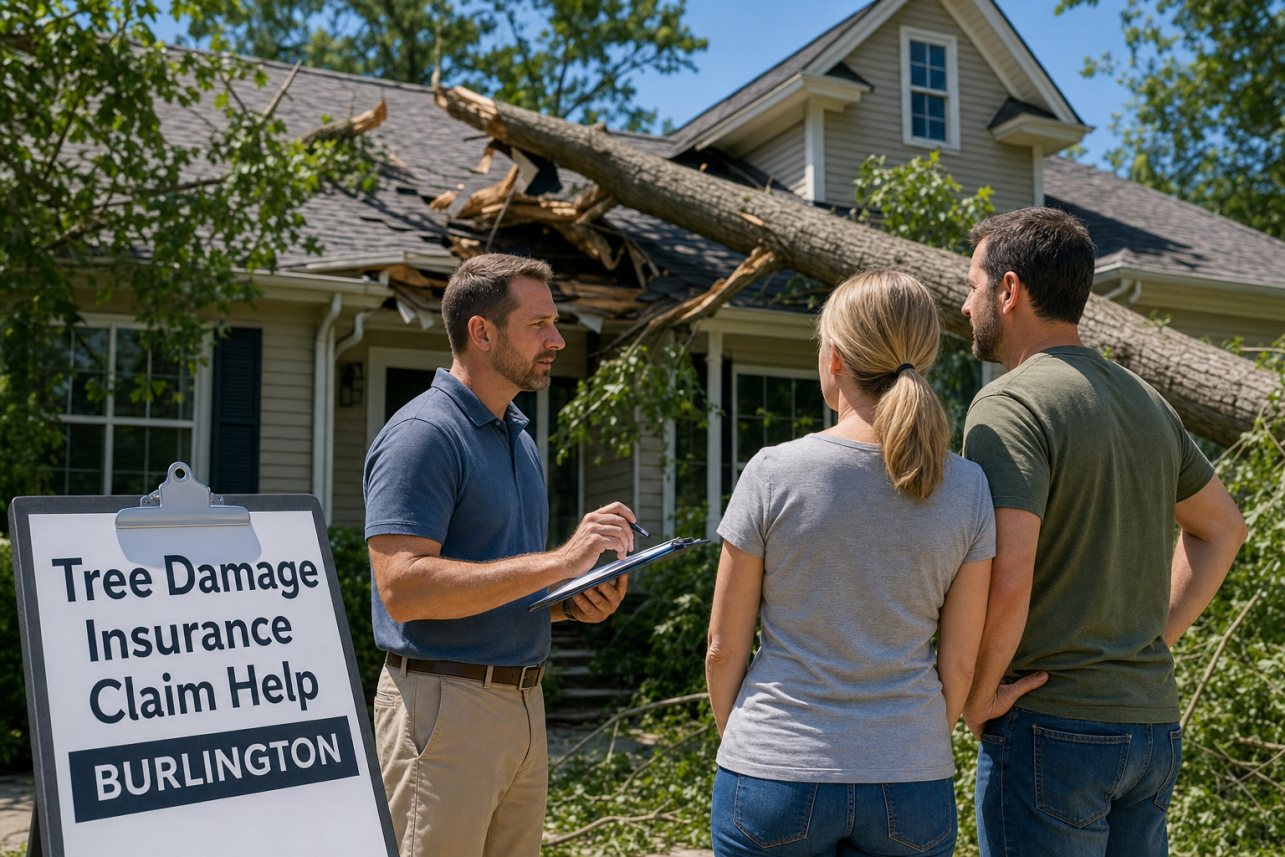
We meet the insurance company's adjuster on site, challenge low estimates line by line, and handle every call and letter. You are kept informed at each step, and nothing settles without your approval. We never guarantee a specific dollar outcome — no honest adjuster can — but we make sure your claim is presented at its full, documented value.
| What Happens | Filing on Your Own | With For The Public Adjusters |
|---|---|---|
| Damage documentation | Carrier's adjuster inspects once, often roof-level only | Full inspection: roof, attic framing, siding, interior, grounds, with photo and moisture evidence |
| Scope of the estimate | Carrier's software estimate, frequently missing decking, framing, and code upgrades | Independent line-item estimate at real Alamance County contractor pricing |
| Tree removal costs | Often capped or partially denied as 'debris removal' limits | Removal, hauling, and stump costs presented under the correct coverage parts |
| Disputed causation (rot vs. wind) | Homeowner's word against the carrier's engineer | Arborist reports, weather data, and impact-path documentation |
| Negotiation | You accept, argue informally, or hire a lawyer | Formal rebuttals, supplements, and appraisal invoked when needed |
| Your time investment | Dozens of hours of calls, emails, and estimates | We handle the claim; you approve the settlement |
Commonly Overlooked In The Public Adjusting Industry
- Fractured roof decking and trusses under the impact point — Carrier adjusters often inspect from the roof surface and never enter the attic, so structural damage hidden beneath intact-looking shingles goes unpaid.
- Debris removal sub-limits stacked with the main coverage — Many policies add a separate 5% debris allowance on top of the dwelling limit, but adjusters frequently lump removal into the repair estimate and shortchange it.
- Matching requirements for shingles and siding — North Carolina claims practice often supports replacing full slopes or elevations when materials can't be matched, yet initial estimates pay only for the struck section.
- The electrical service mast and weatherhead — Homeowners assume the power company fixes everything at the connection point, but the mast on the house is the owner's — and it's a covered, claimable repair.
- Deductible recovery through subrogation on a neighbor's negligent tree — If the neighbor had documented notice the tree was hazardous, your carrier can recover your deductible for you — but almost nobody preserves or submits that proof.
- Landscaping, fencing, and irrigation crushed during removal — Damage caused by crane trucks and dragged trunks during cleanup is part of the loss, but it happens after the adjuster's inspection and rarely makes the estimate.
- Code-upgrade costs on older Burlington homes — Roofs and porches built decades ago must be rebuilt to current code, and ordinance-or-law coverage pays for it — if someone actually itemizes it in the claim.
- Hidden moisture from the gap between impact and tarping — Rain enters between the tree strike and emergency cover-up, and slow interior staining that appears weeks later gets wrongly labeled pre-existing unless it's tied back to the loss date.
Case Studies
Case Study #1
Situation: A homeowner off South Church Street in Burlington had a mature water oak split during a July thunderstorm, dropping a limb the size of a small tree across the back half of the roof and through the screened porch.
Problem: The carrier's adjuster approved tree removal from the roof and a small repair allowance for shingles, but denied the porch framing and interior ceiling damage, claiming the water staining was 'pre-existing wear' rather than storm-related.
Investigation: We documented the strike path from limb to roof deck, pulled attic photos showing fresh fractured rafters directly under the impact zone, and obtained NOAA storm data confirming 60+ mph gusts in Alamance County that evening. We also had a licensed contractor open the porch ceiling to show crushed framing, not rot.
Findings: The interior staining lined up exactly with the fractured decking, and the porch header was snapped, not deteriorated. The carrier's original estimate also omitted code-required decking replacement and used below-market Burlington labor rates.
Solution: We prepared a line-item rebuttal estimate, submitted the engineering-supported causation evidence, and invoked the appraisal clause when the carrier's second offer still excluded the porch structure.
Outcome: The claim settled at $47,300 — nearly four times the original $12,100 offer — covering full roof replacement on the damaged slopes, porch reconstruction, and interior repairs.
Lesson: When a tree hits a roof, the visible shingle damage is rarely the whole story. Impact damage travels into decking, rafters, and interior finishes, and carriers routinely miss or dispute it unless someone documents the full strike path.
Case Study #2
Situation: A retired couple near Lake Mackintosh had their neighbor's dying pine fall across the property line during an ice storm, crushing a detached garage and taking down the electrical service mast to the house.
Problem: Their carrier offered $8,500 and told them to pursue the neighbor for the rest. The neighbor's insurer denied liability, and the couple was stuck with a garage they couldn't use and no clear path forward.
Investigation: We reviewed both policies, photographed the pine's root ball and trunk, and collected written statements plus a certified arborist's report showing the tree had visible decay the neighbor had been notified about twice in writing.
Findings: Their own policy actually covered the full garage rebuild, contents, and the service mast under separate coverage parts the first adjuster never applied. The documented prior notice to the neighbor also created a valid negligence claim their carrier could pursue through subrogation.
Solution: We re-presented the claim under the correct coverage sections — Coverage B for the structure, Coverage C for stored tools and equipment, and additional coverages for debris removal and the electrical repair — with a detailed replacement-cost estimate.
Outcome: The settlement increased to $41,800, the couple recovered their deductible through the carrier's subrogation against the neighbor, and the garage was rebuilt to current code.
Lesson: Whose tree fell matters far less than most Burlington homeowners think. Your own policy usually pays first, and documented prior notice of a hazardous tree can get your deductible back later.
| Scenario | Who Usually Pays | What It Depends On |
|---|---|---|
| Your tree falls on your house | Your homeowner's policy | Storm or accidental cause; damage to a covered structure, not just the yard |
| Neighbor's tree falls on your house | Your policy first; neighbor's insurer possibly later | Whether the neighbor had written notice the tree was dead or hazardous — that opens subrogation and deductible recovery |
| Your tree falls on the neighbor's property | Their policy first | Your liability coverage only enters if you knowingly ignored a hazardous tree |
| Tree falls in the yard, hits nothing | Often not covered | Most policies only pay removal when the tree strikes a covered structure or blocks a driveway or ramp |
| Tree crushes your car in the driveway | Your auto policy (comprehensive), not homeowner's | Whether you carry comprehensive coverage; homeowner's won't pick this up |
| Tree takes down your power line or service mast | Homeowner's policy for the mast; utility for their lines | The service mast and weatherhead on your house are your responsibility and are claimable |
| Tree damages fence, shed, or detached garage | Homeowner's policy, Coverage B | Other-structures limits are usually 10% of dwelling coverage — large garages can exceed it |
| Dead tree the carrier says you neglected | Disputed — often denied | Independent arborist evidence of trunk soundness and wind speed data can reverse the denial |

Reviews
A red maple came down on our house during the April storms and State Farm offered us less than half of what the roofer quoted. For The Public Adjusters found broken trusses in the attic the insurance adjuster never even looked at. Final settlement covered the whole roof, the trusses, and our kitchen ceiling. Worth every penny of the fee.
Denise M., Burlington NC
Our claim was denied because the carrier said the tree was 'rotten' and we should have removed it. These folks brought in an arborist who proved the trunk was sound and the failure was wind-driven. Denial reversed, claim paid in full including the fence and shed the tree took out on the way down. I never would have known how to fight that on my own.
Carlos R., Alamance County
Very responsive team. They handled everything after a pine crushed our carport — the paperwork, the estimates, three rounds of back-and-forth with the insurance company. Only reason for four stars is the process still took about three months, but that was the carrier dragging its feet, not them. We got roughly triple the first offer.
Patricia H., Burlington
Frequently Asked Questions
How Does Tree Damage Insurance Claim Help Burlington Homeowners Actually Work After A Storm?
When a tree comes down on your Burlington home, the process starts with documentation before anything is moved. We photograph the tree, the point of impact, and every affected area — roof decking, trusses, ceilings, siding, fences, and interior water intrusion that often follows a puncture.
Next, we review your policy in detail. Most homeowners policies in North Carolina cover tree removal only when the tree damages a covered structure, and they often cap removal costs at $500 to $1,000 per tree. Knowing those limits before you hire a tree crew matters, because paying out of pocket without documentation can cost you at claim time.
From there, For The Public Adjusters, Inc. prepares an independent damage estimate and files or reopens the claim on your behalf. We meet the insurance company's adjuster at your property, walk the damage together, and push back when their scope misses hidden issues like cracked rafters or saturated insulation.
Alamance County saw significant tree losses during recent ice storms and summer wind events, and we've handled claims across Burlington neighborhoods from West Davis Street to St. Marks Church Road. Our fee is a percentage of the recovered amount, so we only get paid when you do. That structure keeps our interests aligned with yours from the first inspection to the final check.
My Neighbor's Tree Fell On My House In Burlington — Whose Insurance Pays?
This surprises a lot of people: in most cases, your own homeowners policy pays, even though it was your neighbor's tree. North Carolina follows the general rule that the property owner where the tree lands files the claim, unless you can prove the neighbor was negligent.
Negligence usually means the tree was visibly dead, diseased, or leaning, and the neighbor knew or should have known it was a hazard. If you sent a letter or have photos showing the tree's condition before it fell, your insurer may pursue the neighbor's carrier through subrogation — but you still file with your own company first.
The practical concern is your deductible and how the damage is scoped. Insurance adjusters sometimes treat a fallen tree as a simple roof patch when the impact actually cracked framing members, shifted the ridge line, or opened gaps that let rain into wall cavities. Those hidden damages are exactly what a public adjuster in Burlington is trained to find and document.
We also help sort out the removal question. If the trunk is on your structure, removal to get it off the house is typically covered; hauling debris from the yard may fall under a separate, capped limit. For The Public Adjusters, Inc. reads your specific policy language and builds the claim so nothing covered gets left on the table.
The Insurance Company Already Paid My Claim, But It Won't Cover The Repairs. Can You Still Help?
Yes, and this is one of the most common situations we handle in Alamance County. Accepting a first check does not close your claim in North Carolina. You generally have the right to submit supplemental documentation and request additional payment when the initial settlement falls short of actual repair costs.
Underpayment on tree losses usually happens for a few predictable reasons. The carrier's adjuster measured only the visible roof damage and missed structural impact to trusses or rafters. Water intrusion damage to insulation, drywall, and flooring was scoped too lightly. Or the estimate used pricing that local Burlington contractors simply won't work for, especially after a widespread storm when crews are booked solid.
Our team re-inspects the property, often bringing in a contractor or engineer when framing damage is in question. We then prepare a line-by-line supplemental estimate and negotiate directly with the insurance company, so you're not stuck arguing with a claims desk between work shifts.
Time matters, though. Policies contain deadlines for supplemental claims and suit limitations, and evidence gets harder to document once repairs begin or weather causes further deterioration. If you're sitting on a settlement check that won't cover what your roofer quoted, call us before you sign a contractor agreement or cash anything marked as final payment. A free review of your estimate and policy costs you nothing and often reveals thousands in overlooked coverage.
What Does Tree Damage Insurance Claim Help Burlington Residents Can Hire Actually Cost, And Is It Worth It?
For The Public Adjusters, Inc. works on contingency, which means there's no upfront fee and no hourly billing. We charge a percentage of the amount recovered on your claim — and if we recover nothing, you owe nothing. The initial policy review and damage inspection are free.
Whether it's worth it depends on the gap between what the insurer offered and what repairs truly cost. On tree strikes, that gap is often substantial. A carrier estimate might cover shingle replacement over the impact zone while ignoring a cracked truss that requires an engineer's repair plan, or missing the code-upgrade coverage that applies when Burlington's building inspections require decking or ventilation brought up to current standards.
Industry studies have repeatedly shown that professionally represented claims settle significantly higher than unrepresented ones. Even after our fee, most clients net more than they would have on their own — and they skip weeks of phone calls, estimate disputes, and paperwork.
There are cases where we'll tell you not to hire us. If the damage is minor and the insurer's offer is fair, we'll say so during the free inspection. That honesty is why so much of our tree damage insurance claim help Burlington work comes from referrals across Alamance County. When the loss is significant, having a licensed public adjuster who documents everything, understands North Carolina policy language, and negotiates for you is usually the difference between a patch job and a fully funded repair.
Does Homeowners Insurance Cover Tree Removal And Debris Cleanup, Or Just The Structural Damage?
It depends on where the tree landed, and this is where a lot of Burlington claims get shortchanged. If a tree strikes a covered structure — your house, detached garage, fence, or shed — most policies pay to remove it as part of the repair. If it falls in the yard and hits nothing, coverage is usually limited to a small debris removal allowance, often $500 to $1,000 per tree, and only if the cause was a covered peril like wind or lightning.
The problem we see across Alamance County is carriers applying that small yard-debris cap to trees that actually damaged a structure. A mature oak that crushes a fence line and then rests in the yard should be handled under structure repair, not the debris limit. That distinction can change the payout by thousands of dollars.
There's also the cost of the crane. Getting a large tree off a roof in an older Burlington neighborhood with tight lot lines often requires crane work that runs $2,500 or more by itself. Adjusters sometimes estimate a simple cut-and-haul price instead. We document exactly what removal actually required — access constraints, equipment, tarping, emergency stabilization — so the estimate reflects real local costs, not a generic line item.
Before you accept a settlement that lumps everything under a debris cap, have the policy language and the loss reviewed. The wording matters, and so does how the damage is categorized.
How Long Do I Have To File A Claim For Tree Damage In North Carolina, And Can I Wait Until Repairs Are Quoted?
In North Carolina, most homeowners policies require prompt notice of a loss — typically wording like "as soon as practicable" — and the statute of limitations for suing on a property policy is generally three years, though some policies shorten contractual deadlines to as little as one or two years. The safe move is to report the claim within days, not weeks.
That said, reporting the claim and settling the claim are two different things. You do not have to accept the first estimate, and you shouldn't wait for contractor quotes before opening the claim. Report it promptly, then take the time to get the damage properly scoped.
What you should do immediately: prevent further damage. Tarp the roof, board broken windows, and keep every receipt — emergency mitigation is typically reimbursable. What you should not do is authorize full repairs or let the tree company haul everything away before the loss is thoroughly documented.
Burlington and the surrounding Alamance County area see recurring wind events, and after a widespread storm carriers get flooded with claims. Files opened late or with thin documentation tend to get rushed, low evaluations. As a public adjusting firm, we handle the notice requirements, deadlines, and proof-of-loss paperwork so nothing lapses while the damage is being properly measured. If your claim is already open and stalling, deadlines still apply — don't let a slow carrier run out your clock.
What Should I Photograph And Save Before The Tree Company Removes The Tree From My Burlington Property?
Document everything before a single limb gets cut, because once the tree is gone, so is your best evidence. Insurance carriers evaluate what they can see, and a cleaned-up property makes it easy to minimize what happened.
Start with wide shots showing the whole tree in relation to the house — where it stood, where it fell, what it's resting on. Then move close: the point of impact on the roof, cracked or shifted framing visible from the attic, bent gutters, crushed HVAC units, damaged siding and fencing along the fall path. Photograph the trunk base and root ball too; it shows the tree was healthy and wind-thrown rather than rotted, which matters if the carrier tries to argue neglect.
Inside, check ceilings and walls under the impact area for cracks, nail pops, and water staining, and photograph them dated. Roof impacts often rack framing in ways that show up indoors before they're obvious outside.
Save every document: the tree service invoice (itemized, with crane charges listed separately), tarping receipts, and any emergency repair costs. In Burlington, large removals after a storm can be significant expenses, and an itemized invoice is far easier to get reimbursed than a lump sum.
If the tree is on the house and removal can't wait, at minimum take video walking the entire scene before crews start. When we're brought in early, we photograph and scope the loss ourselves — but homeowner photos from day one are always valuable.
The Adjuster Blamed The Damage On Rot Or Wear And Tear — Is Tree Damage Insurance Claim Help Burlington Homeowners Can Turn To Able To Fight That?
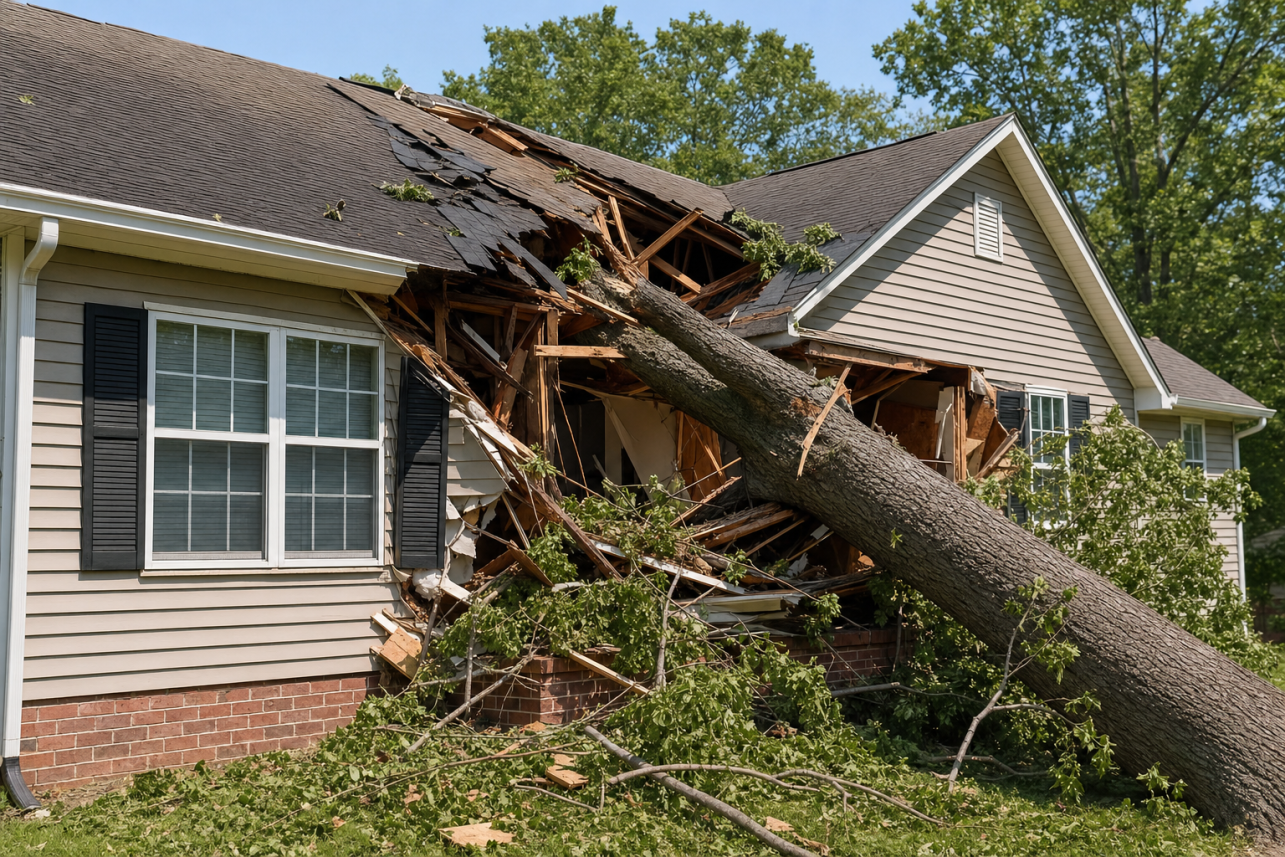
Yes, and this is one of the most common disputes we take on. Tree damage insurance claim help Burlington property owners actually need often starts right here: the carrier's adjuster says the tree was decayed, the roof was already worn, or the fence was old, and uses that to deny or drastically reduce the claim. Wear and tear is excluded under standard policies, so it's a convenient label — but it has to be proven, not just asserted.
Our team pushes back with evidence. We examine the trunk and root structure for signs the tree was sound and failed from wind load, pull weather data for the date of loss showing gust speeds in Alamance County, and document fresh breakage patterns that are inconsistent with slow decay. On the structure side, we distinguish impact damage — split rafters, punctured decking, creased shingles along the strike line — from ordinary aging, which looks completely different up close.
We also review how the denial was written. Under North Carolina's fair claims practices requirements, a carrier must have a reasonable basis for denying coverage. A drive-by opinion that a tree "looked rotten" from a photo rarely holds up against a documented inspection.
If you've received a denial or a lowball settlement blamed on pre-existing conditions, don't repair over the evidence yet. Bring us the denial letter and the adjuster's estimate. We work on contingency, we inspect the loss ourselves, and if the facts support coverage, we build the file that forces a real second look.
A Tree Punched A Hole In My Roof And Rain Is Coming — Should I Tarp It Before The Adjuster Sees It, And Will I Get Reimbursed?
Yes, tarp it — and do it quickly. Every homeowners policy written in North Carolina requires you to take reasonable steps to prevent further damage after a loss. If you leave the roof open and rain soaks your ceilings and insulation over the next few days, the carrier can deny that secondary water damage as neglect, even though the original tree strike was covered.
Emergency tarping, board-up, and temporary shoring are reimbursable under almost every policy as part of the claim. Keep the invoice from the tarping crew, and photograph the opening before the tarp goes on so nothing is hidden from the record.
Here in Burlington and across Alamance County, summer thunderstorms often follow each other within days, so waiting for the insurance company's adjuster before protecting the home is a mistake we see constantly. You do not need permission to make temporary repairs — only permanent repairs should wait until the scope of damage is agreed on.
When For The Public Adjusters, Inc. takes over a claim, we make sure those emergency expenses are itemized separately and paid in full, not lumped into a lowball structural estimate. We also document the interior — attic decking, insulation, drywall moisture readings — because water that entered through the puncture often causes damage the carrier's adjuster never climbs up to find. Tarp first, document everything, then let us handle the negotiation.
The Tree Hit My Fence And Detached Garage, Not The House. Does Tree Damage Insurance Claim Help Burlington Property Owners With Other Structures Too?
It does, and this is one of the most underpaid categories we handle. Fences, detached garages, sheds, carports, gazebos, and even retaining walls fall under Coverage B — Other Structures — on a standard homeowners policy. That coverage is typically capped at 10% of your dwelling limit, which is usually plenty for a fence line or a single-car detached garage in Burlington.
The problem is how carriers price these losses. Fence damage is often estimated per broken picket or panel rather than accounting for the full run that needs replacement to match. A tree that crushes forty feet of privacy fence rarely leaves the adjacent sections reusable, but the first estimate frequently pretends it does. Detached garages get the same treatment — a crushed corner gets patched on paper when the roof structure and framing actually need rebuilding.
Our team measures and documents every structure on the property, including damage the homeowner may not have noticed, like a cracked slab under a shifted shed or gutter and siding damage from limb strikes on the way down.
One thing to check: Coverage B often excludes structures used for business. If you run equipment or inventory out of that garage, tell us up front so we can review your policy language before the carrier raises it. Providing tree damage insurance claim help Burlington neighborhoods have relied on means knowing these traps before they cost you money.
My Settlement Check Was Much Smaller Than The Repair Estimate Because Of 'depreciation.' Is That Money Gone For Good?
Usually not — but you have to know how to recover it, and the insurance company won't chase you down to explain.
Most homeowners policies in North Carolina pay replacement cost, but they pay it in two stages. The first check is the actual cash value: the replacement cost minus depreciation for the age and condition of your roof, siding, or fence. The withheld depreciation — often thousands of dollars on a tree-damaged roof — is called recoverable depreciation, and the carrier releases it after you complete the repairs and submit proof, typically a contractor's invoice.
Where Burlington homeowners get hurt is threefold. First, some never realize a second payment exists and simply patch what the first check covers. Second, policies impose a deadline to complete repairs and claim that depreciation, sometimes as short as 180 days. Third, some policies — especially older roofs on homes in established Alamance County neighborhoods — carry a roof schedule or ACV-only endorsement, meaning depreciation is never recoverable at all. That distinction changes the entire negotiating strategy.
When we review a claim, we read the actual policy language, verify whether the depreciation applied was even calculated correctly (carriers frequently over-depreciate), and make sure the replacement cost figure itself reflects real local repair pricing before depreciation is subtracted. A depreciated percentage of an artificially low estimate shortchanges you twice. If your check felt small, bring us the estimate and the policy — that gap is often where the real money is.
How Long Does A Tree Damage Claim Take To Settle In Burlington, And Does Hiring A Public Adjuster Slow It Down?
A straightforward claim — one tree, clear roof damage, cooperative carrier — can settle in three to six weeks. Disputed claims, underpaid claims, or losses after a major storm event can stretch to several months, especially when a hurricane remnant or ice storm hits the whole Piedmont at once and adjusters are triaging thousands of files.
North Carolina law gives carriers deadlines: they must acknowledge your claim promptly and pay within a reasonable time once liability and amount are agreed. The word 'agreed' is where claims stall. If the carrier's estimate is thousands below what Burlington roofers and contractors will actually charge, the clock effectively stops while you argue.
Does professional representation slow things down? In our experience it's the opposite. Getting tree damage insurance claim help Burlington homeowners can trust means the documentation package — photos, measurements, moisture readings, engineer reports when needed, and a line-item estimate — arrives complete the first time. Carriers delay claims by requesting information piecemeal; we remove that excuse.
When a carrier does drag its feet unreasonably, we know the escalation paths, including invoking the appraisal clause in your policy or filing a complaint with the North Carolina Department of Insurance. Most homeowners don't know those tools exist, let alone how to use them.
Realistic expectation: hiring us on a disputed claim may add a few weeks compared to accepting the first low offer — but accepting a payment that won't rebuild your home isn't fast, it's just unfinished. The goal is a full settlement, once.
Is There Tree Damage Insurance Claim Help Burlington Rental Property Owners And Landlords Can Use, Or Is It Only For Homeowners?
We work with landlords and rental property owners across Alamance County just as often as we work with owner-occupants. If you carry a landlord or dwelling fire policy on a rental house near Elon, Glen Raven, or downtown Burlington, you have the same right to a fair settlement as any homeowner — and often more at stake, because a damaged rental can't collect rent.
Landlord claims come with their own complications. Loss-of-rents coverage is frequently overlooked or underpaid, even though most dwelling policies include it. If a fallen oak makes a unit uninhabitable while the roof and framing are repaired, you may be entitled to the rental income you lost during that period, and we document and pursue that alongside the structural damage.
Tenant-caused delays, access issues, and disputes over who reported the damage first can also muddy a landlord claim. We coordinate the inspection, gather statements and photos from tenants when needed, and keep the carrier focused on the actual damage rather than side issues.
One caution: dwelling policies for rentals are often written on an actual-cash-value basis rather than replacement cost, which changes how depreciation is handled. We review your specific policy language before the claim strategy is set, so you know exactly what recovery to expect. If you own multiple rentals in Burlington that were hit in the same storm, we can handle them as coordinated claims, which usually strengthens each one.
My Contractor Found Hidden Damage After Repairs Started — Cracked Rafters The Adjuster Never Saw. Can The Claim Be Reopened?
Yes, and this happens constantly with tree strikes. The initial inspection is done from the outside or from an attic hatch, and the real damage — split rafters, sheared trusses, cracked ceiling joists, compromised load paths — doesn't show itself until a roofer opens the roof up. That hidden damage is still part of the same covered loss.
The mechanism is called a supplemental claim. We notify the carrier in writing, document the newly discovered damage with photos, contractor findings, and when necessary an engineer's assessment, and submit a revised scope and estimate. The insurer owes payment for all damage caused by the covered event, not just what its adjuster happened to see on day one.
Timing matters. Tell your contractor to stop and photograph everything before covering the framing back up. Once new sheathing and shingles go on, proving the extent of structural damage gets much harder. We often ask carriers to send a re-inspection while the roof is open.
In Burlington we see this most with older housing stock — homes off Church Street, in West Burlington, and around Graham with original framing that fractures rather than flexes when a mature hardwood lands on it. If your repairs have stalled because the supplement was denied or lowballed, bring us the file. As a Burlington public adjuster team, reopening underpaid tree claims and pushing supplements through to payment is a large part of what we do.
The Insurance Company Says I Have To Use Their Preferred Contractor And Their Estimate. Do I Have To Accept That?
No. In North Carolina, you have the right to choose your own contractor. Carrier 'preferred vendor' programs are convenient for the insurance company — the pricing is pre-negotiated in their favor — but nothing in your policy or state law forces you to use their contractor or accept their contractor's estimate as the final word on your claim.
The practical problem is that the carrier's estimate often becomes the settlement ceiling unless someone challenges it line by line. Preferred-vendor estimates on tree claims routinely omit things like structural framing repairs, code-required upgrades, matching shingles across the full slope, interior water damage, and proper debris disposal. Your own contractor may quote the real cost, but the carrier will dismiss that quote as 'inflated' unless it's backed with documentation.
That's exactly the gap we close. We prepare an independent, itemized estimate using the same industry pricing software carriers use, tied to photographs and measurements from our own inspection. When the numbers are defended properly, insurers negotiate; when they're not, homeowners get pressured into the cheaper scope.
This is where professional tree damage insurance claim help Burlington homeowners can hire changes the outcome. For The Public Adjusters, Inc. works only for you — never the carrier — and our fee comes from the recovery we negotiate, so our interest is a full and fair settlement. Use whatever contractor you trust to do the work. Just don't let the insurer's vendor define what your home is owed.
A Tree Came Down In My Yard But Missed The House Completely. Will Insurance Pay Anything Toward Removal?
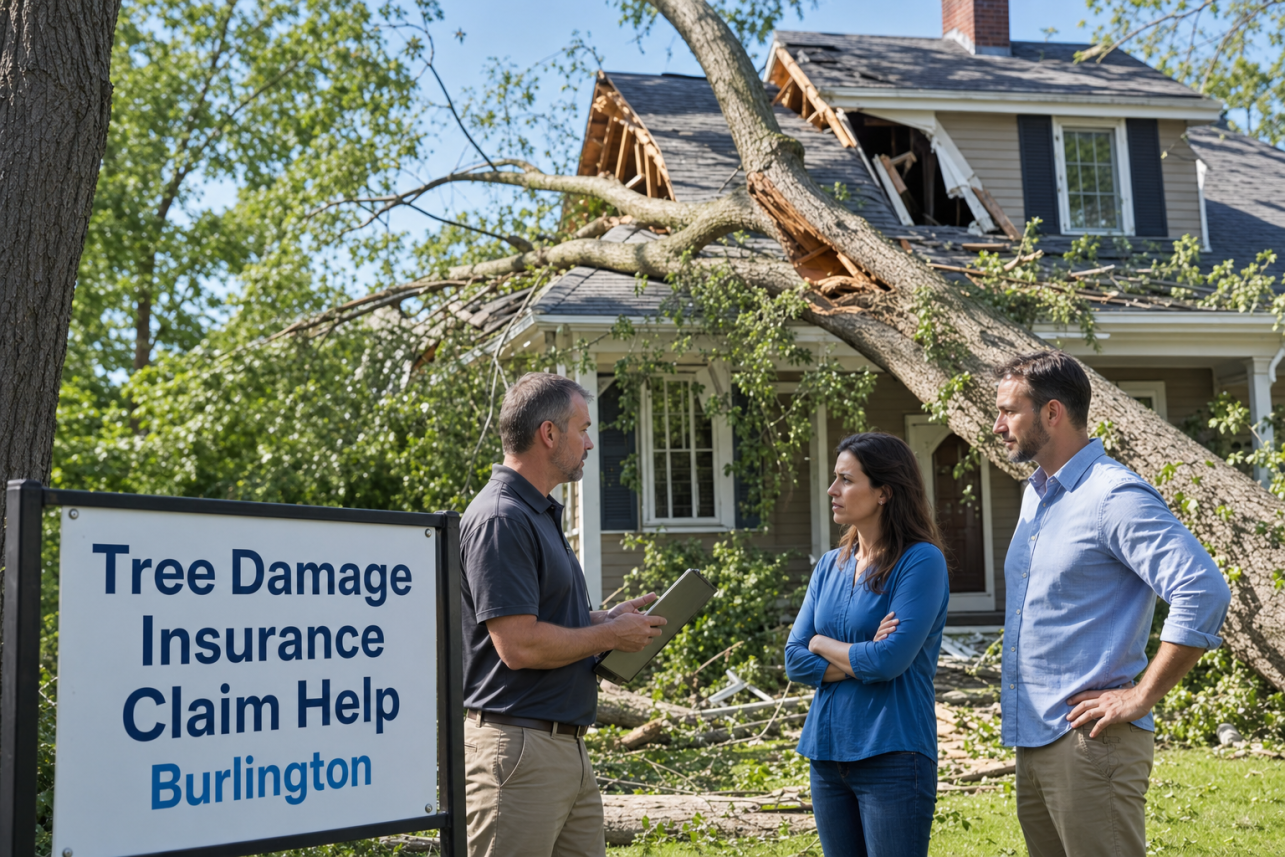
Usually not, and it's one of the most common surprises after a storm rolls through Alamance County. Standard homeowners policies pay for tree removal when the tree damages a covered structure — the house, an attached deck, a fence, a shed, a detached garage — or, under many policies, when it blocks a driveway or a handicap-access route. A tree lying in open yard, damaging nothing, typically isn't covered.
That said, don't write the claim off before someone actually looks. We regularly find covered damage the homeowner missed: a clipped gutter, a cracked fence rail, a bent HVAC line set, gouged siding, a crushed retaining wall, or root upheaval that lifted a walkway. If the tree touched any covered structure on the way down, the removal and debris costs connected to that damage generally come into play, subject to your policy's tree-removal limit — often $500 to $1,000 per tree with a cap per storm.
Also check whether the tree blocked your driveway. In Burlington's older neighborhoods with long single-lane drives, a downed pine across the driveway frequently triggers coverage even when the house is untouched.
If you're unsure, take photos before any cleanup and let a public adjuster in Burlington review your policy language. The review costs you nothing with our firm, and we'll tell you honestly whether there's a viable claim or whether you're better off just paying the tree crew and moving on. Straight answers up front save everyone time.
Local Relevance
Burlington sits squarely in the Piedmont's summer storm corridor. Between June and September, severe thunderstorms roll through Alamance County with straight-line gusts, and the remnants of tropical systems moving up from the coast can drop days of saturating rain. Wet soil plus wind is how big trees come down — often onto older homes.
Many Burlington neighborhoods, especially those built in the mill-town decades, have mature hardwoods towering over houses with original framing and aging roofs. When a large oak lands on one of these homes, the damage rarely stops at the shingles. Insurers sometimes try to attribute part of the loss to age or wear, which is exactly the kind of dispute we push back on.
Summer is also when neighbors' trees cause trouble. If the tree that hit your house stood in the yard next door, coverage questions get complicated fast — generally your own policy responds first, but your neighbor's liability can come into play if the tree was visibly dead or neglected. The Insurance Information Institute publishes helpful consumer guidance on how fallen-tree coverage typically works, and we handle the specifics for Burlington policyholders every storm season.
Burlington's older neighborhoods pair large, decades-old oaks and pines with homes whose roof framing was built to earlier standards, so a single tree strike here often causes structural damage that extends well beyond the visible impact point — which is why a thorough attic and framing inspection, not just a roof-top look, tends to change what these claims are worth.
A Tree Hit Your Home? Talk To Us Before You Accept The Insurer's Number
For The Public Adjusters, Inc. serves homeowners throughout Burlington and Alamance County. The inspection and policy review are free, we are licensed and bonded in North Carolina, and you pay nothing unless your claim pays. Storm season doesn't wait — and neither should your claim.
Call us: (336) 331-8300
Helpful Resources
- NCDOI Public Adjusters Guide
- Insurance Information Institute (III)
- North Carolina Department of Insurance consumer resources — State regulator overseeing insurers and public adjusters in NC
- Insurance Information Institute guidance on fallen trees and coverage — Nonprofit consumer education on how homeowners insurance handles tree damage
Serving Burlington · Alamance
Last updated: July 29, 2026