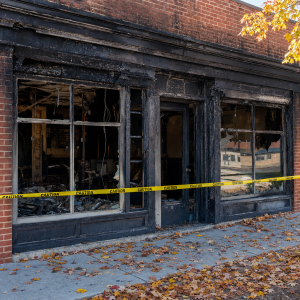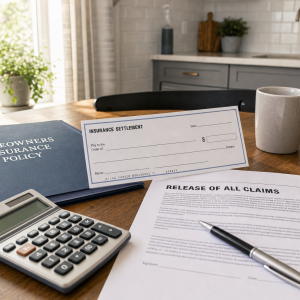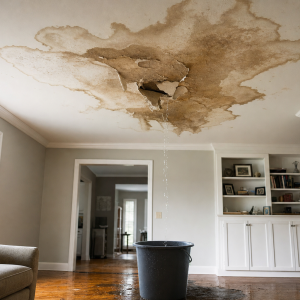

When a disaster like a fire or a hurricane forces you out of your home or business, the first thing on your mind is, “Where do we go now?” That’s when you turn to your insurance company. This is where Loss of Use coverage comes in—it’s also known as Additional Living Expenses (ALE) for homeowners or Extra Expense for businesses, and it’s the part of your policy that acts as a financial lifeline when you’re displaced. A common question from policyholders is, “What is loss of use coverage?”
Its entire purpose is to cover the extra costs you rack up while operating from a temporary location so your property can be rebuilt or repaired. It’s designed to help your family or business maintain its normal standard of living, even when life is anything but normal.
Unlocking Your Financial Lifeline After a Disaster
Picture it: your home is gone. You have no kitchen, no beds, no place to go. Where will you sleep tonight? How will you get the kids ready for school tomorrow? This is the exact chaos Loss of Use coverage is meant to solve.
This isn’t some bonus feature or a favor from your insurance carrier; it’s a critical benefit you’ve been paying for with every single premium. It’s there to bridge the massive financial gap between your regular monthly budget and the sky-high costs of being forced out of your home.
But here’s the hard truth: getting big insurance companies like State Farm or Allstate to pay what you’re rightfully owed is often a bare-knuckle fight. They are notorious for dragging their feet on payments, nitpicking every receipt, or lowballing the amount you need to actually maintain your lifestyle. They are not on your side. Knowing your rights is your first line of defense. You have to be ready to dispute their lowball offers and fight back.
What Does Loss of Use Actually Cover?
Loss of Use is specifically designed to cover any necessary and reasonable increase in your living or operating expenses. The goal is to keep your household or business running as normally as possible.
To make it clearer, we’ve broken down what’s typically covered in the table below.
Expenses Covered by Loss of Use
| Expense Category | Description & Examples |
|---|---|
| Temporary Housing | Covers the cost of a hotel, motel, or a rental home/apartment that’s comparable in size and quality to your damaged home. |
| Increased Food Costs | If you’re forced to eat out because you don’t have a kitchen, this covers the difference between your restaurant bills and your normal grocery budget. |
| Miscellaneous Expenses | This catches all the other necessary costs, like laundry services, pet boarding, extra gas money for longer commutes, and moving or storage fees. |
These are the essentials you’ll need to document meticulously to dispute the insurance company’s inevitable lowball tactics.

This image hits home because it shows the immediate, gut-wrenching need for stability that this coverage is supposed to provide.
So, how much can you expect? Most policies set Loss of Use limits at 20–30% of your dwelling coverage. In plain English, if your home is insured for $300,000, you likely have between $60,000 and $90,000 in ALE benefits to draw from. You can find more details about these kinds of policy limits on industry sites like PlymouthRock.com.
What Your Policy Covers vs. What Insurers Deny
On paper, your policy’s Loss of Use coverage sounds simple. It’s supposed to cover the extra costs you rack up when you’re forced out of your home, allowing you to maintain your normal standard of living.
But here’s the reality: insurance giants like Allstate and State Farm love to build their entire defense around just two words: “reasonable” and “necessary.” While your policy is meant to make you whole, the company adjuster has the power to question every single receipt you submit. It’s a classic move designed to lowball your claim and protect their profits.
Common Expenses and Insurer Pushback
You can—and absolutely should—claim a whole range of expenses that go far beyond just a hotel room. These aren’t luxuries; they’re legitimate costs that pop up the second you’re displaced.
- Temporary Housing: This could be rent for a comparable house or apartment, or the cost of a hotel stay.
- Increased Food Costs: If you don’t have a kitchen, you’re eating out. This covers the difference between your normal grocery spending and those higher restaurant bills.
- Laundry Services: No washer and dryer? Those laundromat costs are covered.
- Pet Boarding: If your temporary rental won’t allow your pets, the cost to board them safely is a valid expense.
- Extra Transportation: Is your new place farther from work or your kids’ school? The increased gas and mileage add up, and that’s a claimable expense.
The financial gut punch of being displaced is enormous, and this coverage exists to bridge that gap. Think about it: a family spending $150 a night on a hotel, plus extra for food and gas, could see their monthly costs skyrocket from $2,000 to over $6,600. Industry leaders like Travelers provide more insight on how these costs stack up.
Here’s a perfect example of a denial tactic you might get in writing from an adjuster.
This screenshot is a classic. The adjuster argues that a restaurant expense isn’t “reasonable,” a textbook strategy to chip away at your claim bit by bit.
The key thing to remember is that your policy covers your standard of living, not just bare-bones survival. That’s a massive distinction, and it’s critical you get your head around understanding homeowners insurance coverage in depth. The insurance company’s goal is to pay as little as they can get away with. Knowing the rules of the game is how you fight back.
Proving Your Home Is Uninhabitable to Trigger Coverage
Let’s be honest: your insurance company isn’t just going to take your word for it. Before they pay a dime for your Loss of Use claim, they’re going to demand proof that your home is genuinely unlivable. It’s your job to build an undeniable case so airtight that it shuts down their typical delay tactics and lowball denials before they even start.
This isn’t just about showing a few pictures of the damage. You have to prove the property is functionally uninhabitable—that it’s impossible to live there safely.
Your first move should be to get official documentation. Think of things like a formal order from the fire department, a notice from a local building inspector, or a civil authority order that prevents you from even accessing the property. These documents are your silver bullets. They officially declare the property unsafe, making it incredibly difficult for your insurer to argue the point.
Gathering Irrefutable Evidence
Next, you need to create a detailed visual record of the disaster zone. Grab your phone and walk through every single room, taking high-resolution photos and videos of everything. Your goal here is to show not just the obvious destruction but how it makes daily life impossible. A caved-in roof is one thing, but also document the extensive mold posing a health risk or the complete lack of running water or electricity.
You’ll quickly find that your policy feels like it’s on your side right up until the moment your insurer pushes back, forcing you to fight for every dollar you’re owed.
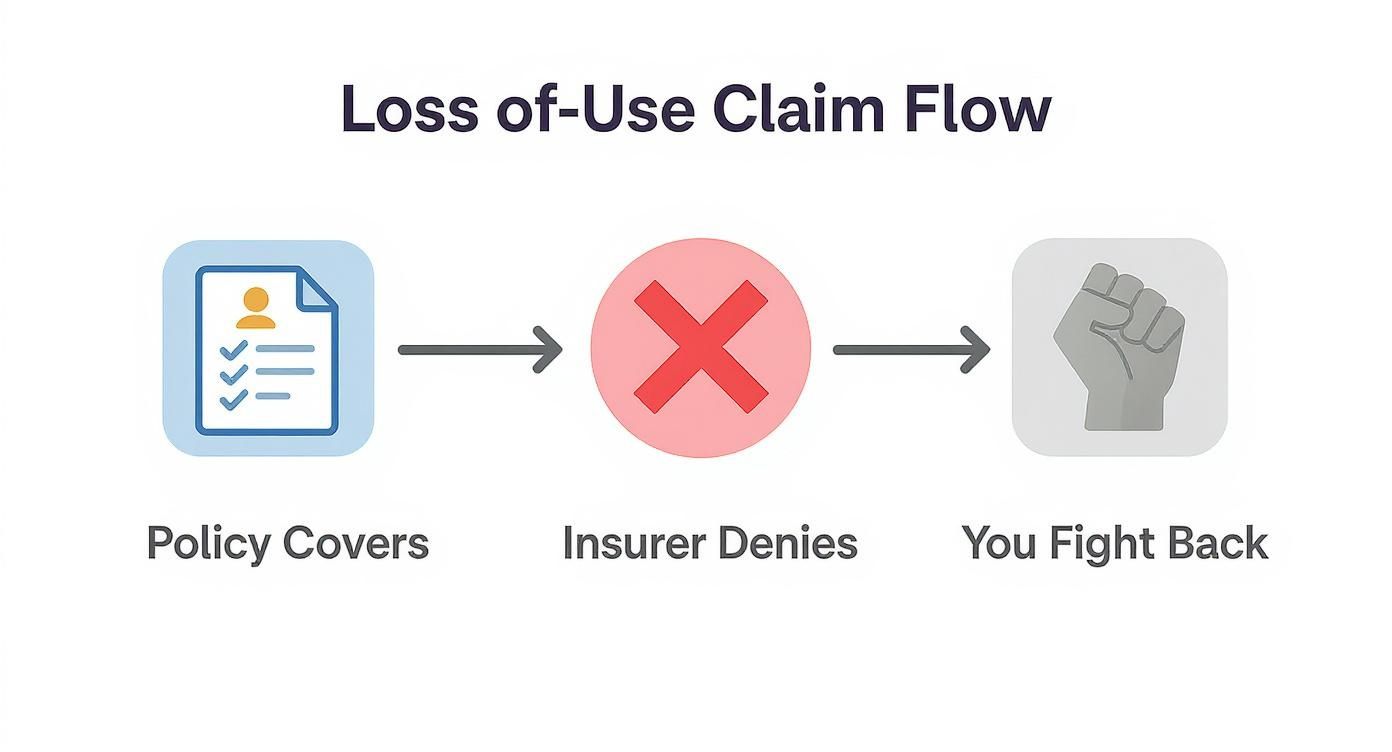
This process visualizes the common path where policyholders must actively dispute denials to secure their benefits.
Finally, bring in the experts to strengthen your case. Get a written report from a licensed contractor or an engineer that explicitly states the home is either unsafe to occupy or that the scope of repairs makes it impossible to live there during the work. This kind of expert opinion adds a layer of authority that an adjuster simply can’t ignore.
Fighting Back Against Insurer Delay and Lowball Tactics
This is where the real fight begins. Insurance companies are businesses, and their goal is to protect their bottom line. To do that, their adjusters often rely on a frustrating playbook known as the “delay, deny, defend” strategy. The goal? To wear you down until you accept a settlement that’s a fraction of what your Loss of Use coverage actually owes you.
They’ll drag their feet, go silent for weeks, and nitpick every single receipt you submit. This isn’t just poor customer service; it’s a calculated tactic. By creating financial pressure and mental exhaustion, they hope their lowball offer will start to look like your only option.
Let me be clear: their first offer is never their best offer. It’s just an opening bid in a negotiation you need to be ready to win.
Your Arsenal Against Insurer Games
You are not powerless in this fight. The key to pushing back is a methodical, almost obsessive, approach to documentation. Your first move should be to start a detailed communication log. Every time you talk to the adjuster, write down the date, time, who you spoke with, and a summary of what was said.
After every phone call, send a follow-up email confirming the conversation. This simple step creates a written record that’s hard for them to dispute later. For anything critical, use certified mail. It gives you an undeniable paper trail proving they received your documents, which is powerful leverage if things get ugly.
You might get a formal-looking letter questioning your expenses, like this one.
This kind of official denial is designed to intimidate you into giving up. But more often than not, it’s based on a weak or self-serving interpretation of your policy designed to save the insurance company money.
It’s absolutely critical that you know your rights. Every state has laws, often called the Fair Claims Settlement Practices Act, that dictate how insurance companies must behave. These laws prohibit them from using deceptive or unfair tactics to settle a claim. To learn more about navigating the claims process and protecting yourself, our guide to managing a property damage claim is an essential resource.
When an insurer deliberately creates unreasonable delays or fails to provide a valid reason for denying a legitimate expense, they may be acting in bad faith. This shifts the power dynamic, giving you leverage to demand fair treatment and the full compensation you are owed under your policy.
Common Insurer Tactics vs. Your Proactive Strategy
Insurance adjusters have a playbook of common tactics they use to minimize what they pay on Loss of Use claims. Recognizing these moves is the first step to countering them effectively.
The table below breaks down some of the most frequent games they play and gives you a clear, proactive strategy to fight back and protect your rights.
Insurer Tactic vs Your Counter-Strategy
| Common Insurer Tactic | Your Proactive Counter-Strategy |
|---|---|
| “Delay, Delay, Delay” | Follow up every phone call with an email summary. Send critical documents via certified mail to create an undisputed paper trail. |
| Requesting Unnecessary Documents | Politely ask the adjuster, in writing, to cite the specific policy provision that requires the requested document. This forces them to justify their request. |
| Issuing a Lowball Offer | Never accept the first offer. Treat it as a starting point for negotiation and respond with a counter-offer backed by your detailed records and receipts. |
| Misinterpreting Policy Language | Get a copy of your full policy (not just the declarations page). If you’re unsure about the language, consult with a public adjuster who can interpret it for you. |
| Ignoring Your Communications | Document every attempt to contact them in your communication log. If they remain unresponsive, send a formal letter threatening to file a complaint with your state’s Department of Insurance. |
Winning a Loss of Use claim isn’t just about submitting receipts—it’s about building a rock-solid case that the insurance company can’t ignore or dismiss. By staying organized and knowing their tactics, you put yourself in the driver’s seat.
Documenting Every Expense to Win Your Claim
When you’re in a dispute with your insurance company, the person with the best records wins. Period. The entire strength of your Loss of Use claim hinges on your documentation, because adjusters from companies like Allstate are trained to challenge every single expense you submit. Proof is your power.
Your strategy has to be meticulous record-keeping. Start by creating a dedicated folder—physical or digital—to track every single receipt. This means temporary housing, every meal out, extra gas mileage, laundry services, and any other cost that is above and beyond what you’d normally spend. This isn’t just about collecting papers; it’s about building an arsenal of evidence.
Creating an Airtight Financial Record
Next, you need to organize this evidence in a way that shuts down the adjuster’s main line of attack before they can even launch it. You have to build a detailed spreadsheet that clearly separates your ‘additional’ living expenses from your ‘normal’ budget.
Here’s a simple example of an expense tracking spreadsheet you can build to organize your Loss of Use claim documentation.

This kind of spreadsheet makes it impossible for an adjuster to argue that you’re mixing normal costs into your claim. By clearly itemizing each additional expense, you construct an airtight financial record that makes it incredibly difficult for them to push back.
This proactive documentation is crucial, especially when you realize how many policyholders are unprepared for this fight. A shocking 30–40% of homeowners are unaware of the specific details of their loss of use benefits, including which expenses are eligible and what the claims procedures are. You can learn more about this knowledge gap from research by sources like Hippo.com. Don’t let that be you.
Frequently Asked Questions About Loss of Use Disputes
When your insurer starts pushing back on your Loss of Use claim, it can feel like they hold all the cards. They don’t. Here are the common fights policyholders face, along with straight answers on how to counter their arguments and protect what you’re owed.
What specific types of expenses are covered by Additional Living Expenses (ALE)?
ALE covers any expense that is above and beyond your normal monthly costs due to displacement. This typically includes:
- Temporary Housing: Rent for a comparable home, apartment, or hotel stay.
- Increased Food Costs: The difference between your normal grocery bill and higher restaurant/takeout expenses.
- Miscellaneous Costs: Laundry services, pet boarding, extra gas for a longer commute, and storage/moving fees.
How is the coverage limit for Loss of Use typically calculated?
Most standard homeowners insurance policies set the Loss of Use limit as a percentage of your dwelling coverage (Coverage A). This limit typically ranges from 20% to 30% of your home's total insured value. For example, a home insured for $300,000 might have $60,000 to $90,000 in available ALE benefits.
How long will my insurer pay for my Loss of Use (ALE) benefits?
Your Loss of Use coverage should last for the "reasonable" time it takes to repair or rebuild your damaged home, allowing you to return to normal occupancy. You should not allow the adjuster to dictate the timeline; use your own independent contractor estimates to justify the full, realistic duration of your necessary temporary living expenses.
What must I prove to my insurance company to trigger Loss of Use coverage?
o trigger Loss of Use coverage, you must prove that your home is uninhabitable due to a covered loss. This proof should include:
- Formal orders from a civil authority (e.g., fire department or building inspector).
- Detailed photos/videos showing the lack of essential services (running water, electricity) or safety hazards.
- A written report from a licensed contractor stating the scope of repairs makes the home unsafe to occupy.
Can I get a cash advance for my Additional Living Expenses, or must I pay out-of-pocket first?
While most policies are set up for reimbursement (you pay first, they pay back), you have the right to demand an advance on your ALE coverage. You should request this in writing, stating that forcing you to pay thousands in unexpected, immediate costs creates an impossible financial hardship, especially if the insurer's delay is creating pressure.
What should I do if my insurance adjuster says my temporary housing choice is "too expensive"?
You should immediately push back in writing. Your policy guarantees you can maintain your "normal standard of living." If you lived in a multi-bedroom home, you are entitled to comparable accommodations. Send the adjuster listings for similar rentals in your area that meet your family's needs and demand they cite the specific policy language that justifies their refusal.
How can I effectively document my food costs for a Loss of Use claim?
To document food costs, you must separate "normal" expenses from "additional" expenses. You must track and submit receipts for restaurant or takeout meals, but you can only claim the difference between those new costs and your pre-disaster average weekly grocery budget. Use a detailed spreadsheet to itemize and separate these two figures.
What are common insurer tactics used to lowball or delay Loss of Use payments?
Insurance companies frequently use the "delay, deny, defend" strategy. Common tactics include:
- Questioning every receipt by labeling expenses as not "reasonable" or "necessary."
- Creating lengthy delays in processing reimbursements to cause financial pressure.
- Misinterpreting policy language to prematurely cut off the payment timeline.
Should I hire a public adjuster specifically for a Loss of Use claim dispute?
Yes. If your insurer is denying, delaying, or significantly lowballing your Loss of Use payments, hiring a public adjuster is highly recommended. A public adjuster is an expert in policy language and insurer tactics, and their only financial interest is securing the maximum possible payout for your entire claim, including the critical ALE benefits.
My Insurer Says the Hotel Is Too Expensive. What Can I Do?
This is a classic lowball tactic, and you shouldn’t fall for it. Your policy is meant to maintain your “normal standard of living,” not just stick you in the cheapest room they can find. If you have a family and lived in a four-bedroom home, the insurance company can’t just cram you into a single motel room to save a buck.
Your first move is to push back—immediately and in writing. Find comparable rental homes or hotel suites in your area that actually fit your family’s needs. Send them the listings and costs. State plainly that your choice is reasonable and necessary to maintain your living standard, and then demand they show you the exact policy language that justifies their refusal. This puts the burden of proof right back where it belongs: on them.
How Long Will My Insurer Pay for Additional Living Expenses?
Don’t ever let the insurance adjuster dictate your repair timeline. Your Loss of Use coverage is supposed to last for the “reasonable” time it takes to actually repair or rebuild your home. Insurers love to pressure policyholders by claiming the work should be done faster than is humanly possible.
To shut this down, get your own independent estimates from licensed contractors you trust. Make sure their reports include a detailed and realistic timeline for completion. Submit this evidence to the insurer. It becomes your proof to justify the full duration of your ALE benefits and stops them from cutting off your payments prematurely.
Can I Get a Cash Advance, or Do I Have to Pay Out of Pocket?
Most policies are set up for reimbursement, meaning you pay first and they pay you back. But you should never be forced to finance your own displacement after a disaster. You absolutely have the right to demand an advance on your Additional Living Expenses coverage.
Insurers are notorious for dragging their feet on providing upfront funds. You can, and should, argue that forcing you to cover thousands in unexpected costs creates an impossible financial hardship. This kind of pressure tactic can be a clear sign of bad faith.
Put your request for an advance in writing. State clearly that you cannot handle the immediate financial burden and that their refusal is preventing you from securing safe, temporary housing. Their response—especially if it’s a denial—becomes a critical piece of evidence in your claim’s paper trail.
Trying to navigate a complex Loss of Use claim while you’re still reeling from a disaster is an uphill battle. At For The Public Adjusters, Inc., we step in and fight for you, making sure the insurance company keeps its promises. If you’re dealing with delays, denials, or lowball offers, contact us for a no-cost claim review and find out how we can secure the full settlement you are rightfully owed.