What Does Homeowners Insurance Cover? – When disaster strikes your home, the first question that hits you is, “Am I covered?” You’ve paid your premiums faithfully to companies like State Farm or Allstate, trusting they’d have your back.
But after a fire, hurricane, or major water loss, you learn a hard lesson: their main goal isn’t making you whole. It’s protecting their bottom line. The real question isn’t just what your homeowners insurance covers, but how you can force them to actually pay it.
What Does Homeowners Insurance Cover?
Understanding what’s written in your policy is just the first step. The true challenge is knowing how to fight the low-ball offers, endless delays, and outright denials that are standard practice for most big insurance carriers.
Your policy is broken down into several key areas. Think of these not just as coverage types, but as the primary battlegrounds where you’ll have to stand your ground to get a fair settlement.
The Battlegrounds of Your Policy
A standard homeowners policy is built on four main pillars of protection. Each one is a target for insurance company adjusters looking to minimize your payout.
- Dwelling Coverage (Coverage A): This is meant to pay for rebuilding or repairing the physical structure of your house. Insurers love to offer estimates for cheap, cosmetic fixes while conveniently ignoring hidden smoke, water, or structural damage that will cause problems later.
- Other Structures (Coverage B): This covers detached structures on your property, like a garage, shed, or fence. Company adjusters often undervalue these assets or “forget” to include them in their initial assessment, hoping you won’t notice.
- Personal Property (Coverage C): This is for replacing everything you lost inside your home—from furniture and clothes to electronics and kitchenware. It’s a prime area for low-ball tactics, where they’ll apply unfair depreciation to slash the value of your belongings.
- Additional Living Expenses (ALE) (Coverage D): This is your lifeline, paying for hotel stays, meals, and other essentials if you can’t live in your home. Insurers will fight to cut this off prematurely, pressuring you to move back in or accept a settlement before the work is done right.
The diagram below gives you a high-level view of these core coverage areas. Knowing them is the first step in spotting where the company adjuster is trying to shortchange you.

This is the playbook insurers use: they know the rules, and they use them against you. The table below exposes how they twist what you’re owed into a low-ball offer.
Standard Coverage vs Insurer Delay and Deny Tactics
| Coverage Area | What It Is Supposed to Protect | How Insurers Try to Underpay It |
|---|---|---|
| Dwelling (A) | The cost to fully repair or rebuild your home’s structure. | Offering estimates for cheap materials or cosmetic fixes; ignoring hidden damage. |
| Other Structures (B) | Repairing or replacing detached garages, sheds, and fences. | Undervaluing these structures or omitting them from the claim entirely. |
| Personal Property (C) | Replacing your lost belongings with items of like kind and quality. | Aggressively depreciating your items’ value; denying claims for “undocumented” items. |
| ALE (D) | Covering your temporary living costs to maintain your standard of living. | Cutting off payments early; refusing to cover legitimate expenses. |
Seeing it laid out like this makes the strategy clear. They chip away at every part of your claim, knowing that most homeowners will get worn down and accept less than they deserve.
To get a deeper understanding of your policy’s potential, this comprehensive guide to homeowners insurance is an excellent resource. Remember, it’s not just about what the policy says it covers, but how much the insurance company is willing to fight you over every single dollar you are rightfully owed.
What Is Dwelling Coverage? It’s More Than Just a Quick Patch Job
When you look at your homeowners insurance policy, you’ll see something called Dwelling Coverage, or Coverage A. This is supposed to be the financial muscle that rebuilds your home—the actual physical structure—after a disaster.
In simple terms, it covers everything from the foundation slab all the way up to your roof. It’s for your walls, floors, and all the built-in stuff like your electrical wiring and plumbing systems. It’s the single most important part of your policy.
But here’s the problem. When you actually file a claim, the insurance company’s adjuster often acts like this coverage is just a small budget for cosmetic touch-ups. They write an estimate designed to patch over the obvious damage while completely ignoring the more expensive problems hiding just beneath the surface.

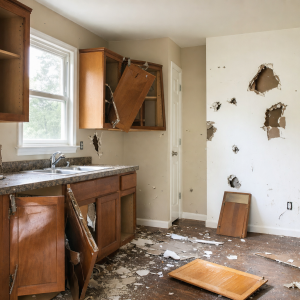
Think about a small kitchen fire. The company adjuster might write up a quote to slap a coat of paint on a smoke-stained wall and replace one burnt cabinet. But what about the soot that got baked into the drywall? What about the smoke particles that were sucked into your HVAC system, or the electrical wiring behind the wall that was compromised by the heat?
Those are the issues that create long-term health hazards and safety risks. And conveniently, they’re also the most expensive things to fix. This isn’t an oversight; it’s a classic low-ball tactic.
The Anatomy of a Low-Ball Dwelling Claim
Insurance carriers train their adjusters to use a playbook for undervaluing dwelling damage. They know most homeowners aren’t construction experts, so they count on you not being able to spot what’s missing from their estimate.
Here are the games they play to slash your settlement:
- Superficial Inspections: Their adjuster shows up, spends 15 minutes snapping a few photos of the most obvious damage, and churns out a quick, surface-level report that misses half the problems.
- “Repair” Over “Replace”: They’ll push to patch a few shingles on a roof that’s lost its structural integrity or steam-clean carpets that were soaked with contaminated water from a burst pipe, even when a full replacement is the only correct solution.
- Ignoring Code Upgrades: If your home was built years ago, repairs will likely need to be brought up to current building codes. Your policy probably covers these mandatory upgrades, but the insurer will frequently “forget” to include those costs.
- Using Cheap Materials: Their estimate will be based on builder-grade, low-quality materials that don’t match what you actually had in your home. This directly violates the “like kind and quality” promise in your contract.
This systematic undervaluing is not an accident. It’s a business strategy designed to protect their profits at your expense. Your policy is a contract that says they will restore your home, not just put a cheap band-aid on it and leave you with hidden issues.
How to Fight for a Complete and Honest Assessment
Challenging your insurer’s low-ball offer requires a professional, evidence-based counter-offensive. This is where a public adjuster becomes your advocate.
While the insurance company’s adjuster works for them, a public adjuster works only for you. They conduct their own forensic-level inspection of your home, looking behind walls, crawling through attics, and using specialized tools like moisture meters and thermal cameras to find every last bit of damage the company adjuster ignored.
From there, they build a brand-new, comprehensive estimate using industry-standard software like Xactimate—the same program insurers use. The difference? Their estimate includes everything required for a proper, safe, and complete rebuild.
A public adjuster’s report is your most powerful weapon. It transforms the dispute from your word against theirs into a professional, evidence-based argument that the insurance company can’t easily dismiss. It forces them to address the actual scope of work, not just the parts they wanted to pay for.
The difference between their initial offer and the final settlement can be tens or even hundreds of thousands of dollars. It’s the difference between a home that’s truly put back together and one that’s a ticking time bomb of future problems. To get a better handle on maximizing this crucial coverage, check out our guide on extended dwelling coverage.
Fighting for Your Personal Belongings After a Claim
A fire or storm doesn’t just damage the walls and roof of your house; it destroys the things that make it a home. Your furniture, your family photos, your clothes, your kids’ toys—all gone. This is what Personal Property Coverage, or Coverage C, is for.
But here’s the cold, hard truth: your insurance carrier sees this intensely personal tragedy as just another accounting problem. They know you’re overwhelmed and heartbroken. And they will absolutely use that to their advantage to slash your payout and pay you pennies on the dollar for a lifetime of possessions.

The ACV vs. RCV Shell Game
The number one weapon in the insurer’s arsenal is depreciation. They wield it by forcing an Actual Cash Value (ACV) settlement on you, even when your policy includes Replacement Cost Value (RCV). Understanding their game is the first step to fighting back.
- Actual Cash Value (ACV): This is the insurer’s favorite number. It’s what your five-year-old sofa or ten-year-old TV was worth the moment before it was destroyed. They’ll take the price of a new one, then subtract a massive chunk for age and “wear and tear.” They might offer you $100 for a sofa that costs $1,500 to replace. It’s an insulting, low-ball tactic.
- Replacement Cost Value (RCV): This is what you’re actually owed—the real cost to go out and buy a new, similar item today. But there’s a nasty catch. Insurers will often pay you the ACV upfront and then hold the rest of the money hostage until you replace every single item and submit every single receipt.
They are banking on the fact that you don’t have the cash to re-buy everything out-of-pocket. They know homeowners get exhausted and give up, letting the insurance company illegally keep the depreciation money that rightfully belongs to you. You can get a much deeper dive on the difference between actual cash value and replacement cost to see just how they manipulate these numbers.
Case Study: A Family’s Fight Against Unfair Depreciation
A Raleigh family lost everything in a devastating house fire. Their insurance adjuster showed up with a spreadsheet that felt like a slap in the face, depreciating nearly every item they owned by a staggering 70-80%. Their high-end television was valued at $50. Their children’s beds were written off as worthless.
Defeated and furious, they hired a public adjuster. Our team immediately got to work. We didn’t just accept their list; we rebuilt their life on paper. We went room-by-room, using family photos, credit card statements, and detailed testimony to document the true quality and value of what they lost. The result was a 100+ page report with links to current products, leaving the insurer no room to argue.
The insurance company’s initial offer for all their personal property was a pathetic $30,000. After our aggressive, thoroughly documented fight, the final settlement for their belongings was over $125,000. This wasn’t a magic trick. It was simply forcing the carrier to honor the policy they wrote.
Special Limits: The Hidden Traps in Your Policy
On top of the depreciation games, insurers use hidden sub-limits to get out of paying for your most valuable items. Your policy might state you have $200,000 in personal property coverage, but buried in the fine print are tiny little caps on what they’ll actually pay for certain categories.
Be on the lookout for these common traps:
- Jewelry, Watches, and Furs: Often capped at a mere $1,500 for theft.
- Firearms: Typically limited to $2,500 total.
- Cash: Your emergency cash might only be covered up to $200.
- Business Property: That work computer or equipment you kept at home? The limit could be as low as $2,500.
The company adjuster knows these limits by heart and will use them to deny full payment, pointing to policy language they know you’ve never seen. Without an expert on your side to navigate this minefield, you’ll be forced to accept their interpretation and lose thousands. A public adjuster makes the carrier prove exactly how these limits apply and fights to find every possible dollar you’re owed.
Your Lifeline Under Attack: Additional Living Expenses
When a disaster makes your home unlivable, one part of your policy becomes an absolute lifeline: Additional Living Expenses (ALE). You might also see it called Coverage D or Loss of Use. This is the coverage that’s supposed to maintain your normal standard of living when you’re forced out. It pays for the hotel or rental home, the extra cost of meals, and other essentials you need while your house is being repaired.
But to insurance carriers like Allstate and State Farm, this lifeline is just another expense to be managed—and minimized. They know that every single day you’re out of your home, their costs are climbing. So they’ll apply intense pressure to cut this support long before you’re ready to go back, hoping the financial strain forces you into a lowball settlement just to make the nightmare end.

The Squeeze Play Insurers Use to Cut Off Your ALE
The insurance company’s strategy is simple: create a false sense of urgency and question every single penny you spend. They use a playbook of manipulative tactics to make you feel like a burden and convince you that your time is running out.
It’s a deliberate game, and here are the rules they play by:
- Unrealistic Repair Timelines: The company adjuster will confidently claim your home can be fully restored in a fraction of the time it actually takes. This gives them a self-serving excuse to cut off your ALE benefits way too early.
- Questioning “Reasonable” Expenses: Get ready for them to nickel-and-dime every receipt. They’ll argue the rental you found is “too expensive” or your food costs are “excessive”—anything to pay less than what’s needed to maintain your life.
- Constant Pressure to Settle: Expect a barrage of calls and emails pushing you to accept their lowball offer for dwelling repairs. They’ll imply that as soon as you settle, you can move home, conveniently ignoring that the money isn’t enough to do the job right.
This constant battle is exhausting. It piles immense emotional and financial stress on top of an already traumatic situation, and it’s all by design. To see a full breakdown of these tactics, check out our guide on homeowners insurance loss of use coverage.
Case Study: How We Fought Allstate’s Premature ALE Cutoff
A family from Cary, NC, was displaced after a supply line burst and flooded their entire first floor. Their insurer, Allstate, placed them in temporary housing and started ALE payments. But after just one month, the Allstate adjuster called with bad news: their benefits were ending because, he claimed, the repairs should have been done by now.
The house was still a disaster zone. The flooring was ripped out and the walls were open to the studs. The family was in a complete panic.
That’s when they called For The Public Adjusters. We immediately took over. We brought in a trusted general contractor who drafted a detailed, realistic repair schedule. His professional assessment proved the restoration would take a minimum of six months due to material backorders and the sheer scope of the water damage.
We submitted this contractor-backed timeline directly to Allstate, along with a firm demand that they continue ALE payments for the full six-month period. Faced with undeniable, professional evidence, Allstate had no choice but to back down. They were forced to approve the full duration of living expenses, giving the family the stability they needed for a proper rebuild.
This is the power of having an expert advocate in your corner. A public adjuster doesn’t just fight for the damage to your home; we fight to protect your right to live safely and securely until the job is done right.
The Flood Insurance Nightmare Your Policy Will Not Cover
Let me give you the hard truth every homeowner in North Carolina and Virginia needs to hear: when the floodwaters rise, your standard homeowners insurance policy is nothing more than expensive, useless paper. It absolutely, positively will not cover flood damage.
This isn’t some fine print detail. It’s a gaping, multi-billion dollar hole in your financial safety net.
Real flood protection only comes from a separate, notoriously brutal federal program: the National Flood Insurance Program (NFIP). Even if you buy your policy from a company you trust, they’re likely just a “Write Your Own” (WYO) carrier. That means they’re forced to play by FEMA’s rigid, unforgiving, and often adversarial rulebook.
Why NFIP Claims Are a Recipe for Disaster
Fighting an NFIP claim is a completely different battle than a typical homeowners claim. The whole system is engineered to minimize what they pay out and protect the federal government’s money—not to help you recover.
The adjuster they send to your flooded home isn’t on your side. They’re trained to follow a strict federal playbook that’s all about limiting what gets approved and putting an impossible burden of proof on you.
Get ready to face a system that’s stacked against you from the start:
- Crippling Coverage Gaps: The NFIP has shocking limitations. For example, any personal property or finished living space in your basement or a lower-level enclosure is essentially uncovered. They might cover the furnace or foundation, but that finished basement you spent a fortune on? It’s gone, with $0 to replace it.
- No Additional Living Expenses (ALE): This is the one that floors most people. Unlike your homeowners policy, the NFIP provides absolutely nothing for temporary housing, food, or other expenses if a flood makes your home unlivable. You are completely on your own.
- Unforgiving Deadlines: The program enforces strict, non-negotiable deadlines for filing your Proof of Loss form. This is a sworn statement detailing every single penny you are claiming. Miss that deadline by even a day, and you can lose your right to the entire claim.
This federal bureaucracy is slow, confusing, and designed to wear you down. The adjusters, whether they’re from the NFIP directly or a WYO company, are there to enforce these harsh rules, not to find ways to help you.
After a devastating flood, going up against the federal government and its labyrinth of insurance regulations is a surefire path to financial ruin. The rules are different, the adjusters are tougher, and your entire financial future is on the line.
A Public Adjuster Is Non-Negotiable for Flood Claims
For a flood claim, a licensed public adjuster who specializes in the NFIP isn’t a luxury—it’s a necessity. They live and breathe the federal regulations, documentation requirements, and appeal processes that control every cent of your claim.
They know exactly how to counter the NFIP adjuster’s low-ball tactics. More importantly, they know how to build and document a claim that meets the federal government’s strict standards for approval, forcing them to pay what you’re owed.
One of our client’s experiences says it all. After a hurricane left them devastated, they were completely lost in a sea of confusing paperwork and conflicting directives from their WYO adjuster.
This review shows the grim reality: facing an NFIP or WYO adjuster alone is a losing fight. A public adjuster forces them to stop playing games and address the actual damage based on the program’s own rules, ensuring you get the maximum possible settlement from a system designed to give you the absolute minimum.
Success Story: How We Won a Raleigh Homeowner’s Fire Claim
It’s one thing to read your policy, but it’s another thing entirely to live through a claim dispute. This is a real story about a Raleigh homeowner whose life was turned upside down by a house fire—and then got even worse when their own insurance company tried to low-ball them.
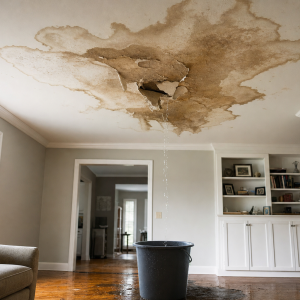
Right after the fire, the carrier’s adjuster did a quick, superficial walkthrough. He jotted down a few notes on the most obvious charring and produced an estimate that was a slap in the face. It completely ignored the toxic smoke and soot that had saturated every room, and the offer wouldn’t have come close to making the home safe again.
Uncovering the Damage They “Missed”
When we were hired, the first thing we did was bring in our team for a true forensic inspection. We didn’t just glance at the burned walls. We used specialized equipment to test for microscopic smoke particulates that had penetrated deep inside the walls, the HVAC system, and every porous surface in the home.
What we found was exactly what the insurance company was hoping nobody would look for: massive structural damage and soot contamination they had either conveniently missed or intentionally ignored. Leaving that damage unaddressed would have posed a serious, long-term health risk to the family.
So, we got to work. We built our own detailed, line-by-line estimate using the same Xactimate software the insurers use. The difference? Our scope of work was based on a complete, proper restoration—not the cheap “patch and paint” job the insurance company wanted to pay for. This documentation became the weapon we used to fight for a fair settlement.
Dismantling the Insurer’s Arguments
Armed with indisputable proof, we went to battle. The insurance company used every delay tactic in their playbook, questioning our findings and dragging their feet. But they had no real argument against a professionally prepared, evidence-backed scope of loss.
We took their weak arguments apart, piece by piece, pointing directly to the policy language that required them to return the home to its pre-loss condition with materials of “like kind and quality.”
Property damage claims are incredibly common. In fact, 5.3 percent of insured homes had a claim in 2023 alone, and property damage accounts for a staggering 97.3 percent of all homeowner claims. Insurance companies deal with this volume by systemizing the low-ball offer.
This case proves a critical point: An insurance company’s first offer is just a starting point for negotiation. They are betting you don’t have the expertise or the energy to fight back. When you bring in a professional advocate, you flip the script.
The final settlement we secured for this Raleigh family was several times higher than the carrier’s original, insulting offer. It was the full amount they needed to rebuild their home and replace what they had lost. After winning your fire claim, the next crucial step is knowing how to choose a general contractor you can trust to handle the restoration.
This client’s experience shows the power you have when an expert is fighting in your corner.
This review captures a scenario we see every day—an initial offer that doesn’t even begin to cover the actual cost of repairs. It’s a perfect example of how fighting back with professional help can lead to a radically different outcome.
Answering Your Top Questions About Fighting Your Insurer
When you’re staring down a dispute with your insurance company, the questions start piling up fast. It’s a confusing and frustrating process, but you’re not powerless. Here are the straight answers to the questions we hear most from homeowners who are tired of being treated unfairly.
Can I Dispute My Insurance Company’s Low-Ball Offer?
Yes. And you absolutely should.
That first offer from your insurer isn’t a final decision—it’s a starting point. Think of it as their opening bid in a negotiation, and it’s almost always designed to protect their profits, not make you whole. You have every right to reject an offer that doesn’t fully cover your damages.
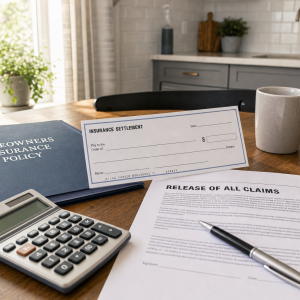
But be careful. Never, ever cash a check that says “full and final settlement” unless you are 100% satisfied with the amount. Cashing that check is like signing a contract; it legally closes the door on your claim and lets the insurance company off the hook for their lowball tactic.
What Should I Do if My Homeowners Claim Was Denied?
The moment you get a denial, your first move is to demand a formal denial letter from the insurance company. Don’t accept a verbal “no.” This letter is crucial because it forces them to put in writing the exact policy language they are using to justify their decision.
Often, insurers will lean on confusing jargon or twist the meaning of a clause, hoping you won’t have the energy to fight back. Once you have that letter, your next call should be to a public adjuster for a professional claim review. They’ll break down your policy and compare it to your actual damages to see if the denial is just another unfair tactic. Many are.
The Company Adjuster Seems Friendly. Should I Trust Them?
No. It’s critical to remember who the company adjuster works for: the insurance company. Their job is to protect their employer’s financial interests, which means finding ways to minimize what they pay you.
Friendliness is a common strategy. It’s meant to build a false sense of trust, making you more likely to let your guard down, say something that could be used against you, or accept a quick, cheap settlement out of frustration. It creates a massive conflict of interest. The only person in this process who is legally and ethically bound to represent your interests is a licensed public adjuster you hire yourself.
These FAQs provide high-density information that addresses specific NCGS (North Carolina General Statutes) and VA Code requirements, moving beyond generic definitions to provide actionable claim strategies.
2. Is water damage from a burst pipe covered if I wasn't home?
Yes, as long as the pipe burst suddenly. The NC/VA Expert Reality: Coverage hinges on the "Reasonable Care" clause. In the NC/VA mountains (Appalachians), pipes freeze often. If you went to Florida for the winter and turned your heat off, the claim will be denied.
The Solve: You must prove you maintained heat at a minimum of 55°F. Provide your Duke Energy or Dominion Energy bills to the adjuster to show consistent gas/electric usage during the freeze event. This "Utility Evidence" is often the only way to overturn a "Neglect" denial.
3. Does homeowners insurance cover "slow leaks" behind a wall?
No, insurance only covers "sudden and accidental" damage. The NC/VA Expert Reality: While "seepage" (leaks over 14+ days) is excluded, many policies in NC and VA contain "Hidden Seepage" endorsements.
The Solve: If the leak was hidden behind drywall or under cabinetry and you could not have seen it, it may be covered. Hire a professional with a thermal imaging camera to prove the leak was undetectable to the naked eye, which classifies it as "hidden" rather than "neglected."
4. Am I covered for "Wind-Driven Rain" if there is no hole in the roof?
No, there must be a "peril-created opening." The NC/VA Expert Reality: This is the #1 dispute after a hurricane in Wilmington or Virginia Beach. If rain is forced under shingles or through siding without a "hole," many adjusters deny it.
The Solve: In NC and VA, look for a "Wind-Driven Rain Endorsement." Even without it, if a public adjuster can find a single lifted shingle or a broken seal, that constitutes a "peril-created opening," triggering coverage for the entire interior water damage.
5. Does my policy cover trees that fall in my yard but don't hit the house?
Usually no. The NC/VA Expert Reality: Most NC/VA policies (HO-3) provide zero coverage for tree removal unless a "covered structure" (house, shed, fence) is hit.
The Solve: There is an "Access" loophole. If the fallen tree blocks your driveway (preventing car access) or a handicapped ramp, the policy often pays up to $500–$1,000 for removal, even if no building was touched.
6. What is "Ordinance or Law" coverage, and why is it critical in NC/VA?
It pays for code upgrades. The NC/VA Expert Reality: If you have an older home in Richmond or Raleigh, modern building codes (like NC Residential Code R905) require ice-and-water shields or specific hurricane strapping. Standard insurance only pays to replace "what was there."
The Solve: Check for Ordinance or Law Coverage (Coverage C in the endorsement). This is what pays the 20%–30% "gap" when the city inspector refuses to sign off on a repair that isn't up to 2024 codes.
7. Does insurance cover "Foundation Cracks" caused by soil settling?
No, earth movement is excluded. The NC/VA Expert Reality: While "Settling" is excluded, "Hydrostatic Pressure" (water weight in the soil) or a plumbing leak under the slab may be covered.
The Solve: In Virginia and North Carolina’s "red clay" regions, soil expansion is common. If you have foundation cracks and a high water bill, you may have a "Slab Leak." If a leaking pipe caused the soil to shift, the entire foundation repair may be covered as an "ensuing loss."
8. Am I covered for "Sewer Backup" automatically?
It’s usually included in premium policies. The NC/VA Expert Reality: In most NC/VA standard policies, Sewer & Drain Backup is specifically EXCLUDED unless you added the HO-0495 (or similar) endorsement.
The Solve: If your basement in Northern Virginia or Charlotte floods with sewage, and you don't have this endorsement, the insurer will call it "Surface Water" (Flood) and pay $0. Always check your "Declarations Page" for a specific dollar limit (usually $5,000 to $25,000) for Water Backup.
9. Does insurance cover mold if it’s caused by humidity?
No, mold must result from a covered water loss. The NC/VA Expert Reality: The humid Southeast climate makes mold a "grey area." If mold is caused by a burst pipe, it’s covered (up to a sub-limit, often $5,000). If it’s from a damp crawlspace, it is not.
The Solve: If you find mold, do not call it "humidity." A public adjuster will perform a "Causation Audit" to see if a specific, sudden event (like a water heater pop) was the source. In NC and VA, the "Source of the Water" dictates the "Source of the Coverage."
10. Is "Food Spoilage" covered after a power outage?
Yes, usually up to $500. The NC/VA Expert Reality: In NC and VA, this coverage often requires the power outage to be caused by a peril on your premises (like a tree hitting your line) rather than a general grid failure.
The Solve: Check your policy for "Power Interruption." Many modern endorsements now cover "Off-Premises" power failure. If you lose $1,000 in frozen meat after a hurricane, this $500 coverage usually has no deductible or a very small one, making it a "hidden win" for policyholders.
When you’re facing a denied, delayed, or low-balled claim, you don’t have to fight alone. The team at For The Public Adjusters, Inc. brings expert knowledge and aggressive advocacy to your side, ensuring you get the full settlement you’re owed. Contact us today for a no-cost review of your claim at https://forthepublicadjusters.com.