You’re staring at a repair bill, the insurer’s first offer looks insultingly low, and the adjuster barely spent enough time in the property to catch the obvious damage, let alone the hidden loss. That’s the moment individuals often realize the inspection wasn’t designed to settle the claim fairly. It was designed to close the file.
Property inspection services matter because the report becomes the evidence that either backs up your loss or lets the carrier underpay it. In a market as large as $6.8 billion in the U.S. in 2026, with more than 33,000 businesses in the sector, inspections aren’t a side task, they’re a core part of property risk management and claim support (IBISWorld).
Table of Contents
- Your First Low-Ball Offer and the Need for Help
- Why Your Insurer’s Inspection Is Not on Your Side
- Forensic Inspections That Win Insurance Claim Fights
- What a Public Adjuster’s Inspection Actually Uncovers
- Using Your Inspection Report to Fight and Win
- Your Next Steps to Secure a Fair Claim Settlement
Your First Low-Ball Offer and the Need for Help
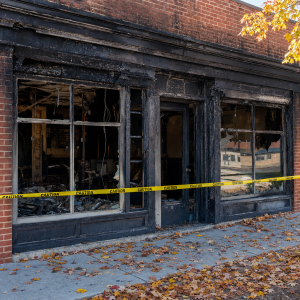
The scene is painfully familiar. A fire leaves soot in the rooms, or a storm lifts shingles and pushes water into the structure. The insurer sends someone out fast, that person walks the property, writes a short estimate, and the first offer lands far below what it takes to repair the place.
That speed helps the carrier. A quick walkthrough often misses damage that takes time to find, and the first estimate can set the tone for the whole claim. A proper property inspection service changes the claim from “what the insurer noticed” to “what the property lost.”

A homeowner usually feels pressure to accept, because the claim file sounds official and the adjuster sounds final. The first offer is only as strong as the inspection behind it. If the inspection missed hidden moisture, smoke migration, or damage inside assemblies, the estimate will be thin no matter how polished the paperwork looks.
Practical rule: if the inspection didn’t document the loss in enough detail to support repair scope, it didn’t really support the claim.
A strong independent inspection gives the policyholder a different starting point. It puts photos, measurements, moisture readings, and repair logic into the record before the insurer controls the narrative. That matters in a field where inspections drive property loss decisions, and where the quality of that work can shape whether a claim gets paid fairly.
A good example is the documentation fight in this business property dispute involving ITEL Laboratories, where the value of the inspection record mattered more than the carrier’s first description of the loss.
Why Your Insurer’s Inspection Is Not on Your Side
The insurer’s inspector is not neutral. The person may be polite, professional, and even thorough in spots, but the inspection still serves the company that pays the claim. That conflict shapes how damage gets framed, what gets measured, and what gets left out.
A carrier can under-scope a loss without saying so outright. A roof may be inspected from the ground when a hands-on review is needed. A water loss may be described as surface-level when moisture has already moved behind drywall and baseboards. A smoke loss may be treated as cosmetic when odor and residue have already traveled through building systems.
An independent comparison helps people see the difference. The insurer’s report usually aims to justify a payment. The policyholder’s report should prove the full scope of damage. That’s why a public adjuster or similar advocate treats the inspection as the first evidence package, not a routine visit.
See how conflict shows up in real claim work in this example involving a business property dispute, where the value of documentation matters more than the carrier’s first description of the loss.

What gets missed most often
- Hidden damage behind finishes: Wall cavities, insulation, and subfloors don’t show up in a casual walkthrough.
- Scope reductions by default: If something can be left out of the estimate, it often will be.
- Pressure to close quickly: The sooner the file closes, the less likely the insurer is to revisit it.
That’s why policyholders should read insurer inspections with healthy skepticism. Not because every adjuster is dishonest, but because the company’s financial incentives are built into the process. If the loss is large, the inspection has to be defensible enough to withstand a real dispute.
Forensic Inspections That Win Insurance Claim Fights
A claim-grade inspection isn’t a glance. It’s a method. The goal is to prove where damage started, how far it traveled, and what had to be affected to repair the property properly.
Fire, smoke, and water losses need different proof
Fire and smoke damage has to be mapped by residue and odor, not just by what looks blackened. The IICRC S700 standard for fire and smoke damage restoration calls for a technical assessment to define the boundaries of fire residues and odors, because smoke can penetrate building systems and create damage that a surface inspection misses (IICRC standards). That matters when the insurer tries to limit the claim to the most visible burn area.
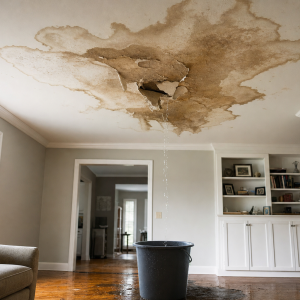
Water damage needs a different approach. Under IICRC S500, a professional inspection must use moisture-detection equipment to track water migration, because a visual review alone can miss the spread behind finishes and within assemblies (IICRC S500). That’s where hidden moisture turns into secondary damage, and that’s often where carriers get the scope wrong.
For homeowners dealing with storm loss, roof damage, and flood issues, the inspection question changes again. Wind, hail, and hurricane claims need a clear look at impact points, opening paths, and collateral damage. Flood claims are even more specialized, especially under NFIP and WYO policies, where the coverage rules and dispute path are different enough that a standard home inspection won’t solve the problem.
A good inspection answers one question with evidence, not opinion. What damage is present, and how do you prove it?
If you want to see how a water-focused claim inspection is documented in practice, review this water damage inspection resource. The core point is simple. The more hidden the damage, the more important the inspection method becomes.
What a Public Adjuster’s Inspection Actually Uncovers
A real claim inspection digs into the loss layer by layer. It looks for damage the insurer’s report may have skipped because it was behind drywall, inside HVAC components, under flooring, or on surfaces that seemed clean at first glance. That’s where disputes get won or lost.
Insurer’s Adjuster vs. Public Adjuster Inspection
| Inspection Area | Insurance Company Adjuster’s Focus | Public Adjuster’s Focus |
|---|---|---|
| Visible damage | Quick confirmation of obvious loss | Full documentation of visible and hidden loss |
| Moisture | Spot checks or limited scanning | Moisture mapping, migration, and source tracing |
| Fire and smoke | Surface soot and obvious burn areas | Residue boundaries, odor travel, affected systems |
| Roof loss | Selective damage references | Pattern evidence, collateral impacts, and repair scope |
| Building systems | Minimal review unless clearly failed | HVAC, electrical, and material contamination checks |
| Claim objective | Close the file efficiently | Support the full repair and replacement scope |
A public adjuster’s inspection usually starts with photos, room-by-room notes, and a damage narrative that explains how one loss led to another. That’s especially important where the carrier’s report treats a house like a collection of unrelated spots instead of a connected building system. Structural compromise after fire, soaked drywall, contaminated ductwork, and damaged roof sections all affect repair scope.
The report has to be tied to the policyholder’s real repair burden. If a storm opened the building envelope, the inspection should show where water entered and where it traveled. If the property smelled of smoke after the visible cleanup, the inspection should show whether odor and residue reached hidden areas.
For a closer look at the role of an advocate in the process, this explanation of what a public adjuster does fits well with the inspection work itself. The important point is that the report should read like evidence, not a casual opinion.
Using Your Inspection Report to Fight and Win
A strong inspection report serves as a powerful tool because it provides a detailed account the carrier must address item by item. When the insurer says a loss is minor, the report can show the moisture map, the residue spread, the roof impacts, and the repair sequence that proves otherwise. That turns a vague disagreement into a documented dispute.
A careful communication log enhances that advantage. Record the date, time, person spoken to, and what was said in each call, email, or text. That contemporaneous record can expose delay, shifting explanations, or contradictions, and the appraisal clause in many policies gives the dispute a structured path when valuation is the main fight (claim dispute guide).
How the report gets used
- Negotiation: The estimate is challenged with photos, measurements, and scope notes.
- Appraisal: The report becomes the basis for selecting an independent appraiser.
- Litigation support: The record helps counsel show why the insurer’s valuation was too low.
- Reinspection requests: Missing items can be pointed out with specific evidence, not general complaints.
A policyholder in a difficult claim dispute should also keep the denial letter and any written coverage position. If the insurer listed a reason for the reduction, the report can target that reason directly. If the company ignored a hidden-loss issue, the report can force a second look.
This is also where specialized help can matter. For The Public Adjusters, Inc. works in this space by documenting damage and preparing a detailed estimate that can be used in the claim dispute process. In the right case, that kind of report is not just paperwork. It becomes the file the insurer has to answer.
The best reports don’t argue. They prove.
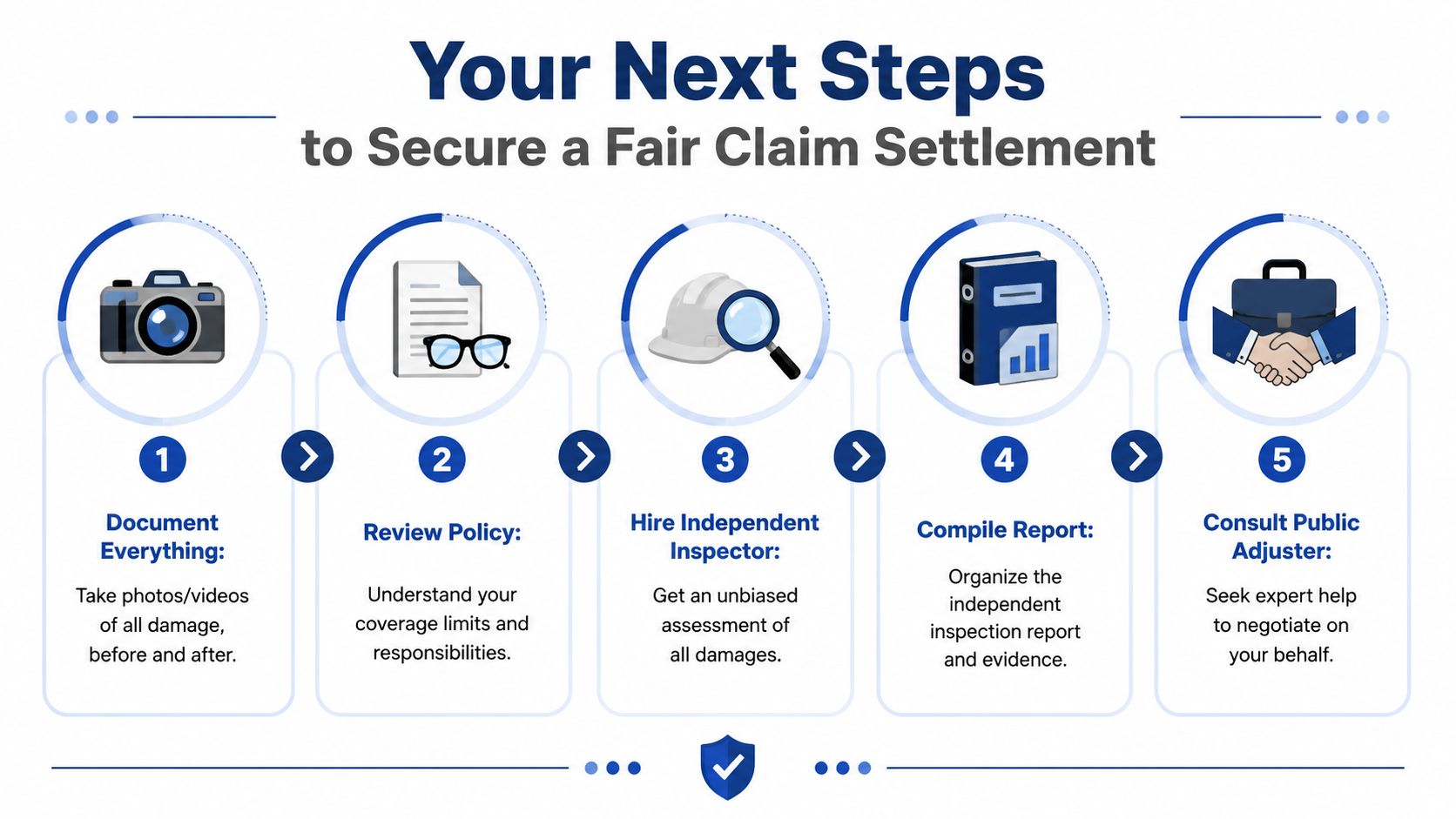
Your Next Steps to Secure a Fair Claim Settlement
Start with your own records before the insurer gets a cleaner version of the story. Photograph and video every damaged area, keep receipts tied to repairs or temporary fixes, and save every email, text, and letter connected to the loss. If the property is still exposed or changing, update the file as conditions change. That record can show what the carrier’s first visit missed.
Get an independent inspection that matches the damage in front of you. Roof damage needs roof evidence. Water damage needs moisture testing and a search for hidden intrusion. Smoke damage calls for residue and odor analysis. A flood dispute needs someone who understands the policy path and the physical evidence, not just what is visible from the doorway.
Before you hire any inspection or adjusting firm, ask direct questions:
- Licensing and authority: Are they licensed in your state to handle this type of claim?
- Relevant experience: Have they handled fire, water, wind, hail, or flood disputes like yours?
- Inspection method: What tools do they use, and do they document hidden damage?
- Deliverables: Will you get a written report, photos, and a repair scope?
- Fee structure: How are they paid, and what happens if the claim does not move?
A lot of homeowners also need help organizing the paperwork that comes out of the inspection. If your claim involves a disputed repair scope or a denial letter, resources for reviewing arguments and assembling documents can help attorneys move faster, but the field evidence still has to be solid first.
If you are dealing with water damage, fire damage, smoke residue, storm loss, or a denial that does not match the actual damage, do not let the carrier’s first inspection control the claim. Get the loss documented properly, then push back with evidence that shows the full scope. A public adjuster’s inspection can also support legal AI for lawyers by giving counsel organized facts, photos, and measurements to review. Have your water damage claim questions answered at NO COST. Call 919-400-6440 to speak with a licensed Public Insurance Adjuster or Contact Us here with questions. WE Work For YOU… NOT Your Insurance Company!
2. Why shouldn’t I just use the "Adjuster" provided by my insurance company?
The insurance company’s adjuster has a fiduciary duty to the carrier, not to you. There are three types of adjusters: Staff Adjusters (employees of the insurer), Independent Adjusters (contractors hired by the insurer), and Public Adjusters (hired exclusively by the policyholder). A Public Adjuster is the only professional licensed to advocate for your interests. In NC and VA, the "best" adjusters act as your claims quarterback—managing everything from forensic damage assessments to negotiating "Law & Ordinance" upgrades that staff adjusters frequently overlook.
3. Is it legal for my roofing contractor in VA or NC to negotiate my insurance claim?
No. In both North Carolina and Virginia, it is a crime for a contractor to negotiate an insurance claim; this is known as the Unauthorized Practice of Public Adjusting (UPAL). In Virginia, under Va. Code § 38.2-1845.1, only licensed public adjusters or attorneys can legally represent a policyholder in a claim. If your contractor is "handling the insurance," your claim could be voided for fraud, and you lose all legal leverage. The best practice is to have your contractor identify the damage and your Public Adjuster negotiate the settlement.
4. How much do the best public adjusters charge in NC and VA?
Public adjusters typically charge a contingency fee ranging from 10% to 20% of the total settlement, but specific state caps apply during disasters.
In North Carolina: Following a declared State of Emergency (like a hurricane), fees are often capped at 10% of the claim proceeds. The best public adjusters near me in NC cannot charge upfront "file fees" or "inspection fees," which are against NC State Statutes.
In Virginia: Fees must be "reasonable" and are clearly outlined in the written contract required by state law. The "best" adjusters provide a transparent fee schedule and do not charge upfront "file fees" or "inspection fees," which are red flags of predatory firms.
5. Can a public adjuster help me if my claim was already denied or "lowballed"?
Yes. A public adjuster’s primary value is in "reopening" claims where the insurer issued a partial payment or a full denial based on "wear and tear." In the Piedmont and Coastal regions of NC and VA, insurers often blame storm damage on age. A top-tier public adjuster will hire an independent engineer to provide a "Causation Report" that proves the storm was the primary "proximate cause," forcing the insurer to acknowledge coverage under the NC/VA Standard Fire Policy guidelines.
6. What is the "Appraisal Clause," and why does my local public adjuster use it?
The Appraisal Clause is a powerful alternative dispute resolution tool found in most NC and VA policies used to settle "amount of loss" disputes without a lawyer. If you and the insurance company disagree on the cost of repairs, your Public Adjuster can invoke Appraisal. This involves two independent Appraisers and a neutral Umpire. In North Carolina and Virginia, the decision of the Appraisal panel is generally binding, making it a faster and cheaper alternative to litigation.
7. How does a local public adjuster determine the "best" price for my repairs?
The best local adjusters use Xactimate or Symbility, but they manually adjust the "Price List" to reflect actual Raleigh, Charlotte, or Richmond labor rates. Insurance companies use "standardized" regional pricing that often lags behind real-world inflation. A local NC/VA adjuster understands the specific costs for IBHS Fortified Roof standards in coastal NC or historic preservation codes in Richmond, ensuring your settlement covers the actual cost of local contractors, not a national average.
8. When is it "too late" to hire a public adjuster for a claim in Virginia or North Carolina?
While it’s best to hire an adjuster immediately, you can generally hire one up until the Statute of Limitations expires, which is often 2 or 3 years depending on your state and policy. * Virginia: Most policies have a 2-year window to file suit or finalize a claim.
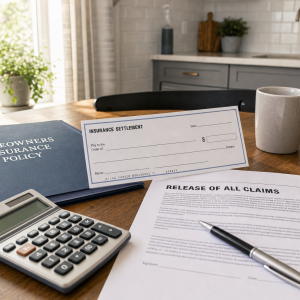
North Carolina: The window is often 3 years, but many "standard" policies shorten this. If you’ve already signed a "Proof of Loss" or a "Final Release," it may be too late. The "best" adjusters will offer a free claim review to determine if there is still "money left on the table."
9. Will hiring a public adjuster cause my insurance company to drop me?
No. In North Carolina and Virginia, it is a violation of unfair trade practices for an insurer to retaliate against a policyholder for hiring a licensed professional. Your policy is a contract that explicitly allows for professional representation. Hiring a public adjuster often makes the insurer’s job easier because they are dealing with a professional who provides evidence-backed estimates in a format the carrier can actually process.
10. How do I solve a dispute with my public adjuster if I’m not satisfied?
If you are in NC or VA, you have a statutory right to a "cooling-off" period to cancel your contract. * North Carolina: You have 3 business days to cancel a public adjuster contract.
Virginia: You have 3 business days (or 5 if the loss occurred during a disaster). If a dispute arises later, you can file a complaint with the NCDOI Consumer Services or the VA SCC. The "best" public adjuster firms will always have a "Satisfaction Guarantee" or a clear termination clause in their contract.
If you are dealing with water damage, fire damage, smoke residue, storm loss, or a denial that does not match the actual damage, do not let the carrier’s first inspection control the claim. Get the loss documented properly, then push back with evidence that shows the full scope. Have your water damage claim questions answered at NO COST. Call 919-400-6440 to speak with a licensed Public Insurance Adjuster or Contact Us here with questions. WE Work For YOU… NOT Your Insurance Company!