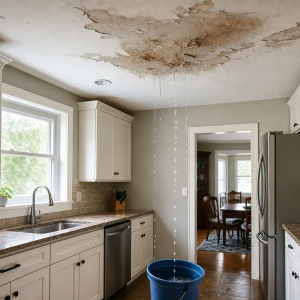
You've photographed the soaked sofa, ruined electronics, and clothing that smells like sewage. You've answered the adjuster's questions, gathered receipts, and waited through weeks of disruption. Then the settlement arrives, and it covers only a fraction of what it will cost to restore your household.
That first check isn't automatically the value of your personal property damage claim. Depreciation, special limits, missing documentation, and the difference between actual cash value and replacement cost can cut a payment sharply. If the carrier has denied, delayed, or low-balled your claim, you have a right to challenge the valuation and demand a policy-based explanation.
Table of Contents
- When the Settlement Offer Feels Like an Insult
- What Personal Property Damage Actually Means Under Your Policy
- ACV Versus Replacement Cost Coverage Decoded
- How to Document Your Inventory and Proof of Loss
- Why Adjusters Low-Ball and Delay Contents Claims
- NFIP Flood Claims and Personal Property in NC and VA
- How a Public Adjuster Fights Back for You
- Get Your Claim Help and Recover What You Owe
When the Settlement Offer Feels Like an Insult
A burst pipe can turn an ordinary home into an inventory project overnight. The sofa is warped, televisions and laptops have water exposure, drawers of clothing are contaminated, and kitchen appliances may no longer be safe to use. You spend days identifying each item, only to receive an offer that values much of the contents at depreciated prices.
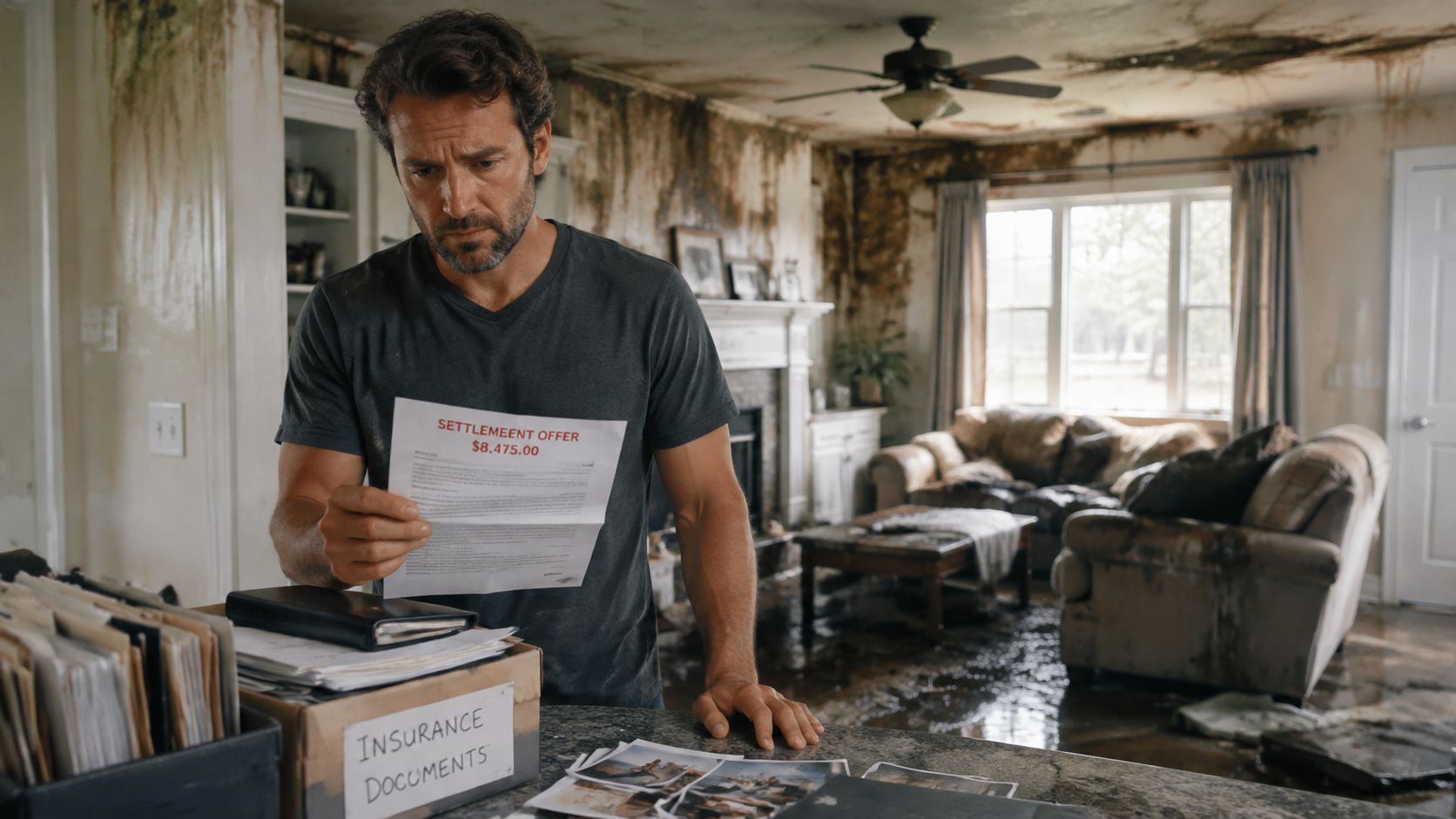
The adjuster points to age, questions why you don't have every receipt, and tells you the carrier can't pay more until you replace the items. You're left wondering whether the check is final. It usually isn't.
Property damage, including theft, represented 97.3% of homeowners insurance claims in 2023, while liability-related claims made up the remainder, according to the Insurance Information Institute's homeowners and renters insurance data. The same data shows about 1 in 36 insured homes had a wind or hail claim, about 1 in 67 had a water damage or freezing claim, and about 1 in 430 had a fire and lightning claim. Those patterns matter in North Carolina and Virginia, where storm, water, and freeze losses can affect both structures and everything inside them.
The first offer is a position, not a verdict
Carriers know that overwhelmed policyholders may accept the first number to move forward. That pressure works especially well when the offer hides depreciation in a spreadsheet, omits items without a detailed explanation, or applies a broad category value to a household's belongings.
Read the estimate line by line. Identify every omitted item, every depreciation deduction, every special limit, and every condition attached to payment. Don't sign a release or agree that the payment is full and final until you understand what rights you're giving up.
Practical rule: Treat the initial contents estimate as a document to audit, not a conclusion you're required to accept.
What Personal Property Damage Actually Means Under Your Policy
Personal property damage concerns the belongings inside a home or business, not the building's walls, roof, floors, or permanent structural systems. Under a homeowners policy, that commonly means furniture, clothing, electronics, appliances, household goods, and selected outdoor property, subject to the policy's covered causes of loss, exclusions, deductibles, and limits.
A commercial policy can protect business personal property, such as inventory, movable equipment, office contents, tools, and merchandise. A restaurant may have damaged refrigeration equipment and supplies. A contractor may have tools and materials affected by a covered loss. A retailer may have stock that is unsellable after smoke or water contamination. The policy language controls whether each category is covered and how the carrier values it.
Coverage depends on the cause and the wording
A sudden, accidental event may trigger coverage when the policy includes that peril. Water from a sudden pipe break can be treated differently from long-term seepage. Fire and smoke damage can affect both the structure and contents. Theft coverage depends on the policy's terms and proof of the loss.
Gradual wear, deterioration, maintenance problems, and other exclusions can't be converted into covered damage by labeling them as a claim. Flood is another major dividing line. Standard homeowners coverage generally doesn't respond to flood damage, which requires separate flood insurance and a different claim process. Earth movement and other excluded causes may also require an endorsement or separate policy.
Limits create hidden gaps
Personal property coverage may be much lower than dwelling coverage. Jewelry, firearms, collectibles, fine arts, money, and specialized equipment can carry sublimits that leave a policyholder short even when the loss is otherwise covered. Scheduling valuable property or adding an endorsement may be necessary for broader protection.
For commercial policyholders, check whether inventory, equipment, tenant improvements, and property in transit are treated separately. A carrier may accept that an item was damaged but still dispute the applicable limit, category, or valuation method. That's why the declarations page and endorsements matter as much as the basic policy form.
ACV Versus Replacement Cost Coverage Decoded
Actual cash value, or ACV, pays the current value of an item after depreciation. Replacement cost coverage, or RCV, pays the cost to repair or replace the item with materials or property of like kind and quality at current prices, subject to the policy's conditions and limits. The National Association of Insurance Commissioners' explanation of ACV and replacement cost sets out this distinction clearly.
A carrier may initially issue an ACV payment even when the policy provides replacement cost benefits. Standard homeowners claims are often handled this way, with recoverable depreciation released after the policyholder replaces the item and submits proof, as described by The Hartford's personal property coverage guidance. That timing creates disputes when the adjuster presents the first payment as though it represents the entire loss.

Compare the valuation methods
| Feature | Actual Cash Value | Replacement Cost |
|---|---|---|
| Basic calculation | Current value after depreciation | Current cost for a comparable replacement |
| Upfront payment | Usually lower | Usually higher, subject to policy conditions |
| Depreciation | Deducted from the item's value | Generally not deducted from the replacement-cost amount |
| Proof required | Evidence of the item, damage, age, and condition | Evidence of the item and proof of repair or replacement may be required |
| Main dispute | Excessive or unsupported depreciation | Delayed recoverable depreciation or disagreement over like kind and quality |
A carrier's depreciation schedule isn't automatically correct. The age, condition, useful life, maintenance, quality, and actual replacement market all matter. If the adjuster depreciates a nearly new item as though it were worn out, demand the calculation and the policy language supporting it.
For a deeper explanation of the valuation fight, review this actual cash value versus replacement cost guide.
The policy may also cap payment at depreciated value or, where repair is economical, the reasonable repair cost needed to restore the item to its pre-loss condition. U.S. government guidance on depreciated value notes that the calculation commonly starts with acquisition cost and adjusts for inflation, which makes the purchase date, original cost, age, and condition important evidence.
Do not accept a depreciation number you can't trace. Ask for the item's replacement price, age assumption, useful-life assumption, depreciation amount, and applicable coverage provision.
How to Document Your Inventory and Proof of Loss
Insurance companies don't pay for items that never make it into the claim. A room-by-room inventory gives the adjuster a clear record, exposes omissions, and creates a foundation for disputing unsupported valuation.
Start with photographs and video before discarding or cleaning damaged belongings, provided the area is safe. Photograph wide views of each room, then take close images of labels, serial numbers, model numbers, stains, swelling, breakage, soot, and contamination. Keep the original files and preserve the date information.

Build a defensible contents file
Use one row for each item rather than combining an entire room into a single line. Include:
- Location: Identify the room, closet, storage area, office, or inventory section.
- Description: Record the brand, model, size, material, color, and distinguishing features.
- Age and condition: State the approximate purchase date and condition immediately before the loss.
- Original cost: Use receipts, invoices, warranties, credit-card statements, bank records, or retailer histories.
- Replacement evidence: Save comparable product listings, written estimates, and current pricing for like kind and quality.
- Damage status: Mark whether the item is destroyed, damaged, contaminated, missing, or potentially repairable.
- Supporting files: Connect each line to photographs, receipts, appraisals, manuals, and communications.
FEMA's NFIP claims guidance identifies room-by-room estimates, detailed inventories with approximate ages, clear interior and exterior photographs, adjuster reports, and proof that prior flood damage was repaired as evidence insurers may require. Those standards are useful even when the loss involves a standard homeowners or commercial property policy.
For restoration-specific handling and cleaning considerations, this contents restoration guide by Eagle Restoration can help you understand why some belongings should be evaluated before disposal. Don't let a contractor remove property without a written inventory and photographic record.
A signed proof of loss isn't a substitute for the claim itself. It's a formal statement supporting the amount requested, and the carrier can challenge it if the documentation is incomplete. Use this proof of loss resource to organize the submission and avoid treating a bare list as sufficient evidence.
Why Adjusters Low-Ball and Delay Contents Claims
The company adjuster's job is to investigate for the insurance carrier. That person may be professional and courteous, but they aren't your advocate. The carrier pays the claim, controls the estimate process, and benefits financially when the covered loss is valued below the policy's available benefits.
Contents claims create easy opportunities for underpayment. An adjuster can apply aggressive depreciation, question an item's age, reject a missing receipt, classify contamination as wear, or omit property that wasn't visible during the inspection. Each decision may look small. Together, they can remove a substantial portion of the claim.
Common pressure points
- Depreciation without a clear basis: The estimate shows a deduction but doesn't explain the useful life or condition assumption.
- Receipt absolutism: The adjuster treats the absence of an original receipt as proof that the item didn't exist.
- Category substitution: A premium product is replaced with a cheaper generic item that isn't like kind and quality.
- Silent omissions: Items discussed during inspection never appear in the final contents worksheet.
- Delay by repetition: The carrier requests documents in stages, forcing you to resubmit information and prolonging resolution.
- Wear-and-tear labeling: Sudden damage is recast as maintenance or gradual deterioration without a sound factual basis.
A policyholder should challenge each unsupported conclusion in writing. Ask the adjuster to identify the exact exclusion, limit, valuation provision, or evidence deficiency behind the position. If the response remains vague, escalate to a supervisor and preserve the entire communication record.
The burden isn't met by sending you a spreadsheet. The carrier should be able to explain how each material deduction follows the policy and the evidence.
Property damage often includes roof, siding, and interior consequences alongside contents. If those issues overlap, this guide to roof insurance claims from Four Seasons Roofing offers useful context for separating roof causation questions from personal property valuation disputes.
Don't confuse persistence with representation. A policyholder can negotiate alone, but a documented dispute needs a scope, pricing support, policy analysis, and a clear demand. That's where an independent advocate can change the quality of the conversation.
NFIP Flood Claims and Personal Property in NC and VA
Flood personal property claims under the National Flood Insurance Program don't follow the same rules as ordinary homeowners contents claims. A standard homeowners policy generally doesn't cover flood, and an NFIP policy has specific covered-property rules, limits, exclusions, and proof requirements. A hurricane, storm surge, overflowing river, or inland flood in North Carolina or Virginia can therefore create two separate insurance questions, one for covered homeowners damage and another for NFIP flood damage.
FEMA defines a proof of loss as the policyholder's signed and sworn statement of loss, supported by documentation for the dollar amount requested. NFIP materials state that it must be filed within 60 days after the loss unless FEMA grants an extension, as explained in the NFIP claims manual. A report to the carrier isn't the same thing as that sworn statement.

Keep the flood claim separate
The NFIP adjuster or a Write Your Own company handles the flood policy under federal program rules. That adjuster isn't adjusting the same coverage as your homeowners carrier. Keep separate files for each policy, each adjuster, each estimate, and each payment.
Your flood contents file should include:
- A signed proof of loss with the amount requested.
- A detailed inventory listing approximate ages.
- Room-by-room estimates.
- Clear interior and exterior photographs.
- Adjuster reports and repair documentation.
- Evidence showing prior flood damage was repaired.
- Receipts, purchase records, warranties, and comparable replacement pricing.
The federal rules make documentation more than a negotiation tool. Missing evidence can become a coverage and valuation problem. Don't discard flood-damaged contents before documenting them and understanding whether the policy requires inspection or authorization.
If the carrier disputes causation, ownership, age, value, or prior damage, demand the specific basis in writing. A public adjuster familiar with NFIP rules can help organize the proof, separate covered flood contents from excluded property, and challenge a valuation that doesn't match the policy.
How a Public Adjuster Fights Back for You
A licensed public adjuster works for the policyholder rather than the insurance company. That distinction matters when the carrier's estimate leaves out rooms, understates contents, applies questionable depreciation, or treats a complex commercial loss as a simple spreadsheet exercise.
For The Public Adjusters, Inc. is a North Carolina and Virginia resource for residential and commercial property claims. Its licensed adjusters inspect losses, prepare scopes and estimates, review policy language, document contents, and communicate with the carrier. The firm also identifies certified expertise, including IICRC credentials for fire and water damage, as part of its claim-support approach.

What representation changes
An advocate can rebuild the inventory when the carrier's list is incomplete, compare replacement products, test depreciation assumptions, and connect damaged contents to the covered event. For a business, the review can also account for inventory, equipment, tenant improvements, and operational disruption under the applicable commercial policy.
The adjuster can manage carrier communications, which reduces the risk that an exhausted policyholder makes an inaccurate statement or accepts an incomplete scope just to end the process. Representation doesn't guarantee payment, and it can't create coverage that the policy excludes. It does create a structured, evidence-based dispute.
Learn more about the role in this explanation of what a public adjuster does. Before signing an agreement, ask about licensing, the scope of services, the fee structure, termination terms, and whether the firm handles the contents portion of the claim directly.
Hire help when the claim becomes a technical dispute, not merely when the check arrives. Waiting until evidence disappears or deadlines pass makes the fight harder.
Get Your Claim Help and Recover What You Owe
A denied, delayed, or low-balled personal property damage claim deserves a written review. Compare the carrier's inventory with your own, identify every depreciation deduction, check your declarations page and endorsements, and preserve receipts, photographs, estimates, and correspondence.
You don't have to treat the insurance company's first offer as final. A no-cost claim review can help you understand the coverage, identify missing evidence, and decide whether professional representation makes sense.
For The Public Adjusters, Inc. offers claim reviews and policyholder support for residential and commercial property losses, including contents valuation disputes. Read the company's reviews carefully, ask direct questions about its process, and request a clear explanation of how it would address your specific claim.
Have your water damage claim questions answered at NO COST. Call 919-400-6440 to speak with a licensed Public Insurance Adjuster or Contact Us here with questions. WE Work For YOU… NOT Your Insurance Company!
If your carrier has undervalued damaged belongings, For The Public Adjusters, Inc. can review the policy, rebuild the inventory, prepare the evidence, and negotiate the personal property claim with the insurer. Visit For The Public Adjusters, Inc. today and request a no-cost review before accepting a settlement that doesn't cover the loss.