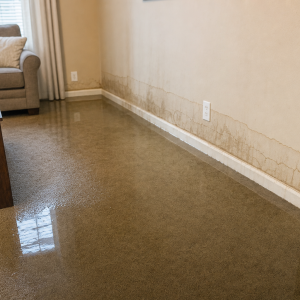

Picture this: a hurricane rips through your North Carolina neighborhood and wrecks your home. You file a claim, assuming your policy with a major carrier like State Farm or Allstate has you covered.
But then their adjuster shows up and hits you with a lowball settlement. It only covers repairs to your home’s original condition, completely ignoring the fact that local building codes have gotten way stricter since it was built. All of a sudden, you’re on the hook for tens of thousands in mandatory upgrade costs. That gap is exactly where ordinance or law coverage is supposed to step in.
The Costly Surprise Your Insurer Hopes You Ignore
Most standard homeowner and business owner policies are written to trap you. They’re designed to restore your property to its pre-loss condition, and that’s it. They will not automatically pay for the increased costs of demolition, repair, or reconstruction needed to comply with today’s laws and building codes. Insurers know this gap exists, and they often downplay it, leaving you dangerously exposed.
Think of your standard policy like a warranty for a 10-year-old car. If the engine dies, the warranty might cover another 10-year-old engine. But what if safety regulations now demand all replacement engines have modern emission controls? Your standard policy won’t touch that expensive, mandatory upgrade—and neither will your insurance company without a fight.
The Widespread Protection Gap
This isn’t some minor oversight; it’s a massive problem that leaves policyholders underinsured. One of the most shocking truths in the insurance world is the massive protection gap for natural disasters. A stunning 60% of global economic losses from catastrophes between 2014 and 2023 were uninsured.
The problem is especially bad in high-risk areas like the Americas, where 46% or US$592 billion of losses were not covered, despite hurricanes constantly hammering states like North Carolina and Virginia. This data screams why public adjusters are so essential. We dive deep into policy language, document every last bit of damage, and negotiate aggressively against insurers who send out their own biased adjusters. You can see the full story in this report on global insurance trends.
An insurer’s initial offer is just that—an offer. It’s often a calculated lowball figure based on what they hope you’ll accept, not what your policy actually entitles you to, especially when complex code upgrades are involved.
This is where the battle begins. Your insurance company has a team of adjusters and lawyers whose entire job is to minimize their payout. Their primary goal is to protect their profits, not help you recover. To level the playing field, you need an expert who works exclusively for you. A public adjuster is your advocate, armed with the knowledge of policy language and construction codes needed to fight back and demand the full and fair settlement you are owed.
Breaking Down Your Ordinance Or Law Coverage
Let’s be clear: Ordinance or Law Coverage isn’t some single, simple benefit. It’s actually a package of three distinct protections that insurance companies—especially the big players like Allstate and State Farm—are notorious for twisting, misrepresenting, or just plain ignoring to keep their payouts low. To fight back, you first have to know exactly what you’re entitled to.
This coverage is almost always split into three parts, usually labeled Coverage A, B, and C.
Imagine a historic commercial building right here in Virginia gets hit by a major fire. The fire department manages to save about half of the structure, but the local building inspector shows up and condemns the entire property. Suddenly, the owner is staring down a ridiculously complex and expensive recovery that their standard policy just won’t cover.
This is where the three pillars of ordinance or law coverage become your lifeline.
Coverage A: Loss to the Undamaged Portion
First up is Coverage A. This part is designed to cover the value of the portion of your property that wasn’t touched by the fire but has to be demolished anyway because of a local ordinance or code enforcement.
In our Virginia business owner’s nightmare scenario, this would cover the actual cash value of the half of the building that the fire didn’t destroy but was still condemned. Carriers love to pretend this value doesn’t exist, but it’s a very real, compensable loss.
Coverage B: Demolition Costs
Next, you have Coverage B. This pays for the actual, hands-on cost of tearing down that undamaged but now condemned section of the building.
Demolition is a messy, expensive, and labor-intensive job. This coverage is what funds the crew, the heavy equipment, and the debris removal needed to get the site cleared and ready for a rebuild. It’s a completely separate cost from the value covered under Coverage A.
The flowchart below shows just how easily standard policies can leave huge financial gaps for property owners, leaving them on the hook for these exact kinds of unexpected costs.

This visual really drives home the critical space between what a basic policy pays for and the true cost of getting back on your feet—and that gap is precisely where ordinance or law shortfalls live.
Coverage C: Increased Cost of Construction
Finally, there’s Coverage C, which is arguably the part we fight over the most. This covers the increased cost to rebuild your property so that it complies with today’s much stricter building codes.
For our Virginia business owner, this means paying for things that weren’t there before the fire—modern electrical wiring, mandatory sprinkler systems, ADA-compliant accessibility features, and more. These upgrades can easily add 20-30% or more to the final rebuilding cost.
You can get a deeper dive into how we secure fair payment for these exact expenses in our guide on building code upgrade coverage.
The Three Pillars of Ordinance or Law Coverage
To make this crystal clear, let’s break down how each coverage component works in a real-world claim. Think of them as three separate buckets of money, each with a very specific job.
| Coverage Component | What It Covers | Real-World Fire Damage Example |
|---|---|---|
| Coverage A | Pays for the value of the undamaged part of the building that must be demolished by law. | The value of the standing, unburned half of the building that the city inspector condemned. |
| Coverage B | Pays for the actual cost to demolish and haul away that undamaged portion. | The invoice from the demolition crew for their labor, equipment, and debris removal. |
| Coverage C | Pays for the extra costs to rebuild to current, stricter building codes. | The cost of new sprinkler systems, updated wiring, and energy-efficient windows required by today’s codes. |
Understanding these distinctions is the first step. The insurance company’s adjuster will do everything they can to blur these lines to save their employer money. It’s our job to hold them accountable to every single dollar you’re owed under each part.
The global insurance industry is massive, with premiums expected to hit an astounding €7.0 trillion. But that number doesn’t tell the whole story for policyholders in North Carolina and Virginia, who are routinely forced to fight tooth and nail for claims involving these mandatory code upgrades.
To win this fight, you have to understand the game. It comes down to mastering contract interpretation principles to dismantle the weak arguments an insurer throws at you. That’s exactly what a good public adjuster does—we use their own rulebook against them to get you the money you deserve.
Common Tactics Insurers Use to Deny Your Claim
Let’s get one thing straight: your insurance company is a business, not a friend. Every dollar they pay out on a claim, especially a complicated and expensive ordinance or law coverage claim, comes directly out of their profits. To protect that bottom line, carriers like State Farm and Allstate have a playbook of cynical tactics designed to deny, delay, and underpay what you are rightfully owed.

They’ll argue the damage wasn’t quite bad enough to trigger the ordinance. Or they might try to convince you that the local building codes aren’t really enforced anyway. These aren’t good-faith arguments; they are stall tactics meant to wear you down until you finally give up and accept a lowball offer.
The Delay and Deny Playbook
The moment your insurer sees a major ordinance or law claim on the horizon, their first instinct is often to find a way to kill it. They know you’re emotionally and financially drained after a disaster, and they count on exploiting that vulnerability.
Here are some of their go-to moves:
- Arguing Codes Aren’t Enforced: The company adjuster might casually say, “Oh, the town doesn’t really enforce that code,” hoping you won’t bother to get an official letter from the building inspector to prove them wrong.
- Minimizing Damage Thresholds: Many ordinances kick in when a specific percentage of the building is damaged, like 50%. It’s amazing how often the insurance company’s estimate will conveniently calculate the damage at just under that threshold—say, 49%—to avoid paying for a full teardown and compliant rebuild.
- Issuing Lowball Estimates: Their estimate will be full of cheap, non-compliant materials and completely ignore the real-world cost of meeting modern codes for electrical, plumbing, or structural systems.
- Blaming “Pre-Existing Issues”: This is a classic. They’ll claim the required upgrades are necessary because of old wear and tear or poor maintenance that existed long before the loss, shifting the cost right back onto your shoulders.
Case Study: A Public Adjuster Fights Back in Apex, NC
This isn’t just theory; we see this stuff happen to good people every single day. We worked with a family in Apex, North Carolina, whose home was hammered by a tornado. The storm was so violent it compromised the home’s foundation, and the local building department mandated massive, expensive upgrades to meet current structural safety codes before they could even think about rebuilding.
Their insurance company’s response? An immediate denial for that part of the claim. Their adjuster came out, took a quick look, and dismissed the required upgrades as a “pre-existing issue” that had nothing to do with the tornado. They were trying to duck a huge expense, leaving this family with an unlivable house and a bill for tens of thousands of dollars.
This is when For The Public Adjusters, Inc. stepped in. A denial from an insurance company is not the final word; it’s the start of the fight.
We immediately brought in our own structural engineers to perform an independent, thorough assessment. Our experts proved, without a doubt, that the tornado’s forces directly caused the damage that triggered the code enforcement action. Armed with irrefutable engineering reports and an expert understanding of North Carolina insurance law, we went back to the insurer and systematically took their flimsy arguments apart.
The result was a complete 180-degree turn. We forced the insurance company to cover the full increased cost of construction for the foundation upgrades. That single move secured an additional $75,000 for the policyholder—money they would have been cheated out of without an expert advocate in their corner.
How to Build an Ironclad Case for Your Claim
When you’re staring down a dispute over ordinance or law coverage, you can’t just cross your fingers and hope for the best. You have to build a case so solid, so undeniable, that your insurance company has no room to wiggle out of paying what they owe you.
Carriers like State Farm and Allstate are banking on you being too exhausted and disorganized to fight back effectively. We’re about to give you the playbook to flip the script.

This isn’t about arguing. It’s about proving, beyond a shadow of a doubt, that the building codes forcing these expensive upgrades are not mere suggestions—they are legal mandates you have no choice but to follow.
Document Everything With Precision
Your single most powerful weapon in this fight is an official letter from your local building inspector. Don’t even entertain a verbal conversation or a casual email. You need a formal document, on official letterhead, that spells out the specific codes requiring either the demolition or the costly upgrades to your property.
This letter isn’t just a piece of paper; it’s non-negotiable proof. It yanks the argument out of the insurance company’s hands and plants it firmly in the world of municipal law.
Next, you get your own estimates. Let me be clear: Never rely on the insurer’s “preferred” vendors. These contractors often have a cozy, long-standing relationship with the insurance companies. Their job is often to produce a lowball estimate that conveniently ignores the expensive code work you’re legally required to do.
You need to find your own independent, reputable contractors—the kind who specialize in code-compliant reconstruction. Their estimates must be detailed and itemized, clearly breaking out the cost of basic repairs versus the increased costs of construction forced by today’s building ordinances.
Your Essential Evidence Checklist
To make your case airtight, you need to compile a file that leaves your insurer with zero wiggle room. Your goal is to overwhelm them with facts. And to really put the pieces together, it helps to start by understanding the intricacies of homeowners insurance claims in general.
Here’s what you absolutely must have:
- The Official Letter: A signed directive from the city or county building department, citing the exact ordinances at play.
- Independent Contractor Bids: Get at least two highly detailed bids from qualified builders you’ve vetted—not the ones the insurer sends your way.
- Photographic and Video Evidence: Document everything. Before, during, and after. Show the damage, the code violations, and the work required to fix it.
- Your Complete Policy: You need a full copy of your insurance policy, including every last endorsement and the declarations pages.
- All Communications: Keep a written log. Every phone call, every email, every letter you send or receive from the insurance company gets noted down with the date, time, and person you spoke to.
Fighting back isn’t just about collecting documents; it’s about weaponizing them. A public adjuster knows how to take that mountain of evidence and present it in a way that forces the insurance company to stop stonewalling and start writing checks.
Let’s be honest, this process can feel like a full-time job. That’s exactly what the insurance companies are counting on. A public adjuster takes this entire burden off your shoulders. We gather the evidence, bring in the right experts, and fight the battles while you get back to your life. If you’re stuck in this nightmare, our guide on how to dispute an insurance claim gives you even more strategies to fight back.
Why a Public Adjuster Is Your Strongest Ally
Trying to go head-to-head with a multi-billion dollar insurance company like Allstate or State Farm on your own is a fight you’re set up to lose from the start. It’s not a fair match.
When it comes to a complicated dispute over ordinance or law coverage, their army of adjusters and lawyers has one mission: protect their profits by paying you as little as they can get away with. They are masters at twisting policy language to their advantage and using your own stress against you.
This is where a public adjuster becomes your most powerful weapon. Unlike the adjuster sent by your insurance company (who works for them), a public adjuster is a state-licensed expert who works exclusively for you, the policyholder. We are your advocate, your expert negotiator, and your shield against the insurer’s games. You can learn more about the role we play by exploring our detailed guide on what a public adjuster is and how we level the playing field.
Dismantling the Insurer’s Arguments
An insurer’s denial of code upgrade costs is almost never based on solid ground. It’s usually built on flimsy interpretations of your policy and conclusions that just so happen to save them a ton of money. A public adjuster’s job is to systematically tear those arguments apart with overwhelming evidence and expertise.
Here’s how we do it:
- Forensic Policy Review: We comb through every single line of your policy, hunting for all the applicable coverages the insurance company hopes you’ll never notice.
- Bringing in the Experts: We have our own network of engineers, contractors, and building code specialists who produce independent reports that directly counter the insurer’s cheap assessments.
- Documenting the Real Cost: We build a detailed, itemized estimate showing what a fully compliant rebuild actually costs, leaving the insurer with zero room to argue the numbers.
This professional intervention is often the only thing standing between a property owner and financial ruin. Without an expert fighting in your corner, you are simply outgunned.
Success Story: A Virginia Business Owner Fights Back
The true power of having a professional advocate is best seen in a real fight. We represented a commercial property owner right here in Virginia whose building was hammered by a major disaster. Their insurer’s first offer was so low it was insulting.
It completely ignored the massive costs needed to bring the older building up to modern fire, electrical, and accessibility codes. The insurance company’s adjuster had conveniently “overlooked” these mandatory expenses.
The insurer was trying to underpay the claim by over 40%—a number that would have crushed the business. That’s when For The Public Adjusters, Inc. was hired to take over. We immediately launched our own investigation, bringing in code experts and specialized contractors to document the true scope and cost of a compliant rebuild.
We presented the insurance company with an irrefutable evidence package that detailed every specific code, every necessary upgrade, and every single dollar they were legally obligated to pay under the ordinance or law provision.
Faced with our rock-solid documentation, the insurer had no choice but to back down from their lowball position. We successfully negotiated a final settlement that was substantially higher, securing the full amount needed for all code-required upgrades. This victory allowed the business to rebuild correctly and safely, a result that would have been impossible if they had accepted the insurer’s initial bad-faith offer.
Your Top Questions About Ordinance or Law Coverage, Answered
Trying to make sense of an insurance claim is a headache on its own. But when ordinance or law coverage gets involved, you’re suddenly dealing with a whole new level of confusion—and a lot more resistance from your insurer.
Homeowners and business owners in North Carolina and Virginia often have urgent questions, and the insurance company’s adjuster is paid to give you the wrong answers. Let’s set the record straight on the most common traps and misinformation out there.
Doesn’t My Standard Policy Already Cover Rebuilding My Property?
This is the single most dangerous assumption you can make. Your standard policy is designed to do one thing: restore your property to its previous condition. It absolutely does not automatically cover the mandatory—and often devastatingly expensive—upgrades required to meet today’s building codes.
Insurers count on you not knowing this. It’s how they justify their lowball settlement offers. Ordinance or Law coverage is a specific, separate add-on meant to plug this very hole, but carriers love to limit it to a uselessly small amount or just fight tooth and nail to avoid paying it at all.
Should I Trust the Insurance Adjuster When They Dismiss Code Upgrade Costs?
Absolutely not. Never, ever trust the insurance company’s adjuster to look out for your best interests. Their job isn’t to help you; it’s to protect their employer’s profits by paying out as little as possible. They are not impartial experts on building codes.
An insurance adjuster’s opinion on building codes is just that—an opinion designed to save their company money. It holds zero legal weight against a formal directive from your local building department.
What you need is an independent, unbiased assessment from a public adjuster and an official order from your local building officials. That’s how you determine the real, legally required cost to rebuild your property the right way.
How Much Ordinance or Law Coverage Do I Really Need?
Most standard policies toss in a token amount, often just 10% of your main dwelling coverage. For any property that isn’t brand new, this is a recipe for disaster.
The true cost to tear down a damaged structure and rebuild it to meet modern safety and structural codes can easily hit 25-50% of your property’s total value. After a loss, a public adjuster can dig into your policy to see if your limits are even close to adequate. More importantly, we know how to fight for every single dollar of the coverage you do have, making sure the insurer can’t twist the policy language to shortchange you.
Can I Really Win a Fight if My Insurer Denies My Claim?
Yes, you absolutely can. A denial is just the insurer’s opening move—it’s not the end of the road. It’s a strategy. They’re testing you to see if you’ll get frustrated and just go away.
When you have an expert public adjuster in your corner, you get the technical documentation, policy expertise, and negotiating power needed to demolish their weak arguments. We know how to challenge a wrongful denial and force your insurance company to honor its contract and pay what you’re rightfully owed.
2. How do I interpret "Coverage A, B, C, and D" in my NC or VA policy to see if I have "Ordinance or Law" Coverage?
In standard HO-3 homeowners policies (the most common in North Carolina and Virginia), these are the core property coverages listed on your declarations page:
- Coverage A (Dwelling): Covers the main structure of your home (roof, walls, attached garage) against covered perils. This is the primary limit, based on your home's rebuild cost.
- Coverage B (Other Structures): Protects detached items like sheds, fences, or guest houses—typically 10% of Coverage A.
- Coverage C (Personal Property): Insures your belongings (furniture, clothes, electronics)—usually 50-70% of Coverage A.
- Coverage D (Loss of Use / Additional Living Expenses): Reimburses extra costs (hotel, meals) if a covered loss makes your home uninhabitable—often 20-30% of Coverage A, with no fixed time limit in most policies (lasts during reasonable repairs).
- Ordinance or Law coverage (also called Building Ordinance or Law) is not assigned a standard letter like Coverage A through F.
- In most HO-3 policies (common in North Carolina and Virginia), basic Ordinance or Law is often included as an additional coverage (typically 10% of Coverage A) and may appear on the declarations page as a separate line item, such as "Ordinance or Law" with its limit (e.g., percentage or dollar amount of Dwelling coverage).
- If increased (via endorsement), it shows explicitly on the declarations page under endorsements or additional coverages—not as Coverage E (which is Personal Liability).
Check your declarations page for a line labeled "Ordinance or Law," "Increased Ordinance or Law," or under "Additional Amounts of Insurance." Not listed? It may be minimal/basic—ask your agent to confirm or add more.
3. What is the "50% Rule" (Substantial Damage) in North Carolina and Virginia?
In many jurisdictions across NC and VA (especially in floodplains like the Outer Banks or Virginia Beach), if a structure is damaged by 50% or more of its market value, it is deemed "Substantially Damaged." Under local ordinances, a substantially damaged building cannot be repaired as-is; it must be brought into full compliance with current codes, which often includes elevating the entire structure. Without Ordinance or Law Coverage, your insurer may only pay for the repair cost, leaving you with a six-figure bill for elevation.
4. How do I handle an adjuster who says my code upgrade is a "voluntary improvement"?
The "Determination Letter" is your strongest weapon. Many adjusters will claim a code upgrade is optional. To solve this, contact your local building official (e.g., the Charlotte-Mecklenburg Building Development or the Richmond Building Inspector) and request a formal Code Determination Letter. If the official states in writing that a specific upgrade (like hard-wired smoke detectors or specific wind-rated windows in NC) is a mandatory requirement for a permit, the insurance company generally cannot deny the claim as "voluntary."
5. Does Ordinance or Law cover ADA compliance for commercial properties in Virginia?
Yes, but only if the loss triggers the requirement. Under the Virginia Uniform Statewide Building Code (USBC) and the ADA, certain repairs to "Primary Function" areas trigger a requirement to spend up to 20% of the repair cost on "Path of Travel" accessibility upgrades (ramps, wider doors). A sophisticated Public Adjuster will ensure that these statutory costs are included in your claim, even if the insurance company’s estimate completely ignores them.
6. Why is my claim being denied because the upgrade wasn't "Incurred" yet?
Insurance companies often use the "Incurred" clause as a stalling tactic, stating they won't pay until you have already paid the contractor. However, in both NC and VA, courts and the Department of Insurance (NCDOI) generally recognize that if a legal obligation to comply exists (via a permit requirement), the cost is "incurred." The Solution: Secure a signed contract with the code-compliant scope clearly line-itemed to prove the future expense is a legal certainty.
7. Does Ordinance or Law Coverage apply to "Grandfathered" features?
Grandfathered status is revoked the moment you suffer a major loss. Many older homes in historic districts like Old Town Alexandria or Winston-Salem are "out of code" but legal because they haven't been touched. Once a fire or storm occurs, the "Grandfathering" ends. Ordinance or Law Coverage is the only mechanism that pays to bridge the gap between your 1950s wiring and the 2023 National Electrical Code requirements currently enforced.
8. What are the common "Coastal Triggers" for Ordinance or Law Coverage in NC and VA?
If you own property on the coast, two specific codes frequently trigger these claims:
Wind-Borne Debris Regions (NCGS § 143-138): Certain areas in NC require impact-resistant glass or storm shutters.
Freeboard Requirements: Local ordinances in VA Beach or Norfolk often require building heights to be 1–3 feet above the base flood elevation. Ordinance or Law Coverage is what pays for that extra elevation height.
9. Can I use Ordinance or Law coverage to move to a different location?
Generally, no. Coverage for "Increased Cost of Construction" is usually limited to the existing location. However, if local ordinances (such as new setback laws) make it legally impossible to rebuild on your current lot, Coverage A (Undamaged Portion) and Additional Debris Removal (Demolition) can help provide the cash value needed to transition to a new site, subject to your policy limits.
10. How does the "Matching" law in NC/VA affect Ordinance or Law claims?
This is a high-level dispute area. In North Carolina, insurers are often required to provide a "reasonably uniform appearance." If a building code requires you to replace a damaged electrical panel with a larger one, and that new panel requires a different type of exterior meter box that doesn't "match" your siding, your Ordinance or Law coverage can be leveraged to pay for the resulting siding changes required by the code-mandated electrical move.
Don’t let a bad-faith denial from your insurance company destroy your financial recovery. The team at For The Public Adjusters, Inc. is here to fight for you. Contact us today for a no-cost claim review at https://forthepublicadjusters.com.