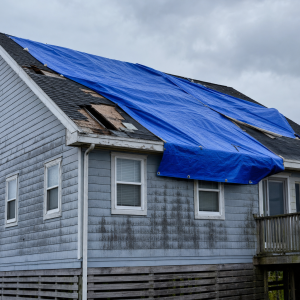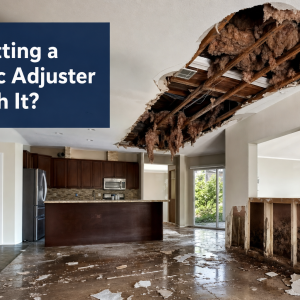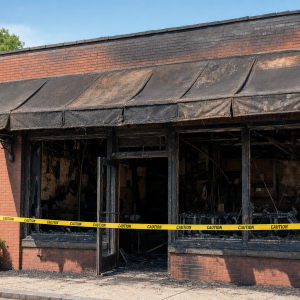

Your roof claim was denied last week. The carrier's adjuster says the damage is wear and tear, the estimate leaves out code-related work, and the payment won't cover the contractor's bid. You're not dealing with a generic insurance dispute. You're dealing with North Carolina insurance laws, a state-specific regulatory system, and a claim file where deadlines and documentation can decide what happens next.
North Carolina's property-claim rules reach back to 1899, when the legislature established the Department of Insurance and assigned it responsibility for admitting, licensing, and regulating insurers. Chapter 58 of the North Carolina General Statutes remains the state's Insurance Law, and the Commissioner of Insurance continues to serve as the chief regulator. That structure matters when your insurer delays, underpays, or changes its explanation for a denial.
Table of Contents
- How NC Insurance Laws Govern Your Property Claim
- Unfair Claims Practices and Prompt-Pay Protections in North Carolina
- Wind vs Flood Coverage and the NFIP Trap in NC
- Critical NC Deadlines After a Property Loss
- How Insurers Low-Ball and Delay Claims in North Carolina
- Your Dispute and Appeal Options Under NC Insurance Law
- When a Public Adjuster Changes the Outcome of an NC Claim
- Your NC Claim Action Plan and NCDOI Resources
How NC Insurance Laws Govern Your Property Claim
A Raleigh homeowner receives a denial after a storm. The adjuster calls the damage wear and tear, the estimate excludes code-related work, and the payment falls short of the contractor's bid. The next question is not whether the adjuster sounded confident. It is whether the carrier applied the policy and the North Carolina rules governing the claim.
Chapter 58 of the North Carolina General Statutes supplies the statutory framework, while Title 11 of the North Carolina Administrative Code sets regulatory requirements for insurers, adjusters, and claim procedures. Read both against the policy, because a denial can look reasonable until its wording is compared with the coverage language and the facts in the file. The statutory framework administered by the Department outlines the state system that governs the carrier's conduct.
North Carolina's Department of Insurance licenses carriers, oversees policy forms and rates, investigates complaints, and enforces insurance laws. That oversight means a homeowners or commercial property dispute deserves a North Carolina-specific review, not a generic explanation based on another state's rules. The Department's filing materials also show how rate decisions can affect the cost and scope of property coverage.
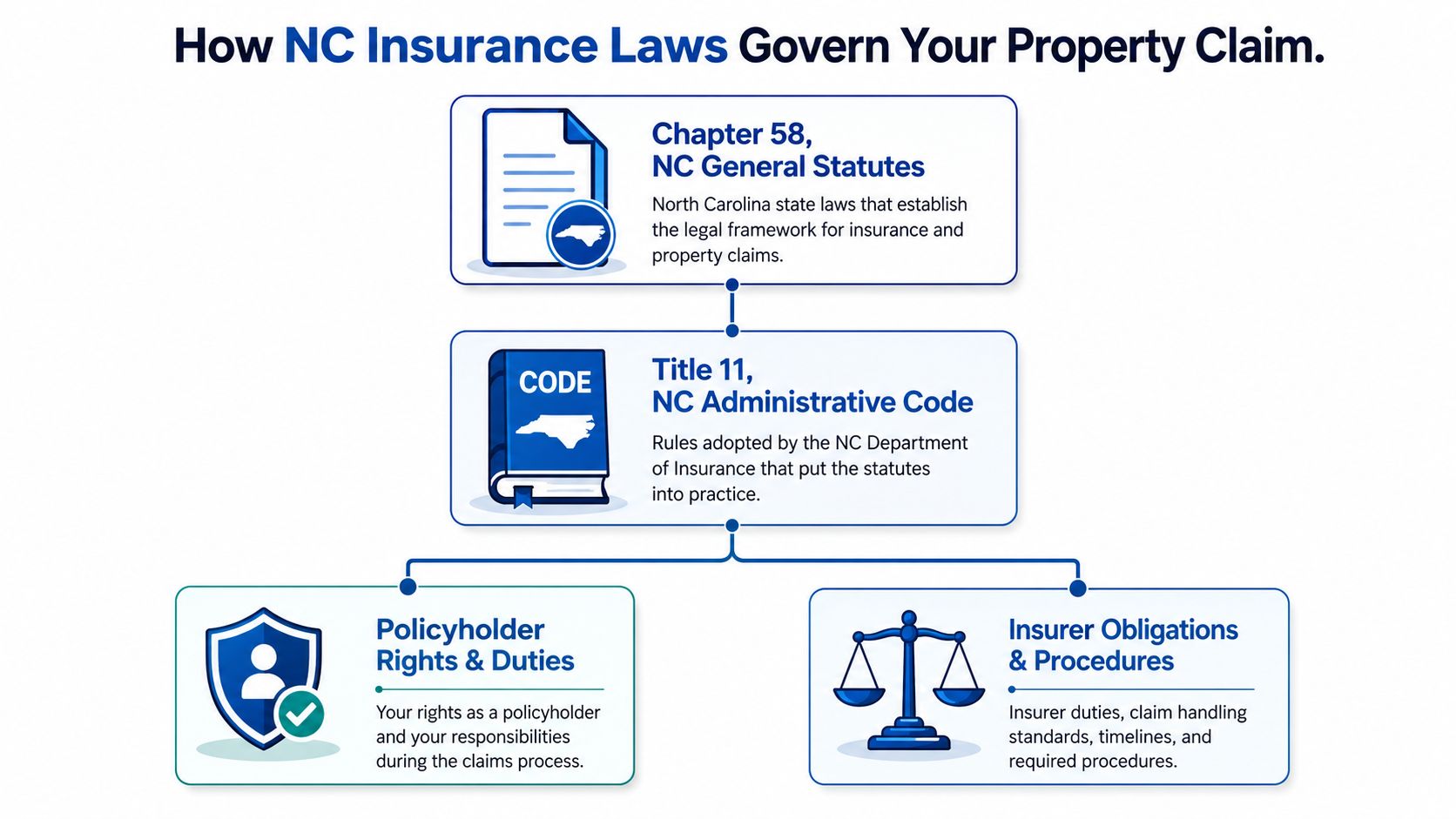
The rules behind the adjuster's decision
Unfair claims settlement provisions address unreasonable investigation, weak explanations, and improper delays. Prompt-pay rules govern how carriers acknowledge and process claims, and North Carolina's property-insurance mediation statute gives an insured a defined opportunity to request mediation after a denial. These rules do not guarantee payment. They require the insurer to follow an identifiable process and support its position with policy language and evidence.
Start with the file. Gather the complete policy, declarations, endorsements, exclusions, estimates, photographs, engineer reports, and every carrier letter. Compare the denial with the exact provision cited. If the explanation changes from wind damage to wear and tear, or from sudden water damage to long-term seepage, preserve every version.
Practical rule: A denial is only as strong as the policy language and evidence supporting it. Ask the carrier to identify the facts and the exact provision it relies on.
Rate pressure makes coverage disputes more consequential. In January 2024, the North Carolina Rate Bureau requested a 42.2% average statewide homeowners increase, after requesting a 24.5% average increase in 2020. The 2020 filing settled at a 7.9% average increase, while Department of Insurance filing materials showed a 5-year average rate indication of +2.8% for 2017 through 2021. North Carolina Department of Insurance filing materials show why a denial, delay, or underpayment can carry serious financial consequences for the policyholder.
Unfair Claims Practices and Prompt-Pay Protections in North Carolina
A claim can be disputed without being handled unfairly. The line matters after a denial, a long silence, or an estimate that leaves out obvious damage. N.C. Gen. Stat. § 58-63-15 addresses unfair claim settlement practices, including unreasonable investigation, poor communication, and refusal to pay without a reasonable basis. North Carolina's administrative rules add practical claims-handling standards that help show whether the carrier followed a defensible process.
Do not argue from frustration alone. Build a file that shows what happened, when it happened, what you supplied, and how the insurer responded. That record gives your written dispute, regulatory complaint, mediation request, or legal consultation something concrete to address.
What to document
The North Carolina Department of Insurance states that homeowners carriers must acknowledge receipt of a claim within 30 days. The state does not set one universal deadline for settling every claim because losses differ in complexity. The NCDOI homeowners insurance FAQs explain that distinction.
Keep a claim diary with:
- Contact history: Record the date, time, name, department, and substance of every call.
- Written communications: Save emails, letters, text messages, reservation-of-rights notices, and denial explanations.
- Scope differences: Compare the insurer's estimate with contractor bids and your room-by-room damage inventory.
- Inspection evidence: Preserve photographs, videos, moisture readings, reports, and repair invoices.
- Delay proof: Note missed appointments, unanswered requests, repeated demands for documents already submitted, and unexplained changes in the assigned adjuster.
| NC Legal Requirement | Common Carrier Violation |
|---|---|
| Acknowledge receipt of a homeowners claim within 30 days | The carrier leaves the claim unassigned or sends only a vague acknowledgment |
| Investigate using reasonable standards | The adjuster inspects one area and ignores related damage |
| Explain a denial using policy language | The letter says “wear and tear” without identifying the exclusion or supporting facts |
| Handle the claim without unreasonable delay | The carrier repeatedly requests information already provided |
| Provide a defensible claim position | The estimate omits visible damage, necessary labor, or covered components |
Match each complaint to evidence. A missed inspection needs dates and messages. An incomplete estimate needs photographs, measurements, contractor pricing, or an itemized inventory. A denial needs the exact policy provision and the facts the carrier says support it.
If the file shows a pattern rather than one isolated mistake, send a written dispute that identifies the correction you expect. North Carolina insurance bad-faith claim guidance provides context for evaluating whether the conduct may justify a regulatory complaint, mediation, or legal advice.
Wind vs Flood Coverage and the NFIP Trap in NC
After a hurricane or severe storm, the coverage dispute often turns on classification. A North Carolina homeowners policy generally addresses covered wind damage. Flood damage falls under a policy issued through the National Flood Insurance Program or a private flood carrier. Homeowners policies generally exclude flood and rising water, so separate flood coverage is required. North Carolina's official flood-insurance guidance explains that basic exclusion.
The hardest disputes involve both wind and water. The carrier may claim rising water caused the roof failure, interior damage, or destroyed contents. You may have evidence that wind opened the roof first and rain entered through that opening. Those theories lead to different insurance claims, so build the timeline before accepting the carrier's label.
Evidence that controls classification
Preserve photographs from before cleanup, weather records, roof-inspection findings, elevation information, contractor observations, and engineering reports. These materials can establish which peril caused each portion of the loss. Floodwater at the property does not automatically prove that every damaged item belongs under flood coverage. The policy language, physical evidence, and sequence of events control.
For help documenting damage from a flood, keep damaged materials when safe, photograph waterlines and affected rooms, and separate wind-related evidence from water-related evidence. Do not let the carrier reduce a mixed loss to one broad conclusion without identifying the cause of each claimed item.
The NFIP has its own filing requirement. Under the Standard Flood Insurance Policy, submit a complete, signed, sworn Proof of Loss within 60 days after the date of loss, unless FEMA extends the deadline for that event. Federal court guidance concerning the NFIP proof-of-loss requirement identifies the default rule. FEMA extended the deadline for Hurricane Milton claims to 180 calendar days from the date of loss, as shown in its event-specific bulletin. Do not assume the adjuster's estimate replaces your sworn proof of loss.
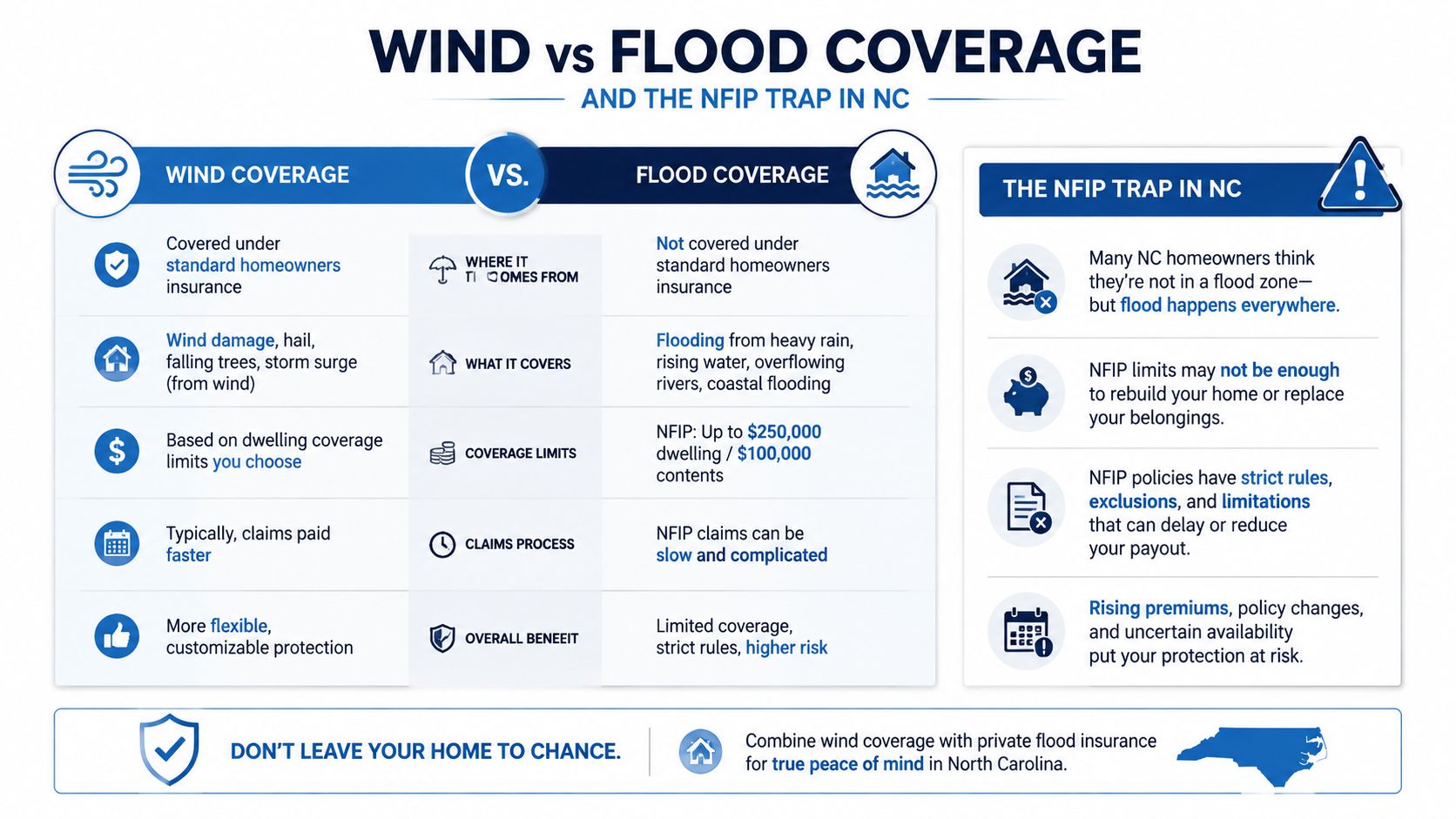
A late NFIP proof of loss can block payment even when the damage is legitimate. Track the deadline, submit supporting records, and keep delivery proof.
Critical NC Deadlines After a Property Loss
After a storm, the insurer may ask for documents while your own filing deadlines keep running. A missed date can weaken a legitimate claim, especially when the dispute involves denial, delay, or a flood-versus-wind classification. Put each deadline in writing and preserve proof of every submission.
Put the deadlines in order
Initial notice: Report the loss according to the policy and keep proof of delivery. A phone call may start the claim, but it does not create a complete record by itself.
Carrier acknowledgment: North Carolina homeowners carriers must acknowledge receipt within 30 days, according to NCDOI consumer guidance. Record the date you reported the loss and the date the carrier confirmed it.
NFIP proof of loss: For a flood claim, submit a complete, signed, sworn Proof of Loss within 60 days after the date of loss, unless FEMA issues an event-specific extension. Do not wait for the adjuster's estimate. The NFIP requirement can apply even when the damage is genuine.
Mediation request: North Carolina's property-insurance mediation procedure gives an insured 60 days after a claim denial to request mediation. Missing that window can bar the mediation demand, although it does not automatically erase every other legal right or remedy.
Civil claim review: Contract and bad-faith disputes may involve separate limitation rules. Have counsel review the policy's suit-limitation language and applicable statute before you assume the filing period.
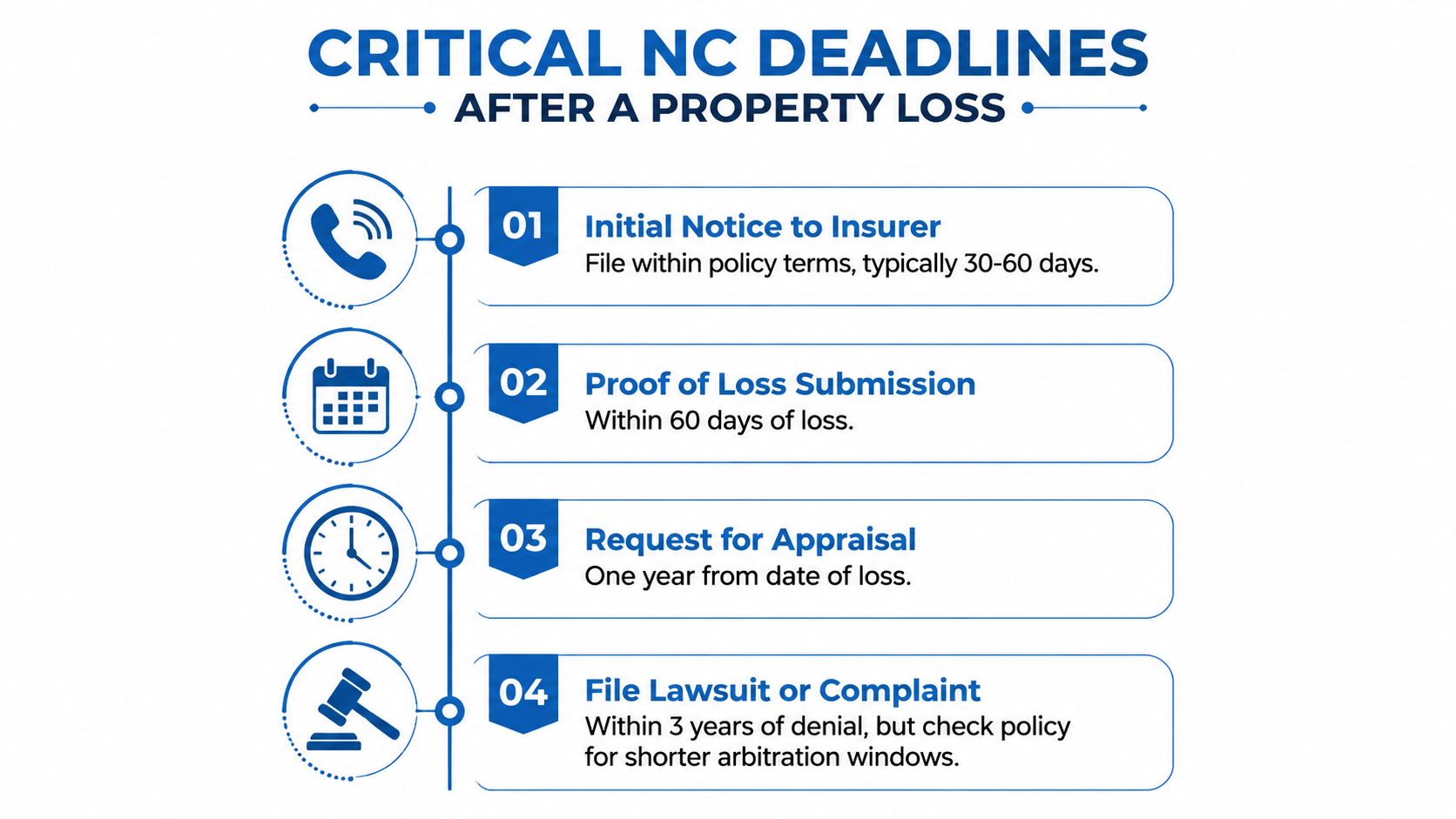
An insurer's delay does not automatically pause your deadlines. Send important materials through a method that creates delivery evidence, save confirmations, and maintain a claim diary showing requests for additional information. Use this North Carolina claim-settlement timeline guidance to organize the file, then obtain prompt professional review when a deadline is close.
How Insurers Low-Ball and Delay Claims in North Carolina
Low-ball claims rarely arrive as an obvious refusal to pay. They arrive as a narrow scope, heavy depreciation, missing code items, or an engineering opinion that changes the cause of loss. Carriers such as State Farm, Allstate, Universal Property, Liberty Mutual, and USAA write property policies in markets where the adjuster's estimate can differ sharply from the work required to restore the building.
The proper response isn't an angry phone call. It's a documented comparison between the policy, the damage, the estimate, and the building requirements.
Tactics that deserve scrutiny
An actual-cash-value estimate may apply depreciation that leaves the payment below the cost of necessary repairs. A scope sheet may omit code-related work, even though North Carolina law can require insurers to address certain building-code coverage issues when the policy and applicable statute support it. An engineer may attribute storm damage to deterioration or flooding without adequately examining the timing and physical evidence.
A long silence also matters. If the carrier's communications show an extended investigation without a clear explanation, that timeline belongs in your claim diary and written complaint.
| Tactic | How It Shows Up in NC Claims | NC Law It May Violate |
|---|---|---|
| Heavy depreciation | The estimate reduces roofing, flooring, or contents values below practical repair cost | Unfair settlement standards may apply if the valuation lacks a reasonable basis |
| Narrow scope | The estimate excludes related rooms, code work, or necessary demolition | Policy provisions and applicable building-code coverage rules must be reviewed |
| Cause shifting | Wind damage is recast as flood, deterioration, or maintenance | A denial may be improper if the investigation doesn't support the stated exclusion |
| Repeated delay | The carrier keeps requesting documents without a clear coverage position | Unfair claims settlement provisions may apply to unreasonable delay |
| Unsupported denial | The letter uses a conclusion without identifying the controlling exclusion | The policyholder should demand the precise provision and factual basis |
When an insurer's offer is far below the repair evidence, the problem is not solved by signing quickly. A separate resource on Oregon auto appraisal help for low offers addresses low-ball valuation in another insurance context, but the documentation principle applies here too. Build the valuation record before accepting the carrier's number.
Your Dispute and Appeal Options Under NC Insurance Law
A denial or low estimate demands a written response, not a phone argument. A focused dispute letter can correct missing damage, require the carrier to state its coverage position, and preserve the facts if the claim proceeds to mediation, appraisal, or court. “I disagree” accomplishes none of those things.
Build the written record first
Send an internal appeal with the claim number, date of loss, disputed rooms or items, relevant policy provisions, estimate differences, and the action you want the carrier to take. Identify potentially unfair conduct under N.C. Gen. Stat. § 58-63-15 if the insurer delayed, failed to investigate, or issued a denial without factual support. Attach photographs, contractor estimates, expert materials, receipts, and a concise damage schedule.
Ask for the claim file and decision materials in writing. Specify the reports, estimates, photographs, recorded statements, engineering opinions, and coverage letters you want. Keep copies of every submission, and record the date sent and the carrier's response.
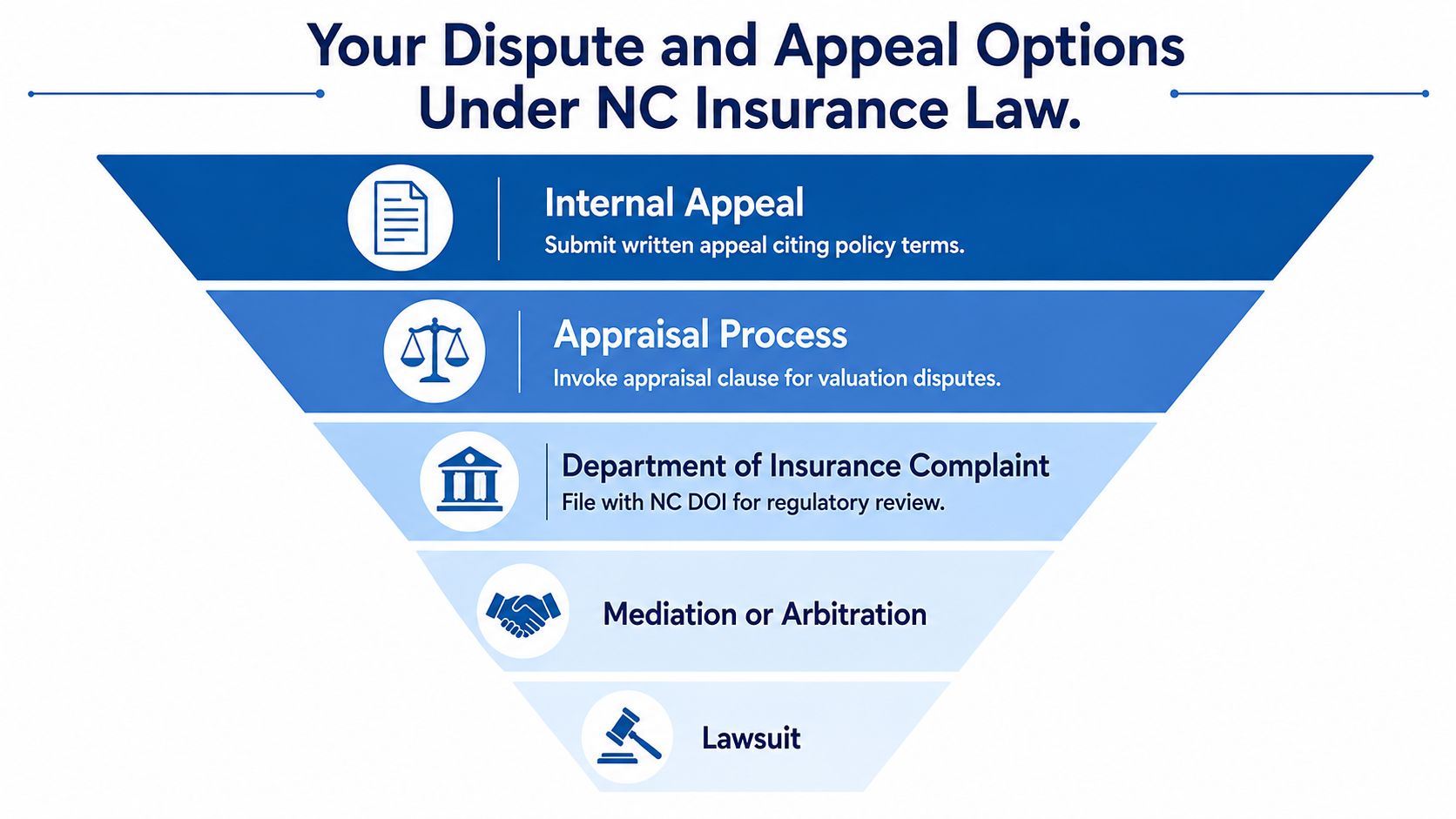
Match the remedy to the dispute
- Internal review: Use it for a missed line item, incomplete inspection, conflicting estimates, or an explanation that does not identify the policy basis.
- NCDOI complaint: Contact the Department's Consumer Services process when the carrier's conduct appears inconsistent with North Carolina requirements. The complaint creates a regulatory record, but it does not replace a lawsuit or guarantee payment.
- Mediation: Consider North Carolina's property-insurance mediation process after a denial, while protecting the 60-day request window described earlier.
- Appraisal or litigation: Appraisal can address the amount of loss when coverage is accepted. Litigation may fit a coverage denial, unsupported exclusion, or investigation the carrier refuses to correct.
Do not sign a release or accept a final payment before reviewing the dispute record. Have a lawyer assess bad-faith issues, limitation periods, notice requirements, and possible fees. A public adjuster can organize the technical claim presentation, while an attorney advises on litigation strategy and legal remedies.
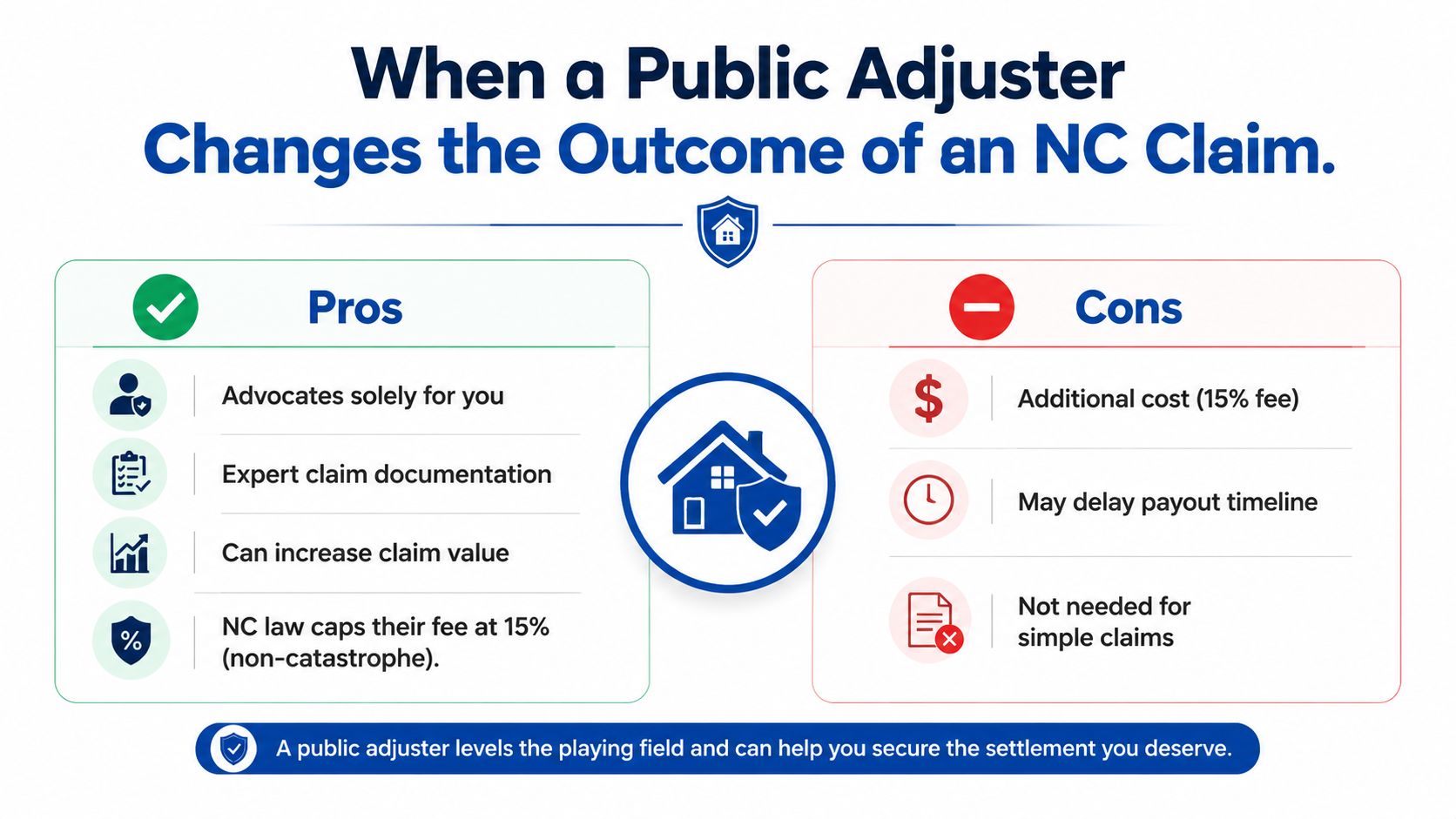
When a Public Adjuster Changes the Outcome of an NC Claim
The carrier's adjuster works for the carrier. A licensed North Carolina public adjuster works for the policyholder, evaluating damage, interpreting the claim presentation, and negotiating with the insurance company. That distinction becomes important when the first estimate is incomplete or the denial rests on a disputed cause.
A public adjuster can reinspect the property, prepare a detailed scope, document contents and building damage, compare estimates, respond to engineering conclusions, and present the claim in a form the carrier must address line by line. A lawyer handles legal advice and litigation. A public adjuster handles the technical and financial claim presentation.
Understand fees before signing
North Carolina law restricts public-adjuster compensation. A public adjuster can't receive a commission based on the insurer's total claim payment, and compensation generally must be reasonable and tied to time and expenses until payment or a written commitment to pay. In catastrophic incidents, the fee cap is 10% of the insurance settlement or proceeds, and a pre-settlement retainer isn't allowed. North Carolina's public-adjuster statute should be read before signing any contract.
Licensing, written contract requirements, and cancellation rights matter. Ask who is licensed, what services are included, how expenses are handled, and whether the agreement covers only the current loss.
The right time to get help is before the claim position hardens. A denial, more than 60 days without meaningful movement, or an offer that won't cover credible contractor bids are all warning signs. Homeowners comparing service models can also review this practical resource on working with a public adjuster.
Your NC Claim Action Plan and NCDOI Resources
A denied, delayed, or underpaid claim requires a documented response. Use this checklist for a home, rental dwelling, or commercial building.
- Secure the policy: Obtain the complete policy, declarations, endorsements, exclusions, and deductibles.
- Create the diary: Record every contact, promise, inspection, request, and missed response with dates and names.
- Request the file: Ask the carrier in writing for the claim materials used to evaluate the loss.
- Preserve damage evidence: Photograph affected areas before repairs, retain damaged materials when safe, and save emergency invoices.
- Challenge the estimate: Mark omitted rooms, materials, labor, code items, contents, and temporary-protection expenses.
- Send a written dispute: Identify the policy language and conduct that may implicate N.C. Gen. Stat. § 58-63-15.
- Protect deadlines: Calendar the carrier acknowledgment rule, any NFIP proof-of-loss deadline, and the mediation window after denial.
- Escalate appropriately: Contact NCDOI, request mediation, obtain a public-adjuster review, or consult counsel based on the dispute.
| Step / Action | NC Rule or Deadline | NCDOI or Other Resource |
|---|---|---|
| Confirm claim acknowledgment | Homeowners carriers must acknowledge receipt within 30 days | NCDOI homeowners insurance guidance |
| Protect an NFIP claim | Complete sworn proof of loss is generally due within 60 days, subject to FEMA extensions | FEMA flood insurance guidance |
| Request mediation after denial | Request within 60 days after denial | North Carolina property-insurance mediation procedure |
| File a regulatory complaint | Use when claim handling appears unfair or improperly delayed | NCDOI Consumer Services Division, 855-408-1212, and the NCDOI online complaint portal |
| Seek specialized help | Match the professional to the dispute | SHIIP handles Medicare questions, the Office of State Fire Marshal handles arson-related matters, and the NAIC consumer complaint database provides broader carrier information |
For a no-cost claim review, gather the full policy, denial or payment letter, insurer and contractor estimates, photographs, inspection reports, receipts, and contact diary. Do not sign a release or accept final payment until someone compares the settlement with the policy and actual repair scope.
For The Public Adjusters, Inc. helps North Carolina homeowners and business owners assess, document, and dispute denied, delayed, and underpaid fire, water, wind, hail, storm, and flood-related property claims. Visit For The Public Adjusters, Inc. for a no-cost claim review, or call 919-400-6440 to speak with a licensed public insurance adjuster. Have your water damage claim questions answered at NO COST. Call 919-400-6440 to speak with a licensed Public Insurance Adjuster or Contact Us here with questions. WE Work For YOU… NOT Your Insurance Company!