Is Your Low Insurance Settlement Offer Too Low? Here’s How to Tell
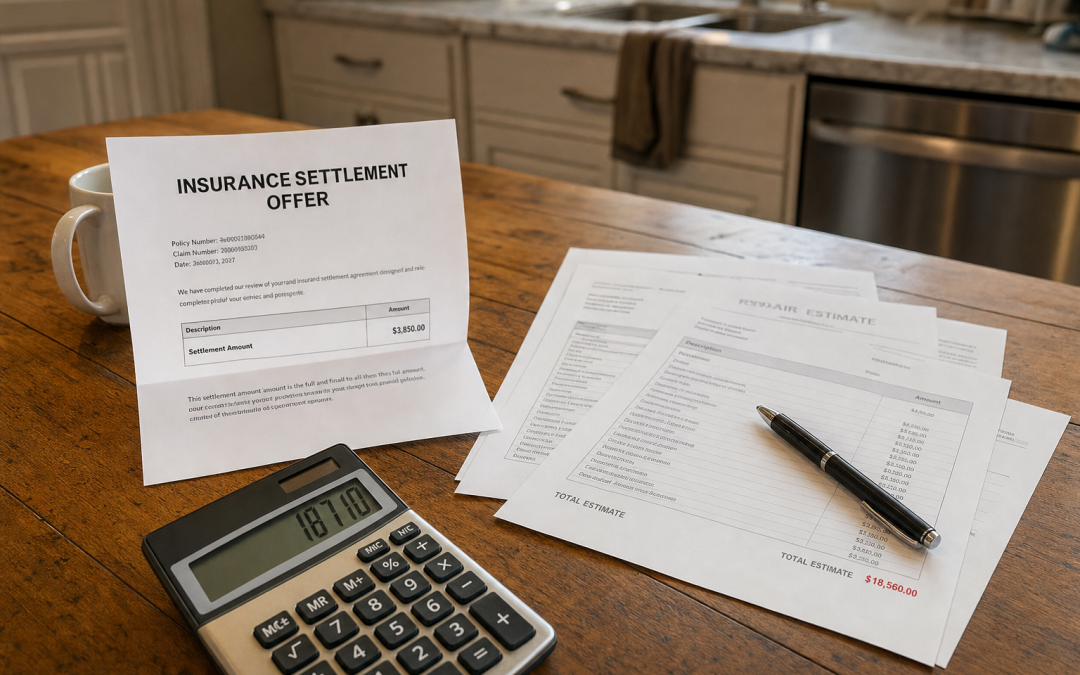
A low insurance settlement offer is one that won’t actually cover the cost of restoring your home to its pre-loss condition — and it’s more common than most homeowners realize. If your insurer’s first number doesn’t match real-world repair estimates, you have the right to question it, document the gap, and negotiate. An initial offer is a starting point, not a final decision.
Key takeaways
- A first settlement offer that ignores line items in your own contractor estimates or omits code-upgrade costs is a strong sign it’s too low.
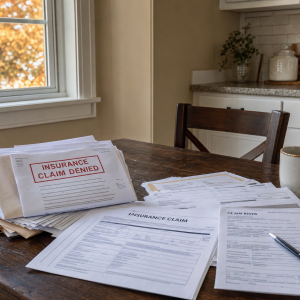
- Never sign a release or cash a check marked ‘full and final settlement’ until you’re sure the offer covers all documented damage.
- You have the right to dispute an offer by submitting a written counter with independent repair estimates, photos, and receipts.
- If negotiations stall, options include invoking the appraisal clause in your policy, hiring a public adjuster, or consulting an attorney.
- Insurers must handle claims in good faith — a documented pattern of lowballing or delay may support a bad-faith complaint to your state insurance department.
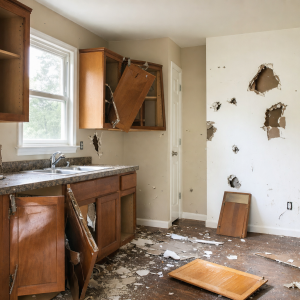
After a summer of severe thunderstorms, straight-line winds, and tropical-storm remnants moving across North Carolina and Virginia, many homeowners are opening settlement letters that feel disconnected from what contractors are actually quoting. Roofs, siding, fences, and interiors soaked by wind-driven rain often cost far more to repair properly than a quick desk estimate suggests. If that describes your situation, you’re not imagining it — and you’re not stuck.
Quick Checklist: Signs Your Offer May Fall Short
Run your settlement offer through this fast gut-check before you sign or deposit anything:
- Contractor estimates come in higher than the insurer’s figure — especially by a wide margin.
- Whole categories of damage are missing, such as interior water damage, tree removal, debris hauling, or code-required upgrades.
- The adjuster’s inspection was rushed, done only from the ground, or handled entirely by photos.
- Depreciation seems aggressive, leaving an actual cash value payment far below replacement cost.
- The estimate uses generic pricing that doesn’t reflect local labor and material costs in your area.
- You’re being pressured to accept quickly or told this is “the best they can do” without a detailed breakdown.
If even one or two of these apply, your claim deserves a closer look. Storm claims in particular are prone to underpayment because damage is often hidden — wet insulation above ceilings, lifted shingles that look intact from the street, or moisture trapped behind walls. Homeowners dealing with roof openings and rain intrusion after a storm can find dedicated guidance on wind damage claim help in Burlington NC, where these underpayment patterns show up frequently.
The Most Important Thing to Know Right Now
Accepting a first offer is not required, and in most cases, cashing an initial payment does not automatically close your claim (though you should always read the paperwork and any release language carefully before signing). Insurers expect supplements and negotiations — it’s a normal part of the process. Your job at this stage is simple: don’t sign a release, don’t agree verbally to a final number, and start gathering independent estimates and photos.
The rest of this guide walks through why lowball offers happen, the specific warning signs of an underpaid claim, and the concrete steps — from documentation to public adjusters to appraisal — that help NC and VA homeowners close the gap between the first offer and a fair settlement.

Why Do Insurance Companies Make Lowball Settlement Offers?
Insurance companies often make low settlement offers because their estimates rely on standardized pricing software, depreciation deductions, and quick inspections that can miss hidden damage. The first offer is a starting point built from the carrier’s data — not necessarily what your repairs will actually cost in your local market.
It helps to understand that a low insurance settlement offer usually isn’t the result of someone twirling a mustache in a back office. It’s the predictable outcome of how the claims process is built. Adjusters handle heavy caseloads, work from software defaults, and estimate what they can see in a single visit. Each of those factors tends to nudge the number down — and none of them are obligated to argue on your behalf.
Software Pricing Doesn’t Always Match Real-World Costs
Most carriers estimate repairs using programs like Xactimate, which pull from regional pricing databases. Those databases are useful, but they can lag behind what contractors in your area are actually charging — especially after a widespread storm when labor and materials spike. If the software says a roof square costs one thing and every roofer quoting your job says another, the estimate starts short before anyone even debates the scope of damage.
Depreciation Shrinks the First Check
If you have a replacement cost policy, the carrier typically pays the depreciated (actual cash value) amount up front and holds back the rest until repairs are complete. Depreciation is often applied aggressively or inconsistently — sometimes to items that shouldn’t be depreciated much at all, like labor in certain jurisdictions. Many homeowners see the initial check, assume that’s the final word, and never recover the withheld depreciation they’re entitled to.
Quick Inspections Miss Hidden Damage
A field adjuster may spend under an hour at your home. That’s rarely enough time to find everything, particularly damage that hides behind finished surfaces. Commonly overlooked items include:
- Attic moisture after a summer storm — wind lifts shingles, rain gets under the decking, and insulation quietly soaks it up long before a ceiling stain appears
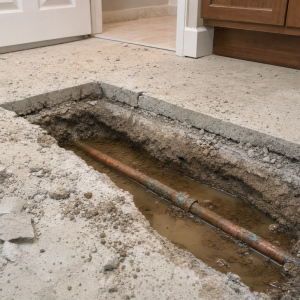
- Water migration inside walls from roof leaks or burst pipes, which can lead to mold if it isn’t opened up and dried
- Code upgrade costs required to bring older construction up to current building standards during repairs
- Matching issues, like replacing part of a roof or siding run with materials that no longer match the rest
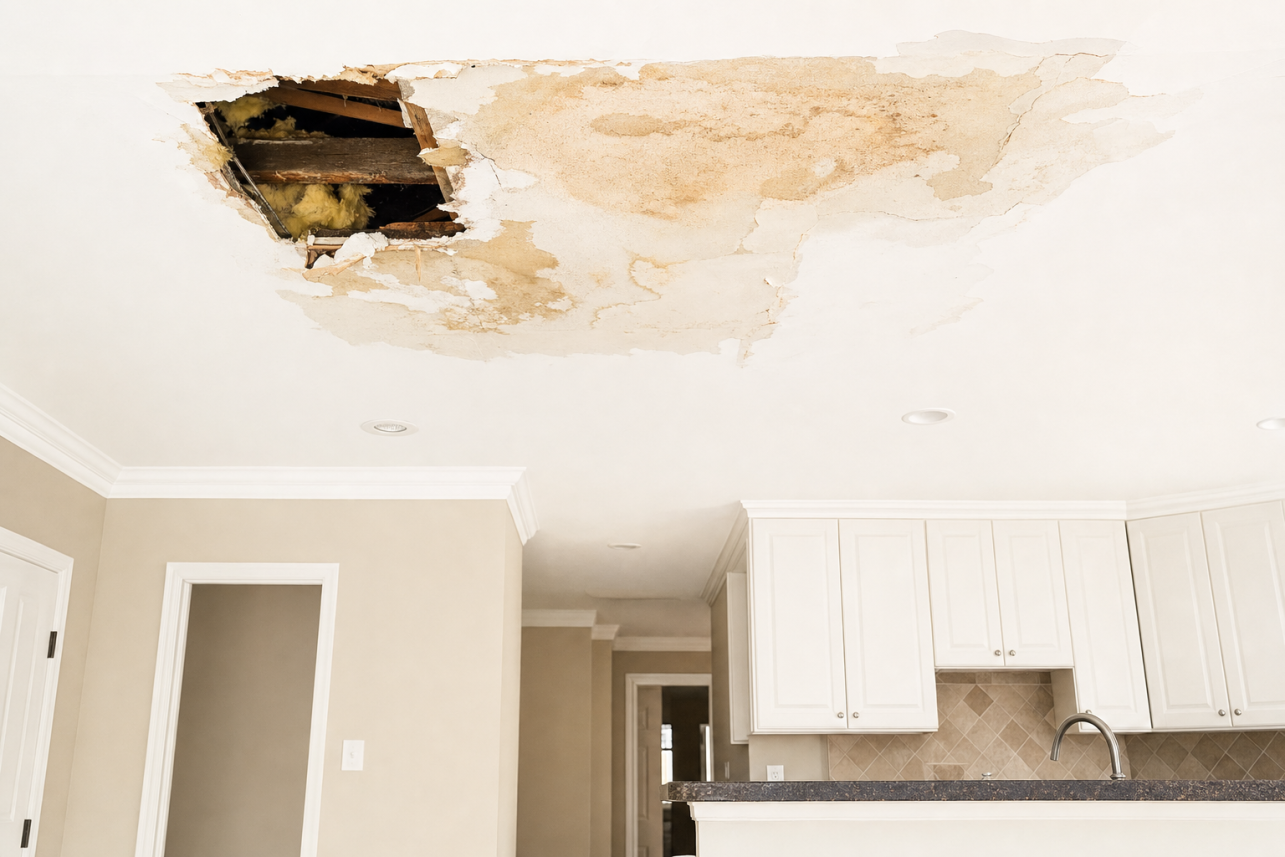
Hidden moisture is one of the most common reasons estimates come in short — it’s a frequent theme in water damage claims in Burlington and across Alamance County, where storm-season leaks often do far more damage than what’s visible from the ground.
The First Number Reflects the Carrier’s Interests
Ultimately, the insurance company’s adjuster works for the insurance company. That doesn’t make them dishonest — but it does mean the burden of documenting the full scope of your loss falls on you. When the estimate starts from conservative software pricing, subtracts depreciation, and omits what the inspection didn’t uncover, a low first offer is simply the natural result. Knowing that is the first step toward challenging it.
How Do I Know My Insurance Payout Is Short? 7 Warning Signs
Your insurance payout is likely short if the insurer’s estimate falls well below contractor quotes, omits necessary line items like water mitigation or code upgrades, applies heavy depreciation, or arrives suspiciously fast. Pressure to accept quickly and blanket denials of hidden damage are also classic signs of a low insurance settlement offer.
Any one of these red flags is worth a closer look. If you spot two or more, it’s time to slow down and scrutinize the estimate line by line before signing anything.
1. The Estimate Doesn’t Match Contractor Quotes
Get at least two written repair quotes from licensed local contractors. If the insurer’s number is significantly lower, ask why. Sometimes the gap comes from outdated pricing software settings or regional labor rates that don’t reflect what contractors in your area actually charge.
2. Missing Line Items
Compare the insurer’s estimate against your contractor’s scope of work. Commonly omitted items include:
- Matching materials, such as shingles or siding that must be replaced beyond the damaged area to achieve a uniform appearance
- Water mitigation costs like drying equipment, dehumidification, and mold prevention
- Code upgrade costs required by current building codes (check whether your policy includes ordinance or law coverage)
- Debris removal, permits, and contractor overhead and profit
3. Heavy or Unexplained Depreciation
Depreciation should be reasonable and tied to the actual age and condition of your materials. If the estimate depreciates a five-year-old roof as if it were twenty years old, or applies depreciation to labor in ways your policy doesn’t allow, the payout will be artificially low.
4. A Fast Offer Before a Full Inspection
An offer that arrives before an adjuster has thoroughly inspected the property — including the attic, crawl space, and behind walls where appropriate — is often based on a surface-level review. Speed is convenient, but a complete inspection matters more than a quick check.
5. Hidden Damage Was Denied or Ignored
Water intrusion, wind damage, and structural issues frequently extend beyond what’s visible. If the insurer dismissed damage without opening up affected areas or ordering appropriate testing, the estimate may only cover a fraction of the real loss.
6. Pressure to Accept Quickly
Statements like “this offer is only good for a limited time” or repeated calls urging you to sign are warning signs. A fair offer doesn’t need a hard sell, and you generally have the right to take reasonable time to review it and ask questions.
7. The Explanation Doesn’t Reference Your Policy
Every reduction or exclusion should be tied to specific policy language. Vague justifications — or no written explanation at all — suggest the number wasn’t built on your actual coverage. Request an itemized estimate and the policy provisions supporting each deduction in writing.
What Should I Do About a Low Insurance Settlement Offer?
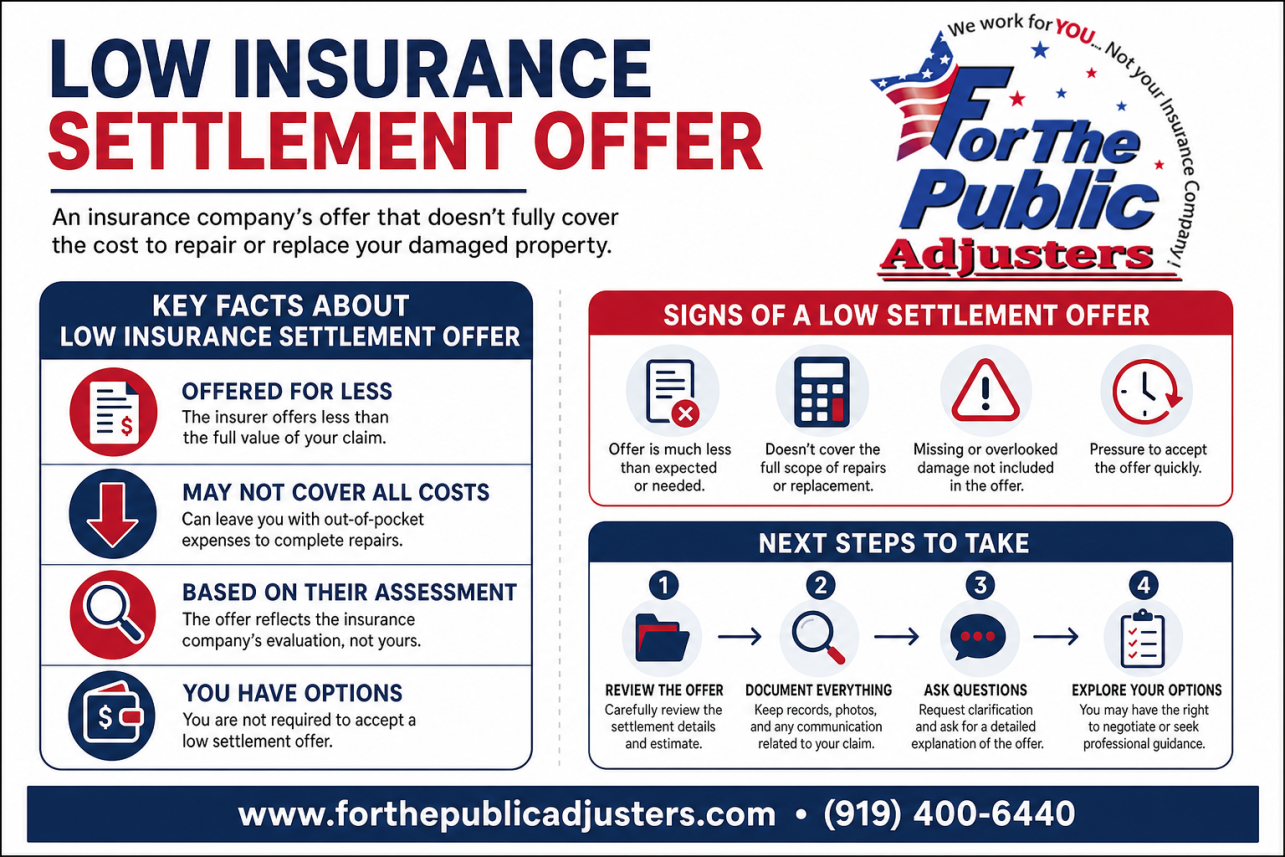
If you receive a low insurance settlement offer, don’t accept or cash it immediately. Instead, request the insurer’s itemized estimate, document your damage thoroughly, obtain independent repair estimates, dispute the offer in writing with supporting evidence, and invoke your policy’s dispute-resolution remedies if the carrier refuses to negotiate in good faith.
A first offer is rarely a final offer. Insurers expect some policyholders to push back — and those who do so with organized documentation tend to fare better. Here is a practical, step-by-step response plan.
Step 1: Request and Review the Itemized Estimate
Ask the adjuster for the complete, line-item estimate behind the offer, not just a summary letter. Compare it against your actual damage. Look for missing rooms, omitted trades (electrical, drywall, painting), lowball unit prices, excessive depreciation, and overlooked code-upgrade costs. You can’t rebut what you haven’t seen.
Step 2: Document Everything
- Photograph and video all damage before repairs, from wide shots down to close-ups.
- Keep receipts for emergency repairs, temporary housing, and damaged contents.
- Log every call, email, and letter with the insurer — dates, names, and what was said.
- Communicate in writing whenever possible so there’s a paper trail.
Step 3: Get Independent Repair Estimates
Obtain written estimates from two or three licensed local contractors who inspect the property in person. Real-world bids from professionals in your market are powerful evidence that the carrier’s pricing software or scope of work misses the mark.
Step 4: Dispute the Offer in Writing
Send a written response that identifies each disputed line item, explains why it’s undervalued or missing, and attaches your contractor estimates, photos, and receipts. Ask the insurer to respond in writing with the specific policy language or reasoning behind any denial or reduction. A precise, documented dispute is far harder to brush off than a phone complaint.
Step 5: Invoke Your Policy’s Remedies
If negotiation stalls, most homeowners policies give you formal tools — such as the appraisal provision for valuation disputes — and you always retain the right to file a complaint with your state’s Department of Insurance or consult an attorney. (When and how to escalate is covered in detail later in this article.)
A Cautionary Tale for Insurers: Guessford v. Penn National
North Carolina courts have made clear that persistent undervaluation carries real risk for carriers. In Guessford v. Pennsylvania National Mutual Casualty Insurance Co., a North Carolina federal court allowed a policyholder’s bad-faith and unfair-trade-practices claims to proceed after the insurer repeatedly offered far less than the documented value of the claim despite the evidence the insured provided. The lesson for homeowners: when you build a well-documented record and the insurer still refuses to deal fairly, that record becomes the foundation for every remedy that follows — from appraisal to litigation.
Can a Public Adjuster Help Me Get a Fair Settlement in NC or VA?
Yes, in many cases. A licensed, bonded public adjuster works exclusively for you — not the insurance company — by independently inspecting your damage, preparing a detailed line-item estimate, and negotiating directly with the insurer on your behalf. Results depend on your policy terms and the actual damage, but professional representation often levels the playing field.
When you receive a low insurance settlement offer, one of the biggest challenges is that the insurer’s estimate was written by someone paid by the insurance company. A public adjuster changes that dynamic. In both North Carolina and Virginia, public adjusters must be licensed by the state’s insurance regulator and typically must post a bond, which gives you a layer of accountability that unlicensed “claim consultants” can’t offer.
What a Public Adjuster Actually Does
- Independent inspection: They physically examine your property and document damage the carrier’s adjuster may have missed — hidden water intrusion, code-upgrade requirements, matching issues with siding or roofing, and secondary damage.
- Detailed line-item estimating: They build a scope of repairs using the same professional estimating software insurers use, item by item, so you can compare their estimate directly against the carrier’s numbers.
- Policy review: They read your actual policy language to identify coverages you may not know you have, such as ordinance and law coverage, debris removal, or additional living expenses.
- Negotiation and communication: They handle calls, correspondence, and supplement requests with the insurance company, presenting documented evidence rather than emotion.
- Claim management: They track deadlines, requested documents, and proof-of-loss requirements so your claim doesn’t stall on a technicality.
How Public Adjusters Are Paid
Most public adjusters work on a contingency fee — a percentage of the settlement they help you recover. That means their interests are aligned with yours, but it also means you should read the fee agreement carefully before signing, understand exactly what percentage applies and to which payments, and confirm the adjuster is licensed in your state. Both North Carolina and Virginia allow you to verify a license through the state Department of Insurance or Bureau of Insurance.
An Honest Word About Expectations
No reputable public adjuster will guarantee a specific outcome, and you should be wary of anyone who does. Whether representation makes sense depends on the size and complexity of your claim, the gap between the offer and your documented damages, and what your policy actually covers. For a small, straightforward claim, the fee may not be worth it. For a significant loss with a low insurance settlement offer on the table — especially one involving structural damage, water losses, or disputed scope — a qualified public adjuster can often uncover legitimate value the initial estimate left out and present it in a way the carrier has to take seriously.
When Should I Escalate: Appraisal, DOI Complaint, or Attorney?
Escalate when good-faith negotiation stalls: invoke your policy’s appraisal clause for disputes over the amount of loss, file a complaint with the North Carolina or Virginia Department of Insurance for claim-handling concerns, and consult an attorney when coverage is denied, bad faith is suspected, or filing deadlines are approaching.
A low insurance settlement offer doesn’t have to be the end of the conversation. There’s a clear ladder of options, and you can often start with the least expensive rung and move up only if needed.
Step 1: Invoke the Appraisal Clause
Most homeowners policies contain an appraisal provision designed to resolve disagreements about the value of a covered loss — not whether the loss is covered. In a typical appraisal:
- You and the insurer each hire an independent appraiser.
- The two appraisers select a neutral umpire.
- Agreement between any two of the three generally sets the amount of loss.
Appraisal is usually faster and less costly than litigation, but read your policy carefully — the process, cost-sharing, and whether the result is binding depend on your specific contract language.
Step 2: File a Complaint with the DOI
If you believe your claim is being handled unfairly — unreasonable delays, poor communication, or an unexplained lowball figure — you can file a free consumer complaint with your state regulator. In North Carolina, that’s the North Carolina Department of Insurance; in Virginia, it’s the Bureau of Insurance at the Virginia State Corporation Commission. Regulators can’t force an insurer to pay a specific amount, but a complaint requires the company to respond formally and can prompt a closer review of your file.
Step 3: Know Your Deadlines
Statutes of limitations set the outside deadline for filing a lawsuit over a claim, and many policies contain their own contractual “suit against us” deadlines that can be shorter than state law allows. These timeframes vary by state and by policy, so check your policy’s conditions section and confirm the applicable deadline early — waiting too long can extinguish your rights entirely, no matter how strong your case is.
Step 4: Consider an Attorney
Legal counsel makes the most sense when:
- The insurer has denied coverage outright, not just disputed the amount.
- You suspect bad-faith claim handling.
- The gap between the offer and your documented loss is large.
- A filing deadline is approaching and negotiations have gone quiet.
Many policyholder attorneys offer free consultations and work on contingency. And if your loss involves flooding, remember that flood claims follow their own federal rules — the FEMA National Flood Insurance Program has a distinct appeals process and deadlines separate from your homeowners policy.
The takeaway: you have structured, escalating options. Start with the tool that matches the dispute, document everything along the way, and don’t let an unexplained low number become the final word by default.
Options for Responding to a Low Insurance Settlement Offer
| Option | Typical Cost to You | Best For | Key Consideration |
|---|---|---|---|
| Negotiate directly with the insurer | Free (your time) | Clear documentation gaps or overlooked damage | Put everything in writing and request the adjuster’s itemized basis |
| Invoke the policy’s appraisal clause | You pay your appraiser; umpire cost is often split | Disputes over the amount of loss, not coverage | Decision is generally binding on valuation |
| Hire a public adjuster | Typically a percentage of the settlement | Large or complex claims you lack time to manage | Verify state licensing and fee caps before signing |
| Consult an insurance attorney | Often contingency or hourly | Suspected bad faith, denials, or high-value disputes | Strongest leverage but usually the longest path |
Illustrative Example: Turning a Lowball Roof Claim Around
Illustrative example
Consider a hypothetical homeowner whose roof and attic were damaged in a hailstorm and who received an initial offer covering only a partial shingle patch. After noticing the estimate excluded decking damage and required code upgrades, she gathered two independent contractor estimates, dated photos, and an inspection report, then submitted a written counter to the insurer. When the adjuster’s revised offer still fell short, she invoked the appraisal clause in her policy. The appraisal process produced a valuation substantially closer to her contractors’ estimates, allowing a full roof replacement. This composite scenario is for illustration only and does not describe a real client or actual dollar figures.
Frequently asked questions
How do I know if my insurance settlement offer is too low?
Compare the offer against independent repair estimates from licensed contractors, your policy’s coverage limits, and a detailed inventory of damaged items. Red flags include an offer that arrives before a thorough inspection, line items priced well below local contractor quotes, missing categories of damage, or heavy depreciation deductions you can’t verify. If the gap between your estimates and the offer is significant, that’s a strong sign it’s undervalued.
What should I do first after receiving a low insurance settlement offer?
Don’t accept or cash any check labeled as final payment. Request a written, itemized explanation of how the insurer calculated the offer, then gather your own evidence: contractor estimates, photos, receipts, and a damage inventory. Respond in writing, point out specific discrepancies, and ask the adjuster to reconsider. Keeping everything documented from the start strengthens your position if you need to escalate later.
Can I negotiate with my homeowners insurance company myself?
Yes. Policyholders negotiate directly with insurers all the time, and many low offers improve once you present documented evidence like independent contractor estimates and itemized damage lists. Put your counteroffer in writing, stay factual rather than emotional, and reference specific policy language where possible. If negotiations stall or the claim is large or complex, that’s when bringing in a public adjuster or attorney makes more sense.
How much does a public adjuster cost for a homeowners claim?
Public adjusters typically work on contingency, taking a percentage of the final settlement rather than charging upfront fees. The exact percentage varies by state, claim size, and whether the claim is new or already in dispute, and some states cap what they can charge. Before signing, get the fee in writing, confirm the adjuster is licensed in your state, and check references or complaints with your state insurance department.
How long does it take to dispute a low insurance settlement?
It depends on how far you have to escalate. Simple negotiations with supporting documentation may resolve in weeks. Formal appraisal processes, complaints to your state insurance department, or hiring a public adjuster typically add months. Litigation can take a year or longer. Most states set deadlines for insurers to respond to claims and disputes, so document every communication date and follow up in writing if responses lag.
What happens if I accept a low settlement offer from my insurance company?
Accepting a settlement, especially one designated as full and final, generally closes the claim and waives your right to seek more money for that loss. That’s why it’s critical not to sign releases or cash final-payment checks while you dispute the amount. Some payments are partial or advance payments that don’t close the claim, so read the accompanying paperwork carefully and ask the insurer in writing to clarify before accepting anything.
Should I hire a lawyer or a public adjuster for a low homeowners claim payout?
A public adjuster is usually the right fit when the dispute is about the value of the damage—they document losses and negotiate estimates. An attorney makes more sense when the insurer denies coverage, acts in bad faith, misses legal deadlines, or when the claim is very large. Many attorneys offer free consultations for insurance disputes, so you can explore both options before committing to either.
What is the appraisal process in a homeowners insurance dispute?
Most homeowners policies include an appraisal clause for disagreements over the amount of a loss. Typically, you and the insurer each hire an independent appraiser, and those two select a neutral umpire. If the appraisers disagree, the umpire helps decide, and agreement between any two parties usually sets the amount. Appraisal resolves valuation disputes without a lawsuit, though you generally pay your own appraiser and share the umpire’s cost.
What mistakes should I avoid when disputing an insurance settlement?
Common mistakes include cashing a check marked as final settlement, missing policy or state deadlines for disputes, throwing away damaged items before they’re documented, relying only on the insurer’s adjuster instead of getting independent estimates, and communicating by phone without written follow-up. Also avoid exaggerating damage—inflated claims can jeopardize your credibility and the entire claim. Keep a dated file of every document, photo, and conversation.
Can I file a complaint against my insurance company for lowballing a claim?
Yes. Every state has an insurance department or commissioner that accepts consumer complaints, usually through a free online form. Include your policy number, claim number, a timeline of events, and copies of estimates and correspondence. The regulator will typically require the insurer to respond, which often prompts a closer review of your claim. A complaint doesn’t guarantee a higher payout, but it creates an official record and can accelerate resolution.
Related local pages
- Public Adjuster Burlington NC: Fire, Water & Storm Damage Claims Handled On The Policyholder’s Side
- Public Adjuster Elon NC — Fire & Water Claim Help For Alamance County Homeowners
- Public Adjuster Haw River NC — Fire, Flood & Storm Claim Help For Older Mill-Town Homes Along The Haw
Think your settlement offer is too low? Get a free claim review from our licensed and bonded public adjusters serving North Carolina and Virginia today. Get in touch.
Last updated: August 7, 2026