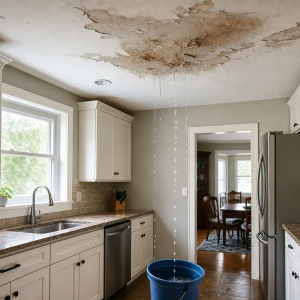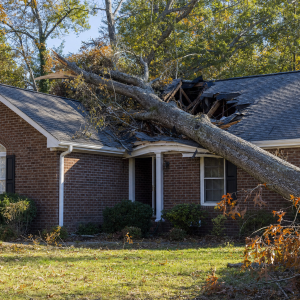

When a disaster like a fire or major storm tears through your home, forcing you and your family out, the last thing you should have to figure out is where you’re going to sleep that night. That’s what Loss of Use coverage is for. It’s the part of your homeowners policy meant to be your lifeline, but insurance companies often treat it as an expense to be minimized at all costs.
Loss of Use Coverage (also called Additional Living Expenses or Coverage D) is a key part of standard homeowners insurance policies (HO-3) in North Carolina and Virginia. It reimburses the extra costs you incur when a covered peril—like fire, windstorm, or water damage—forces you out of your home during repairs.
What Is Loss of Use Coverage and Why Insurers Fight It

This coverage, also known as Additional Living Expenses (ALE) or Fair Rental Value for landlords, is your insurance company’s promise to cover the extra costs of living elsewhere while your property is repaired. It’s designed to maintain your family’s normal standard of living during a crisis.
The keyword that kicks everything off is “uninhabitable”—and it’s where the first fight with your insurer usually begins. You see a home without a roof, working plumbing, or electricity. Your insurance company, motivated by profit, sees a bill they want to avoid paying.
The Fundamental Conflict of Interest
Let’s be blunt: your insurance company is a for-profit business. Whether it’s State Farm, Allstate, or a smaller carrier, their goal is to bring in more money in premiums than they pay out in claims. Their business model is fundamentally at odds with your need for a full and fair settlement. And Loss of Use is a huge, unpredictable expense they are highly motivated to shut down.
Your policy is a contract that says the insurer will make you whole again. Their business model, however, pushes them to pay as little as legally possible. This built-in conflict means you almost always have to fight for your ALE benefits. It’s not an option; it’s a necessity.
This puts you in an immediate battle. It’s your right to be put back on your feet versus their financial incentive to delay, deny, and underpay. They don’t see your family’s displacement; they see a line item on a spreadsheet that needs to be minimized.
What Your Policy Promises vs. How Insurers Push Back
From the very first call, your insurer’s adjuster is looking for ways to limit the payout. Here’s a quick look at the gap between what your policy promises and the reality of how carriers like State Farm and Allstate often operate.
| Coverage Component | What It Should Cover | Common Insurer Pushback |
|---|---|---|
| Temporary Housing | A home comparable to your own in size, quality, and location. | Offering a cramped apartment or distant hotel to save money. |
| Increased Food Costs | The extra expense of eating out if you don’t have a kitchen. | “Your grocery budget was $200/week, so we’ll only cover that.” |
| Transportation | Extra mileage for longer commutes from your temporary home. | Refusing to reimburse for gas or claiming the distance isn’t necessary. |
| Other Expenses | Costs for laundry, pet boarding, moving, and storage. | Scrutinizing every receipt and denying “non-essential” items. |
This isn’t just nickel-and-diming. It’s a calculated strategy to make the claim so frustrating that you give up and accept a lowball offer.
How Insurers Start the Fight from Day One
The adjuster assigned to your claim isn’t on your team. They work for the insurance company, and their job is to protect the company’s money. Their tactics are frustratingly common and designed to wear you down.
They’ll try to:
- Dispute “Habitability”: They’ll argue that you can live in the home during repairs, even with construction dust, noise, or no functioning kitchen, just to avoid triggering ALE coverage.
- Lowball “Comparable” Housing: The insurer will present a rental option that is miles from your kids’ school, half the size of your home, or in a completely different kind of neighborhood, all while insisting it’s a “comparable” replacement.
- Challenge Every Dime: Expect them to question every receipt. That restaurant meal? Too expensive. Those moving costs? Unnecessary. They hope the constant interrogation will exhaust you into submission.
This is a systematic approach to underpaying what they owe you. Recognizing this adversarial dynamic right from the start is the first and most critical step in preparing to fight for the coverage you faithfully paid for.
Decoding Your Policy: What Loss of Use Actually Covers
When a disaster forces you out of your home, your policy’s “Loss of Use” coverage is supposed to be your lifeline. But let’s be blunt: insurance companies often bank on your confusion about what this actually means, making it far easier for them to deny or underpay perfectly legitimate expenses.
The guiding principle is incredibly simple, yet it’s where most of the fights happen. Your insurer must pay the necessary increase in living expenses required to maintain your normal standard of living. This isn’t just about putting a roof over your head; it’s about preserving the life you had before the disaster. That phrase, “normal standard of living,” isn’t a friendly suggestion—it’s a legal benchmark. If you lived in a four-bedroom house, you are entitled to a four-bedroom temporary rental, not a two-bedroom apartment an hour away.
Expenses Your Insurer Is Supposed to Cover
Your Additional Living Expenses (ALE) claim needs to be a detailed list of every single extra cost you have because you’ve been displaced. Insurers like State Farm or Allstate will try to chip away at this, but a properly documented claim goes way beyond just the rent check.
- Comparable Housing: This is the big one and where the first battle usually starts. It includes rent for a home of a similar size and quality in a comparable neighborhood, which is crucial for keeping your kids in their school district.
- Moving and Storage: All the costs to pack up, move, and store whatever belongings you managed to salvage are covered. This isn’t just about moving boxes; it can include hiring professional removals and storage solutions if your home is completely uninhabitable.
- Increased Food Costs: If your temporary rental doesn’t have a kitchen, the difference between your normal weekly grocery bill and the much higher cost of eating out is covered.
- Extra Transportation: Did your temporary home add 20 miles to your daily commute? The extra gas and wear-and-tear on your vehicle are reimbursable expenses.
- Utilities and Services: Any new setup fees or higher utility bills at the temporary location should be paid by the insurance company.
- Miscellaneous Expenses: Think about things like boarding your pets, using a laundromat if your rental has no washer/dryer, or even renting furniture for an empty house. A solid grasp of what homeowners insurance covers helps you spot every possible reimbursable cost.
How Insurers Twist the “Normal Standard of Living” Rule
The real battleground for your loss of use claim is how the words “reasonable” and “necessary” are interpreted. Insurance companies will almost always push for the narrowest, most restrictive definition possible to save themselves money.
They’ll try to tell you a rental in a different, less desirable school district is “close enough.” They’ll argue your increased restaurant bills are an extravagance. This is a calculated strategy designed to wear you down and make you feel unreasonable for simply trying to keep your family’s life stable during a crisis.
For example, your adjuster will take your normal weekly grocery bill of $300 and compare it to a week of eating out that costs $800. Then, they’ll fight you tooth and nail over that $500 difference. Your job is to prove that without a functioning kitchen, the higher cost was both necessary and a direct result of the covered loss.
These disputes are only getting more intense. In the first half of 2025 alone, global insured catastrophe losses hit a staggering $100 billion, with the U.S. responsible for over 90% of that. This explosion in claims means ALE is a prime target for insurers looking to aggressively slash their payouts.
Arming yourself with a clear understanding of what your policy actually owes you is your first line of defense. You have to be ready to justify every single expense and tie it directly back to that core principle of maintaining your normal standard of living—because your adjuster certainly won’t do it for you.
The Insurer’s Playbook: Common Tactics to Deny Your ALE Claim
After a devastating loss, you expect your insurance company to be your safety net. But what you often get is a cold, calculated strategy designed to minimize their payout and wear you down. Insurers like State Farm and Allstate don’t just passively review your loss of use claim; they actively deploy a playbook of tactics to get you to accept a fraction of what you’re owed.
Understanding these moves is the first step in fighting back. These aren’t random obstacles—they are field-tested methods to protect their bottom line, and it’s always at your expense.
Lowballing “Comparable” Housing
The oldest trick in the book is to redefine “comparable” to mean “cheaper.” Your policy obligates the insurance company to provide housing that maintains your normal standard of living. But the adjuster’s first offer will almost always be for a property that’s smaller, in a rougher neighborhood, or miles away from your kids’ school.
They’ll present this completely inadequate option as a reasonable choice, banking on the fact that you’re too disoriented and desperate to argue. They know every day you spend crammed into a hotel room with your family puts more pressure on you to just give in and accept their garbage offer. This isn’t an oversight; it’s a strategic move to save thousands of dollars right from the start.
Imposing Unrealistic Deadlines
Another powerful weapon in the insurer’s arsenal is the clock. Your policy states they will cover your Additional Living Expenses (ALE) for the “reasonable time required” to repair or rebuild your home. The entire fight hinges on their definition of “reasonable.”
An adjuster might just pull a number out of thin air and declare your fire-damaged home can be fully rebuilt in six months, even when everyone knows contractor shortages and supply chain delays make that timeline a complete fantasy.
This isn’t a good-faith estimate; it’s a threat. The insurer is telling you that your benefits will be cut off on a specific date, whether your home is livable or not. This tactic is engineered to create crushing financial and emotional distress, forcing you to bully your contractor or accept an unfair settlement out of sheer terror of being left without a home and without ALE support.
Weaponizing Documentation Demands
If they can’t outright deny your claim, insurers will try to bury you in a mountain of paperwork. They’ll demand an insane level of documentation for every tiny expense, hoping to exhaust you into submission.
- Scrutinizing Grocery Receipts: They’ll nitpick every restaurant meal, demanding you prove the exact dollar-and-cent difference from your pre-loss food budget.
- Questioning Mileage Logs: They’ll challenge the extra gas money you’re spending, arguing that a shorter, less convenient route was available.
- Rejecting Invoices: They might just reject legitimate invoices for things like pet boarding or laundry services, waving them off as “unnecessary luxuries.”
Let’s be clear: this isn’t about due diligence. It’s a war of attrition. The goal is to make claiming your benefits so frustrating and time-consuming that you just give up on the smaller stuff, saving them money with every receipt you decide is too much of a hassle to submit.
Case Study: Public Adjuster Intervention Triples a Family’s ALE Payout
A family of five in North Carolina lost their home in a terrible fire. Their insurer, one of the big national carriers, immediately offered them a cramped two-bedroom apartment as “comparable” housing. The catch? It was located 30 miles from their kids’ school. The offer was a joke—nowhere near enough to rent a suitable home in their actual community. The family was distraught, living out of a hotel and facing the nightmare of uprooting their children’s lives.
Feeling cornered, a co-worker suggested they look online for a Fire Claim Public Adjuster near Durham, NC. They hired a public adjuster. The PA didn’t waste any time. He immediately put together a report with listings for five truly comparable four-bedroom homes right inside the correct school district, proving what the actual market rental rate was. He documented the extreme hardship the insurer’s lowball offer would cause and formally presented the evidence, quoting the policy’s own “normal standard of living” clause back to them.
Faced with a professional, documented argument they couldn’t weasel out of, the insurance company folded. They approved a rental home that actually met the family’s needs, and the final ALE settlement was more than triple their initial, insulting offer. This is a perfect example of how insurers bank on you not knowing your rights or how to effectively push back.
When you’re staring down your insurance company over a loss of use claim, you need to understand one thing: they have a team of adjusters and lawyers whose entire job is to minimize what they pay you. Your best defense? An arsenal of undeniable, overwhelming evidence.
This is about more than just saving receipts. You have to build a bulletproof case that proves every single expense was both reasonable and necessary to keep your family’s life as normal as possible. The goal is to create a record so meticulous that it leaves the insurer’s adjuster with absolutely no room to argue, delay, or deny. You’re dismantling their playbook before they can even run the first play.
Create an Airtight Documentation System
The moment you’re forced out of your home, you’re not just a victim—you’re a case manager. Every call, every email, and every dollar spent is a piece of evidence. Your memory will fade under the stress of a disaster, but a written record is permanent.
- Start an Expense Spreadsheet Immediately: Don’t just throw receipts in a shoebox and hope for the best. Create a detailed spreadsheet right away. It needs columns for the date, expense category (like lodging, food, gas), vendor, a clear description of why it was necessary, and the total cost. This simple step transforms a messy pile of paper into a clear financial story they can’t ignore.
- Log Every Single Communication: Keep a dedicated notebook or a digital log for every interaction you have with the insurance company. Write down the date, time, the name of the person you spoke with, and a summary of the conversation. If an adjuster makes a promise or gives you a directive over the phone, follow up immediately with an email confirming it in writing. This creates a paper trail they can’t deny.
- Gather Competing Quotes: When the adjuster offers a “comparable” rental that’s miles away or half the size of your home, don’t just complain—prove them wrong. Do their job for them. Get written quotes or online listings for three truly comparable properties in your area. This shifts the argument from your opinion to objective market facts.
This level of organization sends a powerful message: you are serious, you are prepared, and you will not be pushed around. The more thorough your records, the weaker their excuses become. This same detailed approach is critical when you get to the point of submitting your final claim package, especially the Proof of Loss form.

This process isn’t random. The lowball offer, the impossible deadlines, the endless requests for more paperwork—it’s a deliberate strategy designed to wear you down until you give up. Your documentation is your shield.
Loss of Use Claim Documentation Checklist
To fight back against these tactics, you need to assemble a comprehensive file. Here is a checklist of the essential documents and evidence you’ll need to gather.
| Document Type | Why It’s Critical | Pro Tip |
|---|---|---|
| Receipts & Invoices | The foundation of your claim. Every hotel bill, meal receipt, and laundry slip is proof of your actual expenses. | Use a dedicated app or folder to photograph every receipt the moment you get it. Paper fades and gets lost. |
| Expense Spreadsheet | Organizes your receipts into a clear, undeniable narrative of your spending. | Update it daily. Waiting until the end of the week will cause you to forget crucial details about why an expense was necessary. |
| Communication Log | Creates a timeline of every promise, delay, and directive from your insurer. It’s your evidence against “he said, she said.” | After every phone call, send a short follow-up email: “To confirm our conversation…” This puts the onus on them to correct the record. |
| Rental/Hotel Agreements | Establishes the cost and terms of your temporary housing, proving you have a formal, long-term living arrangement. | Make sure the agreement lists all occupants and clearly states the monthly cost to avoid disputes. |
| Pre-Loss Utility Bills | Provides a baseline for your normal household expenses, which is crucial for calculating the “additional” cost of living. | Gather at least 6-12 months of bills (gas, electric, water) to show a clear average. |
| Comparable Rental Listings | Objective proof of market rates in your area, shutting down lowball offers for inadequate housing. | Save screenshots or printouts of 3-5 listings that match your home’s size, location, and quality. |
| Photos/Videos of Damage | Visual evidence proving your home was uninhabitable and your displacement was necessary. | Date-stamp your photos. Capture the full extent of the damage that made your home unsafe or unlivable. |
| Proof of Extra Mileage | Documents the increased travel costs due to being displaced from your normal location. | Use a mileage-tracking app or a simple logbook to record trips to work, school, and other necessary errands from your temporary location. |
Having this file organized and ready to go shows the insurance company you mean business and are prepared to substantiate every penny of your claim.
Justifying Every Expense As “Reasonable and Necessary”
Your insurance company is going to scrutinize, question, and attack the legitimacy of your expenses. For every single dollar you claim, be ready to answer two simple questions: Was it necessary? Was it reasonable?
- Necessary: You must be able to tie every expense directly back to your displacement. The hotel was necessary because the fire made your home uninhabitable. The extra gas money was necessary because the only available rental was ten miles further from your kids’ school.
- Reasonable: This is where adjusters love to argue. The key is maintaining your standard of living, not upgrading it. You can absolutely justify renting a four-bedroom house if that’s what you were forced to leave. You can’t justify it if you lived in a two-bedroom condo. Keep your expenses in line with your pre-loss lifestyle.
The financial pressure on insurance companies to minimize payouts is immense. They are not on your side. Let your evidence—your meticulous, undeniable records—do the talking for you.
Navigating Flood Damage and Loss of Use Exclusions

When floodwaters rise, they bring a devastating reality that most homeowners are completely unprepared for. Let’s get one thing crystal clear: your standard homeowners insurance policy does not cover damage from flooding.
This means that the Loss of Use coverage you’ve faithfully paid for as part of that policy is completely useless in a flood. It won’t pay a dime for a hotel, temporary apartment, or anything else.
For most people, the only real protection against a flood is a separate policy from the National Flood Insurance Program (NFIP). This is where an already terrible situation often gets much, much worse.
The NFIP’s Cruel Exclusion
NFIP policies, which are managed by FEMA and sold through Write Your Own (WYO) insurance companies, come with a massive, intentional gap in coverage. They flat-out exclude Additional Living Expenses (ALE).
There is zero coverage for your hotel bills, temporary rent, or the extra cost of eating out while your home is uninhabitable. None.
This single exclusion leaves families financially stranded at the worst possible moment. While your regular policy would help you maintain your life after a fire, the federal flood program offers no such support. It forces you to drain your savings just to have a roof over your head while you try to navigate the claim.
Floods have a staggering 75% global protection gap, meaning most victims lack financial support for displacement. This is especially true under the NFIP in the U.S., which often excludes the ‘loss of use’ coverage that is standard in private policies. This gap leaves families and businesses to cover their own temporary housing and relocation costs after a devastating flood, amplifying their financial hardship and demonstrating a critical failure in standard flood insurance protection. Discover more insights about these global catastrophe statistics at the Insurance Information Institute.
Dealing with NFIP and WYO Adjusters
Filing an NFIP claim isn’t like dealing with your regular homeowners insurance company. The process is rigid, bureaucratic, and completely unforgiving.
The adjusters sent by the NFIP or a WYO company operate under a strict set of federal rules designed to limit what they pay out. They aren’t there to help you find solutions; they are there to follow a government checklist.
They will scrutinize every detail of your damage and almost always produce estimates that fall dangerously short of what you actually need to rebuild. While preventative measures like exterior basement waterproofing can help reduce risk, once the water gets in, you’re at the mercy of this broken system.
Because there is no ALE coverage to negotiate, your entire financial recovery hinges on getting the absolute maximum payout for your building and personal property. Trying to do this alone against the federal government’s complicated and adversarial system is next to impossible.
An experienced public adjuster who specializes in NFIP claims isn’t a luxury—it’s a necessity. They understand the program’s unique rules, how to document damages to meet FEMA’s strict standards, and how to fight back against the lowball offers. They are your only real advocate in a system designed to leave you on your own.
When to Hire a Public Adjuster for Your Loss of Use Dispute
When you’re fighting for your loss of use benefits, it’s not a fair fight. The insurance company has a team of adjusters, lawyers, and experts on their side, all working to protect their bottom line. You’re left with a stack of receipts, a phone, and a growing sense of frustration.
This is the moment to even the odds. Hiring a public adjuster isn’t giving up; it’s a strategic move to bring a professional advocate into the ring who works only for you.
Unlike the company adjuster sent by your insurer, a public adjuster’s loyalty is 100% to you, the policyholder. They are your champion in the claims process.
Taking Command of the Dispute
When your insurer starts digging in its heels—delaying, denying, and defending its lowball offers—a public adjuster steps in to take command. They immediately put a stop to the insurance company’s attempts to wear you down and force you into a bad settlement.
Their role is to:
- Dissect Your Policy: They know how to read the fine print, uncovering every bit of coverage you’re entitled to. They often find benefits you never even knew existed.
- Build an Ironclad Claim: A public adjuster meticulously documents every single cost, from hotel stays to extra mileage, building a professional claim package that leaves no room for the insurer to argue.
- Fight Back Against Lowball Tactics: They challenge the unrealistic repair timelines, reject the inadequate housing offers, and push back against every unfair denial with hard evidence and expertise.
- Negotiate from a Position of Strength: They take over all communications with the insurance company. This frees you from the stress of constant haggling and defending your every move.
In short, a public adjuster levels the playing field. They force the insurance company to deal with an expert who knows the rules of the game just as well as they do. To learn more about their crucial role, see why a public adjuster is an essential ally during a tough claim.
A public adjuster works on a contingency fee basis. This means they only get paid if they recover money for you. This creates a powerful incentive to maximize your claim and secure the highest possible settlement. Their success is tied directly to your success.
Success Story: Saving a Business from a Wrongful Denial
A business owner in Greensboro North Carolina suffered massive water damage to his rental property, forcing his long-term tenants to move out. He filed a Fair Rental Value claim to recoup the lost income, but his insurer flatly denied it, pointing to a confusing exclusion in the policy.
Facing financial ruin, he hired For The Public Adjusters in Greensboro. The PA immediately did a deep dive into the policy and discovered buried language in a little-known endorsement that completely overrode the exclusion the insurance company was using.
The public adjuster presented this finding to the carrier along with a detailed calculation of all the lost rent. Caught red-handed, the insurer had no choice but to reverse its denial. The PA secured a six-figure settlement for the business owner, saving his property from foreclosure. This is a perfect example of how insurers bank on you not knowing your own policy.
Frequently Asked Questions About Loss of Use Claims
Dealing with a loss of use claim is frustrating enough, but it becomes a real battle when your own insurance company seems to be working against you. Let’s tackle some of the most urgent questions policyholders have when they’re fighting to get the benefits they’ve been paying for.
My Insurer’s Comparable Rental Is in a Worse Neighborhood. Can I Refuse It?
Absolutely, and you should. The word “comparable” isn’t just a suggestion; it’s a legal standard meant to maintain your normal life. That includes the quality of your neighborhood, the commute to your job, and your kids’ school district.
Forcing you into a cheaper, inconvenient, or less safe area is a classic insurance company tactic. They’re not looking out for you; they’re trying to save a buck. You have every right to say no to their lowball offer and find a rental that is truly comparable to the home you lost. This is where a public adjuster becomes critical—they can document the obvious differences and force the insurer to cover the real-world cost of a suitable property.
How Long Will My Insurer Pay for My Additional Living Expenses?
Your policy will name a time limit—usually 12 or 24 months—or state that they’ll pay for the “reasonable” time it takes to rebuild your home. That word “reasonable” is where the fight starts. Insurers love to create their own unrealistic repair timelines to justify cutting off your benefits months before the work is actually done.
Don’t let them dictate the terms. Their arbitrary deadline is a negotiation tactic, not a fact. An experienced public adjuster will gather evidence from contractors, suppliers, and municipal permitting offices to prove how long repairs will actually take, forcing the insurance company to honor their end of the deal.
The Adjuster Is Questioning Every Single Receipt for Food. What Can I Do?
This is pure intimidation, plain and simple. They’re trying to wear you down until you just give up. Your policy is meant to cover the increase over what you normally spend on food, not your entire grocery bill. The best defense is a good offense, and that means documentation.
Dig up your bank or credit card statements from the months before the disaster to establish a clear baseline for your normal food spending. From the day of the loss forward, save every single food-related receipt. If the adjuster keeps rejecting legitimate costs after you’ve provided this proof, it’s a massive red flag. They’re showing you they intend to act in bad faith, and it’s time to get professional help on your side.
2. What specific expenses does Loss of Use Coverage reimburse in NC and VA?
It covers reasonable increases in living expenses to maintain your normal standard of living, including:
- Hotel or short-term rental costs (the extra amount over your normal housing expenses)
- Restaurant meals or groceries (difference from your usual food budget)
- Laundry services or laundromat fees
- Pet boarding if your temporary housing doesn't allow pets
- Mileage or transportation increases (e.g., longer commutes)
- Storage fees for belongings
- Temporary furniture rental if needed
It does not cover:
- Full hotel bills if you normally pay a mortgage
- Luxury upgrades (e.g., 5-star hotels when a moderate option suffices)
- Entertainment or non-essential items
In claim experiences we've seen in NC and VA, adjusters approve reasonable costs quickly but scrutinize outliers. Always get pre-approval for big expenses like long-term rentals to avoid surprises.
3. How is the amount of Loss of Use Coverage calculated, and how much do I typically need in North Carolina or Virginia?
Most policies set it at 20-30% of dwelling coverage, but some are as low as 10% or have separate time-based limits. The payout is based on actual additional expenses, not a flat daily rate.
To estimate needs in NC/VA:
- Calculate potential displacement time (e.g., 6-18 months for major fire rebuilds)
- Research local costs: Average hotel rates in Charlotte/Raleigh (~$150/night) or Richmond/Norfolk (~$140/night), plus meals (~$50-75/day per person)
- Factor in family size and pets
Many policyholders underestimate—$50,000 might cover a family of four for 6 months, but major losses often exceed that. We recommend at least 30% of dwelling or an enhanced endorsement for unlimited time (available from carriers like Travelers or Nationwide in NC/VA).
4. How long can I receive Loss of Use benefits after a covered loss in NC or VA?
Coverage lasts for the "shortest time required" to repair/rebuild your home or permanently relocate—often called the period of restoration. There's no strict state-mandated time limit in NC or VA, but policies may cap at 12-24 months.
In practice:
- Minor damage (e.g., kitchen fire): 3-6 months
- Total loss: 18-24+ months
- If repairs delay due to contractor shortages (common post-hurricane in NC), argue for extensions with documentation
Track contractor timelines closely—insurers can't cut off ALE prematurely if delays are beyond your control.
5. Does Loss of Use Coverage pay anything if I stay with family or friends instead of a hotel?
Yes, but only for documented additional costs—like extra groceries you contribute, increased utilities at their home, or mileage. If there are no extra expenses, reimbursement may be minimal or zero.
Many NC/VA policyholders save money this way, but insurers often require proof (e.g., utility bills showing spikes). This avoids full hotel costs while still getting some relief—ideal for extended family support common in our region.
6. Can I claim increased meal costs or restaurant expenses under Loss of Use in North Carolina and Virginia?
Absolutely—the most common ALE category. Coverage reimburses the difference between your normal grocery bill and temporary costs (e.g., $400/month normal vs. $900/month eating out = $500 reimbursable).
Tips from claims we've handled:
- Establish baseline: Submit 3 months of pre-loss grocery receipts
- Keep all receipts—apps like Expensify help
- Reasonable limits: $50-75/day per person is often approved; excessive claims get reduced
Avoid the common mistake of claiming full meal costs without subtracting normal expenses—adjusters deduct your usual budget.
7. What if my home is only partially uninhabitable (e.g., kitchen fire or mold in one area)—does Loss of Use still apply in NC/VA?
It depends on whether the home is deemed "uninhabitable" or unsafe by authorities or your adjuster. Partial damage like a non-functional kitchen often qualifies if cooking/eating is impossible and health risks exist.
In Reddit threads and claims we've seen, insurers sometimes push back on partial losses. Counter with:
- Photos/documentation of unsafe conditions
- Letters from contractors or health inspectors
- Policy language requiring "reasonable" repairs
If denied, appeal—NC DOI and VA Bureau of Insurance side with policyholders when evidence shows genuine displacement.
8. How do I properly document additional living expenses to ensure a smooth claim in North Carolina or Virginia?
Meticulous records are the #1 key to avoiding underpayment:
- Track pre-loss normal expenses (mortgage, groceries, utilities) for 3-6 months
- Save every receipt—scan/upload via insurer apps
- Submit claims monthly with spreadsheets comparing normal vs. temporary costs
- Get written adjuster approval for big items
- Note dates and reasons for each expense
We've seen claims double in payout with organized documentation versus scattered receipts.
9. What should I do if my Loss of Use limit runs out or the insurer says it's insufficient mid-claim?
First, request an advance or extension with evidence of ongoing repairs. If denied:
- File a formal appeal with detailed timelines
- Contact your agent for endorsement options
- Escalate to NC Department of Insurance (ncdoi.gov, free mediation) or VA Bureau of Insurance (scc.virginia.gov/boi)
In large losses (common after NC storms), public adjusters can negotiate higher limits—fees are 10-15% but often worth it.
10. Are there any key differences in Loss of Use Coverage between North Carolina and Virginia homeowners policies?
No major statutory differences—both follow similar ISO policy forms with 20-30% limits. However:
- NC coastal properties may need separate wind coverage, affecting ALE triggers
- VA has stricter rules on civil authority extensions
- Post-disaster, NC often sees more hurricane-related claims with contractor delays impacting ALE duration
Coverage is highly carrier-specific in both states—shop independent agents for best options.
11. Does Loss of Use Coverage help if I rent out part of my home, like a basement apartment or ADU?
Yes—switches to "Fair Rental Value" coverage, reimbursing lost rental income (minus normal expenses) if the rental portion is uninhabitable. For full landlords (DP-3 policies), it's primary.
Document rental agreements and income proof. In NC/VA university towns, this helps many with student rentals.
12. What are the most common reasons Loss of Use claims get denied or reduced in NC/VA, and how can I avoid them?
Common pitfalls:
- Insufficient proof of additional expenses
- Delays in reporting or repairs
- Non-covered perils (e.g., flood—needs separate policy)
- Exceeding "reasonable" standards
Avoid by:
- Notifying insurer immediately
- Mitigating damage quickly
- Keeping detailed logs
- Appealing denials promptly (high success rate via state DOI)
We’ve helped reverse many partial denials with better documentation.
These FAQs address real policyholder pain points we’ve encountered serving NC and VA families. If your situation involves a specific claim or policy review, feel free to reach out—we’re here to help compare options and advocate for fair treatment.
When your insurer’s adjuster stops helping and starts obstructing, you need an advocate who works only for you. The team at For The Public Adjusters, Inc. knows the insurance company playbook inside and out. We document your claim, dismantle their arguments, and fight to get you the full settlement you’re owed.
Contact a Public Adjuster Near Raleigh, NC today for a no-cost claim review and find out how we can help you fight back. https://forthepublicadjusters.com