Filing an insurance claim can feel like you’ve been dropped into a bureaucratic nightmare. The path from the initial incident to getting a check in hand is full of confusing steps, strict deadlines, and a mountain of paperwork. It’s enough to make anyone feel lost.
Getting a handle on this process is your first and most important step toward a fair settlement. It also prepares you for the possibility of insurance claims and disputes down the line.
Decoding the Insurance Claims Process
Think of it this way: filing a claim is like building a case. You’re the lead detective, and the evidence you gather is what will win the day. Every single detail matters, from the first photos you snap to the final walk-through with the adjuster. A claim that’s well-documented and clearly presented from the start is much more likely to go smoothly.
The second an incident happens—a pipe bursts, a tree falls on your roof, a fire starts—the clock is officially ticking. Your absolute first priority is safety, of course. But immediately after that, it’s time to document everything. Being proactive right now is the most powerful thing you can do.
The First 48 Hours After an Incident
What you do in the first two days after a loss is absolutely critical. This is your golden window to capture raw, unfiltered evidence before things get cleaned up or memories start to fade.
- Document the Scene: Go overboard with photos and videos. Get every angle. Don’t just focus on the big, obvious damage; zoom in on the small stuff and capture the surrounding area to provide context.
- Create an Initial Inventory: Start a running list of everything that’s damaged. If your home was affected, this means everything from the drywall and flooring to your furniture and personal belongings.
- Notify Your Insurer: Call your insurance company as soon as you can to report what happened. This official step is known as the First Notice of Loss (FNOL), and it’s what formally opens your claim.
- Mitigate Further Damage: You have a responsibility to stop the damage from getting worse. This could mean putting a tarp over a hole in the roof or calling a plumber to stop a leak. Hang on to every single receipt from these temporary fixes.
The Role of the Claims Adjuster
After you report the loss, your insurer will assign a claims adjuster to your case. This person’s job is to investigate what happened, figure out the cause, estimate the cost of repairs, and see if your policy actually covers it.
Here’s the crucial part to remember: the insurance company’s adjuster works for the insurance company. Not you.
Their final assessment is based on the evidence they gather and the fine print in your policy—all those coverages, limits, and exclusions. When claims get complicated, many homeowners decide to bring in their own expert to level the playing field. To get a better sense of how that works, you can learn more about how a public insurance adjuster advocates for you during this process.
A huge source of friction in insurance claims and disputes comes down to one thing: the gap between what you believe your loss is worth and what the insurer offers. This usually happens because you and the adjuster have very different ideas about repair costs, depreciation, and what the policy actually covers.
This infographic can help you visualize the journey from the moment of disaster to the initial claim assessment.
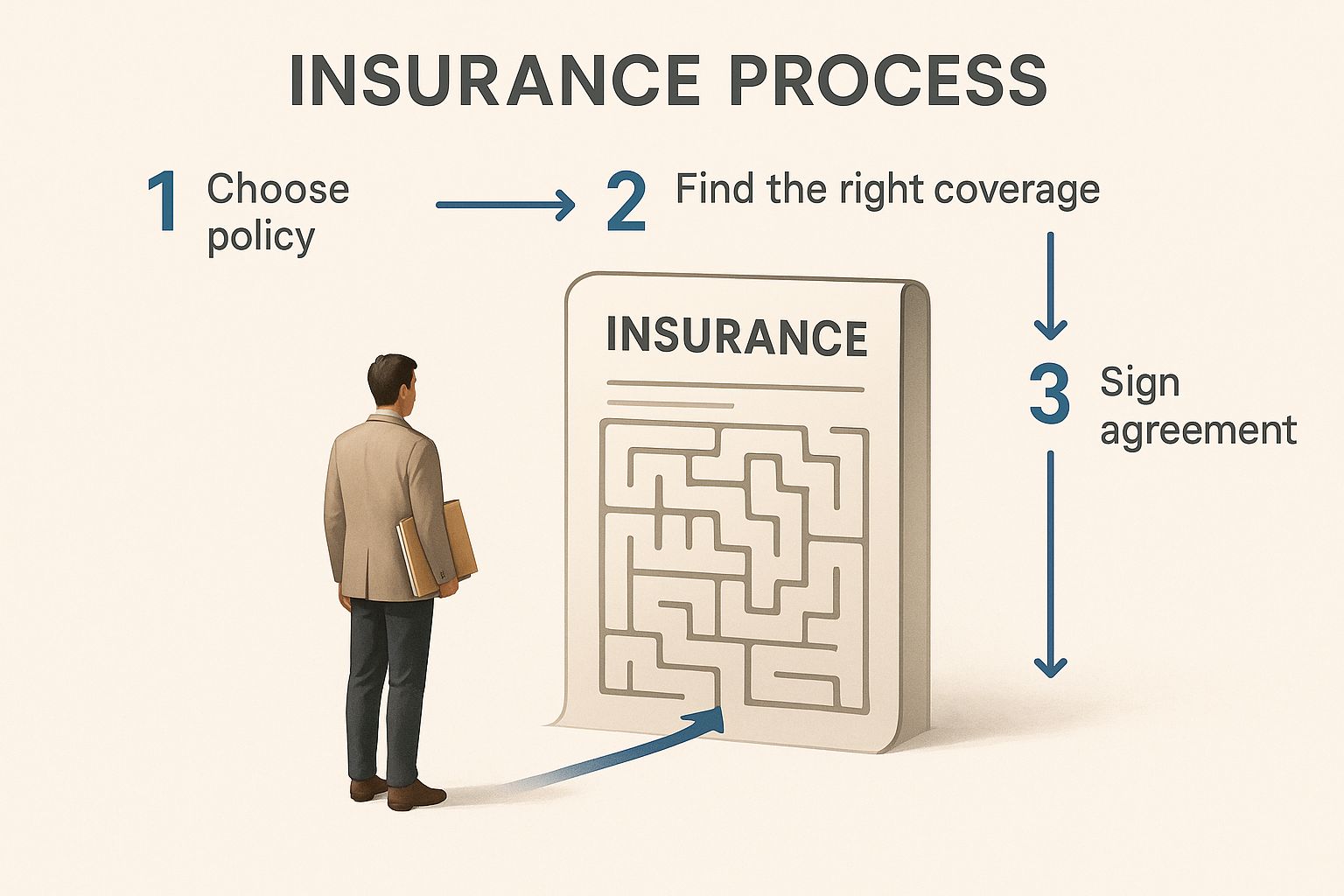
Seeing the steps laid out like this shows that the claims process, while complicated, follows a logical path. It’s not just chaos. Understanding that path is how you take back control.
Why Claims Get Denied or Become Complicated
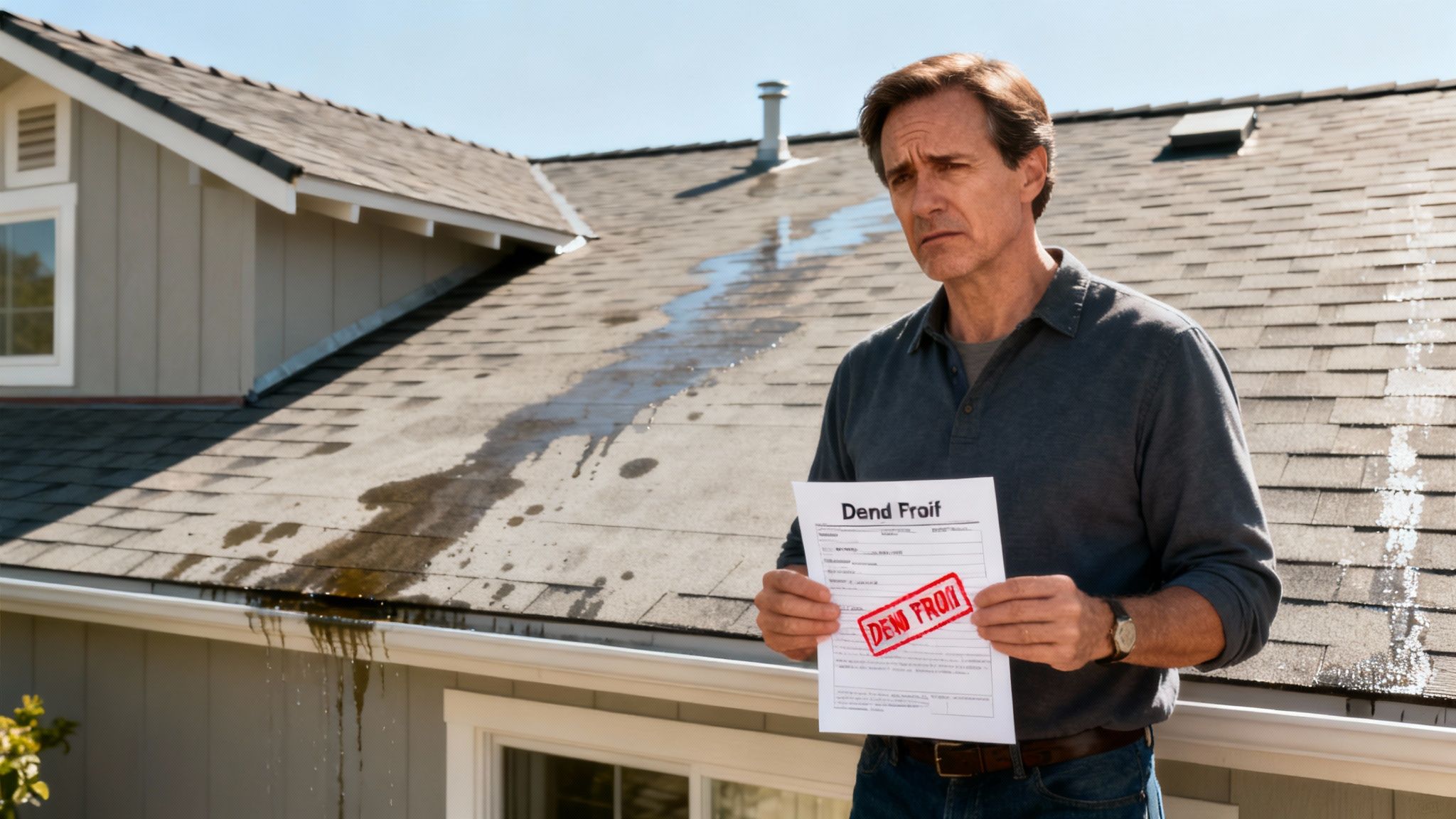
It’s one of the most maddening experiences you can have as a property owner. You faithfully pay your premiums year in and year out, trusting that your insurance company has your back. But when disaster finally strikes and you need them most, you’re hit with a denial or a lowball offer that feels like a slap in the face.
So, how does a straightforward claim go so wrong? The path from a simple incident to a full-blown dispute is almost always paved with the fine print of your policy.
At its core, an insurance policy isn’t just a promise to pay; it’s a dense legal contract loaded with specific rules, conditions, and, most importantly, exclusions. When an insurer denies your claim, they’re essentially saying that, in their opinion, your loss isn’t covered by the terms you agreed to. This is the very ground where most insurance claims and disputes take root.
The reasons for a denial are rarely black and white. They almost always live in the gray areas of policy language, where a single word or phrase can make all the difference.
The Devil in the Details: Policy Exclusions
Every single insurance policy has a section that spells out what it won’t cover. These are called exclusions, and they are the number one reason claims get denied. Insurers design policies to cover specific, named perils (like fire or wind) while intentionally leaving others out.
For instance, a standard homeowner’s policy might cover water damage from a pipe that suddenly bursts, but it will almost certainly exclude damage from a slow, persistent leak that’s been dripping for months. The insurer’s logic? The slow leak is a maintenance issue you should have handled, not a “sudden and accidental” event.
Common exclusions that catch homeowners by surprise include:
- Wear and Tear: An insurer might deny a roof claim after a major hailstorm by arguing the roof was already old and had pre-existing damage. They’ll claim the failure was due to wear and tear, not the storm itself.
- Flood Damage: This is a big one. Most standard property policies flat-out exclude damage from floods. You need a separate, specific flood policy for that—a devastating fact many people learn only after their home is underwater.
- Earth Movement: Cracks in your foundation from shifting soil? That’s typically excluded unless you’ve purchased a special add-on, or “endorsement,” for that coverage.
Disagreements Over Cause and Cost
Another major friction point comes down to a fundamental disagreement over the facts. You and the insurance company’s adjuster can look at the exact same damage and come to wildly different conclusions about what caused it or what it will cost to make things right.
This gets particularly sticky in complex situations. Imagine a grease fire scorches your kitchen. In your eyes, it’s a total loss—the whole space needs to be gutted and rebuilt from the studs. The insurance adjuster, however, might see it differently. They could argue that only the cabinets and countertops need replacing, and the smoke-damaged walls can just be cleaned and repainted.
The heart of many insurance claims and disputes is the valuation gap—the chasm between what you believe the repair costs and what the insurer is willing to pay. This gap is created by disagreements on everything from local labor rates and material costs to the actual scope of work required for a proper, professional repair.
This valuation gap can be massive. Insurance companies often rely on their own pricing software, which might not accurately reflect the real-world, on-the-ground costs in your specific area, leading to a significant underpayment.
Procedural Missteps and Missed Deadlines
Sometimes, a perfectly valid claim gets shot down not because of coverage issues, but because of a simple mistake in the process. Your policy is full of strict rules about how and when you must report a claim and provide all the necessary paperwork.
If you drop the ball on these obligations, you could put your entire claim in jeopardy.
- Late Reporting: Policies demand that you notify the insurer “promptly” or within a “reasonable” time after a loss. Waiting weeks or even months to report damage can be grounds for an automatic denial.
- Inadequate Documentation: Can’t provide receipts or photos to prove you owned the damaged items? Don’t have enough evidence of the loss itself? The insurer has every right to deny that part of your claim.
- Failure to Mitigate: You have a duty to prevent the damage from getting worse. If a tree punches a hole in your roof, you need to put a tarp over it. If you don’t, the insurer could refuse to pay for the additional water damage that occurred because you failed to act.
This table breaks down some of the most common reasons we see for claim denials and, more importantly, what you can do to get ahead of them.
Common Reasons for Claim Denials and How to Avoid Them
| Reason for Denial | What It Means for You | How to Proactively Address It |
|---|---|---|
| Policy Exclusion | The specific cause of your damage (e.g., flood, mold, wear and tear) is explicitly not covered by your policy. | Review your policy’s “Exclusions” section annually. Ask your agent about purchasing endorsements or separate policies for common risks in your area. |
| Late Notice of Claim | You waited too long to report the damage, and the insurer argues this delay prejudiced their ability to investigate. | Report any potential claim to your insurer immediately, even if you don’t know the full extent of the damage yet. |
| Insufficient Documentation | You failed to provide enough evidence to support the value of your claimed losses. | Keep a home inventory with photos, videos, and receipts for major purchases. Take extensive photos and videos of all damage before any cleanup. |
| Failure to Mitigate Damages | You didn’t take reasonable steps to prevent the damage from getting worse after the initial incident. | Take immediate, temporary measures to protect your property, such as boarding up broken windows or tarping a damaged roof. Keep all receipts. |
| Material Misrepresentation | The insurer believes you were dishonest on your initial application or during the claim process. | Be completely honest and accurate on your insurance application and when speaking with adjusters. Don’t exaggerate your losses. |
Understanding these pitfalls is the first step toward avoiding them. Being prepared and proactive can make all the difference in turning a potential denial into an approved claim.
Ultimately, these complications arise from a simple truth: you and your insurer have competing interests. Your goal is to be made whole and restore your property to the way it was before the loss. The insurer’s goal is to pay exactly what is contractually owed—and no more—to protect its bottom line. The real challenge is navigating these opposing viewpoints to reach a fair resolution.
How Global Economics Affect Your Claim
It’s easy to think of an insurance claim as a private matter—just you and your insurance company sorting things out after something goes wrong. But the reality is, your individual claim is tied to huge economic forces happening all over the world. These global trends have a direct impact on the cost of your repairs and how willing your insurer is to pay.
Think about the price of gas. It’s not just about your local station; it’s connected to global oil production, international conflicts, and supply chain logistics. Your insurance claim works the same way. The cost to repair your home after a storm is directly linked to the price of lumber from overseas, the availability of roofing shingles, and the overall rate of inflation. Understanding this bigger picture is crucial when you’re dealing with insurance claims and disputes today.
When these global pressures start to build, insurance companies feel the pinch. Their first instinct is to tighten their belts, which usually means putting every single claim under a microscope.
Inflation and the Rising Cost of Everything
The biggest economic factor you’ll notice is inflation. When the cost of everything goes up, the cost to put your life back together after a disaster goes up, too. This isn’t just an abstract idea—it directly affects how much your claim is worth.
For instance, a sudden spike in demand for building materials or a shortage of skilled carpenters can send home repair costs through the roof. The $50,000 you might have been quoted for a new roof a couple of years ago could easily cost $65,000 today for the exact same work.
This is where the friction starts. Your insurer might hand you an initial offer based on old pricing data that doesn’t match what contractors are actually charging now. That gap between their outdated numbers and the real-world cost is a huge reason for disputes, leaving you to fight for the money you actually need.
Supply Chain Woes and Geopolitical Headwinds
Beyond just general inflation, major disruptions in the global supply chain create massive bottlenecks and drive up costs. A factory shutting down on the other side of the world, a shortage of shipping containers, or new trade tariffs can make essential materials incredibly difficult—and expensive—to get.
We see this all the time in construction and auto repairs. A specific part for your car might be stuck on a cargo ship for weeks, or the type of wood needed for your home repair could suddenly double in price because of a new international trade policy.
The global claims environment is increasingly shaped by compounding economic and geopolitical factors. Ongoing trade tensions and tariffs are driving up the cost of insurance claims, particularly in property and auto lines. For instance, in the U.S., auto insurance premiums are projected to rise significantly due to these increased repair and parts costs. Discover more insights on how global trends affect insurance from Aon.
These outside pressures make insurers even more cautious. They’ll go over every estimate with a fine-toothed comb, questioning every line item that seems high, even if those prices are just the new reality we’re all living in.
Understanding Your Policy in This New Reality
In an expensive, unpredictable economy, the fine print in your policy matters more than ever. The specific valuation method your policy uses can be the difference between getting back on your feet and facing a huge financial hole. This is especially true when it comes to Replacement Cost Value (RCV) vs. Actual Cash Value (ACV). To see just how much is at stake, it’s worth taking a moment to understand how ACV vs RCV can impact your final payout.
When times are tough financially, insurers tend to lean hard on depreciation—the reduction in an item’s value due to age and wear. This is the core of an ACV settlement. It’s a strategy that helps them control their payouts, but it can leave you with a check that’s nowhere near enough to cover the full cost of replacing what you lost. Knowing exactly what your policy says is your best line of defense against being underpaid.
Your Step-By-Step Guide to Disputing a Claim
Getting a denial letter or a laughably low settlement offer can feel like the end of the road. But you need to understand that this is often just the insurance company’s opening move in a negotiation.
You absolutely have the right to challenge their decision. The key is to approach it with a clear, methodical strategy. This isn’t about getting angry or confrontational; it’s about building a case so solid they simply can’t ignore it.
First things first: take a deep breath, stay organized, and let go of the initial frustration. It’s time to pivot from being upset to being focused.
Start with a Formal Internal Review
Before you think about lawyers or state complaints, you have to go through the insurer’s own internal appeals process. Every single insurance company is required to have a formal procedure for policyholders to dispute a decision. This is your first—and often best—shot at getting a different set of eyes on your claim.
Think of it like this: your initial claim was handled by a frontline adjuster. An appeal usually goes up the ladder to a supervisor or a dedicated review team.
You need to kick this off by formally requesting a review of your claim in writing. A phone call won’t cut it. Your letter or email should state clearly that you are appealing the decision on your claim (don’t forget your claim number!) and that you will be providing new information to back up your position. This creates an official paper trail, which is crucial.
Gather Fresh, Compelling Evidence
Just resubmitting your original claim and saying “please look again” is a waste of time. The whole point of an appeal is to hit them with new evidence that strengthens your case and directly picks apart their reasons for denying or lowballing you. Your appeal letter is only as good as the proof you attach to it.
Here’s where you should focus your energy:
- Independent Estimates: Don’t just get one—get detailed, itemized quotes from at least two reputable, licensed contractors. These reports shouldn’t just list a price; they need to explain the full scope of work required for a proper repair, creating a powerful contrast to the insurer’s skimpy estimate.
- Expert Reports: Is the dispute about the cause of the damage? For example, did the insurer blame it on “wear and tear”? Hiring an independent expert like a structural engineer or a public adjuster can completely change the game. Their official report provides authoritative, third-party proof that your claim is valid.
- Additional Documentation: Did you forget to include any photos, videos, or receipts the first time around? Now’s your chance. The more documented proof you have, the stronger you look.
The real secret to a successful appeal is systematically dismantling the insurer’s initial assessment. When you provide independent, expert-backed evidence, you transform the argument from a “he said, she said” debate into a fact-based discussion where your data beats their opinion.
Write an Appeal Letter That Persuades
With your new evidence stacked up, it’s time to write a clear, professional, and persuasive appeal letter. Keep your emotions out of it—stick to the facts.
Your letter needs to include these essential parts:
- Your Info: Start with your name, address, and policy number right at the top.
- Claim Details: Clearly state the date of the loss and your claim number.
- The Decision You’re Fighting: Get right to the point. “I am writing to appeal the denial of my claim…” or “I am appealing the settlement offer of $X…”
- Your Argument: This is the core of the letter. Logically walk them through why their decision was wrong, referencing your new evidence directly. For instance, “Your adjuster’s estimate of $15,000 fails to account for…, as detailed in the attached report from ABC Construction.”
- A Specific Request: Don’t be vague. End by stating exactly what you want—a full reversal of the denial or a specific, higher settlement amount that you can justify with your estimates.
Taking the Fight Beyond the Insurer
What if your internal appeal gets shot down? Don’t give up. You still have several powerful options left.
Every state has a department of insurance that regulates the industry and is there to protect consumers like you. Filing a formal complaint with them is a huge step, as it brings regulatory oversight into your insurance claims and disputes.
You can also look into mediation, where a neutral third party helps you and the insurer work towards a resolution. For bigger, more complicated situations—especially where you suspect bad faith from the insurer—getting legal advice from an attorney who specializes in insurance law is a very smart move.
To learn more about these strategies, check out our guide on navigating a homeowner insurance claim dispute. Your fight for a fair settlement isn’t over until you say it is.
The Impact of Natural Disasters on Insurance
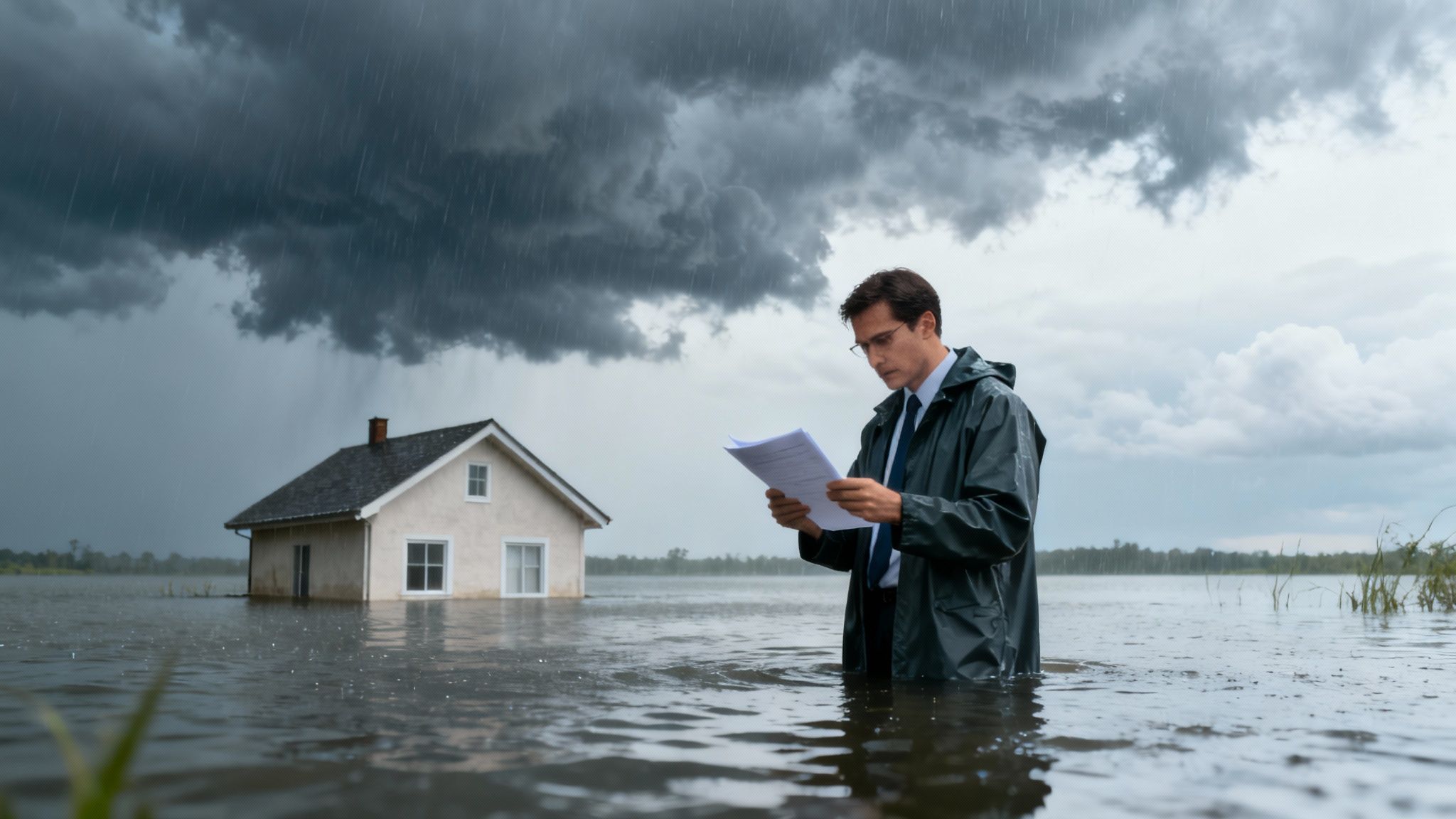
The constant barrage of news about wildfires, floods, and hurricanes isn’t just background noise; it’s radically changing the insurance world. This new reality directly affects your experience with insurance claims and disputes, especially when your home is one of thousands damaged in a widespread disaster.
When a hurricane makes landfall or a wildfire sweeps through a region, insurance companies get hit with a tidal wave of claims all at once. We’re not talking about a single house fire. We’re talking about thousands of devastated homes and businesses, all needing help simultaneously. That kind of volume puts carriers under enormous financial strain, forcing them to get much more defensive.
The Financial Squeeze on Insurers
Think about an insurance company’s money like a town’s water reservoir. Normally, premiums trickle in and everyday claims trickle out, keeping the water level steady. But a catastrophic event is like blowing a hole in the dam—it creates a massive, uncontrolled outflow that threatens to drain their reserves dry.
This financial pressure forces them to protect what’s left. For you, the policyholder, this means you’re walking into a much tougher claims environment. Insurers will tighten up policy language, jack up premiums in high-risk areas, or, in some cases, just pack up and leave a state altogether.
What This Means for Your Claim
In this new era of frequent, large-scale disasters, you have to assume your claim will be put under a microscope. Insurers are on high alert, and they’re looking for any angle to minimize what they have to pay out. This reality is a huge driver behind the increase in complicated insurance claims and disputes.
Here’s how that pressure usually shows up on the ground:
- Stricter Scrutiny: Adjusters will look for any excuse, often blaming the damage on “wear and tear” or pre-existing issues instead of the storm. It’s a classic move to justify a denial.
- Understaffed Response: After a big storm, insurers are completely swamped. Their adjusters are overworked and rushing from one house to the next, which leads to sloppy inspections, missed damage, and frustrating delays.
- Lowball Offers: To control their losses across thousands of claims, the first settlement offer is often based on generic software estimates that have little to do with what local contractors actually charge for repairs.
The bottom line is that one single catastrophic event can threaten an insurer’s financial stability. Their natural reaction is to clamp down and manage their exposure, and that translates directly into a more challenging, and often adversarial, claims process for every single policyholder caught in the disaster zone.
The Growing Protection Gap
Making matters even worse is an alarming trend called the insurance protection gap. This is the jaw-dropping difference between the total economic cost of a disaster and the amount that was actually covered by insurance.
A huge amount of damage from these events simply isn’t insured, leaving homeowners and communities to pick up the pieces on their own. Between 2014 and 2023, natural disasters caused about $2.35 trillion in global economic losses, but only $944 billion of that was insured. That means nearly 60% of all losses were shouldered by individuals, families, and governments. You can discover more insights on this widening gap and what it signals for the industry.
This gap puts even more stress on the entire system. As more properties in risky areas go uninsured, the financial burden on everyone else grows. For those who do have coverage, it makes the value of a solid, well-fought insurance claim more critical than ever.
In this challenging new normal, the quality of your documentation is everything. Detailed photos, videos, home inventories, and independent repair quotes are no longer just “nice to have”—they are non-negotiable tools for getting paid what you’re owed. When you file a claim after a natural disaster, you have to go in assuming it will be challenged and build a rock-solid case from day one. That proactive mindset is your best defense.
Frequently Asked Questions
When you’re in the middle of a stressful property damage situation, questions are bound to pop up. Let’s tackle some of the most common ones policyholders ask when they’re trying to navigate the often-confusing world of insurance claims.
How Long Does an Insurer Have to Settle a Claim?
This is a big one, and the short answer is: it depends on your state, but it’s not forever. Most states have “prompt payment” laws on the books that force insurance companies to act within a specific timeframe after you’ve handed over all the necessary paperwork.
Usually, you’re looking at a window of 30 to 60 days. If your insurer is blowing past that deadline without giving you a legitimate reason in writing, that’s a major red flag. Dragging their feet is a classic tactic in insurance claims and disputes, and it can sometimes cross the line into bad faith.
Should I Hire a Public Adjuster or an Attorney?
This really comes down to what kind of fight you’re in. Think of it this way: are you fighting over the value of the damage, or are you fighting over a legal issue?
- A Public Adjuster is your go-to when the dispute is about the numbers. They are experts at finding all the damage, putting together a rock-solid estimate, and negotiating with the insurance company’s adjuster to get you what your claim is actually worth.
- An Attorney is who you need when things get legal. If your claim was flat-out denied based on some tricky policy language, if you believe the insurer is acting in bad faith, or if it’s time to take them to court, you need legal firepower.
For a really large or complex property claim, sometimes the best move is to bring in both. The public adjuster proves the true cost of your damages, and the attorney provides the legal muscle to make the insurer pay it.
The right professional depends on your specific fight. Is it about the dollar amount of the damages or the legal interpretation of your policy? Answering that question will point you in the right direction.
Will Filing a Claim Increase My Premium?
It’s a fair question, and the honest answer is that it might. Filing a claim—especially if you were at fault—can sometimes lead to a rate hike when it’s time to renew your policy.
But not all claims are created equal. Insurance companies often look at a claim from a massive hurricane differently than they would a preventable accident. It’s also illegal for them to jack up your rates just because you called to ask a question about your policy. Before you file a small claim, it’s always smart to weigh the repair cost against your deductible and the chance of a potential premium increase.
Trying to handle insurance claims and disputes on your own is a recipe for frustration. The team at For The Public Adjusters, Inc. is here to be your expert advocate, fighting to make sure you get the fair and full settlement you’re entitled to. Get a no-cost claim review today and let our licensed professionals take on the insurance company for you. Learn more at https://forthepublicadjusters.com.
Article created using Outrank



Trackbacks/Pingbacks