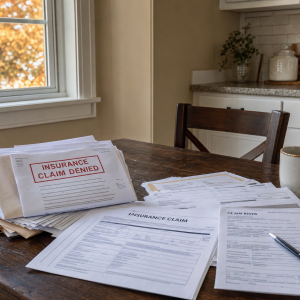
To dispute an insurance claim, you need to do more than just get angry on the phone. You have to formally challenge your insurer's decision with a detailed, evidence-backed letter showing exactly why their assessment is wrong and what you are actually owed.
This isn't just about disagreeing. It's about building a powerful counter-strategy, because that denial letter or lowball offer you received wasn't an unfortunate mistake. More often than not, it was a calculated business decision from an insurance giant that is not on your side.
Why Insurance Companies Deny and Underpay Claims

When your property gets hammered by a storm or damaged in a fire, you expect your insurance company to be on your side. In reality, you're often facing an opponent whose primary goal is to protect its profits, not you.
Insurance giants like State Farm and Allstate are massive corporations with a primary duty to their shareholders, not to their policyholders. It’s a simple, brutal equation: every dollar they pay out on a claim is a dollar less in profit. This fundamental conflict of interest is the engine that drives claim denials and lowball settlement offers.
This isn't just a string of bad luck—it's their business model. They train and deploy adjusters specifically to minimize payouts. The adjuster who shows up at your door isn't there to find every last bit of damage; they're there to find every reason to limit the scope of your claim.
Common Tactics in Their Playbook
If you want to learn how to dispute an insurance claim, you first have to recognize the carrier's go-to strategies. They have a well-worn playbook designed to wear you down until you accept far less than you deserve.
I've seen these excuses time and time again:
- Blaming "Wear and Tear": They'll look at your 10-year-old roof after a hailstorm and claim it failed due to age, conveniently ignoring the fresh, pockmarked evidence of impact damage.
- Citing Pre-Existing Damage: The adjuster might point to a small, completely unrelated scuff on the wall or an old, fixed water stain as "proof" the damage was there before the storm ever hit.
- Alleging Failure to Mitigate: This one is a classic. They'll claim you didn't get a tarp on your roof fast enough after a hurricane, then use that as their excuse to deny the massive interior water damage that followed.
- Using Biased Contractors: The "preferred" contractor they so helpfully recommend often provides an estimate that, surprise, aligns perfectly with their own lowball number. It’s a neat little trick to create a biased validation for their offer.
These tactics create a cycle of frustration for policyholders. A 2022 Accenture analysis found that a staggering 31% of property claimants were not fully satisfied with how their claim was handled. This isn't just a customer service issue; it's a direct result of these profit-first strategies. In fact, poor claims handling could put up to $170 billion of global premiums at risk by 2027 as fed-up customers jump ship.
Real-World Scenarios Unmasked
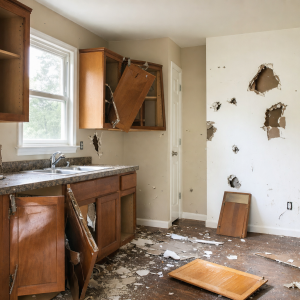
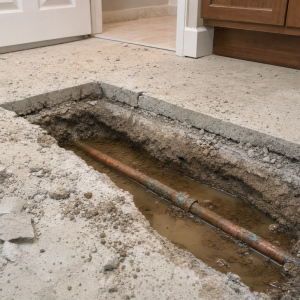
Think about a small business owner who suffers a major water loss from a burst pipe. The insurance company's adjuster shows up, takes a quick look around, and writes up a report to replace only the visibly warped flooring. He completely ignores the potential for hidden mold growth festering inside the walls and the saturated, rotting subfloor. The initial offer is a tiny fraction of the true cost to properly remediate and repair the damage, putting the business's entire future in jeopardy.
Or consider the homeowner whose roof gets pummeled by a severe windstorm. The damage is legitimate, but the insurer dismisses it as merely "cosmetic." They refuse to pay for a full replacement, leaving the family with a compromised roof that's just waiting to fail in the next big storm. For a deeper dive into these kinds of fights, check out our guide on common insurance claims and disputes.
The company adjuster works for the insurance company. Their loyalty is to the company's bottom line. Their goal is to close your claim for the lowest possible amount allowed by the policy.
Once you recognize these moves for what they are—a strategy to lowball you—you can stop feeling helpless and start building your own powerful counter-strategy. The one that’s armed with facts, meticulous documentation, and if needed, expert support.
Building an Airtight Case with Compelling Evidence

When you decide to dispute your insurance claim, you’re not just having a disagreement. You’re entering an evidence-based battle. Your insurance company—whether it’s State Farm, Allstate, or another giant—has a team of adjusters and engineers on standby, and their job isn’t to help you. It’s to protect the company’s bottom line by finding ways to underpay you.
To beat their lowball offer, you have to build your own fortress of proof. Your word means nothing here. You need a mountain of organized evidence that proves, without a doubt, the true value of your loss and dismantles any excuse they might cook up to underpay you. This is your ammunition.
Document Everything, Right Now
The second you can safely get back into your property, your top priority is documentation. Don't clean up. Don't move things. And definitely don't wait. Every minute you hesitate gives the insurer an opening to argue that the damage got worse on your watch or was unrelated to the initial event.
Grab your smartphone and start capturing everything.
- Take Way More Photos Than You Think You Need: Seriously, there is no such thing as too many. Get every angle of every room. You need wide shots to show the scope of the scene and tight close-ups that detail specific damage—the water line on the drywall, the individual hail dings on your siding, the soot inside a kitchen cabinet.
- Shoot Detailed Walk-Through Videos: Hit record and walk through the property, narrating what you see. Describe the smell of smoke or mildew. Point out sounds, like water still dripping. This adds a visceral layer of proof that static photos just can't match. Open doors, pull back curtains, show them everything.
- Find Your "Before" Pictures: This is pure gold. Dig up any photos or videos you have of your property before the disaster. Pre-loss photos instantly kill any argument from the adjuster that the damage was "pre-existing wear and tear."
Pro Tip: Look for the damage they won't. If a fire scorched one room, get photos of the fine layer of soot that settled in rooms down the hall. If a pipe burst, pull up the carpet corner and document the soaked subfloor. The insurance company's adjuster is trained to overlook this stuff. You can't afford to.
Gather Your Own Independent Estimates and Invoices
Your insurance company will send out their adjuster, who will write up an estimate using their company-approved software and pricing. To fight those numbers, you need your own figures from independent professionals who work for you.
Never, ever rely solely on a contractor your insurance company "recommends." These "preferred vendors" often have a cozy relationship with insurers, and their estimates mysteriously seem to align with the low payout the company wants to offer.
Get at least two of your own detailed repair estimates from reputable, local contractors with experience in insurance restoration. These can’t be one-line quotes; they need to break down every cost for labor, materials, and permits. This is how you prove what the real-world repair cost is.
At the same time, you need to be a hawk about tracking every single out-of-pocket expense. Keep receipts for:
- Any temporary repairs made to stop further damage, like buying a tarp for the roof.
- Invoices from water extraction or smoke remediation companies.
- Every receipt for additional living expenses (ALE) if you've been forced out of your home—hotels, meals, laundry, everything.
Create a Painfully Detailed Inventory of Damaged Property
This is the most tedious part of the process, but it's non-negotiable for any homeowner or business owner claim. For every single personal or business item that was damaged or destroyed, you must create a detailed inventory. For each item, list:
- A full description (e.g., "Samsung 55-inch 4K Smart TV, Series 7")
- The manufacturer and model number
- Its approximate age and what you originally paid
- The cost to buy a new one today
Without this detailed list, you’re basically letting the insurance adjuster decide what your life's belongings were worth. This documentation is the backbone of what's called a Proof of Loss form—a sworn statement they will demand from you. Filling this out correctly is critical.
Managing all this paperwork can feel overwhelming, but staying organized is half the battle. Learning about effective legal case file organization is a game-changer and will be your best friend as you move forward.
Your Evidence Checklist for a Successful Claim Dispute
Think of this as your battle plan. Having this documentation organized and ready is how you force the insurance company to take your dispute seriously. It shows them you're prepared, meticulous, and won't be pushed around.
| Evidence Category | What to Collect | Why It's Crucial |
|---|---|---|
| Photographic/Video Proof | Hundreds of photos (wide & close-up), narrated walk-through videos, and any "before" photos of the property. | Creates an undeniable visual record of the damage, countering claims of pre-existing issues or minimal impact. |
| Independent Repair Estimates | At least two itemized estimates from reputable, local contractors who specialize in insurance restoration work. | Provides a credible, third-party valuation of repair costs to dismantle the insurer's lowball, software-based estimate. |
| Personal Property Inventory | A detailed spreadsheet listing every damaged item with its description, age, original cost, and replacement cost. | Forms the basis of your contents claim, preventing the adjuster from undervaluing your personal belongings. |
| Expense Tracking & Receipts | All receipts for temporary repairs (tarps, boarding up windows), remediation services, and Additional Living Expenses (ALE) like hotels/meals. | Ensures you are fully reimbursed for every dollar you spent out-of-pocket as a direct result of the loss. |
| Official Documents & Comms | A copy of your full insurance policy, all written communication with the insurer, and any reports from police, fire, or weather services. | Establishes a clear paper trail and holds the insurer accountable for what they've said and what your policy covers. |
Without this level of detailed proof, you're fighting an uphill battle with one hand tied behind your back. With it, you're in command.
Crafting a Powerful Insurance Claim Dispute Letter
When you get that denial letter or a ridiculously low settlement offer, a phone call just won't cut it. You have to create a formal, written record of your fight. That's where the insurance claim dispute letter comes in.
Don't think of it as a polite request. It’s a formal demand letter—a clear, evidence-backed document that puts the insurer on official notice that you refuse to accept their decision.
This isn’t the place for emotional pleas or vague complaints about being treated unfairly. Your letter needs to be professional, factual, and firm. It should be structured to show giants like State Farm or Allstate that you’ve done your homework, documented your case meticulously, and you’re prepared to take things further if they continue to act in bad faith. A strong letter is often what it takes to get your file off a junior adjuster's desk and in front of a senior claims manager with the power to actually fix the problem.
The Core Components of Your Dispute Letter
A good dispute letter is a strategic weapon. It needs to be organized, direct, and leave absolutely no room for them to misinterpret your position. Every single sentence must work to dismantle their argument and build yours.
Here are the absolute must-haves for your letter:
- Your Claim Information: Get right to the point. Start with your full name, the address of your damaged property, your policy number, and the specific claim number. This makes sure your letter lands in the right file without any delay.
- The Insurer's Decision: Reference the date on their decision letter and the name of the adjuster who handled your claim. State the exact dollar amount they offered or quote their specific reason for the denial.
- A Clear Statement of Disagreement: This is your opening punch. Use firm, direct language. For example: "I am writing to formally dispute the settlement offer of [$ Amount] for the aforementioned claim," or "I formally reject your company's denial of my claim for damages resulting from [Event]."
That first statement immediately sets a serious tone. It signals that this isn't some casual follow-up; it's the start of a formal dispute, and they are legally required to take it seriously.
Building Your Argument Point-by-Point
This is where you win the fight. Saying things like "your offer is too low" is completely useless and gets you nowhere. You have to systematically tear down their reasoning with the mountain of evidence you've already gathered.
Structure this part of the letter as a point-by-point takedown of their assessment.
Let's say their adjuster tried to claim your roof damage was just "pre-existing wear and tear." Your response should be sharp and specific, something like this:
"Your adjuster, [Adjuster's Name], incorrectly attributed the roof damage to 'wear and tear' in his summary dated [Date]. This is factually wrong. Enclosed you will find a detailed report from [Roofer's Name], a licensed local contractor, which explicitly identifies impact damage consistent with the hailstorm on [Date]. I have also included pre-loss photos of my roof, taken on [Date], that clearly show its excellent condition before the storm."
You have to do this for every single point of disagreement. If they undervalued your personal belongings, point to your detailed inventory list and include copies of replacement cost quotes for the big-ticket items. If they ignored hidden water damage, include the moisture readings and photos from your independent restoration expert. Attach copies of all your supporting documents—estimates, expert reports, invoices, key photos—and call them out by name in the letter.
Making Your Demand and Setting a Deadline
After you’ve laid out your evidence, you have to tell them exactly what you want. Don't be vague. Your demand needs to be specific and directly backed up by the proof you've just provided.
State your settlement demand clearly: "Based on the enclosed independent estimates and detailed property inventory, the actual value of my claim is [$ Amount]. I demand a revised settlement in this amount to fully indemnify me for my loss as stipulated in my policy."
Finally, create a sense of urgency. You need to set a deadline for them to respond. Conclude with something firm: "I expect a written response to this dispute within fifteen (15) business days from the date you receive this letter. If I do not receive a substantive response and a revised offer by [Date], I will be forced to explore all other available remedies."
This kind of language shows them you're serious and won’t be worn down by the delay tactics so many insurance companies rely on.
Once your dispute letter is ready to go, send it through official channels. Always, always use certified mail with a return receipt requested. This gives you an undeniable legal paper trail proving exactly when they received your letter. Some insurers still use fax, and you can easily send your dispute letter online via fax to make sure it gets there instantly and professionally.
Mastering Negotiations and the Appeals Process
Sending your dispute letter isn't the end of the fight—it's the opening bell for round two. Once the insurance company realizes you're not just going to roll over, their strategy often changes. This is where the real work begins, and you need to be ready for what comes next, whether it’s hardball negotiations with a senior adjuster or formal processes like appraisal and mediation.
A lot of policyholders get their hopes up, thinking their detailed letter will make the carrier suddenly see the error of its ways and pay what's right. I hate to be the one to tell you, but that’s almost never how it works with companies like Allstate or State Farm. These next steps are just more tools in their arsenal to wear you down.
They’re counting on you getting tired. They hope the endless delays and frustration will push you to take a fraction of what you’re owed just to make it all stop. Your job is to dig in your heels and prove that strategy won't work on you. Treat every single interaction as a negotiation, and keep hammering them with the evidence you’ve already collected.
Winning the Negotiation War of Attrition
When your dispute letter finally lands on the right desk, your claim will probably get kicked upstairs to a more experienced adjuster. Their job is to make this problem go away, but their definition of "resolved" still means paying you as little as possible. You can almost certainly expect a counter-offer.
Here’s a critical piece of advice: never, ever accept their first counter-offer. It's a test. They're dangling a number in front of you to see if you're desperate enough to bite.
Your response needs to be calm, firm, and rooted in facts. Circle right back to your contractor's estimates and your detailed inventory list. If your contractor quoted $50,000 for repairs and they come back offering $20,000, don't get angry. You ask, "Thank you for the revised offer. Can you please provide a line-item breakdown showing how you arrived at that number? I need to compare it to the detailed estimate from my licensed general contractor."
This simple question puts the pressure back on them. It forces them to justify their lowball number, and a lot of the time, they can't do it without exposing how shoddy their own assessment was.
The process is a straightforward escalation of pressure.
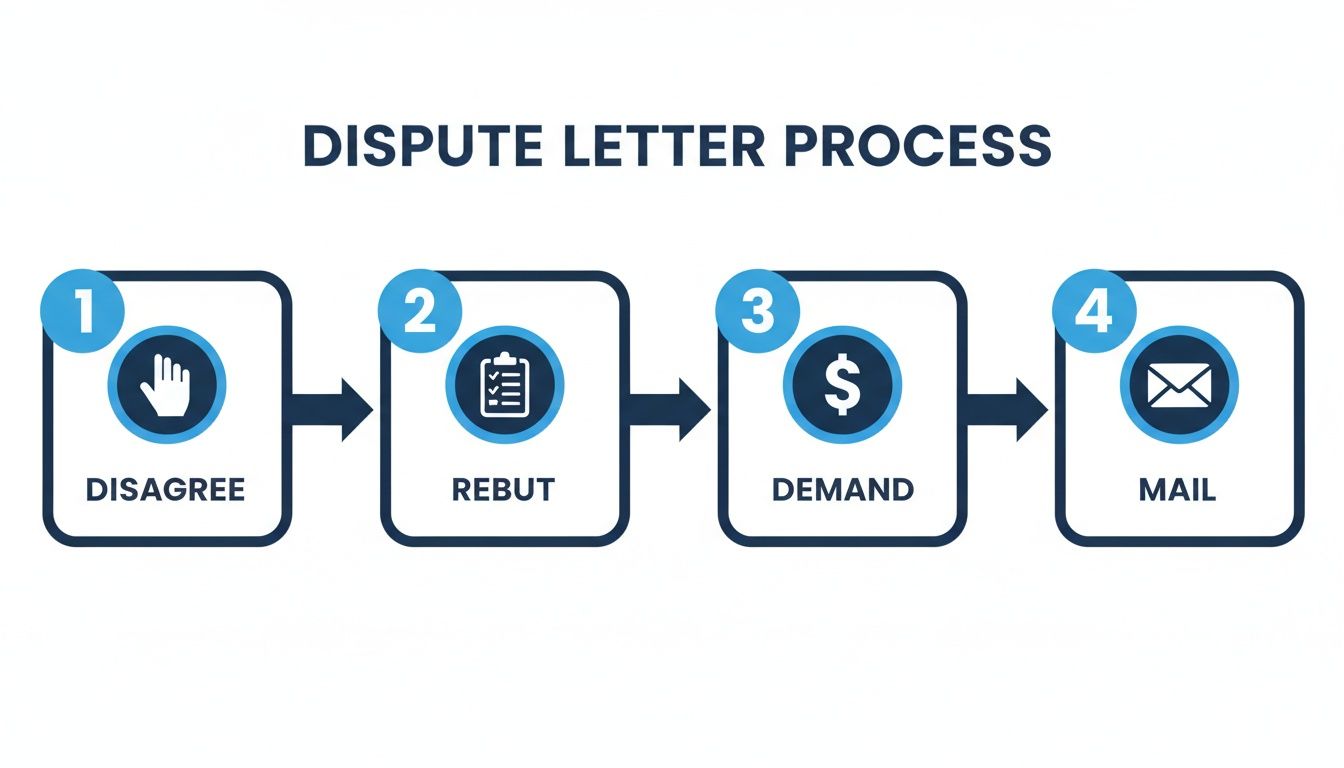
Each step creates a formal paper trail proving you're serious and that you're holding them accountable to the contract.
Navigating Appraisal and Mediation
If you hit a wall with direct negotiation, your policy probably outlines a few other options, most commonly appraisal or mediation. The insurance company will frame these as fair, neutral ways to settle things, but they are absolutely loaded with traps for anyone who isn't prepared.
-
The Appraisal Process: This isn't about who was right or wrong; it's only about the dollar amount of the loss. You hire an appraiser, they hire an appraiser, and if those two can't agree, a neutral "umpire" is brought in to make the final decision. The outcome is almost always binding. Insurers love this because it can kill a dispute fast, and if you haven’t built an ironclad case, you can get stuck with a terrible number.
-
Mediation: Here, a neutral third-party mediator tries to help you and the insurance company find a middle ground. Unlike appraisal, mediation is non-binding, meaning you don't have to accept the outcome. But make no mistake, insurers use it as another high-pressure environment to push you into a "compromise" that saves them money.
In either of these formal settings, the quality of your documentation is everything. A weak, disorganized case will get picked apart in minutes.
Recognizing and Documenting Bad Faith
Throughout this entire ordeal, you have to be vigilant for signs of bad faith insurance practices. Insurers have a legal duty to handle your claim fairly and in a timely manner. When they intentionally drag their feet, mislead you, or refuse to give you a straight answer, they are acting in bad faith.
Keep a running log of every single instance of behaviors like these:
- Unreasonable Delays: Taking weeks to return a simple phone call or respond to your dispute letter.
- Refusing to Justify Their Position: Stonewalling when you ask for a clear, written explanation for their low offer or denial.
- Making Burdensome Document Requests: Constantly asking for information you've already sent, just to create delays.
- Misrepresenting Policy Terms: Lying to you about what your policy actually covers.
Real-World Example: After a severe storm, an Oklahoma homeowner filed a claim with a major insurer. The company's adjuster drastically underestimated the roof damage and then delayed the claim for over a year, causing further interior damage. The homeowner sued. In the landmark case Vining v. Enterprise Financial Group, the court found the insurer's conduct was "malicious and intentional" and awarded the homeowner not only the full value of the claim but also $1 million in punitive damages for bad faith. This case set a powerful precedent for holding insurance companies accountable.
Every email you send, every letter you mail, every note you jot down after a phone call—it all becomes evidence. This paper trail is your single most powerful weapon. It proves you've been reasonable while the insurer has been anything but.
Knowing When to Hire a Public Adjuster

So far, you’ve been fighting this battle on your own. But when the stakes get high and your insurer digs in their heels, it might be time to bring in a professional who is legally obligated to fight for you—and only you. That’s where a public adjuster comes in.
It’s absolutely critical to know who you’re dealing with. The "company adjuster" who came to your property? They work for the insurance company. Their entire job is to protect their employer’s bottom line, which means minimizing what they pay you.
Then there are so-called "independent" adjusters. Don't let the name fool you. These are just third-party contractors hired by insurance companies, usually when a hurricane or other disaster creates a surge in claims. Their loyalty is to the company that signs their checks, not to you.
A public adjuster is the only type of adjuster licensed by the state to work on your behalf as the policyholder.
The Telltale Signs You Need an Expert on Your Side
Deciding to hire help is a big step. The whole process is draining, and you might think you can push through it alone. But certain red flags should be blaring sirens, telling you the fight is too big to wage by yourself. If you're wondering if you should hire a public adjuster, these scenarios are clear signals that it's time to call for backup.
You should seriously consider bringing in a public adjuster if:
- The Damage is Severe or Complex: After a catastrophic fire, a major hurricane, or a devastating dwelling claim, the sheer scope of the damage is overwhelming. A public adjuster knows how to uncover hidden damage—like smoke contamination deep inside your HVAC system or structural problems masked by a quick cosmetic fix—that the company adjuster will almost certainly "miss."
- You Have a Complex Business Interruption Claim: For business owners, figuring out the true cost of a shutdown is a nightmare. It requires a forensic-level analysis of lost profits, ongoing expenses, and projected future earnings. This is highly specialized work that’s way beyond a simple property damage estimate.
- The Insurance Company is Stalling or Acting in Bad Faith: Has your claim been dragging on for months with no end in sight? Is the adjuster ghosting your calls or demanding paperwork you've already sent three times? These are classic delay tactics. A public adjuster knows how to cut through the bureaucratic nonsense and force the insurer to act.
- The Settlement Offer is Shockingly Low: When you get an offer that doesn't even come close to covering your contractor’s estimate, that’s a direct message. Your insurer is drawing a line in the sand. You need a professional negotiator to drag them across it.
A public adjuster levels the playing field. The insurance company has a team of experts on its side; hiring a public adjuster gives you an expert of your own. They speak the same language, use the same estimating software, and understand the policy loopholes that can make or break your claim.
A Case Study in Turning the Tables
Think about a family in Raleigh, NC, whose home was destroyed by a kitchen fire. Smoke and soot had seeped into every corner of the house, ruining everything from furniture and clothing to the ductwork. Their insurer, a major national brand, sent an adjuster who quickly cut them a check for $75,000. The offer barely covered the kitchen repairs and dismissed the widespread smoke damage as something that could just be "cleaned up."
The family was crushed. That amount wouldn't even begin to make their home safe and livable again.
Feeling completely out of their depth, they hired a public adjuster. The PA immediately brought in an industrial hygienist who tested for soot and carcinogens, proving the contamination was severe. He then built a meticulous, 100-page estimate documenting every single item that needed replacing and every surface that required specialized remediation.
Armed with this undeniable proof, the public adjuster went back to the insurance company. After weeks of intense negotiation—and proving the insurer was ignoring key provisions in its own policy—the final settlement came in at over $250,000.
That was the difference between a cheap patch-up job and actually rebuilding their lives. This story isn't an anomaly; it's a powerful example of how an expert advocate can completely change the outcome of a disputed homeowner claim.
Answering Your Questions About Claim Disputes
When you're trying to navigate a claim dispute, a thousand questions run through your mind. You're stressed, you're angry, and you're probably wondering why the insurance company you've paid faithfully for years is suddenly treating you like an adversary.
Let's cut through the noise. Here are some straight answers to the questions we hear every day from property owners who are in the thick of a fight.
How Long Do I Have to Dispute a Claim?
This is the most time-sensitive question, and the answer is buried in your policy and state law. Your homeowner or business owner policy almost certainly has a clause that limits how long you have to file a lawsuit after a loss—often just one or two years.
Insurers like Allstate and State Farm are masters at running out the clock. They'll drag out their "investigation," request the same documents over and over, and string you along with promises of a review. It’s a deliberate strategy. They know that if they can just delay you long enough, that deadline will pass, and your legal rights will evaporate. Don't let them get away with it.
Is It Worth It to Appeal a Denial?
One hundred percent, yes. An initial denial on a property claim is often just a test to see if you'll go away quietly. Many people do, which saves the insurance company a fortune.
When you push back with a formal, evidence-backed appeal, you force the file onto the desk of a senior adjuster. You show them you mean business. The success rates for appeals are often much higher than people think. While it varies, some industry analyses have found that 40% to 80% of certain appealed denials are overturned. You can see some of the data in these findings on denied insurance claims from KFF.
Never assume a denial is the final word. It's often just the insurance company's opening move in a negotiation you didn't know you were in.
What If My Insurer Ignores My Dispute?
Giving you the silent treatment is a classic bad faith insurance tactic. If you’ve sent a formal dispute letter by certified mail and your deadline has come and gone without a peep, it's time to escalate.
Your next move is to send a follow-up letter, also by certified mail. In it, you reference your original communication, the date it was sent, and their failure to provide a timely response. This isn't just about getting their attention; it's about building a rock-solid paper trail. That documentation becomes powerful proof of their unresponsiveness if you need to file a complaint with your state’s Department of Insurance or take legal action down the road.
When you're fighting a lowball offer or an outright denial on your homeowner or business claim, you don't have to go it alone. The team at For The Public Adjusters, Inc. is here to level the playing field, manage your entire claim, and fight for the full settlement you are owed. If you're ready to get an expert in your corner, contact us for a no-cost claim review at https://forthepublicadjusters.com.