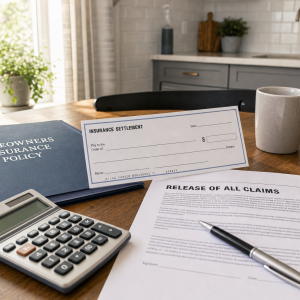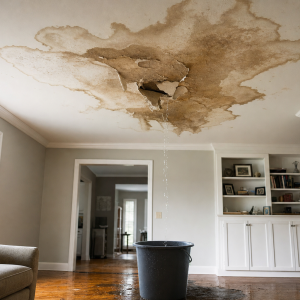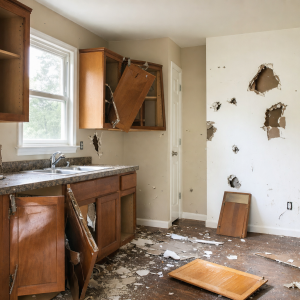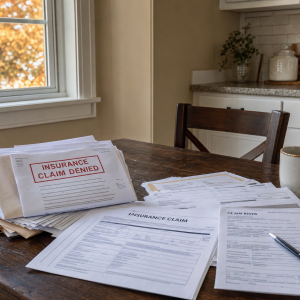

That first homeowners claim settlement offer from your insurance company isn’t just a disappointment—it’s an insult. And it’s almost never accurate or the final offer… BUT, IT’S A FIGHT!
When your homeowners claim gets denied or a ridiculously low check shows up in the mail, it’s easy to feel defeated. But you have to understand, this isn’t the end of the road. This is an insurance company’s opening move in a negotiation you didn’t even know you were in. It’s the start of the fight for the money they rightfully owe you.
Why Your Insurance Company’s First Offer Is Just a Starting Point

As soon as you file a claim, your insurer sends out their adjuster. It’s natural to think this person is there to help you. They aren’t. Their loyalty is to their employer—the insurance company—and their job is to protect the company’s bottom line. Plain and simple, that means paying you as little as legally possible.
This is a fundamental conflict of interest, and it’s why so many initial offers are laughably low or denied entirely. Big carriers like State Farm and Allstate have entire playbooks designed to underpay policyholders because they are banking on one thing: that you’ll be too tired, overwhelmed, and financially stressed to fight back. They are counting on you to just take the check and go away.
Common Excuses for Low-Ball Offers
Insurance adjusters have a whole script of justifications they use to slash your settlement. Knowing their game is the first step to beating them at it.
Here are some of the most common excuses they’ll throw at you to deny or underpay your homeowners claim:
- Twisting Your Policy Language: They’ll cherry-pick confusing phrases from your policy to argue that your specific damage isn’t actually covered.
- Blaming ‘Pre-Existing’ Damage: This is a classic. The adjuster will walk your roof, point to a few scuffs, and declare the damage was already there before the storm—just normal “wear and tear.”
- Ignoring What They Can’t See: The company adjuster’s inspection is usually fast and superficial. They rarely look for hidden damage, like smoke contamination inside your walls or water that has seeped under your floorboards.
- Arguing About the Cause: They might admit the damage exists but then argue about what caused it. A favorite tactic is to reclassify wind-driven rain as a “flood,” conveniently pushing it into a policy exclusion.
Insurer Tactic vs. Policyholder Reality
Insurance companies rely on a standard set of arguments to minimize what they owe you. This table breaks down their justifications versus your reality, and what you can do about it.
| The Insurer’s Justification | Your Reality as a Policyholder | Your First Step to Fight Back |
|---|---|---|
| “The damage is just normal wear and tear.” | The storm, fire, or other event was the direct cause of the damage. “Wear and tear” is an excuse, not an expert assessment. | Get a second opinion from an independent, trusted contractor or a public adjuster to document the true cause. |
| “Your policy doesn’t cover this specific type of loss.” | Insurers often misinterpret their own policies in their favor, hoping you won’t read the fine print or challenge them. | Demand they show you the exact language in your policy, by page and line number, that justifies the exclusion. Don’t take their word for it. |
| “We found pre-existing damage that isn’t related to this claim.” | This is a strategy to reduce the scope of covered repairs by blaming old, unrelated issues for new, sudden damage. | Provide photos or maintenance records showing the condition of your property before the loss to prove the damage is new. |
| “The estimate from our ‘preferred vendor’ is all we’re willing to pay.” | “Preferred vendors” often write low estimates to keep getting business from the insurer, not to make you whole. | You have the right to get your own independent estimates from contractors who work for you, not the insurance company. |
These tactics aren’t just isolated incidents; they’re part of a systematic approach to business. Your policy is a contract, and fighting back is simply holding them to their end of the bargain.
“My parents are in their 80’s and experienced a water loss… the insurance company tried to “low ball” the claim and take advantage of them… After a year of dealing with the insurance company and their lawyers, For The Public Adjusters were able to get us more than 3 times what the insurance company wanted to pay! Don’t hesitate to call these professionals, I’m glad I did.” – David S.
David’s experience proves a critical point: the insurance company’s first “no” is almost never the final word. Their assessment is often biased, incomplete, or flat-out wrong. You absolutely have the right to dispute their findings and demand the fair settlement you deserve. It’s not just an option—it’s the only way to protect your home and your finances.
The Conflict of Interest Built into Every Insurance Policy
You see the commercials all the time. Catchy slogans like “You’re in good hands” from Allstate or “Like a good neighbor, State Farm is there” are designed to make you feel safe. They sell you a promise: pay your premiums, and when disaster strikes, they’ll be there to put things right.
It’s a comforting thought, but it hides a brutal, uncomfortable truth about the insurance industry.
The entire business model is built on a massive, glaring conflict of interest. Your insurance company isn’t your partner. It’s a for-profit business with a legal duty to its shareholders, not to you. The less they pay out on claims, the more profit they report. Every single dollar they deny you on your legitimate homeowners claim goes straight to their bottom line.
Your Adversary, Not Your Ally
This financial reality creates two opposing goals. You need the maximum settlement your policy allows to rebuild your home and life. They are financially motivated to pay you the absolute minimum they can get away with. The moment you file a claim, you stop being a valued customer and become a liability on their spreadsheet.
This isn’t just a theory; it’s the playbook they operate from. They have built an entire system designed to reduce what they pay you, and it kicks into high gear the second their adjuster shows up at your door.
This system relies on a few core tactics:
- Delay, Deny, Defend: This is the insurance industry’s infamous three-step strategy. They drag out the process with endless requests for paperwork, hoping to wear you down until you accept a low-ball offer out of pure exhaustion and financial desperation.
- Inexperienced Adjusters: The carrier often sends a staff or independent adjuster with minimal training to assess complex damage. They are programmed to miss hidden issues, use outdated pricing for labor and materials, and write incomplete estimates that always favor the insurance company.
- Weaponized Policy Language: Insurance policies are dense legal contracts, deliberately filled with confusing exclusions, endorsements, and definitions. The company uses this complexity to create loopholes and justify underpaying what you are rightfully owed.
Never forget that the insurance company’s adjuster is not an impartial expert sent to help you. They are a company employee trained to protect their employer’s financial interests by limiting your payout. Seeing them as your adversary is the first step to protecting yourself.
When Their Business Model Becomes Illegal “Bad Faith”
While minimizing payouts is their standard operating procedure, sometimes an insurer crosses a legal line into what’s known as “bad faith.” This is a legal term for when an insurance company fails to uphold its side of the contract without any reasonable basis.
Bad faith can look like refusing to investigate a claim, deliberately twisting policy language to deny coverage, or making a settlement offer so ridiculously low it bears no resemblance to your actual damages.
A landmark U.S. Supreme Court case, State Farm Mut. Auto. Ins. Co. v. Campbell, blew the lid off this practice. While it was an auto insurance case, the legal principles apply across the board. The court found that State Farm had run a decades-long, nationwide scheme to intentionally underpay claims just to meet internal profit goals. Evidence showed a corporate culture that actively rewarded adjusters for paying less than a claim was worth, proving a systemic strategy of putting profits ahead of policyholders.
The court slammed State Farm with a massive punitive damages award, sending a shockwave through the industry.
Cases like this prove that the low-ball offer you receive isn’t an accident or an honest mistake. It’s the intended result of a calculated business strategy. Understanding this fundamental conflict of interest is critical. It forces you to shift from being a passive victim to an active participant in a negotiation where you must be ready to fight for what your policy promises.
Common Homeowners Claim Disputes and How to Win Them

Every type of property damage has its own playbook of dirty tricks that insurers like Allstate and State Farm use to underpay or outright deny a homeowners claim. If you want to win, you have to understand their specific game plan for your type of loss and know exactly how to counter their moves with cold, hard facts.
Think of it like this: your insurer has played this game thousands of times. They know all the rules, the loopholes, and the shortcuts. They are banking on you not knowing any of them.
Here’s how to flip the script in the most common disputes.
Fighting Fire and Smoke Damage Low-Ball Offers
After a fire, the charred walls and burnt belongings are just the obvious part. The real fight, the one that costs thousands, is over the invisible damage from smoke, soot, and odor.
Your insurance company’s adjuster will write an estimate to clean what they can see. They’ll completely ignore the fact that microscopic smoke particles get into everything—your insulation, your drywall, your HVAC system, everywhere. They’ll argue that a coat of paint is enough. This is a deliberate tactic to sidestep the long-term health hazards and permanent stench of embedded soot.
A public adjuster hits back by documenting the full extent of the contamination. We prove how smoke has saturated insulation and ductwork, making a rock-solid case for proper remediation and replacement—not just a cheap cover-up. It’s about protecting your family’s health and your home’s value.
Disputing Wind and Hail Damage Claims
When it comes to wind and hail damage, especially to your roof, the entire battle comes down to two words: repair versus replace.
The insurance adjuster will almost always push for a cheap patch job, claiming only a few shingles are damaged. This strategy creates two massive problems for you. First, a patched roof is a weak roof, just waiting to leak during the next storm. Second, it’s impossible to perfectly match new shingles to your existing, weathered roof. The result? A mismatched eyesore that kills your home’s curb appeal and slashes its resale value.
Public Adjuster Success Story: The Matching Game
A Raleigh, NC homeowner was handed a check for $3,500 for a “spot repair” on their hail-damaged roof. After we got involved, we successfully argued that North Carolina law requires the insurer to replace the entire slope if matching materials aren’t available to ensure a uniform look. The final settlement wasn’t $3,500. It was over $22,000—enough for a brand-new roof.
By the way, simple home maintenance can give you a huge advantage in these fights. If you can show you’ve taken care of your property, it makes it much harder for them to use their favorite “wear and tear” excuse. As one resource points out, things like regular roof cleaning can seriously benefit your insurance position. You can learn more here: Why Roof Cleaning Can Benefit Your Insurance.
Navigating Deceptive Water Damage Tactics
With water damage claims, it’s all about where the water came from. Your policy probably covers a sudden pipe burst but excludes “flooding” from ground-level water. Insurers love to exploit this gray area.
They will do everything they can to misclassify the source of the water to fit a policy exclusion. They’ll also argue the damage came from a “long-term leak” that you should have fixed ages ago, conveniently re-labeling it as a “maintenance issue” so they can deny your claim. To see how these tactics hit your wallet, learn more about the difference between Actual Cash Value and Replacement Cost.
The Bureaucratic Nightmare of NFIP Flood Claims
Flood damage is a completely different animal. These claims fall under the National Flood Insurance Program (NFIP), which is handled by FEMA. Whether your policy is directly with the NFIP or a Write Your Own (WYO) company, you’re not dealing with your normal insurer anymore. You’re dealing with the federal government’s difficult rules.
The process is notoriously slow, rigid, and tangled in bureaucratic red tape.
NFIP adjusters are infamous for sticking to a strict and shockingly inadequate price list. They’ll deny coverage for anything in a basement and refuse to pay for things that are standard in a normal homeowners claim. Fighting them requires a public adjuster who knows the bizarre and frustrating rules of the NFIP inside and out. This is not a battle you want to fight alone.
Hiring a Public Adjuster to Level the Playing Field

After battling your insurance company, you might feel like you’re trapped in an unwinnable fight. But you don’t have to fight them alone. It’s time to bring in your own champion—a state-licensed Public Adjuster.
This is the most critical distinction every policyholder must understand: the adjuster your insurance company sends works for them. An “independent” adjuster they hire still works for them. A Public Adjuster is the only type of adjuster who works exclusively and legally for you, the policyholder.
Their job is to protect the insurer’s profits. Our job is to protect your home and your financial recovery. It’s that simple. We level the playing field by putting an expert in your corner who knows the insurance company’s playbook inside and out.
Your Dedicated Advocate in the Homeowners Claim Process
Hiring a public adjuster fundamentally changes the dynamic of your homeowners claim. Instead of you trying to prove your loss to a skeptical company employee, you have a licensed professional managing the entire process, armed with evidence and expertise.
The financial pressure on insurance companies has never been greater. Homeowners are enduring a 40.4% cumulative spike in home insurance rates over the past six years, largely due to climate-related disasters and inflation. This strain often leads insurers to adopt more aggressive tactics to deny or underpay claims, making professional advocacy crucial. You can learn more about these trends and what they mean for policyholders by reading the full report on the state of home insurance.
This is precisely where we step in to enforce your rights.
The Public Adjuster’s Forensic Approach
A public adjuster’s process is a world apart from the quick, superficial inspection conducted by the company’s adjuster. We perform a forensic assessment of your property to uncover the full, often hidden, scope of the damage.
Here is what that detailed process looks like:
- Deep-Dive Policy Review: We start by analyzing your insurance policy to identify every ounce of coverage you are entitled to, including endorsements and clauses the company adjuster might “forget” to mention.
- Advanced Damage Detection: We use specialized tools like thermal imaging cameras to find trapped moisture behind walls and digital moisture meters to trace the path of water damage that is invisible to the naked eye.
- Meticulous Documentation: Every single loss is photographed, measured, and documented. We create a detailed inventory of damaged personal property and building materials, leaving no room for the insurer to argue.
- Professional Estimate Writing: We write our own professional, line-by-line repair estimate using the same software as the insurance companies, but we write it to make you whole—not to save the insurer money.
- Aggressive Negotiation: We take over all communications with the insurance company, presenting our evidence-backed claim package and leading the negotiations to secure the maximum settlement you deserve.
For a more in-depth look at our role, you can explore our guide on what a public adjuster does and how we advocate for homeowners.
Public Adjuster Success Story
A homeowner with severe roof damage from a storm was offered a measly $15,000 by their insurer. The company’s adjuster claimed only a small section needed repairs. The homeowner knew it wasn’t right and called us for a free claim review.
Our team conducted a full inspection and found widespread, storm-created damage the initial adjuster had conveniently ignored. We documented the full scope, wrote a comprehensive estimate for a full roof replacement to prevent future leaks, and fought back against the insurer’s low-ball tactics.
The final result? We successfully turned that insulting $15,000 offer into a final settlement of over $100,000. This is the power of having a true expert fighting on your side.
How One Homeowner Fought Back and Won
It’s one thing to talk about how the claims process is supposed to work. It’s another thing entirely to see how a real homeowner, stuck in your exact position, fought back against their insurance company and won their homeowners claim.
This isn’t some made-up story. This is a real 5-star Google review from a real person who went from a frustrating, insulting low-ball offer to a full and fair settlement.
From a Low-Ball Offer to a Full Recovery
Robert B.’s story is the perfect playbook for how insurance carriers operate. He found serious damage to his property and did exactly what he was supposed to do: he filed a claim. The insurance company sent their adjuster, who did a quick walk-through and came back with an offer so low it was offensive.
Their first settlement offer barely even covered his deductible. That meant Robert would get practically nothing to fix the major damage his home had suffered. He was left stressed and feeling completely abandoned by the very company he paid to protect him. This is a classic move from carriers like State Farm and Allstate—they are banking on you getting so frustrated that you just give up.
How a Public Adjuster Changed Everything
Robert didn’t give up. Instead of rolling over and accepting the scraps they offered, he got a professional second opinion. That one move completely flipped the script on his claim.
A public adjuster took over immediately, forcing the insurance company to reopen the case. Here’s how the fight was won:
- A Real, Forensic Inspection: The public adjuster performed a detailed, forensic inspection, uncovering significant damage the company adjuster either conveniently missed or deliberately chose to ignore.
- Ironclad Documentation: Every single bit of damage was meticulously documented with photos, reports, and professional estimates, building an undeniable case for a much, much higher payout.
- Aggressive Negotiation: Armed with indisputable proof, the public adjuster went to war with the insurance company, relentlessly negotiating and systematically dismantling their flimsy excuses for the low offer.
The result? A complete turnaround. As Robert put it, he was “very pleased” with the final outcome—an outcome that actually gave him the money he needed to make his home whole again.
His story is proof that you don’t have to take a denied or low-balled homeowners claim lying down. The insurance company’s first offer is never their best offer. It’s just their opening shot. With the right expert advocate in your corner, you can challenge their decision, level the playing field, and force them to pay the fair settlement you are rightfully owed.
Your Action Plan for a Denied or Underpaid Claim
When you get that denial letter or see the insultingly low offer for your homeowners claim, your next few moves are absolutely critical. They can mean the difference between financial ruin and a full recovery. Your first reaction might be panic or anger, but what you need is a clear, tactical plan of action.
The first rule is the most important: Do NOT cash that check or sign any release documents.
Cashing that check is exactly what they want you to do. It can be interpreted as your acceptance of their insulting offer, effectively slamming the door on your ability to fight for more. It’s a classic trap designed to close out your claim for pennies on the dollar.
Your Immediate Next Steps
Instead of cashing the check, it’s time to put the insurance company on the defensive. You need to demand a detailed, written explanation for their decision.
This isn’t a friendly request. It’s a formal demand that requires them to:
- Pinpoint the exact language in your policy, by page and line number, that they are using to justify the denial or underpayment.
- Provide a complete copy of their adjuster’s report, including every photo, measurement, and note taken during their inspection.
- Explain precisely why they disagree with any estimates you’ve already submitted from your own contractors.
This forces them to show their hand and gives you the ammunition you need for the fight ahead.
While you wait for their response, gather all your own records. This includes your full policy, especially the declarations page, all communications with the insurer, your photos of the damage, and estimates from trusted contractors. Having this information organized is vital. One of the most critical documents they might demand is covered in our guide on the Sworn Statement of Proof of Loss.
This is the typical journey from initial property damage to winning a fair settlement, even after a low-ball offer.

As you can see, their low offer is just a roadblock, not the end of the line. With expert help, you can navigate right past it to a successful outcome.
Make no mistake, the insurance market is under immense financial pressure. With global insured natural catastrophe losses surpassing $100 billion in the first half of the year alone, U.S. insurers are tightening their belts. This pressure results in much stricter claim scrutiny, making it incredibly difficult for homeowners to get a fair deal without an expert advocate on their side. You can explore more about these market pressures and discover more insights from Aon’s market overview.
The Single Most Important Move You Can Make
Before you get locked in a losing battle trying to argue with a massive insurance corporation, you must take the most crucial step of all: contact a public adjuster for a free, no-obligation claim review.
This professional second opinion is the single most powerful tool you have. A public adjuster works only for you, and bringing one in early ensures you have an expert to counter the insurance company’s expert from day one, protecting your right to a fair and just recovery.
Frequently Asked Questions About Homeowners Claim Disputes
Fighting your insurance company is stressful, and you’ve got questions. You’re probably wondering what your options are and if it’s even worth the fight. Here are the straight answers to the questions we hear most from homeowners who are tired of being given the runaround.
How Much Does a Public Adjuster Cost?
Nothing upfront. Zero. We work entirely on a contingency fee basis.
That means we only get paid when we recover money for you. Our fee is simply a small, state-regulated percentage of the settlement we force your insurance company to pay. Because we consistently get clients dramatically more money than they could on their own, our fee is more than covered by the increased settlement.
Is It Too Late if My Claim Was Denied?
Absolutely not. In fact, a claim denial is one of the best times to bring us in.
Think of a denial letter as nothing more than your insurer’s biased opinion—it’s not the final word. Reopening denied claims is what we do. We build a new case with professional estimates, expert reports, and undeniable evidence that forces them to reverse their decision. Some of our biggest wins started with a flat-out denial from a carrier who assumed the homeowner would just walk away.
Will My Insurer Cancel My Policy for Hiring a Public Adjuster?
No. It is illegal for your insurance company to cancel your policy, jack up your rates, or punish you in any way for hiring professional help. Your policy is a contract, and you have every right to enforce it.
Hiring a public adjuster is just leveling the playing field. They have their team of experts working to protect their profits; you’re just bringing in your own expert to protect your home. It’s a standard, protected part of the insurance claim process.
When you’re staring at a denied or low-ball homeowners claim settlement, you don’t have to take it. The team at For The Public Adjusters, Inc. is ready to review your claim for free and fight for every dollar you’re owed. Contact us today and get the expert help you deserve.