
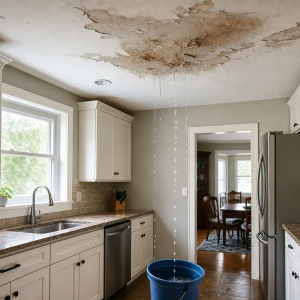
You smell it before you see it. A damp, sour odor behind a vanity, under flooring, inside a closet wall, or rising out of a crawlspace after a storm. Then you find the staining, the discoloration, the black or green growth, and the panic sets in. The repair bill is one problem. The insurance company is the bigger one.
If you're asking does insurance cover mold in home, the honest answer is this: sometimes, but insurance companies fight these claims hard. They don't treat mold like a routine property loss. They treat it like a payout they want to avoid. That means your claim can turn into an argument over cause, timing, maintenance, exclusions, and whether you allegedly failed to act fast enough.
You need to think like you're already in a dispute, because you probably are. The carrier's adjuster isn't showing up to help you maximize recovery. They're showing up to protect the carrier's money. If the mold followed water intrusion, your first move is stopping further damage and documenting everything. Your second move is learning the ground you're standing on. If you're also trying to prevent this mess from happening again in vulnerable areas, these discover basement mold prevention strategies are worth reviewing, especially for below-grade spaces that insurers love to label as long-term moisture problems.
Table of Contents
- Introduction You Found Mold Now Prepare for a Fight
- Why Your Insurer Already Plans to Deny Your Mold Claim
- The Covered Peril Loophole Insurers Use to Escape Paying
- A Real Homeowner's Claim Dispute Success Story
- Building Your Case to Defeat a Low-Ball Mold Claim
- Your Secret Weapon A Public Adjuster vs Their Company Adjuster
- Special Alert for NC & VA Hurricane and Flood Victims
- Conclusion Take Control of Your Mold Claim Today
Introduction You Found Mold Now Prepare for a Fight
Mold claims aren't normal water claims. The moment mold enters the picture, the insurance company starts looking for an escape hatch. They want to call it old damage, hidden seepage, deferred maintenance, humidity, ventilation, or homeowner neglect. Anything but a covered loss.
That matters because most homeowners assume the policy will respond if the house suffered water damage and mold followed. Sometimes it will. Sometimes it should. But carriers have spent years tightening policy language, training adjusters to separate covered water from excluded mold, and limiting what they'll pay even when coverage exists.
Practical rule: If mold is present, don't assume the insurer will connect it to the original water event for you. You need proof, not assumptions.
People often get trapped. They report the problem truthfully, the company asks a few loaded questions, the field adjuster takes limited photos, and the denial or low-ball estimate arrives dressed up in policy language. By then, the carrier has already framed the narrative.
You need your own narrative. You need the cause documented, the timeline locked down, the damaged materials photographed, the moisture path identified, and the carrier's shortcuts challenged early. That's how you stop a mold claim from turning into a blame-the-homeowner claim.
Why Your Insurer Already Plans to Deny Your Mold Claim
By the time your mold claim reaches a desk adjuster, the carrier already has a defense in mind. They are not starting from, "How do we pay this fairly?" They are starting from, "How do we contain this exposure?"

The industry changed after one verdict
The mold fight hardened after the Ballard case in Texas. A major jury award tied mold damage and health allegations to undetected leaks, and the insurance industry responded the way it always does after a painful loss. It rewrote policy language, added caps, and gave adjusters more ways to say no, as documented by United Policyholders in its analysis of how insurers treated mold as too risky.
That reaction still controls claims today.
State regulators approved exclusions and tight limits across the country soon after. Carriers learned a simple lesson. Mold claims get expensive fast, especially once tear-out, testing, remediation, contents damage, and rebuild costs start stacking up. So they built policy wording to break the chain between the water event and the mold damage.
Why carriers come in defensive
Mold is dangerous to an insurer's bottom line because it spreads, it lingers, and it is hard to confine to one room once walls and flooring are opened. That is why the first inspection often feels narrow and rushed. The field adjuster is there to define the smallest claim possible.
Watch the pattern:
- They hunt for delay: If they can argue you waited too long, they frame the mold as avoidable.
- They hunt for maintenance: If they can label the source as long-term seepage, poor ventilation, or humidity, they push it outside coverage.
- They hunt for limits: If the policy has a mold sublimit, they steer the loss into that bucket even when the actual driver was a covered water event.
- They hunt for scope cuts: If they accept part of the claim, they trim demolition, drying, cleaning, and reconstruction wherever they think you will not push back.
This is not random claim handling. It is a system.
What that means for your policy today
Water losses remain one of the costliest categories for homeowners carriers, and mold makes those losses worse because it turns a water event into a contamination dispute. Insurers know that. They train for that. If you want to understand how they frame the water side of the claim before they ever address mold, read this guide on water damage coverage on homeowners insurance.
Here is the practical takeaway. Do not let the carrier define your claim as "a mold problem." That framing helps them. Your job is to force the claim back to the originating loss, the timeline, and the resulting damage. If the mold came from a covered event, the fight is about causation, scope, and policy application.
Carriers built mold restrictions on purpose, and they train adjusters to use them aggressively. You beat that playbook with documentation, pressure, and a claim presentation the insurer cannot easily tear apart.
If you are asking does insurance cover mold in home, ask a better question first. What caused the moisture, when did it happen, and how is the carrier trying to re-label it? That is where denials start, and that is where you stop them.
The Covered Peril Loophole Insurers Use to Escape Paying
Most mold disputes come down to one issue. Was the mold caused by a covered peril, or was it caused by a condition the insurer can label as neglect, seepage, or maintenance?

Sudden and accidental is the whole fight
Standard homeowners insurance policies cover mold remediation only when it results from a covered peril, meaning a sudden and accidental event such as a burst pipe, storm-created roof leak, or appliance overflow, as described in this mold coverage explanation focused on covered perils and denials. That same source states that insurers deny gradual leaks as maintenance neglect, with 70%+ rejection rates for non-peril mold claims.
That's why a pipe break in a wall has a very different claim posture than a slow drip under a sink. The mold may look similar. The policy treatment won't.
How carriers twist the cause of loss
Company adjusters know this language cold. They ask questions designed to move your claim out of the sudden-loss category.
Watch for these tactics:
- They focus on age, not event: If staining looks older than expected, they argue the damage predated the reported loss.
- They use homeowner statements against you: If you say, "We noticed a smell for a while," they may turn that into prior knowledge.
- They isolate the mold from the water event: They pay a little for water damage, then deny large parts of remediation as excluded mold.
- They call hidden damage maintenance: Mold behind cabinets, under flooring, or inside wall cavities often gets labeled as long-term seepage.
If the carrier controls the cause-of-loss story, they'll control the money.
A lot of homeowners lose here because they assume the visible mold proves the claim. It doesn't. The visible mold only proves one thing. Mold is there. You still have to prove why it's there.
A short explainer can help you understand how this dispute usually unfolds in practice:
What good evidence looks like
The strongest mold claims tie the contamination to a specific event and a specific timeline. That means photos of the break, repair invoices, emergency dry-out records, moisture mapping, inspection notes, and proof that you acted quickly.
A useful way to think about it is this:
| Claim question | What the insurer wants to say | What you need to show |
|---|---|---|
| Where did the water come from? | Long-term leak or humidity | Sudden pipe break, storm opening, or appliance failure |
| When did it start? | Ongoing condition | Recent event with a clear timeline |
| Did you respond properly? | Delay or neglect | Prompt mitigation and documentation |
| Is the damage broader than visible mold? | Limited affected area | Full scope including hidden wet materials |
If your answer to does insurance cover mold in home is going to be yes, this is the doorway. Not the mold itself. The covered peril behind it.
A Real Homeowner's Claim Dispute Success Story
Insurance companies count on fatigue. They know many homeowners will accept a weak estimate rather than keep fighting. That's exactly why real dispute outcomes matter.
A low-ball offer did not end the claim
One Raleigh homeowner, Michael Flinchum, described what happened after significant water damage led to an insurance claim. His review is worth reading because it captures the moment many policyholders recognize they've been low-balled.

He wrote:
“We had some significant water damage to our house and started a claim with our insurance company. After we got their initial estimate it was clear to us that they did not properly estimate the damage or the cost to get it fixed… I reached out to For The Public Adjusters and after talking with them it was an easy decision to hire them. They took over the whole process and were able to get us a settlement for more than 4 times what our insurance company originally offered. It was a great experience and I would definitely recommend them.”
That review matters for one reason. The first offer was not the actual value of the claim. It was the carrier's preferred outcome.
If your mold loss started with a covered water event, don't treat the insurer's estimate like a final answer. Treat it like a position they want you to surrender to. A low number often means the scope is incomplete, the tear-out is understated, the rebuild is thin, or the contamination work has been boxed into a narrow category.
Homeowners put themselves at a disadvantage when they accept the carrier's framing. They improve their position when someone challenges scope, pricing, causation, and the policy language behind each line item.
Building Your Case to Defeat a Low-Ball Mold Claim
A mold dispute is an evidence fight. The side with better documentation usually controls the negotiation.
Treat the claim like evidence collection
Start with photos and video before anything gets disturbed. Shoot the visible growth, stained materials, warped flooring, wet insulation, damaged cabinets, baseboards, ceiling cavities, and the point where water entered or escaped. Capture wide shots and close-ups. Keep timestamps if your device stores them.
Then create a communication log. Every phone call, every email, every inspection, every promise. Write down who said what and when they said it.
Use this checklist:
- Photograph first: Document before cleanup crews remove the best proof.
- Preserve damaged material records: Save invoices, emergency service reports, plumber notes, and mitigation documents.
- Track every contact: Adjuster names, dates, summaries, and follow-up requests all matter.
- Keep copies of your policy: Especially endorsements, exclusions, and any mold or fungi limitation language.
Claim discipline: A mold case gets weaker when the homeowner relies on memory. It gets stronger when the paper trail tells the story.
Do the right mitigation without destroying proof
You need to stop further damage. That's not optional. Shut off the water source, dry affected areas, and take reasonable steps to prevent spread. But don't start ripping out walls and floors blindly before the damage is fully documented.
In this situation, people make an expensive mistake. They either do too little and get accused of neglect, or they do too much and destroy the evidence needed to prove scope and cause.
A smart middle ground looks like this:
- Stop active water intrusion: Pipe repair, temporary roof protection, or appliance shutoff.
- Dry the structure: Use professional drying if needed and keep all records.
- Avoid uncontrolled demolition: Don't let anyone gut the area before documentation is complete unless safety demands it.
- Request itemized reports: Moisture readings, affected rooms, and material categories should be written down.
If the carrier has already denied or underpaid and you're trying to push back, review this guide on how to appeal an insurance claim for the dispute side of the process.
Get outside estimates and pin down scope
Never rely only on the insurance company's preferred contractor or estimate. You need independent eyes on the loss. In a mold-related water claim, scope is everything.
Get detailed estimates that address:
| Area of dispute | What a weak carrier estimate often misses | What your independent estimate should include |
|---|---|---|
| Tear-out | Minimal removal | Full removal of affected drywall, insulation, trim, flooring, and cabinetry where required |
| Drying | Limited equipment or days | Proper dehumidification, air movement, monitoring, and documentation |
| Repairs | Cosmetic patching | Complete restoration to like kind and quality |
| Contamination work | Narrow spot treatment | Necessary cleaning, disposal, containment, and rebuild coordination |
Bad estimates don't just lower the payout. They reshape the entire claim around a false version of the damage. Once that happens, every later conversation starts from the wrong number and the wrong scope.
Your Secret Weapon A Public Adjuster vs Their Company Adjuster
The company sends an adjuster and hopes you'll assume that person is neutral. They aren't. They work for the carrier. Their paycheck, authority, and job function all point one direction.

They work for different masters
A company adjuster protects the insurer's interests. A public adjuster represents the policyholder. That difference isn't semantics. It's the whole relationship.
Data from insurance litigation indicates 30-50% of denied mold claims are reversed with expert advocacy from a public adjuster, and homeowners also face delays averaging 45 days and underpayments of up to 40% less, according to this summary of mold claim disputes and expert advocacy. Those numbers match what policyholders experience every day. Delay, reduction, blame-shifting, then pressure to settle.
Here's the contrast plainly:
| Issue | Company adjuster | Public adjuster |
|---|---|---|
| Who they represent | Insurance company | Policyholder |
| Main objective | Control payout | Maximize covered recovery |
| Approach to scope | Often narrower | Often broader and evidence-driven |
| Policy interpretation | Favors carrier position | Challenges restrictive readings |
| Negotiation role | Defends insurer estimate | Pushes for full valuation |
What a public adjuster actually does in a mold dispute
A good public adjuster doesn't just argue. They build the file the right way. They inspect the property independently, review policy language, document damaged building materials, assess the source and timeline, and push back when the insurer misclassifies the loss.
That can include:
- Moisture tracking: Following the path of water through walls, floors, ceilings, and adjacent rooms.
- Scope development: Writing a thorough estimate for demolition, remediation-related work, and reconstruction.
- Causation support: Connecting the mold to the covered water event instead of letting the carrier call it old seepage.
- Carrier negotiation: Challenging denials, partial denials, and low-ball numbers with evidence.
If you want a clearer breakdown of the role, this page explains what is a public adjuster and why policyholders use one when the insurer's version of the loss doesn't add up.
The company adjuster isn't your advocate. If your claim is disputed, you need one.
In mold claims, that's often the difference between accepting a narrow payment and forcing the carrier to confront the actual damage.
Special Alert for NC & VA Hurricane and Flood Victims
After a hurricane, many North Carolina and Virginia homeowners make the same expensive mistake. They file one claim, hand over a few photos, and assume the carriers will sort out wind, rain, flood, and mold fairly. They will not.
Storm losses in this region often split into two fights at once. One carrier handles the homeowners claim. Another handles the flood claim under the National Flood Insurance Program, often through NFIP or a Write Your Own carrier. If mold shows up after both, each side starts pushing responsibility away.
Homeowners coverage and flood coverage are not the same claim
Ground-up water is usually a flood issue. Wind-driven rain through a storm opening is usually a homeowners issue. Mold attached to either one turns into a causation battle fast, especially if the house stayed wet for days after the storm.
NFIP mold payment is narrow, and homeowners carriers use that to their advantage. They argue the mold came from floodwater. Then the flood side limits payment, questions cleanup timing, or says the contamination falls outside what it owes. That leaves the policyholder stuck in the middle.
That is exactly why hurricane mold claims get mishandled.
Why hybrid storm losses become a coverage mess
A single storm can damage the same house in different ways at the same time. The roof gets peeled back by wind. Rain enters from above. Hours later, rising water enters from below. Days after that, insulation, drywall, cabinets, and flooring start growing mold.
Insurers love that confusion because confusion lowers payouts.
What wins these claims is separation. You need the loss broken down by source, by room, and by material. Do not let the carrier label everything below a water line as flood and call the file closed. Do not let a flood carrier absorb obvious wind-created interior water damage either.
Focus on these pressure points:
- Identify every storm-created opening in the roof, siding, windows, and exterior walls
- Match interior staining and wet materials to the likely entry point
- Separate upper-wall and ceiling moisture from lower-wall and floor saturation
- Preserve photos, contractor notes, drying logs, and remediation records with dates
- Push for line-item scope that assigns damage to the correct policy instead of lumping it together
In NC and VA hurricane claims, the damage map often decides the case before the negotiation even starts. If your documentation is sloppy, the carriers will write the story for you. Their version usually ends with less money and more exclusions.
If your home took both wind and flood, treat it like a disputed claim from day one. Build two tracks of proof, protect the mold timeline, and challenge every attempt to dump the whole loss into the least favorable policy.
Conclusion Take Control of Your Mold Claim Today
Mold in a home is bad enough. A carrier that delays, denies, or low-balls the claim makes it worse. If you're dealing with this fight now, don't wait for the insurance company to define the loss for you.
Document the cause. Lock down the timeline. Challenge bad scope. Push back on lazy maintenance accusations. And if the carrier is playing games, bring in someone who knows how to fight property claim disputes for a living. The first denial or weak estimate isn't the end of the claim. It's the start of the true negotiation.
If your homeowners or commercial property claim has been denied, delayed, or underpaid, For The Public Adjusters, Inc. can review the loss and help you challenge the insurance company's position. They represent policyholders, not insurers, and they handle property claim disputes involving water, storm, fire, wind, and mold-related damage across North Carolina and Virginia. Reach out for a no-cost claim review if you need experienced help fighting back.



This guide explained everything clearly.