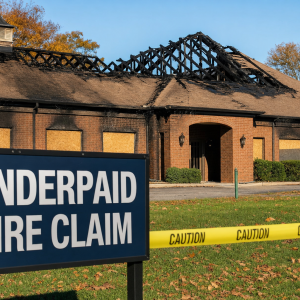
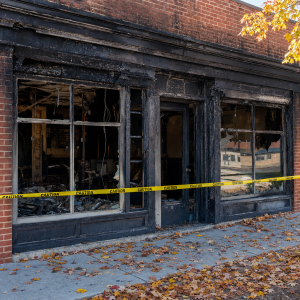
That denial letter from your insurance company for your water leak claim can feel like a slap in the face. You’ve been paying your premiums to State Farm or Allstate, expecting them to be there when you need them most. But when you ask, "does homeowners insurance cover water leaks?", the answer you get is a frustrating, slippery "it depends"—a phrase designed to let them off the hook.
Let's get straight to the point. Your policy is written to cover water damage that is sudden and accidental. It's not designed to cover problems that creep up over time, like gradual leaks or issues from poor maintenance. This single distinction is the battleground where your insurer will fight tooth and nail to deny your claim and protect their profits.
Your Water Leak Claim Was Denied. What Now?
So, what counts as sudden and accidental in the eyes of a policyholder? Think of something you couldn't have possibly seen coming. A pipe that suddenly bursts behind a wall. A washing machine supply line that fails without warning. An ice dam that forces water into your attic during a winter storm.
These are disasters. They happen fast, cause a ton of damage, and are almost always covered under a standard homeowners policy.
Gradual damage, on the other hand, is what your insurance company will label a "homeowner maintenance problem." They’ll argue you should have noticed and fixed it. This is their favorite excuse for denying valid claims.
Common examples they’ll use to deny coverage include:
- A slow, persistent drip under a sink that rots the cabinet over months.
- Water seeping through your foundation because of bad grading or clogged gutters.
- Mold that grows in a damp basement with poor ventilation.
Insurance carriers are experts at blurring these lines. They’ll take a clearly sudden event, like a burst pipe, and try to rebrand it as a gradual problem. They’ll use policy jargon like "long-term corrosion" or "wear and tear" to shift the blame—and the massive repair bill—right back onto your shoulders.
And the stakes couldn't be higher. Water damage and freezing are serious business, making up nearly 24% of all U.S. homeowners insurance claims. The average payout between 2017 and 2021 was a staggering $12,514. Now you see why they fight so hard to avoid paying.
Sudden vs Gradual: A Quick Visual Guide
To make this crystal clear, here’s a simple decision tree that shows how an insurance company thinks when they look at your water leak claim.

As you can see, everything hinges on proving the damage was sudden and unexpected, a fact your insurer will try to dispute at every turn.
Water Leak Claim Dispute Cheat Sheet: Why Insurers Deny Claims
Navigating the fine print can feel impossible. This table breaks down what's usually covered versus what insurers love to deny, giving you a better sense of how to prepare for your claim dispute.
| Type of Water Leak | Typically Covered? | Why Insurers Will Deny It |
|---|---|---|
| Burst Pipe (sudden) | Yes | They'll claim "long-term corrosion" or "lack of maintenance." |
| Appliance Hose Failure (washer, dishwasher) | Yes | They might argue the hose was old and showed signs of "wear and tear." |
| Overflowing Bathtub/Sink (accidental) | Yes | Generally covered unless it's a recurring issue due to neglect. |
| Ice Dams | Yes | They might deny if your gutters were clearly clogged for months. |
| Slow Drip from Faucet/Pipe | No | This is a classic "gradual damage" and "maintenance issue." |
| Seeping Foundation/Basement | No | Almost always considered a maintenance or construction flaw. |
| Leaking Roof (due to age/wear) | No | Roof maintenance is the homeowner's responsibility. |
| Mold Damage (from a slow leak) | No | Considered a secondary effect of an uncovered gradual leak. |
Remember, this is just a general guide. The specific wording in your policy is what truly matters, but insurers will always look for an angle to define your problem as gradual and your responsibility.
No matter what happens with the claim, the physical damage is real. You’ll need to figure out repairs, like fixing hardwood floor water damage from the leak.
For a deeper dive into the immediate steps to take after a pipe bursts, you should read our guide on handling insurance claims for water damage.
How Insurers Use Policy Loopholes to Deny Water Damage Claims
When you file a water damage claim, you need to understand one thing right away: you’re not dealing with a helpful partner. You’re going up against a massive corporation like State Farm or Allstate, and their only goal is protecting their profits. They have a whole playbook of tactics designed to pay you as little as possible, and their company adjusters are trained to find any excuse they can to deny your claim.
Knowing their strategy is the first step to fighting back.

The moment an adjuster from a big carrier steps onto your property, their job isn't to help you. It's to find a reason not to pay. They are digging for loopholes, technicalities, and any bit of fine print they can twist to their advantage. This has nothing to do with fairness; it’s a cold, hard business calculation.
Key Takeaway: The insurance adjuster sent by your carrier works for the insurance company, not for you. Their primary objective is to limit the company's financial liability on your claim, often by finding reasons to deny or underpay it.
The Favorite Excuses Insurers Use
Insurance companies have a go-to list of excuses they use to flip a valid “sudden and accidental” claim into an uncovered “maintenance issue.” Their adjusters are masters at reframing real damage in a way that pads the insurer’s bottom line.
You’ll hear them say things like:
- "Wear and Tear": They’ll point to the pipe that just burst and flooded your kitchen and call it old. Suddenly, it’s not a sudden event anymore—it’s your fault for not replacing old plumbing you didn’t even know was a problem.
- "Homeowner Neglect": This is their favorite catch-all. They can find the smallest thing—a single clogged gutter, for example—and use it as the reason to deny your entire ice dam claim.
- "Faulty Workmanship": If you had any repairs done in the past, they’ll blame the contractor who did the work. This gets them off the hook and leaves you to fight a whole new battle with someone else.
This isn’t just a one-off thing; it's how they operate. Company adjusters are rewarded for closing claims for the lowest amount possible. That gives them a huge financial incentive to read your policy in the most restrictive way, no matter what really happened to your home.
A System Designed to Confuse You
Insurance policies are a nightmare of confusing jargon and endless exclusions. That’s on purpose. A confused homeowner is an easy target. When you're reeling from a disaster and trying to make sense of your coverage, you’re far more likely to just accept a low-ball offer or a wrongful denial.
The company adjuster knows this. They use the complexity of your own policy as a weapon, quoting obscure clauses and misrepresenting your rights. They are counting on you being too exhausted and overwhelmed to fight back.
Insurers know that every dollar they don't pay you goes straight to their profits. With the average water damage claim costing nearly $14,000, they have a powerful motivation to say "no" as often as they can. This conflict of interest is exactly why blindly trusting your insurer’s first assessment is one of the worst mistakes you can make. They are not on your side, and their first offer is almost never their best one.
The 'Sudden and Accidental' vs. 'Gradual' Damage Game
When you file a water leak claim, almost every fight boils down to one thing: the insurance company’s definition of "sudden and accidental" versus "gradual" damage.
This isn’t just about semantics. It’s a deliberate strategy insurance carriers use to exploit a gray area, giving them an excuse to deny your claim and keep their money. Understanding how they play this game is the key to beating them at it.
Think of it this way. A “sudden and accidental” leak is a catastrophe. A pipe shatters inside a wall. A dishwasher supply line explodes. Water comes pouring through your ceiling from an ice dam. It happens in an instant, without warning, and the damage is immediate.
But your insurer will try to frame it as “gradual” damage. In their view, that’s the slow, steady drip under a sink you "should have noticed" or moisture seeping into a basement wall over months. They’ll call this a maintenance problem, which means it’s your problem to pay for. Their goal is to turn your sudden disaster into a slow-drip denial.
The Insurance Company's Playbook
The adjuster who shows up at your door has one job: find a reason to call your catastrophic loss a long-term, gradual issue. They are trained to hunt for any shred of "evidence" they can use to blame you for neglect.
Here’s how they twist the facts to fit their narrative:
- The Burst Pipe: A pipe freezes solid and bursts, flooding your kitchen. You see a clear disaster. The company adjuster, however, finds a tiny speck of rust on the pipe and declares it a "long-term corrosion" problem caused by "wear and tear." Claim denied.
- The Appliance Failure: Your washing machine hose fails, soaking two entire rooms. You see an unexpected appliance malfunction. The adjuster argues the hose was old and you were negligent for not replacing it, blaming your "failure to maintain" the home. Claim denied.
This isn't an accident. It's a calculated strategy designed to protect their bottom line, leaving you to foot the bill.
How We Overturned a Denial with Forensic Proof
A Raleigh, NC, homeowner experienced this firsthand. A pipe on their second floor gave way, sending a torrent of water down through the living room ceiling. It destroyed their drywall, flooring, and furniture.
Their insurance company sent out an adjuster who took a quick look, pointed to the pipe, and immediately denied the claim for "long-term leakage from a deteriorated pipe."
The offer was zero. The homeowner was left facing over $40,000 in repair costs alone.
Overwhelmed, they called us. Our team didn’t just show up with a camera. We brought in a forensic plumber, moisture meters, and thermal imaging cameras to uncover the truth. The evidence was irrefutable: the pipe showed a clean, catastrophic break—the signature of a sudden pressure event, not a slow leak. The so-called "deterioration" was minor, superficial, and had nothing to do with the failure.
We built a case, presenting our detailed findings, a line-item estimate for a proper repair, and a formal dispute letter that quoted their own policy language back to them. Faced with undeniable proof that their adjuster misrepresented the facts, the insurance company folded. They reversed their denial and paid the claim in full.
This is what happens when you have an expert fighting for you. For more on what to do when a pipe ruptures, you can check out our guide on what to do when you have a ruptured pipe.
Water damage is one of the most common and expensive problems homeowners face. Every single day, about 14,000 people in the U.S. deal with a water damage emergency in their homes. That’s roughly 1 in 60 insured homes filing a claim each year. And with a majority of non-weather water damage claims (53%) coming from plumbing failures, having an expert on your side is not a luxury—it’s a necessity. You can learn more about these water damage statistics and their impact on homeowners.
Flood Damage Is Not Covered by Homeowners Insurance

For homeowners in North Carolina and Virginia, let’s get one thing straight right away: your standard homeowners policy does not cover flood damage. This is the fine print that causes absolute shock and heartbreak for families who assumed they were protected from any kind of water disaster.
It's all about where the water comes from. When a pipe bursts inside your walls, that's a water leak claim. But when rivers rise, storm surge rolls in, or heavy rains oversaturate the ground and send water into your home, that’s a flood. Insurance companies see these as two totally different beasts, with completely separate rulebooks.
The NFIP Bureaucracy and Why It’s So Difficult
To get coverage for a flood, you need a separate policy, almost always from the National Flood Insurance Program (NFIP), which is run by FEMA. And filing an NFIP claim is a bureaucratic nightmare, a whole different world from dealing with your regular homeowners carrier.
Your claim will be handled by either an NFIP-direct adjuster or an adjuster from what’s called a “Write Your Own” (WYO) insurance company that sells NFIP policies. Don't be fooled—these WYO carriers can be just as difficult and adversarial as the big-name insurers. They have their own maze of complicated rules designed to limit how much they pay out.
Crucial Warning: The NFIP is a federal program that runs on rigid, unbending guidelines. Unlike a standard claim where you might have a little wiggle room, an NFIP claim has strict, non-negotiable deadlines. If you miss one or submit the wrong paperwork, they can—and will—throw out your entire claim.
The Unforgiving NFIP Claim Process
When you're trying to get a fair settlement for a flood, you’re up against a system designed to trip you up. It’s incredibly complex, and adjusters are quick to deny claims on technicalities.
Here are a few of the biggest hurdles you’ll face:
- The Proof of Loss Deadline: You are required to submit a sworn "Proof of Loss" document within 60 days of the flood. This isn't just a simple form; it's a meticulously detailed inventory of every single bit of damage and its cost. This deadline is the #1 reason we see legitimate claims get denied flat-out.
- Crushing Documentation Demands: The level of proof they require is extreme. You'll need perfect records, receipts for everything, and professional estimates. The burden of proof is 100% on you. The NFIP adjuster won’t lift a finger to help you build your case.
- Bizarre and Confusing Rules: The NFIP has its own strange set of rules about what it covers. For example, most policies exclude almost all coverage for personal belongings in a basement—a nasty surprise for many homeowners after it's too late.
While homeowners insurance might cover a sudden pipe burst, you're on your own for natural floods unless you have that separate policy. For incidents involving actual flood damage, knowing the ins and outs of a flood damage restoration claim is absolutely critical.
In storm-prone areas of North Carolina and Virginia, trying to fight an NFIP claim by yourself is a recipe for disaster. Getting help from a public adjuster who specializes in these uniquely difficult federal claims isn't just a good idea—it's essential if you want a fair recovery.
A Real Success Story Fighting a Denied Water Leak Claim
Explanations are one thing, but nothing hits home like a real story of victory against a stubborn insurance company. When you’re staring down a denied water leak claim, it’s easy to feel like you’re out of options. But their “no” is not the final word.
So many homeowners we meet are in the same boat. A devastating leak turns their life upside down, only to be followed by a lowball offer from their insurer that doesn’t come close to covering the real damage. It’s an infuriatingly common tactic.
This is exactly what happened to one of our clients. They felt completely trapped by their insurance company’s bad-faith games, and their initial hope soured into despair as they realized their carrier had no intention of actually making them whole again.
A Familiar Story: Despair and a Lowball Offer
Picture this: a pipe bursts, and your home is suddenly a disaster zone. You do everything you’re supposed to—report the claim right away, walk the property with the company adjuster, and wait for help to arrive.
But the “help” that comes is a settlement check for less than half of what you need for repairs.
This was the nightmare one homeowner was living. They were looking at tens of thousands of dollars in water damage, and their insurance company was offering pennies on the dollar. The adjuster had done a quick, superficial tour, completely missed huge pockets of hidden damage, and wrote an estimate to protect his employer's bottom line—not the family he was supposed to be helping.
We hear this story all the time. The homeowner was stuck. Their house was a wreck and their insurer refused to pay what was rightfully owed under the policy. It’s a situation designed to make you give up.
Here’s a real review from a client who was in that exact spot before they decided to call us for help.
This review says it all. It shows the night-and-day difference between the dismissive, frustrating experience with the insurance company and the professional, effective fight a public adjuster brings to the table. It’s a testament to what having a real expert on your side can do.
Turning a Denial Into a Full Payout
Feeling defeated, this client decided to get a second opinion. When our public adjuster showed up, the approach was completely different. We didn't just glance at the stains on the ceiling; we launched a full-blown investigation.
Here’s how we flipped their denial into a full recovery:
- Forensic Moisture Mapping: We broke out the thermal imaging cameras and professional moisture meters to trace exactly where the water went. We uncovered extensive, hidden saturation in the walls, subfloors, and insulation—all of which the company adjuster had “missed.”
- Policy Language Expertise: We dove deep into their policy documents and pinpointed the exact language that obligated the insurer to cover the full scope of the damage. We then cited these sections directly in our communications, leaving them no room to hide behind their flimsy excuses.
- Tenacious Negotiation: Armed with irrefutable evidence and a command of the policy, we went to war. We flat-out rejected their lowball tactics and demanded a settlement that would actually restore the home to its pre-loss condition.
The result? The insurance company caved. They were forced to reverse their position and pay the claim in full.
This family went from facing a crushing financial loss to getting every dollar they needed to properly repair their home. This story is proof you don’t have to take what your insurer gives you. With the right help, you can fight back—and win.
How a Public Adjuster Forces Your Insurer to Pay Fairly
Hiring a public adjuster isn’t about trying to get more money from your insurance company. It’s about forcing them to honor the very policy they sold you in the first place.
The entire insurance claim system is tilted in the carrier's favor from the start. A public adjuster is the expert advocate you bring in to level that playing field and fight exclusively for your best interests.
Their first move? Throw out the insurance company's biased and incomplete assessment. They immediately launch their own independent, detailed investigation into your water leak, working for you and only you.
Deploying Technology and Expertise
A professional public adjuster doesn't just do a quick walkthrough with a camera. They bring the same advanced tools and industry certifications the insurance companies use—but they do it with more precision and with your recovery as the only goal.
This is what a real investigation looks like:
- IICRC-Certified Inspections: They apply industry-leading knowledge from the Institute of Inspection, Cleaning and Restoration Certification (IICRC) to properly assess the full extent of the water damage.
- Thermal Imaging Cameras: These powerful tools don't lie. They reveal hidden moisture trapped behind walls, under floors, and in ceilings—damage the company adjuster somehow "missed."
- Professional Moisture Meters: They take meticulous readings to build a detailed map of every affected material. This creates undeniable proof of the water’s true path and the full scope of repairs you need.
This forensic approach uncovers the real damage, which is almost always far greater than what the insurer’s adjuster wrote down. It builds a foundation of evidence that is incredibly difficult for any carrier to dispute. For a deeper dive into their role, you can learn more about what a public adjuster does in our guide.
Speaking the Insurer’s Language
Once all the damage is properly documented, the public adjuster compiles a professional, line-item estimate for every single repair. They don’t just pull a number out of thin air; they use Xactimate, the exact same specialty software that nearly every insurance company relies on to calculate claim payouts.
This is a critical advantage. By building and submitting the claim in the precise format and language the insurer understands, it robs them of their ability to argue over pricing or nitpick repair methods. The public adjuster's estimate becomes a powerful weapon, arguing for every penny you are owed based on real data and industry-standard costs.
The Bottom Line: A public adjuster takes the entire soul-crushing process off your plate. They handle the endless phone calls, manage every frustrating deadline, and conduct all negotiations. They force carriers like State Farm or Allstate to stop their delay tactics and finally act in good faith. They turn the tables, ensuring the final settlement is based on what it actually costs to restore your home, not just what the insurance company feels like paying.
FAQ About Disputing Your Water Leak Claim
Going head-to-head with an insurance company over your water leak claim is a confusing, frustrating mess. You're stressed, and a million questions are probably running through your mind. Getting the right answers is the first step to taking back control.
Here are a few of the most common questions we hear from homeowners whose water leak claims have been denied or lowballed.

How Much Does a Public Adjuster Cost for a Water Leak Claim?
Any public adjuster worth their salt works on a contingency fee. That means there are zero upfront costs to hire them.
They only take their fee—a small, pre-arranged percentage—out of the money they successfully recover for you. This setup puts them on your side of the table. Their only goal is to maximize your settlement so you have the funds to fix your home properly. It’s simple: If you don’t get paid, they don’t get paid.
What Evidence Do I Need to Fight a Water Leak Claim Denial?
To beat a denial, you have to dismantle the insurance company's argument. Your best weapon is overwhelming evidence that proves the water damage was sudden and accidental—not the result of some long-term, gradual leak they can blame on you.
You need to build a case file that includes:
- Immediate Proof: All the photos and videos you shot the moment you found the damage.
- Repair Invoices: Receipts for any emergency water mitigation or initial repairs you paid for out-of-pocket.
- Maintenance Records: Proof you’ve been taking care of your property. This directly counters their favorite excuse: homeowner neglect.
- An Expert Report: This is your knockout punch. An independent report from a public adjuster, complete with data from tools like thermal imaging, gives you a professional assessment that completely refutes the company adjuster’s weak excuses.
Can I Reopen a Closed Water Damage Claim?
Yes, in most cases, you can absolutely reopen a closed water damage claim. If you find more hidden damage that wasn’t in the original estimate, or if you feel the initial settlement was just plain wrong, you have every right to file for a supplemental claim.
But you have to act fast. States have strict time limits, called statutes of limitations, for these actions. It's critical to call a public adjuster right away. They can look at your case and tell you if you’re still within that legal window to reopen the claim and fight for the rest of the money you're owed.
When your insurance company is giving you the runaround on your water leak claim, you don't have to fight them alone. The team at For The Public Adjusters, Inc. has the expertise to counter their delay and denial tactics, document your true damages, and secure the full settlement you deserve. Get a no-cost claim review today and let us handle the fight for you. Visit us at https://forthepublicadjusters.com to get started.