
The storm has passed, but the fight usually starts when the estimate lands in your inbox. You see roof damage, wet insulation, stained ceilings, warped flooring, soaked inventory, and maybe mold starting to show. The carrier's adjuster sees a patch job, a few squares of shingles, and a number that won't come close to putting the property back.
That gap is where disaster recovery funding gets lost.
For homeowners and business owners in North Carolina and Virginia, recovery money isn't one check. It's a stack. Insurance proceeds usually come first. Federal aid may follow. Flood losses may trigger a separate NFIP fight. Mitigation money may exist later, but it won't solve today's cash crunch. If you treat those as separate tracks, you make mistakes that cost you negotiating power. If you handle them as one coordinated funding strategy, you preserve more options and usually recover more money.
Table of Contents
- When Disaster Recovery Funding Becomes a Claim Fight
- Understanding the Main Disaster Recovery Funding Sources
- Eligibility and Coverage Rules That Decide Your Payout
- Application Timelines Documentation and How to Preserve Every Dollar
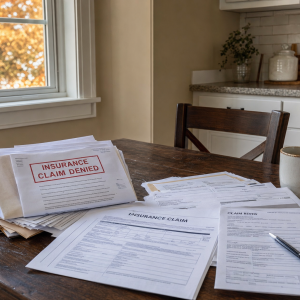
- How to Fight Low Ball Denied and Delayed Recovery Claims
- NC and VA Resources and Next Steps for Home and Business Owners
- Protect Your Recovery Funding and Get Claim Help Now
When Disaster Recovery Funding Becomes a Claim Fight
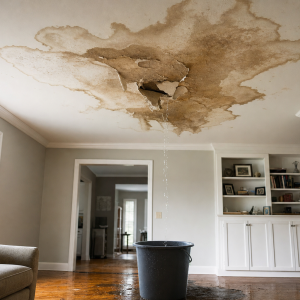
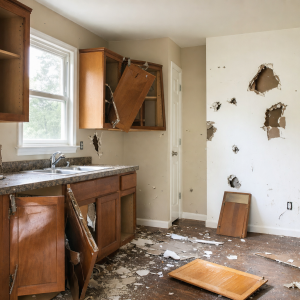
A common post-storm scene looks like this. A homeowner in coastal North Carolina has shingles torn off, rain enters through the roof, drywall swells, cabinets absorb water, and the flooring starts buckling two days later. The insurer sends an adjuster. The estimate covers visible roof repair, ceiling patching, and paint in one room. It leaves out wet insulation, detached guttering, hidden moisture spread, matching issues, and the contractor's recommendation for broader repairs.
That's how a property loss turns into a disaster recovery funding problem.
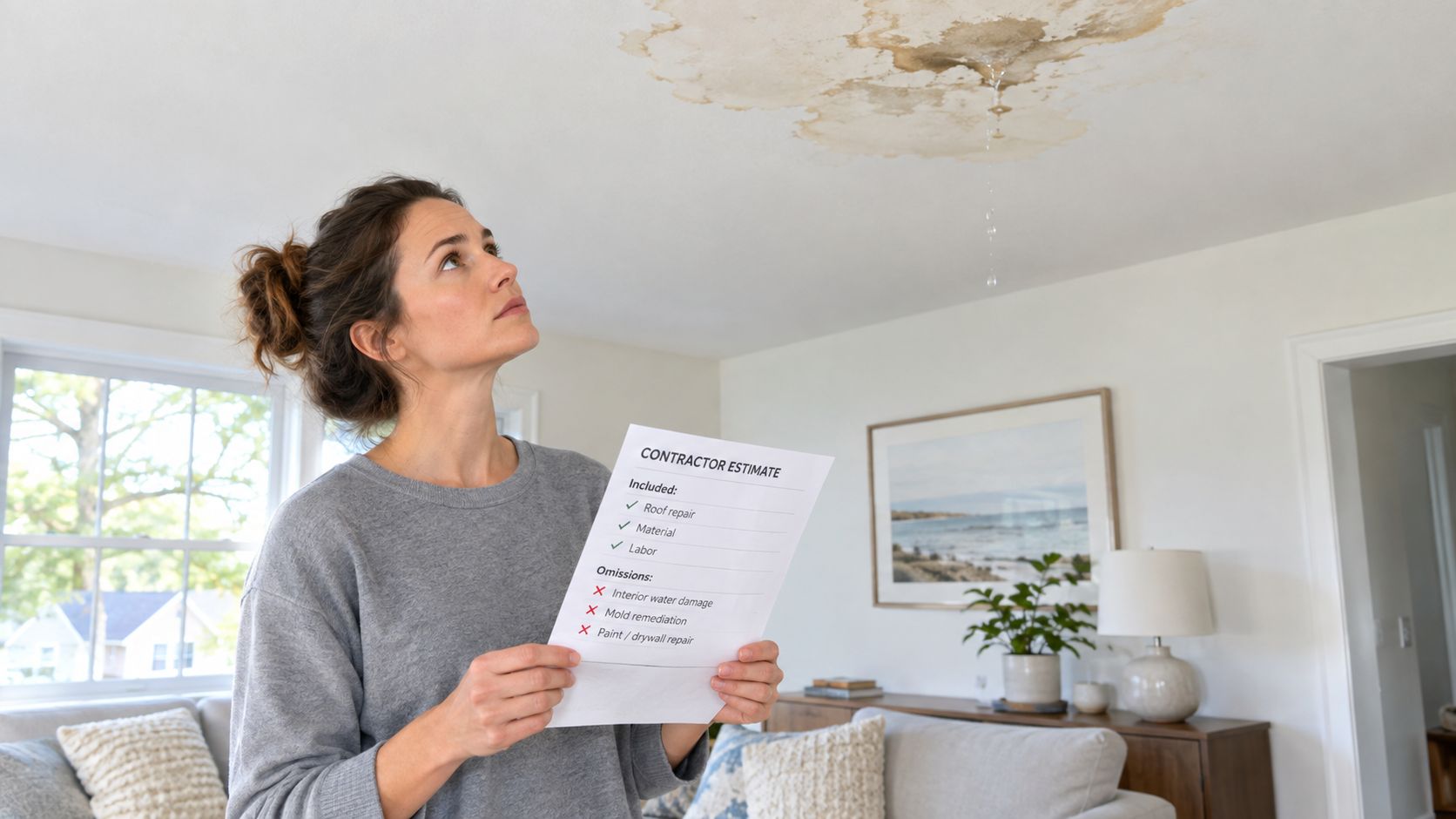
The same thing happens with small businesses. Wind pushes water into a retail space. The building claim gets under-scoped. Contents are undervalued. The owner loses time arguing over emergency mitigation invoices while bills keep coming. By the time federal assistance options get reviewed, key documents are missing or the owner already signed paperwork that boxed them in.
One loss can involve several funding layers
You need to think about the recovery stack early:
- Insurance proceeds first: Homeowners, dwelling, and business owner policies usually provide the main source of repair money for covered wind, hail, fire, smoke, and water damage.
- Flood is a separate lane: If flood caused the damage, standard property policies usually aren't the fight. The dispute is often under FEMA's NFIP through a direct policy or a Write Your Own carrier.
- Federal aid is limited support: FEMA assistance can help, but it doesn't replace a properly adjusted insurance claim.
- Documentation controls everything: Photos, moisture records, receipts, contractor scopes, and correspondence preserve more than one funding option at the same time.
Practical rule: Never let the insurance company's first scope become the master document for your entire recovery.
If the carrier sends payment made to you and your mortgage company, that adds another layer of delay and control issues. This breakdown of what a public adjuster says about insurance claim checks helps explain why cashing or endorsing funds too quickly can create problems when the scope is still incomplete.
The core issue is simple. Disaster recovery funding is a claim fight first, a paperwork exercise second. If your scope is wrong, every downstream funding source gets harder to use.
Understanding the Main Disaster Recovery Funding Sources
Most owners recover in layers, not all at once. The first mistake is expecting one source to do everything. The second is assuming all money arrives on the same timeline.
The recovery stack works like a budget, not a jackpot
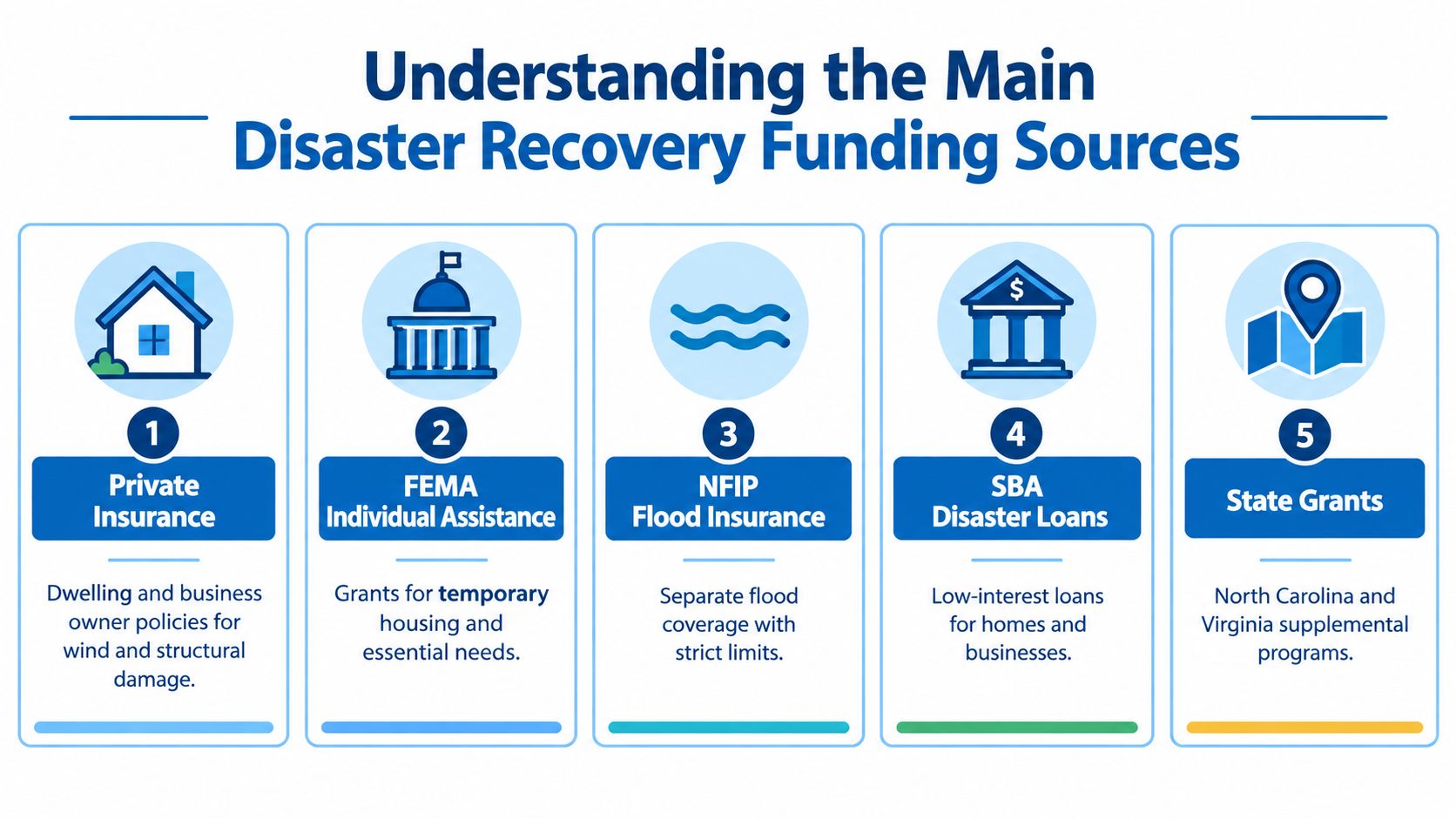
Private insurance is usually the main engine for rebuilding covered property damage. FEMA grants can help with temporary housing, basic repair support, and essential needs, but they're not designed to make a disputed insurance underpayment disappear. SBA disaster loans can fill gaps for some owners, but that's debt, not claim value. NFIP flood coverage only applies when flood caused the loss, and it comes with its own rules and proof requirements. State or local programs can help in some events, but they're supplemental and often narrow.
At the federal level, disaster money is enormous, which tells you something important about the scale of these losses. The Congressional Budget Office reports that FEMA's Disaster Relief Fund received $381 billion from 1992 through 2021, or $469 billion in 2022 dollars, and FEMA spent $347 billion over that same span, with spending ranging from $2 billion in 1992 to $47 billion in 2020 and averaging about $12 billion per year. It also notes that nearly three-quarters of appropriations came through supplemental appropriations rather than routine annual funding (Carnegie disaster dollar database summary). That means recovery funding is big, reactive, and often slowed by post-event systems.
Disaster Recovery Funding Sources Compared
| Funding Source | What It Covers | Who Qualifies | Timing |
|---|---|---|---|
| Private Insurance | Covered dwelling, structure, contents, and some business property losses under the policy | Policyholders with covered damage | Usually first source pursued, but often disputed |
| FEMA Individual Assistance | Temporary housing, basic repair help, and other essential needs within program limits | Disaster survivors in declared areas who meet program rules | After declaration and registration review |
| NFIP Flood Insurance | Covered flood damage under the flood policy | Flood policyholders with flood-caused loss | Separate claim track with strict proof requirements |
| SBA Disaster Loans | Financing for repair, rebuilding, or business recovery gaps | Eligible homeowners and businesses | Application and approval process can take time |
| State Grants | Event-specific supplemental recovery support | Depends on program and disaster area | Varies widely |
For owners comparing financing options beyond insurance and grants, this Business Loan Warrior SBA loan guide gives a useful plain-English look at how the SBA process typically moves.
Flood changes the entire funding picture
Flood damage has to be treated differently. If rising water entered the property, you need to read the claim through the NFIP lens, not a standard homeowners lens. That's why this guide on flood damage claim issues matters. The claim rules, documents, deadlines, and dispute path are different.
Federal aid is support money. Insurance proceeds are usually rebuilding money. Don't confuse the two.
Eligibility and Coverage Rules That Decide Your Payout
Many bad settlements happen because owners focus on damage before they focus on coverage. Damage matters. Policy language decides whether the carrier pays properly, partially, or not at all.
Read the loss through the correct policy type
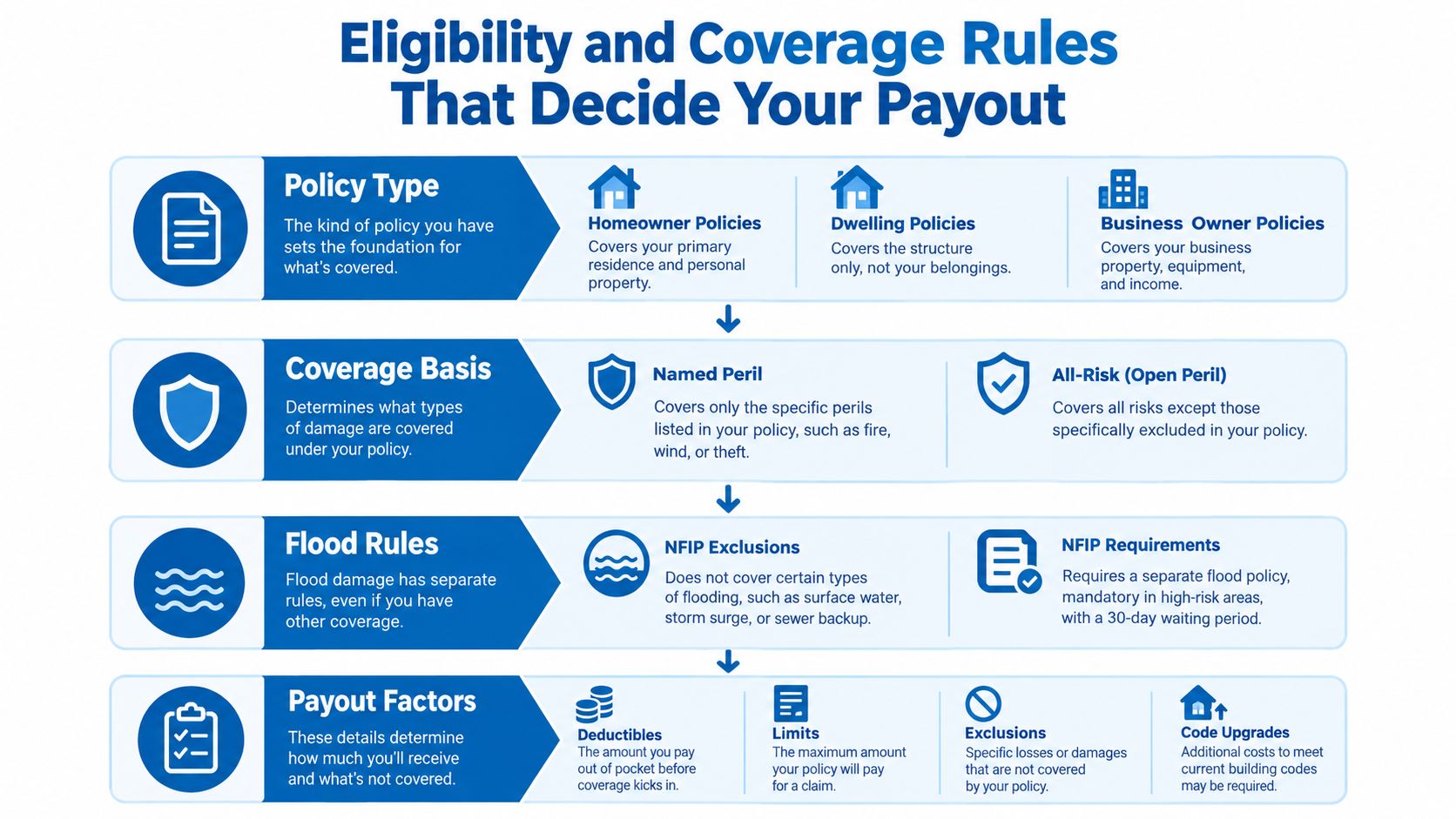
A homeowner policy, a dwelling policy, and a business owner policy don't work the same way. Some losses are evaluated under broader open-peril wording. Others are tied tightly to named causes of loss. That difference matters when the insurer tries to classify what happened as wear and tear, seepage, deferred maintenance, or excluded surface water instead of covered storm damage.
Use this checklist when the carrier pushes back:
- Match the cause of loss to the policy wording. Wind-driven rain, hail impact, fire, smoke, and sudden discharge are not the same thing.
- Check whether the building was owner-occupied, tenant-occupied, vacant, or used commercially. Occupancy affects how some forms respond.
- Look for deductibles, limits, exclusions, and endorsements. Ordinance and law, debris removal, mold limitations, and code upgrade issues change the number fast.
- Test the denial language, not just the result. If the letter is vague, push for the exact policy basis.
Flood has its own rules and its own adjuster problems
Standard homeowners and business owner property coverage usually doesn't handle flood the way owners expect. If flood water caused the damage, the dispute is commonly with the NFIP or a Write Your Own company handling NFIP coverage. Those claims are document-heavy and often unforgiving if you miss support for the amount claimed.
NFIP policyholders generally must submit a signed Proof of Loss within 60 days after the loss, unless FEMA waives or extends that deadline. FEMA's materials state that the Proof of Loss is the policyholder's sworn statement of the amount claimed and must include supporting documentation (FEMA NFIP claims manual).
If flood is involved, don't assume the adjuster's worksheet protects you. Your sworn documentation does.
Federal eligibility matters, but it won't fix weak claim evidence
FEMA Individual Assistance is capped at $25,000 per household for repair or replacement of a primary residence and another $25,000 for Other Needs Assistance, with annual inflation adjustments, and applicants generally have 60 days from the disaster declaration to register, with possible late registration for an additional 60 days with an explanation (44 CFR 206.110 at Cornell Law School). That's useful help, but it's not a substitute for the full value of a major property loss.
Post-disaster mitigation money also follows its own logic. FEMA's Hazard Mitigation Grant Program isn't a flat yearly pot. Its funding ceiling is calculated from total federal assistance under a Presidential major disaster declaration, so larger declared events can produce a larger mitigation envelope later (FEMA HMGP disaster summaries). That can help with future risk reduction, but it won't excuse a carrier that underpaid your present loss.
Application Timelines Documentation and How to Preserve Every Dollar
Owners lose money when they treat documentation like cleanup paperwork. It's claim evidence. It's federal aid evidence. It's key to securing funds.
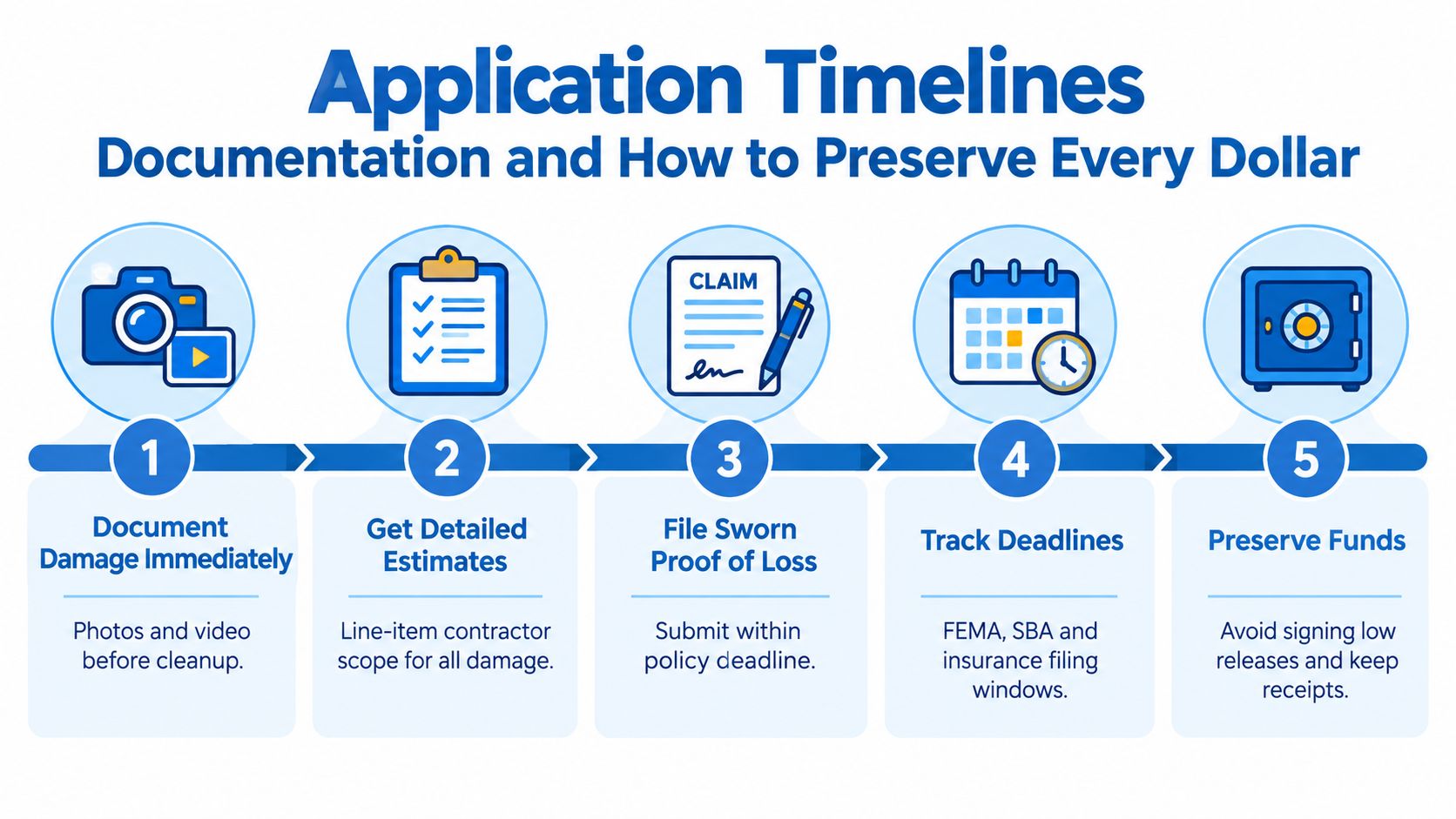
Start with the property exactly as it sits after the event, before major tear-out changes the scene. Photograph exterior elevations, roof slopes if safely accessible, every interior room, ceiling stains, wet baseboards, detached siding, damaged inventory, and any temporary repairs. Then get moisture readings, emergency mitigation records, and line-item contractor estimates that describe scope in detail, not one-page lump sums.
The timeline that protects your options
The order matters.
- Document first: Photos, videos, mitigation invoices, drying logs, tarp receipts, hotel receipts, and contents lists should be organized immediately.
- Get a detailed scope: Your contractor's estimate should identify damaged materials, affected rooms, demolition needs, code-triggered items, and rebuild details.
- Preserve flood rights carefully: Under the NFIP claims process, the policyholder is expected to present documentation such as a Proof of Loss and a contractor's detailed estimate to the adjuster, and FEMA's claims guidance says an amended Proof of Loss can be filed if it is still within 60 days of the date of loss (NFIP claims handbook).
- Track federal windows: If there's a disaster declaration, register on time for FEMA and evaluate SBA options quickly.
- Keep every receipt: Temporary repairs, mitigation, relocation, spoilage, emergency power, and cleanup expenses may matter later.
This short explainer on the Proof of Loss requirement is worth reviewing if flood or a sworn statement issue is already slowing your recovery.
A quick visual summary helps when you're building your file:
Deadline extensions can happen, but don't plan your recovery around them
FEMA has extended NFIP Proof of Loss deadlines in major events. One bulletin extended the deadline from 60 days to 1 year for additional claimed amounts, and another extended it further so the total extension for Hurricane Sandy claims reached 1.5 years (FEMA Sandy extension bulletin). That history matters for disputes, but it does not mean your deadline will be extended after your storm.
Build the file as if no extension is coming. That's the safest position in every flood dispute.
If you need outside help with inspections, estimate review, and carrier communication, one option in NC and VA is For The Public Adjusters, Inc., which handles residential and commercial property claim documentation and negotiations for policyholders.
How to Fight Low Ball Denied and Delayed Recovery Claims
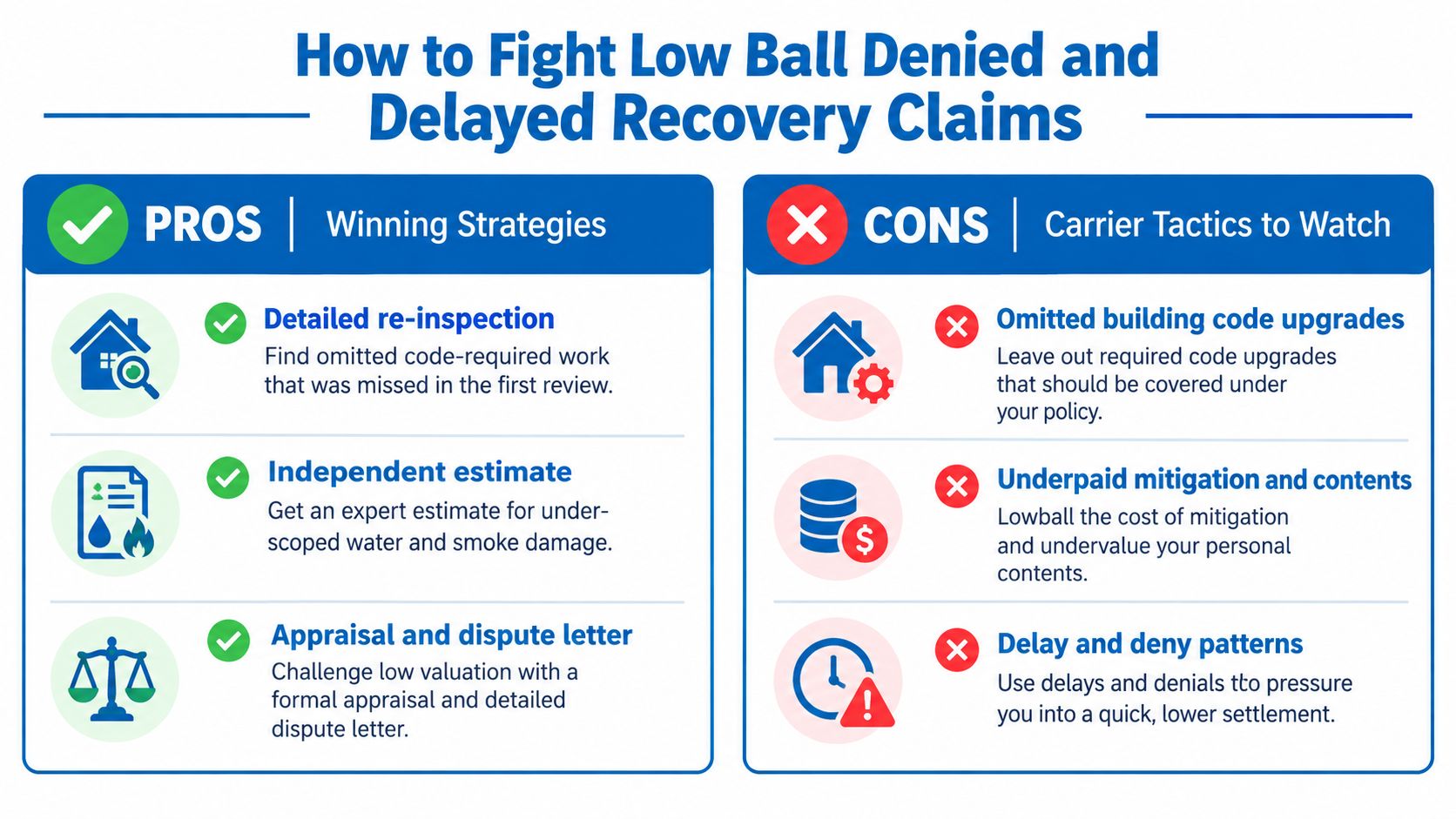
Low-ball estimates usually follow a pattern. The adjuster prices what was easy to see on day one and skips what takes effort to prove. That means missed code items, ignored moisture spread, limited paint or flooring scope, trimmed demolition, reduced overhead and profit issues, and weak treatment of business interruption-related property impacts.
What to challenge in the insurer's scope
Don't argue in generalities. Challenge line items.
| Carrier move | What you should demand |
|---|---|
| Patch-only roof scope | A written basis for repairability, slope count, and all damaged components |
| Minimal interior allowance | Room-by-room scope tied to moisture spread and material removal needs |
| Ignored code work | Identification of code-triggered items and ordinance or law treatment |
| Reduced mitigation payment | Review of drying logs, equipment records, and emergency service documentation |
| Delayed response | Written status requests and confirmation of what documents are still claimed missing |
Strong disputes are built on better evidence, not louder complaints
Use this sequence when the offer is short:
- Ask for the complete line-item estimate, not just the total.
- Compare it against your contractor scope and photographs.
- Identify each omission in writing. Roofing accessories, insulation, sheathing, detached finishes, cabinetry, base, trim, and content categories are commonly left out.
- Request reinspection when the adjuster missed areas or inspected too early.
- Submit supplemental documents in organized form, not scattered emails.
- If appraisal or another dispute process exists in the policy, evaluate it before the file stalls.
For business owners dealing with downstream operational damage and dispute strategy, this SME dispute recovery guide offers a useful outside perspective on preserving recovery claims when a loss disrupts operations.
Flood disputes require extra discipline
Flood claims can be especially frustrating because owners assume the adjuster's visit equals full claim presentation. It doesn't. If the amount is wrong, the support has to be stronger than the carrier's worksheet. In some claims, an amended Proof of Loss may help if still timely under NFIP rules.
The fastest way to lose leverage is to accept a low estimate because you're tired of waiting.
Delayed claims create another problem. The longer the carrier takes, the more likely temporary conditions change, contractors move on, and pricing worsens. Keep every communication in writing. Ask direct questions. What item is unpaid, why is it unpaid, and what exact document would change the decision? Vague answers are a warning sign.
NC and VA Resources and Next Steps for Home and Business Owners
North Carolina and Virginia owners need a local recovery plan, not just generic disaster advice. Storm losses here often involve wind-driven rain, hail, roof failure, tree impact, crawl space moisture, and flood overlap. Coastal and inland claims both get messy fast because the causation fight starts early.
A practical next step is to gather three things before you ask for help: the full policy if you have it, the carrier estimate, and your contractor or mitigation records. If you own an older home, policy form differences can matter more than people realize. This plain-language guide to HO-8 policies in North Carolina is useful if your property has older-home coverage issues.
What local owners should do next
- Homeowners with roof and water damage: Check whether the estimate includes insulation, detached finishes, paint scope, and moisture-related demolition.
- Landlords with dwelling policies: Confirm whether loss settlement and occupancy issues are being used against you.
- Business owners: Separate building damage, contents damage, and emergency mitigation records so nothing gets buried in one file.
- Flood policyholders: Keep the flood dispute on its own document track. Don't blend it carelessly into a standard homeowners argument.
What we see in real NC and VA dispute files
The same patterns repeat. A wind claim gets paid as a repair when the contractor documents broader damage. A water loss estimate includes drying but leaves out full rebuild items. A commercial loss values visible damage but skips less obvious components needed to reopen correctly. When a public adjuster gets involved, the dispute often becomes more focused because the file is rebuilt around scope, measurements, policy language, and support.
The broader funding backdrop is also getting tougher. For fiscal years 2015 through 2024, appropriations for disaster assistance totaled at least $448 billion, and in 2024 alone, FEMA approved over two million households for federal disaster assistance (Congressional Research Service summary). At the same time, the prevention side has become less reliable. The UNDRR's Global Assessment Report 2025 says most disaster financing still goes to response and recovery rather than disaster risk reduction, and pre-arranged financing remains only a very small fraction of crisis funding (UNDRR GAR 2025). That's one more reason not to leave insurance money on the table.
Protect Your Recovery Funding and Get Claim Help Now
The right way to think about disaster recovery funding is simple. Insurance proceeds are the first layer to fight for. Federal aid is the second layer to coordinate carefully. If the first layer gets underpaid, every other part of your recovery gets harder.
Three habits protect more money than anything else. Document the damage early and thoroughly. Meet every Proof of Loss, registration, and document deadline that applies to your loss. Challenge low estimates with line-item evidence instead of broad complaints.
Don't sign off on an incomplete scope just because a check arrived. Don't assume FEMA will cover what the insurer left out. Don't let a flood adjuster's worksheet stand in for your sworn proof. And don't wait for a denial letter to start building a better record.
Recovery funding has become a major public system worldwide, but the most practical lesson for owners is local and immediate. The World Bank reports that in FY2025 its disaster risk management financing commitments reached $10.93 billion, and GFDRR says its 328 grants informed $8.67 billion in disaster and climate resilience investments, implying roughly $253 of investment informed for every $1 disbursed (World Bank resilience and disaster management overview). Small amounts of organized support can release much larger recovery dollars. The same logic applies to your claim file. Better documentation creates bigger options.
If you own a home or business in North Carolina or Virginia and the insurance company's number doesn't reflect the actual damage, treat that as a funding problem that needs to be corrected now, not later.
If your storm, water, fire, hail, or flood-related property claim has been underpaid, delayed, or pushed toward a low settlement, For The Public Adjusters, Inc. can review the damage, estimate, and policy issues with you and help you identify where recovery funding is being lost. Have your water damage claim questions answered at NO COST. Call 919-400-6440 to speak with a licensed Public Insurance Adjuster or Contact Us here with questions. WE Work For YOU… NOT Your Insurance Company!