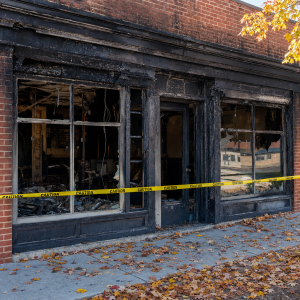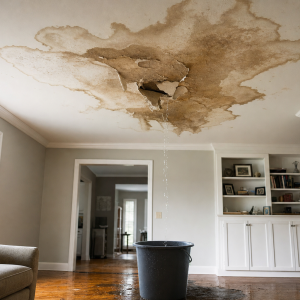
You smell it before you see it. A musty odor that won't leave. A soft spot under the floor. A contractor opens a hatch for a minor repair, shines a light into the crawl space, and suddenly the problem is bigger than anyone thought.
That's when the insurance fight usually starts. Not when the moisture began. When the carrier realizes it can call the damage “seepage,” “condensation,” “poor maintenance,” “grading,” or “long-term exposure” instead of a covered loss. Homeowners think they're dealing with wet wood and bad air. In reality, they're also dealing with a claim strategy designed to shrink, delay, or deny payment.
If you're facing crawl space moisture issues, you need two things at the same time. You need to understand the building problem under your house, and you need to understand how insurers use technical language to turn that problem into a loophole.
Table of Contents
- The Hidden Threat Beneath Your Floors
- Assessing the Damage Your Insurer Will Ignore
- The Remediation Trap How DIY Fixes Can Void Your Claim
- Building Your Case File to Fight a Denial
- Fighting Low-Ball Offers in NC and VA
- You Found the Moisture Dont Let Your Insurer Deny the Fix
The Hidden Threat Beneath Your Floors
A lot of crawl space claims begin with a simple complaint. The house smells off. Floors feel damp or uneven. Someone in the family starts noticing irritation, allergies, or stale air that gets worse when the HVAC runs.
What homeowners notice first
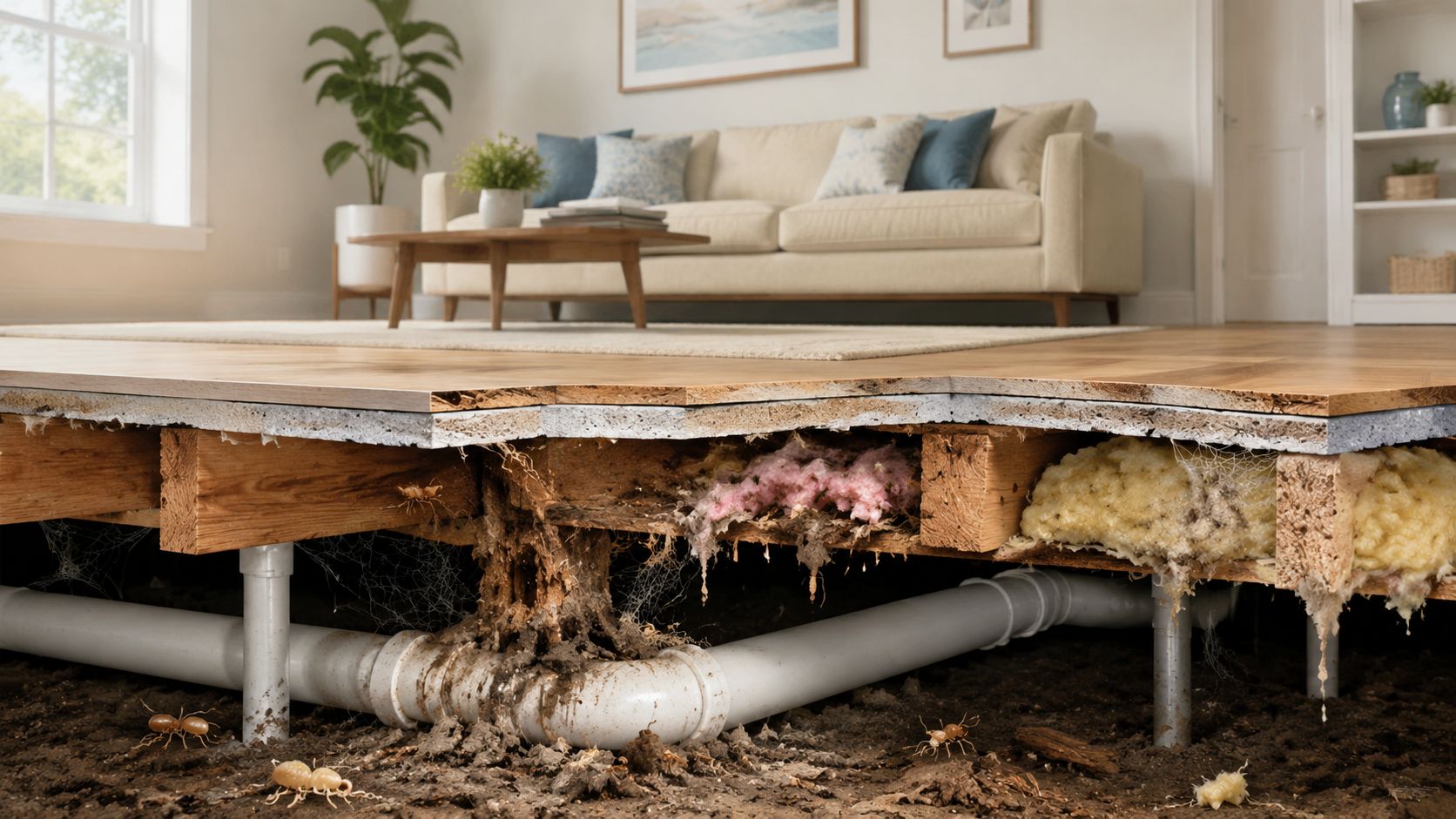
That concern is justified. Up to 50% of the air in a home can come from the crawl space, which means problems below the floor can move into living areas through mold spores, allergens, and odors. The same homeowner guidance says the target is to keep humidity below 50% to reduce mold and mildew growth, as explained in this crawl space air quality guidance.
This is why crawl space moisture issues aren't just a housekeeping problem. They can affect comfort, air quality, and the parts of the house you can't easily inspect every day. If you want a broader view of what contaminated moisture can do after it gets into building materials, this overview on understanding mold and bacteria risks is worth reading.
Common triggers include groundwater seepage, slow plumbing leaks, outside drainage problems, wet insulation, or humid air cycling through the space. Homeowners usually focus on stopping the smell and drying the area. Insurance companies focus on labeling the cause in a way that helps them deny the claim.
Practical rule: The first battle is over causation. If the insurer frames the moisture as slow, preventable, or maintenance-related, it gains room to underpay or deny.
How insurers spin the cause
I've seen carriers take the same damp crawl space and describe it five different ways depending on which exclusion they want to lean on. If they say it was long-term seepage, they argue wear and tear. If they say it was condensation, they point to ventilation or insulation. If they say exterior grading caused it, they push it toward owner maintenance.
That's why you shouldn't speak loosely when you first report the damage. Saying “this has probably been going on forever” or “we've had a smell for months” can hand the insurer language it will repeat back to you later. Be accurate, be narrow, and stick to what you observed.
If you're trying to sort out where water damage sits under a homeowners policy before you get cornered in a call, start with this guide on whether homeowners insurance covers water damage. Don't assume the company's first explanation is the final one.
Assessing the Damage Your Insurer Will Ignore
Most carrier inspections move fast. The adjuster may look for standing water, take a few photos, and move on. That approach misses the kind of damage that often defines crawl space moisture issues.
What to look for before anyone cleans it up
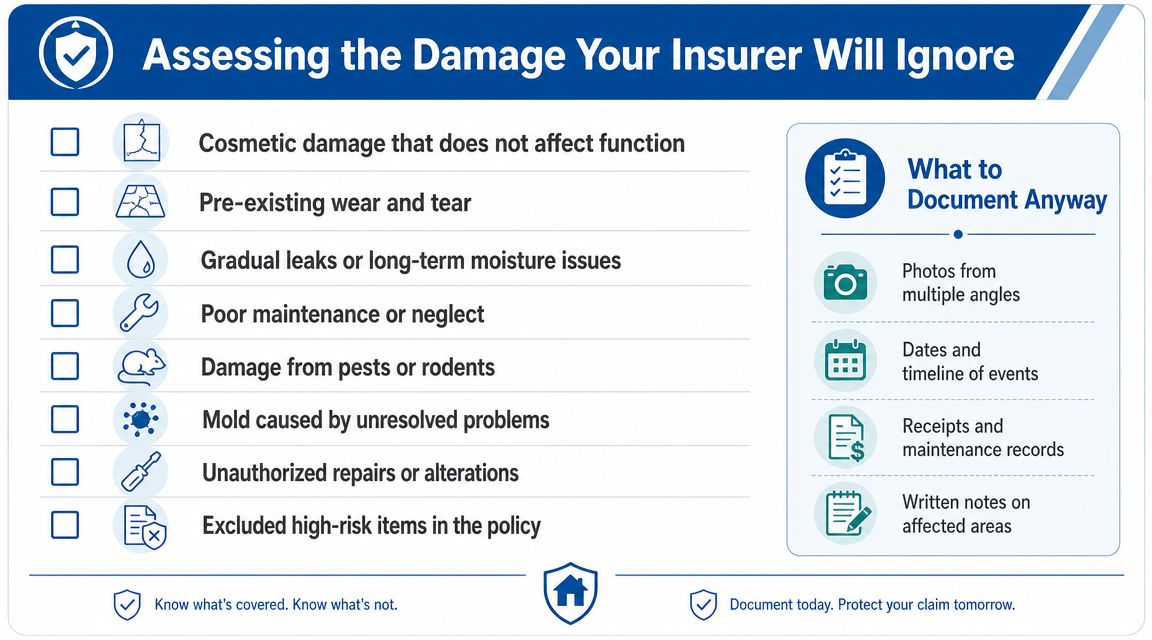
Start with your own eyes and your phone. Don't make repairs yet. Document the condition as found.
Look for these signs:
- Foundation wall staining: White, chalky residue, dark moisture marks, or tide lines can show where water has been moving.
- Wood distress: Check joists, beams, subfloor, sill plates, and blocking for discoloration, softness, cracking, or visible fungal growth.
- Insulation failure: Fallen, compressed, stained, or wet insulation matters because it can show the moisture path and duration.
- Metal and mechanical clues: Rusted fasteners, sweating ductwork, corroded straps, and damp HVAC components often tell the story better than a puddle does.
- Biological and pest evidence: Mold, mildew, insect activity, and rodent nesting often follow moisture even when the insurer tries to separate them from the water source.
A lot of homeowners make the mistake of waiting for visible pooling before taking this seriously. That's backwards. A 1,000 sq. ft. dirt crawl space can release up to 15 gallons of water vapor into the home every day, which is why hidden vapor movement can drive mold, structural stress, and air quality problems even when you don't see obvious standing water, according to this crawl space moisture benchmark.
What the carrier's adjuster may leave out
A company adjuster may document only what supports a limited payment. Cleanup. Minor drying. Maybe a small insulation allowance. What often gets ignored is the chain reaction.
Here's the gap in plain terms:
| What you need documented | What gets minimized |
|---|---|
| Source indicators | “No active leak seen today” |
| Damaged framing and subfloor | “Appears aged” |
| Wet insulation and duct impact | “Not directly covered” |
| Air quality consequences | “Maintenance issue” |
| Extent of hidden moisture migration | “No standing water observed” |
That's why proof matters more than first impressions. A thorough file beats a casual site visit every time.
If you need a sharper sense of how professionals evaluate hidden water damage for claim purposes, review this page on working with a water damage public adjuster. It helps you see what a serious damage scope should include.
The insurer doesn't need the whole story to save money. You do.
The Remediation Trap How DIY Fixes Can Void Your Claim
Homeowners want to fix the problem fast. That instinct is understandable. It can also wreck a valid claim.
Why quick fixes hurt good claims
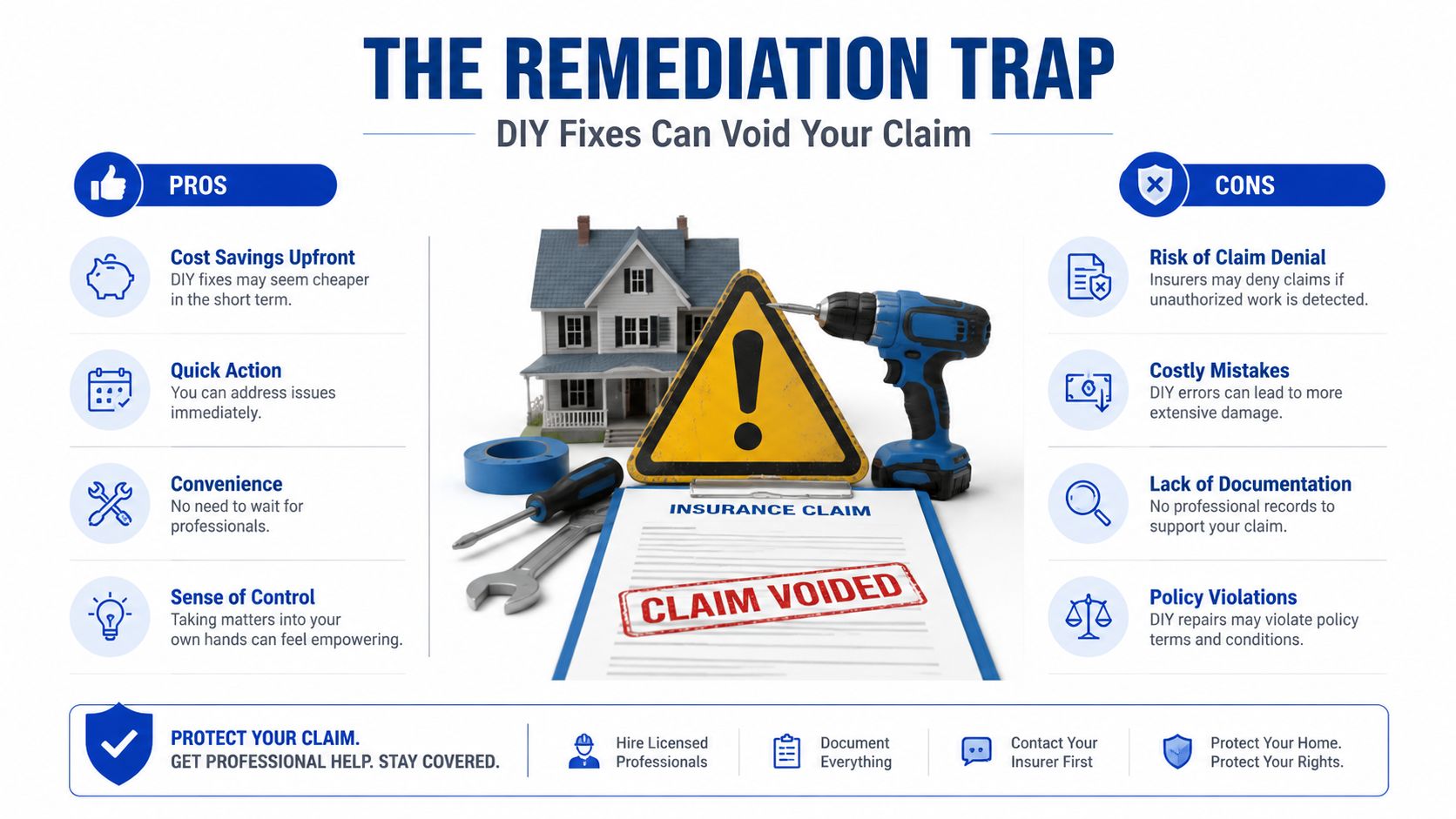
I've seen people rip out wet insulation, bag moldy debris, lay plastic over the dirt, spray store-bought antimicrobial products, and call a handyman before they have a real record of the damage. Then the insurer shows up and says there's no way to verify the original condition. That's not bad luck. That's a gift to the carrier.
The same problem happens when a contractor starts “helping” by summarizing the cause too casually. One line in an invoice that says “long-term moisture” can sink coverage arguments before they ever get off the ground.
Claim warning: Emergency steps to protect the property are one thing. Untracked demolition is another. If you remove evidence, you reduce leverage.
There is a proper repair conversation here. Building science guidance recommends a continuous plastic vapor barrier over the crawlspace floor and humidity in the 30 to 50% range. The same guidance warns that relative humidity above 60% increases the risk of mold growth and wood decay, as outlined in this crawl space humidity and vapor barrier discussion.
That information matters. But for claim strategy, timing matters just as much. Use that guidance to evaluate repair proposals after you've documented the loss, not as a reason to start tearing things apart in a panic.
What smart homeowners do instead
If you're weighing major structural or moisture-control work, it helps to understand the difference between professional foundation work or DIY. The same common-sense principle applies in crawl spaces. Some work is too consequential to improvise, especially when insurance is already looking for an excuse to shift blame.
A better response looks like this:
- Stop active worsening without erasing proof. If there's an active leak, shut off the water if you can do it safely. If water is entering from outside, take reasonable temporary steps to reduce further intrusion.
- Photograph first, move second. Get wide shots, mid-range shots, and close-ups before insulation, debris, or damaged material is touched.
- Keep removed materials if possible. Sections of wet insulation, rotted wood, or stained vapor barrier can become physical evidence if the claim turns hostile.
- Get independent opinions in writing. You want a contractor or specialist to describe what they observed, what appears damaged, and what repairs are needed. You do not want vague language that helps the insurer.
- Watch your recorded statements. Carriers love asking leading questions after a homeowner has already done cleanup and can no longer show the original conditions.
If you're already talking to an adjuster, read this guide on what not to say to a water claim adjuster. One careless sentence can do more damage than the moisture.
Building Your Case File to Fight a Denial
A crawl space claim gets stronger when your documentation is boring, methodical, and hard to argue with. Emotion won't win this. Records do.
Document like the denial is already coming
Start a claim file the day you discover the problem. Use a folder on your phone, a cloud drive, and a paper notebook if you have to. Keep everything.
Your file should include:
- Photos by sequence: Start outside. Then the access point. Then every section of the crawl space. Then every damaged component.
- Video walkthroughs: Narrate what you're seeing without guessing. State the date, the location, and visible conditions.
- Contractor observations: Ask for itemized written findings, not vague summaries.
- Communication logs: Record who called, when they called, what they said, and what they asked for.
- Receipts and emergency invoices: Save every charge tied to mitigation, temporary protection, or inspection.
Use names of materials and locations whenever you can. “Wet insulation” is weaker than “fallen fiberglass batt beneath the kitchen subfloor near rear plumbing line.” Specificity limits the insurer's room to reinterpret the damage later.
The file that gives you leverage
One of the biggest mistakes homeowners make is documenting only the ugly parts. You also need context. Show access limitations. Show moisture pathways. Show exterior conditions. Show the transition from visible damage to hidden impact.
This short checklist helps:
| Evidence type | Why it matters |
|---|---|
| Date-stamped photos | Shows condition before cleanup or repairs |
| Video with narration | Preserves what you observed in real time |
| Independent estimates | Counters one-sided carrier pricing |
| Material samples | Supports disputes over severity |
| Written timeline | Helps defeat claims of inconsistency |
Keep your descriptions factual. “Observed dark staining on joist under hallway” is useful. “Probably old damage from years ago” is not.
If the insurer denies for “long-term seepage” or “pre-existing conditions,” your answer shouldn't be outrage alone. It should be a packet. A measured rebuttal letter, attached photos, contractor findings, and a clean timeline can force the conversation back to evidence instead of assumptions.
Fighting Low-Ball Offers in NC and VA
The denial isn't always a denial letter. Sometimes it's an estimate so small it's designed to make you give up and self-fund the repairs.
What a low-ball crawl space estimate looks like

In crawl space moisture disputes, low-ball tactics tend to follow a pattern. The carrier pays for “cleanup” but not for the damaged framing. It allows spot treatment but not broader remediation. It omits access complications, insulation replacement, duct cleaning concerns, or the work needed to address the actual moisture pathway.
That kind of estimate isn't always random. It often reflects the insurer's preferred theory of the loss. If the company says the issue was minor and localized, the estimate will mirror that story. If your experts show broader damage tied to a covered event, the valuation changes.
Here's what to compare when the estimate arrives:
- Scope omissions: Did the carrier skip damaged materials your contractor documented?
- Causation language: Does the estimate label items as maintenance, wear, rot, or seepage?
- Access and containment: Did it account for the difficulty of working in a tight crawl space?
- Related systems: Were insulation, ductwork, subfloor components, or affected finishes left out?
How to push back without rambling
The strongest rebuttals are organized. Not emotional. Not scattered.
Use this framework when disputing a low offer:
- Identify missing line items. Mark what wasn't included.
- Tie each omission to evidence. Photo, invoice, inspection note, or contractor statement.
- Challenge unsupported exclusions. If the carrier says “long-term,” ask what inspection basis supports that conclusion.
- Request reconsideration in writing. Verbal objections disappear. Written disputes don't.
- Escalate if needed. When the insurer stalls, bring in qualified representation that works for the policyholder, not the carrier.
NC and VA homeowners run into the same problem over and over. The insurer acts as if the first estimate is neutral. It isn't. It's a negotiation position. Treat it that way.
A low offer is often the insurer testing whether you know what was missed.
You Found the Moisture Dont Let Your Insurer Deny the Fix
Crawl space moisture issues put homeowners in a bad spot because the damage sits in a part of the house that is often overlooked, but the claim fight turns on details the insurer knows how to weaponize. That's the trap. The company uses technical terms to make the problem sound excluded, inevitable, or your fault.
The claim fight is about framing
If the carrier controls the story, it will call the damage seepage, condensation, deferred maintenance, rot, or poor drainage. If you control the story, you focus on evidence, timing, visible conditions, and the actual scope of repair. That difference matters.
You don't need to out-talk an insurance adjuster. You need to out-document them. Clean photos. Clear timelines. Independent findings. Careful language. Those things move claim disputes.
Homeowners who've been through this know how quickly the process turns. One day you're worried about the smell under your floors. The next day you're reading a letter that sounds like the insurer already decided your home's condition was your own fault.
What homeowners need to remember
Keep these principles in front of you:
- Don't let cleanup destroy proof. The evidence under the house may be the strongest part of your claim.
- Don't adopt the insurer's wording. Their labels are often built for denial.
- Don't accept the first estimate as complete. Review scope, causation language, and omissions carefully.
- Don't assume hidden damage won't matter. Crawl spaces affect structural components, insulation, and indoor conditions in ways that don't show up in a quick walkaround.
- Do get help early if the carrier is resisting. The longer a bad claim narrative sits unanswered, the harder it becomes to reverse.
Two client experiences say it better than any marketing copy could.
“After my crawl space flooded, the insurance company offered me pennies. I was lost. For The Public Adjusters came in, took over, and fought for me. They turned a $4,000 offer into a $35,000 settlement. I can't thank them enough!” – D.S., Apex, NC
“I had no idea how complicated a water claim could be. They said the damage was 'long-term seepage.' For The Public Adjusters proved it was from a sudden failure and got my entire claim covered. They are essential.” – M.L., Virginia Beach, VA
If your crawl space claim has been delayed, underpaid, or denied, stop treating it like a simple repair issue. It's a claim dispute. Handle it like one.
For The Public Adjusters, Inc. helps homeowners and commercial property owners in North Carolina and Virginia fight denied, delayed, and underpaid property claims. If you're dealing with crawl space moisture damage, water intrusion, mold-related disputes, or a low-ball insurance estimate, get experienced policyholder representation before the insurer locks in its version of the loss. Have your water damage claim questions answered at NO COST. Call 919-400-6440 to speak with a licensed Public Insurance Adjuster or Contact Us here with questions. WE Work For YOU… NOT Your Insurance Company!