A water damage claims adjuster knightdale NC homeowners can rely on is a licensed public adjuster who works for you — not the insurance company — after a burst pipe, roof leak, or appliance failure soaks your home. For The Public Adjusters, Inc. documents the full scope of the damage, prepares the proof-of-loss paperwork your policy requires, and negotiates directly with your insurer. We are licensed and bonded, and we handle everything from the first inspection to the final settlement discussion so you are not left arguing with a claims department on your own.
What This Service Is
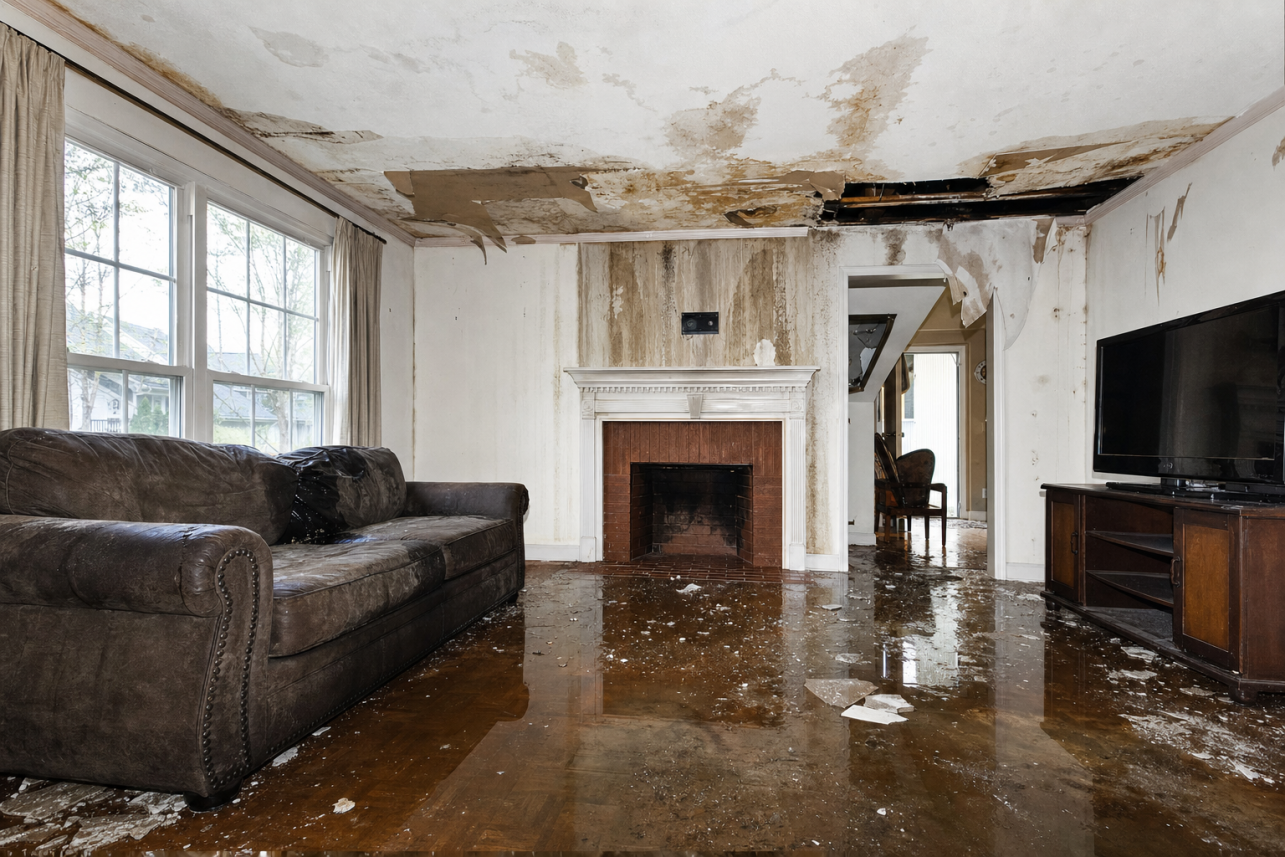
When water gets loose in a house, the damage you can see is usually the smallest part of the problem. Water wicks up drywall, soaks insulation, travels along subfloors, and settles inside wall cavities where it quietly feeds mold in Knightdale's humid climate. The adjuster your insurance company sends often measures the visible stain and stops there.
A public adjuster does the opposite. We represent the policyholder, and only the policyholder. Our job is to find everything the water touched, put a defensible repair value on it, and present the claim the way your policy actually requires — including the proof-of-loss documentation, moisture readings, photographs, and line-item repair estimates that insurers take seriously.
We also translate the confusing parts of your policy into plain English: whether you are being paid actual cash value or full replacement cost, why depreciation was deducted from your check, how your deductible applies, and whether your emergency dry-out and mitigation costs should be reimbursed. The North Carolina Department of Insurance licenses public adjusters for exactly this reason, and its NCDOI Public Adjusters Guide explains the role clearly: we work for the insured, and our fee comes from the settlement we help secure — never a guarantee of a specific number, but a professional presentation of what the loss is genuinely worth.
One important distinction: rising water from outside the home is flood damage, which falls under a separate flood policy rather than your homeowners coverage. We handle both — standard water damage claims and NFIP flood claims — and we can tell you quickly which category your loss falls into, because filing under the wrong one is a common reason claims stall or get denied.
Common Problems
Why Is The Insurance Company's Offer So Much Lower Than My Contractor's Repair Estimate?
This is the single most common call we get from Knightdale homeowners. The insurer's estimate often prices a surface-level fix — paint over the stain, patch the ceiling — while your contractor is quoting what it actually takes: opening walls, replacing wet insulation, drying the subfloor, and treating for mold.
The gap also comes from depreciation. If your check was calculated on actual cash value, the insurer deducted for the age of your flooring, cabinets, and drywall, and you may be owed the held-back amount once repairs are done. Many homeowners never collect it because nobody explains the process.
We rebuild the claim from the ground up with a room-by-room, line-item estimate and challenge the numbers that don't hold up. A low first offer is a starting position, not a final answer.
My Water Damage Claim Was Denied Or Is Dragging On — What Now?
Denials usually hinge on a few phrases buried in the policy: the insurer calls the damage 'gradual' rather than sudden, blames a maintenance issue, or argues the loss was really flooding, which homeowners policies exclude. Delays happen when the file sits waiting on documentation the insurer says it never received.
A denial is not the end of the road. Courts have repeatedly sided with policyholders when insurers stretch exclusions too far. In Corban v. United Services Automobile Association, the Mississippi Supreme Court ruled for a homeowner after Hurricane Katrina, holding that an insurer cannot escape paying for covered damage simply because excluded flood damage also occurred to the same house. The burden of proving an exclusion applies sits with the insurance company — not with you.
We review the denial letter against your actual policy language, gather the evidence the insurer claims is missing, and push the claim forward with deadlines and documentation the company must respond to.
Should I Hire A Water Damage Claims Adjuster Knightdale NC Policyholders Trust — Or Just Handle It Myself?
If the loss is small, contained, and the insurer's first check covers your contractor's estimate, you may not need us — and we will tell you that honestly. Public adjusters earn their fee on complicated or underpaid claims, not simple ones.
Hire help when the numbers don't match, when the insurer's inspection took fifteen minutes, when you suspect water traveled somewhere no one checked, or when you are already out of pocket for emergency dry-out costs and hotel stays. Those are the claims where representation changes the outcome.
When you compare adjusters, verify the license with the North Carolina Department of Insurance, ask whether they are bonded, and ask who actually inspects your home. We are licensed and bonded, we do our own inspections, and we work on contingency — if the settlement doesn't improve, you owe us nothing.

Our Process
Free Inspection And Policy Review
We walk the property with moisture meters and cameras, tracing where the water actually went — inside walls, under floors, behind cabinets. At the same time, we read your full policy, including the endorsements and exclusions, so we know exactly what coverage you are working with before anyone talks numbers.
Documentation And Claim Preparation
We build the claim file the way insurers are required to evaluate it: a detailed proof of loss, a line-item repair estimate, a contents inventory for damaged belongings, and receipts for your emergency mitigation costs. Thorough documentation is what separates claims that get paid from claims that get argued.
Negotiation And Settlement
We present the claim to your insurance company, attend their re-inspections, answer their pushback, and negotiate on your behalf until the offer reflects the documented loss. You approve every decision. Our fee is a percentage of the recovery, so our interests stay aligned with yours from start to finish.
| What Happens | Filing on Your Own | With For The Public Adjusters |
|---|---|---|
| Damage documentation | Photos of visible damage only; hidden moisture usually missed | Thermal imaging, moisture mapping, and full room-by-room scope |
| Estimate accuracy | Carrier's estimate, written by the carrier's adjuster | Independent line-item estimate built to actual repair costs |
| Policy interpretation | You take the desk adjuster's word on coverage | We read the policy ourselves and apply matching, code, and ALE provisions |
| Negotiation | One offer, take it or fight alone | Documented supplements, re-inspections, and appraisal if needed |
| Typical outcome | Settlement based on the first, narrowest scope | Settlements frequently two to five times the initial offer |
| Your time invested | Weeks of calls, emails, and contractor coordination | We manage the claim; you approve the results |
Commonly Overlooked In The Public Adjusting Industry
- Moisture trapped behind base cabinets and toe kicks — Carrier adjusters rarely pull cabinets during inspection, so saturated toe kicks quietly grow mold months after the check is cashed.
- The flooring matching provision — Carriers offer to patch a few boards of continuous hardwood or tile, and homeowners don't realize North Carolina claims practice often supports replacing the full connected area when a match is impossible.
- Drying equipment invoices vs. actual dry standard — Mitigation companies bill for equipment days, but nobody verifies the structure actually reached dry-standard readings before rebuild started.
- Additional living expense (ALE) coverage — Families camp in a half-gutted house for weeks because no one told them the policy pays for a comparable rental while the home is uninhabitable.
- Code-upgrade coverage on older Knightdale homes — Repairs in homes built before current Wake County code often trigger required electrical or plumbing upgrades that ordinance-and-law coverage pays for — if someone claims it.
- The date-of-loss timeline in seepage denials — Carriers deny slab and pipe leaks as 'gradual' by default, and without a documented discovery timeline the denial usually sticks.
- Depreciation holdback recovery — Policyholders accept the actual cash value payment and never file for the recoverable depreciation they're owed after repairs are completed.
- Electrical inspection after ceiling water intrusion — Water that passed through light fixtures and junction boxes creates a fire risk, yet the inspection cost rarely appears in a carrier's first scope.
Case Studies
Case Study #1
Situation: A family in the Widewaters subdivision of Knightdale came home from a weekend trip to find their supply line to the second-floor washing machine had burst, sending water through the ceiling into the kitchen and living room below.
Problem: Their carrier's staff adjuster inspected for twenty minutes and issued an estimate of $11,400 — enough to dry the structure and patch drywall, but nothing for the hardwood flooring, cabinetry, or the mold risk building inside the wall cavities.
Investigation: Our team performed moisture mapping with thermal imaging and pin-type meters across every affected room. We documented elevated moisture readings behind the kitchen base cabinets and inside the party wall that the carrier's adjuster never opened.
Findings: The hardwood throughout the first floor was a continuous, site-finished install — meaning spot repairs would never match. Moisture had also wicked into the cabinet toe kicks, and microbial growth had already started behind the dishwasher.
Solution: We rewrote the scope to include full first-floor hardwood replacement under the matching provisions of the policy, cabinet replacement rather than a doomed repair attempt, proper containment and remediation, and additional living expenses for the family during the work.
Outcome: The claim settled at $67,800 — nearly six times the original offer — and the family stayed in a rental off Smithfield Road paid under their ALE coverage while the home was restored.
Lesson: The first estimate after a pipe burst almost always scopes what's visible, not what's wet. Moisture doesn't stop at the drywall, and neither should the claim.
Case Study #2
Situation: The owner of a small dental practice near the Knightdale Station area discovered water pouring from a failed HVAC condensate line above the drop ceiling on a Monday morning, soaking exam rooms, equipment, and the reception area.
Problem: The carrier accepted the building damage but denied the bulk of the business interruption claim, arguing the practice could have reopened within days. They also classified the saturated flooring as 'cleanable' rather than replaceable.
Investigation: We pulled the practice's production records, appointment logs, and payroll to build a real income-loss model. We also brought in an independent hygienist to confirm that patient-care areas with wet subfloor and glue-down vinyl could not pass sanitary standards without full replacement.
Findings: The glue-down flooring had trapped water against the slab, and moisture readings weeks later still exceeded manufacturer reinstallation thresholds. The interruption period was legitimately six weeks, not the four days the carrier assumed.
Solution: We presented a documented business income calculation, health-code support for the flooring replacement, and a corrected drying scope. When the desk adjuster stalled, we invoked the appraisal clause in the commercial policy.
Outcome: The claim resolved for $142,000 combining property and business income — the carrier's opening position had been under $38,000.
Lesson: Commercial water losses are two claims in one: the building and the income. Business owners who only argue the property side routinely leave the larger number on the table.
| Water Loss Scenario | Typical Coverage Outlook | What the Settlement Hinges On |
|---|---|---|
| Burst supply line or pipe | Usually covered as sudden and accidental | Proving the break was sudden, plus how far moisture actually traveled |
| Water heater failure | Resulting damage covered; the tank itself often isn't | Scope of subfloor and wall damage in adjacent rooms |
| Slab leak under flooring | Damage often covered; access and repair costs vary by policy | Timeline documentation to defeat a 'long-term seepage' denial |
| Toilet or tub overflow | Generally covered when accidental | Ceiling, framing, and electrical damage on floors below |
| Washing machine hose failure | Covered, but carriers scrutinize maintenance | Whether flooring must be replaced wall-to-wall for matching |
| HVAC condensate leak in attic | Covered if sudden; denied if deemed gradual | Moisture readings and evidence of when the leak began |
| Sewer or drain backup | Only covered with a backup endorsement | Whether the endorsement exists and its sub-limit amount |
| Outside surface flooding | Excluded under homeowners; needs flood insurance | Identifying any covered interior plumbing contribution to the loss |


Reviews
Our water heater let go in the garage and flooded three rooms off Hodge Road. State Farm offered us $9,000 and I almost took it. For The Public Adjusters found wet insulation and subfloor damage their guy never checked, and the final settlement came in over $34,000. They handled every call with the carrier so I didn't have to.
Marcus T., Knightdale
A slab leak under our kitchen went undetected for weeks and the insurance company tried to deny it as 'long-term seepage.' This team brought in a leak detection report, documented the timeline, and got the denial reversed. We ended up with new flooring, cabinets, and the plumbing access repairs covered. I honestly thought we were stuck paying out of pocket.
Denise W., Wake County
Second-floor bathroom overflow while we were at work — water came through the ceiling lights downstairs. The adjuster the carrier sent barely looked in the attic space between floors. For The Public Adjusters found soaked framing and got the ceiling, electrical inspection, and living expenses added to the claim. Took a few weeks longer than the quick lowball offer, but it was worth roughly triple the money.
Rob and Kayla H., Knightdale
Frequently Asked Questions
When Should I Hire A Water Damage Claims Adjuster Knightdale NC Homeowners Can Trust?
The best time to call is before you file the claim, or as soon as possible after the loss. Water damage moves fast in Knightdale homes — especially in crawl spaces and behind drywall — and the way the claim is documented in the first 48 to 72 hours often determines what the insurance company will pay.
If you've already filed and received a lowball estimate, it's still not too late. For The Public Adjusters, Inc. regularly reopens and supplements underpaid water claims across Wake County. We can review the carrier's estimate line by line, identify what was missed — hidden moisture in wall cavities, damaged subflooring, code-upgrade costs — and negotiate the difference.
You should strongly consider bringing in a public adjuster if any of these apply: the damage affects multiple rooms or levels, the source was a slow leak the carrier may try to exclude, you've received a denial or reservation-of-rights letter, or the insurer's payout won't come close to covering real repair costs from local contractors.
Smaller, straightforward losses — a single damaged cabinet, for example — may not need professional representation. We'll tell you honestly during a free claim review whether our involvement makes financial sense. Because we work on a contingency fee, we only take cases where we believe we can recover meaningfully more than the carrier has offered. That review costs you nothing and gives you a realistic picture of what your claim is actually worth.
What Does A Knightdale Public Adjuster Actually Do On A Water Damage Claim?
A public adjuster is a licensed professional who works exclusively for you, the policyholder — never for the insurance company. The adjuster your carrier sends is paid by the insurer; we're paid only from what we recover for you.
On a water loss, our work starts with documentation. We use moisture meters and thermal imaging to map how far water actually traveled, because water rarely stays where you can see it. In homes off Smithfield Road or in neighborhoods like Widewaters and Princeton Manor, we routinely find saturated insulation, wet subfloor, and moisture wicking up interior walls that the carrier's estimate ignored.
Next, we review your policy in detail — coverage limits, water damage exclusions, mold sublimits, and ordinance-and-law coverage that pays for bringing repairs up to current Wake County building code. Then we build a complete, itemized estimate using the same software carriers use, priced for the actual Raleigh-area construction market.
From there, we handle everything: filing or amending the claim, meeting the company adjuster at your property, responding to requests for documents, and negotiating until the settlement reflects the true scope of repairs. If your family needs to relocate during drying and reconstruction, we also document additional living expenses so those costs are reimbursed.
Most clients tell us the biggest relief is simply not having to fight the insurance company themselves while also managing a torn-apart house.
How Much More Can I Recover With Professional Help, And What Does It Cost?
Every claim is different, but underpayment on water losses is common enough that industry studies have found policyholders represented by public adjusters often recover substantially more than those who handle claims alone. In our experience across Knightdale and eastern Wake County, initial carrier estimates on significant water losses frequently miss 30 to 50 percent of the true repair cost.
The gaps tend to be the same ones: no allowance for removing and replacing wet drywall beyond a small cut line, no detection of moisture inside wall cavities, flooring patched instead of replaced when matching material can't be sourced, missed mold remediation, and no line items for code-required upgrades like updated electrical or plumbing connections.
Our fee at For The Public Adjusters, Inc. is a contingency percentage of the settlement we recover, agreed to in writing before we start. There are no upfront costs, no hourly billing, and no fee at all if we don't recover money for you. North Carolina regulates public adjuster contracts, and you'll see every term clearly before signing.
Because our fee comes from the recovery, our interests are aligned with yours — we're motivated to document every dollar of legitimate damage. On most substantial water claims, the increase we negotiate exceeds our fee many times over. During your free initial review, we'll give you an honest assessment of the gap between the carrier's offer and what your policy should actually pay, so you can decide with real numbers in hand.
My Water Damage Claim Was Denied — Can A Water Damage Claims Adjuster Knightdale NC Residents Rely On Still Help?
Yes, in many cases. A denial letter is the insurance company's position, not the final word. As a water damage claims adjuster knightdale NC policyholders call after a denial, we start by comparing the carrier's stated reason against your actual policy language and the physical evidence at the property.
The most common denial reasons on water claims are also the most contestable. Carriers often label damage as "long-term seepage" or "wear and tear" to trigger an exclusion, even when the evidence points to a sudden pipe failure or appliance leak — which most Knightdale homeowners policies do cover. We bring in moisture mapping, plumber reports, and when needed, engineering opinions to establish what really happened and when.
Other denials hinge on late reporting or alleged failure to mitigate. North Carolina policyholders have reasonable defenses here too, particularly when the damage was hidden inside walls or under flooring and couldn't have been discovered sooner.
Our process is straightforward: we request the complete claim file, re-inspect the property ourselves, document everything the carrier's adjuster missed or mischaracterized, and submit a formal, evidence-backed demand to reopen the claim. If the insurer still won't move, we can prepare the file for appraisal or refer you to an attorney we trust — but most denials we take on are resolved through negotiation.
Don't accept a denial at face value. Bring us the letter and your policy, and we'll tell you honestly whether the decision can be challenged and what recovery is realistic.
What Types Of Water Damage Will A Water Damage Claims Adjuster Knightdale NC Policyholders Hire Actually Handle?
For The Public Adjusters, Inc. handles the full range of water losses Knightdale homeowners face: burst supply lines, water heater failures, washing machine and dishwasher overflows, roof leaks after wind or hail, frozen pipe breaks during those occasional January cold snaps, and slab leaks that go undetected for weeks.
The distinction that matters most in Wake County claims is sudden-and-accidental damage versus gradual damage. Most homeowner policies cover a pipe that bursts on Tuesday but exclude a pipe that seeped for six months. Insurers lean hard on that exclusion, sometimes labeling a covered sudden loss as "long-term seepage" to reduce or deny payment. Our job is to document the timeline, bring in plumbers or moisture-mapping evidence when needed, and push back with facts.
We also handle the secondary damage that often gets overlooked: warped hardwood in adjacent rooms, wicking up drywall, damaged insulation, and mold that develops within 48 to 72 hours in North Carolina humidity. Many carriers cap mold remediation, and knowing how to properly categorize water damage versus mold damage can dramatically change what your policy pays.
One important note: standard homeowner policies do not cover rising floodwater from storms — that falls under separate flood insurance. If you're near Mingo Creek or in a lower-lying part of eastern Wake County, we can review both policies to determine which one responds to your loss and pursue each accordingly. Bring us your policy and we'll tell you honestly what's covered before you commit to anything.
How Long Does A Water Damage Insurance Claim Take In Knightdale, And Does Hiring An Adjuster Slow Things Down?
A straightforward water claim in Wake County typically resolves in 30 to 60 days. Larger losses — think a second-floor pipe break that ruins two levels of a home off Old Knight Road — can run 90 days or longer, especially when structural drying, flooring replacement, and contents inventories are involved.
Hiring a public adjuster does not slow the process. In our experience it usually shortens it, because delays almost always come from incomplete documentation, back-and-forth over scope, or the carrier requesting information piecemeal. We front-load the claim: full moisture readings, photo and video documentation, a line-item estimate written in the same Xactimate software carriers use, and a complete contents list. When the insurance company gets a professional, defensible package on day one, there's far less to dispute.
North Carolina law also works in your favor. Insurers must acknowledge claims promptly and pay undisputed amounts without unreasonable delay, and we know how to invoke those timelines when a carrier drags its feet. If a desk adjuster in another state sits on your file, we escalate it.
Realistic expectations matter, though. If the carrier disputes causation — for example, arguing the damage is gradual rather than sudden — resolution can take longer because we may need plumber statements or engineering opinions. We'll tell you up front where your claim falls and give you a timeline based on the actual facts, not a sales pitch. Throughout the process, you'll deal with us, not the insurance company's phone tree.
What Should I Do In The First 24 Hours After Finding Water Damage In My Knightdale Home?
First, stop the water. Shut off the supply valve at the fixture or the main shutoff — in most Knightdale homes it's in the crawlspace, garage, or near the water meter at the street. If water is contacting outlets or your panel, kill the electricity to that area before you step in.
Second, document everything before you touch it. Take wide shots of each affected room, then close-ups of flooring, baseboards, furniture, and personal items. Video with narration works well. This evidence is often the difference between a full recovery and a lowball offer, because once drying equipment arrives, the original conditions are gone forever.
Third, mitigate reasonably. Your policy requires you to prevent further damage — move furniture, pull up area rugs, run fans. But do not authorize a full tear-out or sign a contractor's work authorization with an assignment-of-benefits clause before understanding what it commits you to. In North Carolina's humidity, mold pressure is real, so drying should start quickly, but keep samples of damaged flooring and drywall as physical evidence.
Fourth, call a water damage claims adjuster knightdale NC homeowners can reach before recorded statements happen. What you say to the carrier in that first call — especially about how long the leak existed — gets used to frame coverage. For The Public Adjusters, Inc. offers free claim reviews, and involving us on day one means the claim is built correctly from the start rather than repaired after mistakes are made.

My Insurer Already Made An Offer On My Water Claim — Is It Too Late To Bring In Your Team?
No — as long as you haven't cashed a check marked as final settlement or signed a full release, the claim can still be reopened or supplemented. We regularly take over Knightdale water claims after the homeowner receives a first offer, and it's often the moment people realize they need help, because the number doesn't come close to actual repair costs.
First offers on water losses are frequently thin in predictable ways. Carriers may pay to dry the structure but underpay flooring, arguing you can patch a section of hardwood rather than replace continuous flooring — even though matching ten-year-old planks is rarely possible. They may miss baseboards, cabinet toe-kicks, insulation, or the cost of proper containment. Depreciation is another common gap: many policies owe you recoverable depreciation after repairs, and homeowners leave it unclaimed simply because no one explained the process.
When we take over an open claim, we re-inspect the property, write our own independent estimate, and submit a supplement with supporting documentation. If the carrier won't move, North Carolina policies include an appraisal clause — a formal dispute mechanism that resolves the value of the loss without going to court — and we guide clients through it when it makes sense.
One caution: policies have deadlines for supplements and for recovering depreciation, often within a set period after the loss. If your Knightdale claim was paid months ago and the settlement felt short, call For The Public Adjusters, Inc. sooner rather than later so no deadline closes the door on money you're owed.
Does My Homeowners Policy Even Cover Water Damage, Or Do I Need A Water Damage Claims Adjuster Knightdale NC Policyholders Call To Find Out?
Most homeowners policies in Wake County cover sudden and accidental water damage — a burst supply line, a failed water heater, an overflowing washing machine, or a pipe that froze during one of our January cold snaps. What they typically exclude is flood water rising from outside, long-term seepage, and damage the insurer argues resulted from deferred maintenance.
The trouble is that the line between covered and excluded is where most disputes happen. A carrier may see a slow leak behind a shower wall and call it 'long-term seepage,' when the actual failure was sudden and the resulting damage is covered under North Carolina policy language and case law.
We read your specific policy before we do anything else. Every carrier writes its exclusions differently, and endorsements you may not remember buying — like water backup coverage for sump pump or drain failures — can change the outcome dramatically.
If you're unsure whether your loss qualifies, don't guess and don't take the carrier's first answer as final. Our Knightdale team reviews policies and inspects damage at no charge, and we'll tell you honestly whether you have a viable claim before you commit to anything. Homeowners near Widewaters, Mingo Creek, and older neighborhoods off First Avenue call us for exactly this reason: they want a straight answer about coverage before the insurer frames the narrative.
What Documentation Should I Gather Before Your Team Inspects My Knightdale Water Loss?
The good news: you don't need to prepare a perfect file before we arrive. Part of what a public adjuster does is build the documentation for you. That said, a few things make your claim stronger from day one.
First, photos and video. Capture the source of the water if you can see it — the broken fitting, the failed valve, the split pipe — plus every affected room, ceiling, and floor. Time-stamped phone photos are fine. If a plumber has already repaired the source, ask them for their invoice and a short written description of what failed, because that document often decides whether the loss is classified as sudden and covered.
Second, keep every receipt. Emergency water extraction, fans and dehumidifiers, hotel stays, even meals if you were displaced — these fall under different coverage parts of your policy and are frequently reimbursable.
Third, locate your full policy, including the declarations page and all endorsements. If you can't find it, we'll request a certified copy from your carrier on your behalf.
Finally, don't throw anything away. Damaged flooring, drywall cuttings, and ruined belongings are physical evidence. Set them aside in the garage or a corner of the yard until we've documented them. When our adjuster arrives at your home — whether you're in Planters Walk, Knightdale Station, or out toward Marks Creek — we'll handle the moisture mapping, measurements, and itemized inventory from there.
I Found More Damage After My Claim Settled — Hidden Mold And Rotted Subfloor. Can A Water Damage Claims Adjuster Knightdale NC Homeowners Recommend Reopen The Claim?
Yes, in most cases we can. This is called a supplemental claim, and it's one of the most common reasons Knightdale homeowners contact us. Water rarely reveals its full damage right away — moisture wicks into wall cavities, insulation, and subflooring, and problems like mold growth or cupped hardwoods often surface weeks after the carrier closed its file.
Accepting a settlement check generally does not waive your right to claim additional damage from the same loss, unless you signed a full release — which is uncommon on standard property claims. North Carolina policies do impose deadlines, though, so timing matters. The sooner we document the newly discovered damage, the easier it is to tie it back to the original water event rather than letting the carrier argue it's a new, unrelated problem.
Here's how we handle it. We inspect with moisture meters and, where warranted, thermal imaging to map how far the water actually traveled. We photograph and scope the hidden damage, connect it causally to the original loss, and submit a supplemental estimate with supporting documentation the carrier can't easily dismiss.
Mold adds a layer of complexity, since many policies cap mold remediation at $5,000 or $10,000. We structure the supplement carefully so that structural drying, tear-out, and rebuild costs are claimed under the correct coverage rather than lumped under the capped mold limit. If your contractor opened a wall and found a mess the insurance company never paid for, call us before you authorize repairs — the evidence behind that wall is your leverage.
Is For The Public Adjusters Licensed In North Carolina, And How Does Getting Started Actually Work?
Yes. Public adjusters in North Carolina are licensed and regulated by the NC Department of Insurance, and we work under a written contract that spells out our fee and your rights — including a statutory window to cancel after signing, so you're never locked in on the spot. You're welcome to verify any adjuster's license through the Department before hiring anyone, and we encourage it.
Getting started is simple. You call or submit a request, and we schedule an inspection of your Knightdale property, usually within a day or two for active water losses because standing moisture gets worse by the hour. The inspection and claim review are free, and there's no obligation.
If we take the claim, we handle the rest: filing or amending the notice of loss, meeting the carrier's adjuster at your home so you don't face that inspection alone, preparing a line-item estimate of the full damage, and negotiating until the settlement reflects what your policy actually owes. You'll get updates at every stage, and nothing is settled without your approval.
Our fee is a percentage of the recovery, paid only when you're paid. If we recover nothing, you owe nothing. That structure means we only take claims we genuinely believe are underpaid or wrongly handled.
We serve all of Wake County, and eastern Wake is home territory for us — Knightdale, Wendell, Zebulon, and the neighborhoods along the 64/264 corridor. When a pipe bursts or a ceiling comes down, you're calling someone who knows the local carriers, local contractors, and local building costs.
The Insurance Company Says My Loss Was 'long-Term Seepage' — Can A Water Damage Claims Adjuster Knightdale NC Homeowners Hire Fight That?
Yes, and this is one of the most common disputes we handle. Insurers frequently label a loss as gradual seepage, wear and tear, or deferred maintenance because those causes are excluded under most policies. But the label the carrier picks is not the final word — the evidence is.
A sudden supply-line failure, a burst pipe behind a wall, or an appliance leak that only recently began can all mimic 'long-term' damage once water has spread through drywall and subfloor. Our job as a Knightdale public adjuster is to establish the actual timeline and mechanism of the loss.
We do that with moisture mapping, plumber and leak-detection reports, photographs of the failed component, and when needed, opinions from licensed contractors or engineers. Staining patterns, material deterioration rates, and moisture readings often tell a very different story than the carrier's two-page denial letter suggests.
We also scrutinize the policy language itself. Many North Carolina policies cover the resulting damage from a hidden leak even when the leaking component itself is excluded — a distinction desk adjusters routinely gloss over. If your Wake County claim was tagged as seepage or maintenance, don't accept that characterization until someone working for you, not the insurer, has examined the evidence. In many of these disputes we've turned a full denial into a properly paid claim.
Will Filing A Water Damage Claim Raise My Premiums Or Get My Knightdale Policy Dropped?
It's a fair concern, and the honest answer is: it depends on the size and frequency of your claims, not on whether you hire representation. In North Carolina, water losses are reported to industry databases like CLUE, and carriers do consider claim history at renewal. A single water claim rarely triggers non-renewal by itself, but two or three within a few years can.
That's exactly why the decision to file should be made carefully — and why we tell some Knightdale homeowners not to file at all. If the damage is barely above your deductible, absorbing the cost may protect your insurability. Part of our initial review is running that math with you before anything gets reported.
When the loss is significant — soaked flooring, saturated drywall, cabinet damage, potential mold — filing almost always makes sense, and the goal becomes recovering every dollar the policy owes on that one claim. Underpaid claims are the worst outcome: you take the premium consequences of filing without getting fully paid.
One more point: hiring a public adjuster does not appear on your claim record as a negative mark, and carriers cannot legally penalize you for using licensed representation. Your premium impact is driven by the loss itself. Our involvement simply ensures that if the claim is going on your record either way, the settlement actually covers the repairs your Wake County home needs.
Can A Water Damage Claims Adjuster Knightdale NC Landlords And Business Owners Use Help With Rentals And Commercial Properties?
Absolutely. For The Public Adjusters, Inc. represents residential homeowners, landlords, and commercial policyholders throughout Knightdale and the rest of Wake County, and water losses at income-producing properties bring complications that owner-occupied claims don't.
For rental properties, the big issues are loss of rents and tenant displacement. Most landlord policies include fair rental value coverage, but carriers rarely volunteer it and often undercalculate it. We document market rents, lease terms, and realistic repair timelines so that coverage pays what it should while the unit is uninhabitable.
For commercial buildings — retail spaces along Knightdale Boulevard, offices, restaurants, warehouses — business interruption and extra expense coverage often matter more than the physical damage itself. A burst sprinkler line or failed water heater can shut a business down for weeks. We prepare the financial documentation those claims require, working from your P&L records, payroll, and tax filings.
Commercial water claims also involve code-upgrade issues. Older Knightdale buildings frequently need electrical, plumbing, or accessibility upgrades triggered by repairs, and ordinance-or-law coverage should fund those — if someone claims it properly.
The process starts the same way for every property type: a no-cost review of your policy and the damage. Whether it's a duplex near downtown or a multi-tenant commercial building, we build the claim so nothing recoverable gets left behind.

What Is Recoverable Depreciation On My Water Claim, And How Do I Actually Collect It?
If your policy pays replacement cost — and most Wake County homeowners policies do — the carrier initially issues payment for actual cash value, which is the replacement cost minus depreciation. That withheld depreciation is called 'recoverable,' meaning you can collect it, but only after you complete the repairs and prove it.
Here's where policyholders lose money. The insurer's estimate might show $28,000 in replacement cost, pay $19,000 up front, and hold back $9,000 in depreciation. To recover that $9,000, you typically must finish repairs within a policy deadline — often 180 days to two years depending on your policy — and submit invoices showing what you actually spent. Miss the deadline or skip the paperwork, and the carrier keeps it.
We manage this entire process for our Knightdale clients. That means tracking the deadlines in your specific policy, submitting contractor invoices correctly, and disputing depreciation calculations that were too aggressive in the first place. Carriers sometimes depreciate items that shouldn't be depreciated at all, or apply unrealistic lifespans to flooring and cabinetry.
We also make sure the replacement cost figure itself is right before depreciation is ever applied. If the base estimate is low, both your up-front check and your recoverable depreciation shrink with it. Getting the full scope documented early — every affected room, every material, every trade — is what makes the back-end recovery worth pursuing. If you're sitting on an unclaimed depreciation holdback right now, it's worth a call before your window closes.
Local Relevance
Knightdale sits in a part of Wake County that sees the full range of water problems North Carolina can produce. Hot, humid summers bring intense thunderstorms and the occasional remnants of tropical systems, which drive roof leaks and water intrusion. Then winter delivers sharp cold snaps — brief, but cold enough to burst pipes in crawlspaces and garages that were never built for hard freezes.
The town's housing stock adds another wrinkle. Knightdale has grown quickly east of Raleigh, so newer subdivision homes sit alongside older houses closer to the town's core. Newer builds often hide slow leaks behind finished walls until the damage is extensive, while older homes tend to carry aging supply lines, water heaters, and washing machine hoses that fail without warning.
And because our summers stay humid for months, wet building materials here don't dry on their own. Mold can take hold within days of a leak, which is why the timeline of your claim — and how thoroughly the damage gets documented early — matters so much in this area. If rising water from a storm is involved, we also handle flood claims under the National Flood Insurance Program, which is a separate process from a standard homeowners claim and comes with its own strict deadlines.
Because so many Knightdale homes were built during the area's rapid-growth years with slab foundations and second-floor laundry or bathrooms, leaks often travel down through floor systems and show up rooms away from the actual source — so an insurer who only inspects the visible stain frequently misses most of the loss. Insist on moisture mapping of adjacent rooms and the level below before any settlement number is discussed.
Get A Second Opinion Before You Accept That Check
If water has damaged your Knightdale home and the insurance company's response doesn't add up, let us take a look. For The Public Adjusters, Inc. is licensed and bonded, the inspection and policy review cost you nothing, and we only get paid if your recovery does. One conversation will tell you where your claim really stands.
Call us: (919) 400-6440
Helpful Resources
- NCDOI Public Adjusters Guide
- National Flood Insurance Program (NFIP)
- Federal Emergency Management Agency (FEMA)
- North Carolina Department of Insurance — State regulator that licenses public adjusters and assists consumers
Serving Knightdale · Wake
Last updated: August 17, 2026