
There isn’t one insurance company that denies the most claims across every type of policy. But in homeowner insurance, public data shows some of the biggest carriers, including Allstate, Farmers, and number one culprit state-specific State Farm companies, post very high denial rates, especially in catastrophe-heavy markets where carriers fight harder and policyholders get squeezed.
If you’re reading this after a denial letter, a low-ball estimate, or weeks of silence from your adjuster, your instincts are probably right. A lot of denied and underpaid property claims aren’t random mistakes. They’re the result of a system built to protect the carrier’s money first and force the homeowner to do all the work.
For homeowners in North Carolina and Virginia, that’s the part that matters. Storm claims, wind claims, roof claims, fire claims, water damage claims, and business property losses often turn into fights over cause, scope, and value. The better question isn’t just which insurance company denies most claims. It’s which companies make denial and underpayment part of the playbook, and how you push back when they do.
Table of Contents
- Decoding the Data on Denied Claims
- The Wall of Shame Which Insurers Deny Homeowner Claims Most
- Top Excuses Insurers Use to Deny or Low-Ball Your Claim
- Your Playbook for Fighting a Claim Denial or Low-Ball Offer
- Success Story How a Public Adjuster Defeated a Bad Faith Denial
- Don’t Fight Alone Get Expert Claim Help in NC and VA
Decoding the Data on Denied Claims
The raw question, which insurance company denies most claims, sounds simple. It isn’t. Carriers write different products, in different states, under different rules, and their behavior can look very different depending on the kind of property claim involved.
What matters more than branding is claim denial rate. That’s the number that tells you how often a carrier says no after a loss gets reported. It doesn’t tell the whole story, but it tells you enough to know whether you’re dealing with an insurer that fights claims aggressively.
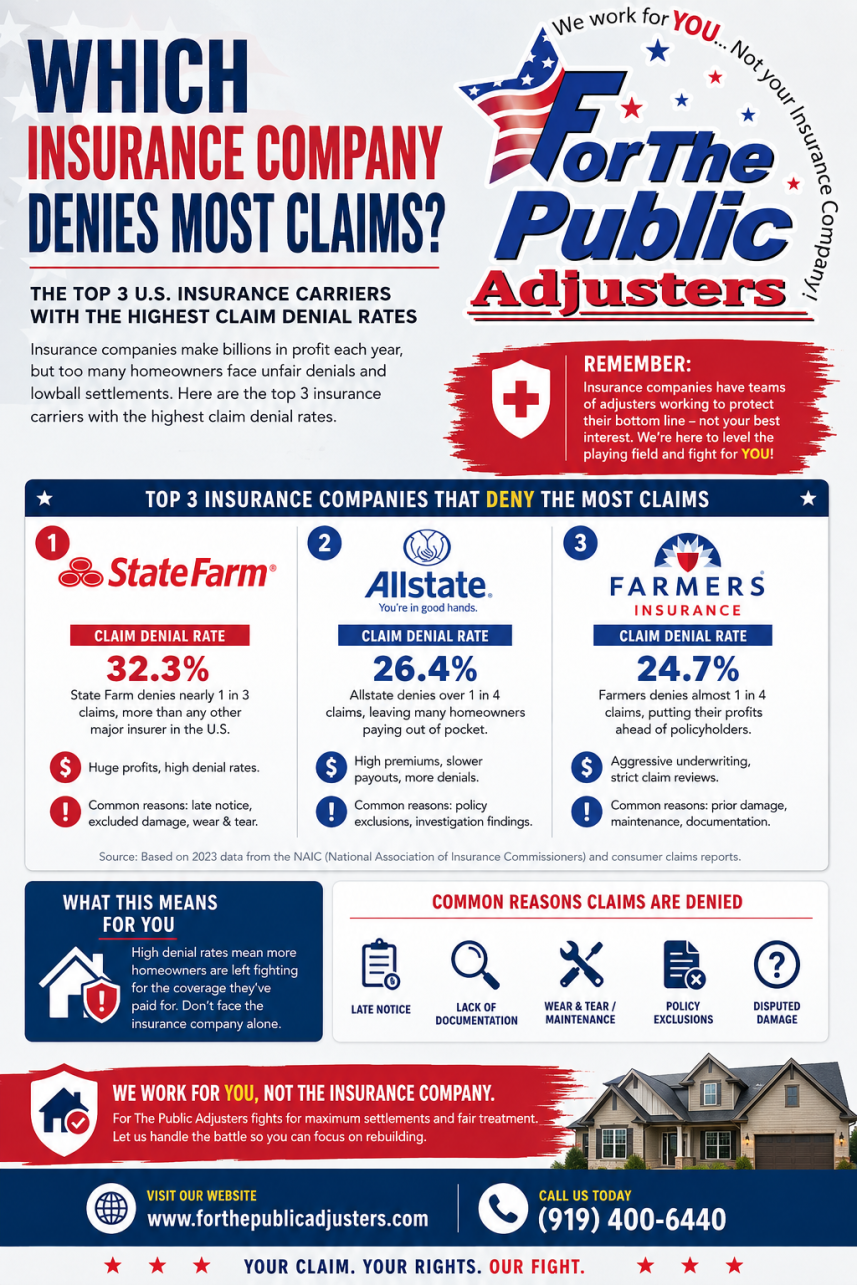
The number to watch is denial rate
One reason homeowners get confused is that carriers love broad reputation language. “Good hands.” “Like a good neighbor.” Nice slogan. Useless when your roof claim gets chopped apart line by line.
The public evidence shows denial behavior can vary wildly by insurer and product line. In the health insurance market, for example, KFF reported that insurers selling qualified health plans on HealthCare.gov received 471 million claims in 2023 and denied 86 million in-network claims, for an average 20% in-network denial rate and 36% out-of-network denial rate. KFF also found denial rates ranged from 1% to 54% for in-network claims, which proves there is no single universal “worst” company across all insurance lines and markets. It also found that fewer than 1% of denied claims were appealed, and insurers upheld the original denial in 56% of those appeals according to KFF’s claims denials and appeals analysis.
That isn’t homeowner data, and I don’t treat it as homeowner proof. I treat it as a warning sign. Denials are common, appeals are rare, and carriers know many won’t keep pushing.
Practical rule: Don’t obsess over slogans or national ad budgets. Watch for denial patterns, delay tactics, and whether the carrier forces policyholders to prove the obvious.
Why North Carolina and Virginia owners should care
In North Carolina and Virginia, claim disputes often get uglier after wind, hail, hurricanes, major rain events, and fires. That’s when the carrier starts slicing the claim into categories that help them pay less. They call part of the damage old. They call part of it excluded. They call part of it repairable when it plainly needs replacement.
A national average can hide that behavior. A carrier might look ordinary on paper and still fight hard in storm-prone areas where large losses stack up. That’s why homeowners need to read denial trends with a property-claim mindset, not a marketing mindset.
If your carrier says the loss is really wear and tear, deferred maintenance, or pre-existing damage, start with the exact policy language and the actual condition of the property. Then compare their position against the facts on the ground. If you want a deeper breakdown of one common fire-claim tactic, read these reasons insurance companies deny fire claims.
The Wall of Shame Which Insurers Deny Homeowner Claims Most
You pay premiums for years, a storm rips through your roof, and the carrier answers with a denial letter full of polished excuses. Then you learn the company has a pattern. That’s the part homeowners miss. The problem is not just one bad adjuster or one bad file. It’s repeat behavior.
The public numbers are ugly
A 2024 analysis summarized by Insurance.com found that Allstate and USAA had the highest claim denial rates among the largest reporting home insurers, according to Insurance.com’s review of which home insurance company denies the most claims. These are major carriers with massive market share, not obscure regional names.
The same analysis showed how extreme denial rates can get in a high-risk property market. In Florida, State Farm Florida Insurance Co. reported a 59.2% denial rate, United Services Automobile Assn. reported 49.5%, and USAA Casualty Insurance Co. reported 48.7%. The average across all reporting carriers was 42.1%, and the average across the 14 largest reporting homeowners insurers was 48.0% in that reporting set.
That should change how you read a denial letter. A high denial rate does not prove your claim was handled in bad faith. It does prove some carriers deny a huge share of homeowner claims and then expect policyholders to give up.
Reported Homeowner Claim Denial Rates for Select Insurers in High-Risk States
| Insurance Company | Reported Denial Rate |
|---|---|
| State Farm Florida Insurance Co. | 59.2% |
| United Services Automobile Assn. | 49.5% |
| USAA Casualty Insurance Co. | 48.7% |
| Average across 14 largest reporting homeowners insurers | 48.0% |
| Average across all reporting carriers | 42.1% |
Denial rates also vary widely by insurer. That matters. Carriers love to act like hard denials and thin payments are just part of the business. They are not. They are claim-handling choices.
What homeowners in NC and VA should take from this
If you own property in North Carolina or Virginia, do not read these numbers like a consumer survey. Read them like a warning. After hurricanes, wind losses, hail, major rain, fires, and collapse claims, carriers look for ways to split damage apart, shrink scope, and force the burden back onto you.
That pattern shows up the same way over and over. The roof has storm damage, but the carrier calls part of it age. The interior water damage is real, but they call it long-term seepage. The repair estimate leaves out code items, detached structures, overhead and profit, or full replacement where patchwork will fail. That is how underpayment starts.
High denial numbers usually travel with familiar field tactics. Expect causation fights. Expect narrow readings of policy language. Expect repeat inspections after you push back. Expect delay sold to you as investigation.
Stop giving the carrier the benefit of the doubt. Build the file fast. Photograph everything. Get contractor opinions in writing. Demand the policy language they relied on. If the insurer is one of the big-name carriers that fights hard on property losses, study how those disputes play out in this guide to a State Farm homeowners claim dispute.
A denial letter is the carrier’s opening position. Treat it like one and fight back.
Top Excuses Insurers Use to Deny or Low-Ball Your Claim
Most denial letters are written to sound technical, neutral, and final. Strip away the language and the pattern is usually simple. The insurer is trying to move your loss into a category that pays less or doesn’t pay at all.
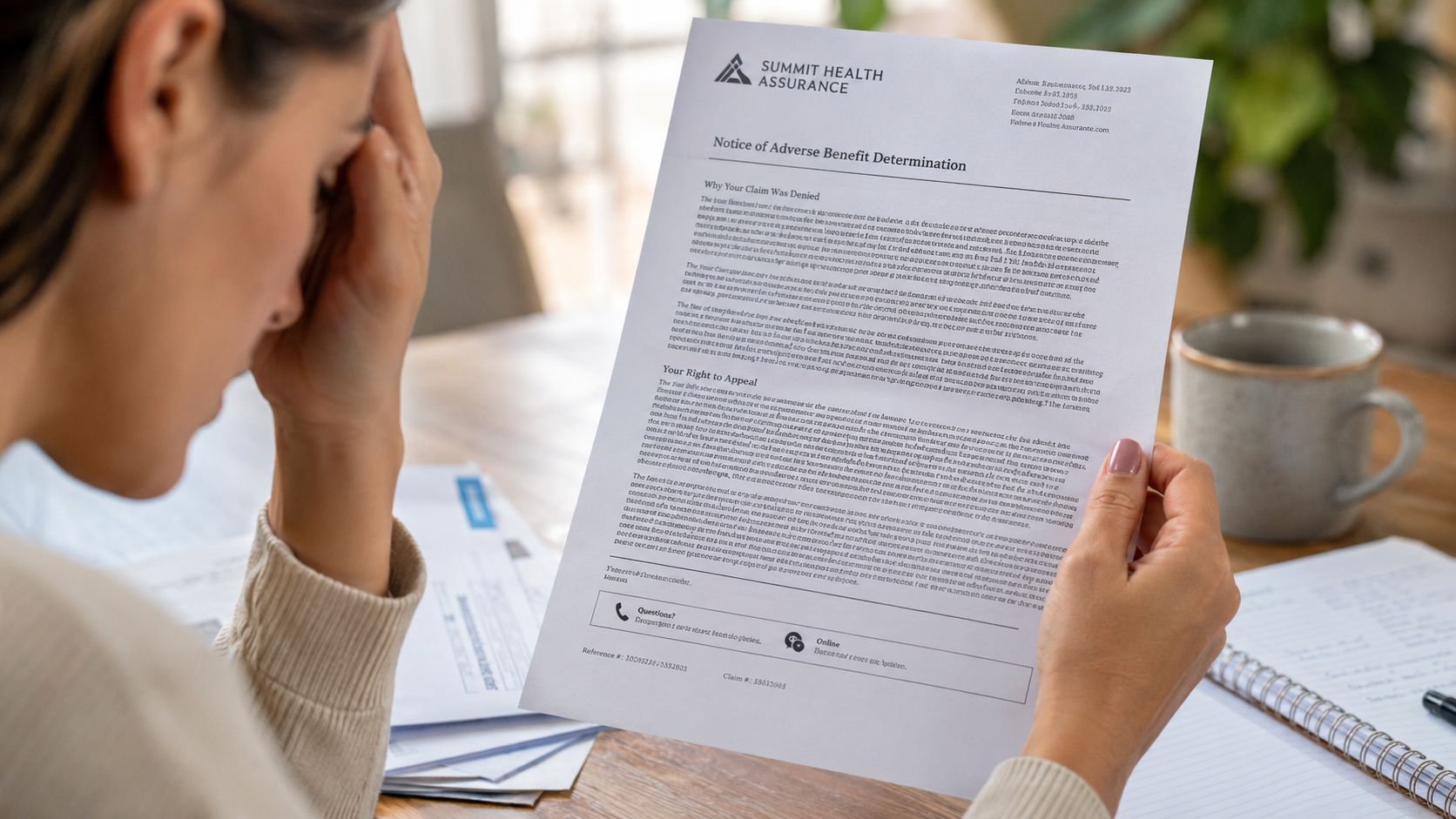
How they frame a denial
The first tactic is mislabeling the cause of loss. A storm-created opening becomes “wear and tear.” Wind damage becomes “age-related deterioration.” A sudden water event becomes “long-term seepage” or “repeated leakage.” Fire-related damage becomes “limited to the visibly burned area,” while smoke, odor, and hidden damage get ignored.
The second tactic is weaponizing your maintenance history. If the property isn’t brand new, the insurer often acts like any prior aging lets them deny current storm or water damage. That’s nonsense unless the policy language and the physical evidence support it.
Watch for these common excuses:
- “Wear and tear” means the carrier is trying to convert a covered event into ordinary aging.
- “Pre-existing damage” means they want you to prove exactly when the damage occurred.
- “Improper repairs” often appears when an insurer wants to blame a contractor, a prior owner, or old workmanship instead of the covered loss.
- “No sudden direct physical loss” is policy wording they use to argue the event was gradual or cosmetic.
Read the denial letter with a pencil in your hand. Circle every cause-of-loss statement and every policy exclusion they cite. That’s where the fight starts.
How they shrink the estimate instead
A low-ball offer is often just a soft denial. The carrier admits some damage exists, then prices the repairs so low that you can’t restore the property.
That usually happens through estimate manipulation. The adjuster leaves out line items, prices lower-grade materials, ignores code-related work, or writes for spot repairs where matching and full replacement are the actual issue. On roof claims, they’ll call functional damage “cosmetic.” On interior water losses, they’ll omit removal, drying-related work, insulation, texture matching, or overhead and profit where it’s warranted.
Actual cash value also gets used against policyholders. If the insurer starts with a depreciated number and you don’t understand the distinction, you may think that’s all you’re owed. If you need a cleaner breakdown of that trap, read this explanation of actual cash value insurance.
Insurers also exploit homeowner fatigue. The longer they delay, the more tempting a weak offer looks. That’s not an accident. That’s an advantage.
Your Playbook for Fighting a Claim Denial or Low-Ball Offer
These fights are often lost because they are argued emotionally while the insurer argues from paper. You need your own paper trail. You need your own scope. You need to force the carrier to defend its position in writing.
Start with the process below, then keep escalating until the insurer either pays correctly or has to explain itself to someone else.
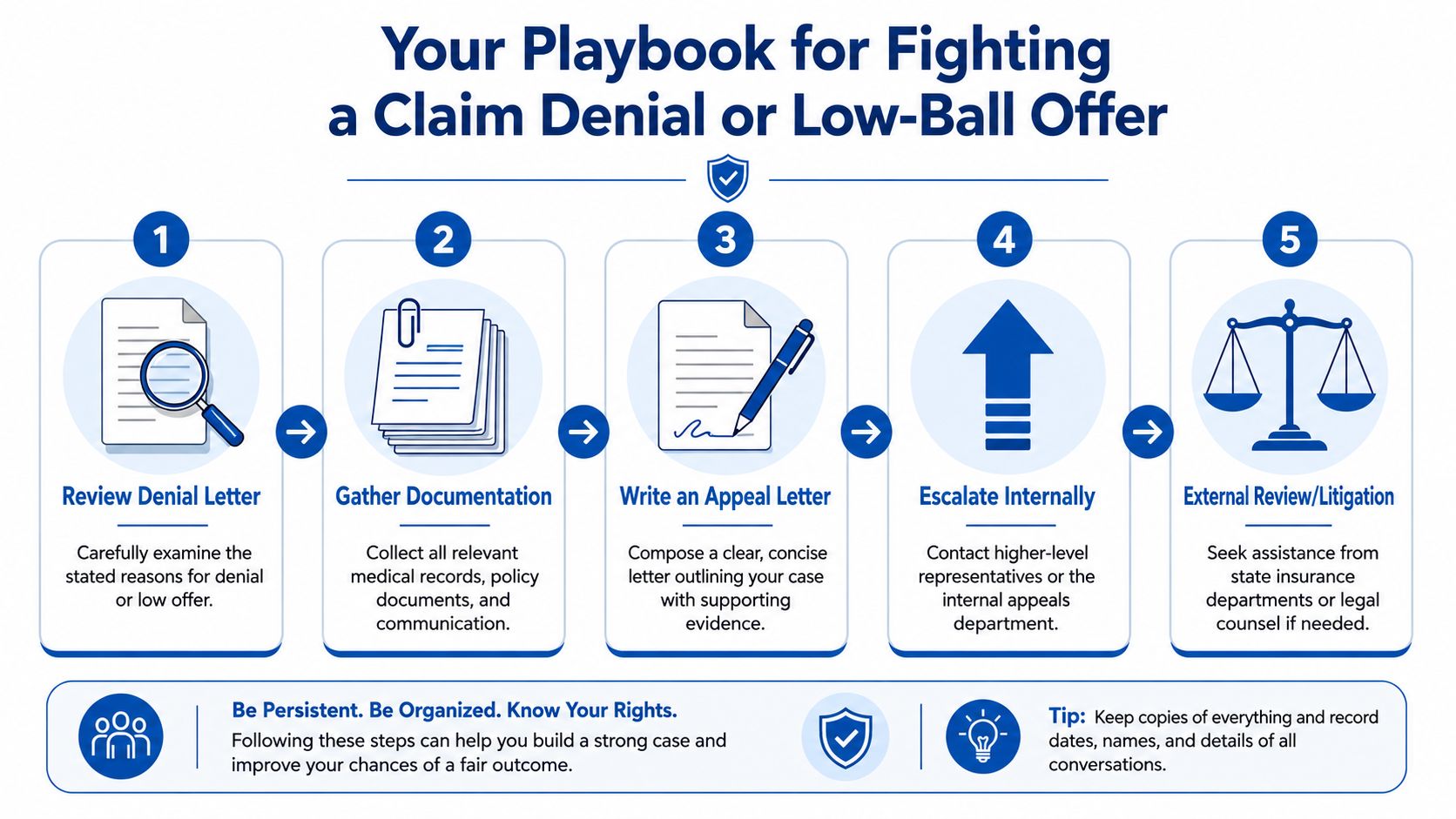
Start by forcing clarity
Demand a written explanation of the denial or underpayment that quotes the exact policy language the carrier is relying on. Not a vague paragraph. Not a phone call summary. The actual provisions, exclusions, conditions, and valuation language.
Then compare that language to the facts of your loss. If the insurer says your roof has no covered wind damage, ask them to identify every slope inspected, what they observed, who inspected it, and what evidence supports that conclusion. If they say interior staining is long-term seepage, demand the basis for that conclusion.
Use this checklist:
- Request the full claim file in writing. Ask for estimates, photos, field notes, engineer reports, cause-of-loss findings, prior payment calculations, and all denial reasoning.
- Preserve the property condition. Take date-stamped photos and video before temporary repairs erase evidence.
- Get independent estimates. Use qualified contractors or experts who will describe scope, cause, and required repairs in writing.
- Build a document timeline. Track every inspection, email, voicemail, payment letter, and change in position by the carrier.
A solid outside resource on dealing with adjuster negotiations is this homeowner’s guide to insurance claims, especially if you’re trying to stay organized while the insurer keeps moving the target.
Build your counterclaim like a case file
Don’t send the carrier random photos and a frustrated email. Send a structured rebuttal.
Include the denial letter, your photos, your contractor or expert reports, a room-by-room or roof-slope-by-roof-slope scope, and a direct response to each reason the insurer gave. If they omitted code items, identify them. If they priced for patching where matching or replacement is necessary, say that plainly and attach support.
What to demand: A revised scope, a revised estimate, a reopened investigation, and a written response to each disputed item.
Put deadlines in writing. Keep your tone controlled. You’re not asking for a favor. You’re demanding contract performance.
Later in the process, use this video as a practical reset before your next written dispute:
Escalate when the carrier stalls
If the desk adjuster keeps stonewalling, move up the chain. Ask for a supervisor review. Ask whether the claim has been referred to a special investigation unit, engineering consultant, or internal appeals process. Make them say who is making the decision.
If the carrier still drags its feet, file a complaint with your state insurance regulator. In North Carolina and Virginia, a regulatory complaint won’t decide the amount of your loss for you, but it can force attention onto a file that the insurer has allowed to rot.
And remember this. Courts do punish carriers when the facts support it. In Taddei v. State Farm Indemnity Co., a New Jersey court found that State Farm acted in bad faith by unreasonably delaying and denying a homeowner’s fire claim, as discussed in the Taddei decision. That doesn’t mean every denial becomes a lawsuit. It does mean insurers can lose when they push too far.
Success Story How a Public Adjuster Defeated a Bad Faith Denial
A Virginia storm claim that changed once the homeowner got help
A Virginia Beach homeowner called after a storm claim went sideways. The insurer’s field adjuster had inspected the roof, brushed off the visible damage as cosmetic, and issued a payment so small it didn’t even move the claim forward in a practical way. The homeowner had already spent weeks arguing with the company and getting nowhere.
The turning point wasn’t emotion. It was documentation.
A public adjuster inspected the property from top to bottom, not just from the driveway and a quick ladder glance. The inspection focused on functional damage, collateral indicators, interior effects, repairability, and whether a partial fix would restore the property. The claim package that followed wasn’t just “please reconsider.” It tied the observed damage to the reported storm event, laid out the full repair scope, and challenged the carrier’s assumptions one by one.
The roof wasn’t the only issue. Related components and code-driven repair implications had been ignored in the original review. That’s common. Company estimates often look tidy because they leave out the expensive parts.
The first inspection often tells you what the insurer wants to pay. The second inspection should tell you what it actually takes to repair the property.
Once the carrier was confronted with a better-documented file, the posture changed. The claim was reopened. The estimate changed. The homeowner went from feeling trapped by the insurer’s first answer to having a real path to recovery.
That outcome is why policyholders shouldn’t surrender just because the first adjuster says no, or says “that’s all we can do.” A denial can be challenged. A low-ball can be dismantled. A weak inspection can be exposed for what it is.
The broader lesson is simple. Property claims are technical disputes dressed up as customer service interactions. The homeowner who brings better evidence usually has the stronger position.
Don’t Fight Alone Get Expert Claim Help in NC and VA
The numbers and patterns are clear enough. Some major insurers deny a lot of homeowner claims. Others don’t deny at the same pace, which tells you this isn’t just bad luck or unavoidable industry math. Carriers make choices about how hard they’ll fight, how narrowly they’ll read damage, and how long they’ll make you wait.
What smart policyholders do differently
Homeowners who recover more don’t treat a denial like the end. They treat it like a dispute.
They demand the policy language. They challenge bad causation findings. They document every room, every slope, every invoice, every email. They stop relying on verbal promises and start building a record. That’s how you fight an insurer that hopes you’ll get tired before they get honest.
If you’re in North Carolina or Virginia and your fire, water, wind, hail, hurricane, or business property claim has been delayed, denied, or underpaid, get serious fast. Evidence fades. Temporary repairs change the scene. Adjusters rotate. Files get handed off. The longer you wait, the easier it gets for the carrier to say the trail is unclear.
When you need outside help
Some disputes can be handled with a strong written rebuttal and better supporting documents. Others need a more aggressive strategy, especially when the carrier has locked itself into a weak denial position or issued an estimate that doesn’t come close to the actual repair cost.
That is where experienced claim help matters. Not from the insurance company’s adjuster. From someone whose job is to challenge the insurance company’s numbers, assumptions, and interpretation of the loss.
Client feedback says it better than any slogan:
“For The Public Adjusters helped me when Allstate offered just $5,000 for a major fire. We ended up settling for over $150,000. They are lifesavers.” – Jane D., Raleigh, NC
“I was fighting a denied storm damage claim from State Farm for months. One call to this team changed everything. They found coverage the insurance company ‘missed’ and got my roof replaced.” – John S., Virginia Beach, VA
How do I legally interpret the denial letter to understand the insurer's true reason for denial?
The denial letter must cite the specific policy section, exclusion, or condition they claim was violated. A Public Adjuster analyzes this legal language to determine if the insurer is misinterpreting the policy or if a valid counter-argument (e.g., an endorsement that overrides the exclusion) exists.
How can I challenge a claim denial based on "Insufficient Documentation" or "Lack of Evidence"?
You challenge this by commissioning an independent expert assessment. For property claims, this means a Public Adjuster obtains forensic engineering reports, detailed Xactimate estimates, and thermal imaging evidence that the insurer's initial adjuster overlooked or ignored.
What is the most effective way to address the insurer's denial based on alleged "lack of maintenance" or "gradual damage"?
This tactic is rebutted with forensic engineering evidence. The expert report must scientifically establish the loss was caused by a sudden, abrupt event (covered peril) and not the long-term, preventable deterioration (excluded peril) cited by the carrier.
What is the Appraisal Clause, and when is it the best option to reverse a denial?
The Appraisal Clause is a contractual dispute resolution method used only when the insurer acknowledges coverage but disputes the dollar amount. If the denial is based on low valuation, Appraisal (where both parties hire an independent appraiser) is often the quickest, most binding path to resolution.
Can I still file an appeal if I missed the insurer's initial appeal deadline?
While missing the deadline is dangerous, a Public Adjuster can still often proceed by filing a formal request for reconsideration backed by substantial new evidence or by leveraging the time allowed under the state's statute of limitations for filing a lawsuit for breach of contract.
What specific evidence must be included in a formal written appeal letter to maximize success?
The appeal letter must be a rebuttal memorandum, including: 1) A clear citation of your policy provision; 2) A direct counter-argument to the insurer's cited exclusion; and 3) Attached, new expert evidence (e.g., engineering report, contractor estimate) proving your loss is covered and valued higher.
How does filing a complaint with the State Department of Insurance (DOI) help overturn a denied claim?
While the DOI cannot force a payout, filing a complaint initiates an investigation into the insurer's claims practices. This formal regulatory scrutiny often prompts the insurer to re-evaluate the denial internally, especially if they are concerned about a finding of bad faith or improper handling.
If my claim was denied because the adjuster claims I committed "material misrepresentation," how is that proven wrong?
A denial based on alleged misrepresentation (e.g., policy application or claim statement) is countered by a Public Adjuster through the submission of objective, verifiable facts and documentation that prove any initial inaccuracy was a good-faith error and not an intentional act to defraud the insurer.
When should I stop the appeals process and start considering a bad faith lawsuit against the insurer?
Litigation should be the last resort. A Public Adjuster first exhausts all contractual remedies (Appraisal, formal appeals). A lawsuit is typically considered when the insurer's denial is unreasonable or unfounded and demonstrates a clear pattern of violating state statutes governing fair claims practices.
Does hiring a Public Adjuster after a denial delay the claim further, or does it speed up the final resolution?
Hiring a Public Adjuster generally speeds up the final resolution. The Public Adjuster assumes control of the claim, preventing the insurer from using stall tactics and applying pressure by setting strict timelines and submitting a complete, undisputed, legally-sound scope of loss.
Can a Public Adjuster help me recover money even if the claim denial was issued months or even years ago?
Yes. If the claim is within the state's statute of limitations (often 2-5 years), a Public Adjuster can gather the necessary retrospective evidence, argue that the original denial was incorrect based on policy language, and successfully file a Supplemental Claim or challenge the original decision.
Have your water damage claim questions answered at NO COST. Call 919-400-6440 to speak with a licensed Public Insurance Adjuster or Contact Us here with questions. WE Work For YOU… NOT Your Insurance Company!
If your insurer denied, delayed, or low-balled your property claim, get real help from For The Public Adjusters, Inc.. We represent homeowners and business owners in North Carolina and Virginia, not insurance companies, and we know how to dispute bad estimates, challenge weak denials, and force carriers to deal with the actual damage.