When a disaster strikes and forces you to shut your doors, the immediate damage is just the beginning. The real test of survival comes next. Business Income Insurance is supposed to be your safety net, designed to replace the revenue and profits you lose while you’re closed for repairs from a covered event like a fire or major storm. Think of it as the financial bridge that gets you from disaster to reopening.
Table of Contents
- Your Guide to Winning a Business Income Claim Dispute
- Understanding Your Actual Coverage
- Triggering Your Policy After a Disaster
- Common Policy Exclusions and Pitfalls to Avoid
- How to Prove Your Loss and Fight a Lowball Offer
- Why You Need a Public Adjuster on Your Side
Your Guide to Winning a Business Income Claim Dispute
Picture your business as a machine. Revenue is the fuel that keeps it running. When a catastrophe hits, that fuel line is instantly cut. Your property insurance might cover the cost of fixing the machine itself, but what about the fuel? What covers the lost sales, the payroll you still have to meet, and all the other bills that keep piling up? That's the critical gap Business Income coverage is meant to fill.
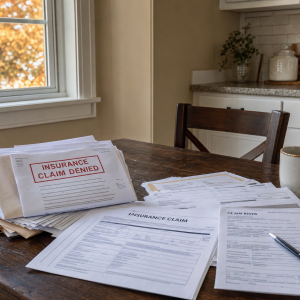
Unfortunately, getting that lifeline often turns into an uphill battle. Insurance carriers have a playbook for minimizing payouts, and they're experts at running it. They might stall, hoping the financial pressure forces you to accept a lowball offer. Or they'll just deny the claim outright, burying you in confusing policy language and obscure exclusions.
Fighting Back When Your Claim Is Undervalued
Let's be clear: the insurance company’s adjuster works for them, not for you. Their primary objective is to protect their employer’s bottom line, which creates an immediate conflict of interest. We see them use the same tactics over and over:
- Disputing your numbers: They'll often challenge your income projections, using outdated financials or completely ignoring your recent growth to argue your losses are smaller than they really are.
- Arguing the "Period of Restoration": This is a big one. They'll try to cut off the coverage period prematurely, insisting you should have reopened weeks or even months sooner, regardless of construction delays or supply chain realities.
- Twisting policy language: Adjusters are masters at using vague policy terms to justify not paying for legitimate ongoing expenses like marketing, utilities, or wages for key employees.
This isn't just a possibility; it's a routine part of the claims process for many businesses. We’ve seen major insurance carriers face legal action for systemically underpaying and delaying these exact types of claims. They are counting on you being overwhelmed, exhausted, and desperate enough to take whatever they offer.
“A lowball offer or a denial on your business income claim isn't the end of the road—it's just the insurance company's opening move. Whether your business survives comes down to how you counter with facts, detailed documentation, and expert representation.”
Your policy is a contract, a promise to make you whole. When the insurance company breaks that promise, you need a strategy. This guide is your playbook. We're going to pull back the curtain on the carrier's common tactics, show you exactly how to prove your total losses, and explain how having a public adjuster on your side can completely change the outcome of your claim.
Understanding Your Actual Coverage
When you're trying to recover after a disaster, the last thing you need is a fight with your insurance company. But often, the complex language in your policy feels like it's being used against you. Insurers sometimes use terms like "business income" and "business interruption" interchangeably, which only adds to the confusion. The first step to securing a fair settlement is knowing exactly what your policy covers.
Think of Business Income coverage as your company’s financial lifeline—it's there to replace the money you've lost. Its main job is to cover the net income you would have earned had the disaster never struck. It also pays for the essential operating expenses that don’t stop just because your doors are closed, like rent, utilities, and payroll for key employees.
Distinguishing Business Income from Extra Expense
Now, this is different from Extra Expense coverage, which acts more like an emergency fund. This part of your policy is designed to pay for the reasonable and necessary costs you take on to minimize the shutdown period and get your business back up and running faster. While related, this is a separate coverage, and this is where adjusters often try to blur the lines.
Here are a few classic examples of an Extra Expense:
- Renting a temporary office space or storefront.
- Leasing critical equipment to continue fulfilling customer orders.
- Paying your staff overtime to accelerate repairs and recovery efforts.
The insurance company’s adjuster might try to muddy the waters here to limit what they have to pay. For example, they may incorrectly classify an expense to make it fit under a smaller coverage limit, or worse, deny a critical extra expense entirely. Knowing the difference between these coverages is your first line of defense. To dig deeper into the core of your protection, you can learn more about what is typically included in ISU business interruption insurance.
This infographic shows the promise of business income insurance versus the harsh reality many business owners face during the claims process.

As you can see, there’s often a huge gap between the policy’s purpose as a safety net and the adversarial tactics insurers use to protect their bottom line. The best way to defend yourself is to fully understand the terms within your own policy. Get a head start by reading our guide on how to read an insurance policy and prepare yourself for the road ahead.
Triggering Your Policy After a Disaster
It’s a common misconception that your Business Income coverage kicks in the second a disaster strikes. In reality, your policy doesn’t start paying out automatically. There are two specific conditions that must be met, and knowing them inside and out is your first line of defense when an insurance company tries to push back on your claim.
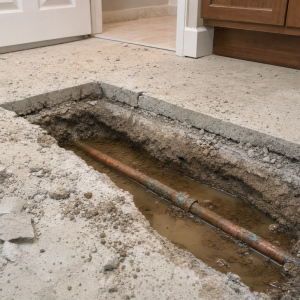
First, your business must have suffered a "direct physical loss or damage" to the insured property. This is the foundational requirement—the event that sets everything else in motion. Think of a fire that destroys your restaurant's kitchen, a hurricane that tears the roof off your warehouse, or even a burst pipe that floods your retail shop. Without actual, physical damage to the property listed on your policy, the coverage simply won’t respond.

But that’s only half the story. This physical damage must also lead to a "necessary suspension" of your business operations. The key word here is necessary. If the damage is severe enough that you have to shut down completely, or even just scale back operations in a way that hurts your bottom line, then the suspension is considered necessary.
The Battle Over the Period of Restoration
Once your coverage has been triggered, a clock starts ticking on what’s known as the "Period of Restoration." This single policy term is often the most fiercely debated part of a business income claim. It defines the timeframe during which your insurer is supposed to cover your lost profits and ongoing expenses.
This period officially begins at the moment of the physical loss and is supposed to end when your property should be repaired or rebuilt with reasonable speed and similar quality. And that's precisely where the fight often begins.
The insurance company's adjuster has a powerful incentive to argue for the shortest possible restoration period. They might create an unrealistic timeline, claiming repairs should only take a few weeks while completely ignoring the real-world obstacles you're facing, such as:
- Waiting on city or county permits to begin construction.
- A shortage of qualified contractors, especially after a widespread disaster.
- Major supply chain backlogs for essential building materials or specialty equipment.
Their goal is to cut off payments long before you can realistically reopen. It’s a deliberate strategy designed to minimize their payout, and they’re banking on you not having the expertise or stamina to challenge them.
A policyholder is not expected to perform miracles. The Period of Restoration must reflect the actual time it takes to rebuild in the real world, not an idealized timeline created by an adjuster trying to close a file.
For example, I've seen an adjuster tell a restaurant owner that a new commercial oven should have arrived in two weeks, when the manufacturer's real-world lead time was twelve weeks. This isn't a simple disagreement; it's a tactic to underpay a claim by tens of thousands of dollars. To counter this, you have to meticulously document every single delay and prove you are moving with "reasonable speed" given the circumstances. Never let an adjuster’s arbitrary schedule determine the fate of your business.
Common Policy Exclusions and Pitfalls to Avoid
Knowing what kicks your coverage into gear is just one side of the coin. The other is learning how to navigate the maze of exclusions and policy pitfalls that can seriously reduce—or even eliminate—your payout. Insurance policies are dense legal documents, and buried in the fine print are clauses that an insurance company's adjuster can use against you when you're already in a tough spot.
The first trap many business owners fall into is the "waiting period," which acts like a time-based deductible. Your business income coverage doesn't start paying the second disaster strikes. Instead, most policies have a built-in waiting period, typically 72 hours, before benefits kick in. This means you're completely on your own for the first three days of lost income and continuing expenses.
Decoding Common Exclusions
Beyond that initial waiting period, your policy has a whole list of specific perils it won't cover. These exclusions are often the primary reason an insurer will send a denial letter, so it’s crucial to know what they are before you ever have to file a claim.
Here are a few of the most common exclusions we see trip people up:
- Flood Damage: Your standard business policy almost certainly does not cover damage from rising water. For that, you need a separate policy, usually from the National Flood Insurance Program (NFIP), which has its own notoriously complex claims process.
- Virus and Bacteria: The COVID-19 pandemic threw this exclusion into the spotlight. Today, most policies have explicit language stating they won't pay for business losses caused by viruses, pandemics, or other communicable diseases.
- Utility Service Interruption: If a storm knocks out a power station across town and your business goes dark, your standard policy probably won’t cover the shutdown. You typically need a specific add-on, or endorsement, to be covered for losses from off-site utility failures.
"A policy exclusion is the insurer's final say, but a denial based on a misapplied clause is not. Many business owners have successfully fought back when an insurer unfairly used a policy detail to escape its obligation to pay."
The Coinsurance Penalty Trap
This next one is perhaps the most dangerous and widely misunderstood pitfall in business insurance: the coinsurance penalty. This clause is an absolute nightmare for any business owner who is underinsured, even slightly.
Here’s how it works. Your policy requires you to insure your business for a certain percentage of its total value, usually 80% to 100%. If you don't meet that threshold, the insurance company can penalize you by slashing your claim payment.
Let’s say your business is valued at $1 million and you have a policy with an 80% coinsurance requirement. This means you must carry at least $800,000 in coverage. If you only bought a $600,000 policy to save on premiums, you're underinsured. Now, imagine you suffer a covered loss of $200,000. You might expect your policy to pay that full amount, but it won't. The insurer will apply a formula that reduces your payout proportionally, leaving you to cover a massive financial shortfall yourself.
The good news is that a denial isn't always the final word. Policyholders have successfully challenged insurers on the unfair application of these clauses, especially when an agent sold them an inadequate policy or when the company used a flawed property valuation. You have the right to fight back.
How to Prove Your Loss and Fight a Lowball Offer
Let's talk about the moment your insurer's settlement offer lands in your inbox. After weeks of waiting, you're expecting a number that will make you whole again. Instead, you see a figure so low it feels like a mistake. It’s not.
An insurance company's first offer is almost never its best. Think of it as an opening bid in a negotiation—one designed to test how little you're willing to accept. To come out on top, you have to counter their move not with frustration, but with cold, hard proof of what your business truly lost.

This part of the claims process is won in the details. You can't just tell the insurance company what you think you've lost; you have to show them, using a mountain of documentation that leaves no room for debate. This is no time for guesstimates.
Building Your Financial Arsenal
To build an undeniable claim, you need to assemble a comprehensive file of your business's financial history. This evidence is the foundation of your entire argument, proving what your business would have earned if the disaster had never happened.
Start gathering these records immediately:
- Profit and Loss Statements: You'll want at least three years of historical P&L statements to establish a clear pattern of profitability and growth.
- Tax Returns: Business tax returns for the corresponding period will corroborate the data in your P&L statements.
- Sales Records: Pull detailed sales reports that illustrate your monthly and even seasonal revenue trends.
- Payroll Records: This includes all documentation for wages, salaries, and benefits, proving your continuing labor costs.
- Bank Statements: Business bank statements are crucial for showing historical cash flow patterns.
A lowball offer often stems from the insurance company's adjuster using a flawed or incomplete financial analysis. They might conveniently overlook a recent upward trend in sales or miscalculate your ongoing expenses, all to justify a smaller payout.
Armed with these documents, you can construct a compelling and realistic income projection. It's not just about showing where your business was, but also where it was headed. Had you just landed a major contract? Was your busy season right around the corner? Understanding this context is key to calculating what business income insurance is truly worth to you. For a detailed guide on how to package this information, our article on preparing a Proof of Loss is a must-read.
Case Study: Overturning a Flawed Analysis
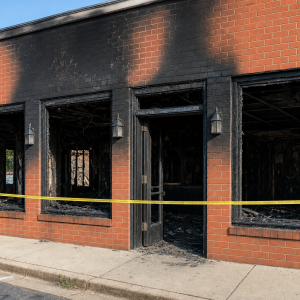
We saw this play out with a thriving restaurant owner in North Carolina whose kitchen was gutted by a fire. The insurance company’s adjuster came back with a shockingly low offer. Their justification? They based their calculations solely on the restaurant's numbers from the previous year's "slow season," completely ignoring the fact that the fire happened just weeks before the busy summer tourist season was set to begin. It was a clear attempt to minimize the payout.
Feeling completely stonewalled, the owner brought us in. Our team conducted a forensic financial analysis. We didn't just look at last year's numbers; we used the restaurant’s detailed sales data, upcoming reservations, and local tourism forecasts to build an accurate, forward-looking projection.
By presenting this indisputable financial breakdown, we successfully challenged the insurer's flawed math. The final settlement was 150% higher than the initial offer, giving the owner the capital needed to rebuild properly and get back on their feet.
Why You Need a Public Adjuster on Your Side
After a disaster strikes your business, the last thing you want is another fight. But when you file a major business income claim, that's often exactly what you get. You're up against an insurance company with a team of adjusters and lawyers whose primary job is to protect their bottom line, not yours. It’s an uneven battle from the start.
This is where a public adjuster comes in. Think of us as your personal advocate—a licensed professional who works exclusively for you, the policyholder. At For The Public Adjusters, Inc., we level the playing field for business owners throughout North Carolina and Virginia. We’ve seen the tactics insurance companies use to delay, underpay, and deny claims, and we know how to fight back.

Putting an Expert in Your Corner
Our job is to take the entire, overwhelming claims process off your plate so you can get back to what you do best—running your business. We step in and immediately turn the tables by:
- Digging into the Details: We conduct a deep dive into your policy, uncovering every possible source of coverage. At the same time, we meticulously document every single aspect of your loss to build an airtight case.
- Driving the Negotiation: We handle all the back-and-forth with the insurance company. We present our ironclad claim, challenge lowball offers, and push back against unfair denials. You no longer have to deal with the constant phone calls and confusing requests.
Bringing in a professional who answers only to you is the single most important move you can make after a loss. It's a known fact in our industry, backed by studies, that policyholders who hire a public adjuster consistently secure more significant settlements than those who go it alone.
You’ve paid your premiums faithfully for this exact moment of protection. You deserve every penny you are owed. You can learn more about what we do and the value we bring in our guide to the role of a public claims adjuster. When you’re ready to have a professional lead the charge, our team is here.
Here are some of the most common questions our clients ask us about the business income claims process.
What Should I Do if My Business Income Claim Was Denied?
Getting that denial letter is a gut punch, but it’s not the end of the road. In fact, it’s often just the beginning of the real negotiation.
Your very first step should be to demand a detailed explanation for the denial in writing. Make sure it quotes the exact policy language the insurance company is using to justify their decision. This document is a critical piece of the puzzle.
Once you have that, don't try to fight this battle alone. Gather your financial records and immediately contact a public adjuster. A denial is frequently just a carrier’s interpretation of your policy—and it can be wrong. An expert can analyze their reasoning, find the holes, and build a powerful, evidence-based appeal on your behalf.
The Insurance Company's Offer for My Lost Income Is Way Too Low. How Do I Fight It?
You have to challenge their math with better math. A lowball offer is a classic insurance company tactic, often based on a skewed reading of your past performance or a convenient failure to account for your company's growth.
To fight back, you need to build your own comprehensive income projection. This isn't just about showing old tax returns; it's about proving what you would have earned with solid evidence like recent sales data, industry trends, and signed contracts you couldn't fulfill. This is exactly what a public adjuster specializes in—forensic accounting that proves your true losses and forces the carrier to justify their low numbers or pay what you're actually owed.
How Long Can the Insurance Company Drag This Out?
While state laws require insurers to act in "good faith" and pay claims promptly, some will use delays as a strategy. They might string you along with endless, repetitive requests for documents, hoping you'll get tired and accept a low offer just to be done with it.
If you feel your claim is being intentionally stalled, that is a huge red flag. An experienced public adjuster can step in, cite the specific claim-handling laws your insurer must follow, and apply the pressure needed to get things moving. Remember, unreasonable delays aren't just frustrating—they can be grounds for a separate bad faith action against your insurance company.
When you're facing a tough fight over your business claim, you don't have to go it alone. The experts at For The Public Adjusters, Inc. are here to help you get every dollar you are entitled to.
I had a pipe bust in my attic that caused a massive amount of water damage in my home. A friend referred me to For The Public Adjusters and I’m so glad I called them. Scott and his team are extremely knowledgeable and they handled my claim with the insurance company from start to finish. I highly recommend them. – C. Romano
Have your water damage claim questions answered at NO COST. Call 919-400-6440 to speak with a licensed Public Insurance Adjuster or Contact Us here with questions. WE Work For YOU… NOT Your Insurance Company