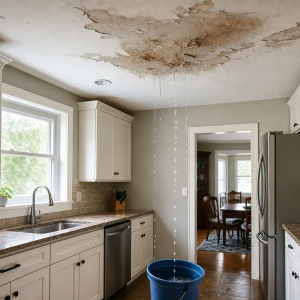

A storm tears shingles from a North Carolina roof, rain enters the attic, and water stains spread across the ceiling. The adjuster inspects the damage, then focuses on a phrase buried in the policy. The carrier says the roof may be covered, but the furniture, electronics, or stored business property are not. The homeowner hears “all risk” and assumes the entire loss should be paid. The insurer sees exclusions, listed perils, and separate coverage forms.
That dispute often turns on more than the name printed on the policy. It turns on which property was damaged, what caused the damage, and who must prove coverage or an exclusion. A named-peril policy generally requires the policyholder to connect the loss to a listed cause. An all-risk or open-peril policy generally requires the insurer to identify an exclusion when denying an otherwise covered accidental physical loss. Investopedia's explanation of the burden of proof describes this distinction directly.
This guide explains the named peril vs all risk difference through the lens that matters after a fire, wind event, water intrusion, theft, hurricane, or tornado. You'll see how HO-3 policies split dwelling and contents coverage, why adjusters challenge causation, how to read exclusions and endorsements, and how to push back against a denial or low-ball offer. In North Carolina and Virginia, the policyholder needs an advocate who reads the contract as carefully as the carrier does.
Table of Contents
- Introduction When Your Claim Outcome Depends on Two Words
- What Named Peril and All Risk Policies Actually Mean
- How Named Peril and All Risk Compare on Coverage and Proof
- The Hidden HO-3 Split That Denies Personal Property Claims
- Real Claim Scenarios for Fire Wind Water and Theft
- How to Read Your Policy and Test Whether a Loss Is Covered
- How to Fight a Denied or Low Ball Claim and Get Help in NC and VA
Introduction When Your Claim Outcome Depends on Two Words
A homeowner may believe the claim is straightforward. Wind damages the roof. Rain enters through the opening. Drywall, flooring, cabinets, and personal belongings suffer damage. The insurance company sends an adjuster, takes photographs, and later issues a partial payment or denial. The explanation may say the roof damage is covered but the water damage is excluded, or that the contents loss doesn't match a covered peril.
The difference between named peril and all risk can determine how that argument develops. Under named-peril wording, the insured generally must show that the damage resulted from one of the causes specifically listed in the policy. Under open-peril wording, the insured generally shows accidental direct physical loss to covered property, and the carrier then must establish that an exclusion applies. Rate Authority's coverage glossary explains how that burden shift affects complex property claims.
The practical question is not “Do I have all-risk insurance?” It is “Which coverage applies to this damaged property, and what does the policy require each side to prove?”
That question matters after a tornado when wind, rain, and fallen trees affect different parts of the home. It matters after a burst pipe when sudden discharge and mold allegations appear in the same file. It matters to a business owner whose building has open-peril coverage while inventory or equipment follows narrower terms.
Carriers know the difference. Their adjusters may separate one event into multiple damage mechanisms, apply an exclusion to one portion, and value another portion below the cost of proper repair. Policyholders should respond with the same level of precision.
The goal isn't to accept the carrier's label. The goal is to identify the applicable coverage form, trace the damage to its cause, test every exclusion, and document why the loss falls within the policy. That approach gives homeowners and business owners a stronger position before a claim dispute hardens into a denial.
What Named Peril and All Risk Policies Actually Mean
Named-peril coverage protects property only when the loss results from a peril expressly listed in the policy. The list may include causes such as fire, windstorm, hail, theft, or vandalism, but the policy controls. If the cause isn't listed, the insured generally must expect a coverage problem unless an endorsement changes the result.
The proof starts with the policyholder. A claim investigation must connect the physical damage to a listed event. That can require photographs, repair records, weather information, fire reports, plumbing evidence, invoices, witness statements, and a clear timeline. The carrier can challenge the cause, the extent of damage, or whether the alleged peril produced the loss.
All-risk coverage, also called open-peril coverage, starts from the opposite position. It covers accidental direct physical loss unless the policy specifically excludes the cause or damage. The form isn't a promise to pay for every condition affecting a property. Exclusions remain central, and endorsements can add, remove, or modify protection.
The historical reason both forms exist is contractual evolution. Named-peril coverage dominated early casualty insurance dating back at least to the 1800s, while research on property-liability insurance identifies a later shift toward all-perils coverage in the 1930s. Research on the historical development of property-liability insurance describes that transition as a move from requiring the insured to identify a listed cause toward requiring the insurer to prove an exclusion.
That history helps explain today's patchwork policies. A single homeowners policy may use open-peril wording for the dwelling and named-peril wording for personal property. Commercial policies may also apply different forms to buildings, business personal property, inventory, equipment, and specialized property.

Start by looking past the marketing label. Find the insuring agreement, the definitions, the exclusions, and the endorsements. The operative wording determines whether you need to prove a listed peril or whether the insurer must prove that an exclusion defeats coverage.
How Named Peril and All Risk Compare on Coverage and Proof
The cleanest comparison uses five questions. What triggers coverage? Who carries the initial proof burden? How broad is protection? Why does price differ? What role do exclusions play?
| Issue | Named-peril policy | All-risk or open-peril policy |
|---|---|---|
| Coverage trigger | The loss must match a listed peril. | The loss is covered unless an exclusion applies. |
| Burden of proof | The insured generally must prove the listed cause. | The insurer generally must prove the exclusion. |
| Protection | Narrow and specific. | Broader, subject to exclusions and limits. |
| Cost | Generally less expensive. | Generally more expensive because the default coverage is broader. |
| Exclusions | Unlisted causes fail before exclusion analysis may matter. | Specific exclusions become the carrier's main defense. |
The distinction becomes important in a complicated roof claim. A named-peril policy may require proof that wind, hail, or another listed event caused the damage. An open-peril policy may cover the accidental physical loss unless the carrier establishes that wear and tear, faulty maintenance, water, or another exclusion applies.
All-risk wording is generally more extensive and therefore generally more expensive than named-peril wording. Thimble's explanation of named-peril coverage also emphasizes that broader coverage doesn't erase carve-outs. The policyholder still must examine exclusions, conditions, limits, endorsements, and deductibles.
All risk is not “everything insurance.” It is broader starting coverage followed by a serious exclusion fight.
Texas Department of Insurance guidance identifies common exclusions that can include termites, wear and tear, sewer backup, flood, earthquake, and mold-related repairs. The Texas regulator's comparison of all-risk and named-peril policies also explains that named-peril forms vary and may be narrower than consumers expect.
For NC and VA homeowners, the strongest form isn't automatically the easiest claim. A broad dwelling form can still produce a denial if the carrier proves an exclusion or argues that the loss was not accidental physical damage. A named-peril contents claim can still succeed when the evidence clearly connects the damage to a listed event.
The practical recommendation is direct. Don't argue from the title on the declarations page. Separate the property categories, identify the relevant coverage grant, trace the cause, and make the carrier identify the precise exclusion or limitation it relies on. For roof-specific repair questions, a useful complementary resource is this guide from 7 Summits Roofing, which can help homeowners frame the building-damage portion of a dispute.
The Hidden HO-3 Split That Denies Personal Property Claims
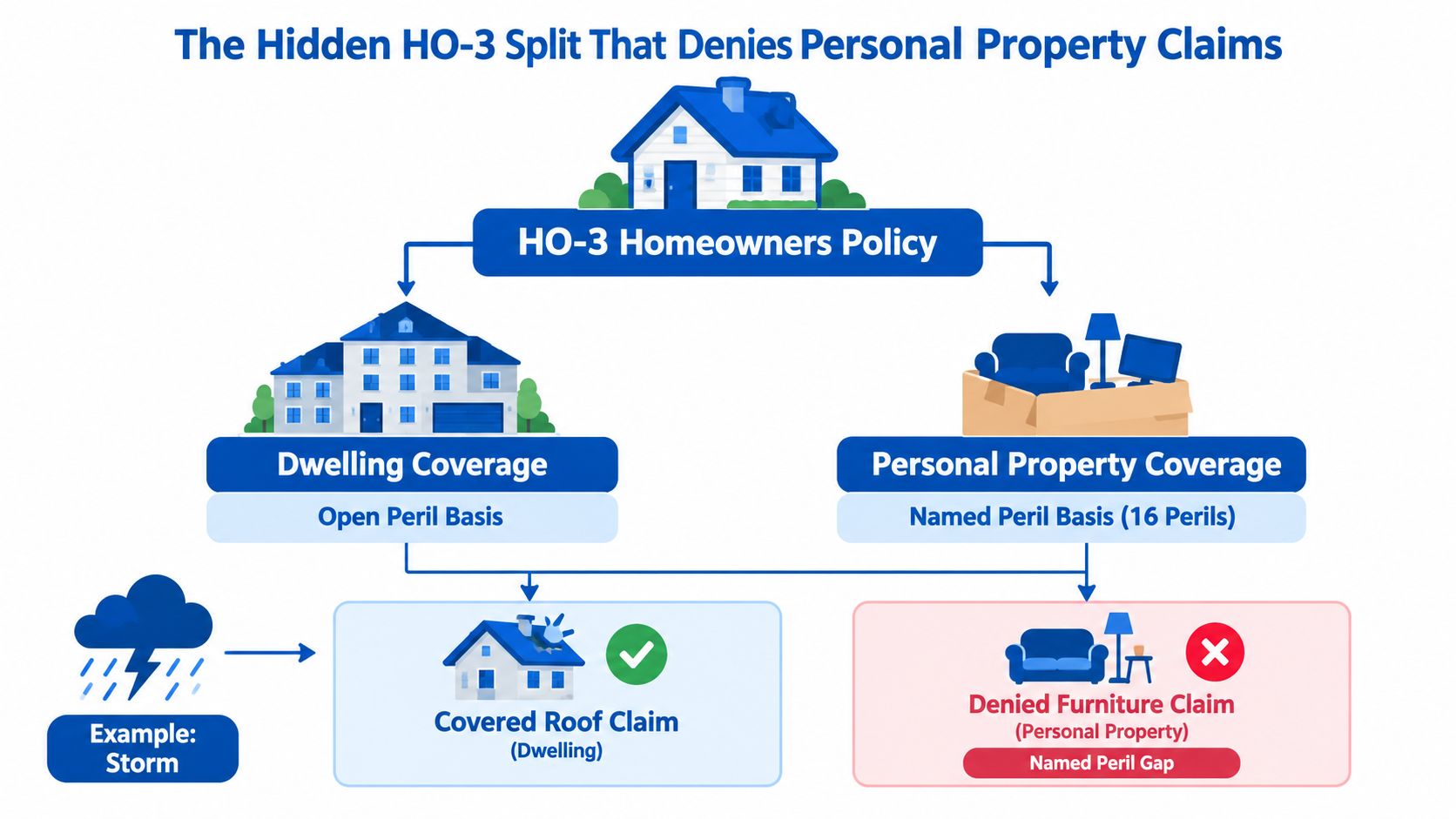
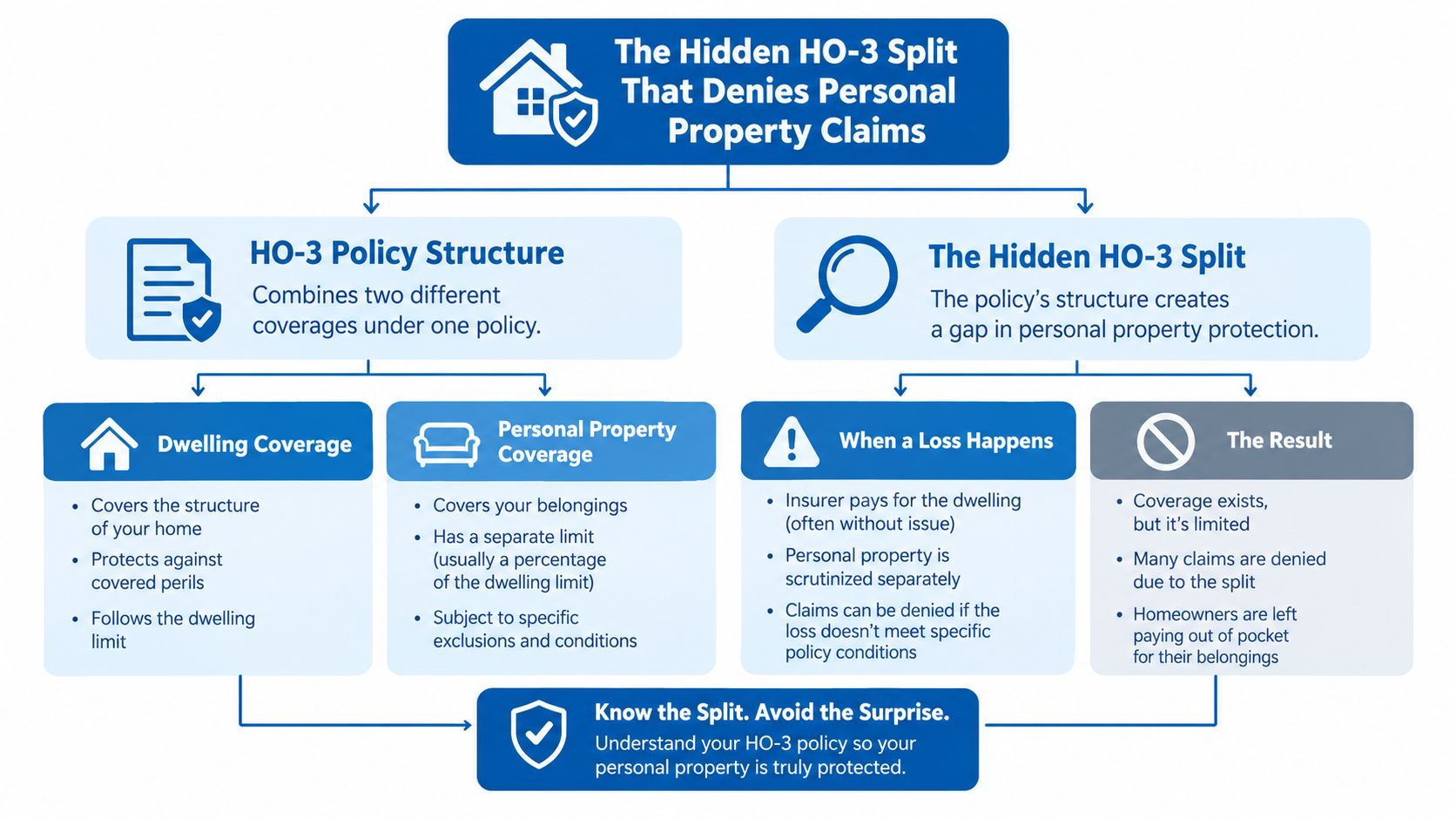
The standard HO-3 structure creates one of the most misunderstood coverage traps in homeowners insurance. A widely used HO-3 form typically insures the dwelling on an all-risk or open-peril basis, while personal property is covered on a named-peril basis with 16 specifically listed perils. Insurance Geek's explanation of homeowners perils identifies this split and its practical effect.
That means the house and the belongings don't necessarily follow the same proof rules. The roof, framing, and attached building components may receive open-peril treatment. Furniture, electronics, clothing, and other contents may require the homeowner to show that the damage resulted from one of the listed perils.
One event can create two coverage arguments
Suppose wind damages the roof and rain enters the bedroom. The carrier may inspect the roof under dwelling coverage, then analyze the damaged furniture under Coverage C. The homeowner may receive payment for covered structural repairs while the carrier argues that the furniture damage resulted from an unlisted water event, seepage, or another excluded mechanism.
The same problem can affect commercial property. A business owner may have broad building coverage but narrower terms for inventory, tools, equipment, or stored records. A fire may clearly damage the building, while smoke contamination to business contents requires a separate analysis of the applicable peril and any special limitation.
The insurer's adjuster may call this a routine coverage distinction. For the policyholder, it can create a major financial gap. The claim should be divided by property type before anyone accepts a blanket conclusion.
Audit the contents portion separately
For each damaged item, identify:
- Location: Was it inside the dwelling, in another structure, or at a business premises?
- Cause: Did fire, wind, hail, theft, vandalism, or another event cause the damage?
- Evidence: What photographs, receipts, repair opinions, or reports connect the item to that cause?
- Policy response: Which listed peril, exclusion, endorsement, or sublimit does the carrier cite?
A denial that says “water damage is excluded” may not answer whether wind first created an opening, whether a covered discharge caused the loss, or whether the carrier has analyzed the contents under the correct coverage form. This explanation of contents coverage gaps addresses why a dwelling can have broad protection while personal property remains subject to a named-peril requirement.
For a practical review of documenting and valuing belongings, use this resource on personal property damage. Don't let the carrier treat the dwelling decision as the final answer for everything inside it.
Real Claim Scenarios for Fire Wind Water and Theft
A fire claim often looks favorable under either form because fire commonly appears as a listed peril. The dispute usually moves elsewhere. The adjuster may accept direct burning damage but challenge smoke residue, odor, soot migration, contents contamination, or additional living expenses. Under named-peril coverage, the policyholder still needs to connect those losses to the covered fire. Under open-peril dwelling coverage, the carrier must support any exclusion it applies.
Wind and hail claims create a similar split. A tornado may remove roofing materials, break windows, and allow rain into the home. The carrier may argue that some roof damage resulted from age or maintenance while the water damage came from excluded seepage. The policyholder needs a qualified inspection that separates pre-existing conditions from storm-created openings and traces the resulting interior damage.
Water claims require especially careful causation analysis. A sudden pipe break can produce direct physical damage, while long-term leakage, repeated seepage, sewer backup, flood, mold, or poor maintenance may receive different treatment. A carrier cannot resolve every water claim with the single word “leak.” The investigation must identify the source, timing, path, affected materials, and policy language.
The burden differs sharply between forms. A named-peril contents claim may fail if the homeowner can't connect damaged furniture to a listed event. An open-peril dwelling claim may remain viable unless the insurer proves that a specific exclusion applies. The Fifth Circuit's discussion of all-risk dwelling coverage in Corban v. USAA states that, after the insured establishes accidental direct physical loss, the insurer must prove excluded damage by a preponderance of the evidence in that case.
Mixed-cause damage needs a causation map, not a conclusory label.
Theft and vandalism claims also depend on the form and the facts. A named-peril policy may list theft or vandalism, but the policyholder must establish the event and identify the damaged property. An open-peril form may provide broader protection for accidental physical loss, yet exclusions, vacancy provisions, security conditions, and special limits can still control the outcome.
In North Carolina and Virginia, storms frequently produce overlapping wind, rain, tree, and contents damage. Preserve the sequence of events. The first visible condition after the storm can be more useful than a later inspection after emergency repairs, drying, or debris removal.

How to Read Your Policy and Test Whether a Loss Is Covered
Don't begin with the adjuster's summary. Begin with the policy packet. The declarations page identifies the insured property, policy period, coverage limits, and endorsements, but it doesn't provide the complete coverage analysis.
Read the contract in a fixed order
Declarations page: Confirm the address, effective dates, dwelling limit, personal property limit, deductibles, and listed endorsements. A missing endorsement can change the dispute.
Insuring agreement: Find the promise to pay for covered direct physical loss. Determine whether the relevant property uses open-peril or named-peril wording.
Definitions: Look for terms such as “loss,” “physical loss,” “wear and tear,” “water damage,” “flood,” and “surface water.” Definitions can narrow or expand how the carrier characterizes the event.
Exclusions: Read the full exclusion, including anti-concurrent-causation language, ensuing-loss wording, exceptions, and references to endorsements. Never rely on a one-line adjuster explanation.
Endorsements: Check whether an endorsement adds coverage, changes a limitation, modifies a deductible, or replaces standard wording.
Deductibles and limits: Separate the applicable deductible from the amount of damage. Then check sublimits for categories such as jewelry, electronics, business property, or additional living expenses.

Create a simple loss worksheet with the date, weather or event conditions, first discovery, source of damage, affected rooms, affected belongings, emergency work, and continuing damage. Photograph conditions before demolition whenever safety permits. Keep invoices, receipts, contractor scopes, moisture documentation, and communications with the carrier.
A named-peril claim should answer, in plain language, “Which listed peril caused this item's damage?” An open-peril claim should answer, “What accidental physical loss occurred, and what exact exclusion does the carrier rely on?” Those are different questions, and a generic denial may answer neither.
For a deeper policy-reading reference, review this guide to reading an insurance policy. Treat the policy as a contract, not as a brochure. If the carrier cites an exclusion, demand the exact form, page, paragraph, and factual basis for applying it.
How to Fight a Denied or Low Ball Claim and Get Help in NC and VA
A denial or low-ball offer isn't the end of the claim. It is the point where the policyholder must stop relying on informal assurances and start building a documented coverage dispute.
Give prompt notice as required by the policy, protect the property from further damage, and preserve evidence. Mitigation doesn't mean surrendering control to the carrier's preferred vendor. It means taking reasonable steps to prevent additional harm while documenting what existed before emergency work began.
Then compare the carrier's scope with an independent inspection and estimate. Identify every omitted room, damaged material, contents item, code-related repair, and necessary related expense. If the carrier says an exclusion applies, respond in writing with the cause evidence and the policy language supporting coverage. Under open-peril wording, require the insurer to identify and prove the exclusion rather than asking the homeowner to prove that every conceivable cause is covered.
A verbal denial is not a complete claim position. Ask for the written policy basis and the facts supporting it.
A licensed public adjuster can help when the loss is complex, the carrier has separated damage into competing causes, the estimate is incomplete, or the adjuster has undervalued repairs and contents. Public adjusters represent the policyholder, not the insurance company. Their work may include inspection, documentation, scope preparation, estimating, policy analysis, and communication with the carrier. Claim management services for disputed property losses can be useful when the file has stalled or the insurer's position doesn't match the physical evidence.
For North Carolina and Virginia homeowners, bring in help before signing a release, accepting a final payment, or allowing a partial estimate to define the entire loss. Business owners should also protect separate building, contents, equipment, inventory, and income-related components under the applicable policy forms.
For The Public Adjusters, Inc. provides no-cost claim reviews and represents homeowners and businesses in North Carolina and Virginia with fire, smoke, water, wind, hail, hurricane, tornado, theft, and vandalism property claims. The firm's licensed public adjusters inspect damage, interpret policy language, prepare documentation and estimates, and communicate with insurers on the policyholder's behalf.
If your carrier has denied, delayed, or undervalued a named-peril or all-risk property claim, contact For The Public Adjusters, Inc. for a policy-focused review of the coverage form, exclusions, damage scope, and proof burden. Have your water damage claim questions answered at NO COST. Call 919-400-6440 to speak with a licensed Public Insurance Adjuster or Contact Us here with questions. WE Work For YOU… NOT Your Insurance Company!