
An insurance claim dispute is what happens when you, the policyholder, have to formally fight your insurance company’s decision on your property damage claim. This fight usually kicks off because of a denial, an insultingly low settlement offer, or a ridiculous delay in payment after you’ve suffered a covered loss to your home or business.
You have every right to challenge their decision and get the money you’re owed. This isn’t about asking for a favor; it’s about demanding what you paid for.
Your Insurer Said No. Now What?
It’s a gut-punch moment for any home or business owner. You’ve faithfully paid your premiums, year after year, trusting your insurance company would have your back when disaster strikes your property.
Instead, you’re holding a denial letter full of confusing jargon or an offer that wouldn’t even begin to cover the repairs. Let me be clear: this is not an accident. It’s a strategy.
Big insurance carriers like State Farm and Allstate are massive, profit-driven corporations. Their business model often involves collecting premiums and then finding ways to lowball, delay, or deny legitimate claims. Their company adjusters are trained to do one thing: protect the company’s bottom line. That almost always means paying you as little as legally possible. They bank on your shock, confusion, and unfamiliarity with the claims process, hoping you’ll just give up and accept their first lowball offer.
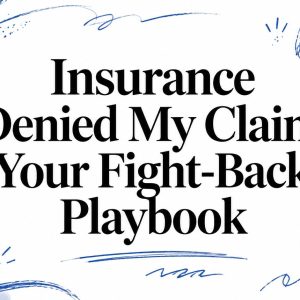
This graphic really captures the journey from that initial shock to becoming a prepared fighter for your claim.

The most important thing to see here is that their “no” is not the end of the story. It’s the starting bell for the real fight to hold them accountable.
The Reality of the Insurance Industry
You have to understand the battlefield. Insurance companies are under constant pressure from rising claim costs. A big part of this is something the industry calls ‘social inflation’—basically, juries are handing out bigger awards in lawsuits, and legal tactics are getting more aggressive. You can get more background on these industry trends at aon.com.
This pressure makes insurers dig in their heels and fight policyholders like you even harder.
You are not just a customer; you are one party in a binding contract. When the insurance company breaks its promise, you have every right to dispute their decision and force them to honor the terms you paid for.
Pivoting from Policyholder to Advocate
The first and most critical move is to change your mindset. Immediately. You cannot accept their decision as the final word.
You have to switch from being a passive policyholder to an active advocate for your own claim. This means understanding, right now, that the company adjuster is not on your team. They are your opponent in a negotiation, plain and simple.
This mental shift means getting organized, getting educated, and getting persistent. To get started on the right foot, take a look at our detailed guide on how to appeal an insurance claim denial. Learning their playbook and preparing your counter-moves is how you turn a frustrating denial into a successful settlement.
Building an Unshakeable Case Against Your Insurer
To win a fight against your insurance company, you can’t just tell them they’re wrong. You have to prove it with overwhelming, undeniable evidence.
Let’s be clear: big insurers like State Farm and Allstate have armies of adjusters and lawyers. Their job is to pick your claim apart and find every possible reason to pay you less. Your job is to build a fortress of proof they simply cannot get around.
This goes way beyond snapping a few quick photos on your phone. A winning case is built on meticulous documentation, professional validation from your own experts, and a crystal-clear, chronological record of every single interaction.

Assemble Your Evidence Arsenal
The first step is creating a detailed inventory of every single item that was damaged. For each piece of property, whether it’s a section of drywall in your home or a critical piece of business equipment, you need specific, hard proof.
- Photographic and Video Evidence: Get everything from multiple angles. Take wide shots to show the overall scope of the damage, then get in close for the details. Critically, don’t just document the damage itself—document the cause if you can, like the burst pipe behind the wall or the gaping hole in the roof.
- Receipts and Proof of Ownership: It’s time to do some digging. Find original receipts, old credit card statements, or even user manuals for your high-value items. This proves you owned it and establishes what it originally cost, which is a crucial starting point for valuation.
- A Detailed Timeline: This might be the most powerful tool you have. Create a simple log of events. Start with the date the damage happened, and from that moment on, record every single communication with the insurance company. Note the date, time, who you spoke with, and a summary of what was said.
Get Independent Validation, Not Theirs
Your insurance company will send out their adjuster—an employee who works for them, not you. They might also “recommend” contractors from their preferred list. Politely decline and get your own independent estimates from reputable, local contractors that you trust.
These third-party estimates from professionals who aren’t on the insurer’s payroll provide a realistic, boots-on-the-ground cost for repairs. They serve as a powerful counterpunch to a lowball offer.
A common tactic is for an insurer’s “preferred vendor” to write an estimate that conveniently aligns with the low settlement amount the company wants to pay. Always get your own quotes.
With natural catastrophes on the rise, the volume and cost of claims are exploding. In the first half of 2025 alone, insured losses hit approximately USD 80 billion worldwide. That immense financial pressure gives insurers more incentive than ever to underpay claims, making your independent evidence even more critical. You can read more about this in the global insurance outlook on ey.com.
Case Study: The Power of Proof
Think about a business owner in North Carolina whose commercial kitchen was hit by a major fire. The insurer’s first offer was a pathetic $80,000, which would barely cover the cost of new appliances, let alone the extensive repairs.
Feeling cornered, the owner hired a public adjuster. This adjuster meticulously documented everything: the soot damage that had crept deep inside the ventilation system, the heat damage to electrical wiring hidden inside the walls, and the true replacement cost of specialized cooking equipment.
Armed with detailed contractor estimates and an exhaustive inventory, the public adjuster reopened negotiations. The final settlement was over $250,000—more than three times the insurance company’s initial offer. This victory wasn’t won with angry phone calls. It was won with organized, irrefutable evidence. Knowing how to negotiate with an insurance adjuster is key, and it all starts with having the facts locked down on your side.
The Policy Language They Weaponize Against You
Insurance policies are dense and confusing for a reason. It’s a deliberate strategy. The major carriers know that if you’re overwhelmed by jargon and convoluted clauses, you can’t fight back effectively when their adjuster shows up to twist the meaning of your contract.
An insurance claim dispute almost always comes down to a few key words and phrases they are banking on you not understanding. This calculated confusion can easily cost you tens of thousands of dollars on a homeowner or business claim.

Key Terms Their Adjusters Love to Twist
Your policy is a legally binding contract. Every single word matters. The company adjuster—the one who seems so helpful—is trained to use specific phrases to slash your payout. You need to know what these terms actually mean, not what the insurance company wants them to mean.
Here are a few of the most commonly abused terms:
- Actual Cash Value (ACV) vs. Replacement Cost Value (RCV): This is a classic. ACV is what your damaged property was worth a moment before the loss, including depreciation (wear and tear). RCV is the real-world cost to replace that property with new, similar materials today. Adjusters will apply outrageous depreciation to drive down the ACV payout, leaving you with a massive financial gap to cover the actual cost of rebuilding.
- Exclusions: This is the part of your policy that lists what isn’t covered. Insurers are notorious for stretching these definitions to their breaking point. For example, they might deny a claim for water damage caused by wind-driven rain during a hurricane by calling it a “flood,” which is a common exclusion. It’s a bait-and-switch tactic.
- Duties After Loss: This clause outlines your responsibilities after a disaster, like protecting the property from further damage and providing documentation. If you miss a single, tiny step, the adjuster may try to use it as a reason to deny your entire claim, even if it’s a perfectly legitimate loss.
This isn’t just happening here and there. As claims become more complex, especially with major business interruptions and climate-related disasters, insurers have doubled down on these aggressive tactics. It’s gotten so bad that insurance claims are now the second most litigated category in the English High Court, a trend you can read more about in this analysis of shifting trends in insurance disputes on wolterskluwer.com.
Insurance companies often rely on a playbook of delay-and-deny tactics. Knowing what to expect is the first step in fighting back effectively.
Common Insurance Company Tactics and Your Counter-Moves
This table breaks down some of the most common maneuvers used by insurance companies to minimize your payout and provides clear, actionable ways you can respond.
| Insurance Company Tactic | What It Looks Like | Your Counter-Move |
|---|---|---|
| The Lowball Offer | You receive a settlement offer that is shockingly low and won’t come close to covering your actual repair or replacement costs. | Get your own independent estimates from reputable, local contractors. Present these competing bids to the adjuster in writing. |
| Delay, Delay, Delay | The adjuster goes silent, doesn’t return calls, or keeps asking for the same documents over and over again. | Document every interaction. Send certified letters demanding a response by a specific date. Mention you are aware of your state’s prompt payment laws. |
| Misrepresenting the Policy | The adjuster tells you something isn’t covered, citing a vague exclusion or misinterpreting a key term like ACV. | Request their reason for denial in writing, citing the specific policy language they are using. This forces them to go on record. |
| “Preferred” Contractor Pressure | They insist you use one of their “network” or “preferred” contractors, who often do cheap, subpar work to keep the insurer happy. | You have the right to choose your own contractor. Politely decline and state you will be using a contractor you trust to do the job right. |
By anticipating these moves, you take back control of the process and show the insurer that you won’t be easily intimidated.
A landmark California case, Brandt v. Superior Court, established a powerful precedent that every policyholder should know. The court ruled that if an insurer acts in bad faith by wrongfully denying or underpaying a claim, the policyholder can recover the attorney’s fees they spent fighting to get the benefits they were owed.
This ruling is a huge deal. It puts real financial consequences on the table for insurers who think they can get away with deliberately misinterpreting their own policies.
Your policy is your most powerful weapon in this fight. The moment you start speaking their language and challenging their interpretations, the power dynamic shifts. You’re no longer a victim; you’re an informed policyholder demanding the full coverage you paid for.
Why You Need a Public Adjuster in Your Corner
When your property gets hit, your insurance company sends out their adjuster. Let’s be clear about who this person is. They work for the insurance company. Their loyalty is to their employer’s bottom line, not to your recovery.
Their job is to evaluate the damage, but they’re doing it through a lens of minimizing the payout. It’s a fundamental conflict of interest. How can you expect a fair shake from someone whose performance is judged by how little their company has to pay you? You can’t.
This is exactly why you need a public adjuster fighting for you.

A public adjuster is a state-licensed professional who works for one person and one person only: you, the policyholder. They are your advocate, your expert, and the person who finally levels the playing field against a massive insurance corporation.
Leveling the Playing Field
Think about it. The insurance company has a team of experts—adjusters, engineers, lawyers—all focused on protecting their financial interests. A public adjuster brings that same level of expertise to your side of the fight. They know the policy language inside and out, they see the corners the company adjuster tries to cut, and they know how to build a claim based on the real scope of your loss.
Here’s how they turn the tables:
- A Brutally Thorough Re-Inspection: Your public adjuster conducts their own exhaustive inspection, digging deep to find damage the company adjuster conveniently “missed” or ignored.
- Expert Policy Analysis: They tear apart your policy from your perspective, finding every ounce of coverage you’re entitled to instead of looking for excuses to deny it.
- A Rock-Solid Damage Estimate: They build a detailed, line-item estimate for repairs using real-world local costs for labor and materials. This isn’t a guess; it’s a real number that stands up against the insurer’s lowball offer.
- Aggressive Negotiation: They take over all the brutal back-and-forth with the insurance company. You’re out of the fight, and they’re in it, negotiating from a position of strength to get you a fair settlement.
It’s crucial to understand what they bring to the table. For a deeper look, check out our guide on what a public adjuster is and how they help policyholders.
Case Study: A Fight and a Win
Picture a family in coastal North Carolina after a hurricane ripped through their town. Their insurance carrier, a huge national company, sent out an adjuster who rushed through the inspection and slapped an offer of $75,000 on the table. The family was devastated and felt pressured to take it.
Something felt wrong, so they hired a For The Public Adjusters. The PA immediately brought in an engineer and found massive structural damage to the foundation that the insurance company’s guy had completely overlooked. He also uncovered hidden water damage festering behind the walls that demanded a full remediation.
After documenting every last bit of damage the insurer ignored and building a brand new, comprehensive claim, the public adjuster went to work. The final negotiated settlement wasn’t $75,000. It was over $300,000. That’s the power of having a real expert in your corner.
This story isn’t an exception; it’s what happens when you have a professional who is 100% committed to your recovery, not the insurance company’s profits. In a dispute, a public adjuster isn’t a cost—it’s an investment in getting every single dollar you are owed.
Escalating Your Dispute When They Refuse to Pay
So, you’ve laid out a rock-solid case, armed with photos, reports, and estimates. But the company adjuster is still refusing to budge on a fair settlement.
This is an infuriatingly common roadblock. It’s a deliberate strategy designed to frustrate you into giving up. When polite conversation hits a wall, it’s time to stop talking and start escalating. This isn’t about yelling or making empty threats; it’s about strategically turning up the heat and showing the insurer you’re dead serious about getting what you’re owed.
Draft a Formal Demand Letter
Your first real power move is to send a formal demand letter. Forget email. This is a meticulously crafted legal document that puts your entire case on paper. It needs to be professional, firm, and packed with facts.
Clearly state the amount you are demanding and the legal basis for your claim. Reference the specific language in your policy that supports your position, attach your contractor’s estimate as evidence, and give them a hard deadline to respond—usually 15 to 30 days.
Send it via certified mail. This creates an undeniable legal record that they received your demand, a critical piece of evidence if you need to take things further.
Bring in the Regulators
If your demand letter gets ignored or you get another lowball offer, your next call is to your state’s Department of Insurance (DOI). Every single state has one of these regulatory bodies whose job is to police insurance companies. Filing a complaint is free, and it’s a potent way to get their attention.
Once you file, a DOI investigator will formally contact your insurer to demand an explanation for how they’ve handled your claim.
While the DOI can’t force your insurer to write a check for a specific amount, a formal complaint instantly puts the company on the defensive. They now have to justify their stonewalling to a government regulator, which is often all the motivation they need to finally offer a fair settlement.
Use the Policy’s Own Rules Against Them
Buried in the fine print of your policy are dispute resolution clauses you can use to force their hand. The appraisal clause is one of the most powerful tools available.
If the disagreement is over the amount of the loss (the value of the damages), either you or the insurer can demand appraisal. Here’s how it works:
- You hire your own independent, expert appraiser.
- The insurance company hires its own appraiser.
- Those two appraisers agree on a neutral third party, called an umpire.
- A settlement amount agreed upon by any two of those three is legally binding.
This process yanks the decision-making power away from the stubborn company adjuster and puts it into the hands of impartial experts. It’s almost always faster and cheaper than filing a lawsuit. Some policies also allow for mediation, where a neutral mediator helps you and the insurer negotiate a resolution.
Before taking the next step, it helps to see your options laid out clearly.
Dispute Escalation Options At a Glance
Here’s a quick breakdown of your primary escalation paths, what situations they’re best for, and what you can realistically expect from each.
| Escalation Method | Best For | Potential Outcome |
|---|---|---|
| Formal Demand Letter | Initial disagreements over settlement amount or coverage. | Puts your claim on the legal record; often prompts a more serious settlement offer. |
| State Dept. of Insurance | Unresponsive adjusters, clear policy violations, or bad faith tactics. | Regulatory pressure on the insurer, potential for fines against them, and a fair settlement. |
| Appraisal Clause | Disputes only over the cost of repairs or value of the loss. | A legally binding settlement amount determined by independent experts. |
| Mediation | Complex disputes where negotiation is still possible. | A mutually agreed-upon settlement, but not a binding decision. |
| Lawsuit | Clear evidence of bad faith or breach of contract; all other options failed. | A court-ordered judgment for the claim amount, plus potential damages for bad faith. |
Each of these tools serves a specific purpose in the fight for a fair payout.
When even these steps fail, or if you have clear evidence the insurer is acting in bad faith—deliberately lying about your coverage, for example—it’s time to call an attorney who specializes in fighting insurance companies. Legal action is the final backstop, the ultimate way to hold them accountable for breaking the promise they made to you in the policy.
Burning Questions About Fighting Your Insurance Company
If you’re in the middle of a claim dispute, it’s easy to feel like you’re completely on your own. You’re not. The frustrating, infuriating questions running through your head are the same ones we hear every single day from homeowners and business owners just like you.
Here are some of the most common questions—with the straight answers you won’t get from your insurer.
How Long Do I Have to Fight a Claim?
The clock is ticking, and your insurance company is counting on you to run out of time. Every state has a strict deadline for filing a lawsuit against an insurer, which is known as the statute of limitations.
This deadline can be a few years or, in some cases, just one year from the date of loss. Worse, the insurance company can bury language deep in your policy that shortens that deadline even further.
Miss this deadline, and it’s game over. Your right to recover a single dime is gone forever, no matter how obvious it is that they owe you. You have to check your policy for these deadlines and act fast. If you’re even remotely unsure, you need to get a professional involved immediately to protect your rights.
Is My Insurance Company Acting in Bad Faith?
“Bad faith” isn’t just a term for terrible customer service. It’s a legal grenade. It means your insurer didn’t just deny or underpay your claim—they did so without any reasonable justification for their actions.
The big carriers are masters at walking right up to the line, but sometimes they trip and fall right over it.
The classic signs of bad faith are hard to miss once you know what to look for:
- Endless Delays: They drag their feet for months, demanding the same documents over and over, hoping you’ll just give up.
- A Joke of an Investigation: Their “adjuster” spends 15 minutes at your heavily damaged property and claims to have seen everything.
- Twisting the Policy Language: They take a single phrase out of context to deny a loss that any reasonable person can see is clearly covered.
- Outright Intimidation: The adjuster hints that if you hire a public adjuster or an attorney, they’ll drop your coverage at renewal.
Document every single one of these tactics. Hard proof of bad faith can be a powerful weapon, sometimes leading to damages far beyond the original value of your claim.
Can I Reopen a Claim If I Find More Damage Later?
The short answer is yes, but get ready for a bare-knuckle brawl. Policies generally allow you to file a supplemental claim if you discover additional damage directly linked to the original event after you’ve already cashed a check.
Maybe you find extensive mold hiding behind a wall weeks after a water leak repair, or an engineer discovers foundation cracks that weren’t obvious right after the storm.
The fight is all about proving the new damage isn’t from some new, unrelated event. You have to move quickly and document everything that connects the new discovery back to the original loss. Insurers will almost always resist, which is exactly why getting a public adjuster to manage the reopening is critical. We know how to build the case and force them to pay.
Will Fighting My Claim Make My Premiums Go Up?
This is the biggest scare tactic in the insurance industry’s playbook. Let’s be perfectly clear: your premium is likely to go up because you filed a claim, not because you disputed their ridiculously low offer. Any claim, paid or not, can flag you as a higher risk in their eyes.
You should never, ever accept a garbage settlement because you’re afraid of a premium increase. The thousands of dollars they are trying to cheat you out of will almost always be more than any potential rate hike.
It is your absolute right to demand the full and fair amount you are owed under the contract you paid for. Don’t let them bully you into accepting less.
How can I effectively challenge an insurer's use of the "Gradual Damage" or "Lack of Maintenance" exclusion?
You challenge this by commissioning a forensic expert report (e.g., structural engineer or hydrologist) that focuses on the proximate cause of loss. This report must technically prove the failure was the result of a sudden event (e.g., latent defect, sudden pipe burst) rather than long-term neglect.
What specific documentation should I use to legally invalidate a low settlement offer?
To legally invalidate a low offer, you must submit a detailed counter-demand including a line-by-line Xactimate estimate (prepared by a Public Adjuster), a full Proof of Loss statement, and a formal letter citing the specific policy sections and endorsements that support your higher valuation.
What is the critical difference between a "denial of claim" and a "dispute over amount," and why does it matter?
A denial means the insurer claims zero coverage (policy violation or exclusion). A dispute over amount means coverage is acknowledged, but the cost is challenged. This difference matters because a dispute over amount allows for a mandatory Appraisal option, which is often faster than litigation.
How does the Appraisal Clause mechanism work as a powerful solution for claim disputes?
The Appraisal Clause is a contractual right for disputes over only the value of damage. Both parties hire an independent appraiser, who then jointly selects an impartial umpire. The final decision agreed upon by two of the three parties is binding and often results in a full, fair settlement without litigation. Click Here or more on the Insurance Appraisal Process.
When should I pivot from direct negotiation to filing a complaint with the State Department of Insurance (DOI)?
ou should pivot to the DOI when the insurer exhibits potential bad faith practices—such as unreasonable delay, refusal to communicate, failure to conduct a timely investigation, or refusal to acknowledge a clear policy provision. A Public Adjuster often uses a DOI complaint as leverage.
What is a "Reservation of Rights" letter, and how does a Public Adjuster counteract it?
A Reservation of Rights (ROR) is a letter where the insurer investigates the claim while reserving the right to deny it later. A Public Adjuster counteracts this by providing immediate, undeniable documentation that satisfies all conditions of the policy, narrowing the insurer's window for technical denial.
How is a Public Adjuster's estimate different from a contractor's estimate in a claim dispute?
A Public Adjuster's estimate is a legally defensible document based on insurance standards (Xactimate), including line items for temporary repairs, engineering fees, depreciation schedules, and code upgrades. A contractor's estimate focuses primarily on the cost of physical construction only.
If my claim dispute involves Additional Living Expenses (ALE), how can a Public Adjuster ensure full payment?
The Public Adjuster justifies ALE payment by proving the home is functionally uninhabitable and calculating the necessary and reasonable cost to maintain your pre-loss standard of living. They submit meticulously organized receipts and projections, often countering insurer attempts to cut off ALE prematurely.
Can I recover payment for required Code Upgrades and Ordinance & Law changes in a disputed claim?
Yes, provided you have the Ordinance or Law endorsement on your policy. A Public Adjuster ensures the insurer acknowledges and pays for legally required upgrades (e.g., new electrical wiring, foundation changes) that are necessary to bring the repaired property up to current building codes.
When should I stop negotiating with my insurance company and consider litigation (hiring an attorney)?
You should consider litigation only after exhausting all contractual options (negotiation, appraisal, mediation) with the help of a Public Adjuster. An attorney focuses on legal remedies, which can be costly and slow; a PA focuses on the claims process, which is often faster and less expensive.
What specific credentials should I look for when hiring a Public Adjuster for a claim dispute?
Look for a PA who has a valid state license, high-volume experience with your specific dispute type (e.g., fire, hail, water), and verifiable successful outcomes (reviews) in your local region. Membership in professional organizations like NAPIA is also a strong indicator of expertise.
When your insurance company is breaking its promises, you don’t have to take them on alone. The state-licensed experts at For The Public Adjusters, Inc. work for you, not the insurance company. We take over the entire dispute process to get you the settlement you’re actually owed.
Contact us today for a no-cost claim review at https://forthepublicadjusters.com.