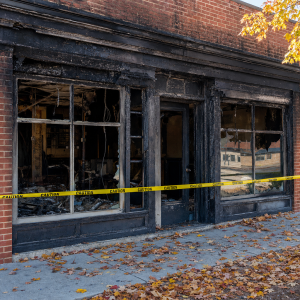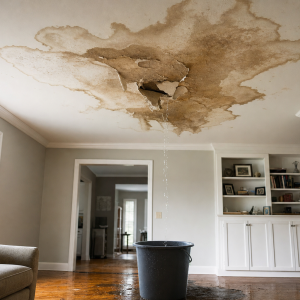

You've reported the flood, watched an adjuster photograph the obvious damage, and received a payment that doesn't come close to making the home whole. Then the paperwork arrives, filled with technical language about exclusions, causation, limits, and proof. You're left wondering whether that first payment is a final settlement, whether hidden damage can still be claimed, and whether FEMA will help if the insurer pays only part of the loss.
A FEMA flood insurance claim isn't handled like an ordinary homeowners claim. Most NFIP policies are administered through a Write Your Own insurer, or through NFIP Direct, and the deadlines are strict. The adjuster's estimate isn't automatically the last word, a partial payment isn't necessarily a complete resolution, and an appeal won't repair every mistake made earlier in the process.
Table of Contents
- Why NFIP Adjusters Low-Ball Flood Damage Claims
- Documenting Flood Damage Before the Adjuster Arrives
- The Proof of Loss Deadline Trap
- When to Hire a Public Adjuster for NFIP Disputes
- How to Appeal a Denied FEMA Flood Insurance Claim
- Navigating FEMA Disaster Assistance and Claim Overlaps
Why NFIP Adjusters Low-Ball Flood Damage Claims
Your frustration is justified when an NFIP adjuster arrives, measures a visible water line, lists a few damaged items, and produces an estimate that ignores what it takes to restore the property. The common assumption is that the adjuster's first estimate represents the value of the loss. It doesn't. It represents the adjuster's initial interpretation of the policy, the evidence, and the scope of damage.
The adjuster usually works for the WYO insurer handling the policy or through NFIP Direct. The Government Accountability Office explains how NFIP flood claims are assigned and inspected, including the role of the flood claims adjuster in determining what damage the policy covers. That process gives the carrier control over the first scope of loss, while the homeowner is often dealing with contaminated materials, displaced family members, emergency contractors, and incomplete information.
The system has a built-in distance between the policyholder and the person making the estimate. That distance matters.
The first estimate often misses the real scope
A quick inspection can overlook damage that isn't obvious from across the room. Floodwater may wick upward through drywall, insulation, flooring, cabinets, and trim. Moisture can remain behind finished surfaces, while contamination and saturation affect materials that look intact at first glance.
That doesn't mean every hidden condition is automatically covered. It means the adjuster must evaluate the evidence rather than treating visible staining as the full boundary of the loss. A scope that stops at the highest visible line can leave out necessary demolition, material replacement, electrical components, mechanical systems, and contents affected by floodwater.
Watch for these recurring weaknesses in an initial estimate:
- A narrow waterline measurement: The estimate may stop at visible staining without addressing upward wicking or materials that absorbed water above the obvious line.
- Missing contents: Furniture, appliances, electronics, flooring, stored property, and personal items may receive little attention unless you create a detailed inventory.
- Minimal repair assumptions: An estimate may price cosmetic cleaning when the property requires removal, drying, replacement, testing, or rebuilding.
- Unclear causation decisions: The carrier may characterize damage as pre-existing, wear-related, or unrelated to flooding without explaining the evidence supporting that conclusion.
- Incomplete emergency work: Necessary pumping, drying, stabilization, debris handling, and temporary protection may not appear in the first scope.
Flood losses are widespread, not limited to coastal communities. FEMA reports that every state and territory has had flood insurance claims between 1980 and today, and that almost one-third of NFIP claims from 2014 to 2024 came from areas outside mapped high-risk flood zones. Those facts matter to homeowners in North Carolina and Virginia who may have assumed their property was not exposed to serious flood damage. FEMA's flood insurance claim information also shows the long-running scale of the program, with more than 2.7 million claims processed and $87.5 billion paid since 1978.
Practical rule: Treat the first estimate as a position to analyze, not a settlement you must accept.
If floodwater also damaged roofing, siding, or other components through a separate storm-related cause, keep those issues organized and documented independently. A contractor experienced in repairing a wind-damaged roof can help identify storm damage that shouldn't be confused with the NFIP flood scope.
Documenting Flood Damage Before the Adjuster Arrives
The strongest response to a weak estimate is evidence. Don't rely on a conversation with the adjuster to preserve your claim. Create your own record before cleanup changes the scene, and keep that record organized so you can connect every damaged item to the flood.
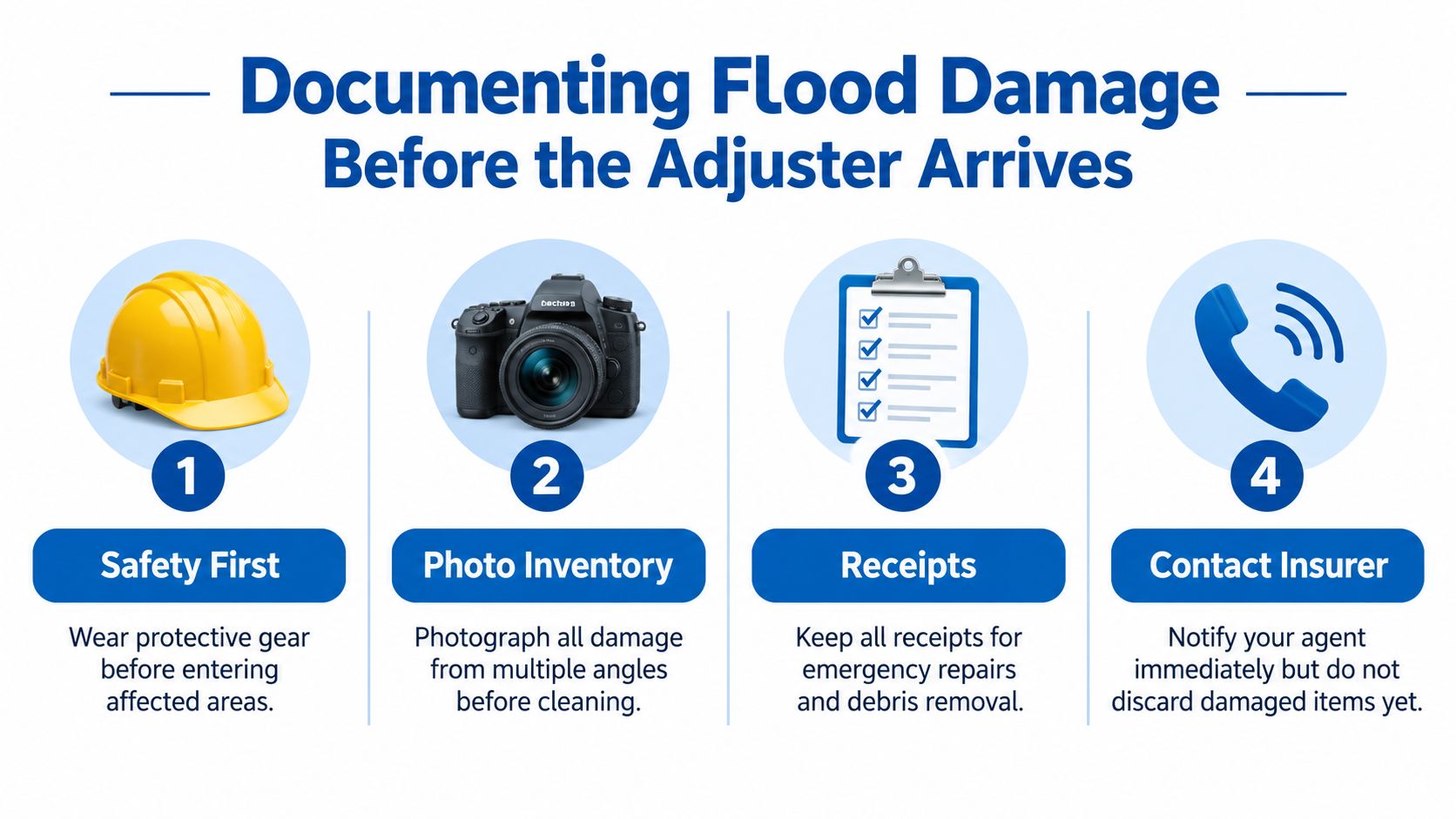
Safety comes first. Floodwater can carry contaminants, damage electrical systems, weaken floors, and create dangerous conditions. Don't enter an unsafe structure merely to take photographs. Once entry is safe, document the property before removing materials or discarding contents.
Follow a strict evidence sequence
Start with wide photographs. Photograph every affected room from multiple corners. Include ceilings, walls, floors, doors, cabinets, appliances, mechanical equipment, and visible floodwater lines. Wide images establish location. Close-ups establish the condition of each material.
Record the waterline. Photograph the highest visible waterline in each room. Use a ruler or measuring tape where possible, and capture the measurement in the image. If the line is irregular, document the highest point and the surrounding area rather than presenting one measurement as the entire scope.
Create a contents inventory. List each damaged item, including its room, description, brand, model, serial number, approximate age, condition, and replacement information. Photograph appliances and electronics with serial numbers visible. For furniture and personal property, take individual photographs instead of relying only on room-wide images.
Preserve physical samples. Before discarding damaged flooring, drywall, insulation, cabinetry, or other materials, keep representative samples when it is safe and practical. Label each sample with its location and the date removed. A sample may help demonstrate saturation, contamination, material type, or the difference between a surface stain and deeper damage.
Notify the insurer promptly. FEMA instructs policyholders to report the loss, photograph and video damage, document floodwater lines and affected property, and prepare an inventory before cleanup where possible. The FEMA claim filing guidance for policyholders and practitioners also identifies the importance of repair estimates, receipts, and supporting documents.
Protect the property without destroying proof
Emergency repairs can be necessary. Stop active leaks, remove standing water when safe, prevent additional damage, and follow professional remediation advice. Keep contracts, invoices, receipts, photographs, moisture records, disposal records, and communications with contractors.
Don't let urgency erase evidence. Before removing a damaged item, photograph it in place, photograph identifying information, describe why it must be removed, and preserve a sample or component if possible. If an item must be discarded for health or safety reasons, keep a written record and ask the adjuster how the carrier wants the evidence preserved.
Your file should contain:
- A room-by-room photo set: Include overview photographs, close-ups, measurements, and images taken before demolition.
- A contents spreadsheet: Record descriptions, identifying information, damage condition, and supporting purchase or replacement documentation.
- A repair file: Keep estimates, invoices, receipts, permits, drying records, and contractor notes together.
- A communication log: Record every call, email, inspection, request for information, payment, and explanation of coverage.
- A temporary housing record: Preserve receipts and correspondence for costs that may relate to the broader disaster recovery process, without assuming the NFIP policy covers every expense.
A verbal report starts the conversation. It doesn't replace the evidence needed to challenge an incomplete scope.
The Proof of Loss Deadline Trap
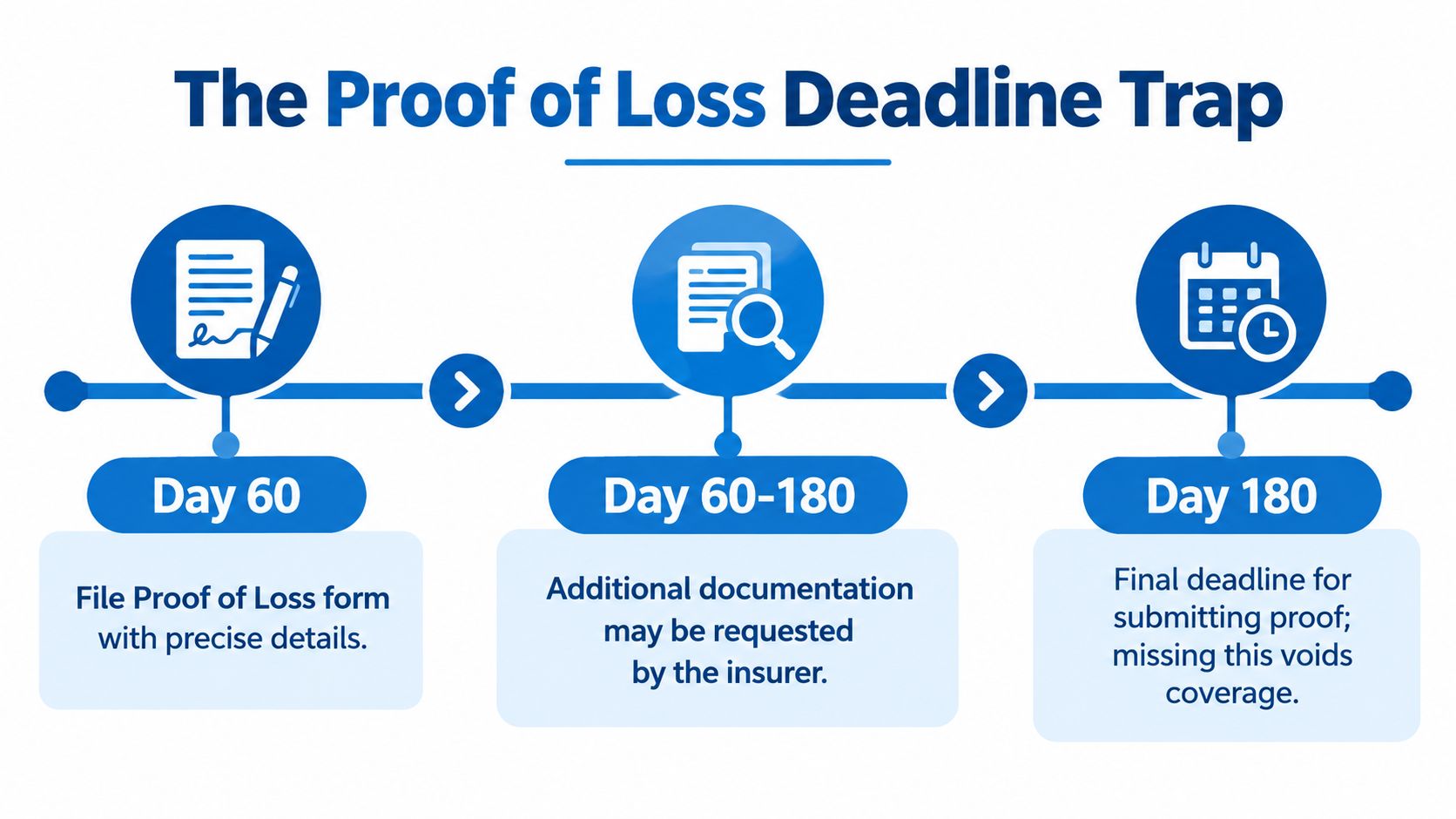
Calling the agent is necessary, but it isn't the same as submitting a formal Proof of Loss. The NFIP requires a signed and sworn Proof of Loss containing specific claim information and an itemized statement of the loss. If you treat the adjuster's estimate as the Proof of Loss, or assume the carrier will complete everything for you, you may surrender control over the amount and description of your claim.
The policy language requires the Proof of Loss within 60 days after the loss, and FEMA identifies the information it must contain. That includes the date and time of loss, cause of loss, ownership interest, other insurance, lienholders, occupancy details, and itemized building and personal-property losses. The form also needs detailed repair estimates, receipts, and supporting documents.
A partial payment is not a clean finish
Many policyholders get trapped at this stage. The insurer issues an advance or partial payment, and the homeowner assumes the claim is moving toward a final settlement. Meanwhile, additional damage remains under investigation, the repair estimate is incomplete, or the adjuster has excluded categories that require a written dispute.
A partial payment doesn't automatically mean the insurer agrees to pay the rest. It also doesn't automatically mean the policyholder has submitted a complete sworn statement for the full loss. Read every payment letter, release, estimate, coverage explanation, and request for information. Identify whether the payment is described as an advance, undisputed amount, partial settlement, or final payment.
Don't sign a document you don't understand merely because you need funds to begin repairs. Ask for a written explanation of what the payment covers and what the carrier says remains disputed.
Build the Proof of Loss around the entire known claim
Prepare the document from your own evidence, not just from the adjuster's scope. Compare the estimate to your photographs, inventory, contractor findings, remediation records, and policy limits. If the adjuster omitted a room, appliance, structural component, or necessary repair operation, address that omission in the supporting materials.
The NFIP Proof of Loss deadline guidance is worth reviewing before you sign anything because a claim can contain several moving parts. Your submission should be precise enough to identify the amount claimed and the items supporting it, while clearly separating known damage from information still being developed.
Your adjuster can help document the loss, but the adjuster isn't your representative.
A homeowner may discover additional damage after demolition. That possibility is exactly why you shouldn't wait passively for the carrier to decide when your claim is complete. Ask the insurer in writing whether an extension or additional submission procedure applies to your situation. Keep proof of delivery for every submission, and retain the signed copy in your claim file.
The consequences of missing a required deadline can be severe. In federal flood claims, paperwork isn't a clerical detail that can always be corrected later. It can determine whether an otherwise legitimate item is considered at all.
When to Hire a Public Adjuster for NFIP Disputes
You don't need independent help for every minor adjustment. You should seriously consider it when the carrier has made the dispute technical, expensive, or difficult to untangle.
A public adjuster represents the policyholder, not the insurer. A state-licensed professional can inspect the damage, organize the documentation, prepare a detailed scope and estimate, interpret policy language, and communicate with the WYO carrier. That doesn't guarantee coverage for every disputed item. It does give you someone whose job is to identify what the insurer's estimate left out.
The difference becomes important when the adjuster says:
- The damage is pre-existing: Ask what evidence supports that conclusion and whether the carrier has separated prior conditions from flood-caused damage.
- Wicking damage isn't covered: The dispute may depend on how materials were affected, what the policy covers, and whether the estimate accurately identifies the damaged components.
- The payment is partial but unexplained: Demand a line-by-line explanation of paid, denied, reserved, and omitted items.
- The scope changes without notice: Compare each estimate revision and preserve earlier versions so reductions don't disappear into a new document.
- The Proof of Loss is incomplete: Get help assembling the itemized amount, supporting records, and sworn submission before the deadline creates a problem.
- The loss involves a large structure or extensive contents: Multiple rooms, systems, and categories of property require a coordinated inventory rather than scattered receipts.
Independent documentation changes the negotiation
An insurer's estimate may use assumptions that look reasonable until someone tests them against the physical property. A public adjuster can compare waterline photographs with demolition findings, match damaged materials to repair operations, and identify where a unit price or labor scope doesn't reflect the actual work required.
That review is especially useful when the first inspection happened before walls, floors, cabinets, or mechanical components were opened. The initial report may describe visible conditions accurately while still failing to capture the full repair sequence.
Read what a public adjuster does in a property claim dispute before hiring anyone. Ask about state licensing, flood claim experience, fees, the scope of services, and whether the professional will handle documentation and carrier communications. Don't choose a representative based only on promises of a particular payout. Choose someone who can explain the policy, the evidence, the deadlines, and the risks in plain language.
An adjuster who says “the insurance company already made its decision” is not giving you useful advice. The right question is whether the carrier explained its decision, applied the policy correctly, and evaluated all available evidence.
How to Appeal a Denied FEMA Flood Insurance Claim
A written denial is not the same as an informal disagreement with an adjuster. The appeal process begins with the denial letter, and the letter controls the deadline. FEMA requires a written NFIP appeal within 60 calendar days of the date on the denial letter. FEMA counts the period beginning the day after the letter date. If the 60th day falls on a weekend or federal holiday, the deadline extends to the next business day. The NFIP appeal rules from FloodSmart explain this calculation.
Don't wait until the deadline approaches. Start by identifying exactly what the carrier denied, whether it denied coverage or only specific items, and whether the payment dispute concerns causation, exclusions, valuation, documentation, or policy limits.
Prepare an appeal that answers the denial
A useful appeal isn't an emotional restatement that the house was damaged. It connects each disputed item to evidence and policy language.
Include:
- The claim and policy identifiers: State the policy number, claim number, property address, loss date, and denial letter date.
- The disputed decision: Quote or accurately summarize each denial reason without changing its meaning.
- The evidence: Attach photographs, measurements, inventories, repair estimates, receipts, remediation records, expert findings, and relevant correspondence.
- The requested correction: Identify the items you believe should be paid and explain the amount claimed for each.
- Proof of delivery: Send the appeal through a method that creates a dated record, and retain the complete submission.
If the carrier partially paid the claim, describe the unpaid items separately. A partial payment can require a detailed dispute even when the overall claim wasn't labeled “denied.” Don't allow the carrier's use of a payment label to hide the practical fact that substantial damage remains unpaid.
A Philadelphia Fed analysis found that only 61% of flood insurance claims were fully settled after 90 days, while nearly 80% received at least partial monetary relief within that period. The same analysis found median initial processing time fell from about 60 days in 2011 to about 20 days starting in 2020. Those figures don't tell you whether your claim is correct, but they show why partial payment and final resolution must be treated as separate questions. The Philadelphia Fed analysis of flood insurance payment timing provides that performance context.
An appeal is a legal and procedural deadline, not a customer-service follow-up.
Filing an appeal doesn't waive Proof of Loss requirements or extend the period for submitting that proof. It also doesn't extend the one-year limit to file suit against the insurer after a written denial, as stated in the NFIP appeal form and policy guidance%20Static%20Fillable.pdf). If the amount is substantial or the denial raises complex federal policy issues, consult qualified legal counsel promptly rather than assuming the appeal process protects every deadline.
Navigating FEMA Disaster Assistance and Claim Overlaps
Flood insurance and FEMA disaster assistance are related, but they aren't interchangeable. FEMA says survivors must report all insurance coverage, and FEMA can't pay for costs that insurance covers. That rule prevents duplicate recovery, but it doesn't mean an insurance delay or incomplete payment automatically eliminates every possibility of disaster assistance.
If the insurer has delayed payment, issued a denial, or paid only part of the claimed loss, preserve the insurer's written documents. FEMA may need the settlement, denial, or lack-of-coverage information to evaluate what remains unpaid. The FEMA guidance on insurance and disaster assistance explains that survivors should provide those documents and contact FEMA again if 30 days have passed without receiving insurance funds.
The practical mistake is waiting in silence while the claim sits in limbo. Notify the appropriate disaster assistance program about the insurance status, explain what the carrier paid and what remains disputed, and keep copies of every submission. Don't report an insurance payment as covering damage that it didn't cover, but don't omit the policy merely because the carrier is moving slowly.
Coordinate the two recovery paths carefully
Use a simple claim-status record showing:
- What the NFIP policy paid: Identify the categories and amounts resolved.
- What remains disputed: Separate denied items, omitted items, pending items, and unpaid portions.
- What FEMA assistance concerns: Match the request to costs not covered by insurance.
- What documents support the gap: Keep the denial, settlement, estimate, receipts, and correspondence together.
For broader planning after a disaster, disaster recovery funding options can help you understand how insurance proceeds and other recovery resources fit together. The goal isn't to collect twice. It's to prevent a delayed or partial insurance payment from making you appear fully compensated when you aren't.
For The Public Adjusters, Inc. helps policyholders assess, document, and dispute NFIP flood claims involving denials, delays, incomplete scopes, and underpayments. Visit For The Public Adjusters, Inc. for claim guidance, and use Have your water damage claim questions answered at NO COST. Call 919-400-6440 to speak with a licensed Public Insurance Adjuster or Contact Us here with questions. WE Work For YOU… NOT Your Insurance Company!