When you first see the damage from a flood, the shock is paralyzing. But what comes next is often a second, more calculated disaster: fighting the very insurance system that was supposed to be your safety net. This guide is your strategy manual for disputing their lowball offer and forcing a fair recovery.
Let’s be blunt. This isn’t just about cleaning up; it’s about gearing up for a battle against the National Flood Insurance Program (NFIP) and its Write Your Own (WYO) partners like State Farm or Allstate. You’re not in this alone.
The Brutal Reality of Disputing Flood Damage Claims
Once the water is gone, the real fight begins. You’re left standing in a home or business soaked in contaminated muck, about to go head-to-head with the notoriously complex and hostile NFIP claims process. This isn’t a simple homeowner’s claim. You’re up against a federal bureaucracy designed to protect its own funds, not you.
The adjusters they send are either from the NFIP directly or from a Write Your Own Company (WYO) like State Farm or Allstate. Don’t let a familiar logo fool you. When it comes to flood insurance, they are operating under the unforgiving rules of the federal government. Their job isn’t to get you back on your feet. It’s to find ways to delay, deny, and underpay your claim. They lowball claims as a standard business practice because they know most people are too overwhelmed to fight back.

A System Rigged Against You
Let’s get one thing straight: the adjuster sent by the NFIP or WYO company is not your friend. They are not there to help you. Their mission is to find any reason—any loophole in the dense policy language—to deny, delay, or drastically underpay your claim. It creates a completely unfair power dynamic from the moment they step on your property.
And these events are becoming terrifyingly more common. Since 2000, flood-related disasters have shot up by 134% compared to the two decades prior, making them one of the most frequent and expensive catastrophes on the planet. Floods now account for a staggering 35–40% of all weather-related disasters. The risk isn’t just real; it’s growing.
You are not a customer they are trying to help. You are a claimant in an adversarial system. The insurance company holds all the power—the confusing policy documents, the teams of adjusters, and the legal firepower—all aimed at one goal: minimizing their payout.
The Ally You Need in This Fight
This is exactly why a public adjuster is your most powerful weapon. A public adjuster works only for you, the policyholder. Their entire job is to level the playing field and dispute the insurance company’s lowball offer. They are state-licensed experts who know the NFIP rulebook inside and out and have spent their careers countering the tactics of companies like State Farm and Allstate.
While you’re focused on the overwhelming task of emergency cleanup and putting your life back together, your public adjuster takes command of the entire claims dispute. They document everything, negotiate aggressively, and fight to get you every single dollar you’re entitled to.
As you navigate this brutal recovery process, it’s also smart to think about the future. Protecting your home from the next flood is critical. You might want to explore better materials by checking out this ultimate guide to waterproof and moisture-resistant flooring.
Why NFIP Flood Claims Are So Difficult to Win
Let’s be blunt: when you dispute a flood damage claim, you’re not dealing with your regular homeowners insurance. You’re stepping into a bureaucratic maze run by the federal government, and the rules are designed to protect their money, not yours.
This is the hard truth about the National Flood Insurance Program (NFIP). It’s not a simple policy; it’s a dense, rigid federal program with a rulebook that can trip up even the most careful homeowner. This is precisely why getting a fair payout for the damage from a flood feels like an uphill battle from the start.
The Write Your Own (WYO) Shell Game
You probably write your flood insurance check to a company you know—State Farm, Allstate, or another big name. They are called Write Your Own (WYO) companies. But here’s the kicker: they are merely administrators for the federal government.
Don’t let the familiar logo fool you. Every decision, every denial, and every dollar is controlled by the NFIP’s iron-clad federal guidelines. This creates a massive, built-in conflict of interest. The adjuster they send to your home isn’t there to help you. Whether they work for the WYO carrier or are a direct NFIP contractor, they serve one master: the federal program. Their job is to minimize the payout.
That adjuster is not on your side. Think of them as a gatekeeper for federal funds, trained to twist every gray area in the policy to favor the insurer. Their mission is to find reasons to deny your claim, not ways to help you rebuild your life.
The Federal Playbook of Denial, Delay, and Lowballing
The NFIP operates from a playbook designed to control costs, which means the process is automatically adversarial. The deadlines are non-negotiable, the rules are unforgiving, and the entire burden of proof is dumped squarely on your shoulders. Forget the consumer protections you might have under state-regulated insurance; this is a federal game with a different set of rules.
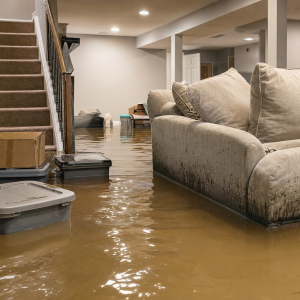
For example, NFIP adjusters love to issue blanket denials for basement damage. They know the policy has strict limitations for basements, so they’ll often deny everything down there, conveniently “forgetting” that crucial equipment like your furnace, water heater, and electrical panels are supposed to be covered. It’s not an oversight; it’s a calculated strategy. They are banking on you not knowing the dense federal code.
Case Study: How a Public Adjuster Fought Back and Won
A North Carolina family learned this the hard way after a hurricane swamped their home. The WYO adjuster came out, took a quick look, and offered a pathetic $55,000. He claimed most of the damage from a flood was in the “uncovered” basement and insisted some structural problems were there before the storm.
Gutted and feeling hopeless, the family hired a public adjuster. Our team didn’t just take the insurer’s word for it. We immediately brought in an independent structural engineer and an industrial hygienist.
Their investigation uncovered the brutal truth: the floodwaters had dangerously weakened the home’s foundation, and toxic black mold was spreading through the walls—all a direct result of the flood. Armed with this undeniable proof, the public adjuster built a new, rock-solid claim. The real cost to make the family whole was over $275,000.
Faced with an expert-backed claim they couldn’t weasel out of, the NFIP caved and paid the full amount. That’s the power of having a real advocate in your corner.
Insurer Tactics That Reduce Your Flood Claim
When your life has been turned upside down by a flood, you expect your insurance company to be a lifeline. But let’s be blunt: when it comes to the NFIP and their WYO partners like Allstate or State Farm, filing a claim isn’t a request for help. It’s the start of a fight.
These companies have a well-oiled machine built for one purpose: minimizing what they pay out. The adjuster they send to your home isn’t your ally. They are a trained professional whose job is to find every loophole and exclusion to protect their company’s profits, not to make you whole after you’ve suffered damage from a flood.
You’re not just dealing with an adjuster; you’re caught in a pincer movement between a massive federal bureaucracy and a for-profit insurance giant. They are aligned against you.
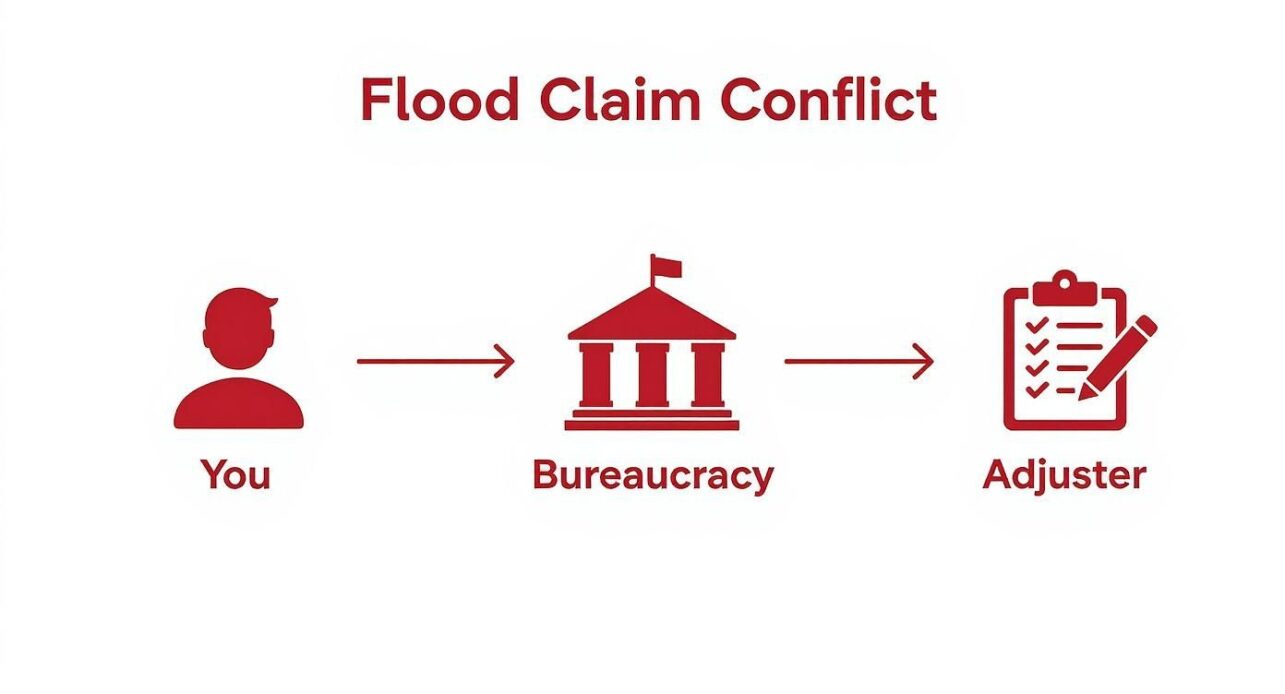
This setup is designed to wear you down. They know you’re exhausted, stressed, and desperate to get back on your feet. They use this against you.
Misinterpreting Policy Language
One of the oldest tricks in their playbook is to weaponize the very policy that’s supposed to protect you. NFIP policies are notoriously dense, tangled messes of federal regulations, exclusions, and limitations. Their adjusters know how to twist this confusing language to their advantage.
They’ll point to some obscure clause to justify denying a huge chunk of your claim. For instance, they might tell you nothing in your basement is covered. What they conveniently “forget” to mention is that the policy explicitly covers essential equipment like your furnace, electrical panels, and water heater. It’s not a mistake; it’s a calculated strategy.
They are banking on you not knowing the fine print. They present their self-serving interpretation as the final word, hoping you’ll be too overwhelmed to challenge them.
Blaming “Earth Movement” and Pre-Existing Issues
If they can’t deny coverage based on policy language, they’ll just blame the damage on something else. This is a classic move. Did the floodwaters crack your foundation? The adjuster will call it “earth movement” and deny it. Did the hydrostatic pressure cause your walls to shift? They’ll label it a “pre-existing structural issue.”
This tactic is particularly cynical. After a quick, superficial look, they’ll declare the damage was there before the storm, without a shred of evidence. Suddenly, the burden of proof is on you to prove the flood was the direct cause—a tough battle when you’re already fighting to keep your head above water.
- Their Claim: “This foundation crack looks old. We don’t cover pre-existing conditions.”
- The Reality: The sheer force of thousands of gallons of floodwater can easily crack foundations and wreck a home’s structure.
- Their Goal: To carve out the most expensive repairs from your claim by blaming them on uncovered perils.
Using Outdated and Unrealistic Pricing
Even when the insurance company admits something is covered, they will fight tooth and nail over the cost. The adjuster’s repair estimate will almost always be insultingly low. They use pricing software loaded with outdated costs for local labor and materials, guaranteeing a lowball number.
They’ll use tools like Xactimate but deliberately manipulate the settings to produce the lowest possible price. Their estimate will conveniently leave out critical steps like mold remediation or upgrades required to meet current building codes. The resulting offer is never enough to properly repair the damage from a flood and restore your property.
Case Study: A Public Adjuster Forces a Fair Payout
A family’s home was gutted by floodwaters. The adjuster sent by their WYO carrier did a quick walk-through and slapped a $40,000 settlement offer on the table, calling it fair and final. The family felt completely defeated.
They decided to get a second opinion and hired a public adjuster. Our team spotted the insurer’s games immediately. The company adjuster had ignored the tell-tale signs of mold creeping behind the waterlogged drywall and completely missed the severe structural damage to the subflooring.
We brought in our own experts—industrial hygienists to test for contamination and structural engineers to assess the foundation. They documented the full extent of the loss. Armed with this undeniable, expert-backed evidence, we went back to the insurer and called them out on their lowball tactics.
Backed into a corner, the insurance company had no choice but to pay what they actually owed. The final settlement was over $250,000. That’s the difference between a patch job and actually having the resources to rebuild your life.
The insurance company has a playbook designed to underpay you. But you don’t have to play their game. The table below shows some of their most common tactics and how a public adjuster systematically dismantles their strategy.
Common Insurer Tactics vs Your Public Adjuster’s Strategy
| Common Insurer Tactic | How a Public Adjuster Fights Back |
|---|---|
| Denies coverage based on a twisted policy interpretation. | Performs an expert policy review and cites specific language that proves coverage, forcing the insurer to honor the contract. |
| Blames damage on “pre-existing conditions” or “earth movement” without proof. | Hires independent engineers and contractors to provide expert reports that prove the flood was the direct cause of the damage. |
| Uses lowball pricing software (Xactimate) with outdated costs. | Builds a new, comprehensive estimate from scratch using current local labor rates and material costs, including all necessary line items. |
| Ignores hidden damage like mold, structural issues, and contamination. | Brings in a team of specialists (hygienists, engineers) to uncover and document the full scope of the loss. |
| Delays the process, hoping you’ll give up and accept a low offer. | Manages all communication, enforces policy deadlines, and applies constant pressure to force the insurer to act. |
This isn’t about getting more than you’re owed; it’s about getting exactly what your policy promises. An experienced public adjuster knows the insurer’s playbook inside and out and has the counter-moves ready to secure a fair settlement.
How to Build an Unbeatable Flood Damage Case
Let’s get one thing straight. Winning a dispute over the **damage from a flood** isn’t about filling out forms. It’s about waging a strategic campaign. You have to build a case so airtight and so undeniable that the NFIP or WYO adjuster has absolutely nowhere to run. This is your battle plan.
The bedrock of your case is an overwhelming mountain of evidence. Forget a few dozen pictures—you need thousands. I’m serious. Document every single thing from every angle you can think of, both tight close-ups and wide shots. Take videos where you walk through and narrate what you’re seeing. Point out the water lines, call out the specific items that are destroyed, and describe how things looked before the flood.
This forensic-level documentation becomes your knockout punch against the insurance company’s inevitable attempts to downplay your loss.
Arming Yourself with Independent Expertise
Never, ever rely on the repair estimates from the insurance company’s adjuster or their “preferred” contractors. Let’s be blunt: these guys have a direct financial incentive to keep the insurance carrier happy, which means one thing—keeping repair costs as low as humanly possible. Their estimate isn’t a fair assessment; it’s their opening shot in a negotiation you didn’t even know you were in.
You need your own ammunition. That means hiring your own trusted, independent, and local contractors to write up their own detailed estimates. These are the pros who know the real cost of labor and materials in your city, and they’ll scope the work based on what it actually takes to restore your property correctly, not just slap on the cheapest patch job.
- Get multiple quotes: You need at least two or three separate, detailed estimates from reputable local builders.
- Insist on itemized details: Demand that every estimate breaks down the costs line by line—materials, labor, permits, everything.
- Factor in code upgrades: A proper estimate from a real contractor will account for any upgrades needed to meet current building codes, something the insurer’s adjuster almost always “forgets.”
Mastering the Critical Proof of Loss Form
The single most critical document in your entire NFIP claim is the Proof of Loss. This isn’t just a form; it’s a sworn statement detailing the exact amount you are demanding as payment. The adjuster is going to push you hard to sign their version, which will be based on their joke of an estimate. Don’t do it.
You have the right to submit your own Proof of Loss, filled out to reflect the actual value of your damages based on your independent estimates. This document has to be perfect—detailed, accurate, and turned in before the strict NFIP deadline. Screwing this up can kill your entire claim. You can find a complete breakdown of this process in our guide on filing an insurance claim for flood damage.
A meticulously prepared Proof of Loss, backed by your own independent estimates and exhaustive documentation, transforms your claim from a simple request into a powerful, evidence-based demand that the insurer cannot easily dismiss.
Success Story: A Business Owner Fights Back
Think about the Virginia business owner whose workshop was wiped out by a flash flood. The WYO adjuster came out, took one look at his specialized equipment, and declared most of it “salvageable.” The settlement offer wouldn’t even cover the structural repairs. When the owner filed a supplemental claim, they flat-out denied it. He thought his business was over.
That’s when he hired a public adjuster. Our team didn’t just argue with the insurer; we built an irrefutable case. We brought in an equipment specialist who certified that the machinery was a total loss from water and sediment contamination. We put together a forensic-level report, complete with engineering assessments of the building’s structural damage and independent repair estimates that were more than triple what the insurer offered.
Faced with that mountain of expert evidence, the WYO carrier had no choice. They reversed their denial and paid the claim in full. That’s the difference between giving up and building an unbeatable case.
The Power of a Public Adjuster in Your Corner
After a flood rips through your life, you’re not just cleaning up a mess. You’re walking onto a new battlefield where the rules are designed to confuse you and your opponent is a corporate giant. This is where you flip the script on the insurance company.
To do that, you have to understand the night-and-day difference between the two types of adjusters who will show up at your door.
The adjuster sent by the NFIP or your WYO carrier—think State Farm or Allstate—works for them. Their entire job, from their salary to their next promotion, hinges on one thing: closing your claim for the smallest amount of money possible. They are not on your team. They’re there to guard the insurance company’s profits.
A public adjuster, on the other hand, works only for you, the policyholder. They are your licensed, professional advocate with a single, clear mission: to fight for the maximum and correct settlement you are rightfully owed for the damage from a flood.
Your Advocate in a Complex Flood Dispute
When you hire a public adjuster, you’re bringing in an expert who not only speaks the insurer’s language but knows every single trick in their playbook. Their job is to grab the reins of the entire miserable, complicated claims process and take that stress off your shoulders.
Here’s what that looks like in the real world:
- A Complete Re-Evaluation of Damage: They don’t just do a quick walkthrough. They conduct a forensic-level inspection of your property, finding all the hidden and long-term damage that the company adjuster somehow “missed.”
- Expert Policy Interpretation: They will tear apart your dense, confusing NFIP policy to find and use every ounce of coverage you’re entitled to. They turn the insurance company’s own rulebook against them.
- Handling All Communications: They step in and take over the endless, draining phone calls, the mountain of paperwork, and the constant back-and-forth emails, shielding you from the insurer’s delay and deny tactics.
- Negotiating from a Position of Power: Armed with undeniable evidence, expert reports, and meticulous repair estimates, they don’t ask for a fair settlement—they demand it.
In short, they level the playing field. You can learn more about what a public adjuster is and how they can fight for you in our detailed guide.

A Case Study in Turning the Tables
Let’s talk about what this really means for a family. A homeowner in North Carolina had their property swamped by floodwaters, which left behind a thick, toxic sludge. The WYO adjuster came out, did a rushed 45-minute inspection, and came back with a pathetic settlement offer of just $30,000. He claimed most of the damage was just cosmetic.
Feeling completely defeated, the homeowner decided to get a second opinion. That one decision changed everything.
They hired For The Public Adjusters who immediately launched a real, independent investigation. They brought in a structural engineer who found that the floodwaters had washed away critical soil from under the foundation, putting the entire home’s structure at risk. An industrial hygienist also found dangerous levels of bacteria that had soaked deep into the wall cavities, well beyond what the eye could see.
Armed with this evidence, the public adjuster put together a comprehensive report with expert findings and a new, line-by-line repair estimate that showed the true cost of the disaster. Faced with irrefutable proof, the insurance company had no choice but to scrap its lowball offer.
The final settlement was over $200,000, giving the family the money they actually needed to rebuild their home safely and completely. That is the difference a public adjuster makes.
Your Next Steps to Fight an Unfair Settlement
Let’s be blunt: that first offer from your insurer for the damage from a flood is not their final word. It’s not a good-faith gesture. It’s a calculated business decision designed to make your claim go away for the smallest amount of money possible.
The entire NFIP claims process is adversarial by design. That insultingly low offer you’re staring at is proof the system is working exactly as intended—against you.
You’ve likely already seen the games they play. They’ll twist the language in your policy, try to blame “pre-existing conditions” for the flood damage, and use repair estimates that are a complete joke. This isn’t a mistake. It’s their playbook. But you have every right to punch back.
Take Control of Your Claim Now
If they’re dragging their feet, lowballing you, or just flat-out denied your claim, the time for being patient is over. Your financial recovery—your ability to actually rebuild—is on the line, and it depends entirely on what you do next.
Don’t let the insurance company bully you into accepting a settlement that won’t even begin to cover the cost of putting your life back together. Taking back control starts with rejecting their story and getting a team on your side that works only for you.
You are not helpless in this fight. The second you decide to challenge their bogus assessment is the second you start to win. Taking aggressive action right now is the single most important thing you can do to get the settlement you are owed under the law.
Your Immediate Action Plan
Don’t sign a thing. Don’t cash their check. Follow this checklist to protect your claim and fight for every dollar you deserve.
- Contact a Public Adjuster Immediately. This is the single most powerful move you can make. A public adjuster will give you a no-cost, no-obligation review of your claim and the insurer’s ridiculous offer. They’ll tell you straight up if you’re being underpaid and map out a clear plan to fight back.
- Refuse to Sign a Final Release. Do not sign any document labeled “final payment” or “full release.” Cashing their check or signing that form is often a permanent surrender of your right to demand more money, even when you find more damage down the road.
- Continue Documenting Everything. Keep a running log of every single call, email, and conversation with your insurer. Save every receipt for stop-gap repairs, hotel stays, and any other cost you’ve incurred because of the flood. This paper trail is the ammunition you’ll need for the fight ahead.
Common Questions We Hear About Flood Damage Claims
Trying to make sense of a damage from a flood dispute is intentionally confusing. The National Flood Insurance Program (NFIP) and the big insurance carriers who service their policies, like State Farm and Allstate, count on that confusion to justify underpaying your claim.
Here are straight answers to the questions we hear every day from homeowners and business owners fighting for what they’re owed.
The Adjuster Said My Basement Isn’t Covered. Can I Fight That?
Yes. Not only can you fight it, you absolutely must. This is one of the most common and dishonest denial tactics in the book.
While it’s true that NFIP policies have specific rules about what’s covered below ground, the company adjuster will almost always misapply those rules. They love to issue a blanket denial for everything in your basement, hoping you’ll just accept it.
The reality is, the policy is very clear about covering essential building systems and equipment needed to make the home functional. That list often includes:
- Furnaces and water heaters
- Electrical junction boxes and circuit breaker panels
- Sump pumps
- Foundation walls, footings, and stairways
When an adjuster denies coverage for these items, they aren’t following the rules—they are twisting the policy language in their company’s favor. A public adjuster will tear that argument apart, show them exactly what is covered under federal guidelines, and force them to pay for it.
How Can a Public Adjuster Get More Money if the NFIP Has Payment Limits?
This gets right to the core of the insurance company’s game. Let’s be blunt: the fight is almost never about hitting your policy’s maximum payout limit. It’s about the insurer systematically refusing to pay you what you’re owed within that limit.
They pull this off with a series of bad-faith tactics. Their adjuster will write an estimate using laughably low, outdated prices for labor and materials. They will conveniently “miss” obvious hidden damage like moisture trapped in the walls that will turn into a massive mold problem. They’ll misinterpret policy language to exclude things that are clearly covered.
A public adjuster dismantles their lowball offer by building an undeniable claim from the ground up. We bring in our own experts, use current, local construction pricing, and document every square inch of the loss. We prove the true value of your damages and compel the insurer to pay it.
It’s not about finding extra money in the policy. It’s about forcing the insurance company to pay the money that was yours from the start. They have a legal duty to make you whole, and a public adjuster’s job is to hold them to that standard.
Is It Too Late to Get Help if I Already Have a Low Settlement Offer?
No. In fact, this is the perfect time to bring in a professional. Getting a lowball offer is the clearest signal you can get that your insurance company is not on your side and is actively working against your financial recovery.
As long as you haven’t signed a final release form or cashed their settlement check, this fight is far from over. Do not sign anything they put in front of you.
A public adjuster can step in right now, officially reopen the claim, and file supplemental claims for everything their first adjuster ignored. An unfair offer isn’t the end of the road; it’s the sign that it’s time to bring in an expert to finish the fight for you.
Q2: How does the NFIP define a 'flood' for claims purposes?
A: An NFIP-covered flood is defined as a general and temporary condition of partial or complete inundation of two or more acres of normally dry land area, or of two or more properties (at least one of which is yours), from: overflow of inland or tidal waters or unusual and rapid accumulation of surface water.
Q3: What specifically is covered under a typical NFIP flood insurance claim?
A: Flood insurance covers direct physical loss caused by flooding. It is separated into: Building Coverage (structure, foundation, plumbing/electrical systems, furnaces, water heaters, built-in appliances) up to $250,000, and Contents Coverage (clothing, furniture, electronics, washer/dryer) up to $100,000, which must be purchased separately.
Q4: What should I do immediately after a flood before filing my claim?
A: After ensuring safety and turning off utilities, your first action is to document the damage thoroughly. Take extensive photos and videos of the structural damage, standing water levels, and all damaged personal property before discarding anything. Also, immediately begin necessary temporary repairs to prevent further loss and save all receipts.
Q5: How do I actually file a flood damage claim and what information is needed?
A: Promptly contact your insurance agent or company to report the loss. You will need your policy number, the name of your insurance company, and a contact number/address where you can be reached. Ask about receiving an Advance Payment to start recovery immediately.
Q6: What is a 'Proof of Loss,' and is there a deadline for filing it?
A: The Proof of Loss is a sworn statement, often prepared with your adjuster's help, that formally details the amount of money you are claiming. You are generally required to complete and submit this detailed form to your insurance company within 60 days of the date of loss. This deadline is critical.
Q7: What common types of damage are excluded from NFIP flood claims?
A: Common exclusions include: water damage from rain entering through a wind-damaged roof or window (wind-driven rain), Additional Living Expenses (ALE) for temporary housing, damage from mold/mildew that could have been avoided, and property outside the building (pools, fences, landscaping).
Q8: Is damage to finished basements and personal property in basements covered?
A: Coverage in basements is severely limited. Coverage is generally restricted to essential utility items like furnaces, water heaters, and washers/dryers. Finished walls, floors, ceilings, and most personal property (furniture, electronics, clothing) stored in a basement are not covered.
Q9: My flood claim offer is too low; how can I dispute the settlement amount?
A: If you disagree with the amount, you should contact your insurance company's claims department to discuss the discrepancy. The most effective way to dispute a low offer is to hire a Public Adjuster to professionally re-document the loss and negotiate the settlement on your behalf.
Q10: Are flood claims paid at Replacement Cost Value (RCV) or Actual Cash Value (ACV)?
A: The valuation method depends on the property: Buildings (primary residences) are generally paid at Replacement Cost Value (RCV) if specific occupancy and coverage rules are met. Personal Property (Contents) is always paid at Actual Cash Value (ACV), which is replacement cost minus depreciation.
If you’re facing a battle over the damage from a flood, you don’t have to accept the insurance company’s lowball offer. The team at For The Public Adjusters, Inc. provides no-cost claim reviews to help policyholders in North Carolina understand their rights and fight for the fair settlement they deserve. Take the first step toward a just recovery and contact us today.