Quick answer: Contesting an insurance appraisal means challenging the carrier’s scope, pricing, or coverage position with documented evidence — dated photos, contractor line items, code references, and policy language. The main routes are a written correction package, invoking the policy’s appraisal clause, state-sponsored mediation, or hiring a licensed public adjuster to rebuild the claim.
Reviewed by the licensed public adjusters at For The Public Adjusters, who represent policyholders — never insurance companies — in disputed property damage claims.
You’re standing in the kitchen or the office, staring at an estimate that won’t even buy the materials, much less put the place back together. The adjuster has already made the first visit, the carrier’s number is thin, and now the calls slow down or stop. That’s the moment you realize this isn’t about “settling” a claim, it’s about contesting an appraisal that misses damage, prices it wrong, or ignores coverage that should’ve been paid.
What catches people off guard is how often a low result shows up. In mortgage lending, low appraisals are not rare, Fannie Mae research cited by HSH found they came in low about 8% of the time in a 2016 study, and HSH notes the rate changes with local market conditions (HSH appraisal dispute guidance). Insurance disputes are different, but the same lesson applies, if the number is off, you need a disciplined challenge, not a rant.
A policyholder in that spot usually isn’t fighting over “price” in the abstract. They’re fighting over what was measured, what was left out, what the policy covers, and whether the carrier’s scope even matches the actual damage. If the adjuster has stopped responding, there’s usually a paper trail, a photo set, and a repair estimate already telling a different story.
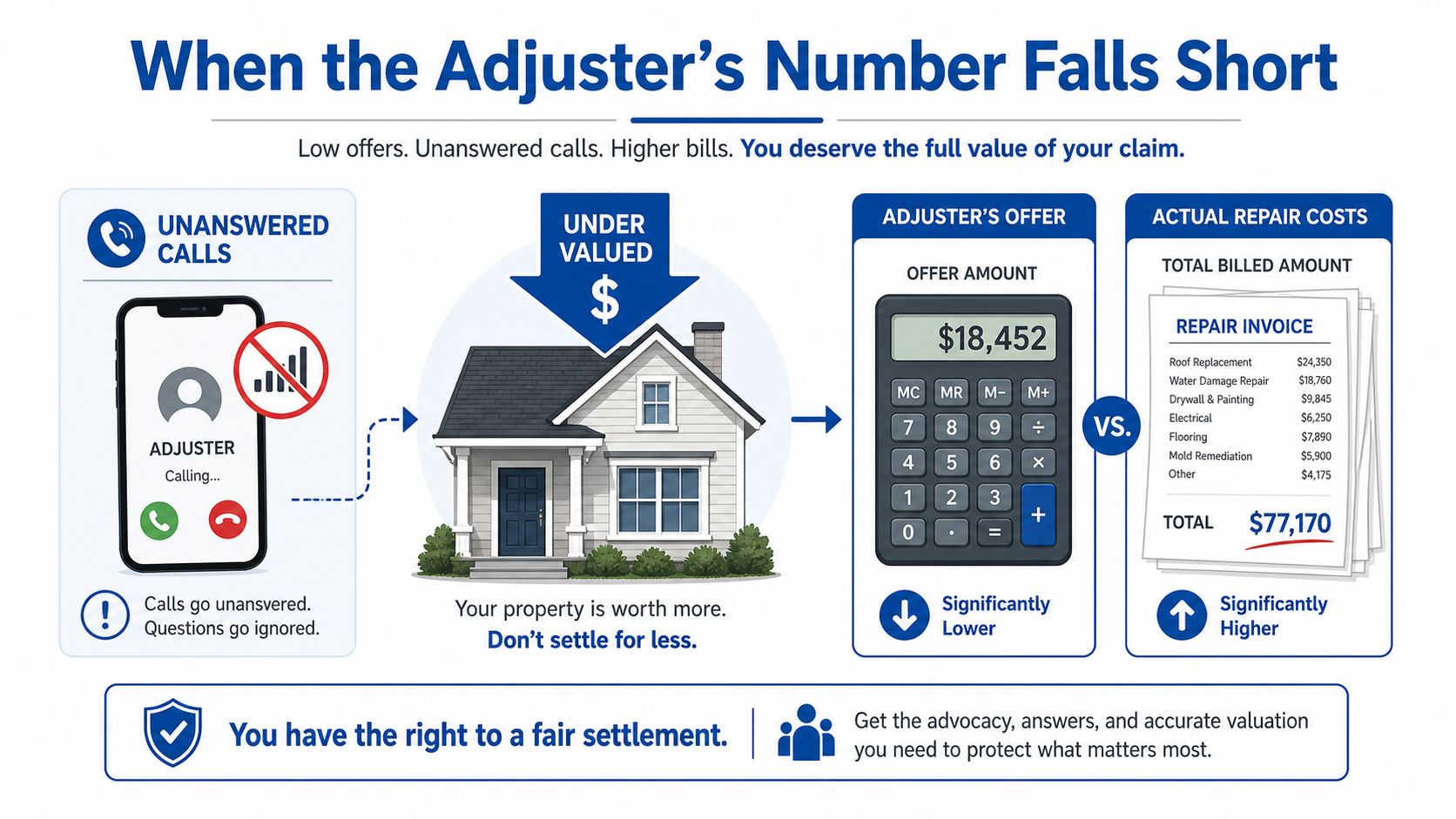
If you want a straight example of what people run into after a carrier goes quiet, this property damage claims resource is useful because it keeps the focus on documentation and next steps instead of wishful thinking. For a deeper look at why silence from the carrier becomes its own problem, see what to do when the insurance company isn’t responding to your claim.
Table of Contents
- What Should You Do When the Appraisal Comes in Low and the Carrier Stops Returning Calls?
- What Does an Insurance Appraisal Actually Cover, and What Does It Not?
- How Do You Build a Reconsideration of Value for an Insurance Claim?
- Appraisal Clause, Mediation, and Other Dispute Remedies
- Why a Public Adjuster Changes the Outcome of a Disputed Appraisal
- Drafting the Demand Letter That Actually Gets the Estimate Revised
- What Happens After an Adverse Appraisal Award
What Should You Do When the Appraisal Comes in Low and the Carrier Stops Returning Calls?
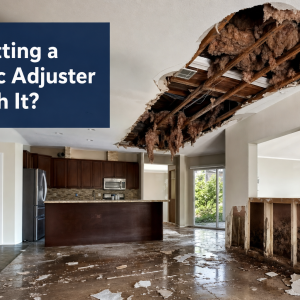
The first bad sign is usually not the number. It’s the tone after the number. A homeowner gets the estimate, the kitchen ceiling is still open, the damaged insulation is still sitting in place, and the carrier’s desk adjuster starts replying like the file is finished even though the repair work hasn’t even started.
That’s where insurance appraisal gets misunderstood. In a claim, an appraisal is often the carrier’s estimate, the scope sheet, and the depreciation calculation that drive the check, not a market valuation like a mortgage appraisal. The policyholder is left comparing the carrier’s version of the loss against what the building needs to be made whole.
Practical rule: if the number doesn’t match the damage in front of you, do not treat it like a customer-service issue. Treat it like a documentation problem.
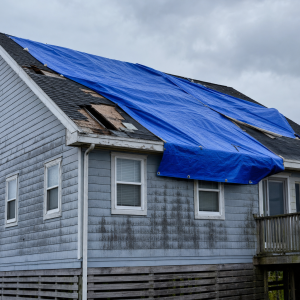
I’ve seen this play out on roofs, water losses, and interior storm claims. The carrier writes for patching when the system needs broader replacement, or they miss damaged areas because the first inspection was rushed and the photos were incomplete. Once that happens, the dispute is no longer about mood or frustration, it’s about a measurable gap between the estimate and the loss.
The policyholder’s job is to close that gap with proof. That usually means photos, contractor scope, code references, and line-item corrections, not repeated phone calls asking when someone will “take another look.” If you’re already getting the runaround, start working from the file, not from the phone.
What Is the Carrier Really Defending When It Low-Balls an Appraisal?
The carrier is usually defending three things at once. First, the scope of damage. Second, the pricing in the estimate. Third, the policy position on what qualifies as covered repair versus excluded or depreciated loss. If you don’t separate those issues, the discussion gets muddy fast.
That’s why a narrow, fact-based challenge is more effective than a general complaint. A clean correction package gives the adjuster something they can move on, and it gives your side a record if the file has to be escalated later. For policyholders who are stuck in that limbo, this guide on insurance appraiser issues is a useful companion because it shows how the valuation side and the claim side often get conflated.
What Does an Insurance Appraisal Actually Cover, and What Does It Not?
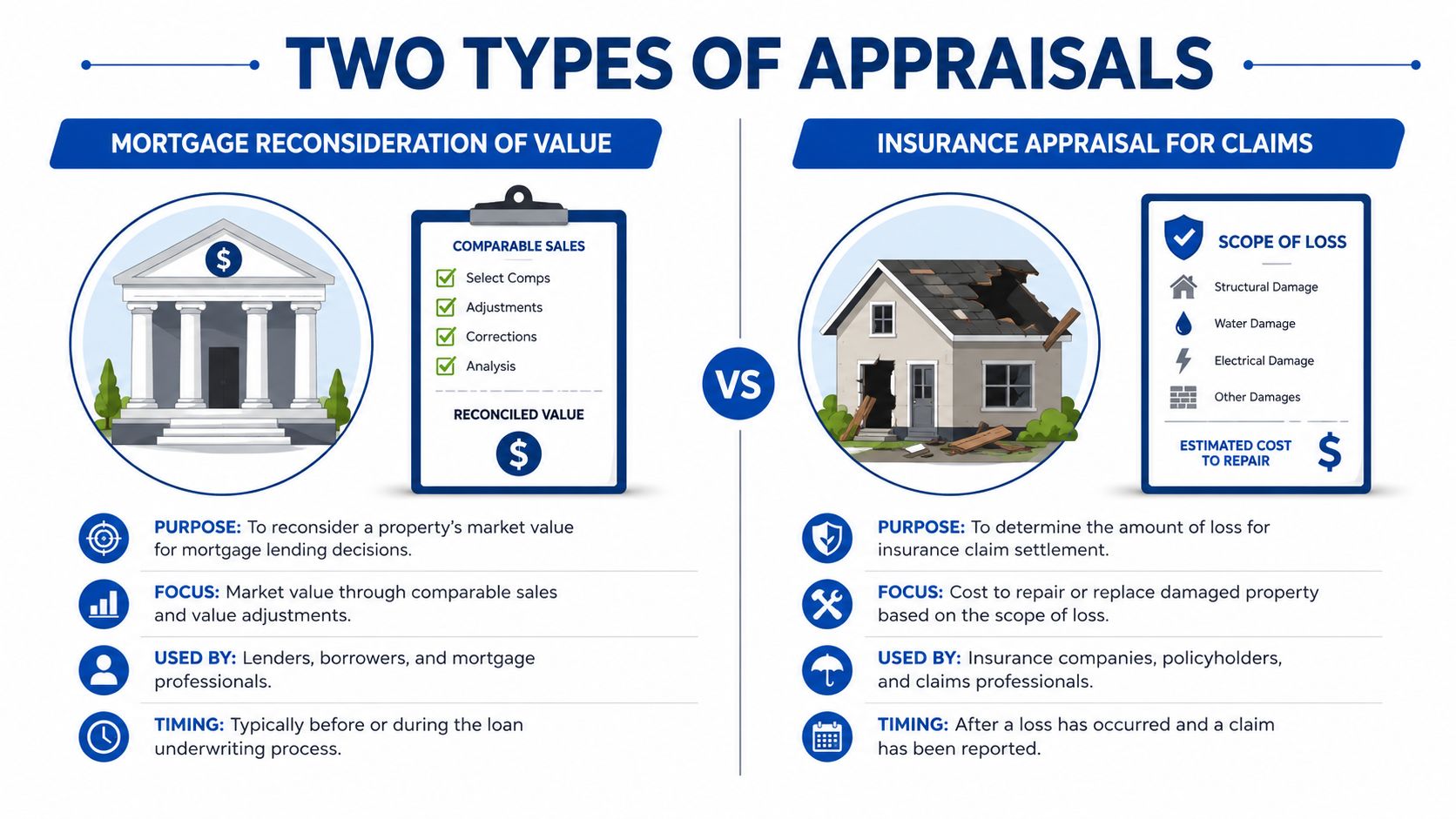
A mortgage valuation and an insurance claim appraisal are not the same creature. The mortgage version is about fair market value, comparable sales, and lender review. The insurance version is about scope of loss, causation, repair method, code compliance, contents, and depreciation, all filtered through the policy language and, when applicable, the appraisal clause.
That distinction matters because many homeowners borrow language from home-loan disputes that doesn’t fit a damage claim. In a claim file, the issue isn’t whether neighboring houses sold for more or less. It’s whether the carrier priced the damage correctly and whether the policy covers the repair work needed to restore the property.
How Does the Rulebook Change Depending on the Type of Dispute?
Mortgage appraisal disputes use lender-mediated reconsideration practices, with comparables and factual corrections routed through the lender. Insurance claims are governed first by the policy, then by state insurance rules, and sometimes by case law if the file turns into a legal fight. That’s why a claim challenge has to stay tied to the actual loss, not to a wish for a higher number.
In practical terms, an insurance appraisal covers things like whether wet drywall should be cut higher, whether a roof needs related flashing work, or whether contents were underpriced after smoke exposure. It does not automatically decide every coverage question. If the carrier says the loss is excluded, or says a policy limit bars recovery, that’s a coverage issue, not just a valuation issue.
What Does Not Belong in an Appraisal Dispute Argument?
Owner opinion doesn’t move much. A statement like “the house should be worth more” is useful in a mortgage dispute, but it’s weak in a property damage claim unless it’s tied to documented repair costs or policy obligations. The same goes for broad complaints about the neighborhood, the insurer’s attitude, or what a prior contractor estimated without showing the line-item basis.
The strongest claim disputes stay concrete. They point to the damaged room, the missing code item, the inaccurate measurement, the overlooked trade, or the misapplied depreciation. That is the language carriers are forced to answer, because it speaks the same language as the estimate itself.
How Do You Build a Reconsideration of Value for an Insurance Claim?
A carrier’s estimate is not the place to start. Start with an audit. Pull the adjuster’s scope, the photos, moisture readings if they exist, the contractor’s bid, and the policy language that governs the claim, then compare each line item to the damage and each coverage position to what the file supports.
Good claim challenges stay narrow. One missing room, one wall measured wrong, one code-required upgrade left out, one contents category priced as salvage when it clearly is not. A short list of documented corrections usually carries more weight than a thick packet full of weak objections.
What Evidence Should You Collect Before You Send Anything?
A useful packet usually includes these items:
| Evidence to Collect | Carrier Error It Corrects |
|---|---|
| Dated photos | Missed damage or incomplete scope |
| Contractor estimate | Underpriced labor or omitted trades |
| Moisture mapping or drying logs | Unverified demolition or drying decisions |
| Permits and inspections | Missing code-required work |
| Manufacturer install guides | Wrong repair method or product mismatch |
| Policy excerpts | Incorrect coverage or depreciation position |
Keep the challenge tight. A small set of provable errors usually does more than a thick packet filled with weak objections.
The same logic applies when someone contest an unfair property tax bill, because the side with cleaner facts usually has the stronger position. In property claims, that means every correction should answer a specific carrier mistake, not just repeat that the payment is too low.
How to write the correction package
Start line by line. If the carrier left drywall out behind cabinets, say so, show the photo, explain the tear-out required, and tie it to the repair method. If they priced a finish as paint only when the space needs full replacement, show the material difference and the installation requirement.
When the dispute involves structural damage, code and manufacturer standards matter. If the carrier’s scope leaves those items out, the correction package should point directly to the missing requirement and the repair consequence. If you are working with an insurance appraiser, the file still has to do the work. The appraiser can only push on facts that are already in the record.
Appraisal Clause, Mediation, and Other Dispute Remedies
The appraisal clause in a property policy is often treated like a magic switch, but it isn’t. It usually addresses the amount of loss, not the coverage fight underneath it. If the carrier is arguing that the damage isn’t covered at all, appraisal can become the wrong tool very quickly.
That’s why the first question is simple. Is this a disagreement about value, or is it a disagreement about whether the policy owes the item at all? If it’s value, appraisal may help. If it’s coverage, appraisal can waste time and limit your options.

Pick the remedy that matches the fight
Mediation can help when both sides want a negotiated resolution and the carrier is still engaged. A written demand can work when the issue is a missed line item or a bad estimate that hasn’t been formally corrected yet. A Department of Insurance complaint can create pressure if the file has gone stale or the adjuster is stonewalling.
Bad-faith litigation is different. That’s the escalation path when the insurer’s conduct, not just the number, becomes part of the problem. It’s not the first move in most files, but it belongs on the table when the claim handling itself has crossed the line.
When appraisal helps, and when it doesn’t
Appraisal helps most when both sides agree the loss is covered but disagree on the amount. It tends to be less helpful when the problem is exclusion language, causation disputes, or policy interpretation. A policyholder can accidentally lock themselves into a process that only answers one question while the carrier continues to ignore the larger one.
A strong claim handler knows the difference. Sometimes the right move is to invoke appraisal in writing. Sometimes the right move is to keep the file open, force a written coverage position, and use the policy, not the appraisal clause, as the point of influence.
Why a Public Adjuster Changes the Outcome of a Disputed Appraisal
Carrier estimates miss things for the same reason so many files stall, the person writing the scope is working for the insurer. The company adjuster is under pressure to close the file, the desk reviewer is screening for leakage, and the homeowner is expected to spot gaps while also managing repairs, contractors, and daily life. That setup rarely produces a fair first pass.
A state-licensed public adjuster changes the room. The scope is no longer framed only by the carrier’s own estimate, because the policyholder now has someone building a documented counter-file, line by line. On fire and water losses, IICRC-backed documentation matters because it shows the damage, the affected materials, and the repair logic in a way carrier reviewers can’t easily dismiss.
What the public adjuster actually does
A public adjuster inspects the damage, documents it, writes the estimate, and negotiates with the carrier on behalf of the policyholder. That includes checking measurements, matching the scope to the damage pattern, and making sure the estimate is written in a way that survives scrutiny. It also means pushing back when the carrier prices work as cosmetic when the loss is structural or moisture-related.
One recurring pattern is a roof and interior water claim where the initial carrier estimate missed code-required flashing, overlooked wet insulation in two rooms, and underpriced contents. The correction package changed the discussion because it tied each miss to a physical observation and a repair consequence, not to an opinion. If you want a plain explanation of the role itself, what a public adjuster does lays out the function without insurer language getting in the way.
Why carriers negotiate harder
Carriers negotiate harder when a public adjuster is involved because the file gets harder to hand-wave. The estimate is organized, the photos are better, the line items are defensible, and the policy arguments are stated in the same language the desk reviewer uses internally. That forces the carrier to either justify its position or revise it.
For homeowners and business owners, that can mean the difference between an unsupported low figure and a settlement that pays for the work. For some claims, For The Public Adjusters, Inc. is one option among others when the goal is to document the loss, challenge the estimate, and press the carrier for a proper adjustment under the policy.
Drafting the Demand Letter That Actually Gets the Estimate Revised
A demand letter in a claim dispute should read like a correction memo, not a complaint. Keep the tone firm, professional, and factual. If the letter sounds emotional, the carrier will treat it like noise and move on.
Start with the claim number, insured property, date of loss, and the exact estimate or determination being challenged. Then list the disputed line items and explain why each one is wrong. The best letters don’t argue in circles, they connect the carrier’s mistake to the policy, the photos, the contractor scope, or the code requirement.
A simple structure that works
Use a short opening, then a numbered list of corrections, then a clear request for response. Each correction should say what the carrier wrote, what should be changed, and what supports the change. That keeps the reviewer from burying the file under vague disagreement.
For a water loss, a strong paragraph might read like this in substance, without the drama: the estimate omits drywall replacement behind the cabinets where saturation extended beyond the visible surface, it fails to include the code-required moisture barrier, and it applies depreciation to contents that were documented as water impacted and not merely aged. The request then asks for revised pricing, updated scope, and written confirmation that the carrier will review the attached photos, moisture readings, and contractor estimate.
What to close with
End with a clear deadline and an escalation path. If the carrier doesn’t respond in writing, the next step may be a Department of Insurance complaint, a formal re-open request, or referral for bad-faith review depending on how the file is being handled. A professional letter makes it easy for the carrier to move, and it makes it harder for them to claim they never had the evidence.
A short closing usually works best:
- Request: revise the estimate and provide a written coverage position on the disputed items.
- Support: attached photos, contractor scope, policy excerpts, and code references.
- Deadline: confirm receipt and respond in writing by a stated date.
What Happens After an Adverse Appraisal Award
An adverse award doesn’t always end the fight, but it does change the playbook. The first move is to review the award against the evidence that was submitted and identify whether the issue is a bad result, a bad process, or a coverage dispute that should never have been pushed into appraisal in the first place. Those are different problems, and they don’t get solved the same way.
If the process was tainted by appraiser partiality or misconduct, a written motion to vacate or modify the award may be available under state law. If new evidence surfaces, the claim can sometimes be re-opened with a fresh documented demand. If the carrier’s conduct is the bigger issue, a formal Department of Insurance complaint or bad-faith litigation may be the right escalation.
The timing question matters
Statute of limitations windows vary by state and policy, so waiting for a carrier to “circle back” can cost you real advantage. That’s why the file has to stay organized from day one, with estimates, photos, correspondence, and any written appraisal demands preserved in one place. If the dispute is really about coverage, not value, that issue should be flagged early instead of being forced through the wrong process.
The practical move after an adverse result is to ask three questions. Did the award ignore evidence? Did the carrier handle the claim unfairly? Did the policyholder choose the right remedy at the right time? The answer to those questions usually tells you whether to press forward, correct the record, or escalate.
For The Public Adjusters, Inc. helps policyholders document property damage claims, challenge low estimates, and push back when the carrier’s scope doesn’t match the loss. If your fire, water, wind, hail, or storm claim has gone sideways, visit For The Public Adjusters, Inc. to get claim help from a licensed public insurance adjusting team that works for you, not your insurance company.
Appraisal Clause, Mediation, and Other Dispute Remedies
When the correction package doesn’t move the number, the policy itself usually offers a formal path. Most property policies contain an appraisal clause: either party can demand appraisal, each side hires its own independent appraiser, and the two appraisers select a neutral umpire. Agreement by any two of the three sets the amount of loss. Many states also offer department-of-insurance mediation for property claims, and a formal complaint to the state regulator remains an option when the carrier stops responding entirely.
How Do You Pick the Remedy That Matches the Fight?
Match the tool to the dispute. If the disagreement is about how much — scope, pricing, depreciation — appraisal is built for exactly that. If the disagreement is about whether the loss is covered at all, appraisal generally can’t decide it; coverage denials point toward mediation, a regulator complaint, or counsel. If the carrier simply went silent, a documented demand letter with a response deadline often has to come first, because appraisal and mediation both assume there’s an active dispute on the record.
When Does Appraisal Help, and When Doesn’t It?
Appraisal helps when the gap is large, the damage is well documented, and the fight is about dollars, not coverage. It doesn’t help when the carrier has denied the claim outright, when the gap is smaller than the cost of the process, or when the real