State Farm Purposely Low-Balling Claims – In late 2025, a surge of lawsuits filed across Oklahoma has thrust State Farm — the state’s largest homeowners insurer — under intense scrutiny. The allegations are serious. Hundreds of homeowners claim the company systematically underpaid or denied legitimate hail damage claims, favoring minimal payouts even after contractors and inspectors confirmed major roof and structural damage. Headlines about State Farm Purposely Low-Balling Claims are no longer isolated stories, but part of a growing legal storm.
For many families, this legal battle is not simply about shingles or repair invoices. It is about trust. It is about whether the insurer they faithfully paid for years stood by them when disaster struck, or whether they were left alone with a damaged home and a sense of betrayal.
The Hurt Behind the Headlines: Real People, Real Losses
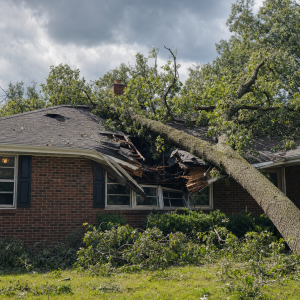
One of the most widely discussed cases involves a Tulsa-area couple whose nightmare began with a hailstorm on October 4, 2023. After the storm, a tree-trimmer climbed onto their roof and immediately shouted down a sentence no homeowner ever wants to hear:
“You’ve got a hole in your roof.”
Contractors later confirmed that the hail impact was severe enough to compromise the structure. A full roof replacement was necessary. Yet when the couple filed a claim, what they received from State Farm was just a fraction of what the repairs required — barely a few thousand dollars against a rebuild cost that eventually soared into the tens of thousands.
After back-to-back hailstorms and still no meaningful support from their insurer, they were left to cover the majority of the expenses themselves. The couple has joined the long line of policyholders who now see headlines like State Farm Purposely Low-Balling Claims and feel those words describe their life experience, not just a news story.
Their story is not unique. More than 200 lawsuits have been filed across Oklahoma, each telling its own version of the same frustrating pattern: visible damage, contractors recommending full replacement, and State Farm offering payouts that fall dramatically short of the actual repair needs.
What Homeowners Are Alleging: A Coordinated “Hail Scheme”
According to court filings, the heart of the controversy lies in what plaintiffs describe as a coordinated effort inside State Farm to minimize hail-related payouts. Beginning around 2020, internal documents reference the formation of the Wind-Hail Model Enhancement Team, a group that plaintiffs say fundamentally changed how storm claims were evaluated.
The lawsuits argue that this was not an ordinary internal initiative. Instead, homeowners claim the team developed claim-handling strategies designed to reduce costs by denying or undervaluing damage — even when trained contractors or roofing experts concluded the opposite. Partnerships with outside consultants and forensic engineering firms are alleged to have played a role by providing assessments that downplayed or reclassified damage as “wear and tear” or “pre-existing,” rather than hail impact.
During one hearing, a homeowners’ attorney summarized the allegation in stark terms:
“You’ve got a scheme when you are going to reduce the claim before it even happens — and make billions.”
In the eyes of many policyholders, this is exactly what State Farm Purposely Low-Balling Claims is really about: not a handful of bad decisions, but a system built to minimize what is paid out on legitimate storm losses.
History of Litigation: This Isn’t the First Time State Farm Has Been Accused
The Oklahoma lawsuits do not exist in a vacuum. Instead, they fit into a broader national pattern of similar disputes that has followed State Farm across multiple states, storms, and decades. The legal landscape surrounding hail and wind damage claims is notoriously complex, and State Farm has found itself at the center of many of the industry’s most high-profile controversies.
The emerging picture is one of repeated conflict between policyholders and the insurer, often turning on technical assessments of roof damage, the reliability of engineering reports, and the question of whether the problem stems from hail impact or simple aging of the home.
A National Timeline of Legal Battles Against State Farm
Across the country, numerous lawsuits echo the same allegations now unfolding in Oklahoma. A look at key moments over the past decades helps illustrate how long homeowners have been fighting similar battles and why the current wave of State Farm Purposely Low-Balling Claims coverage feels like the culmination of years of frustration.
As far back as the early 2000s, hail-related disputes in Texas and the Midwest revealed consistent tension between roofers and State Farm adjusters over what constituted legitimate hail damage claims. Homeowners and contractors complained that obvious impact marks, broken shingles, and compromised underlayment were being categorized as cosmetic or age-related, rather than storm driven.
By 2012, controversies arose in Texas regarding whether homeowners were entitled to full roof replacements or only patch repairs. Courts warned insurers against unreasonable partial fixes that left homes mismatched or still vulnerable to future leaks.
Colorado became a hotspot around 2015, when repeated hailstorms triggered dozens of lawsuits accusing State Farm of minimizing storm-related roof impact and using underqualified adjusters. The pattern intensified in North Texas after a massive 2017 hailstorm, where homeowners reported that their claims were categorized as “cosmetic only,” mirroring objections raised today in Oklahoma.
By 2020, during the pandemic era, State Farm allegedly restructured its internal storm-claims process — the same period referenced in Oklahoma filings as the birth of the Wind-Hail Model Enhancement Team. Plaintiffs say this is when the company moved from case-by-case evaluation to a more aggressive, standardized model of cost-cutting on wind and hail claims.
In 2022, a major federal case — Schnell v. State Farm Lloyds — centered on a Texas couple whose concrete-tile roof was visibly damaged in a wind and hailstorm. While State Farm accepted some of the claim, it refused to pay for a full replacement. A federal appeals court rejected State Farm’s attempt to dismiss the case, ruling that there were “genuine issues of material fact” regarding the cause of the damage. This judicial language signaled that the insurer’s explanations did not convincingly outweigh the homeowners’ evidence and flagged the dispute as serious enough to go to trial.
By 2024 and early 2025, more homeowners in Alabama took State Farm to court after their hail claims — typically involving damage estimates in the tens of thousands of dollars — were denied despite contractors confirming impact damage. In some Alabama cases, however, courts sided with State Farm when evidence suggested the roof was simply old or deteriorated. These mixed outcomes illustrate how much claim results depend on documentation, expert testimony, and interpretation — factors that homeowners often struggle to navigate alone.
In 2025, Oklahoma’s lawsuits became the epicenter of this national controversy, marking what may be the most concentrated set of hail-related legal actions ever filed simultaneously against the insurer. For many observers, this is the moment when years of localized disputes finally crystalized into a broader narrative: State Farm Purposely Low-Balling Claims is not just a headline, but a systemic allegation.
Why the Oklahoma Cases Matter — For Homeowners and the Insurance Industry
The Oklahoma litigation stands out not just because of the sheer number of homeowners involved, but because of what it could reveal. Plaintiffs have successfully pushed for the release of internal State Farm documents, including training manuals and communications that may shed light on whether claims-handling approaches were intentionally designed to reduce payouts.
Documents with titles like “The Art of the Conversation” have drawn attention for allegedly instructing adjusters on how to frame discussions with policyholders — not always in the homeowners’ favor. These disclosures may have implications far beyond Oklahoma, potentially influencing policyholder rights and insurance regulation nationwide.
If plaintiffs succeed, the financial consequences for State Farm could reach into the hundreds of millions, or even billions, once roof replacements, structural repairs, legal fees, and potential punitive damages are factored in. But the broader fallout could reshape how insurers nationwide evaluate storm claims, interact with engineering firms, and communicate with their customers.
For homeowners in hail-prone states, the Oklahoma litigation serves as a warning and a wake-up call. It underscores that policy language, claim handling, and even internal training protocols can directly affect whether a family can afford to fix their roof after a storm.
 What Homeowners Should Watch and Do
The lawsuits highlight a common reality: when hail hits, documentation is everything. Photos of the roof before and after storms, detailed contractor evaluations, measurements of hailstones, and written communication logs all become critical if a claim is challenged.
Many homeowners in these lawsuits report that their initial adjuster inspections were quick, superficial, or inconsistent with independent contractor findings. This is why many attorneys and public adjusters advise homeowners to seek independent inspections from licensed roofers, public adjusters, or engineers unaffiliated with the insurer.
Every email, letter, text, and phone call summary should be preserved. A simple timeline documenting when the storm occurred, when the damage was discovered, when the claim was filed, and how the insurer responded can become powerful evidence if a dispute escalates.
In a landscape where a single line in an inspection report can determine whether a roof is repaired or written off as “cosmetic,” diligence and thorough documentation can make the difference between a denied claim and a fair settlement.
What This Could Mean for State Farm — and the Future of Homeowners Insurance
For State Farm, the growing cluster of lawsuits represents a major reputational crossroads. The company is not just defending individual claims; it is defending the integrity of its entire claims-handling system. If courts find that the company intentionally engaged in a pattern of fraudulent low-ball claims, the phrase State Farm Purposely Low-Balling Claims may become a defining part of its public image for years to come.
The outcome of the Oklahoma litigation may influence whether insurers must adopt more transparent evaluation methods, how engineering firms are used, and how consumers are treated after catastrophic storms. Regulators, lawmakers, and consumer advocates will be watching closely to see whether reforms are needed to prevent similar disputes in the future.
Ultimately, these cases could determine whether homeowners can rely on their insurer in moments of genuine need — or whether additional legal protections will be required to ensure fairness. For now, as legal proceedings unfold and more internal documents surface, one thing has become increasingly clear: the fight over hail claims is no longer just about roofs. It is about accountability, consumer protections, and whether insurance companies will live up to the promises they make.
If Your Hail Claim Was Underpaid or Denied, You Don’t Have to Fight Alone
If you’re reading this because your own hail, wind, or storm claim feels like a low-ball offer or an unfair denial, you are not alone — and you are not powerless. You have options.
A qualified public adjuster can review your policy, inspect the damage from your side of the table, and help you challenge an offer that doesn’t come close to making you whole. In a world where headlines about State Farm Purposely Low-Balling Claims are becoming more common, having an experienced advocate on your side can make all the difference.
If you are from the state of Oklahoma and have been affected by a State Farm claim, you can contact the Oklahoma Department of Insurance for guidance as well.
How do you successfully dispute a denial based on "pre-existing damage" or "wear and tear" on an older roof?
This is the most common denial. We use historical weather data (NOAA reports) to establish the exact date and intensity of the hail event at your location. Then, we coordinate a joint inspection with an independent roofing consultant who uses test squares and controls to isolate the fresh hail impacts from old weathering, providing a date-stamped damage report that isolates the covered event from prior conditions.
My adjuster only marked a few shingles with chalk. How does a Public Adjuster prove the hail damage is widespread enough for a full replacement?
Insurance adjusters may inspect small "test squares" and project the damage based on a low number. We ensure the inspection adheres to industry-accepted standards (like the 20/20 Rule or equivalent) and document multiple slopes and elevations. We utilize drone and high-resolution photography to show the uniformity and severity of impacts across the entire roof plane, forcing the carrier to acknowledge the full scope of loss.
If my hail claim was filed months after the storm, will the insurance company deny it for lack of "prompt notice?"
A Public Adjuster argues that hail damage is often latent (hidden) and not easily visible from the ground, especially on older roofs. We document the first time a reasonable person would have discovered the damage (e.g., discovery of a leak or during a maintenance check), thus satisfying the policy's requirement for timely reporting after discovery.
How do you argue for a full roof replacement when my state doesn't have a matching statute and only one slope was damaged?
We bypass the lack of a "matching statute" by focusing on material unavailability and functional impairment. We secure an affidavit from the original manufacturer or supplier confirming the original color/product line is discontinued, making the entire roof replacement the only path to repair with "like kind and quality" materials as required by the policy.
My roof is damaged, but so are my gutters, vents, and siding. How do you ensure the claim covers ALL exterior hail damage?
We ensure the scope includes all collateral damage. Hail damage often dents soft metal components (gutters, downspouts, flashing, vents, AC fins) and can fracture or puncture siding and windows. We conduct a comprehensive 360-degree exterior inspection and itemize all affected systems, ensuring the full cost of replacing all damaged exterior materials is included in the Xactimate estimate.
Does hail damage coverage include the cost of Code Upgrades if local regulations have changed since my roof was installed?
Yes, provided you have "Ordinance or Law" coverage. Hail damage often necessitates a full tear-off, which triggers local building codes requiring upgrades like ice and water shields, specialized ventilation, or more robust decking. We identify these mandatory code compliance costs upfront and include them in the claim, preventing massive out-of-pocket expenses.
My policy is RCV (Replacement Cost Value). How does a Public Adjuster ensure I receive the depreciation holdback payment after the repairs are done?
The carrier initially pays the Actual Cash Value (ACV) and holds back the depreciation. We meticulously manage the claim to ensure: 1) The ACV payment is maximized. 2) The full repair work (costing at least the ACV + holdback) is completed using a licensed contractor. 3) We submit the necessary invoices, permits, and affidavits proving completion, forcing the carrier to release the final Recoverable Depreciation payment quickly.
What is "Appraisal," and when is it the best option to resolve a hail damage claim dispute with my insurer?
Appraisal is a formal, contractual dispute resolution method used when the insurer agrees the damage is covered but disputes the value (scope/cost) of the repair. A Public Adjuster acts as your appointed appraiser, presenting the fully documented scope to a neutral umpire. It is often a faster, cheaper alternative to litigation for resolving valuation disputes.
If my insurance company uses a preferred contractor network, must I accept their low-cost bid for my hail repair?
No. You have the right to choose your own licensed, reputable contractor. The carrier's preferred vendors are incentivized to keep costs low for the carrier. We ensure the carrier pays the Reasonable and Necessary Cost of repair, which is the fair market rate established by your choice of contractor.
Can hail damage cause internal water leaks that don't appear until weeks later, and how does a Public Adjuster prove this connection?
Yes. Hail impacts compromise the shingle seal or crack vents, allowing slow water intrusion that may take weeks or months to reach the interior ceiling or wall. We use thermal imaging and moisture mapping to prove the current leak path originates directly from the roof damage caused by the historical hail event, thus tying the interior water damage to the covered peril.
What must be included in my initial hail claim submission to prevent an immediate underpayment or denial?
To prevent an early denial, your submission (prepared by the PA) must include: 1) A specific date-of-loss tied to verified weather reports. 2) A detailed, itemized Xactimate scope showing damage to multiple slopes and soft metal components. 3) High-resolution photos with clear scale markings (coin/ruler) to distinguish hail impacts from normal wear.
(Original story: Oklahoma lawsuits accuse State Farm of billion-dollar hail scheme)
When you’re facing a denied or underpaid claim, you need an expert in your corner. For The Public Adjusters, Inc. fights exclusively for policyholders in North Carolina and Virginia to get the full settlement you are owed. Contact us for a no-cost claim review today at https://forthepublicadjusters.com.