
If you are searching for the Best Public Adjuster Chapel Hill NC, For The Public Adjusters, Inc. represents homeowners and business owners in Orange County when a property damage claim is denied, delayed, or paid for less than the repairs will actually cost. We work only for you, never for the insurance company, and we are licensed and bonded in North Carolina.
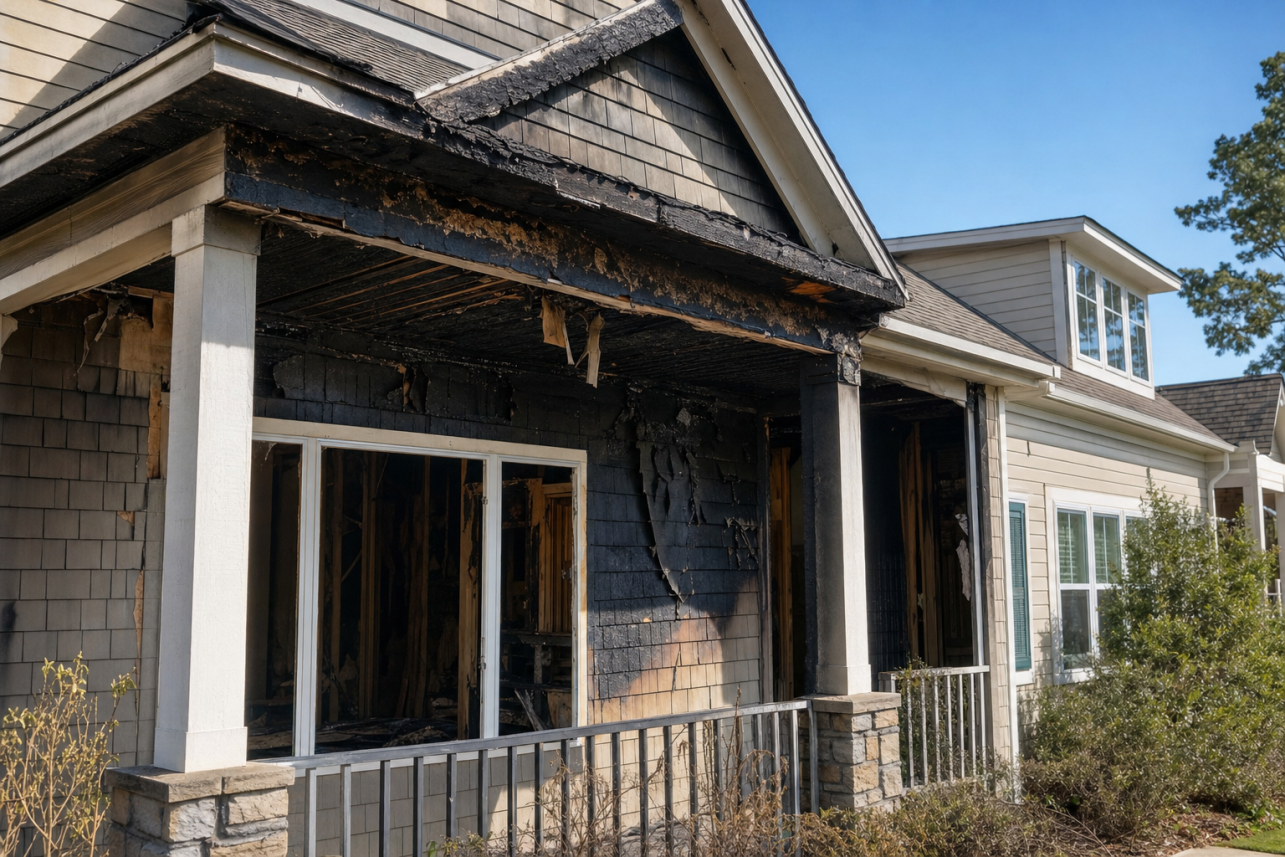
From fire and smoke losses near campus to tree strikes and ice-dam leaks in the older neighborhoods off Franklin Street's surrounding corridors, we document the damage, prepare the proof of loss, and negotiate directly with your carrier. You pay nothing up front — our fee is a percentage of what the claim actually pays.
What This Service Is
A public adjuster is a licensed insurance professional who works for the policyholder, not the insurance company. The adjuster your carrier sends after a fire, burst pipe, or fallen oak is paid by the insurer. We are the counterweight: we read your homeowners insurance policy line by line, scope the full damage, and build the claim the way it should have been built from day one.
The North Carolina Department of Insurance regulates this profession, and the NCDOI Public Adjusters Guide explains exactly what we are permitted to do on your behalf — represent you in the claim, prepare documentation, and negotiate the settlement. That oversight matters: it means you are hiring a licensed advocate, not a storm-chasing salesman.
We handle fire damage, smoke damage, water damage, tree damage, vandalism, car-hits-home losses, flood claims, and commercial business claims across the Triangle. Chapel Hill owners sometimes find us through our work in neighboring Wake County — for example, as the Best Public Adjuster Morrisville NC homeowners call when a carrier's first offer doesn't come close to real repair costs. The same approach applies here in Orange County.
Common Problems
What Does A Public Adjuster Cost — And Why Was My Settlement So Low In The First Place?
We work on a contingency fee: a percentage of the amount your claim pays, agreed in writing before we start. No recovery, no fee. There is no upfront charge to review a denial letter or a low offer.
Underpayment usually hides in the fine print. Carriers often pay "actual cash value" — replacement cost minus depreciation — and many owners never realize they can recover that withheld depreciation once repairs are done. Low-ball contractor-style estimates, missed code upgrades, and ignored additional living expenses coverage while you're out of your home all shrink the check further.
We can never guarantee a specific result, and we won't pretend otherwise. What we can do is measure the loss properly and insist the policy be applied as written.
Why The Best Public Adjuster Chapel Hill NC Gets Involved After A Denial Letter
A denial letter is not the final word. Carriers deny or underpay by labeling storm damage "wear and tear," disputing the cause of a water loss, or claiming the proof of loss was incomplete. Claims can often be reopened or supplemented when new documentation shows the first inspection missed damage — but North Carolina's time limits for filing suit are real, so waiting is the one mistake you can't undo.
North Carolina courts have backed policyholders in exactly these fights. In Gaston County Dyeing Machine Co. v. Northfield Insurance Co., the North Carolina Supreme Court sided with the insured after property damage was denied, holding that when policy language is ambiguous, it must be read in favor of coverage. That principle protects Chapel Hill homeowners today.
When a fire loss gets lowballed, thorough re-documentation changes the conversation — the same way our Fire Claim Adjuster Wake Forest work has turned denied smoke and soot claims into paid ones.
Everyone Claims To Be 'the Best Public Adjuster Near Me' — How Do I Actually Choose?
Start with the basics: verify the license with the North Carolina Department of Insurance, confirm the firm is bonded, and get the contingency fee in writing before signing anything. A legitimate adjuster will never ask for cash up front or promise a specific dollar outcome.
Then ask about the actual work. Top public adjusters photograph and moisture-map the loss themselves, prepare a detailed line-item estimate rather than accepting the carrier's, and know when the policy's appraisal process can break a deadlock without a lawsuit.
Could you handle the claim yourself? For a small, clean loss, maybe. But once a carrier disputes cause, scope, or value, you're negotiating against trained adjusters who do this every day. Hiring your own levels that field.

Our Process
Free Policy And Damage Review
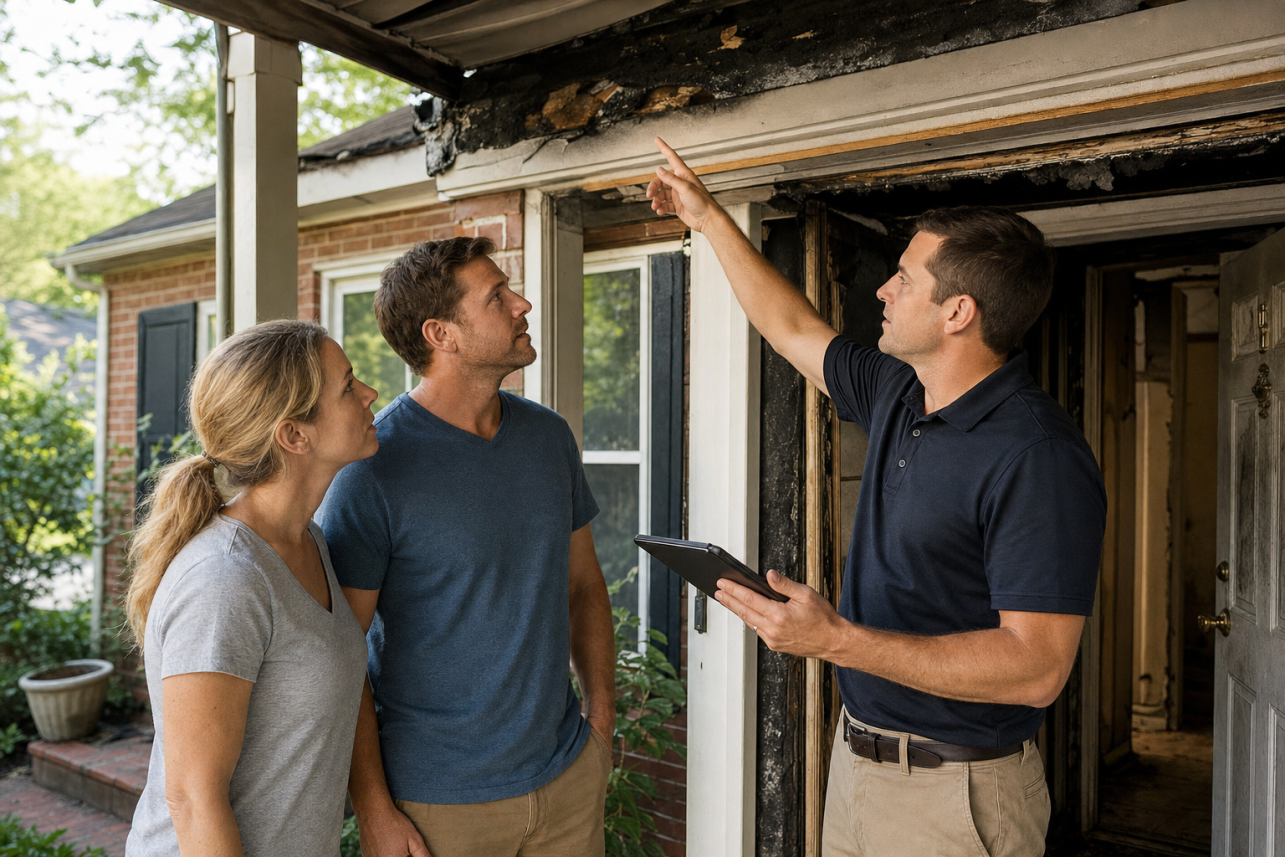
We read your full homeowners or commercial policy — coverage limits, exclusions, deductible, endorsements — and inspect the damage ourselves. Fire, smoke, water, fallen trees, vandalism, a car into the house: we scope what the carrier's adjuster saw and, more importantly, what they didn't.
Documentation And Proof Of Loss
We build the claim file: photos, moisture readings, contents inventories, and repair estimates written to real Chapel Hill construction costs, not a software default. A properly prepared proof of loss closes the gaps carriers use to delay or deny.
Negotiation And Settlement
We present the claim, answer the carrier's objections, and negotiate until the offer reflects the documented loss. If a dispute hardens, we know when the appraisal clause applies and when a case needs counsel — the kind of situation where our Lawyer For Insurance Dispute Knightdale referrals have helped policyholders who hit a wall.
| What Happens | Handling It Yourself | With For The Public Adjusters |
|---|---|---|
| Damage documentation | Carrier's adjuster scopes what's visible, often one room | Independent moisture mapping, soot testing, and expert inspections across the whole home |
| Estimate preparation | You rely on the insurer's numbers or a single contractor bid | Line-item estimates built to the policy, including code upgrades and matching |
| Contents losses | Flat allowances or rough lists from memory | Itemized room-by-room inventory with replacement pricing and documentation |
| Depreciation review | Labor depreciation often goes unchallenged | Improper deductions flagged, supported by rulings like Sproull v. State Farm |
| Negotiation | You negotiate against a trained company adjuster | A licensed, bonded adjuster who works only for the policyholder handles every discussion |
| Deadlines and proof of loss | Easy to miss policy time limits | All filings, supplements, and deadlines tracked for you |
Commonly Overlooked In The Public Adjusting Industry
- Improper depreciation of labor — Carriers quietly depreciate labor inside actual cash value payments even though courts such as the Illinois Supreme Court in Sproull v. State Farm ruled for the homeowner that labor isn't a depreciable item.
- Matching coverage for continuous flooring and siding — Insurers pay to replace only the damaged section, but hardwoods running through connected rooms or discontinued siding often can't be reasonably matched, which can trigger broader replacement under the policy.
- Code upgrade and ordinance costs — Repairs in Chapel Hill and Orange County must meet current building code, and the extra cost of bringing older construction up to code is covered under many policies yet rarely included in the first estimate.
- Soot and smoke migration through HVAC ductwork — Field adjusters scope the burn room and stop, while duct systems carry corrosive residue into rooms that look untouched until surfaces start yellowing months later.
- Hidden moisture behind walls and under subfloors — Drywall dries on the surface long before the cavity behind it does, so claims get closed before the real water footprint is ever measured.
- Additional living expenses during repairs — Policyholders eat hotel, meal, and storage costs out of pocket because nobody told them their policy reimburses the reasonable increase in living expenses.
- Proof-of-loss and supplemental claim deadlines — Policies and NFIP flood claims carry strict filing windows, and homeowners who discover additional damage after the deadline often lose the right to recover it.
- Contents depreciation applied too aggressively — Carriers assign steep age-based depreciation to furniture, clothing, and electronics without documentation, and most policyholders never realize those percentages are negotiable with proof of condition.
Case Studies
Case Study #1
Situation: A family in the Southern Village area of Chapel Hill came home after the remnants of a hurricane pushed through Orange County to find water staining across their dining room ceiling and buckled hardwood flooring below.
Problem: Their insurance carrier's field adjuster attributed the leak to 'wear and tear' on the roof and offered a small payment that covered little more than drying out the dining room. The homeowners knew the roof had been fine before the storm, but they had no way to prove it.
Investigation: Our team pulled NOAA storm data for the date of loss, documented hurricane-force gusts recorded near Chapel Hill, and brought in a licensed roofing consultant. We performed moisture mapping through the dining room, adjoining kitchen wall, and the subfloor, and photographed creased and displaced shingles consistent with storm uplift rather than age.
Findings: The moisture meter readings showed saturation extending two rooms beyond what the carrier scoped. The subfloor under the hardwoods was wet, insulation in the attic was soaked, and the shingle damage pattern matched storm-created openings, not deterioration.
Solution: We prepared a line-item estimate covering full roof repair, hardwood flooring replacement across continuous rooms under the policy's matching considerations, attic insulation, drywall, and paint. We submitted a supplemental claim with the weather data, consultant report, and photo documentation, then negotiated directly with the carrier's adjuster.
Outcome: The carrier reversed its wear-and-tear position and issued a revised settlement many times the original offer, including the roof, continuous flooring, and interior repairs. The family rebuilt without paying out of pocket beyond their deductible.
Lesson: A hurricane doesn't have to tear the roof off to cause a covered loss. Storm-created openings are often misread as maintenance issues, and independent weather data plus proper moisture documentation can completely change how a carrier classifies the damage.
Case Study #2
Situation: A couple near Meadowmont suffered a kitchen fire that was extinguished quickly, but smoke and soot traveled through the HVAC system into bedrooms and closets throughout the home.
Problem: The carrier's initial estimate covered cleaning and repainting the kitchen only, and it depreciated the labor portion of the repairs on the actual cash value payment. The couple's clothing, upholstered furniture, and books smelled of smoke, yet the contents payment was a flat allowance that didn't come close to real replacement costs.
Investigation: We ordered particulate and soot residue testing in rooms the carrier never entered, inspected the ductwork, and built a room-by-room contents inventory with photographs, purchase records, and current replacement pricing for every affected item.
Findings: Soot residue was present on surfaces two floors away from the kitchen, the duct system required full cleaning and partial replacement, and the contents inventory documented losses far beyond the carrier's allowance. We also flagged the improper depreciation of labor, citing Sproull v. State Farm Fire & Casualty Co., 2021 IL 126856, in which the Illinois Supreme Court sided with the homeowner and held that labor costs may not be depreciated when calculating actual cash value.
Solution: We submitted a revised structural estimate including whole-home cleaning, sealing, repainting, and duct remediation, along with the detailed contents inventory and a demand to remove labor depreciation from the settlement calculation.
Outcome: The carrier expanded the scope to the entire home, paid the documented contents inventory, and restored the improperly depreciated labor amounts. The couple also recovered additional living expenses for the weeks they stayed elsewhere during remediation.
Lesson: Fire claims are rarely just about the burn room. Smoke migrates through ductwork, contents losses deserve an itemized inventory rather than an allowance, and courts have repeatedly backed policyholders when carriers calculate depreciation unfairly.
| Claim Situation | Risk of Going It Alone | Where a Public Adjuster Helps Most |
|---|---|---|
| Kitchen or house fire | Smoke and soot in distant rooms and ductwork get left out of the estimate | Residue testing, whole-home scope, full contents inventory, and additional living expense recovery |
| Hurricane or tornado damage | Storm damage gets labeled 'wear and tear' and denied | Independent weather data and roofing experts prove the loss was storm-created |
| Burst pipe or water intrusion | Hidden moisture behind walls leads to mold and reopened repairs later | Moisture mapping documents the true footprint before anything is sealed up |
| Flood damage (NFIP policy) | NFIP proof-of-loss deadlines are strict and unforgiving | Help preparing documentation; FEMA and FloodSmart resources explain coverage limits |
| Underpaid settlement already received | Accepting the first check can leave covered damage unpaid | A supplemental claim reopens the scope with new evidence and a corrected estimate |
| Denied claim | Most homeowners never challenge a denial, even weak ones | A documented rebuttal with expert reports, policy language analysis, and negotiation |
| Smoke damage from a nearby fire | Carriers often dismiss claims where the home itself didn't burn | Testing proves contamination of contents, HVAC systems, and finishes |
Reviews
After a pipe burst in our crawl space off Estes Drive, the insurance company offered barely enough to replace the flooring in one room. For The Public Adjusters found moisture in walls their adjuster never checked and documented everything. The final settlement covered the subfloor, cabinets, and mold remediation. I would never face a water claim alone again.
Marcus T., Chapel Hill
A tornado-warned storm dropped a tree section onto our roof and the carrier tried to call half the damage pre-existing. This team brought in their own roofing expert, pulled the storm reports, and handled every call with the insurance company. The difference between the first offer and what we actually received paid for their fee many times over. Professional, local, and honest about what to expect.
Deborah K., Governors Club
Our rental property had a grease fire and the smoke damage reached rooms the insurer's estimate ignored completely. They built a contents inventory for everything, caught labor depreciation the carrier shouldn't have taken, and even pointed me toward FEMA resources when I asked about separate flood coverage for the same property. Thorough people who clearly know Orange County claims.
Priya R., near UNC campus
Frequently Asked Questions
What Does The Best Public Adjuster Chapel Hill NC Homeowners Rely On Actually Do During A Claim?
When people search for the Best Public Adjuster Chapel Hill NC has available, they are usually asking who works for the policyholder instead of the insurance company. That is exactly our role at For The Public Adjusters, Inc. We are licensed and bonded, and we represent you — not the carrier — from the first inspection to the final payment.
In practical terms, we read your policy line by line, document every bit of damage to your home, building, and contents, prepare a detailed estimate using the same software insurers use, and negotiate directly with the company adjuster. In Chapel Hill, that often means fire and smoke losses, burst pipes in older homes near Franklin Street and the historic districts, hail damage, and water intrusion in finished basements around Orange County.
Many homeowners accept the first offer because they do not realize the carrier's estimate frequently misses hidden damage — wet insulation behind walls, smoke residue in HVAC systems, or code-upgrade costs required by Orange County permitting. We find and document those items so your claim reflects the true scope of the loss.
We handle property claims only. We do not work on cell phone, motor vehicle, health, or life insurance claims, and we never guarantee a specific outcome — what we promise is thorough documentation and professional advocacy.
How Much Does Hiring A Chapel Hill Public Adjuster Cost, And When Does It Make Sense?
Our fee is a percentage of the insurance settlement, agreed upon in writing before we begin. There are no hourly bills and no upfront charges, so you know exactly where you stand from day one. If the claim pays nothing, you owe nothing under that contingency arrangement.
Hiring a public adjuster in Chapel Hill makes the most sense when the loss is significant or complicated. A kitchen fire with smoke spread through the whole house, a second-floor pipe failure that soaked ceilings and hardwood floors, or tornado damage that opened a roof to rain — these claims involve dozens of trades, code requirements, and contents inventories that are easy to undervalue.
It also makes sense when something feels wrong: the carrier's estimate seems far too low, the adjuster is slow to respond, or your claim has been partially denied. We can step in at any stage, including after a denial, to re-document the loss and reopen negotiations.
For very small claims close to your deductible, we will tell you honestly that professional representation may not add value. We are licensed and bonded in North Carolina, and while we cannot guarantee any particular dollar amount, our job is to make sure nothing covered by your policy gets left off the table.
Can You Help With Hurricane, Tornado, Or Flood Damage To My Chapel Hill Home?
Yes, with an important distinction every Orange County homeowner should understand. Hurricane and tornado damage — torn roofing, tree impacts, rain intrusion through storm-created openings — is typically handled under your homeowner's policy, and we represent you on those claims. Chapel Hill residents who remember Hurricane Fran's destruction across the Triangle know how severe inland hurricane damage can be, and tornado outbreaks have struck central North Carolina more than once.
Flood damage is different. Rising water from creeks like Bolin Creek or Booker Creek, or stormwater pooling into a crawlspace, is generally excluded from standard homeowner's policies. Flood losses are covered through the National Flood Insurance Program, and we encourage Chapel Hill homeowners to review their flood risk and coverage options at FEMA.gov and FloodSmart.gov, the official NFIP site. If you carry a flood policy, we can assist with documenting that loss as well.
Many storms create both types of damage at once — wind-driven rain through a hurricane-damaged roof plus rising water in the basement. Sorting out which policy owes for which damage is one of the most valuable things a Chapel Hill claims professional does, because carriers sometimes point to the flood exclusion for damage that is actually covered. We document the cause of each item carefully so coverage is applied correctly.
Do Policyholders Ever Actually Win Against Insurance Companies, Or Is Hiring The Best Public Adjuster Chapel Hill NC Offers A Waste Of Time?
Policyholders win, and North Carolina case law proves it. In Gaston County Dyeing Machine Co. v. Northfield Insurance Co., 351 N.C. 293 (2000), the North Carolina Supreme Court sided with the insured in a dispute over property damage coverage. The insurers had tried to narrow the policy language to avoid paying for the physical damage, and the Court rejected that reading, holding that the coverage applied. The case remains a cornerstone for property owners across the state, including here in Orange County, because it confirms that ambiguous policy language is construed in favor of the policyholder.
That principle matters in everyday claims. When a carrier argues that your water-damaged hardwood floors are only owed a patch repair, or that smoke contamination of your contents is "cosmetic," the policy language — read fairly — often supports far more than the first offer.
Most disputes never need a courtroom. Thorough documentation, a professional estimate, and firm negotiation resolve the majority of underpaid claims for Chapel Hill homeowners. But knowing the law stands behind insureds gives you real leverage.
For The Public Adjusters, Inc. is licensed and bonded, and while no one can guarantee a specific result on any claim, working with the Best Public Adjuster Chapel Hill NC residents can find means your loss is presented completely, accurately, and with the full weight of your policy behind it.
What Types Of Property Damage Claims Does The Best Public Adjuster Chapel Hill NC Residents Call Handle?
For The Public Adjusters, Inc. handles claims involving damage to homes, commercial buildings, and the contents inside them. In Orange County, the most common claims we manage are fire and smoke damage, water damage from burst pipes or appliance failures, hurricane damage, tornado damage, theft, and vandalism.
Chapel Hill's housing stock ranges from historic homes near Franklin Street to newer construction in Southern Village and Meadowmont, and each presents different documentation challenges. Older homes often have plaster walls, hardwood details, and materials that carriers try to replace with cheaper modern substitutes. We build estimates that account for what your property actually requires.
We also assist with flood losses. Flood claims typically run through the National Flood Insurance Program, which has its own rules and deadlines, so it helps to review the guidance published by FEMA at fema.gov and the NFIP at floodsmart.gov while your claim is open. We know how those policies differ from standard homeowners coverage and document losses accordingly.
To be clear about what we do not handle: we do not work on insurance claims involving cell phones, motor vehicles, health insurance, or life insurance. Our focus is strictly real property and contents — the structure you own and the belongings inside it. If your loss falls in that category, whether it's a kitchen fire in a Carrboro-adjacent neighborhood or storm damage near UNC's campus, we can review your policy and your situation at no obligation.
My Insurer Already Denied Or Lowballed My Claim. Is It Too Late To Bring In A Public Adjuster?
No — in many cases a denial or a low offer is exactly when a Chapel Hill public adjuster becomes most valuable. A denial letter is not the final word. It is the carrier's interpretation of your policy, and interpretations can be challenged with better documentation, a correct reading of the policy language, and a properly prepared proof of loss.
North Carolina courts have held insurers accountable when claims are mishandled. In Guessford v. Pennsylvania National Mutual Casualty Insurance Co., a North Carolina homeowner whose house was badly damaged sued his insurer after it repeatedly undervalued the structural loss. The federal court in the Middle District of North Carolina allowed his bad-faith and unfair claim practices claims to proceed, and the case ultimately resulted in a substantial jury verdict for the policyholder. Cases like that show the system can work for insureds when a claim is documented and pressed correctly.
When we take on a previously denied or underpaid claim, we re-inspect the property, re-measure the damage, obtain contractor-level pricing for the Chapel Hill market, and identify coverage the first adjuster may have skipped — code upgrade coverage, additional living expenses, or contents losses that were never inventoried.
We cannot guarantee any specific outcome, and no honest adjuster can. What we can do is make sure your claim reflects the full, documented scope of your loss, which is often very different from what the carrier's first estimate showed. Keep an eye on your policy's deadlines, though — the sooner we review the file, the more options you have.
Are You Licensed To Handle Insurance Claims In Chapel Hill And Orange County?
Yes. For The Public Adjusters, Inc. is licensed and bonded, and public adjusters in North Carolina are regulated by the North Carolina Department of Insurance. That licensing matters more than most policyholders realize, because it means we are legally authorized to represent you — the insured — in negotiations with your insurance company, something a contractor or restoration vendor is not permitted to do.
The bond requirement adds another layer of protection. It exists specifically to protect policyholders, and it is one of the first things we encourage homeowners to verify before signing with anyone. You can confirm any adjuster's license status directly through the NC Department of Insurance.
Working locally also matters. Claims in Chapel Hill involve local permitting through the Town of Chapel Hill or Orange County, local rebuilding costs that differ from statewide averages, and in some neighborhoods, historic district considerations that affect how repairs must be performed. An adjuster who understands those realities can build an estimate that holds up, rather than a generic one the carrier can pick apart.
When you contact us, we will walk you through our license information, our fee agreement, and exactly what representation involves before you commit to anything. North Carolina law also gives policyholders a window to cancel a public adjusting contract after signing, so you are never locked in blindly. We believe transparency up front is the foundation of every successful claim we handle in Orange County.
How Do I Choose The Best Public Adjuster Chapel Hill NC Has To Offer For My Specific Claim?
Start by verifying the basics: the adjuster should be licensed through the North Carolina Department of Insurance and bonded, as we are. Then look past the basics to experience with your specific type of loss. An adjuster who mostly handles small water claims may not be the right fit for a major fire loss or a hurricane claim with structural damage.
Ask how they document a loss. The strongest claims are built on detailed room-by-room inspections, moisture readings where water is involved, photographic evidence, a complete contents inventory, and line-item repair estimates priced for the Chapel Hill market — not a quick walkthrough and a round number.
Ask about the fee structure, too. Reputable public adjusters in North Carolina work on a contingency percentage of the recovery, with no upfront cost. Be cautious of anyone demanding payment before results, and equally cautious of anyone promising a specific dollar outcome. No one can guarantee what a carrier will pay, and a promise like that is a red flag, not a selling point.
Finally, ask who will actually handle your file. Some firms sign you up locally and hand your claim to an out-of-state processing office. For The Public Adjusters, Inc. manages claims directly, inspecting the property ourselves and negotiating with the carrier's adjuster face to face when needed. For a homeowner off Estes Drive or a business owner near downtown, that local, hands-on approach is usually the clearest difference between an adequate result and a thorough one.
How Long Does A Claim Take When I Work With The Best Public Adjuster Chapel Hill NC Offers?
Timelines vary by claim type and complexity, but most of the residential claims we handle in Chapel Hill resolve within 60 to 120 days from the date we're retained. A straightforward kitchen fire or burst-pipe loss can move faster; a hurricane claim with structural damage and disputed scope often takes longer.
North Carolina law requires insurers to acknowledge claims promptly and to pay undisputed amounts without unreasonable delay, and we hold carriers to those deadlines. One of the biggest things that slows policyholders down is incomplete documentation — missing contents inventories, vague repair estimates, or no moisture readings after water damage. Because we prepare a complete, itemized claim package up front, there are fewer rounds of back-and-forth with the insurance company.
We cannot promise a specific settlement amount or a guaranteed closing date — no honest adjuster can. What we can do is keep your file moving. We respond to carrier requests within days, not weeks, document every phone call and email, and escalate through supervisors, the appraisal clause, or the North Carolina Department of Insurance when a carrier stalls.
For Chapel Hill and Orange County homeowners, we also account for local realities that affect timing: Town of Chapel Hill permit requirements, the availability of area contractors, and seasonal demand after storm events. If you're worried your claim has already dragged on too long, bring us the file. For The Public Adjusters, Inc. will review it at no cost and tell you honestly where it stands.
What Should I Do Right After Water Or Fire Damage At My Chapel Hill Home, Before Anyone From The Insurance Company Arrives?
First, make the property safe and prevent further damage — your policy actually requires this. Shut off the water supply after a pipe break, have the power company or an electrician secure electrical hazards after a fire, and tarp or board openings. Keep every receipt for emergency work, because those costs are typically reimbursable.
Second, document everything before cleanup begins. Photograph and video each damaged room from multiple angles, including inside cabinets, closets, and crawl spaces where water travels unseen. In older Chapel Hill neighborhoods like Northside or homes near Bolin Creek, hardwood floors and plaster walls can hide moisture that shows up as mold weeks later, so thorough early documentation protects you.
Third, do not throw anything away until it has been photographed and listed. Fire-damaged contents, soaked furniture, and ruined clothing all have claim value, and carriers routinely dispute items that were discarded without proof.
Fourth, be careful with recorded statements. You must cooperate with your insurer, but you are not required to guess at causes, dates, or values on the spot. Innocent misstatements get used to narrow coverage later.
Finally, call a Chapel Hill public adjuster before you accept any quick settlement offer. Early offers are frequently based on a brief walkthrough, not a full scope of repairs. For The Public Adjusters, Inc. is licensed and bonded, and we can step in at any stage — but the earlier we document the loss, the stronger your position.
If My Insurance Company Still Refuses To Pay Fairly, Do Homeowners Ever Win In Court?
Yes — and North Carolina courts have a real track record of siding with policyholders when carriers read coverage too narrowly. A notable example is Gaston County Dyeing Machine Co. v. Northfield Insurance Co., decided by the North Carolina Supreme Court in 2000. The insured suffered a significant property loss, the carrier tried to escape payment through a restrictive reading of the policy, and the Court ruled for the insured, reaffirming that ambiguous policy language must be construed in favor of coverage.
That principle — ambiguity favors the policyholder — is one of the strongest tools a Chapel Hill homeowner has. Carriers write these policies; when the wording is unclear, North Carolina law says the insured gets the benefit of the doubt.
That said, litigation is the last resort, not the first move. Most disputed claims we handle for Orange County property owners resolve well before a courtroom. We rebuild the claim with proper estimates and documentation, invoke the appraisal clause when valuation is the sticking point, and file complaints with the North Carolina Department of Insurance when a carrier's conduct crosses the line.
We never guarantee an outcome — anyone who does should raise a red flag. But the question clients ask us is whether hiring the Best Public Adjuster Chapel Hill NC has available actually changes results, and the honest answer is that properly documented, professionally presented claims consistently settle for more than claims policyholders handle alone. If a case does need an attorney, we work alongside counsel and our file becomes the backbone of the legal claim.
Does My Homeowners Policy Cover Flood Damage In Chapel Hill, Or Do I Need A Separate Flood Policy?
Standard homeowners policies in North Carolina almost never cover flooding — meaning rising surface water from outside the home. If Bolin Creek or Booker Creek overflows into your crawl space, or heavy rain sends runoff through your finished basement, that loss typically falls under a separate flood policy through the National Flood Insurance Program (NFIP) or a private flood carrier, not your homeowners coverage.
This distinction trips up a lot of Chapel Hill homeowners, because water damage from inside the home — a burst supply line, a failed water heater, an overflowing appliance — usually is covered by the homeowners policy. The source of the water determines which policy responds, and carriers sometimes blur that line to deny claims. We sort out causation with moisture mapping, plumber reports, and weather data so the right coverage pays.
If you carry an NFIP policy, know that flood claims follow different rules: a sworn Proof of Loss is generally due within 60 days, and the deadlines are strictly enforced. You can review your coverage and flood-zone status at FloodSmart.gov, the official NFIP site, and FEMA.gov publishes flood maps for Orange County that show whether your property sits in a Special Flood Hazard Area.
As a Chapel Hill public adjuster, we handle both flood claims and homeowners water claims, and we frequently manage situations where both policies are involved after a major storm. We're licensed and bonded in North Carolina, and we'll tell you plainly which policy applies before you spend a dime.
Will Hiring The Best Public Adjuster Chapel Hill NC Offers Slow Down My Claim Or Make My Insurer Treat Me Differently?
In our experience, the opposite is usually true. When For The Public Adjusters, Inc. takes over a claim, we submit organized, fully documented proof of loss packages that give the carrier little reason to stall with endless requests for "more information." A complete, professional submission tends to move through review faster than a homeowner's piecemeal paperwork.
Your insurer also cannot legally penalize you for hiring representation. North Carolina licenses public adjusters specifically so policyholders have an advocate, and we are licensed and bonded to practice here in Orange County. Carriers deal with public adjusters every day; it signals that your claim will be documented thoroughly and measured against the actual policy language.
That matters because courts have repeatedly held insurers to the full scope of what repairs really cost. In Gilderman v. State Farm Fire & Casualty Co., 437 Pa. Super. 227 (1994), homeowners prevailed when the court ruled the insurer could not automatically withhold general contractor overhead and profit from repair estimates on damaged homes. Those are exactly the line items that quietly disappear from many initial estimates we review for Chapel Hill properties.
We can never promise a specific outcome or dollar figure, and no honest adjuster should. What we can do is make sure every covered item, from smoke-damaged drywall in a Southern Village home to water-soaked contents in a Franklin Street condo, is documented, priced at local Chapel Hill rates, and formally presented so nothing is left on the table by accident.
Do You Handle Commercial Buildings And Rental Properties In Chapel Hill, Or Only Single-Family Homes?
We represent owners of homes, commercial buildings, and the contents inside them. That includes rental houses near the UNC campus, small retail and office buildings along the Franklin Street and Elliott Road corridors, condominium units, and townhomes throughout Orange County. If a covered peril like fire, lightning, hurricane, tornado, water intrusion, or theft damaged the structure or your business personal property, we can step in.
Commercial claims often involve layers a residential claim does not, such as business interruption coverage, tenant improvements, and code-upgrade requirements under Chapel Hill and Orange County building ordinances. We document each of those elements separately so the carrier cannot lump them into one lowball figure.
To be clear about what we do not handle: we do not take claims involving motor vehicles, cell phones, health insurance, or life insurance. Our work is strictly damage to buildings, homes, and contents.
One more note for landlords and commercial owners near Bolin Creek, Booker Creek, or other flood-prone areas: standard commercial and homeowners policies generally exclude flood. Flood coverage comes through the National Flood Insurance Program (floodsmart.gov) or a private flood policy, and FEMA (fema.gov) publishes the flood maps that determine your zone. If you carry an NFIP policy and suffer flood damage, we can help you document and present that claim properly alongside any wind or water claims under your main policy.
What Actually Happens During Your First Visit To My Damaged Property In Chapel Hill?
The first visit is a working inspection, not a sales pitch. We walk the entire property with you, not just the obviously damaged rooms. Fire, smoke, and water travel in ways homeowners rarely expect, so we check attics, crawl spaces, HVAC ductwork, wall cavities, and adjoining rooms. In older Chapel Hill homes near Gimghoul or Westwood, hidden damage behind plaster walls is extremely common.
We photograph and video everything, take moisture readings where water is involved, and begin a room-by-room contents inventory. We also review your full policy, including endorsements and exclusions most people have never read, so you know exactly what coverages apply before the carrier's adjuster frames the conversation.
By the end of that visit, you will have an honest assessment of whether your claim justifies professional representation. Sometimes it does not, and we will tell you so. We never guarantee a particular settlement amount, because no one legitimately can, but we will explain what the documented damage supports under your specific policy language.
If you hire us, our fee is a percentage of the recovery, so there is no upfront cost for the inspection or the claim work that follows. From that point forward, carrier calls, meetings with the company adjuster, estimates, and negotiations run through our office instead of interrupting your work and family life. Many Orange County clients tell us that relief alone was worth the call.

How Is The Best Public Adjuster Chapel Hill NC Property Owners Can Hire Different From The Adjuster My Insurance Company Sends?
The adjuster your insurance company sends works for the insurance company. That person may be courteous and competent, but their estimate is prepared for their employer, using their employer's pricing guidelines and interpretation of the policy. A public adjuster is the only type of adjuster licensed by North Carolina to represent you, the policyholder, and our fiduciary duty runs to you alone.
The practical difference shows up in scope. Carrier estimates on Chapel Hill claims we review routinely omit items like code-required upgrades, matching of discontinued materials, proper smoke remediation, and full contents inventories. We build our own independent estimate using local labor and material pricing, then negotiate from documented facts rather than accepting the first number.
The law supports thorough policyholders. In Windridge of Naperville Condominium Association v. Philadelphia Indemnity Insurance Co., 932 F.3d 1035 (7th Cir. 2019), a building owner won when the court ruled the insurer had to replace all the siding on storm-damaged buildings, not just scattered panels, because patched mismatched siding was not a true repair. That reasoning matters constantly in Chapel Hill neighborhoods with discontinued siding, shingles, or brick.
For The Public Adjusters, Inc. is licensed and bonded, and we handle claims across Chapel Hill, Carrboro, Hillsborough, and the rest of Orange County. We cannot guarantee any particular result, but we can make certain your claim is measured by what your policy actually owes rather than what the first estimate happened to include.
Local Relevance
Chapel Hill's housing stock is a public adjuster's full syllabus. Historic homes near the UNC campus have plaster walls, aged wiring, and original framing that make fire and smoke losses far costlier to restore than a carrier's standard estimate assumes. Meanwhile, the subdivisions built during the growth decades carry builder-grade roofs that carriers now love to dismiss as worn out rather than storm-damaged.
The weather does its part. Hurricane remnants push inland and drop trees from the town's famous hardwood canopy onto roofs. Winter ice storms snap limbs and create ice-dam leaks. Spring brings narrow hail and tornado paths that can total one street and skip the next — so "nobody else on my street filed" proves nothing about your roof.
Flooding is the quiet trap. Creeks running through Orange County neighborhoods can rise outside the mapped high-risk zones, and most homeowners policies exclude flood entirely — that coverage comes separately through the National Flood Insurance Program (NFIP). We handle flood claims alongside fire, water, and tree losses here, and we bring the same documentation standards we apply to a Water Damage Claim Help Bynum case or a claim for a Public Adjuster Smithfield NC client across the Triangle.
Chapel Hill's mature oak and hardwood canopy is beautiful until an ice storm or hurricane remnant loads those limbs — tree-strike and ice-related leak claims here are routinely underpaid because carriers treat them as isolated maintenance issues, so documenting the storm date and the weather event itself often decides whether the claim is denied or paid in full.
Get A Chapel Hill Claim Review Before You Accept The Carrier's Number
Whether you're holding a denial letter, a low offer, or a fresh loss you haven't filed yet, talk to us first. For The Public Adjusters, Inc. is licensed and bonded in North Carolina, the review costs nothing, and we only get paid when your claim does.
Call us: (919) 400-6440
Helpful Resources
- NCDOI Public Adjusters Guide
- National Flood Insurance Program (NFIP)
- North Carolina Department of Insurance — State regulator where you can verify public adjuster licenses
Serving Chapel Hill · Orange
Last updated: November 8, 2026