
When a major wind storm tears through your neighborhood, the aftermath can feel overwhelming. Filing a wind damage roof insurance claim starts the moment the storm subsides, and the first steps you take are absolutely critical. It all boils down to acting quickly, safely, and thoroughly to protect both your property and your right to a fair settlement.
What To Do Immediately After a Wind Storm
Chaos and stress are the first things you’ll feel after a bad storm. Before you even glance up at your roof, your first priority is always safety. Take a slow, careful walk around your property from the ground. Are there downed power lines? Unstable tree limbs hanging precariously overhead? These are immediate dangers that need to be addressed before you can even think about the claim.
Once you’re sure the area is safe, it’s time to switch gears and become a meticulous record-keeper. Your smartphone is about to become your best friend in this process.
Document Everything Meticulously
Start snapping photos and taking videos of absolutely everything. Don’t settle for a single wide shot of the roof. Get in close. I’m talking about detailed pictures of shingles that have been lifted, creased, or blown off entirely. Document any damage to the flashing around your chimney or vents and any dents in your gutters from flying debris.
Shoot from every conceivable angle—from the yard, looking out of second-story windows, and only if you can do it safely, from a securely placed ladder.
Your job is to build a visual case so compelling that it’s impossible to deny the storm’s impact. An adjuster might see a few missing shingles and call it a day, but a folder with 50 different photos showing granule loss, creased shingles, and dented vents tells a much bigger, more accurate story.
This infographic lays out the crucial first steps for inspecting and documenting your roof after a storm hits.
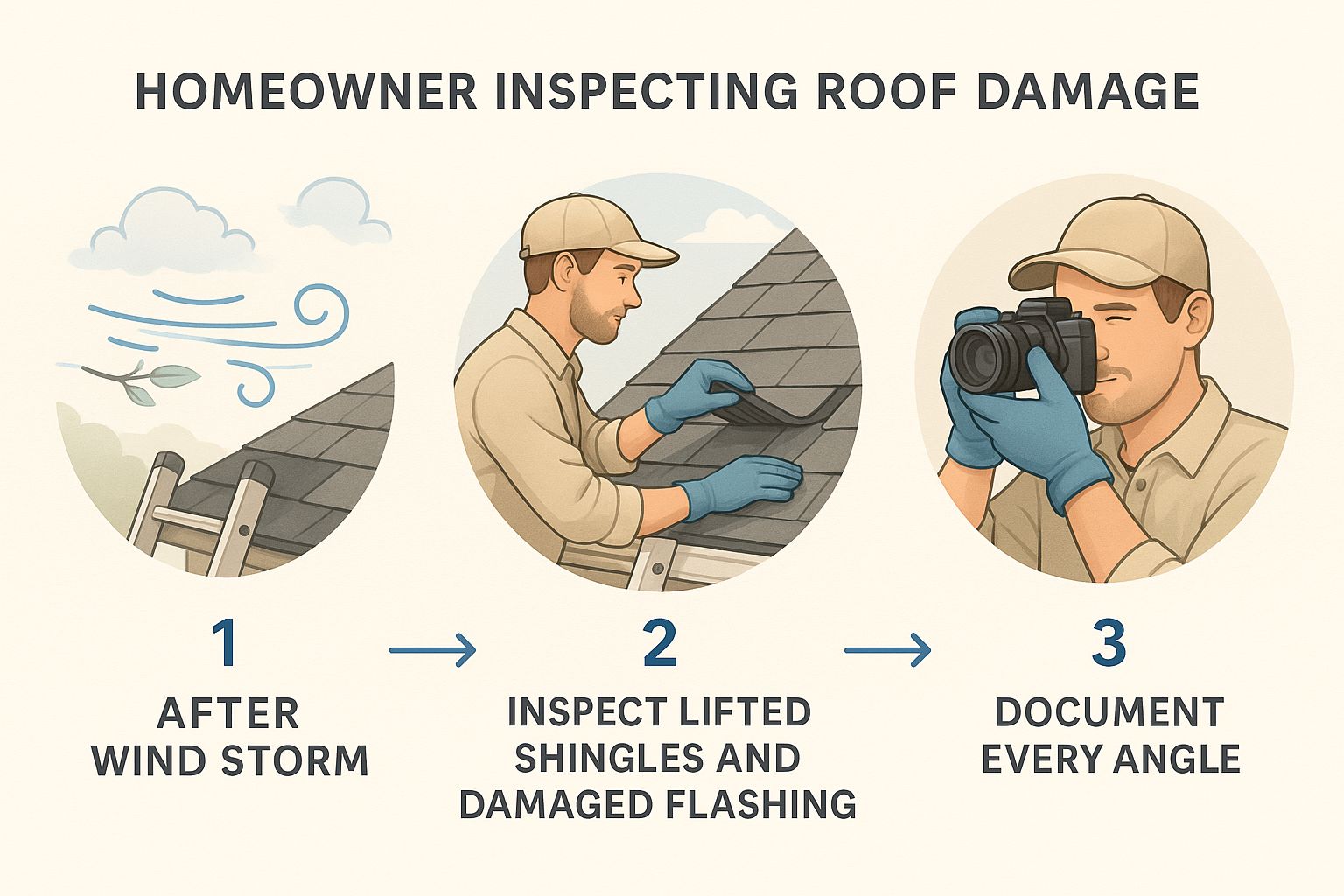
A systematic approach, from safety checks to detailed photography, is the foundation of a solid claim. Proper damage documentation is non-negotiable if you want to secure the settlement you deserve.
Mitigate Further Damage
Buried in the fine print of your policy is a clause often called “Duty to Mitigate.” This simply means you’re required to take reasonable steps to prevent the existing damage from getting worse. For a damaged roof, this almost always means performing a temporary repair, like throwing a tarp over a hole to keep rain out of your attic.
But—and this is a big one—do not attempt any permanent repairs before the insurance adjuster has done their inspection. Fixing the roof prematurely can completely derail your claim. Just cover the exposed areas to prevent more water from getting in. Make sure you keep the receipts for any materials you buy, like tarps, plywood, or rope, because these expenses are usually reimbursable.
You’re not alone in this. It’s staggering to realize that between 2018 and 2022, wind and hail damage was responsible for about 42% of all insured home losses in the U.S. The average claim payout for these incidents was around $13,511. This is a common and costly problem for homeowners everywhere.
To help you stay on track during this stressful time, here’s a quick checklist of the most important first steps.
Immediate Action Checklist for Roof Wind Damage
| Action Item | Why It’s Critical | Pro Tip |
|---|---|---|
| Prioritize Safety First | Check for downed power lines, gas leaks, or unstable structures before approaching your home. Your well-being is more important than property. | If you see any downed power lines, stay at least 35 feet away and call your utility company and 911 immediately. |
| Thorough Photo/Video Documentation | This is your primary evidence. Capture damage from multiple angles (wide shots and close-ups) before any temporary repairs are made. | Narrate your videos. Point out specific damages like “This is the east side of the roof, and you can see the shingles are lifted here.” |
| Perform Temporary Repairs | Your policy requires you to prevent further damage. Tarping holes or boarding up windows protects your home and shows the insurer you’re being responsible. | Take “before” and “after” photos of the temporary repair. Keep all receipts for materials like tarps and plywood for reimbursement. |
| Contact Your Insurance Company | The sooner you start the claims process, the better. Have your policy number ready and provide a concise description of the damage. | Don’t say “the whole roof is destroyed.” Instead, say, “My roof sustained significant wind damage and I need an adjuster to inspect it.” |
| Keep a Detailed Communication Log | Document every call and email with your insurer: date, time, who you spoke with, and a summary of the conversation. | An email is better than a phone call because it creates a written record. Follow up important calls with a summary email to the representative. |
Following these initial actions methodically sets the stage for a smoother, more successful claims process down the road.
Understanding Your Wind Damage Coverage

Before you even think about dialing your insurance company, you need to know exactly what you’re dealing with. Going into a wind damage roof insurance claim without reading your policy first is a recipe for disaster. The language is dense and often confusing on purpose, but a couple of key terms will make or break your entire settlement.
The absolute biggest one to understand is Actual Cash Value (ACV) versus Replacement Cost Value (RCV).
ACV is essentially the “garage sale” price for your roof. It pays you for the depreciated value of your 15-year-old shingles, not what it actually costs to install a new roof today. RCV is the good stuff. This is the coverage that pays the full price to replace your damaged roof with new, similar-quality materials.
The difference between an ACV and an RCV payout can be massive—we’re talking thousands, even tens of thousands, of dollars. One leaves you covering a huge chunk of the bill yourself, while the other is designed to make you whole again.
This one detail is where so many claims go sideways. To see just how much this can impact your bottom line, it’s worth taking a moment to learn more about how ACV vs RCV policies work and the math behind them. Knowing which one you have shapes your entire claim strategy from the start.
Finding the Devil in the Details
Go find your policy declarations page. It’s usually the first page or two in your insurance packet and serves as the summary of your coverage. This is where the gold is buried.
You’re looking for a few key things:
- Coverage A – Dwelling: This is the max insured value for your home’s structure.
- Deductible Type: Is it a simple flat deductible (like $1,000) or a separate, and much higher, wind/hail or hurricane deductible?
- Policy Type: It should clearly state whether your coverage is Replacement Cost Value (RCV) or Actual Cash Value (ACV).
The Nasty Surprise of Percentage Deductibles
Many homeowners, especially in states prone to bad weather, get a brutal shock when they realize they don’t have a straightforward flat deductible. Instead, they’re stuck with a percentage-based deductible for wind damage, which is a whole different ballgame.
This isn’t a percentage of the repair cost; it’s a percentage of your home’s total insured value.
Let’s say your home is insured for $400,000 and you have a 2% wind deductible. That means you are on the hook for the first $8,000 of repairs, not a simple $1,000 or $2,500. This single detail can completely change the financial outcome of your claim. Finding this number before you call the insurance company gives you the power to set real expectations and plan your next move.
Time to File the Claim (And Do It Right)
Actually filing your claim is much more than just picking up the phone. You’re setting the stage for the entire process, and how you present your case from that very first conversation can make a huge difference.
Before you even think about dialing your insurance company, get your ducks in a row. This is not the time to be scrambling for paperwork while you’re on hold. Find your policy number, confirm the exact date the wind hit, and have a simple, clear summary of the damage you’ve spotted.
Making That First Call
The words you choose when you first report the damage are critical. So many homeowners unintentionally shoot themselves in the foot by downplaying the damage. They’ll say things like, “it looks like we lost a few shingles.” Don’t do that.
Be direct. Be factual. A much better approach is to say something like this: “My home sustained significant roof damage during the storm on [Date]. I need to open a claim and get an adjuster scheduled to come out.”
This language works. It’s not speculative—you’re not claiming to be a roofing expert—but it clearly establishes the serious nature of the situation. Your only goal on this call is to get your claim number and the name and contact info for the adjuster they assign to you.
Keep this in mind: the person you’re speaking to is taking notes on every single thing you say. Stick to the facts. You’re simply reporting damage that needs a professional look; you are not giving a final diagnosis.
Start Your “Claim File” Immediately
From this point on, you need to become an obsessive record-keeper. This isn’t just about staying organized; it’s about building your evidence. Get a physical binder or create a dedicated folder on your computer—or better yet, do both.
This file is now the single source of truth for your entire wind damage roof insurance claim. Every email, every photo, every receipt, every note gets filed away here. After you hang up the phone with anyone from the insurance company, make a quick note: date, time, who you spoke with, and what was said.
At a minimum, your claim file should contain:
- Your Policy: A complete copy of your homeowner’s insurance policy, especially the declarations page.
- Proof of Damage: All the photos and videos you took right after the storm.
- Communication Log: A running document where you track every single interaction.
- Receipts: Any money you’ve spent on temporary fixes, like buying a tarp.
- Your Claim Number: Write this in big, bold letters on the front of the folder. You’ll need it constantly.
This one habit changes everything. It shifts you from being a victim of the process to being the manager of your claim. When an adjuster asks for a specific receipt from three weeks ago, you won’t be digging through a junk drawer. You’ll pull it right out, instantly showing them you’re on top of things. This simple organizational step is honestly one of the most powerful things you can do to get a fair and timely settlement.
Managing the Insurance Adjuster’s Inspection

This is it. The single most important moment in your entire wind damage roof insurance claim is when the insurance adjuster shows up at your door. The report they write after this visit will directly dictate the size of that settlement check. It’s a meeting you absolutely cannot afford to walk into unprepared.
And you should never, ever go it alone.
Your smartest move—and frankly, a non-negotiable one—is to have your own trusted, local roofing contractor there with you, on the roof, during that inspection. This isn’t just a good idea; it’s a strategic necessity. Remember, the adjuster works for the insurance company. Their goal is to assess, document, and close the claim. Your roofer, on the other hand, works for you. Their only goal is to make sure your roof gets a complete and proper repair that will last.
When you have a pro on your side of the table, the entire dynamic shifts. It’s no longer an interrogation. It becomes a peer-to-peer discussion between two experts, which instantly levels the playing field.
What the Adjuster Sees vs. What Your Roofer Finds
Insurance adjusters are trained to spot the obvious stuff. They’re looking for textbook examples of wind damage, like entire shingles that have been ripped off and are now sitting in your yard. But here’s the thing: a huge amount of legitimate wind damage is much more subtle and easily missed, especially by an adjuster who might be on their fifth inspection of the day.
This is precisely where your roofer earns their keep. They act as your on-site advocate, pointing out the less obvious damage that a hurried adjuster might otherwise glance right over.
We’re talking about things like:
- Creased Shingles: The wind can lift a shingle, bend it back, and then let it lay flat again. It might look okay from the ground, but that crease has permanently compromised its integrity. That’s a future leak just waiting for the right storm.
- Broken Sealant Strips: Even without a visible crease, high winds can break the thermal seal that bonds one shingle to the next. This allows wind-driven rain to get underneath, which is a recipe for disaster.
- Significant Granule Loss: A little granule loss is normal wear-and-tear. But a severe windstorm can literally “scrub” the protective granules off your shingles, which is like stripping the sunscreen off your roof. It drastically shortens its lifespan.
Think of it this way: The adjuster’s job is to document the damage that is easy to see today. Your roofer’s job is to find the hidden damage that will cause massive headaches six months or a year down the road. Without that expert second opinion, you could be leaving thousands of dollars in necessary repair costs on the table.
Your Job During the Inspection
While your roofer is up there talking shop and pointing out technical details, your role is to guide the overall process. Before the adjuster even pulls up, you should do a full walk-around of your property with your contractor. Together, build a master list of every single spot you’ve both identified as damaged.
When the inspection begins, use that documentation. Be an active participant. Point to specific areas and pull up the photos you took right after the storm. Don’t be afraid to ask direct questions to make sure everything gets logged.
A couple of examples: “Did you get a good look at the creasing on the west slope that my roofer was showing you?” or “Can we just confirm that the damaged flashing around the chimney is included in your notes?”
This isn’t about being confrontational; it’s about being thorough. This proactive approach forces a complete evaluation and makes it incredibly difficult for the insurance company to come back later with a lowball offer based on a rushed or incomplete inspection. You’re no longer just a bystander—you’re an active, informed manager of your own claim.
How to Dispute a Low Settlement Offer
It’s one of the most sinking feelings in the entire claims process. You’ve waited weeks, maybe longer, and the settlement offer from your insurance company finally lands in your inbox. Your stomach just drops. The number isn’t just a little off; it’s nowhere close to what you need to actually fix your roof.
Don’t panic. This isn’t the final word. Think of it as the insurance company’s opening bid in a negotiation.
Getting a lowball offer on your wind damage roof insurance claim feels personal, but it’s often just a standard tactic. Your first move isn’t to get angry—it’s to get strategic. You need to formally request a complete, itemized copy of the insurance adjuster’s estimate and report. That document is the key to understanding exactly how they came up with their low number.
Analyze the Adjuster’s Report Line by Line
Once you have that report, put on your detective hat. Sit down with the estimate from your own trusted roofer and compare them side-by-side, line by line. You’re hunting for discrepancies, omissions, and flat-out errors.
Keep a sharp eye out for these common issues:
- Incorrect Measurements: Did their adjuster even measure your roof’s square footage correctly? A small miscalculation here can slash thousands off your settlement.
- Missing Line Items: Did they conveniently forget to include the cost of removing and hauling away the old shingles? What about renting a dumpster or pulling the required permits? These are all real-world costs that must be covered.
- Lowball Material and Labor Costs: Insurance adjusters often rely on generic pricing software that pulls from national averages. This rarely reflects the actual market rates for labor and materials in your specific town. Your local roofer’s quote is based in reality.
This meticulous analysis is how you build your counter-argument. You’re taking the conversation out of the realm of opinion and grounding it in hard facts and figures.
The Power of Competing Estimates
Just telling your insurance company their offer is too low won’t get you anywhere. You have to prove it with undeniable evidence. This is where getting multiple, detailed estimates from reputable, local roofing contractors becomes your most powerful weapon.
Each estimate needs to be a comprehensive document, not just a total price scribbled on a piece of paper. It should break down every single cost: materials, labor, permits, and any special equipment needed. When you present two or three professional estimates that all come in significantly higher than the insurer’s offer, it becomes very difficult for them to claim their number is fair.
Your goal is to build a case so strong and well-documented that it’s easier for the insurance company to approve a higher settlement than it is to continue fighting you. This is how you shift the balance of power back in your favor.
The financial stakes here are incredibly high. In the first half of 2025 alone, global insured catastrophe losses hit a staggering $100 billion, with severe wind events in the United States driving a large part of that. As you can read in these global catastrophe loss trends on Risk & Insurance, homeowners face huge financial risks if they don’t advocate for themselves.
Knowing When to Call for Backup
What if you’ve presented all your evidence and the insurance company still refuses to budge? It’s time to escalate. You have two main options for professional backup: a public adjuster or an attorney.
A public adjuster works for you, not the insurance company. They are licensed experts who speak the insurance company’s language. They take over the entire dispute, from re-evaluating the damage to negotiating directly with the insurer, usually for a percentage of the final settlement. Many homeowners don’t realize what an advantage they provide. You can learn all about the benefits of hiring a public insurance adjuster in our guide.
If your dispute gets tangled in complex legal issues or you suspect the insurer is acting in bad faith, you may need an attorney who specializes in property claims. Fighting a low offer is a marathon, not a sprint. But with the right evidence and professional support, you can turn that initial disappointment into a fair settlement that actually makes you whole again.
Clearing Up the Confusion: Common Questions on Wind Damage Claims
After a storm rolls through, you’re left with more than just a damaged roof—you’re left with a ton of questions. Even after you get the ball rolling with your claim, uncertainty can creep in. Getting straight answers to these common worries can mean the difference between a smooth process and a costly headache, giving you the confidence you need to handle your wind damage roof insurance claim the right way.
One of the biggest sources of anxiety for homeowners is time. And for good reason.
How Long Do I Really Have to File a Claim?
This is a critical question, and the answer isn’t always straightforward. The deadline, officially called the statute of limitations, is all over the map. It changes from state to state and can even vary based on the fine print in your specific policy. Some states might give you a couple of years, but others have a much tighter window—often just one year from the date the storm hit.
Here’s the thing, though: waiting is never a good idea. The more time that passes, the easier you make it for your insurance company to argue that something else caused the damage, not the storm. The absolute best move is to file your claim the moment you realize there’s a problem. If you need to find your specific deadline, dig into your policy and look for a section called “Duties After a Loss.”
Is Filing a Claim Going to Make My Insurance Rates Skyrocket?
It’s a fear that stops a lot of people in their tracks, but a single weather-related claim usually isn’t going to trigger a massive rate hike all by itself. What often happens is that insurers raise rates across an entire area after a major storm. That means your premium could go up whether you file a claim or not.
On top of that, many states have laws on the books that stop insurers from punishing you for filing a claim from an “Act of God.” Don’t let the fear of a small potential increase stop you from claiming thousands of dollars in necessary roof repairs.
I see it all the time: a homeowner pays $4,000 out-of-pocket for a repair just to avoid a potential $100 yearly premium increase. The math just doesn’t work. This is exactly what you pay for insurance to cover.
What Happens if My Shingles Are Discontinued?
This is a surprisingly common problem, especially for roofs that are 10 or 15 years old. This is where your policy’s “matching” coverage becomes your best friend. A good policy won’t just pay to replace a few shingles; it will cover the cost to replace an entire slope or even the whole roof to make sure everything looks uniform. A mismatched, patchwork roof is an eyesore that can seriously tank your home’s resale value.
Scan your policy documents for language like “matching” or “line of sight” coverage. If your insurer tries to lowball you by only offering to pay for the few damaged shingles, you know you have a major point of negotiation on your hands.
Should I Bother Getting Contractor Estimates Before I File?
Yes. One hundred percent, yes. Getting at least three detailed, itemized estimates from trusted local roofers is one of the most powerful things you can do. It gives you a real-world benchmark for what the repairs should actually cost, making it painfully obvious if your insurer’s offer is way off the mark.
When you hand those professional estimates to the adjuster, it adds a massive amount of weight and credibility to your position. It’s a lot harder for them to justify a lowball settlement when you have solid proof from the market showing what the work truly costs.
If you’re dealing with a denied, delayed, or underpaid claim, you don’t have to fight the insurance company on your own. The team at For The Public Adjusters, Inc. works for you—not the insurer—to make sure you get every dollar you’re entitled to. Get a no-cost claim review today and let us take over the fight.