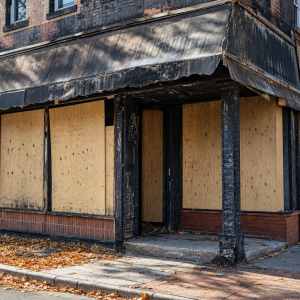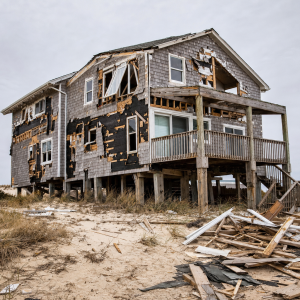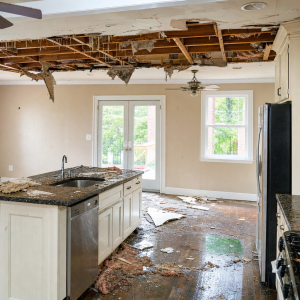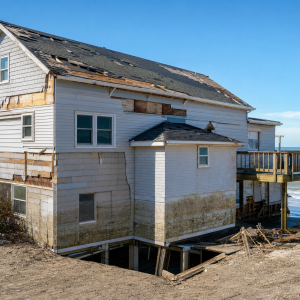
It’s a sickening feeling. Walking up to your property to find it spray-painted, windows shattered, or senselessly destroyed. That initial shock and violation quickly turn to anger and frustration, especially when you realize the real fight is just beginning.
You’ve paid your insurance premiums on time, year after year, believing your carrier would have your back when you needed them most. But now, as you start the vandalism insurance claim process, you’re about to discover a harsh reality: your insurance company isn’t your partner. They’re your opponent. Insurers like State Farm and Allstate have built their empires by collecting premiums and then using every trick in the book to minimize, delay, and deny legitimate claims.
This guide is your battle plan for when that opponent tries to lowball, delay, or flat-out deny your claim.

Your Guide to Disputing a Vandalism Insurance Claim
When you file a claim, you’re not just filling out paperwork. You’re entering an adversarial negotiation where the other side’s primary goal is to pay you as little as legally possible.
This isn’t just bad luck; it’s a calculated business strategy. Insurance giants like State Farm and Allstate are massive corporations focused on one thing: profit. They train their adjusters to be professional skeptics, armed with tactics designed to minimize every single payout. They know that if they make the process difficult and frustrating enough, you might just give up and accept a fraction of what your claim is actually worth.
Understanding the Insurer’s Mindset
From the second you call to report the damage, a file is opened, and your claim is immediately viewed through a lens of suspicion. Insurers see vandalism and “malicious mischief” claims as having a high potential for fraud, so they scrutinize them with a fine-toothed comb.
To win this fight, you have to know their playbook. Expect them to deploy a few common tactics right out of the gate:
- The Lowball Offer: An adjuster will show up, do a quick inspection, and present a settlement offer that seems fast. It’s also guaranteed to be insultingly low. They’re betting you’re desperate to start repairs and will take the first check they dangle in front of you.
- The Delay Tactic: Suddenly, the adjuster who was so quick to respond goes silent. They’ll ask for the same documents multiple times, miss deadlines they set themselves, and drag their feet for weeks or months. This is a war of attrition. They want to wear you down until you break.
- The Policy Language Trap: They will dig through your policy looking for any exclusion or condition they can twist to use against you. They’ll bring up confusing clauses about “vacancy” or nitpick the definition of “vandalism” to justify a denial or a smaller payment.
Taking Control of the Narrative
This isn’t just a guide on how to fill out a form. This is about arming you with the strategies to dismantle their arguments and force your insurer to honor the contract you paid for. We’ll show you how to build an ironclad evidence package, dissect and challenge an adjuster’s shoddy estimate, and cut through the confusing policy language they hide behind.
The entire conflict boils down to one thing: you want to be made whole, and your insurer wants to protect its bottom line. To win, you have to make it more painful and legally risky for them to underpay you than to just pay you what they owe.
This is your property and your claim. You are not powerless against a corporate giant when you have the facts on your side and a solid strategy.
Insurer Tactic Vs Your Counter-Strategy
Insurance companies rely on a standard set of tactics because, most of the time, they work. Policyholders get overwhelmed and give in. But when you know what to expect, you can prepare a counter-move for every tactic they throw at you.
Here’s a quick look at their common moves and how you can shut them down.
| Common Insurer Tactic | Your Effective Counter-Strategy |
|---|---|
| The Quick, Lowball Offer | Never accept the first offer. State that you are still assessing the full scope of damages and will be submitting your own detailed repair estimate from a trusted contractor or public adjuster. |
| Requesting a Recorded Statement | Politely decline. You are only required to cooperate, not to give a recorded statement that can be twisted and used against you later. Provide all information in writing. |
| Claiming Damage is “Pre-Existing” | Provide dated photos or videos of your property from before the vandalism occurred. Maintenance records and receipts for prior work can also shut down this argument. |
| Using Vague Policy Exclusions | Demand the insurer provide the exact policy language they are citing, in writing. Ask them to explain how it applies specifically to your damages. Vague references aren’t enough. |
| Delaying Communication | Document every single interaction. Follow up every phone call with an email summarizing the conversation. Create a paper trail that proves their bad faith tactics. |
Think of this as a chess match. By anticipating their moves, you stay in control of the board and protect your right to a fair settlement.
Building an Airtight Case Against Your Insurer
When your property is vandalized, your insurance company’s most effective weapon against you is doubt. An adjuster from a carrier like Allstate or State Farm is trained to look for inconsistencies, question your timeline, and find any reason they can to minimize what they have to pay you. Your job is to systematically eliminate every shred of that doubt.
This isn’t just about taking a few photos. It’s about building a case so strong and so thoroughly documented that it becomes legally and financially risky for them to deny or lowball your vandalism insurance claim. You need to construct a fortress of irrefutable evidence.
Go Beyond Photos with a Video Walkthrough
Photos are essential, but they don’t tell the whole story. A video walkthrough captures the scene in a way that a series of static images never could.
Start recording before you even set foot in the damaged area. As you walk through, narrate exactly what you see, in real-time. Describe the smells, the sounds of crunching glass under your feet, and the general feeling of violation. This narrative context is incredibly powerful and very difficult for an insurer to dismiss.
- Move slowly and deliberately as you go from room to room or across the property.
- Zoom in on the details: show the pry marks on a doorframe, the exact words spray-painted on a wall, or the shattered components of a piece of equipment.
- Verbally note the time and date right at the beginning and end of the recording. This establishes a clear, undeniable timeline.
This video essentially becomes a guided tour of the vandalism, making it impossible for an adjuster to later claim they didn’t understand the full scope of your loss.
Solidify Your Timeline and Losses
Your word alone isn’t enough for an insurance company that’s looking for an excuse to pay less. You have to anchor your claim with official, third-party documents that they simply cannot dispute.
The first and most critical piece of evidence is the official police report. This document legally establishes that a crime occurred at your property on a specific date. It immediately shuts down any insinuation that the damage was pre-existing or, worse, self-inflicted. Always get a full copy for your claim file.
Next, get some formal witness statements. Talk to neighbors, employees, or anyone who saw or heard anything. A simple signed letter detailing what they witnessed—even if it’s just confirming the property was pristine the day before—adds another layer of validation to your timeline.
To build an airtight case, you have to meticulously document all damages. This includes things that require essential locksmith services to repair or replace locks and security systems. Those costs are a crucial part of your claim.
Create an Indisputable Financial Record
The final, and arguably most important, step is to create a detailed inventory of every single item that was damaged or stolen. This is more than just a list; it’s a comprehensive financial document. For every single item, you need to include:
- Description: The brand, model number, and serial number if you have it.
- Age: When and where you bought it.
- Proof of Ownership: Find the receipts, credit card statements, or even the original packaging.
- Replacement Cost: Research what it would cost to buy a new, comparable item today.
This detailed list becomes the backbone of your financial demand. The more thorough this inventory is, the less room the adjuster has to argue with your numbers. This is a critical component when you are preparing a formal sworn statement. You can learn more by reading our guide on how to complete a Proof of Loss form.
An adjuster can argue with your opinion, but they can’t argue with a stack of receipts, a police report, and a detailed video. Your goal is to overwhelm them with facts until paying your claim fairly is their only logical option.
The process flow below outlines the key stages of disputing a claim, starting with documentation.

This visual just reinforces the point: a successful dispute begins with meticulous documentation. It’s what empowers you to challenge the insurer and take control of the outcome.
Decoding the Policy Language Insurers Use to Deny Claims
Let’s be honest: insurance policies are dense, confusing documents, and that’s not an accident. Carriers like State Farm and Allstate pack them with jargon, technical definitions, and sneaky exclusions that their adjusters weaponize to underpay or flat-out deny a valid vandalism insurance claim.
Your policy isn’t a promise to make you whole. It’s a legal contract, and you better believe the fine print is engineered to protect their profits, not your property.
Understanding these traps is your first line of defense. When an adjuster starts quoting obscure policy sections, they aren’t trying to educate you. They’re building their case for a denial, and you have to be ready to tear that case apart.
Vandalism vs. Malicious Mischief
This is one of the oldest tricks in the book. The adjuster creates a distinction where, in the real world, there is none. While you and I might use “vandalism” and “malicious mischief” interchangeably, some policies define them differently just to create a loophole.
- Vandalism is often defined narrowly as the willful and malicious destruction of property.
- Malicious Mischief can be interpreted more broadly, sometimes including acts done with reckless disregard, even if total destruction wasn’t the main goal.
Here’s how they use it against you. Imagine kids break into your commercial property and discharge a fire extinguisher everywhere just for kicks. The insurer might argue it was just “mischief,” not “vandalism,” and claim it’s excluded. It’s a deliberate, bad-faith misreading designed to make you give up.
The Notorious Vacancy Clause
This is the nuclear option for insurers, especially on commercial properties or rental homes. The “vacancy” or “unoccupancy” exclusion is probably the most common reason vandalism claims get denied. Insurers will fight tooth and nail to prove your property was vacant because it often voids coverage for vandalism entirely.
They lean on a very strict definition: a property is vacant if it lacks the necessary furnishings for its intended use. A property is simply unoccupied if the stuff is there, but the people are temporarily away.
An adjuster sees your rental home is between tenants and immediately slaps a “vacant” label on the file. They’ll completely ignore the fact that the property was just unoccupied for a few weeks while you were getting it ready for new residents. This bad faith tactic was challenged in TRB Investments, Inc. v. Fireman’s Fund Ins. Co., where the court ultimately had to clarify that a building being prepared for a tenant was not “vacant” in the way the insurer claimed, forcing the company to pay.
Exclusions Hidden in Plain Sight
Beyond the vacancy clause, your policy is a minefield of other exclusions that adjusters use to chip away at your settlement. They know most people don’t read their entire policy until after a disaster strikes.
Here are a few common ones they’ll try to pull on you:
- Theft from a property under construction: They might agree to cover the physical damage from the vandalism but then deny the claim for the expensive tools or copper piping that was stolen.
- Glass breakage: Many policies have much lower limits for broken glass or exclude it completely if the property has been unoccupied for a set number of days.
- Graffiti removal: It seems like a textbook case of vandalism, right? But some policies classify graffiti under a separate, more limited coverage—or exclude it entirely.
Worse, an adjuster might try to re-characterize the damage altogether. If vandals broke a pipe and flooded your building, the insurer might try to deny the claim based on a water damage exclusion. They deliberately ignore the fact that a covered peril—vandalism—was the actual cause. It’s a classic bad-faith move.
The only way to fight back is to know exactly what your policy says and how to dismantle the insurer’s self-serving arguments. Getting a deep understanding of your policy is a critical skill, and you can get a head start by learning how to read an insurance policy the right way. That knowledge is what empowers you to call their bluff and demand the full coverage you’ve been paying for.
Why Your Vandalism Claim Faces Intense Scrutiny
Ever wonder why your legitimate claim is being treated with such suspicion? You’ve provided photos, filed a police report, and done everything right, yet your insurance company is treating you like a suspect instead of a victim.
It’s because large insurance carriers are hardwired to protect their bottom line. They view every vandalism insurance claim through a lens of potential fraud.
This isn’t personal; it’s a cold, calculated business reality. Understanding this industry mindset is crucial because it explains why your fight for a fair settlement feels so unnecessarily difficult. You aren’t just proving a loss—you are actively fighting against a culture of inherent skepticism.
The High Cost of Fraud Creates a Culture of Doubt
Insurance companies aren’t just being difficult for the sake of it. They operate in an environment where fraud is a massive, costly problem, and that has real consequences for honest policyholders like you.
Across the industry, vandalism is a small slice of property claims by frequency, but it’s disproportionately expensive when a claim gets filed. In the United States alone, property and casualty insurance fraud costs about $45 billion annually.
With suspicious or fraudulent claims making up an estimated 2–10% of all payouts, this burden adds roughly $400–$950 per year to the average family’s premiums. It’s this multi-billion-dollar problem that forces insurers like Allstate and State Farm to develop aggressive fraud-detection protocols. Your claim is run through algorithms and cross-referenced against “red flag” indicators before an adjuster even picks up the phone.
Red Flags That Trigger an Insurer’s Suspicions
Your claim might be completely valid, but certain circumstances can automatically place it under a microscope. Adjusters are trained to hunt for specific patterns they associate with fraudulent activity.
- Recent Policy Changes: Did you just increase your coverage limits or take out the policy? This is a huge red flag for insurers, who might suspect the damage was planned.
- Financial Distress: If they discover you’re behind on your mortgage, facing foreclosure, or have significant business debts, they will scrutinize your claim for a financial motive.
- Claim History: A history of previous claims—especially for similar issues like theft or vandalism—will trigger an immediate and more intensive investigation.
- Vague Details: If you’re unclear about the timeline of events or can’t provide specific details about what was damaged, the adjuster’s suspicion will grow.
Understanding real-world incidents, like these client experiences with construction site raids, can shed light on why certain claims face such intense scrutiny. The potential for high-value theft of materials alongside vandalism makes these sites prime targets for fraud investigations.
Your meticulously documented evidence is your only defense against this default suspicion. You must prove not only that the damage occurred but also that it couldn’t have been caused by you or someone acting on your behalf.
The insurer’s investigation will feel invasive because it is. They may pull your credit report, interview your neighbors and employees, and search for any inconsistency in your story to justify a denial.
How This Skepticism Impacts Your Claim
This built-in skepticism directly translates into the frustrating tactics you’re experiencing.
That lowball offer isn’t just a negotiation tactic; it’s a test to see if you’ll accept a fraction of what you’re owed because they perceive a weakness in your claim. The endless requests for more documentation are designed to wear you down and hopefully find a contradiction.
By understanding that the system is designed to be skeptical, you can prepare for it. You can see why a detailed, third-party documented case is non-negotiable. It’s not just about proving your loss; it’s about systematically dismantling the insurer’s built-in reasons for doubt. This knowledge empowers you to build a case that is not just valid but is also resilient enough to withstand their toughest scrutiny and force them to pay what they rightfully owe.
How a Public Adjuster Can Win Your Fight
When your property gets vandalized and your insurance company starts playing games, it’s easy to feel completely outmatched. The adjuster your insurer sends over works for them, not you. Their job is to protect the company’s bottom line.
Right there, you have a massive conflict of interest. To level the playing field, you need a professional advocate who works exclusively for you: a public adjuster.
Hiring a public adjuster is the single most powerful move you can make in a disputed vandalism insurance claim. They are licensed experts in policy language, damage assessment, and claims negotiation. Unlike the company adjuster, their only loyalty is to you.
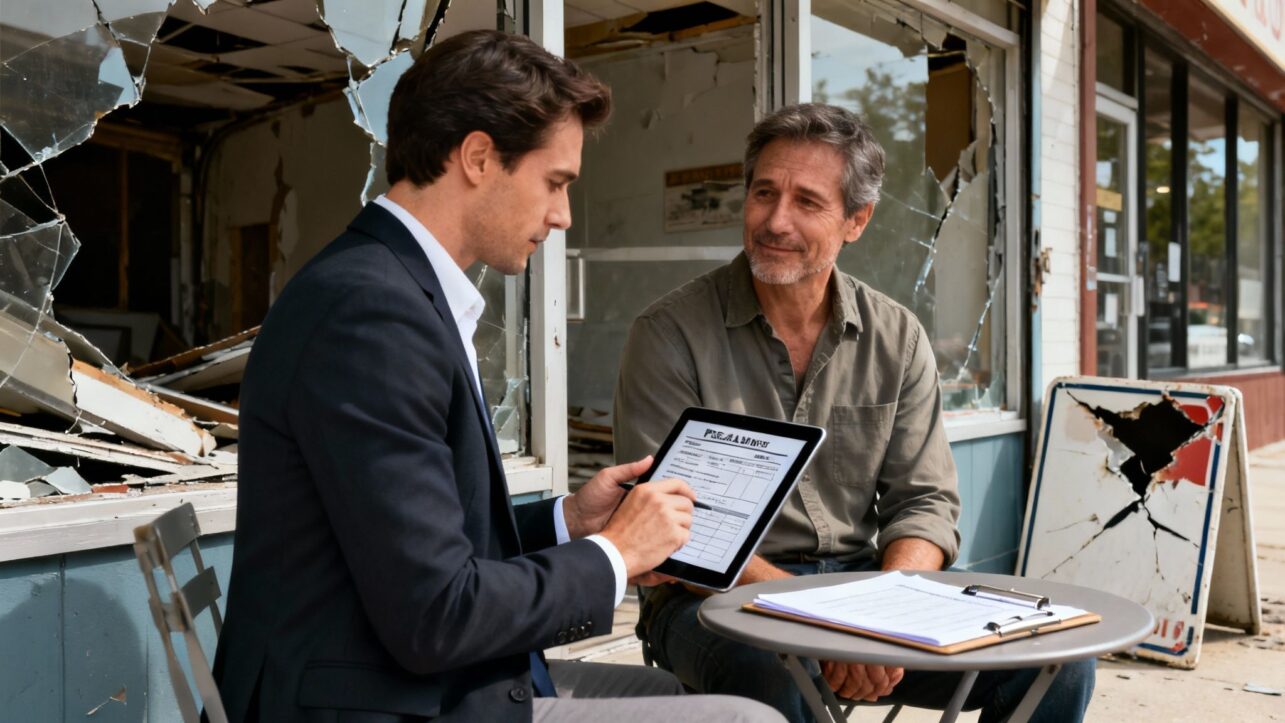
They take over the entire grueling process, from re-evaluating the damage to handling every last frustrating phone call and email with the insurance company.
Independent Damage Assessment and Valuation
The insurance company’s adjuster will often perform a quick, superficial inspection designed to produce the lowest possible repair estimate. It’s their standard playbook. A public adjuster does the exact opposite.
They conduct a meticulous, independent investigation of the vandalism, uncovering damage the company adjuster conveniently overlooked or ignored. They bring in their own team of trusted contractors, engineers, and inventory specialists to document the true scope and cost of your loss.
This isn’t a quick walk-through. This is a deep dive:
- A forensic review of the damage: They’re looking for hidden issues like structural damage from a forced entry or smoke and soot damage from a small fire set by the vandals.
- Creating a detailed scope of work: Using the same professional software as the insurers (like Xactimate), they build a line-by-line repair estimate that is accurate, comprehensive, and defensible.
- Valuing business interruption: For commercial claims, they calculate the full financial impact of the downtime—a complex area where insurers love to lowball.
This professional, evidence-backed estimate becomes the new baseline for negotiations. It forces the insurer to justify their cheap offer against a credible, expert-prepared document they can’t easily dismiss.
A Real-World Case Study in Success
Take the case of a small business owner in North Carolina whose retail store was extensively vandalized. The insurer, a major national carrier, came out quickly and offered $45,000 to cover everything. The offer felt like a slap in the face, but the owner was overwhelmed and had no idea how to fight back.
Feeling defeated, he hired a public adjuster. The PA immediately spotted numerous overlooked items: damage to the HVAC system from debris, significant business income lost during the forced closure, and the high cost of specialized cleaning to remove spray paint from historic brickwork.
The public adjuster re-scoped the entire loss and compiled a new claim package totaling over $150,000. After intense negotiations where the PA systematically dismantled the insurance company’s weak arguments, the insurer finally agreed to a settlement of $142,500—more than triple the original offer. This is the tangible financial impact an expert advocate delivers.
Navigating the Insurer’s Skepticism
You have to understand that insurance companies are naturally skeptical of vandalism claims. They know that property and casualty fraud—including fabricated break-ins—accounts for about 10% of industry fraud losses worldwide. That translates to roughly $122 billion in annual costs.
Because of this, your claim is immediately run through their fraud models. A public adjuster knows how to build a case that preemptively crushes this skepticism with irrefutable proof.
When you hire a public adjuster, you’re not just getting help with paperwork. You’re hiring a strategist, a negotiator, and an expert who forces the insurance company to honor the policy you paid for.
They handle the fight so you can focus on recovering and rebuilding. The value isn’t just in the final settlement amount; it’s in the peace of mind that comes from having a true professional in your corner. If you are struggling with a claim, you can discover more about the benefits of hiring a public claims adjuster in our detailed guide.
Navigating a Disputed Vandalism Claim
When your insurance company digs in its heels, it feels like you’ve hit a brick wall. The adjuster suddenly stops returning your calls. A denial letter lands in your mailbox, stuffed with confusing jargon. Or you get a final settlement offer that’s frankly insulting.
This is a critical moment in your vandalism insurance claim, and how you react will make or break your outcome. Don’t panic. You are not out of options. Here are direct, real-world answers to the toughest challenges you’ll face.
What Should I Do if the Insurer’s Estimate Is Too Low?
First rule: never, ever accept the first offer. An insurance company’s initial estimate isn’t a good-faith assessment of your damages; it’s a strategic opening bid in a negotiation. The adjuster they send is trained and paid to minimize what they pay out. Period. Accepting their lowball number is exactly what they’re hoping for.
You need to dispute their estimate immediately, and you have to do it in writing. Don’t just complain that it’s too low—get specific. Point out every single missing line item, the undervalued materials, and the inadequate labor costs they conveniently left out.
More importantly, you have to hit back with your own estimate. This needs to come from a trusted, independent contractor or, for maximum leverage, a public adjuster. A public adjuster uses the same industry-standard software, like Xactimate, that the insurance company does. This instantly creates a direct, line-by-line comparison that forces them to defend their numbers against an expert-level report.
The argument is no longer about their lowball number. It becomes a professional debate between two detailed assessments, forcing them to justify every single dollar.
Can I Fight a Denial Based on a Vacancy Clause?
Absolutely. This is a classic, but often beatable, denial tactic. Insurers like State Farm and Allstate love to use a very strict, self-serving definition of “vacant” (meaning empty of people and property) versus “unoccupied” (property is still there, but people are temporarily away). They weaponize this clause because it often lets them void coverage for vandalism entirely.
If your rental property was between tenants for a few weeks, or your home was fully furnished while you were on an extended trip, you have a strong case that it was merely unoccupied. The key is to fight their definition with cold, hard facts.
A denial based on a vacancy clause is not the final word. It’s a technical argument that can be defeated with the right evidence and a deep understanding of policy language.
Pull out your policy and find the specific definitions for both terms. Then, start gathering proof.
- Recent utility bills show the property was being maintained.
- Time-stamped photos of the furnishings inside prove it wasn’t empty.
- Signed statements from neighbors confirming you were just temporarily away can be incredibly powerful.
This is a technical battle where a public adjuster’s expertise in policy interpretation can be the deciding factor between a denial and a full payment.
Is Suing My Insurance Company for Bad Faith an Option?
Filing a lawsuit for bad faith is a serious move, but it’s an option. Think of it as the final play after you’ve exhausted all other avenues. “Bad faith” is a specific legal claim that your insurer failed to honor its contract with you, and did so without any reasonable basis.
This goes way beyond just disagreeing on the value of your claim. It involves clear misconduct on their part.
- Intentionally delaying your claim for months with no good reason.
- Making zero genuine effort to investigate the damages you reported.
- Deliberately misinterpreting their own policy language just to deny you.
- Refusing to make a reasonable settlement offer when their responsibility is clear.
Before you even consider calling a lawyer, you must meticulously document every single interaction. Keep a log of every phone call, save every email, and note every delay and broken promise. This paper trail is the absolute foundation of any potential bad faith case.
Often, you won’t even need to go to court. Simply having an expert representative like a public adjuster present a well-documented case is enough to make the insurer’s legal team sit up and pay attention. When they’re faced with a credible threat of litigation backed by solid proof, many carriers will suddenly find the motivation to offer a fair settlement to avoid a costly and potentially losing court battle.
Battling an insurance giant on your own is an uphill struggle. At For The Public Adjusters, Inc., we take on that fight for you. We are state-licensed experts who work only for policyholders, never for insurance companies, ensuring you get the full settlement you are owed for your vandalism insurance claim. If you’re facing a denial, delay, or lowball offer, contact us for a no-cost claim review today at https://forthepublicadjusters.com.