Insurance Claim Water Damage NC – Filing an insurance claim for water damage feels like it should be straightforward. You pay your premiums on time, every time, expecting your insurance company to be there for you when disaster strikes.
But the reality is, the moment you file that claim, the dynamic shifts. You’re no longer just a valued customer; you’re a potential liability. Your insurance carrier’s primary goal isn’t to make you whole—it’s to protect their own profits. Understanding this fundamental conflict of interest is the first, most crucial step in fighting for what you’re rightfully owed.
The Reality of a Water Damage Insurance Claim Dispute

When you find your home soaked, the first person you call is your insurance company. You expect a compassionate ear and a rapid response. Instead, you get a company adjuster.
This person works for the insurer—think big names like State Farm or Allstate—and their job performance is measured by how effectively they can minimize payouts. Their loyalty is to their employer, not to you. This creates an immediate, built-in conflict. Their mission isn’t to uncover the full extent of your damages; it’s to close your file for the absolute minimum amount possible, because every dollar they don’t pay you is a dollar that pads their bottom line.
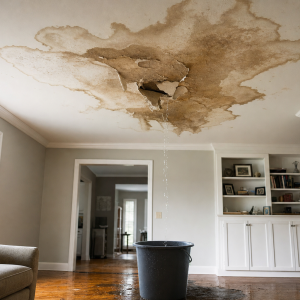
This is where the games begin. The entire process is often designed to wear you down, starting with deliberate delays. It’s not uncommon for your insurer to take days, sometimes even weeks, to send their adjuster out. All the while, that hidden moisture is seeping deeper, turning a water problem into a major mold infestation.
Common Insurer Tactics to Watch For
When the company adjuster does finally show up, their inspection is often frustratingly quick and superficial. They rarely have the sophisticated equipment, like thermal cameras or penetrating moisture meters, needed to find water trapped behind drywall, under hardwood floors, or inside your insulation.
This incomplete inspection leads directly to the most predictable and infuriating part of the process: the lowball settlement offer. Their first estimate is almost guaranteed to:
- Overlook Hidden Damage: They’ll pay for the water stain on your living room ceiling but completely ignore the soaked insulation and budding mold colony in the attic right above it.
- Use Outdated Pricing: They often rely on pricing software that uses national averages for labor and materials, which does nothing to reflect the actual, higher costs in your local market.
- Ignore Necessary Steps: The estimate will conveniently leave out essential line items like professional drying and dehumidification, microbial testing, or the cost of temporary housing while your home is unlivable.
Key Takeaway: An insurer’s first offer is never their final offer. It’s a calculated opening move in a negotiation, intentionally set as low as they think they can get away with. If you accept it, you’re leaving behind the money you absolutely need to fix your home correctly.
The Financial Stakes of Underpayment
This isn’t a small problem. Water and freezing damage account for a staggering 29.4% of all home insurance claims. The industry might tout an average payout of around $13,954, but that number is dangerously misleading. A serious water loss from a burst pipe or failed appliance can easily run into the tens, or even hundreds, of thousands of dollars to fix properly.
When your insurer’s offer falls short, you’re backed into a corner. You either pay the rest out of your own pocket, settle for cheap, shoddy repairs that tank your property value, or live with lingering damage that will cause long-term structural rot and mold-related health problems. If you want to understand the bigger picture, this guide to home insurance claims offers some valuable perspective.
The system is rigged to benefit the insurance company, plain and simple. You can learn more about the fine print in our article on whether homeowners insurance covers water damage. Acknowledging this unfair reality is the only way to prepare yourself for the fight ahead.
Decoding Your Claim Denial Or Lowball Offer
That denial letter in your hands? Or the settlement offer that won’t even cover the paint, let alone the repairs? It’s not a mistake. It’s a strategy.
Insurance companies are masters of confusion. They rely on dense policy language and intimidating jargon to make you feel like you have no other choice but to accept their decision. But peel back the layers, and you’ll find their justifications are often just flimsy excuses designed to protect their profits. Understanding their playbook is the first step to fighting back.
Common Excuses Insurers Use To Deny Claims
One of the oldest tricks in the book is to misclassify where the water came from. Your policy is written to cover damage that is “sudden and accidental”—think a pipe that bursts or a washing machine hose that lets go all at once. So, the insurer’s goal is to reframe your catastrophe as a slow, “gradual” problem you should have fixed.
Their adjuster will walk through your damaged property looking for any excuse to say the damage is from:
- Long-Term Seepage: They’ll find a pinprick of rust on a pipe fitting and declare the leak has been happening for months, conveniently ignoring the fact that your kitchen was just flooded overnight.
- Poor Maintenance: This is a classic. The insurer blames you, claiming you failed to maintain your plumbing or appliances. Suddenly, the financial burden is shifted from their shoulders to yours.
- Existing Wear and Tear: They might argue that an old water heater was a ticking time bomb or an aging roof was bound to fail. They completely ignore that your policy exists to cover exactly these kinds of unexpected failures.
Here’s how it plays out in the real world: A supply line under your sink explodes, flooding the kitchen and soaking the subfloor. Your insurer sends their adjuster, who writes a report saying the pipe showed “long-term corrosion.” Just like that, they’ve reclassified a sudden event as a maintenance issue you ignored, and your claim is denied.
How Insurers Cook Up Lowball Estimates
Even if they approve your claim, the fight has just begun. The estimate you get from the company adjuster is often a work of pure fiction, carefully crafted to justify the lowest possible payout. They have a few go-to methods for this.
First, they use pricing software with outdated numbers. The cost of drywall, lumber, and skilled labor in North Carolina and Virginia can skyrocket after a major storm, but their databases conveniently ignore that reality.
Second, their “scope of work” is a joke. It’s dangerously incomplete. The adjuster’s estimate might include money to replace the soaked drywall but will almost always leave out critical—and expensive—steps like:
- Proper Dry-Out: They won’t budget for the commercial-grade dehumidifiers and high-power air movers needed to actually stop mold before it starts.
- Microbial Testing: They pretend mold isn’t a risk, skipping the tests needed to find hidden growth that can pose a serious health hazard.
- Code Upgrades: They fail to include the cost of bringing your home’s electrical or plumbing systems up to current building codes, which is required by law during most major repairs.
This systematic undervaluing leaves you with a check that can’t possibly cover a professional restoration. You’re left to pay out-of-pocket or cut corners on the repair, which is exactly what they want.
It’s easy to feel cornered when you see these tactics in writing. The insurer presents their reasoning as fact, hoping you won’t question it.
Here’s a look at what they say versus what’s actually happening.
Insurer’s Excuse vs The Reality of Your Claim
| Insurer’s Justification | What It Often Means For You | How A Public Adjuster Fights Back |
|---|---|---|
| “The damage is from long-term seepage, not a sudden event.” | A denial based on a maintenance clause, leaving you with the entire bill. | We bring in independent experts (engineers, plumbers) to prove the failure was catastrophic and sudden, forcing the insurer to acknowledge coverage. |
| “This is due to wear and tear and lack of maintenance.” | The insurer is shifting blame to you to avoid paying. | We document your property’s condition and maintenance records, arguing that policies are meant to cover unexpected failures of aging systems. |
| “Our estimate reflects the fair market cost for repairs.” | The estimate is based on outdated pricing and a minimal scope of work. | We build a new, exhaustive estimate using Xactimate with current local labor and material costs, detailing every necessary step. |
| “The additional damage (like mold) is not covered.” | They are ignoring the direct consequences of the initial water loss. | We prove the mold is a direct result of the covered water event (“ensuing loss”) and force them to pay for proper remediation. |
This isn’t an exhaustive list, but it shows you the game being played. Their goal is to close your claim as cheaply as possible. A public adjuster’s job is to dismantle these weak arguments with facts, evidence, and a deep understanding of your policy.
How to Dispute an Unfair Settlement Offer
Getting a lowball offer or an outright denial for your water damage claim feels like a slap in the face. But let’s be clear: it’s not the final word. It’s the insurance company’s opening shot in a negotiation they’re hoping you won’t even start.
This is the moment you stop being a victim of the process and become an advocate for your own recovery. It’s time to build a case so strong they can’t ignore it. Your first move? Stop taking anything the insurance company’s adjuster says at face value. Their job is to protect their employer’s bottom line, not yours.
Gather Your Counter-Evidence
You need an independent, professional evaluation from someone who works for you.
Start by getting your own damage assessments. Don’t settle for one—get several detailed estimates from reputable, local restoration contractors. These are the pros who see the disastrous results of underpaid claims every single day, and they know exactly what it costs to make things right.
Their estimates need to be exhaustive, breaking down every single cost:
- Materials: Listing real, local prices for drywall, flooring, insulation, and paint—not the watered-down national averages your insurer loves to use.
- Labor: Including the actual costs for every trade needed, from plumbers and electricians to drywallers and painters.
- Specialized Services: Detailing every line item for professional water extraction, structural drying, and certified mold remediation.
While the contractors are building their quotes, you need to go back to documenting everything. The photos you took at the beginning were a great start, but now it’s time to get granular. Take new, high-resolution photos and videos that specifically call out everything the company adjuster conveniently “missed.”
Use a flashlight to illuminate dark, damp corners. Peel back warped baseboards to expose hidden moisture. Get crystal-clear shots of any budding mold growth. Your mission is to create a visual record that makes the full extent of the damage impossible to deny.
This flowchart shows the typical playbook insurers use to deny claims, which often kicks off with that insulting low offer.

It’s no accident. They rely on a few key tactics, betting that you’ll get frustrated and just accept their decision.
Draft a Powerful Dispute Letter
Once you have your mountain of evidence—independent estimates, new photos, expert reports—you’re ready to draft a formal dispute letter. This isn’t an emotional email; it’s a cold, fact-based rebuttal that systematically dismantles their flimsy offer.
Structure your letter for maximum impact.
- State Your Purpose: Open by clearly stating you are formally disputing their settlement offer for claim number [Your Claim Number]. Reference their offer date and the amount.
- Present Your Evidence: Go point by point, countering their lowball estimate with your own proof. For example: “Your estimate allocates $500 for drywall repair. As shown in the attached Estimate A from a licensed contractor, the actual cost in our area is $2,500 due to the extensive water saturation behind the wall.”
- Include All Documentation: Attach copies of everything. Every estimate, every new photo, every report from your experts. Label them clearly (e.g., “Exhibit A: Contractor Estimate,” “Exhibit B: Photos of Hidden Mold”).
- Make a Clear Demand: End by stating the full, documented amount required to properly restore your property. Give them a firm deadline for a response, like 15 or 30 days.
Send this letter via certified mail with a return receipt requested. This creates a legal paper trail proving they received your dispute—something that becomes critical if you need to escalate things. It’s also vital to get every piece of paperwork right; a poorly completed Proof of Loss form can be grounds for an immediate denial. You can learn more about Proof of Loss forms to make sure your documentation is airtight.
This is a huge undertaking. It takes meticulous attention to detail and a level of persistence most people just don’t have time for. For many homeowners, this is where the fight becomes overwhelming.
You don’t have to do it alone.
Why a Public Adjuster Is Your Strongest Ally

Once you’ve collected your proof and formally challenged your insurer’s insultingly low offer, the real fight begins. Let’s be blunt: going toe-to-toe with a multi-billion-dollar corporation like Allstate or State Farm on your own is an exhausting, uphill battle. They have armies of adjusters, lawyers, and engineers whose entire job is to protect the company’s bottom line—not make you whole.
This is where you stop playing their game and start leveling the field. It’s time to bring in a professional advocate who works only for you: a public insurance adjuster.
Unlike the staff adjuster sent out by your insurance company, a public adjuster has zero loyalty to the carrier. They are licensed by the state to represent you, the policyholder. Their one and only goal is to force the insurer to pay the maximum settlement possible for your insurance claim water damage.
The Public Adjuster’s Role in Your Claim Dispute
Think of a public adjuster as your personal claims expert and enforcer. They take over the entire grueling process, managing every last detail so you can breathe again. Their involvement completely flips the power dynamic of the claim.
A qualified public adjuster will:
- Conduct a Forensic Inspection: Our IICRC-certified experts don’t just walk through with a clipboard. We use thermal imaging cameras, moisture meters, and other advanced tools to uncover every bit of hidden water damage the company adjuster conveniently “missed.”
- Build an Ironclad Estimate: We don’t just edit their lowball offer. We build a brand-new, comprehensive scope of work from the ground up, using the same software as the big carriers. The difference? We include every single line item required to do the job right, at current local prices.
- Handle All Communication: Forget the endless phone tag, condescending emails, and stall tactics. We take over all communications and negotiations, shielding you from the carrier’s games.
- Fight for Your Maximum Payout: We know the policy language inside and out, and we know the state regulations they have to follow. We use that knowledge to dismantle their weak arguments and compel them to pay what your claim is actually worth.
Here’s a real-world example: A family’s home from a water damage claim in Apex, NC was devastated by a major pipe burst. Their insurance company’s initial offer was a pathetic $8,000—not even enough to cover the water mitigation, let alone the repairs. After they hired us, our team found massive hidden damage to the hardwoods und the carpet and excessive swelling to subfloors. We documented everything, built a new estimate, and went to war with the carrier. The final settlement? Over $120,000. That’s the difference an expert makes.
An Advocate in a High-Stakes Environment
The financial stakes have never been higher. The U.S. has been slammed with a staggering increase in catastrophic weather events. In just the first half of one recent year, the U.S. absorbed over 90% of the world’s $100 billion in insured losses, with severe storms causing tens of billions in damage alone. For homeowners in flood-prone areas of North Carolina, the risk is even greater, especially with low participation in the National Flood Insurance Program (NFIP), which leaves billions in water damage uncovered. You can read more about these staggering natural disaster figures.
This is exactly where our independent public adjusters in NC and VA become invaluable. We meticulously document every point of water intrusion, prepare an exhaustive scope of repairs, and negotiate aggressively to overturn unfair denials and underpayments.
Navigating this complex environment requires an expert who knows the insurer’s playbook. A public adjuster understands the intricate policy language and the dirty tricks carriers use to shortchange you. You can discover more about the value a public claims adjuster brings in our detailed article. They are, without a doubt, your single most powerful ally in a system designed to work against you.
The peace of mind that comes from handing the fight over to a professional is immeasurable. It frees you to focus on your family and putting your life back together, confident that your claim is being handled by an expert who is fighting for your best interests, not the insurance company’s.
Real Proof That Expert Help Wins Claims

It’s one thing to talk about fighting back against a bad-faith insurer; it’s another thing entirely to see the proof. Let’s be clear: policyholders who bring in an expert don’t just “even the odds.” They win.
They win because they have a professional advocate who knows how to take an insurance company’s weak arguments and dismantle them with cold, hard facts.
When the Courts Hold Insurers Accountable
The legal system is littered with cases where homeowners, pushed to the absolute limit, fought back and won verdicts that exposed their insurer’s bad faith. These victories prove that challenging an unfair decision isn’t just an option—it’s a necessity.
Take the landmark case of Vardanyan v. Amco Insurance Company. After a water loss, the insurer, Amco (a Nationwide subsidiary), did a quick, superficial once-over and denied the claim. Their excuse? The leak was a long-term, pre-existing issue. It’s a classic move we see all the time.
But the homeowner didn’t roll over. They took the fight to court. The evidence at trial completely shredded the insurer’s flimsy “investigation,” proving it was biased from the start. The jury sided with the homeowner, awarding them not just the full repair costs but also significant damages for the company’s bad faith.
This case is a powerful reminder that an insurance company’s denial is not the final word. It’s just their opinion—and a heavily biased one at that. When you hit back with compelling evidence, their entire position crumbles.
These court battles set crucial precedents. But the most satisfying wins are the ones that never see the inside of a courtroom. The right expert can force an insurer to pay what they owe long before a lawsuit is needed, simply by building an undeniable case.
A Real-Life Success Story from Jacksonville, NC
Theory is one thing, but the relief in a real client’s voice tells the whole story. This review from a homeowner in Jacksonville shows the dramatic shift from pure frustration to a final, successful resolution after they brought in For The Public Adjusters, Inc.
This story is a textbook example of the insurance game. A pathetic lowball offer, a frustrating battle with the carrier, and finally, a successful outcome driven by professional intervention. It’s hard proof that you don’t have to take the unfair settlement your insurer tries to jam down your throat.
Turning the Tables on Your Insurer
The financial stakes here are massive. In 2025 alone, global insured losses from natural disasters hit a staggering $108 billion. Floods and severe thunderstorms were responsible for nearly all of it. Homeowners in storm-prone states like North Carolina and Virginia are on the front lines.
This is where firms like For The Public Adjusters, Inc. step in. They bring certified expertise in water damage assessment to the table, forcing a fair settlement by countering the carrier’s adjuster, whose job is to undervalue your claim. You can dig into more stats about the impact of natural disasters on insurancejournal.com.
The evidence, from courtroom wins to 5-star reviews, is crystal clear. When you’re facing a complex insurance claim water damage dispute, hiring a public adjuster isn’t just a smart move. It’s the single most powerful step you can take to get the money you’re rightfully owed.
Burning Questions About Water Damage Claim Disputes
When your insurance company starts playing games, the whole process feels rigged and confusing. You’re left with more questions than answers, which is exactly what they want.
Let’s cut through the noise. Getting clear, straight answers is the first step to taking back control. Here’s what we hear from homeowners every single day.
How Much Does a Public Adjuster Cost?
This is usually the first question out of anyone’s mouth, and for good reason. The answer is simple: most reputable public adjusters work on a contingency fee basis. This is a game-changer for homeowners.
What does that mean for you?
- Zero upfront costs. You pay nothing out of pocket to get started.
- The fee is a small, pre-agreed percentage of the new money we recover for you.
- If we don’t increase your insurance settlement, you owe us nothing. Period.
This payment model completely aligns our goals with yours. Our success is tied directly to your success, so our only focus is getting you the maximum possible payout.
I Already Cashed the Insurance Check. Is It Too Late to Get Help?
Absolutely not. Cashing that first check from your insurer doesn’t sign away your rights, no matter what they might imply. In almost every case, it is not too late to fight for more.
Think of that initial payment as an “undisputed” portion of your claim—the bare minimum they couldn’t deny. It’s incredibly common for hidden damage to show up once contractors start tearing out walls and floors. You have every right to reopen the claim and file a supplement to cover those new costs.
A public adjuster specializes in exactly this scenario. We can step in, document all the additional damage the company “missed,” and go back to the negotiating table to get you what you’re actually owed.
What If My Damage Is From a Flood, Not a Pipe Burst?
This is a critical distinction, and getting it wrong can kill your claim before it even starts. Let’s be blunt: standard homeowners insurance policies do not cover flood damage.
Coverage for rising surface water—like storm surge or overflowing rivers—comes from a separate policy, usually through the National Flood Insurance Program (NFIP). These claims are a different animal entirely.
They’re handled by FEMA-certified adjusters and are governed by unforgiving federal rules, insane paperwork requirements, and brutally tight deadlines. NFIP claims are notoriously difficult and often fought tooth and nail. If you have a flood claim, you need a public adjuster with proven, specific experience in navigating the treacherous NFIP system.
Can My Insurer Cancel My Policy For Hiring a Public Adjuster?
Let’s get one thing crystal clear: absolutely not.
It is illegal for your insurance company to retaliate against you just for hiring a state-licensed public adjuster. They can’t cancel your policy, jack up your rates, or punish you in any way for getting professional representation.
Your right to hire an expert advocate for your insurance claim water damage is protected by law. Any suggestion otherwise from your insurer isn’t just unethical—it’s a potential act of bad faith.
What specific water damage endorsements should I have that a Public Adjuster can leverage when a claim is denied?
Many claims are denied because the homeowner lacks key endorsements. We immediately look for Water Backup and Sump Overflow (critical for basement claims) and Hidden Water Leak or Concealed Plumbing Leak coverage. These endorsements can override the standard exclusion for gradual damage if the leak was hidden within a wall or under a floor, turning a likely denial into a covered loss.
My claim was denied because the adjuster claimed "Lack of Maintenance." How does a PA successfully challenge this negligence argument?
We first require the insurer to prove the lack of maintenance caused the covered damage, not just the failed item (which is usually excluded anyway). We then provide proof of reasonable maintenance (e.g., utility records, contractor invoices, dated photos of the area). If a pipe burst due to a flaw, the failure is covered, even if the pipe was old, unless the policyholder had specific prior knowledge of the imminent failure and ignored it.
Does my policy cover the cost to actually find and repair the source of the hidden water leak?
No, standard policies often cover the resulting damage (e.g., ruined drywall and flooring), but typically exclude the cost to repair the faulty appliance or pipe itself (the source). However, if you purchased an "Explosion of Pipes" endorsement or a "Service Line Coverage" endorsement, the cost to excavate or repair the broken line itself may be covered. We identify the relevant coverage parts to ensure you get paid for both the repair and the resulting damage.
What is the correct way to document the "Category" of water loss, and why is this critical to the final settlement?
Water damage is classified into three categories: Category 1 (Clean Water): From a supply line. Category 2 (Grey Water): From an appliance, carrying contaminants. Category 3 (Black Water): Highly contaminated (sewage, floodwater). A Public Adjuster ensures the restoration scope is based on the proper category. For instance, Category 3 water necessitates full demolition of all porous materials (drywall, insulation, carpet) to prevent biohazards, resulting in a significantly higher, more accurate claim value.
The mitigation company chosen by the insurer started work immediately. How does a Public Adjuster audit their bill to prevent it from consuming my coverage limit?
We immediately review the mitigation company’s drying logs, equipment rental invoices, and moisture mapping reports. We check for over-utilization (leaving excessive drying equipment in place too long) and padded labor hours. Since mitigation costs (which are separate from repair costs) can be $10,000-$30,000, we ensure the charges are Reasonable and Necessary to prevent the mitigation bill from eating into the funds needed for the actual reconstruction.
If my water-damaged subfloor is contaminated with mold, how does a Public Adjuster ensure full remediation is covered?
Mold coverage is often limited (e.g., $5,000 or $10,000) or excluded entirely. We argue the mold remediation is necessary because the mold resulted directly from the covered water peril. We coordinate air quality testing and mold protocols with certified industrial hygienists. Crucially, we ensure the insurer pays for the Access and Repair costs (the cost to tear out the wall to get to the mold) under the dwelling coverage, separate from the small mold sublimit.
How does a Public Adjuster use thermal imaging and moisture meters to overcome the insurer’s lowball estimate?
Insurance adjusters rely on visual inspection. We use thermal imaging and non-penetrating moisture meters to find hidden moisture pockets inside walls, ceilings, and under cabinets that visual inspection misses. This objective, forensic evidence proves the full scope of affected materials is much larger than the insurer estimated, forcing the carrier to approve a larger demolition and drying plan.
The insurance adjuster is offering to pay for a partial repair (e.g., half a wall). How do you force them to pay for a full wall or entire room?
Some states can invoke the Matching Clause or Uniformity Doctrine. You can argue that the repair must be of "like kind and quality." If the damaged wall cannot be perfectly matched in texture, paint, or material (which is common with older homes), demand replacement of the entire, non-damaged section (the whole wall, or even the whole room if necessary) to restore the aesthetic and structural uniformity of the home, thus maximizing the claim.
What North Carolina’s Official Position Is (As of 12/2025)
According to the NCDOI’s FAQ for homeowners insurance, there example is for a roof claim: “If my roof is damaged, does the company have to replace my whole roof?” — the answer given is: No. The insurer generally must replace only the damaged area, even if the shingles (or other materials) will not match because they’re discontinued. NC DOI
In other words: North Carolina does not automatically mandate a full-roof (or full-surface) replacement just because a match cannot be found. NC DOI+1
As one roofing-claim guide puts it (in the context of NC): “matching requirements depend on the terms outlined in your specific insurance contract."
So unlike some states that statutorily require “matching” materials or a “reasonably uniform appearance,” NC policyholders should expect matching/ uniformity to be subject to the insurance contract’s language — not a broad state-level mandate.
My claim was approved for ACV (Actual Cash Value). How does a Public Adjuster ensure I receive the full RCV (Replacement Cost Value) amount?
ACV is the depreciated amount. We ensure the policyholder signs a contract and completes the necessary repairs, incurring costs equal to or greater than the full RCV estimate. We then submit the invoices and receipts to the carrier. We meticulously track the claim to ensure the carrier releases the final Recoverable Depreciation holdback, as the policyholder has fulfilled their duty to repair.
My home is uninhabitable due to the water damage. How do I ensure my Additional Living Expenses (ALE) are maximized and not cut short?
We immediately secure an "Uninhabitability Report" from the mitigation company and a long-term estimate from the contractor (often longer than the insurer’s estimate). We manage the ALE documentation (receipts for temporary housing, food costs, etc.) and negotiate a cash advance or direct billing arrangement with the carrier to prevent the financial burden from forcing the policyholder to prematurely return to an unsafe home.
What is the main reason my water damage claim may be settled for a low amount, and what is the Public Adjuster’s countermeasure?
The main reason is that the insurance company's estimate (usually done via Xactimate) is based on minimal scope and generic pricing. Our countermeasure is to submit a comprehensive, expert-driven Xactimate estimate that includes all hidden damage, local market labor rates, mandatory code compliance costs, and professional overhead and profit (GCOP), typically raising the initial offer by 50% to 300% to reflect the true cost of restoration.
Don’t let the insurance company have the final say. When you’re dealing with a denied or lowballed water damage claim, you don’t have to take it lying down. The team at For The Public Adjusters, Inc. is here to fight for the full, fair settlement you deserve. Contact us today for a free, no-obligation claim review and let us show you how we can turn the tables in your favor.