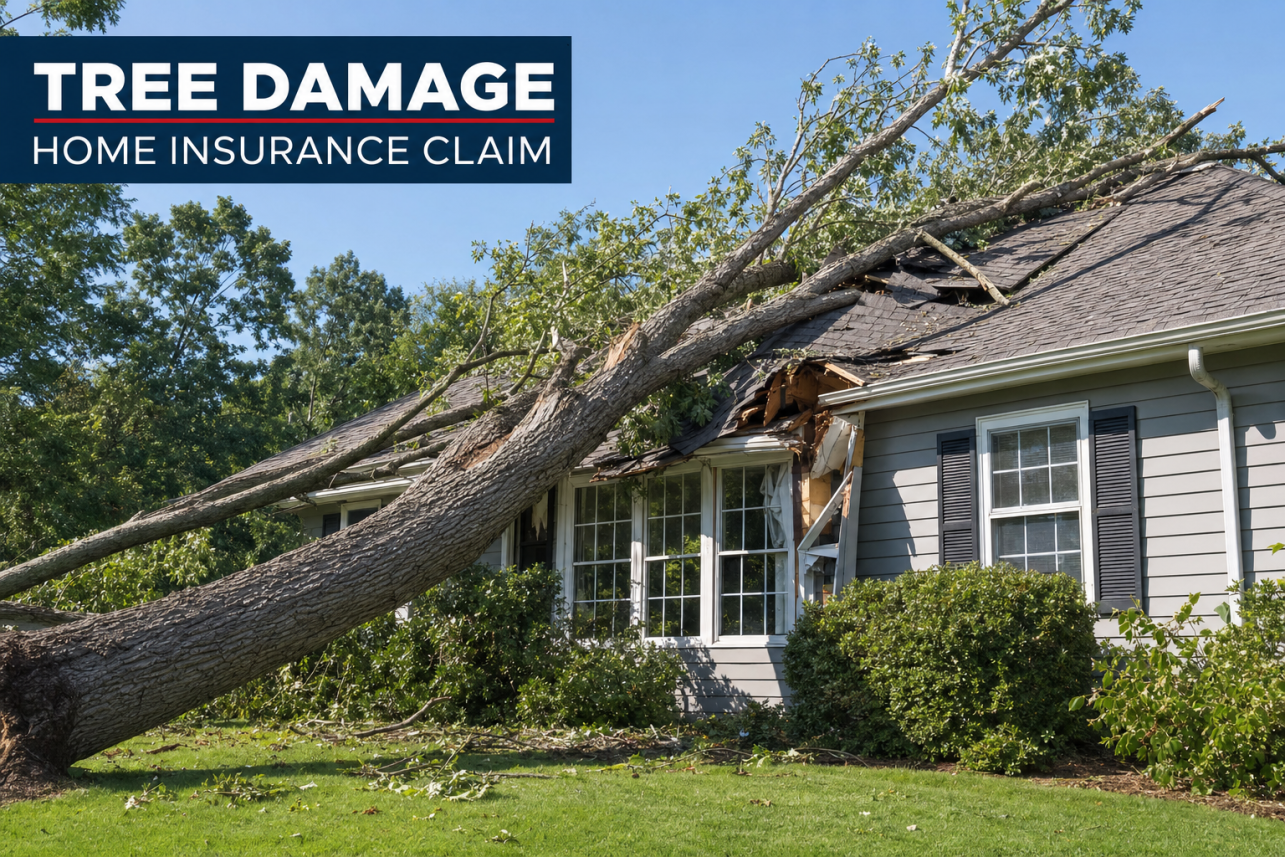
A tree damage home insurance claim Mebane homeowners file after a tree falls on the house is typically covered under a standard homeowners policy — but the payout depends heavily on how the damage is documented and valued. Roof, framing, and interior water damage are often underestimated in the insurer's first inspection. For The Public Adjusters, Inc. represents you, not the insurance company, from documentation through settlement negotiation. We are licensed and bonded in North Carolina.
What This Service Is
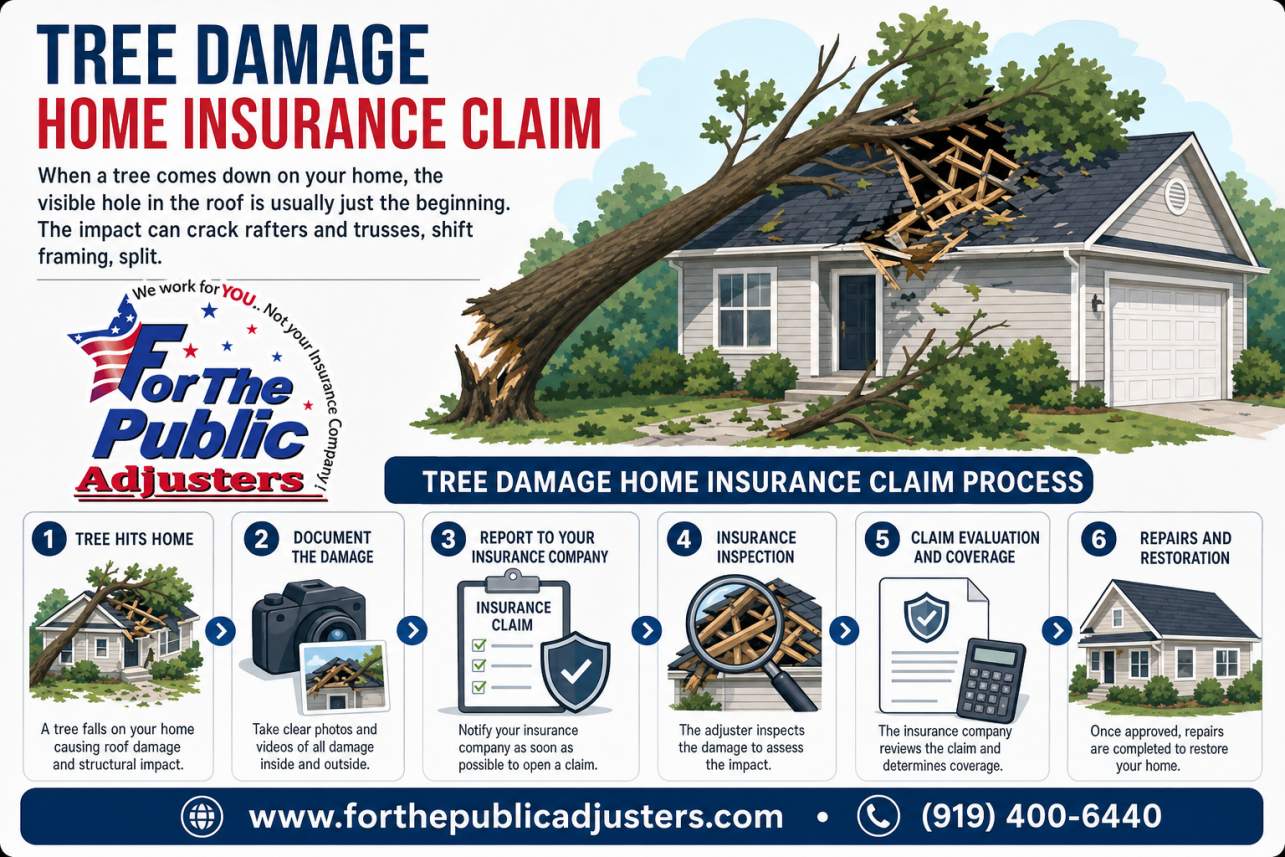
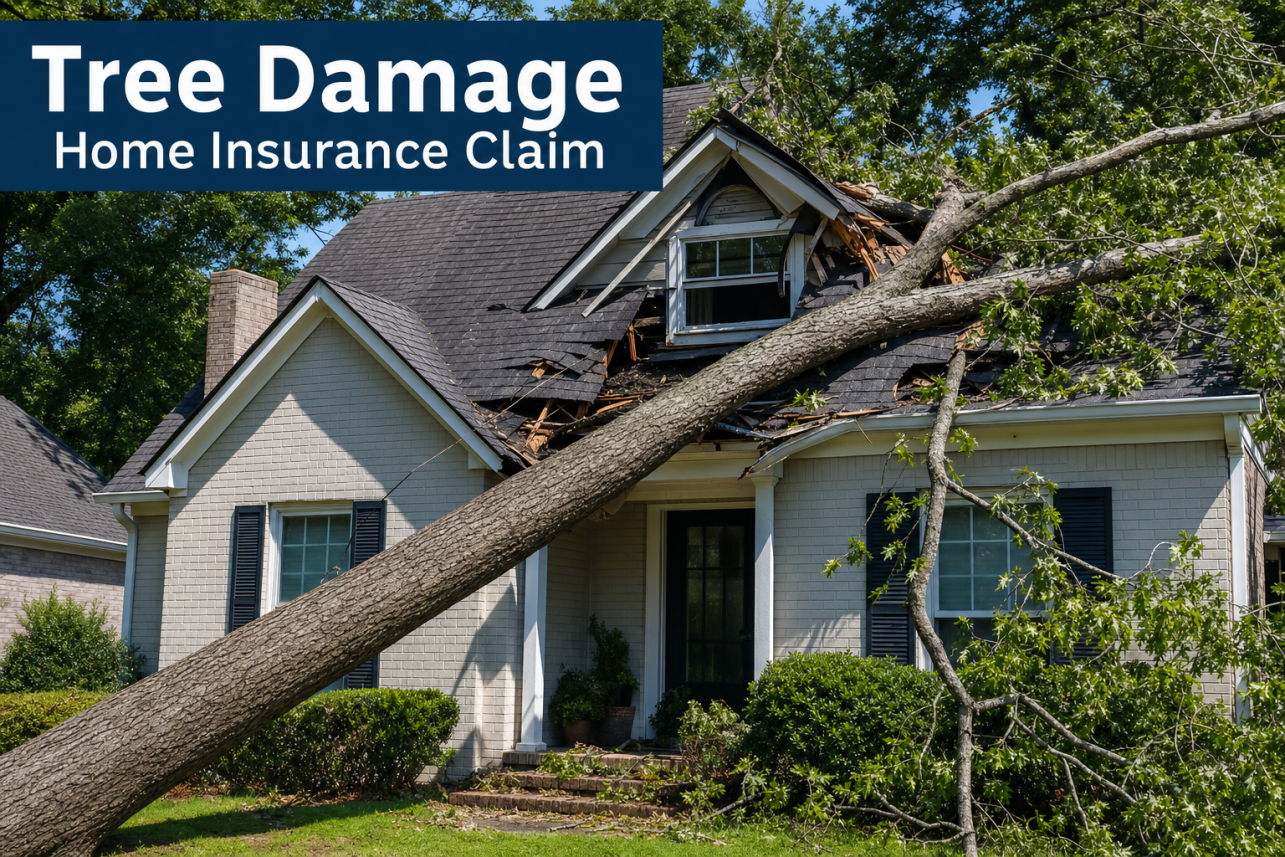
When a tree comes down on your home, the visible hole in the roof is usually just the beginning. The impact can crack rafters and trusses, shift framing, split sheathing, and open the interior to rain — which means water damage to insulation, drywall, flooring, and belongings can follow within hours.
As your public adjuster, we build the claim for you. That means a full structural damage assessment, photographing and measuring every affected area, preparing the proof of loss your policy requires, and pricing repairs at what they actually cost in the Mebane market — not what a quick drive-by estimate suggests.
We also handle the parts homeowners rarely know to ask about: tree removal cost coverage (most policies cap it, and only when the tree damages a covered structure), emergency tarping and temporary protection so further damage isn't blamed on you, and additional living expenses if the house isn't safe to occupy during repairs.
One thing worth understanding early: whether your policy pays replacement cost or actual cash value matters enormously. Actual cash value subtracts depreciation, so a fifteen-year-old roof gets valued as a fifteen-year-old roof. We review your policy language before the insurer's numbers ever land, so you know what you're entitled to claim.
Common Problems
Why Was My Tree Damage Home Insurance Claim Mebane Payout So Low?
The most common reason is scope. The insurance company's adjuster inspects for an hour, prices the visible hole, and misses the cracked rafters, the saturated insulation, and the fact that matching your existing shingles may require replacing more than one slope.
Depreciation is the second culprit. If your settlement letter shows a large deduction for the age of your roof, you may still be able to recover that amount after repairs — but only if the claim is handled correctly and on time.
Then there's your deductible and the tree removal cap, which together can shrink a check fast. When the first offer barely covers debris hauling, that's usually a sign the structural damage was never fully scoped, not a sign your policy is that thin. We re-inspect, re-document, and present a complete estimate before you accept anything.
The Insurer Inspected, And Now My Claim Is Stalled, Disputed, Or Denied
Delays and lowball responses after a tree strike are common, and North Carolina policyholders are not powerless against them. Insurers must handle claims fairly, and courts have held them accountable when they don't.
In Guessford v. Pennsylvania National Mutual Casualty Insurance Co., a North Carolina homeowner whose home damage claim was repeatedly undervalued took his insurer to federal court and prevailed, recovering far more than the carrier's original position. Cases like that exist because documented, persistent pushback works.
If your claim has been denied over a policy exclusion, or the damage estimate dispute has dragged on for months, the answer is rarely to argue on the phone. It's to put a properly supported proof of loss and a line-item estimate in front of the carrier — and to know your rights under the guidance the North Carolina Department of Insurance publishes for policyholders. That's the work we do every day.
Can I Handle This Myself, Or Should I Hire A Public Adjuster?
You can file on your own, and for a small limb through a gutter you probably should. But when a tree has fallen on the home itself — roof structure, ceilings, possible foundation or wall movement — you're negotiating tens of thousands of dollars against a professional adjuster who does this daily.
A good public adjuster works only for you, is licensed by the state, and is paid from the settlement, not upfront. The NCDOI Public Adjusters Guide explains exactly what we're permitted to do on your behalf and how our licensing works — read it before hiring anyone, including us.
What you should expect from a legitimate firm: a written agreement, a full scope-of-damage inspection, a detailed repair estimate, and someone who attends every carrier inspection with you. We can't guarantee a specific outcome — no honest adjuster can — but we can make sure nothing is left off the claim.
Our Process
Emergency Protection And Free Claim Review
First, we make sure the house is protected — tarping, board-up, and safe temporary repairs are generally covered and expected under your policy, and skipping them can hurt your claim later. Keep every receipt.
Then we review your policy and the damage at no cost, and tell you honestly whether the claim is worth pursuing with our help.
Full Documentation And Structural Assessment
We inspect everything the tree touched: roof decking, rafters, walls, ceilings, electrical, and any water intrusion paths. We photograph, measure, and price the damage line by line, and prepare the proof of loss the carrier requires.
This is where most self-filed claims fall short — hidden structural damage that never makes it into the file never makes it into the check.
Presentation And Settlement Negotiation
We submit the complete claim, attend the insurer's inspection alongside their adjuster, and challenge any undervalued or omitted items with documentation. If the carrier disputes the estimate, we negotiate until the settlement reflects the real cost of putting your home back.
You stay informed at every step, and you make the final decision on any offer. Claim deadlines in your policy are strict, so the sooner we start, the more options you keep.
| Claim Stage | Handling It Yourself | With For The Public Adjusters |
|---|---|---|
| Initial damage inspection | Carrier adjuster looks at the visible hole and shingle damage, often from the ground or a drone | Attic, framing, and impact-path inspection, with a structural engineer when the strike warrants it |
| Scope of repairs | Estimate typically limited to roofing over the puncture point | Full scope: rafters, decking, interior finishes, water intrusion, mold, and code upgrades |
| Neighbor's tree disputes | Carriers point at each other while you wait | Policy language enforced immediately; subrogation used to recover your deductible |
| Negotiation | You accept or argue the first offer alone | Line-item negotiation backed by documentation and NC policy knowledge |
| Typical timeline | Months of back-and-forth, especially after a denial or lowball | Structured demand and follow-up that keeps the carrier on deadline |
| Final settlement | Often covers a fraction of true repair cost | Settlement built to actually restore the home, plus living expenses when owed |
Commonly Overlooked In The Public Adjusting Industry
- Fractured rafters and trusses beyond the visible puncture — Carrier adjusters often inspect from the roof surface or a drone and never enter the attic, so cracked framing along the impact path goes unmeasured.
- Ridge and wall-plate displacement from impact load — A heavy trunk can shift the whole roof structure a fraction of an inch, which only shows up with an engineer's inspection, not a shingle count.
- Resulting water and mold damage inside wall cavities — Rain that entered between the tree strike and the tarp soaks insulation and framing behind paint, and it isn't visible by the time anyone looks.
- The falling-object provision in neighbor-tree disputes — Homeowners are routinely told to chase the neighbor's insurer, when their own policy plainly covers the dwelling regardless of who owned the tree.
- Debris removal sub-limits stacking with dwelling coverage — Tree removal is often paid under a separate provision, so bundling it into the roof estimate quietly shrinks the total recovery.
- Code-upgrade costs on older Mebane and Orange County homes — Repairs to a home built decades ago must meet current NC building code, and first estimates almost never include ordinance-or-law dollars.
- Matching requirements for shingles and siding — Insurers pay to patch one slope even when the replacement shingles won't match, though North Carolina claim practice often supports broader replacement.
- Deductible recovery through subrogation — When a neglected tree caused the loss, the carrier can recover from the responsible party and must return your deductible — but nobody volunteers that.
Case Studies
Case Study #1
Situation: A family off Mebane Oaks Road had a mature red oak fall directly onto their roofline during a July thunderstorm, punching through the decking above the master bedroom and cracking rafters across two rooms.
Problem: The carrier's adjuster inspected quickly, wrote an estimate for shingle replacement over the visible hole, and issued a check for $11,400. The homeowners felt the house 'didn't sound right' when walking upstairs but had no way to prove structural harm.
Investigation: We brought in a structural engineer to open the attic and inspect the framing along the impact path, not just the puncture point. We also documented interior ceiling cracks, racked door frames, and moisture staining from rain that entered before the tarp went on.
Findings: Three rafters were fractured, the ridge board was displaced nearly an inch, and the impact had transferred load into a bearing wall, cracking the top plate. Wet insulation and drywall in two rooms had already begun growing mold behind the paint.
Solution: We rewrote the scope to include engineered rafter repairs, ridge realignment, full re-deck of the affected slope, interior demolition and rebuild of two rooms, mold remediation, and code-required upgrades. We presented the engineer's report and a line-item estimate to the carrier and negotiated each disputed item.
Outcome: The claim settled at $87,300 — more than seven times the original payment — plus additional living expenses for the three weeks the family stayed elsewhere during structural work.
Lesson: A tree strike is an impact event, not a roofing event. The damage almost always travels farther through the frame than the hole in the shingles suggests, and the first estimate rarely accounts for that.
Case Study #2
Situation: A retired couple in the Cameron Park area of Mebane had a neighbor's dying pine crash onto the rear corner of their home, crushing a gutter section, damaging the roof edge, and snapping a covered porch post.
Problem: The carrier denied most of the claim, arguing the tree came from the neighbor's property and telling the couple to pursue the neighbor's homeowner policy. Weeks passed with both insurers pointing at each other while rain kept entering the damaged corner.
Investigation: We reviewed the couple's policy language, which clearly obligated their own carrier to pay for damage to their dwelling regardless of who owned the tree. We also gathered dated photos, an arborist's assessment showing the pine was visibly dead, and the couple's prior written warnings to the neighbor.
Findings: The denial had no basis in the policy — first-party coverage applies to falling objects no matter where the tree grew. The documented neglect also gave the carrier a strong subrogation path against the neighbor's insurer, which changed its willingness to pay.
Solution: We filed a formal demand citing the falling-object provision, submitted a complete estimate covering roof edge reconstruction, porch structural repair, fascia, gutters, and water-damaged interior finishes, and packaged the neglect evidence so the carrier could recover its money afterward.
Outcome: The couple's own carrier reversed course and paid $34,600 within five weeks. Their deductible was later refunded after the carrier recovered from the neighbor's insurer through subrogation.
Lesson: Never let 'it was the neighbor's tree' stall your claim. Your policy covers your house, and documented neglect can even get your deductible back — but someone has to hold the carrier to the contract.
| Scenario | Typically Covered? | What It Depends On | What to Do First |
|---|---|---|---|
| Healthy tree falls on your roof in a storm | Yes — dwelling coverage applies | Wind, ice, or lightning as the cause; policy deductible | Photograph everything before cleanup, then tarp to prevent further damage |
| Neighbor's tree lands on your house | Yes — your own policy pays first | Documented neglect can trigger subrogation and refund your deductible | Save any prior warnings to the neighbor and get an arborist's opinion |
| Tree falls in yard, hits nothing | Usually limited or excluded | Most policies only pay debris removal if a structure or driveway is blocked or hit | Read your debris removal limit before paying a tree crew out of pocket |
| Tree crushes detached garage or shed | Yes — under other-structures coverage | That limit is usually only 10% of your dwelling coverage | Check whether the limit actually covers rebuild cost, not just materials |
| Carrier claims the tree was rotted or diseased | Disputed — often wrongly denied | Whether wind was the proximate cause; arborist and engineer evidence | Don't accept the denial; get an independent assessment before responding |
| Rain enters through the hole before repairs | Yes — resulting water damage is covered | Proof you took reasonable steps to mitigate (tarping, drying) | Keep receipts for tarps, fans, and emergency work — they're reimbursable |
| Home unlivable during structural repairs | Yes — additional living expenses | Loss-of-use limits and how long repairs genuinely take | Track lodging, meals above normal cost, and mileage from day one |
Reviews
A hickory came down on our roof in April and State Farm offered us barely enough to patch the shingles. For The Public Adjusters found broken rafters our adjuster never looked at and got the settlement raised from about $9,000 to over $60,000. They handled every call with the insurance company so we didn't have to.
Darlene W., Mebane NC
Tree fell on our home during that windstorm off Highway 70 and the insurer tried to blame it on 'rot' to duck the claim. This team brought in an engineer, proved wind was the cause, and turned a denial into a full roof and ceiling repair. Worth every penny of their fee.
Marcus T., Mebane NC
The tree that hit our house was our neighbor's, and both insurance companies kept passing the buck for almost two months. Once we hired For The Public Adjusters it was resolved in weeks — porch rebuilt, roof corner fixed, and we even got our deductible back later. Only wish we'd called them on day one.
Renee C., Mebane NC
Frequently Asked Questions
What Should I Do First When Filing A Tree Damage Home Insurance Claim Mebane Homeowners Can Actually Win?
Safety comes first. If a tree has fallen on your home, get everyone out until a professional confirms the structure is stable. Trees that punch through a roof in Mebane often crack rafters, shift load-bearing walls, and compromise ceilings in ways you cannot see from the ground.
Next, document everything before anything is moved. Take wide photos showing where the tree stood, close-ups of the impact point, and interior shots of every affected room, including attic spaces. Once a removal crew hauls the tree away, your best evidence goes with it.
Then take reasonable steps to prevent further damage, such as tarping the roof, and keep every receipt. Your policy requires mitigation, and those emergency costs are typically reimbursable.
Finally, be careful with the recorded statement your insurer will request. What you say about the tree's condition, maintenance, and the timeline of the storm can shape the entire outcome. Many Orange County homeowners call For The Public Adjusters, Inc. before that first conversation so the claim is framed correctly from day one. We inspect the damage ourselves, prepare a detailed scope of loss, and handle communication with the carrier so nothing gets minimized or missed. Getting professional representation early almost always produces a smoother, better-documented claim than trying to correct a lowball estimate months later.
Does Homeowners Insurance Cover A Tree That Falls On My House In Mebane, And What About The Tree Removal Itself?
In most cases, yes. Standard homeowners policies in North Carolina cover damage caused when a tree falls on your home due to wind, storms, ice, or lightning — the exact perils that hit Mebane hardest during summer thunderstorms and winter ice events. That coverage extends to your roof, framing, siding, gutters, interior finishes, and often attached structures like porches and carports.
Tree removal is where homeowners get surprised. Carriers generally pay to remove the portion of the tree that landed on a covered structure, but many policies cap removal of the rest of the tree at $500 to $1,000, sometimes per tree with a total limit per storm. A large oak on a Mebane lot can cost several times that to fully remove, so knowing your policy language matters.
Coverage can get complicated if the tree came from a neighbor's yard. If their tree was visibly dead or they had been warned about it, their liability coverage may apply. Otherwise, your own policy typically responds regardless of whose property the tree grew on.
Exclusions are the other trap. Insurers sometimes deny or reduce claims by arguing the tree was rotten or the roof was already worn. We review the actual policy, push back on improper exclusions, and make sure the settlement reflects the true cost of repairs in the Orange County market, not a desk adjuster's software estimate.
The Insurance Company's Estimate Seems Too Low For The Tree Damage To My Roof. What Can I Do?
You are not obligated to accept the first offer, and in tree-impact claims the first estimate is frequently incomplete. Carrier adjusters often scope only the visible hole in the roof and miss what a falling tree actually does to a house.
A heavy trunk striking a roof transfers force through the entire structure. We routinely find cracked trusses and rafters, separated drywall seams, racked door frames, damaged sheathing well beyond the impact zone, and hidden moisture from rain that entered before the roof was tarped. Insurance estimates that skip these items can be off by tens of thousands of dollars.
As licensed public adjusters, we work for you, not the insurance company. We perform our own detailed inspection, often including attic and structural evaluation, then prepare a line-item scope of loss using current repair pricing for the Mebane and Orange County area. From there, we negotiate directly with the carrier and, if needed, invoke the appraisal process built into most North Carolina policies to resolve disputes over value.
Timing matters. It is far easier to supplement a claim before you accept payment and sign off than after. If your check has not arrived yet, or even if repairs have stalled because the payout will not cover them, contact For The Public Adjusters, Inc. for a review. If we do not believe we can improve your outcome, we will tell you honestly.
How Long Does A Tree Damage Home Insurance Claim Mebane Residents File Usually Take To Settle?
A straightforward tree damage home insurance claim Mebane property owners submit — clear storm cause, moderate roof damage, cooperative carrier — often resolves in 30 to 60 days. North Carolina requires insurers to acknowledge claims promptly and pay within a reasonable time once liability and value are agreed upon.
The reality is that many claims take longer, and the delays usually trace back to disputes over scope. If the carrier's estimate only covers patching shingles when the tree cracked rafters and soaked insulation, the back-and-forth over supplements can stretch a claim to four or six months. Widespread storms that hit Alamance and Orange County at once also slow carrier response times because adjusters are stretched thin.
Several things keep a claim moving. Thorough documentation from day one prevents the carrier from requesting endless follow-up inspections. A complete, professionally prepared scope of loss reduces the rounds of negotiation. And having one experienced advocate handle all communication means requests get answered fast instead of sitting in a homeowner's inbox.
That is a large part of what we do at For The Public Adjusters, Inc. We build the claim file the way carriers expect to see it, anticipate the pushback, and hold the insurer to reasonable timelines under North Carolina claims-handling standards. Homeowners who bring us in early typically see fewer delays because the claim is documented right the first time. If your claim has already stalled, we can step in mid-process and get it moving again.
A Tree Fell On My Mebane Home And My Neighbor Says It Was Mine, Not Theirs. Whose Insurance Actually Pays?
In North Carolina, the rule surprises most homeowners: the insurance that pays is almost always the policy covering the property the tree landed on, not the policy of whoever owned the tree. So if your neighbor's oak crashed onto your roof, you file with your own carrier first.
The exception is negligence. If your neighbor knew the tree was dead, diseased, or leaning dangerously and did nothing, their liability coverage may be responsible. Proving that takes documentation, such as photos of visible rot, prior arborist warnings, or written complaints you sent before the storm.
We see this situation constantly in Mebane's older neighborhoods, where mature hardwoods sit right on property lines. Our team gathers the evidence, determines whether a negligence claim against the neighbor's carrier is realistic, and pursues whichever path recovers more for you.
Either way, do not delay filing with your own insurer while the neighbor question gets sorted out. Policies require prompt notice, and waiting can jeopardize the claim entirely. Your carrier may later pursue the neighbor's insurer through subrogation, which can even get your deductible refunded if they succeed.
What Hidden Damage Should I Look For After A Tree Falls On My House In Mebane?
The visible hole in the roof is rarely the whole story. When a tree strikes a home, the impact travels through the entire structure. We regularly find cracked rafters and trusses two or three framing bays away from the strike point, shifted ridge beams, and hairline cracks in interior drywall that signal the frame absorbed serious force.
Water intrusion is the second problem. Between the moment of impact and the tarp going on, rain gets into insulation, wall cavities, and ceiling assemblies. In North Carolina's humidity, that trapped moisture can turn into mold within days, and carriers often try to exclude it if it is not documented early.
Other commonly missed items include bent gutter systems, punctured roof decking hidden under intact-looking shingles, damaged chimney flashing, cracked window frames, and HVAC or electrical components crushed by limbs.
An insurance adjuster doing a quick rooftop walk in an Orange County subdivision will not open ceilings or pull insulation to find any of this. Our inspections go deeper, and when warranted we bring in structural engineers so every dollar of damage is on the estimate before you settle, not discovered by your contractor after the check clears.
Is It Worth Hiring A Public Adjuster For A Tree Damage Home Insurance Claim Mebane Homeowners Are Filing?
For anything beyond a few broken shingles, yes, and the math usually proves it. Industry studies have shown that professionally represented claims settle for significantly more than claims homeowners handle alone, often several times more on structural losses like a tree strike.
A tree falling on a home creates one of the most commonly underpaid claim types we see. Carriers frequently pay for the obvious roof patch while omitting framing repairs, interior water damage, code-upgrade costs, and full tree removal. Homeowners who do not know what to demand simply never receive it.
For The Public Adjusters, Inc. works on contingency, meaning we are paid a percentage of what we recover for you, and nothing if we recover nothing. There is no hourly bill and no upfront fee. That structure means our interests are aligned with yours from day one.
We handle the entire process: documenting the damage, writing our own line-item estimate, meeting the carrier's adjuster on site, and negotiating until the settlement reflects the true cost of repairs in the Mebane market. Most clients tell us the biggest benefit beyond the money is not having to fight the insurance company themselves while also dealing with a hole in their roof.
My Insurer Denied Part Of My Claim After A Tree Hit My Roof, Blaming Wear And Tear. Can That Be Reversed?
Often, yes. "Wear and tear" and "pre-existing condition" are two of the most overused denial reasons in the industry, especially on roofs in Orange County that are more than ten years old. The carrier's position is essentially that your roof was already failing, so the tree strike does not matter. That argument frequently does not hold up under scrutiny.
The key is causation evidence. Fresh fracture patterns in shingles, clean breaks in decking and rafters, and impact-consistent damage all point to a sudden covered event rather than gradual deterioration. Satellite imagery, prior inspection reports, and even real estate listing photos can prove the roof's condition before the tree fell.
A partial denial is not the final word. North Carolina policies give you the right to dispute, invoke appraisal, or present new evidence, and carriers reverse positions more often than homeowners realize when confronted with a properly documented rebuttal.
When we take over a disputed tree damage home insurance claim Mebane property owners bring to us, we re-inspect the loss, build the causation file, and challenge the denial in writing with the policy language and evidence attached. If the carrier still refuses to pay fairly, we push the dispute through appraisal or connect you with counsel. Bring us the denial letter and we will tell you honestly whether it can be beaten.
Can I Have The Tree Removed From My Roof Before The Insurance Adjuster Sees It?
Yes, and in most cases you should. Your policy actually requires you to take reasonable steps to prevent further damage, so leaving a pine or oak resting on a broken roof while rain gets in can hurt your claim rather than help it.
The key is documentation before anything moves. Photograph and video the tree from every angle — where the trunk contacts the roofline, the point of impact, crushed gutters, and the base of the tree showing whether it uprooted or snapped. Get close-ups and wide shots that show the whole scene.
Keep every invoice from the tree service and the tarping crew, and ask the crew to photograph the roof surface once the tree is off. That exposed decking often reveals cracked rafters or punctured sheathing the insurer needs to see. Save a section of the trunk if rot or disease is visible, since the tree's condition can matter if a neighbor's tree is involved.
Here in Mebane we see a lot of mature willow oaks and loblolly pines come down in summer thunderstorms, and homeowners who wait days for an adjuster visit often end up with interior water damage the carrier then tries to separate from the claim. Don't wait. Mitigate, document everything, and keep receipts — emergency removal and tarping costs are generally reimbursable when the tree struck the house.
The Tree Made Part Of My House Unlivable. Will My Policy Pay For A Hotel Or Rental While Repairs Happen?
Almost certainly, yes. When a fallen tree crushes a roof section, breaks trusses, or opens the home to weather, most homeowners policies include Additional Living Expenses coverage, sometimes called Loss of Use. It pays the extra costs of living elsewhere while your home is uninhabitable.
That coverage typically includes hotel stays, a short-term rental in the Mebane or Burlington area, increased food costs above what you'd normally spend, pet boarding, extra mileage if you're commuting farther, and even laundry. The operative word is "extra" — the carrier reimburses the difference between your normal expenses and what you're spending now.
Two things trip homeowners up. First, carriers sometimes argue the home is still livable when only one room is damaged, even if there's no heat, exposed insulation, or a tarp over the kitchen. Document why the conditions are unsafe or unsanitary, especially with children or elderly family members in the house. Second, people forget to keep receipts. Save everything, even small purchases.
Alaska structural repairs after a major tree strike in Orange and Alamance counties often run eight to sixteen weeks once engineering, permits, and contractor scheduling are factored in, so ALE can add up to a significant portion of your recovery. A public adjuster in Mebane can calculate the full displacement period based on a realistic repair timeline rather than the insurer's optimistic one, which is frequently where these disputes get resolved in your favor.
Is There A Deadline To File A Tree Damage Home Insurance Claim Mebane Homeowners Need To Worry About?
There are actually several deadlines, and missing any of them can cost you real money. Your policy requires "prompt" notice of the loss, which isn't a fixed number of days but should be interpreted as within days, not months. Waiting invites the carrier to argue that delays worsened the damage.
Beyond initial notice, North Carolina policies typically require you to submit a signed proof of loss within a set window after the insurer requests one — often 60 days. There's also usually a deadline to complete repairs if you want to recover withheld depreciation, commonly 180 days to two years depending on the policy. Finally, North Carolina law generally gives you three years to file suit over a property claim, though some policies attempt to shorten that contractually.
The practical takeaway for a tree damage home insurance claim Mebane residents are filing: report the loss within a day or two of the storm, even if you haven't found all the damage yet. You can supplement the claim later as hidden problems surface, like cracked framing or slow ceiling stains that appear weeks after impact.
If a storm hit months ago and you're only now noticing sagging or leaks near the strike point, don't assume you're out of time. We regularly help homeowners in Orange County open or reopen claims well after the date of loss, provided the damage ties back to the covered event and the policy deadlines haven't fully run.
My Settlement Check Shows A Deduction For Depreciation. Do I Ever Get That Money Back?
Usually yes, but only if you follow the process correctly. Most homeowners policies in North Carolina pay tree-strike losses on a replacement cost basis, but they do it in two payments. The first check is the actual cash value — replacement cost minus depreciation for the age and condition of your roof, siding, and framing.
The withheld amount is called recoverable depreciation. Once you complete the repairs and submit invoices showing what you actually spent, the carrier releases that second payment. On a fifteen-year-old architectural shingle roof in Mebane, depreciation can easily be 30 to 50 percent of the roof line item, so this is not small money.
Where homeowners get hurt is in the details. If the insurer's initial estimate was low, the depreciation holdback is calculated on that low number, and contractors won't do the work for it. If you do cheaper repairs than the estimate, the carrier only releases depreciation up to what you spent. And if you miss the policy's completion deadline, some carriers refuse to release it at all.
Check your check stub and the estimate carefully — some older policies pay actual cash value only on roofs, with no depreciation recoverable. That's a critical distinction after a tree falls on a home. Our team reviews the policy language, corrects the underlying estimate so the full scope is priced properly, and tracks the paperwork so every recoverable dollar comes back to you rather than staying with the insurance company.
The Tree Only Damaged Part Of My Roof, But The Shingles No Longer Match. Can I Get The Whole Roof Covered In A Tree Damage Home Insurance Claim Mebane Homeowners File?
Possibly, yes — and this is one of the most commonly underpaid issues we see in Mebane. When a tree crushes one slope of a roof, insurers often approve repairs for only the damaged section. But if your shingle color or style has been discontinued, or if patched shingles create an obvious mismatch, you may be entitled to more.
North Carolina does not have a strict matching statute, but the state's Unfair Claims Settlement Practices rules and most policy language require the insurer to restore your home to its pre-loss condition. A roof with two visibly different shingle colors arguably isn't that. Carriers know this, which is why documentation matters.
We build the case by getting written confirmation from suppliers that the shingle line is discontinued, photographing the mismatch from the street and from neighboring sightlines, and citing the policy's own repair language. In many Mebane cases, that pressure turns a partial slope repair into a full slope or full roof replacement.
The same argument applies to siding, gutters, and fascia damaged when limbs rake down the side of the house. If your insurer is offering a patchwork fix that would leave your home looking pieced together, don't accept it as final. A tree damage home insurance claim Mebane property owners pursue with proper matching documentation frequently settles for two to three times the original repair-only estimate. Have the file reviewed before you cash anything marked as full and final payment.
A Tree Fell On My Detached Garage And Fence In Mebane, Not The House Itself. Is That Covered The Same Way?
It's covered, but under a different part of your policy — and that difference affects how much you can recover. Your dwelling coverage (Coverage A) applies to the house itself. Detached garages, sheds, fences, gazebos, and carports fall under other structures coverage (Coverage B), which is typically capped at 10% of your dwelling limit.
So if your Mebane home is insured for $300,000, you generally have around $30,000 available for all detached structures combined. For most garage and fence losses that's enough, but a large oak flattening a two-car detached garage with a workshop inside can exceed that cap quickly. Contents inside the garage — tools, mowers, equipment — are paid separately under personal property coverage, so make sure they're itemized rather than lumped into the structure estimate.
Fences deserve special attention. Adjusters often price a few damaged panels, but wooden fence sections rarely match after years of weathering, and impact from a falling trunk frequently racks posts several sections away from the visible break. We walk the entire fence line and test post stability before agreeing to any scope.
One more Mebane-specific note: many properties here back up to wooded lots, and insurers sometimes try to classify fence damage as gradual rot rather than storm impact. Photograph the fallen tree in contact with the fence before removal. Clear cause-and-origin photos shut down that argument before it starts, and they're the single best piece of evidence you can give your adjuster.
My Home Was Built Decades Ago. Will Insurance Pay To Bring The Tree-Damaged Areas Up To Current Building Code During Repairs?
Only if your policy includes ordinance or law coverage — and this catches a lot of Orange County homeowners off guard. When a tree opens up a roof or wall on an older Mebane home, the repair permit will require the work to meet today's North Carolina building code, not the code from when the house was built. That can mean upgraded roof decking and fasteners, modern electrical work where wiring was exposed, updated framing connections, and current insulation standards.
Standard policy language pays to repair what was there before. It does not automatically pay for code-required upgrades unless you have an ordinance or law endorsement, which is often included at 10% of your dwelling coverage but is sometimes stripped out of cheaper policies.
Here's the practical problem: insurer estimates almost never include code upgrade costs upfront, even when the coverage exists. The homeowner discovers the gap mid-repair when the contractor pulls permits and the inspector requires the upgrades. By then, you're negotiating a supplement while your roof is open.
We read the policy before repairs begin, identify what the Orange County inspections process will require, and get those costs into the estimate from the start. On older homes near downtown Mebane, code-related items alone have added five figures to settlements we've handled. Pull out your declarations page and look for ordinance or law or building code coverage. If it's there, make sure every dollar of it that applies gets claimed — the insurer will not volunteer it.
My Settlement Check For The Tree Damage Is Made Out To Me AND My Mortgage Company. Why, And How Do I Actually Get The Money?
This is standard practice, though it frustrates nearly every homeowner who runs into it. Your mortgage lender has a financial interest in the property, so your policy names them as a loss payee. Any significant settlement on a tree damage home insurance claim Mebane lenders are attached to will be issued jointly, and the bank must endorse the check before you can use it.
Each mortgage servicer has its own process. Smaller checks — often under $10,000 to $40,000 depending on the lender — may be endorsed and released quickly. Larger settlements usually go into an escrow arrangement where the lender releases funds in draws: a portion upfront, a portion mid-repair after an inspection, and the balance at completion.
To keep this moving, contact your servicer's loss draft department as soon as the check arrives. You'll typically need the adjuster's estimate, a signed contractor agreement, a W-9 from the contractor, and sometimes a notarized affidavit. Send everything together in one package — piecemeal submissions are the number one cause of weeks-long delays.
One warning: never let repair timelines slip because funds are sitting with the lender. Document every call and submission date. If the servicer's delay causes further damage or contractor cancellation fees, that paper trail protects you. We routinely handle lender coordination for Mebane clients precisely because a fairly settled claim can still stall for two months at the mortgage company. The insurance fight isn't truly over until the money is actually in your contractor's hands.
Local Relevance
Mebane sits in North Carolina's Piedmont, where mature oaks, poplars, and pines tower over both the older mill-era homes near downtown and the newer subdivisions that have grown up along the I-40/85 corridor. Big hardwoods and shallow-rooted pines in saturated clay soil are a recipe for tree strikes.
The risks here come from several directions: violent summer thunderstorms, winter ice storms that load limbs until they snap, and the remnants of hurricanes that push far inland and topple trees across the region. Older homes in particular often have framing and rooflines that make impact damage more complicated — and more expensive — to repair correctly.
We also see neighbor's-tree situations regularly in Mebane's established neighborhoods, where lots are close and canopies overlap. In most cases, your own homeowners policy responds when a neighbor's tree lands on your house, though liability can shift if the tree was known to be dead or dying. We sort out which policy applies and pursue the claim accordingly, whether the damage is structural, interior water damage, or fire and smoke damage from a downed line.
Mebane's clay-heavy Piedmont soil holds water after prolonged rain, which loosens the root plates of large oaks and pines — so many local tree strikes happen in the second storm, after the ground is already saturated. If a storm system stalls over Alamance and Orange counties for days, that's the time to look hard at the big trees leaning toward your roof.
A Tree Is On Your House. Don't Face The Insurance Company Alone.
For The Public Adjusters, Inc. is licensed and bonded in North Carolina, and we work exclusively for policyholders — never for carriers. Whether the tree just came down or your claim has already been underpaid or denied, we'll review your situation and your policy at no cost and tell you where you stand. Serving Mebane and the surrounding Piedmont.
Call us: (919) 400-6440
Helpful Resources
- NCDOI Public Adjusters Guide
- Insurance Information Institute (III)
- North Carolina Department of Insurance — State regulator for insurance claims and public adjuster licensing
- Insurance Information Institute: if a tree falls on your house, are you covered? — Consumer explainer on tree damage and homeowners coverage
Last updated: August 11, 2026