
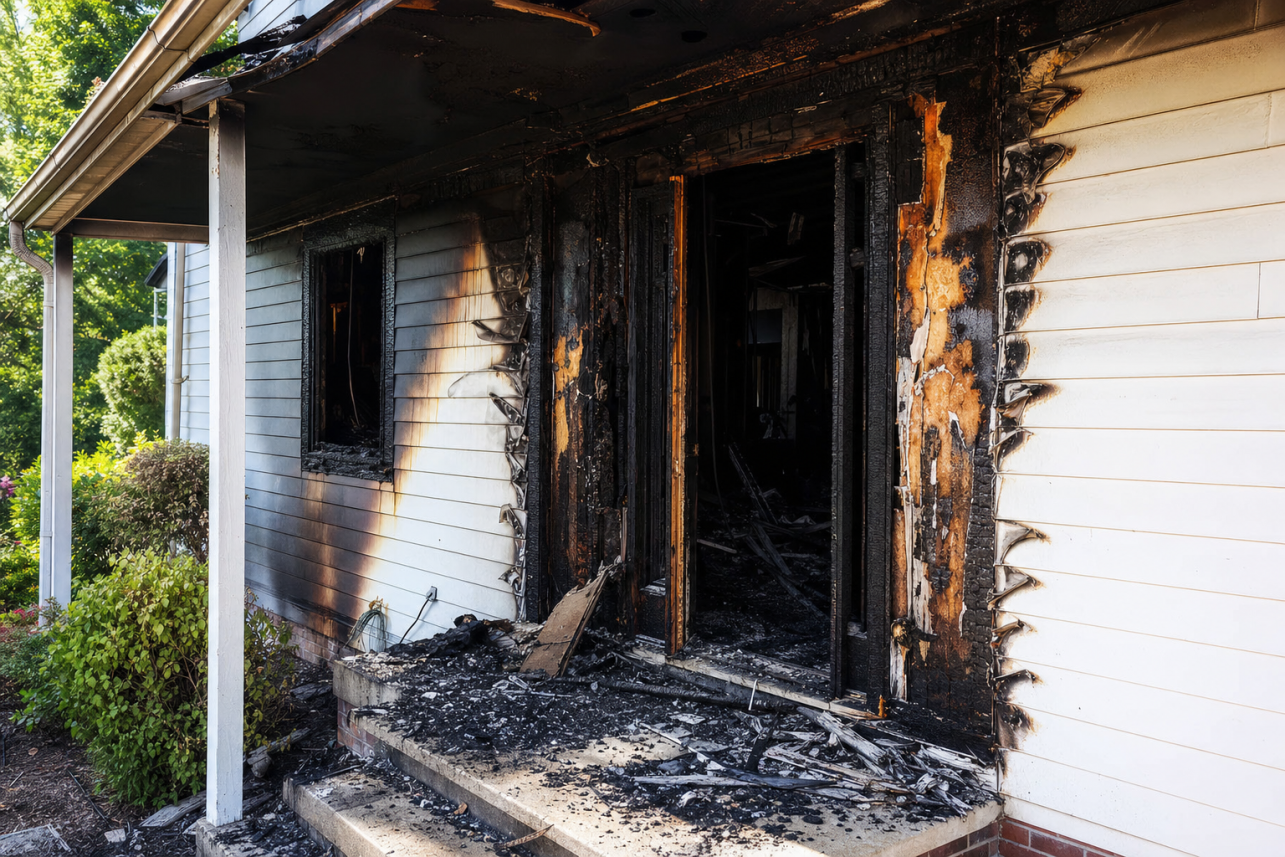
If you have been wrongfully accused of arson Chapel Hill NC insurers still owe you a fair, good-faith investigation before they can deny your fire claim. An accusation is not proof, and a suspicion raised by an insurance company’s investigator does not end your right to recover under your policy. For The Public Adjusters, Inc. represents Chapel Hill homeowners facing an arson defense, documenting the true cause and full value of the loss so the burden of proof stays where it belongs — on the insurance company.
What This Service Is
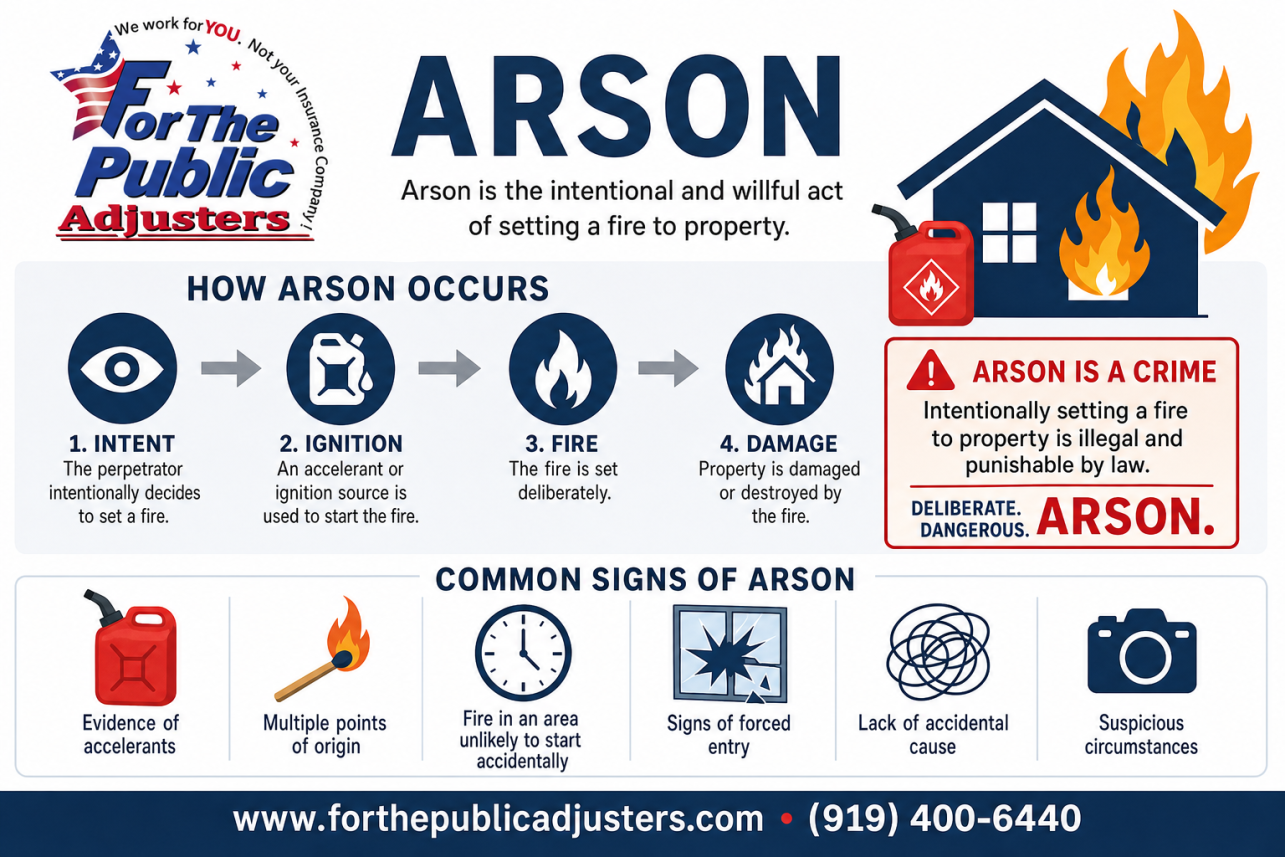
An arson homeowners claim is a fire damage claim that the insurance carrier has flagged as intentionally set. When that happens, the claim shifts from a routine loss into an adversarial investigation. The carrier may demand an examination under oath, request years of financial records, and delay payment while its own fire investigator builds a cause-and-origin theory.
A public adjuster works only for you, the policyholder — never for the insurance company. Our role in an arson-accusation case is to independently document the fire scene, the smoke damage, the water damage from firefighting efforts, and every item of personal property destroyed. We prepare the detailed inventory and building estimate the carrier is obligated to consider.
We also help you respond to the carrier’s demands correctly. Recognized fire-investigation methodology, including the guidance published by the National Fire Protection Association, requires that a determination of incendiary cause be supported by evidence, not by elimination of guesses or by suspicion about a homeowner’s finances. When a carrier’s file does not meet that standard, a well-documented claim puts real pressure on the denial.
Courts have sided with wrongly accused homeowners before. In Weathers v. American Family Mutual Insurance Co., a federal court upheld a substantial verdict for a homeowner whose fire claim was denied on an arson theory the insurer could not support — a reminder that policyholders who stand their ground, with proper documentation, can and do win. We are licensed and bonded, and while no one can promise a specific outcome, we can promise your side of the file will be complete.
Common Problems
The Carrier Says Arson Isn’t Covered — So Is My Whole Claim Worthless Now?
Arson by a stranger, a vandal, or an unknown third party is generally a covered fire loss under a standard homeowners policy. What is excluded is intentional burning by the insured. Those are two very different things, and carriers sometimes blur them.
Even while the accusation is pending, your policy still defines what the loss is worth: dwelling repairs, smoke and soot remediation, water damage from suppression, destroyed contents, and additional living expenses while you cannot occupy the home. We value all of it independently, so if the denial fails — or is withdrawn — the payout is based on your documentation, not the carrier’s low first estimate.
What Should I Do When I’m Wrongfully Accused Of Arson In Chapel Hill NC?
First, do not give a recorded statement or sit for an examination under oath without preparation. These are formal tools carriers use to build a denial file, and innocent homeowners hurt themselves with casual, unprepared answers.
Second, preserve everything: photos of the scene, the fire department’s report, receipts, and any evidence of where you were. Third, keep meeting your policy duties — cooperating in the right way protects your claim, while refusing outright can give the carrier a separate reason to deny. We guide Chapel Hill and Orange County homeowners through each of these steps so a wrongful accusation does not turn into a permanent lost claim.
Do I Really Need A Public Adjuster, Or Should I Just Wait It Out?
Waiting rarely helps. In an arson dispute, the carrier is actively building its file every week — hiring cause-and-origin experts, pulling your financial records, and framing the narrative. A homeowner with no representation is usually the only person at the table without an advocate.
A good public adjuster does three things a homeowner cannot easily do alone: builds a professional damage estimate the carrier must answer, manages the flow of information so you meet your duties without volunteering ammunition, and identifies weaknesses in the insurer’s investigation. In North Carolina, public adjusters must be licensed by the state, and the NCDOI Public Adjusters Guide is a sensible resource for verifying credentials before you hire anyone — including us.
Our Process
Free Claim And Accusation Review
We start by reviewing your policy, the denial or reservation-of-rights letter, and the fire department report. We identify exactly what the carrier is alleging, what evidence it claims to have, and what deadlines and duties you are facing. You will leave that first conversation understanding where your claim actually stands.
Independent Documentation Of The Loss
Our team inspects and photographs the fire, smoke, and suppression-water damage throughout the home, then prepares a line-item repair estimate and a complete contents inventory. Where the cause is disputed, we help coordinate independent cause-and-origin expertise so the carrier’s theory does not go unchallenged. This file becomes the foundation of everything that follows.
Negotiation And Resolution
We present the documented claim to the carrier, respond to its investigator’s positions, and negotiate on your behalf through appraisal or settlement discussions where appropriate. If the dispute must go to counsel, your attorney inherits an organized, fully valued claim file instead of a shoebox of receipts. Throughout, you approve every decision — it is your claim and your home.
| What’s at Stake | Facing the Carrier Alone | With For The Public Adjusters |
|---|---|---|
| Scene evidence | Debris removed before you know it mattered; the carrier’s report becomes the only record | Independent IAAI-certified investigator documents the scene before anything is hauled away |
| Examination under oath | Answers given cold can be reframed as inconsistencies and used to support denial | Full preparation, document review, and representation so testimony stays accurate and protected |
| Financial document requests | Broad requests answered in full, handing the insurer a ‘motive’ narrative | Requests audited for legitimacy; only what NC law actually requires gets produced |
| Living expenses during the freeze | ALE payments stopped while the family pays for temporary housing out of pocket | Formal demands and bad-faith notice to keep ALE flowing during the investigation |
| Claim valuation once cleared | Carrier’s original lowball estimate is accepted out of exhaustion | Line-by-line dwelling, contents, and code-upgrade documentation of the true loss |
Commonly Overlooked In The Public Adjusting Industry
- Halting debris removal until an independent investigation is complete — Homeowners assume cleanup helps the claim, not realizing that once debris leaves the site, the carrier’s origin-and-cause report can never be physically challenged.
- Requesting the carrier’s complete claim file notes — Most policyholders never learn they can obtain the internal notes that reveal exactly what triggered the SIU referral against them.
- Checking the carrier’s investigation against NFPA 921 protocol — Incendiary findings often rest on skipped elimination steps, but nobody outside fire investigation knows the standard exists to check against.
- Cell phone location data and doorbell camera footage as alibi evidence — Families focus on defending their character when timestamped digital records can simply prove they weren’t there.
- Limiting the scope of financial document production — Accused homeowners hand over years of bank and tax records in a panic, not knowing broad fishing requests can be narrowed under the policy’s actual terms.
- Keeping additional living expenses paid during the fraud review — Carriers quietly stop ALE checks while investigating, and most families don’t realize the policy still obligates payment absent an actual denial.
- The agent’s own file notes on recent coverage changes — A coverage increase flagged as suspicious is often explained away by the agent’s documented recommendation — evidence sitting in a file nobody thinks to pull.
- Ordinance and law coverage after the accusation is withdrawn — Once cleared, exhausted homeowners accept the original estimate and miss the code-upgrade money that older Orange County homes almost always qualify for.
Case Studies
Case Study #1
Situation: A homeowner off Weaver Dairy Road in Chapel Hill suffered a garage fire two weeks after listing the house for sale. The carrier’s SIU flagged the timing and the fact that the family was staying with relatives the night of the fire.
Problem: The insurer issued a reservation of rights letter citing suspected incendiary origin, demanded an examination under oath, and froze all payments — including additional living expenses — while the family carried two housing costs.
Investigation: We retained an independent, IAAI-certified fire investigator to re-examine the scene before the carrier authorized debris removal. We pulled the Chapel Hill Fire Department incident report, the Orange County dispatch log, and the homeowner’s cell phone location data for the night in question.
Findings: The carrier’s origin-and-cause report had ruled out an accidental cause without testing the garage door opener’s aging capacitor. Our investigator documented arc mapping consistent with an electrical fault at that unit, and NFPA 921 protocol had not been followed on two key elimination steps.
Solution: We prepared the homeowner for the examination under oath, submitted our investigator’s rebuttal report, and presented the location data proving the family was 40 minutes away when the fire started. We then documented the full structural and contents loss line by line.
Outcome: The carrier withdrew the incendiary designation, paid the dwelling claim at $214,000, released contents payments of $61,000, and reimbursed five months of back-owed additional living expenses.
Lesson: A reservation of rights letter is not a denial — but it is the moment to bring in your own investigator, because once debris is hauled away, the physical evidence that clears you is gone forever.
Case Study #2
Situation: A retired couple near Southern Village experienced a kitchen fire that spread into the attic. The husband had recently increased their dwelling coverage after a routine agent review, and the carrier treated that policy change as a red flag.
Problem: The insurer’s adjuster asked pointed financial questions during the recorded statement, requested three years of tax returns, and delayed the claim for months under an ongoing ‘material misrepresentation’ review — effectively an accusation without ever using the word arson.
Investigation: We audited every document request against North Carolina’s fair claims handling standards, obtained the complete claim file notes through a formal request, and had a forensic accountant prepare a financial summary showing no distress, no liens, and no motive.
Findings: The claim notes revealed the SIU referral was triggered solely by the coverage increase — the agent’s own file confirmed he had recommended it because the home was underinsured against Orange County rebuild costs. The fire origin was a failed range hood documented in a manufacturer recall.
Solution: We packaged the agent’s file notes, the recall documentation, and the financial summary into a formal demand, put the carrier on notice regarding bad-faith exposure, and set a firm deadline for a coverage decision.
Outcome: The carrier issued full payment within three weeks of our demand: $187,500 for the dwelling, $48,000 in contents, and code-upgrade coverage the original adjuster had never mentioned.
Lesson: Answering open-ended financial questions without guidance hands the carrier the narrative — an accused homeowner has the right to know exactly why documents are being requested before turning anything over.
| Warning Sign From the Insurer | What It Usually Means | Your Best Move |
|---|---|---|
| Reservation of rights letter arrives | The carrier is preserving its option to deny while it builds a file | Do not panic or go silent — retain independent representation before responding |
| Claim referred to the SIU | A red flag (timing, coverage increase, financial stress) triggered a formal fraud review | Ask in writing what triggered the referral; document everything from this point on |
| Request for a recorded statement | Your words will be compared against every other statement for inconsistencies | You can schedule it — never give one cold, and never guess at details you don’t remember |
| Demand for tax returns and bank records | The insurer is hunting for a financial motive | Have the request reviewed first; NC policies don’t entitle carriers to unlimited financial discovery |
| Examination under oath scheduled | This is a formal legal proceeding, often with the carrier’s attorney present | Attend — refusing can void coverage — but only after thorough preparation with your own adjuster |
| Debris removal authorized quickly | The physical evidence that could clear you is about to disappear | Halt removal in writing and get an independent origin-and-cause investigation done first |
| ALE payments suddenly stop | Pressure tactic to push you toward a fast, cheap settlement | Send a formal demand citing your policy’s ALE provision and NC fair claims standards |
| Months pass with no coverage decision | The carrier may be stalling past reasonable investigation timelines | Set a written deadline and put the insurer on notice of potential bad-faith exposure |

Reviews
After our detached workshop burned, the insurance company implied my son had set the fire because he’d been out there that evening. For The Public Adjusters brought in their own fire investigator who traced it to a battery charger left on a shelf. They sat with me through the examination under oath and never let the carrier’s lawyer twist my answers. The accusation was dropped and we were paid in full. I honestly don’t know what would have happened to my family without them.
Marcus T., Chapel Hill
My claim sat frozen for four months while the SIU ‘investigated’ me — a 61-year-old teacher with no motive whatsoever. These adjusters got the claim file notes, showed the carrier had skipped required NFPA 921 steps, and pushed the whole thing to resolution in about seven weeks. They also found $19,000 in code-upgrade coverage I didn’t know I had. Worth every penny of their fee.
Deborah W., Carrboro
The reservation of rights letter after our house fire felt like being told we were criminals. Our public adjuster explained exactly what the carrier could and couldn’t demand under North Carolina law, prepped us for the recorded statement, and stopped the debris removal until an independent investigator documented the scene. That evidence — a failed dryer outlet — is what cleared us. Only reason for four stars is the process still took months, but that was the insurer dragging, not them.
James and Priya K., Chapel Hill
Frequently Asked Questions
What Should I Do If My Insurer Suspects Arson In Chapel Hill NC And Denies My Fire Claim?
First, do not panic and do not stop communicating with your insurer entirely — silence is often interpreted as evasion. But before you give any recorded statement or sign anything beyond the initial claim paperwork, get representation. An accusation of arson in Chapel Hill NC is not a routine claim dispute; it is the insurer building a case to avoid paying you.
Request the denial or reservation-of-rights letter in writing, along with the specific policy language the carrier is relying on. Insurers in North Carolina must state the basis for a denial, and vague references to “suspicious origin” are not enough on their own.
Preserve everything. Keep the fire scene undisturbed as much as the Chapel Hill Fire Department and Orange County officials allow, photograph the damage from every angle, and save receipts, mortgage statements, and utility records that establish your finances were stable — carriers lean heavily on a supposed financial motive.
Then bring in an independent advocate. For The Public Adjusters, Inc. works only for the policyholder, never the insurance company. We commission independent cause-and-origin investigations, challenge flawed lab findings, and document your actual losses so the burden of proof stays where North Carolina law puts it: on the insurer. A carrier alleging intentional burning must prove motive, opportunity, and incendiary origin — most wrongful accusations collapse when a qualified team pushes back on all three.
Can An Insurance Company Legally Refuse To Pay If They Accuse Me Of Setting The Fire, Even Without Criminal Charges?
Yes, and this surprises many Chapel Hill homeowners. A carrier can deny a fire claim on civil grounds even if the Orange County District Attorney never files charges, or if you are charged and later cleared. The criminal system requires proof beyond a reasonable doubt; a civil claim denial only requires the insurer to show it is more likely than not that the fire was intentionally set by or at the direction of the insured.
That lower standard is exactly why wrongfully accused homeowners need their own experts. Insurers frequently rely on fire investigators they hire and pay, and those investigators sometimes reach “incendiary” conclusions based on outdated indicators — pour patterns, spalling, or burn intensity readings — that modern fire science under NFPA 921 has discredited.
The good news is the burden cuts both ways. In North Carolina, once you show a covered fire loss occurred, the insurer must prove its arson defense with actual evidence of incendiary origin, plus your motive and opportunity. Suspicion, financial hardship, or an undetermined cause is not proof.
Our team retains independent cause-and-origin experts, obtains the Chapel Hill Fire Department and SBI reports, and dissects the carrier’s investigation for scientific and procedural failures. When the insurer’s file cannot withstand scrutiny, denials get reversed — through negotiation, appraisal, the North Carolina Department of Insurance, or litigation support if it comes to that.
How Does A Public Adjuster Help A Wrongfully Accused Homeowner During An Arson Investigation Of A Chapel Hill House Fire?
A public adjuster is a licensed professional who represents you — not the insurance company — through every stage of the claim. When the accusation is intentional burning, that representation becomes critical, because the carrier’s adjusters, investigators, and attorneys are all working toward one goal: denial.
We start by managing communication. Insurers commonly demand an Examination Under Oath, sweeping financial records, and recorded interviews. You generally must cooperate under your policy, but how and when you respond matters enormously. We prepare you, coordinate with legal counsel when needed, and make sure requests stay within what the policy actually allows.
Next, we build the counter-case. That means independent fire-origin experts who follow NFPA 921 methodology, review of the fire department and any SBI or ATF reports, and documentation showing alternate causes — electrical faults, appliance failures, or accidental ignition — that the insurer’s investigator may have dismissed too quickly.
Finally, we document the loss itself. Even homeowners fighting an accusation still need a complete inventory of structural damage, personal property, and additional living expenses. Chapel Hill’s housing stock ranges from historic homes near Franklin Street to newer construction in Southern Village and Briar Chapel, and rebuild costs here run well above state averages. We price the claim accurately so that when the denial is overturned, you recover the full amount, not a lowball settlement offered as a way out.
How Long Does It Take To Resolve A Disputed Fire Claim In Orange County, And What Does It Cost To Hire For The Public Adjusters, Inc.?
Timelines vary with the strength of the insurer’s accusation and how quickly its investigation concludes. A straightforward fire claim in North Carolina often settles within 60 to 90 days, but a claim flagged for suspected arson in Chapel Hill NC can stretch six months to a year or more, especially if the carrier demands Examinations Under Oath or waits on lab results and official reports from local or state investigators.
We work to compress that timeline. North Carolina requires insurers to acknowledge claims, investigate promptly, and pay undisputed amounts without unreasonable delay. When a carrier drags its feet or hides behind an open investigation, we document every delay and, when warranted, involve the North Carolina Department of Insurance. Insurers behave differently when they know someone is tracking their deadlines.
As for cost, For The Public Adjusters, Inc. works on contingency. There is no upfront fee and no hourly billing — we earn a percentage of what we recover for you, and North Carolina caps public adjuster fees by statute. If you recover nothing, you owe us nothing.
That structure matters for accused homeowners, who are often paying for temporary housing in the Chapel Hill area while their claim sits in limbo. Your initial consultation and claim review are free, and we will tell you honestly whether we can improve your position before you sign anything.
What Evidence Do Insurers Use To Build An Arson Chapel Hill NC Accusation, And How Can I Push Back?
Insurance companies typically lean on a fire cause-and-origin report, financial records, and circumstantial details. Their investigators look for accelerant patterns, multiple points of origin, recent policy changes, mortgage trouble, or a home listed for sale. In Orange County cases we’ve handled, carriers have also used neighbor statements and even social media posts to suggest motive.
The problem is that much of this evidence is interpretive. Burn patterns once considered proof of accelerants are now known to occur in ordinary flashover fires, and NFPA 921 — the national standard for fire investigation — warns against exactly the assumptions many insurer-hired investigators still make.
Pushing back starts with obtaining the carrier’s full investigative file, including the origin-and-cause report, lab results, and photos. From there, an independent fire investigator can re-examine the scene or the documentation and identify accidental causes the insurer overlooked, such as electrical faults, appliance failures, or lightning — all common in older Chapel Hill homes near downtown and in neighborhoods like Northside.
Financial ‘motive’ evidence can also be rebutted with context. Owing money is not proof of arson, and North Carolina law places the burden on the insurer to prove intentional burning, not on you to prove innocence.
For The Public Adjusters, Inc. coordinates this counter-investigation, documents your actual losses, and challenges each element of the accusation in writing so the carrier cannot quietly rest a denial on assumptions.
Should I Give A Recorded Statement Or An Examination Under Oath If My Chapel Hill Insurer Suspects I Set The Fire?
You generally cannot refuse outright — most homeowner policies in North Carolina require you to cooperate, sit for an examination under oath (EUO) if demanded, and produce documents. Refusing can itself become grounds for denial. But how you handle these steps matters enormously when you’ve been wrongfully accused.
A recorded statement early in the claim is often informal, but everything you say will be compared word-for-word against your later EUO testimony. Innocent inconsistencies — misremembering what time you left the house, or which door was locked — get portrayed as deception. That’s why accused homeowners in Chapel Hill should prepare carefully before speaking on the record.
An examination under oath is more serious. It’s conducted by the insurer’s attorney, transcribed by a court reporter, and can run for hours. You’re entitled to have representation present, and you should. You can also request the questions be limited to matters relevant to the claim.
Before any EUO, gather and review your own timeline: cell phone location data, receipts, work records, and witness contacts that establish where you were. Bring documentation of the home’s condition, maintenance history, and contents.
Our team preps clients for these examinations, attends alongside counsel when appropriate, and ensures the document requests aren’t used as a fishing expedition into your finances beyond what the policy actually permits. Cooperating fully while protecting yourself is a balance, and it’s one no accused homeowner should try to strike alone.
Will An Arson Accusation On My Fire Claim Affect My Mortgage, My Record, Or My Ability To Get Insurance Again?
An insurer’s suspicion by itself is not a criminal charge and creates no criminal record. Only the Chapel Hill Police Department, the Orange County Sheriff’s Office, or the SBI can pursue arson criminally, and insurers referring a file to authorities is different from prosecutors actually filing charges — which requires proof beyond a reasonable doubt.
Your mortgage is a more immediate concern. Most Chapel Hill homeowners have a lender named on their policy, and lenders expect fire proceeds to repair the home or pay down the loan. While a claim sits denied, you’re still obligated to make mortgage payments on an unlivable house. Communicating with your lender early — and showing them the claim is being actively disputed — can prevent default proceedings and sometimes secure forbearance.
Future insurability is real but manageable. A denied fire claim appears in the CLUE database that carriers check when underwriting new policies, which can raise premiums or trigger declinations. This is one more reason to fight a wrongful denial rather than walk away: a claim that’s ultimately paid reads very differently than one denied for suspected intentional loss.
If your dispute succeeds, you can also request that the carrier correct how the claim is coded in reporting databases. For The Public Adjusters, Inc. helps Orange County homeowners think through all three fronts — lender, record, and future coverage — because winning the claim itself is only part of putting a wrongful accusation behind you.

My Fire Claim Was Already Denied For Suspected Arson — Is It Too Late To Fight It In Chapel Hill?
Usually not, but the clock is running. In North Carolina, most homeowner policies require any lawsuit against the insurer to be filed within a set period — often as short as one year from the date of loss, though some policies allow three. Read your policy’s ‘Suit Against Us’ clause immediately, because that deadline controls everything else.
Before litigation, there’s often room to reopen the claim. A denial letter must state the carrier’s reasons, and each stated reason can be challenged with new evidence: an independent origin-and-cause report, alibi documentation, expert rebuttal of accelerant findings, or proof that the ‘financial motive’ the adjuster cited was mischaracterized. Carriers do reverse arson Chapel Hill NC denials when confronted with a well-documented rebuttal, particularly when their own investigation cut corners under NFPA 921 standards.
You can also file a complaint with the North Carolina Department of Insurance, which requires the carrier to respond formally. That alone sometimes prompts a second look by a supervisor rather than the original adjuster.
If the insurer won’t move, North Carolina law provides real leverage: claims for bad faith and unfair claims practices under Chapter 58 can expose a carrier to damages well beyond the policy limits, which changes their settlement calculus.
We review denied fire claims throughout Orange County at no upfront cost, assess whether the denial can be overturned, and build the file needed to do it — before any policy deadline closes the door.
Can My Insurer Still Pursue An Arson Chapel Hill NC Denial If The Fire Marshal Ruled The Cause Undetermined?
Yes, and this surprises a lot of homeowners. The Orange County fire marshal’s finding and your insurance company’s conclusion are two separate determinations. Even when local investigators classify a fire as undetermined or accidental, the carrier can hire its own cause-and-origin expert and reach a different opinion.
That said, an undetermined ruling from the fire marshal is powerful evidence in your favor, and the insurer’s expert doesn’t get the last word. Their conclusions can be challenged on methodology — whether they followed NFPA 921, the accepted standard for fire investigation, or jumped to conclusions based on burn patterns that modern fire science has discredited.
We’ve seen carriers lean on outdated indicators like pour patterns or crazed glass that don’t hold up under scrutiny. When we take on a wrongfully accused homeowner in Chapel Hill, we bring in independent fire investigators to re-examine the scene, the lab reports, and the carrier’s expert file. If their conclusion doesn’t survive a rigorous review, the denial rarely survives either.
The key is acting quickly. Fire scenes degrade, debris gets hauled away, and evidence disappears. Do not authorize demolition or cleanup of the fire scene until your own expert has documented it. If the carrier already removed evidence without giving you a chance to inspect it, that spoliation issue can itself become leverage in resolving your claim.
Do I Have To Take A Polygraph Or Let The Insurer’s Investigators Search My Home After A Suspicious Fire In Chapel Hill?
You are never required to take a polygraph, and you should decline politely. Polygraph results are unreliable, generally inadmissible in North Carolina courts, and carriers sometimes use the request itself as a pressure tactic. Refusing a polygraph is not a breach of your policy’s cooperation clause, no matter how the SIU investigator frames it.
Access to the property is different. Your policy does require reasonable cooperation, which typically includes allowing the insurer to inspect the fire scene and damaged contents. Refusing a legitimate inspection can give them grounds to deny the claim for non-cooperation, which is a fight you don’t want.
The smart middle ground is controlled cooperation. Allow the inspection, but insist it be scheduled in advance, documented, and ideally attended by your own representative or independent fire expert. Ask what they intend to remove from the scene and get an inventory of anything they take for lab testing. You’re entitled to that.
Requests to search areas unrelated to the fire — your vehicle, your phone, your finances beyond what the policy requires — deserve careful scrutiny before you agree. When we represent accused homeowners in Chapel Hill, we manage these interactions directly so cooperation requirements are met without handing the carrier ammunition. That balance between cooperating and protecting yourself is exactly where most people get into trouble on their own.
Will My Insurance Pay For Temporary Housing While An Arson Chapel Hill NC Investigation Drags On?
In most cases, yes — at least initially. Your homeowner’s policy includes additional living expenses (ALE) coverage, which pays for temporary housing, meals above your normal costs, and related expenses while your home is uninhabitable. An open investigation is not, by itself, a legal reason to withhold ALE.
In practice, some carriers slow-walk or suspend these payments once their special investigations unit gets involved, hoping financial pressure pushes the homeowner toward a lowball settlement or a claim withdrawal. Given Chapel Hill’s rental market, where short-term housing near town or the university is expensive and scarce, that pressure gets real fast.
If your carrier cuts off living-expense payments during an arson Chapel Hill NC dispute without formally denying the claim, put your request in writing, keep every receipt, and demand a written explanation citing the specific policy provision they’re relying on. Under North Carolina’s unfair claims settlement practices rules, insurers must act on claims with reasonable promptness and explain denials in writing.
We routinely fight for ALE reinstatement while the underlying accusation is contested, because a family shouldn’t be homeless on the strength of an unproven suspicion. Document everything: hotel invoices, rental agreements, mileage, storage fees, even increased grocery costs from losing your kitchen. If the accusation ultimately fails — and wrongful accusations often do — those documented expenses become part of your recovery, sometimes with interest.
What Are The Biggest Mistakes Wrongfully Accused Homeowners Make With A Fire Claim In Orange County?
The most damaging mistake is talking too much, too soon. Innocent people assume that full, unguarded cooperation will clear things up quickly. But SIU investigators are trained to find inconsistencies, and casual statements about your finances, your whereabouts, or the home’s condition can be twisted into a motive narrative. Answer honestly — but with preparation and representation, not off the cuff.
Second is missing policy deadlines. North Carolina fire policies impose strict timelines for proof of loss and for filing suit, and an accusation doesn’t pause them. Homeowners who wait for the investigation to “blow over” sometimes discover their contractual window has closed.
Third is losing control of the evidence. Letting the carrier’s experts pick through the debris alone, or authorizing cleanup before an independent investigator documents the scene, forfeits your best defense. The physical evidence at a Chapel Hill fire scene often disproves an arson theory outright — but only if it’s preserved.
Fourth is signing broad authorizations without review. Carriers frequently request sweeping access to bank records, tax returns, and phone data. Some requests are legitimate under the policy; others overreach. Signing everything handed to you invites a fishing expedition through your finances.
Finally, going it alone. Accused homeowners face a professional investigative apparatus, and the playing field isn’t level. Getting an experienced public adjuster involved early — before the recorded statement, before the examination under oath — changes the trajectory of these claims more than anything else you can do.
Who Actually Investigates A Suspicious House Fire In Chapel Hill, And Why Do The Fire Department And My Insurer Reach Different Conclusions?
Several parties may investigate the same fire, and they answer to different masters. The Chapel Hill Fire Department and the Orange County fire marshal investigate to determine cause and origin for public safety purposes. In serious cases, the NC State Bureau of Investigation or ATF may assist.
Your insurance company runs a separate, private investigation through its Special Investigations Unit, and it typically hires its own cause-and-origin engineer. That expert is paid by the carrier, and while most are professionals, their findings sometimes lean toward incendiary conclusions that support a denial — especially when the physical evidence is ambiguous.
This is why homeowners are often stunned to learn the fire department listed the cause as accidental or undetermined while the insurer’s expert calls it incendiary. The two investigations are not required to agree, and the insurer is not bound by the fire marshal’s findings.
As a Chapel Hill public adjuster, we obtain every official report — the fire department incident report, the fire marshal’s file, and any SBI records available — and compare them line by line against the carrier’s expert opinion. Gaps, assumptions, and departures from NFPA 921, the recognized standard for fire investigation, become powerful leverage. When the official public record contradicts a paid expert’s incendiary finding, that contradiction is often the foundation for reversing a wrongful accusation.
If Someone Else Set The Fire — A Vandal, An Ex, Or A Tenant — Can My Insurer Still Raise An Arson Chapel Hill NC Defense Against My Claim?
A fire being intentionally set does not automatically defeat your claim. Arson committed by a third party — a burglar, a vandal, a disgruntled ex, or a tenant — is generally a covered peril under a standard homeowner policy. The exclusion the carrier relies on applies to intentional acts by the insured, not by strangers.
Where it gets complicated is the so-called innocent co-insured problem. If your spouse or another person named on the policy is suspected, the insurer may try to deny the entire claim, including your share. North Carolina courts have wrestled with these situations, and the outcome often turns on the exact policy language — whether it excludes acts by “an insured” or “the insured.” That single word can decide whether an innocent homeowner recovers.
Our role is to force the carrier to prove who it actually claims set the fire, not simply gesture at the word arson and walk away. We document your whereabouts, gather police reports on break-ins or threats, and press for the carrier’s evidence tying the fire to you specifically.
We have handled Chapel Hill claims where a fire near UNC rental property was blamed on the owner when the real story involved a departing tenant. If someone else lit the match, you should not pay the price. For The Public Adjusters, Inc. builds the record that separates your conduct from the crime.
How Long Do I Have To Fight My Insurer In North Carolina If They Deny My Fire Claim Over Suspected Arson?
Deadlines matter enormously in a disputed fire loss, and they are shorter than most homeowners assume. North Carolina’s standard fire policy language typically requires any lawsuit against the insurer to be filed within a set period — often as short as one year from the date of loss under older policy forms, though many current policies allow three years. The controlling deadline is in your specific policy, and it can differ from the general statute of limitations for contract claims.
There are also earlier deadlines buried in the policy: proof of loss is frequently due within 60 days of the carrier’s request, and inventory and documentation demands carry their own timelines. Missing any of these gives the insurer an additional reason to deny, separate from the arson allegation itself.
Be careful with the clock during a long investigation. Some carriers slow-walk suspicious-fire claims, requesting document after document, and homeowners assume the deadline pauses while the claim is “open.” It usually does not, unless the carrier agrees in writing to toll it.
When we take on a wrongfully accused homeowner in Orange County, one of our first steps is calendaring every contractual and statutory deadline and, where appropriate, requesting a written tolling agreement. That protects your right to sue while we work to resolve the accusation through the claim process. If you are anywhere near a deadline, get help immediately — rights in these cases are lost far more often to the calendar than to the evidence.
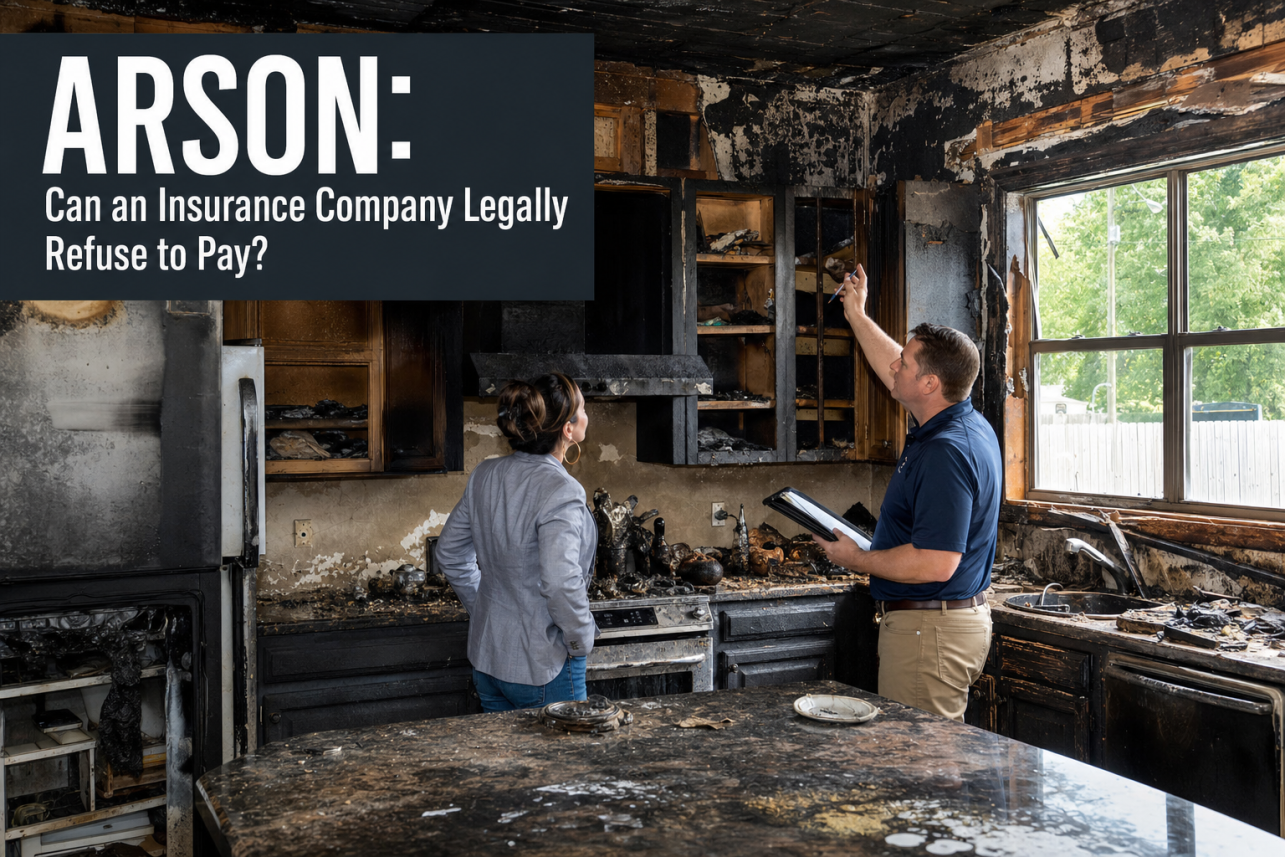
Can I Hire My Own Fire Expert To Challenge An Arson Chapel Hill NC Finding, And Does For The Public Adjusters, Inc. Arrange That?
Yes, and in a wrongful accusation case it is often the single most important move you can make. When a carrier defends an arson Chapel Hill NC denial, its case usually rests on one cause-and-origin report. An independent, credentialed fire investigator working for you can test every assumption in that report against NFPA 921 methodology.
We regularly coordinate independent experts for our clients — certified fire investigators, electrical engineers, and forensic accountants when the carrier alleges financial motive. The fire expert examines burn patterns, char depth, electrical panels and wiring, appliance failures, and the carrier’s handling of the scene. Insurer experts sometimes overlook accidental causes like a failed lithium battery, an overloaded circuit in an older home near downtown Chapel Hill, or a malfunctioning HVAC component. Finding a credible accidental cause can dismantle an incendiary finding entirely.
Timing is critical. The scene should be preserved and inspected before demolition or repairs, and North Carolina spoliation principles mean the carrier must give you and your expert fair access to evidence it removed for testing. We put those demands in writing early so nothing disappears.
Expert fees are separate from our contingency fee, but in a six-figure fire loss they are usually a small fraction of what is at stake. We help you weigh that investment honestly. In our experience, the moment a qualified independent expert appears on your side, the carrier’s posture changes — the file goes from an easy denial to a claim they know will be scrutinized.
Local Relevance
Chapel Hill’s housing stock is older than much of the Triangle. Neighborhoods near downtown and the university include homes built in the early and mid twentieth century, and many of them still carry original or partially updated wiring, aging chimneys, and decades of renovation layers. Those conditions produce electrical and heating-related fires that can burn in unusual patterns — patterns an insurance investigator in a hurry can misread as suspicious.
The area also has a high concentration of rental properties and homes that sit vacant between tenants or during long academic-year absences. Vacant and rental properties are where third-party arson and vandalism most often occur, and they are also where carriers are quickest to point a finger at the owner. A vandalism homeowners claim and an arson accusation frequently arrive tangled together, and separating them correctly matters enormously to coverage.
For The Public Adjusters, Inc. handles fire, smoke, and arson-related homeowners claims across Chapel Hill, Carrboro, and the rest of Orange County. We know how these older homes are built, what honest fire causes look like in them, and how to document a loss so an accusation has to answer to evidence.
Many Chapel Hill homes date to the mid-1900s and still contain legacy wiring or repeatedly renovated electrical systems, and fires that start inside old walls often leave burn patterns that a rushed insurer’s investigator can mistake for an accelerant-driven fire — which is why early, independent documentation of electrical origin evidence is often the single most valuable step a wrongly accused homeowner here can take.
Accused Of A Fire You Didn’t Set? Get Your Own Advocate.
The insurance company has investigators working on its side of the file right now. For The Public Adjusters, Inc. is licensed and bonded, and we work only for policyholders — never for carriers. Call for a free, confidential review of your fire claim and the accusation against you before you answer another question from the insurer.
Call us: (919) 400-6440
Helpful Resources
- National Fire Protection Association (NFPA)
- NCDOI Public Adjusters Guide
- North Carolina Department of Insurance — State regulator where consumers can verify adjuster licenses and file complaints
Serving Chapel Hill · Orange
Last updated: August 7, 2026