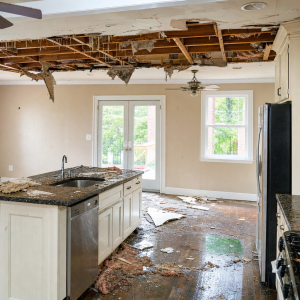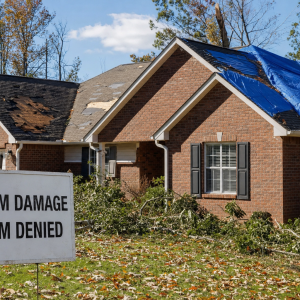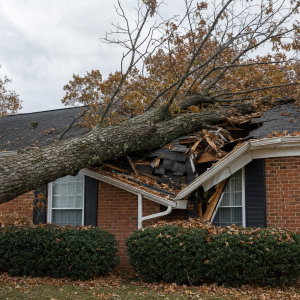

Most advice treats a tropical storm as a lesser cousin of a hurricane, something you can shrug off once the headline says the system never made Category 1. That advice is how a low-ball offer gets written. A carrier's first letter often leans on the label, not the loss. If the advisory never said hurricane, the adjuster treats roof openings, soaked drywall, and a collapsed ceiling as wear, or as flood that your dwelling policy does not cover. The storm name does not settle the dispute. What settles it is the cause of loss at your address, the policy language that applies, and a file that separates wind from water before the carrier writes the story for you.
Table of Contents
- Tropical Storm Versus Tropical Cyclone at a Glance
- Why a Tropical Storm Is Still a Tropical Cyclone
- Why Wind Speed Misses Most of the Damage
- Coastal Versus Inland Homes and Businesses
- Named Tropical Storms That Still Caused Major Losses
- Fight a Low-Ball or Denied Storm Claim
- Business and NFIP Limits That Shrink a Storm Settlement
- Confirm Your Coverage Before the Next Storm
Tropical Storm Versus Tropical Cyclone at a Glance
A tropical cyclone is the whole family of organized, rotating, warm-core low-pressure systems over tropical or subtropical waters. A tropical storm is the stage in that family where maximum sustained winds reach 39 to 73 mph (34 to 63 knots).
| Stage | Maximum sustained wind | Named? | Property implication |
|---|---|---|---|
| Tropical depression | Below 39 mph (below 34 knots) | No | Wind risk is usually limited, but heavy rain can still flood |
| Tropical storm | 39 to 73 mph (34 to 63 knots) | Yes | Wind, rain, surge and tornado risk; a serious claim is possible |
| Hurricane Category 1 | 74 to 95 mph | Yes | Roofs, siding and trees at risk |
| Hurricane Category 2 | 96 to 110 mph | Yes | Significant roof, window and door damage |
| Hurricane Category 3 (major) | 111 to 129 mph | Yes | Major structural damage likely |
| Hurricane Category 4 | 130 to 156 mph | Yes | Severe damage, roof loss likely |
| Hurricane Category 5 | 157 mph or higher | Yes | Catastrophic damage |
The NOAA tropical cyclone climatology baseline for 1991–2020 puts an average Atlantic season at 14 named storms, 7 hurricanes, and 3 major hurricanes. Named storms include both tropical storms and hurricanes, so about 7 of 14 never reach hurricane strength. The official season runs June 1 through November 30, though systems can form outside those dates. A named system starts at 39 mph, becomes a hurricane at 74 mph, and reaches major-hurricane status at 111 mph, Category 3 or higher.
A named tropical storm is already a real tropical cyclone, with sustained winds up to 73 mph. The name alone does not predict how much damage a house or shop will take.
Why a Tropical Storm Is Still a Tropical Cyclone
The phrase tropical cyclone vs tropical storm is not a choice between two storm types. One is the family. The other is a wind-speed stage inside it, and the system gets a name once it reaches that stage. Below 39 mph it stays a tropical depression and stays unnamed.
The World Meteorological Organization classification changes the label by basin once winds hit hurricane strength:
- North Atlantic, eastern and central North Pacific, Caribbean, and Gulf: the system is a hurricane at 74 mph (64 knots) or higher.
- Western North Pacific: the same strength is a typhoon. Super Typhoon Bavi is the kind of system that carries that basin's name, not "hurricane."
- Indian Ocean and South Pacific: equivalent systems are commonly called cyclones.

What belongs in the claim file
A news story that says "tropical cyclone" is describing the whole system. Your file should record the stage the storm reached where the home or business sits, not only the headline category at landfall two counties away.
Practical rule: Write the storm name, the dates it affected the property, and the advisory numbers into the first page of the claim file. Different agencies can describe the same event with different labels.
That page stops an adjuster from arguing that a tropical-storm designation means the wind could not have opened the roof. The threshold for a name already marks organized circulation and sustained winds that can tear shingles, drive rain through openings, and push surge.
Why Wind Speed Misses Most of the Damage
Wind speed is the wrong yardstick for a property claim. The category is a measure of maximum sustained wind. It says nothing about how long the rain sat over a watershed, how far seawater ran up a river, or whether a tornado dropped in an outer band.
Tropical cyclones, tropical storms included, can generate storm surge, inland rainfall flooding, destructive winds, tornadoes, high surf, and rip currents. The NOAA JetStream hazards page treats those as separate threats, not as a ranking that follows the wind number.

| Hazard | Where it hits hardest | Why wind speed misses it | Evidence to keep |
|---|---|---|---|
| Sustained wind | Roofs, siding, windows, trees | Measured by the category scale itself | Time-stamped photos of openings and debris |
| Storm surge | Coastal and estuary properties | Wind pushes seawater onshore, and water can travel miles inland through bays, rivers, and estuaries | High-water marks, elevation data, pre-storm photos |
| Rainfall flooding | Inland and low-lying homes and shops | Risk follows storm size, forward motion, moisture supply, and terrain, so a slow, large tropical storm can flood more than a compact, faster hurricane | Rain gauge or river records, photos before cleanup |
| Tornadoes | Scattered, including away from the center | They form in rain bands and can occur for days after landfall | Weather alerts, debris path photos, damage timeline |
Duration is the part carriers skip
Flooding can extend hundreds of miles inland and persist for days after the wind drops. A compact Category 2 that races through can leave less water damage than a broad tropical storm that stalls. Surge can fail roads and bridges and eat foundations even when the peak gust never hits hurricane force.
Evidence that still exists after cleanup
Keep time-stamped photographs of wind openings and of water entry, elevation and flood indicators, debris patterns, rainfall or river-flood records, utility-outage notes, and pre-loss maintenance records. The split that matters is wind-created openings versus rising water, because causation and the policy that applies can differ.
A Detailed Storm Inspection by a storm or hail damage claim expert is the practical way to lock that split down while the marks are still on the walls. Photos taken after the dry-out crew has already pulled the baseboards are much harder to use.
Coastal Versus Inland Homes and Businesses
A tropical cyclone is not a point on a map. Hazards reach well outside the forecast cone, which is why an inland house can be wrecked by a storm that never became a hurricane.
The NOAA tropical cyclone preparedness brief names four hazards that can hit together: wind, tornadoes, inland flooding, and storm surge. Tornadoes can spin up in rain bands away from the center and can keep forming for days after landfall while the remnants still have a recognizable circulation. Water hazards have historically been leading causes of hurricane deaths. A weaker, messier tropical storm can produce a harder claim than a compact hurricane when rain, inland flooding, tornadoes, and wind hit different parts of the same property.
In Cary, the claims we see most often are wind and hail, water losses, and fire and smoke. Location still decides which mechanism you have to prove.
Three addresses, three first questions
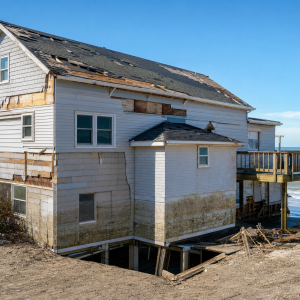
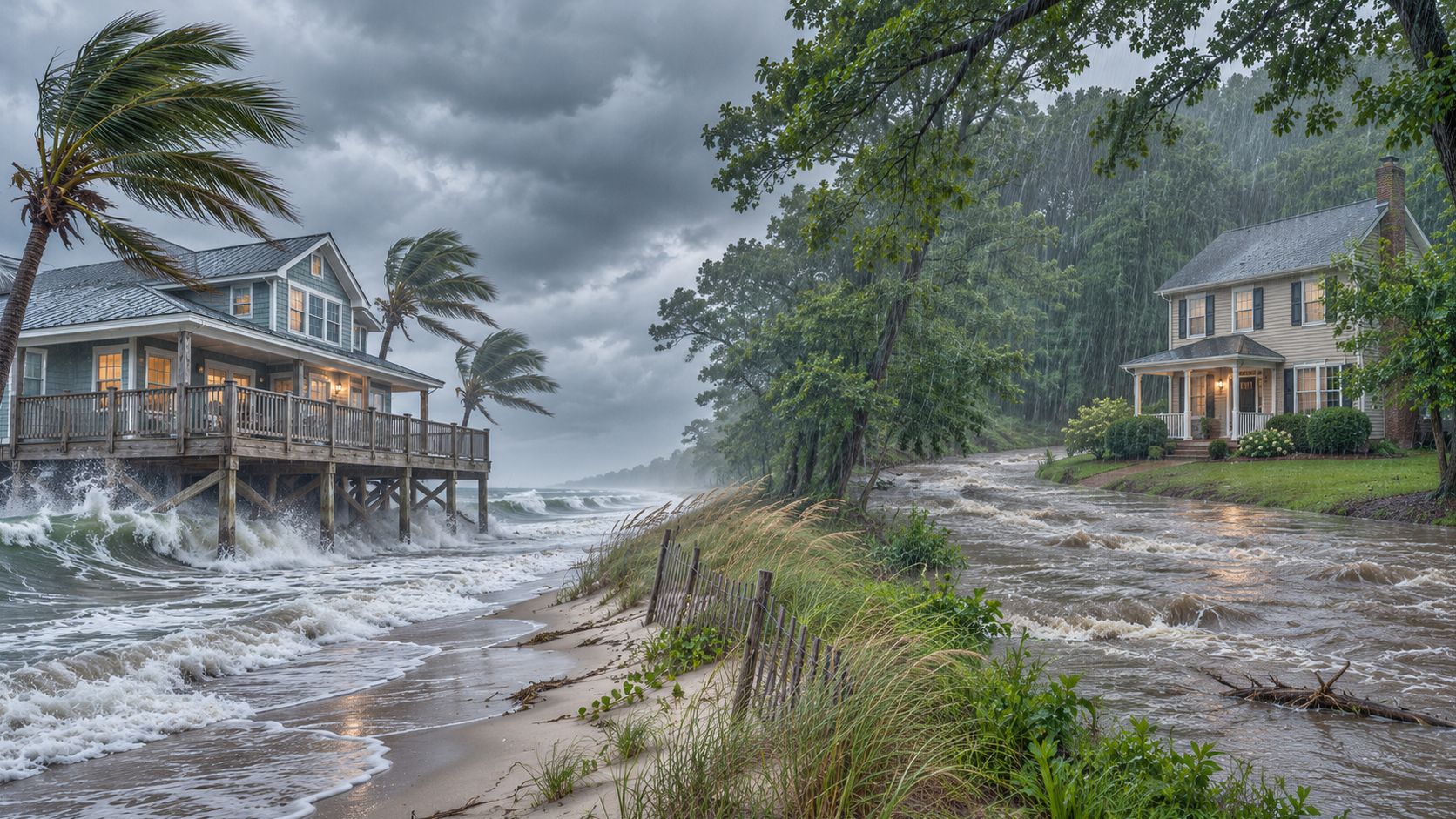
A coastal bungalow after tropical-storm surge. Waves and wind hit the same wall. Photograph the high-water line on the pilings before anyone pressure-washes, and ask the carrier which policy it says applies to seawater versus rain that entered through a wind opening.
An inland two-story office under a tropical storm's rain. The center never came close. Pull the river gauge and the radar loop for the hours the ceiling failed, and ask whether the denial is flood, wind-driven rain, or "wear" with no photos of the pre-loss roof.
A small retail shop whose roof a tornado opened. The debris path may sit miles from the track. Save the weather alert and photos of the debris line, and ask the carrier to scope the torn roof as wind, not as a maintenance item.
Weather alerts, radar or rainfall evidence, photos taken before cleanup, and contractor notes are what separate covered wind damage from flood a policy may exclude.
Before you argue the number, name the hazard that is most likely at your address and the one document that proves it.
Named Tropical Storms That Still Caused Major Losses
Classification describes maximum sustained wind, not total damage potential. The NOAA ocean service hurricane explainer is direct about that gap. The scale does not account for storm surge, rainfall flooding, or tornadoes. A system is a tropical storm once maximum sustained winds reach at least 39 mph, and a hurricane at 74 mph. Flooding is the major threat for people living inland, and tropical cyclones can generate torrential rainfall exceeding 6 inches.
Two storms that never needed hurricane winds
Tropical Storm Allison (2001) came ashore on the Texas coast as a tropical storm. Extreme rainfall flooded Houston and the surrounding area. Properties took on water with no hurricane-force wind at the site. The dispute, then and now, is not the category. It is whether the policy covers the water that entered, and through what opening.
Tropical Storm Imelda (2019) stalled over Southeast Texas and dropped very heavy rain across the region. A slow tropical storm can out-flood a faster, stronger hurricane because the rain stays. Carriers still open those files by quoting the tropical-storm label, then separate wind from water after the fact.
Can the designation still support a serious claim?
Yes. Coverage depends on the cause of loss and the policy terms, not on the storm's name or category. For a North Carolina or Virginia owner, a storm labeled only a tropical storm can still produce severe wind, water, tornado, and inland-flood losses.
Split the file by hazard, not by headline:
- Wind: lifted shingles, broken windows, fallen trees on the structure.
- Storm surge: seawater, high-water marks, eroded ground.
- Rainwater: entry through a storm-created opening.
- Sewer backup: only if you can show what drove it.
- Flood: rising water from overflow, which may sit on a flood policy instead.
- Tornado: a debris path and an alert, even far from the center.
Photographs, a timeline, mitigation records, and a scoped estimate matter most when those causes overlap. The category number will not do that work for you.
Fight a Low-Ball or Denied Storm Claim
A low first offer after a storm, a slow reinspection, and a letter that blames flood or pre-existing wear without photos are common patterns. You do not need a famous verdict to recognize them. You need a file the carrier has to answer.

- Read the denial or offer letter and copy the exact cause of loss it cites, such as flood, earth movement, or wear.
- Ask the carrier in writing for an itemized causation breakdown that separates wind openings from water entry, room by room and component by component.
- Gather what the storm cannot erase: time-stamped photos taken before cleanup, weather alerts, rainfall or river data, and maintenance records.
- Commission an independent estimate that lists each damaged item with repair pricing.
- Compare the carrier's scope line by line and flag missing items, unmatched quantities, and rooms the adjuster never entered.
- Build a disputed-claim package with photographs, the independent estimate, and the policy language that supports coverage.
- Invoke appraisal or the policy's dispute clause if the carrier still underpays.
Where a public adjuster fits
A public adjuster can review the denial, investigate the cause of loss independently, and submit a documented appeal. The adjuster does not get paid unless the policyholder gets paid. On a denied or disputed storm claim, the package we build uses photographic evidence, a detailed independent estimate, and the policy language that supports coverage.
One Apex family's claim after a July thunderstorm dropped a limb through the roof settled at $67,800. The storm was not a hurricane. The opening in the roof, documented and scoped, was the claim.
I would start with the denial letter, not with a phone call. A call leaves no record of the cause the carrier is using. A written request for the claim file and an itemized breakdown does.
Business and NFIP Limits That Shrink a Storm Settlement
Clear physical damage does not guarantee a full payment. On an NFIP flood claim, the trigger is direct physical loss by or from flood, not the fact that a tropical cyclone or tropical storm passed over the property. Adjusters on these files come from NFIP or a Write Your Own company, and the Standard Flood Insurance Policy is narrower than a dwelling or commercial property form.
The FEMA NFIP flood insurance manual states that flood coverage generally does not pay for loss of revenue or profits, loss of access, loss of use, business interruption, or additional living expenses. A shop that closes for three weeks can have a real building loss and still collect nothing for the closure under that policy.
Two tracks, not one estimate
Covered physical damage is the building and the contents the flood policy insures. List each damaged component, fixture, and item of contents with its repair or replacement cost.
Consequential losses are closure, relocation, and extra operating costs. Calculate lost income and extra expenses on a separate sheet and send that sheet to any non-flood commercial policy that may apply. We handle business interruption on commercial properties, along with tree-strike and lightning, so that second sheet is not an afterthought.
Sewer backup is covered under the flood policy only when flooding directly caused the backup. An unrelated backup is not covered by that policy. Say so in the narrative, with the date the street flooded and the date the floor drain reversed, or the carrier will treat them as the same event and deny both.
An early number is not a valuation
On a two-story office condo near Cary Towne Boulevard, a commercial hail and wind claim drew an insurer offer of $11,000. The appraisal award reached $214,000. Before you price anything, decide whether each item is permanently installed building equipment or movable business contents. That classification changes both eligibility and the limit that applies.
Confirm Your Coverage Before the Next Storm
Know which limit applies before the next advisory. The FEMA NFIP summary states that residential policies provide up to $250,000 for a single-family building and up to $100,000 for contents. Commercial structures may receive up to $500,000 for the building and $500,000 for contents. Building and contents are separate, and contents coverage is not automatic with building coverage. An adjuster can treat equipment, inventory, or furniture as uninsured when only the building was purchased, or can stop at the statutory cap.
- Pull the declarations page and mark what you bought: building, contents, business interruption, and flood.
- Compare those limits with the estimate, sorted by coverage category, and check valuation, deductibles, and item exclusions.
- Photograph and inventory contents now, with serial numbers and receipts.
- Request a free, no-obligation policy and damage review. For The Public Adjusters, Inc. does that review at no obligation, on contingency, with no upfront cost and no hourly billing.
- If an offer arrives after a storm, act quickly. Dedicated attention on the file right after a hurricane or major storm is what guards against a low initial disaster offer.
If the dispute is a roof, it helps to find out when insurers replace roofs so you can tell a full replacement argument from a repair argument before you accept a patch scope.
Have your water damage claim questions answered at NO COST. Call 919-400-6440 to speak with a licensed Public Insurance Adjuster or Contact Us here with questions. WE Work For YOU… NOT Your Insurance Company!
If a tropical storm label is being used to shrink a wind, water, or tornado loss on a North Carolina or Virginia property, For The Public Adjusters, Inc. represents the policyholder, documents the cause of loss, and negotiates the claim. We work dwelling and commercial property files, including hurricane and flood disputes, and we are paid only when you are paid. Bring the denial letter or the low offer and get a no-cost review before you sign anything.